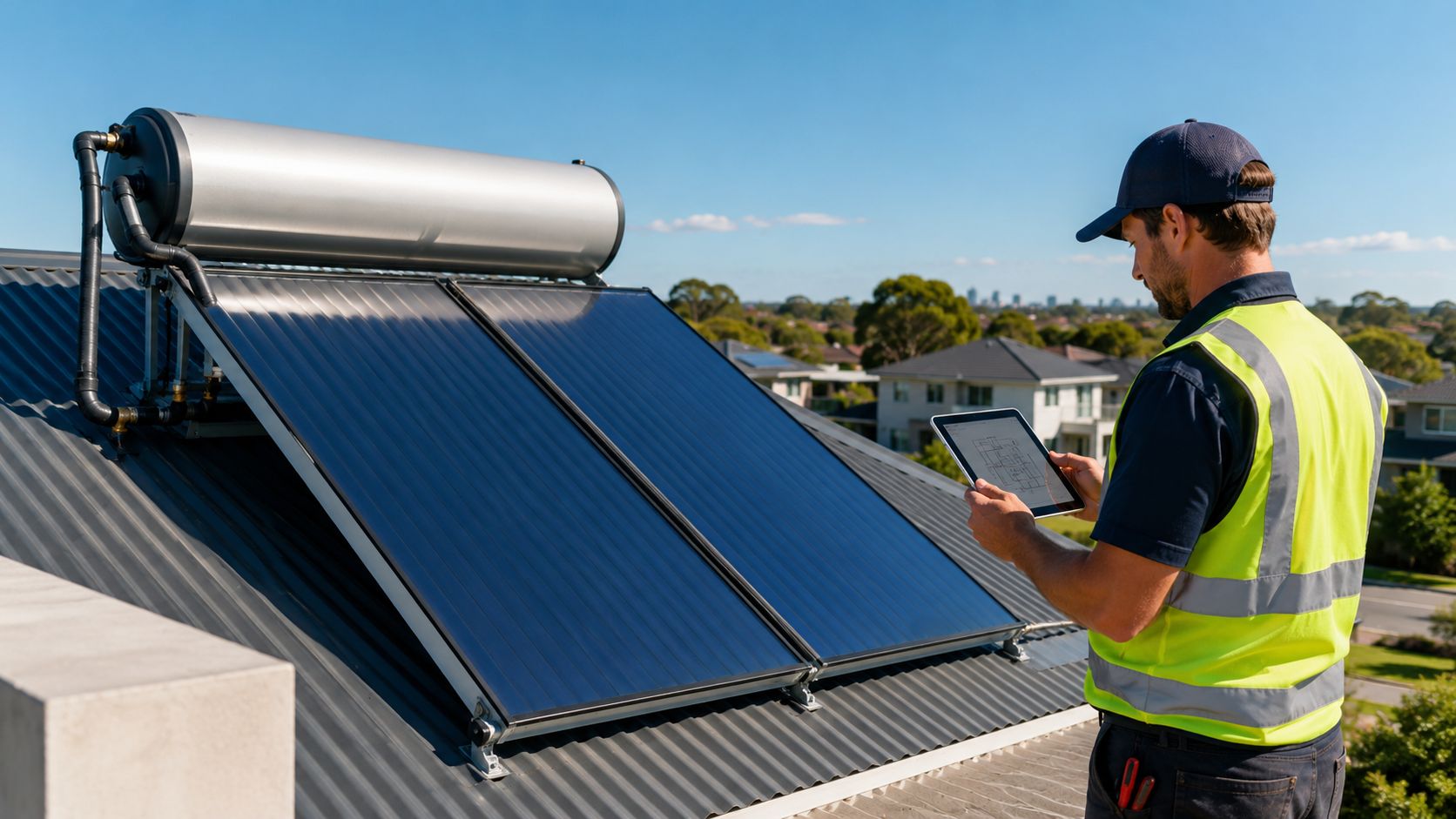
NSW Solar Hot Water System Installation: Your 2026 Guide
Last updated:
Your old storage tank is on the way out. The gas bill or power bill keeps reminding you that hot water isn't cheap. You've started looking at replacements, and now you're staring at two very different paths. A solar hot water system installation on the roof, or a modern heat pump tied into a broader electrification plan.
That's the main decision in NSW now.
A lot of guides still talk as if solar thermal is the automatic upgrade. It isn't. Solar hot water can still be an excellent fit on the right home, with the right roof, the right household usage, and the right plumbing layout. On the wrong home, it becomes a complicated retrofit that costs more effort than it's worth. In plenty of cases, a heat pump water heater paired with solar PV is the cleaner, simpler long-term move.
Understanding Solar Hot Water Systems
A solar hot water system works a bit like a garden hose left in the sun. The hose heats up because it absorbs solar energy. Solar thermal does the same job more deliberately. Collectors on the roof absorb sunlight, transfer that heat into water or a heat-transfer fluid, and a storage tank holds that heated water for household use.
That sounds simple, and the basic principle is. The complexity sits in choosing the right collector, the right tank arrangement, and the right roof layout. If any of those are wrong, performance drops and maintenance headaches start.

Collector types
The first choice is usually flat plate collectors versus evacuated tubes.
Flat plate collectors are the more familiar panel-style option. They're durable, tidy-looking, and often suit homes where roof appearance matters. They tend to work well on straightforward roofs with good sun access and enough area.
Evacuated tube collectors use rows of glass tubes. They're often chosen where winter performance, limited roof space, or tricky climate conditions push the design. They can be a good solution, but they also need proper placement and support. On some homes, they're the best technical answer. On others, they're more hardware than the site really needs.
System layout choices
The next split is thermosiphon versus split systems.
A thermosiphon system places the tank on the roof with the collectors. Hot water rises naturally, so the system uses simple physics rather than relying heavily on pumped circulation. It can be effective, but it puts more weight and visual bulk on the roof.
A split system keeps the collectors on the roof and places the tank below, often at ground level. This can suit homes where roof loading, sightlines, or access make a rooftop tank a poor idea. Split systems often fit modern retrofit work better, but pipe runs and control design matter much more.
Practical rule: The best-performing system on paper isn't always the best system for your house. Roof access, tank location, and serviceability usually decide what will actually work long term.
Solar hot water system types at a glance
| System Type | Best For | Pros | Cons |
|---|---|---|---|
| Flat plate collector | Homes with solid sun exposure and standard roof space | Proven design, neat profile, suits many metro homes | Can be less flexible on constrained roofs |
| Evacuated tube collector | Homes with limited collector space or tougher winter conditions | Strong thermal performance, flexible collector footprint | More specialised installation and visual impact |
| Thermosiphon system | Homes that can handle rooftop tank placement | Simpler circulation concept, fewer moving parts in some setups | Added roof weight, more visible from the street |
| Split system | Retrofits, homes with ground-level tank preference | Better for many existing homes, easier tank access for servicing | More plumbing complexity, pipe layout matters |
If you're also comparing roof-mounted options more broadly, it helps to look at how solar water heater panels are configured on Australian homes before locking in a collector style.
One other clue homeowners often miss is the condition of the existing hot water service. If your current unit is already making odd sounds, that can point to scale, pressure, or heating element issues rather than just age. This guide to causes of water heater noise is a useful starting point before you decide whether you're replacing a failing system or planning a full upgrade.
Is Solar Hot Water Still the Best Choice in 2026
For many NSW households, this is the question that matters most. Not “Can I install solar hot water?” but “Should I?”
Australian policy now supports both solar hot water and heat pump water heaters under schemes like the Small-scale Renewable Energy Scheme, but public-facing guides rarely compare them using Australian data, even though the choice has a major effect on payback and overall savings for NSW households, as noted in this Australian solar thermal and heat pump comparison discussion.

When solar thermal still makes sense
Solar thermal still earns its place on the right property.
It tends to suit households with consistent hot water demand, a good unshaded roof area, and a layout where collector and tank placement can be done cleanly. Larger families often fit this profile better than low-occupancy homes. If people are showering morning and evening, using plenty of hot water, and the roof is cooperative, solar thermal can perform very well.
It also makes sense for homeowners who want to target water heating directly, rather than adding another electrical appliance load to the home.
When a heat pump may be the smarter choice
A heat pump often wins when the roof is awkward, shaded, heritage-sensitive, or crowded with PV. It also suits homes where the easiest path is replacing a ground-level tank without running new roof plumbing.
If a household is already planning rooftop solar, the broader question becomes whole-of-home energy design. In many homes, solar PV plus a heat pump water heater creates a cleaner upgrade path because the hot water system works with the electrification strategy rather than requiring separate thermal hardware on the roof.
For readers weighing that bigger system design question, it's worth looking at how hybrid solar solutions bring PV, storage, and efficient appliances together rather than treating hot water as a stand-alone purchase.
Here's the plain version. Solar thermal is no longer the default answer. It's a site-specific answer.
On a clean north-facing roof with strong hot water usage, solar thermal can still be a very good installation. On a shaded terrace, a strata property, or a roof already crowded with PV, it often isn't the first option I'd recommend.
The same applies when homeowners compare against older large-capacity gas storage systems. If you're replacing something oversized, this explainer on 100-gallon gas heaters is useful context because it shows how traditional storage thinking can be very different from modern high-efficiency system design.
Later in the process, the right installer should test your assumptions. If you say, “I want solar hot water,” a good consultant should be willing to reply, “Maybe, but let's see if a heat pump fits your house better.”
This video gives a useful visual overview before you compare site conditions and system layouts.
A simple way to think about the decision
- Choose solar thermal when your roof is suitable, your household uses a lot of hot water, and the plumbing route is straightforward.
- Choose a heat pump first when roof constraints, shading, or retrofit complexity start pushing the project away from clean design.
- Choose based on the whole house if you're also considering PV, batteries, EV charging, or full electrification.
Your Pre-Consultation Site Assessment Checklist
Before booking quotes, walk around your property and check the basics. You don't need to diagnose the whole job. You do want to spot the issues that usually make or break a solar hot water system installation.
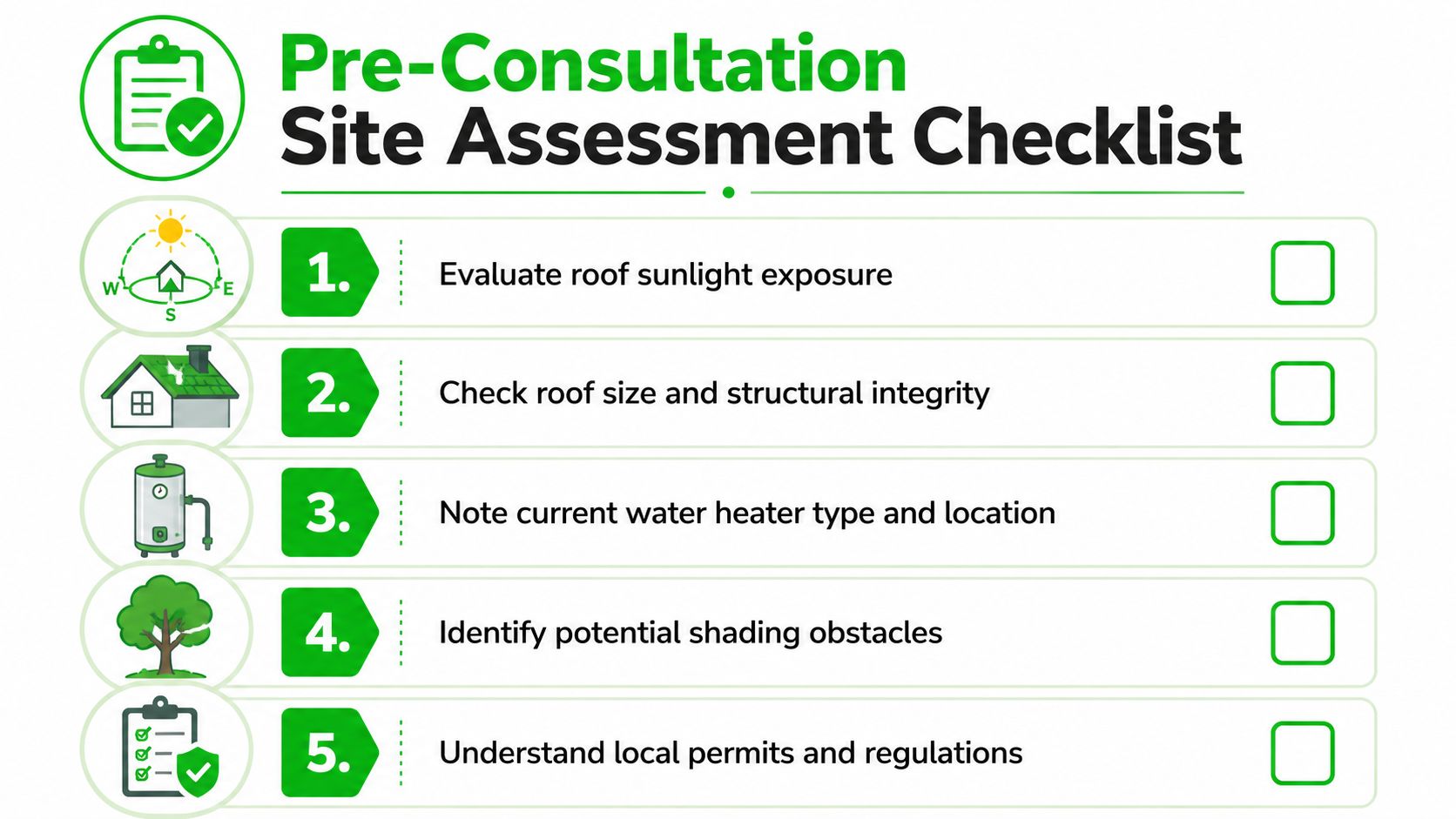
What to check outside
Start with the roof.
- Sun access: Look at tree cover, neighbouring homes, and upper-storey walls. A roof can look sunny at midday and still be a poor performer if it loses winter sun.
- Usable roof area: Solar thermal needs real physical space for collectors, plus safe access for installation and servicing.
- Roof condition: If the roof already needs repairs, replacement, or repointing, sort that first. Installing collectors over a roof nearing the end of its life is asking for rework later.
If your home has concrete or terracotta roofing, this overview of solar for tile roof installations helps you understand why mounting details and flashing quality matter before any collector goes up.
What to check inside and around the tank
The second part is plumbing practicality.
Current system location
Note whether your existing tank is on the ground, in a cupboard, outside on a slab, or somewhere awkward.Distance to likely collector position
Long pipe runs add complexity, heat loss, labour, and often frustration.Booster type
Find out whether your current water heating is electric, gas, or something else. That affects integration options.Access for future servicing
A system that's hard to reach won't get maintained properly.
Quick check: If the best roof spot is a long way from the tank and the only route involves multiple penetrations, boxed-in ceilings, or difficult wall cavities, ask early whether a heat pump would be the cleaner option.
What to mention when you call
When you speak with an installer, have these details ready:
- House type: Detached house, duplex, townhouse, or strata lot.
- Occupancy pattern: Whether hot water use is spread through the day or concentrated in short peaks.
- Known roof issues: Past leaks, brittle tiles, or limited access.
- Any planned upgrades: Solar PV, switchboard work, EV charging, or renovation plans.
That short list helps the installer give you a more realistic first assessment instead of a generic sales answer.
An Overview of the Professional Installation Process
A proper installation day is rarely dramatic. That's the point. Good crews make it look straightforward because they've already done the planning.
The morning usually starts with a final site check. The team confirms collector position, pipe route, tank location, roof access, and any safety controls. If something on site doesn't match the original assumption, this is when it should be corrected, not improvised halfway through the job.
Roof work and mounting
The first visible stage is mounting the collectors.
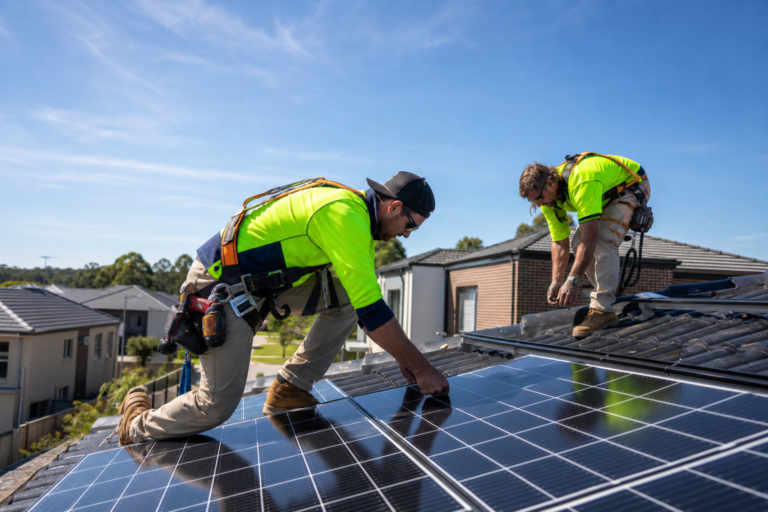
On a good job, brackets are placed to suit the roof structure, penetrations are carefully flashed, and the array sits square and secure rather than forced into a position that was merely convenient. Homeowners often focus on where the collectors sit. Installers focus just as much on how they're fixed and how the roof is sealed around them.
Pipework and hydraulic layout
Here, experienced work shows.
Professional solar thermal installation requires collectors and pipe runs to maintain a continuous slope for drainage, roof penetrations to be properly sealed, and fluid thermal expansion to be managed to prevent stagnation and support long-term reliability, as set out in these solar water heating installation and operation instructions.
If that sounds technical, here's why it matters in plain English:
- Continuous slope helps the system drain properly where the design requires it.
- Correct sealing prevents the roof leak you discover in the next big storm.
- Expansion management stops heat and pressure from turning into a maintenance problem.
A solar hot water system can look tidy on day one and still be a poor installation underneath. Pipe fall, insulation, flashing, and isolation points decide whether the system behaves properly after summer heat and winter weather.
Commissioning and handover
Once the hardware is in place, the team fills, tests, and commissions the system. That includes checking circulation, booster operation, controller settings where applicable, tempering arrangements, and basic leak testing.
A proper handover should cover:
- How the booster operates
- What normal performance looks like
- What maintenance intervals to expect
- Which warning signs mean you should call for service
The homeowner shouldn't be left guessing whether the system is heating, boosting too often, or bypassing the solar contribution. If the explanation at handover is rushed or vague, that's usually a warning sign about the overall job standard.
Navigating NSW Permits and Government Incentives
A lot of homeowners still use the word “rebate” for solar hot water. That's understandable, but it's not quite how the market works now.
Australia moved from direct government rebates, including the Renewable Energy Bonus Scheme that ran from 2009 to 2012, to the market-based incentive of Small-scale Technology Certificates, or STCs, for eligible systems, as explained in this summary of Australia's solar hot water policy shift. The practical result is that support for eligible solar water heaters didn't disappear when older rebate programs ended. It changed form.
What STCs mean in simple terms
STCs are part of the current installation economics for eligible systems.
For most homeowners, that doesn't mean wrestling with paperwork alone. It usually means the installer handles eligibility, product compliance, and certificate processing as part of the project workflow. That's why people often experience STCs as an upfront reduction in installation cost rather than a separate claim process later.
Permits and approvals
Approval requirements vary by property type and site conditions.
A detached house with clear roof access is usually more straightforward than a terrace in a dense suburb, and far simpler than a strata property with shared roofing or body corporate approval. If you're also looking at broader energy savings and export strategy across the home, it helps to understand how NSW feed-in tariff settings fit into the bigger PV conversation, even though feed-in tariffs relate to solar electricity rather than thermal hot water.
Here's the key point. Government support still matters, but it only works smoothly when the system itself is eligible and correctly specified.
- Product eligibility matters
- Installer compliance matters
- Site suitability still matters
A subsidy doesn't rescue a poor design. It only improves the economics of a sound one.
Common Installation Pitfalls and Retrofit Challenges
Most disappointing solar hot water jobs don't fail because solar thermal itself is flawed. They fail because someone tried to force the wrong system onto the wrong house.
Many installation guides gloss over the hidden retrofit costs in older Australian homes, including long pipe runs, complex roof penetrations, structural loading limits, and the challenge of tying into existing plumbing. Those issues can make a project uneconomic if they aren't assessed properly, as outlined in this technical discussion of solar collector retrofit considerations.
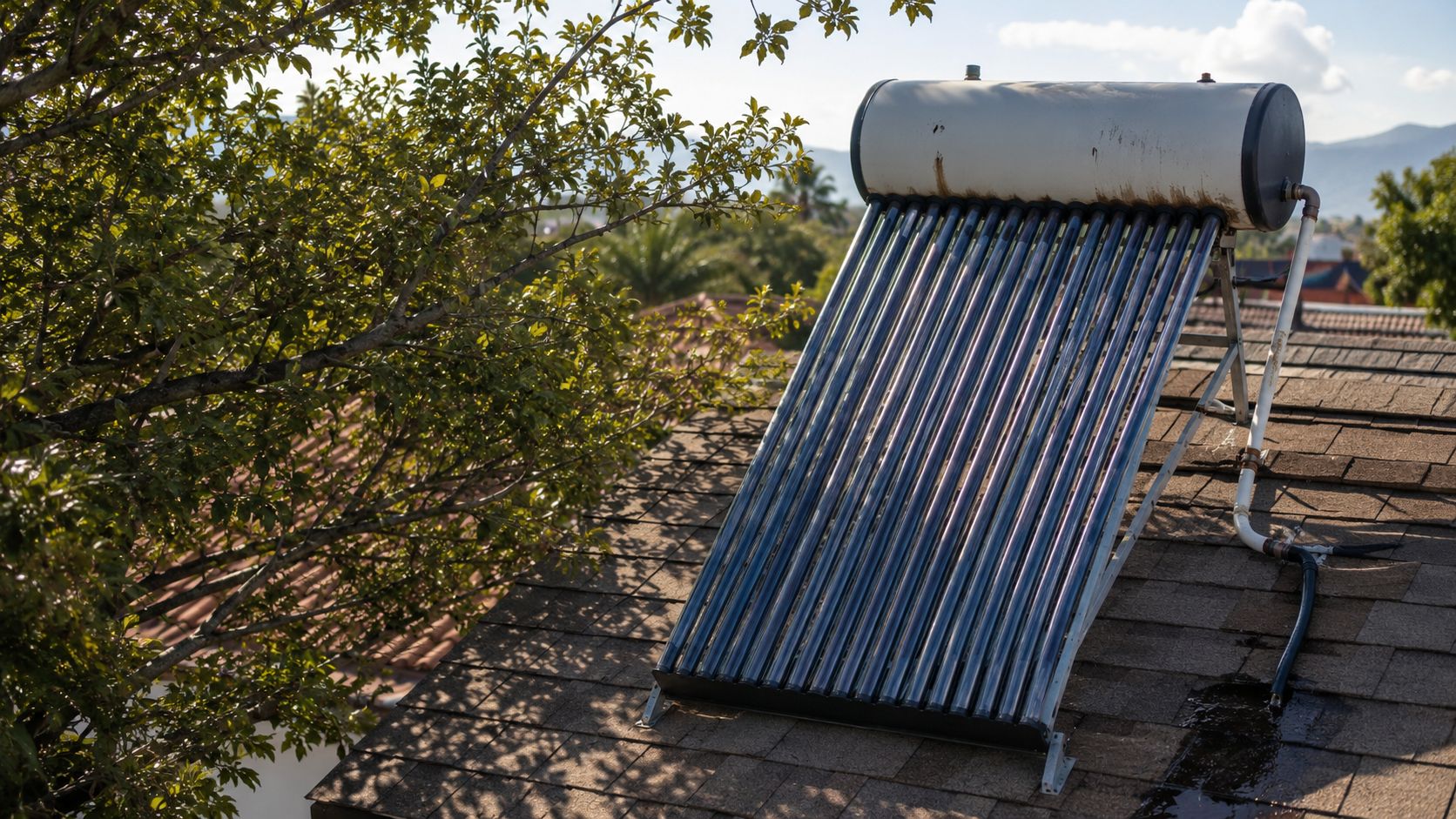
The common traps
Some pitfalls show up again and again.
- Undersized systems: The household expects strong solar contribution, but the collector area or tank size never matched the usage pattern.
- Bad collector placement: The roof face looked acceptable during inspection, but winter shading or awkward orientation cuts useful performance.
- Overlong pipe routes: Heat is lost before the water gets where it needs to go, and the install becomes harder to service.
- Poor integration with existing boosters: The solar side may work, but the overall system doesn't behave efficiently because the booster setup wasn't thought through.
Older Sydney homes are a different category
Retrofitting onto an older freestanding house in Sydney often means dealing with roof cavities, wall chases, or plumbing routes that were never designed for solar thermal.
A common example is the classic older home where the existing hot water system sits at the back of the property, but the only usable collector space is toward the street frontage. Technically possible? Often yes. Sensible? Not always.
Another example is brittle roofing, old penetrations, or questionable roof structure. If asbestos is suspected anywhere in the roof build-up or associated materials, stop and get proper advice first. This asbestos roof guide is worth reviewing before anyone starts cutting, drilling, or disturbing old roof elements.
Some retrofit jobs look cheap in a brochure and expensive on site. The roof tells one story. The plumbing tells the rest.
Strata and access issues
Townhouses, villas, and strata properties add another layer.
You may need approval for roof-mounted hardware, access arrangements, future maintenance responsibility, and visual impact. Even when the roof technically gets enough sun, administrative friction can make a heat pump the cleaner path.
A good installer should be willing to say no. If the project needs too many workarounds, too much roof surgery, or too much compromise on collector placement, solar thermal stops being the elegant option.
How to Choose a Licensed Solar Installer in NSW
By the time you're comparing quotes, most of the important technical questions have already narrowed down to one practical issue. Who's designing and installing the system?
In Australia, eligible solar hot water systems must meet specific Australian Standards for design and installation to qualify for STCs, and the installer has to match collector type, tank size, and system design to the local climate zone and site conditions. That's why certified expertise isn't optional, as explained in this guide to solar water heater installation best practices.
What to check before you sign
Don't just ask whether a company installs solar hot water. Ask how they assess suitability.
Look for these basics:
- Licence details: Verify the contractor licence. If a business gives you a licence number such as #329360c, check it rather than taking it on trust.
- Standards compliance: Ask how they determine product eligibility and installation compliance.
- In-house capability: Find out whether the company uses its own installation team or hands the job to rotating subcontractors.
- After-care: Ask who handles faults, warranty claims, and service calls after commissioning.
If you're already comparing local contractors, this overview of the best solar panel installers in Sydney gives a useful benchmark for the kind of questions a serious buyer should ask across any solar-related install.
Questions that expose weak quotes
The best questions are practical, not flashy.
Ask things like:
- Why does this system suit my roof?
- Where will the tank go, and why?
- How will you minimise pipe length and heat loss?
- What happens if my roof condition changes the design on the day?
- Who returns for service if there's a leak or control issue?
A weak installer will answer in broad marketing language. A strong installer will talk about roof geometry, plumbing route, servicing access, booster integration, and compliance.
The safest quote usually isn't the shortest one. It's the one that clearly explains the compromises, the limitations, and the reason this system is right for your specific house.
The standard to hold them to
Choose the team that's willing to challenge your assumptions, inspect properly, and recommend a different technology when that's the smarter fit.
That's what protects your roof, your plumbing, and your long-term savings.
If you want practical advice on whether solar thermal still makes sense for your home, or whether a heat pump, solar PV, battery, or EV charging setup would deliver a better result, speak with Interactive Solar. Their family-owned NSW team handles consultation, design, certified installation, and after-care, so you get a recommendation that fits the house rather than a one-size-fits-all pitch.
Make Interactive Solar a preferred source in Google
One click tells Google to surface our articles more often in Top Stories, AI Overviews and AI Mode.