Solar Panel Installation Western Sydney: 2026 Cost, Rebates & Sizing Guide
Last updated:
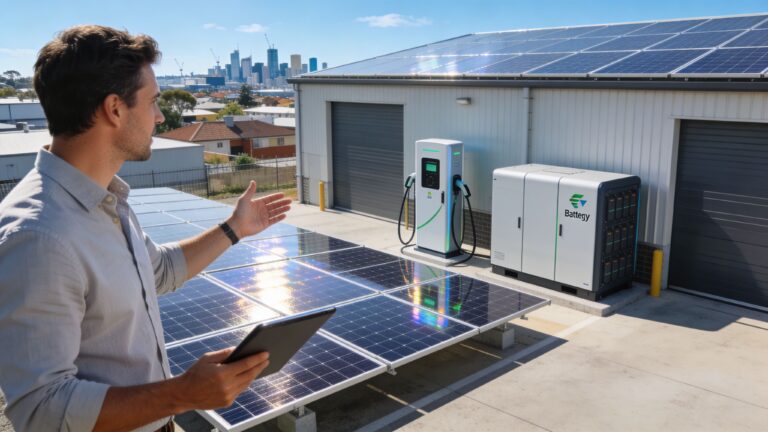
Solar panel installation western sydney homes need in 2026 is more straightforward than ever, thanks to updated federal rebates, clearer grid export rules from Endeavour Energy, and a competitive local installer market that has driven system prices to record lows. A quality 6.6kW system now costs $4,000 to $6,500 after the Small-scale Technology Certificate (STC) rebate, with payback periods of 3.5 to 4.5 years for most Western Sydney households. This guide gives you every figure, every rule, and every decision framework you need to get solar right the first time in 2026.
Key Takeaways
- A 6.6kW solar system in Western Sydney costs $4,000 to $5,800 after the federal STC rebate, with 3 to 4 year payback.
- Endeavour Energy caps solar export at 5kW for single-phase connections and up to 15kW for three-phase connections.
- The 2026 IPART benchmark feed-in tariff for NSW flat all-day rates is 3.4 to 6.5 cents per kWh, down from 4.8 to 7.3 cents in 2025-26.
- The Cheaper Home Batteries Program, from 1 May 2026, offers a rebate of approximately $272 per kWh for the first 14kWh of battery capacity.
- Total time from first contact to a fully energised system typically takes 4 to 8 weeks, with installation itself taking 6 to 8 hours.
Solar Panel Installation Western Sydney: What It Costs in 2026
Solar panel installation western sydney quotes vary by system size, panel brand, and inverter type, but the following table gives you a reliable benchmark for the current market. All prices shown are after the federal STC rebate, which is the single biggest discount available to Western Sydney homeowners.
| System Size | Panels (approx) | STC Rebate (Zone 3) | Net Cost (After Rebate) | Annual Savings (est.) | Payback Period |
|---|---|---|---|---|---|
| 6.6kW | 16 x 415W | ~$1,710 | $4,000 to $5,800 | $1,400 to $1,800 | 3 to 4 years |
| 10kW | 24 x 415W | ~$2,600 | $6,200 to $8,500 | $2,100 to $2,600 | 3.5 to 4.5 years |
| 13.3kW | 32 x 415W | ~$3,450 | $8,500 to $11,500 | $2,600 to $3,200 | 3.5 to 5 years |
These figures assume a self-consumption rate of around 35 to 40 percent, which is typical for a household home between 9am and 5pm on weekdays. If someone works from home, the self-consumption rate rises to 50 to 60 percent and payback shortens accordingly. The STC rebate for Zone 3 (which covers all of Western Sydney including Blacktown, Parramatta, Penrith, Hills Shire, Camden, and Campbelltown) is calculated at roughly 45 STCs for a 6.6kW system in 2026, at a current spot price of around $38 per STC.
For a detailed assessment of your roof and electricity bill, get a free quote from Interactive Solar, who have been installing across Western Sydney since the early feed-in tariff era and understand the local network rules inside out.
Solar Panel Installation Western Sydney: Understanding the 2026 STC Rebate
Solar panel installation western sydney buyers often ask whether the federal rebate is still available in 2026. Yes, it is. Small-scale Technology Certificates (STCs) are issued under the federal Clean Energy Regulator’s Renewable Energy Target scheme and apply to every residential solar installation carried out by an accredited installer in Australia. The scheme is legislated to step down by one deeming year each January, so 2026 systems receive 5 deeming years of certificates. In Western Sydney’s Zone 3 solar radiation zone, a 6.6kW system generates approximately 45 STCs, worth roughly $1,710 at the current spot price. A 10kW system generates approximately 68 STCs, worth approximately $2,584.
The key qualification: your installer must hold current accreditation with Solar Accreditation Australia (SAA), the body that took over installer accreditation from the Clean Energy Council on 29 May 2024, must use CEC-approved panels and inverters, and must lodge the STC assignment form on your behalf. Reputable installers like Interactive Solar handle all of this paperwork and deduct the rebate from your invoice upfront. You never need to chase the rebate yourself.
Endeavour Energy Export Limits: What Every Western Sydney Solar Owner Must Know
One factor that surprises many first-time solar buyers is that exporting power to the grid in Western Sydney is subject to limits set by Endeavour Energy, the local distribution network operator. As of 2026, the default export limits for residential customers on the Endeavour Energy network are:
- Single-phase connection: 5kW export limit at the inverter (this is the most common residential connection type).
- Three-phase connection: Up to 15kW export limit across all three phases.
This means that if you install a 10kW solar system on a single-phase connection, the inverter must be configured to cap its export at 5kW, even though the panels may be producing 10kW at noon on a clear day. The excess generation above the export cap is either consumed on-site (good) or clipped (wasted, if you have no battery). This is a critical reason why adding a battery makes sense for larger systems: it stores the generation that would otherwise be clipped and shifts it to evening use.
Interactive Solar’s design team accounts for these export limits in every proposal. If you have a larger home with high evening consumption, they will size the battery to absorb your midday surplus rather than lose it to clipping. See the Solar Batteries page for current battery pricing and models, or check the current export limit rules directly on the Endeavour Energy solar connections page.
3.4 to 6.5c/kWh is the IPART 2026-27 benchmark feed-in tariff range for NSW flat all-day rates, down from 4.8 to 7.3c/kWh in 2025-26, which is why sizing a system (and battery) to self-consume rather than export matters more than ever for Western Sydney households. Source: IPART, August 2026
Choosing the Right System Size for Your Home
Solar panel installation western sydney sizing decisions should start with your electricity bill, not with a salesperson’s default package. The correct system size depends on three things: your annual consumption in kilowatt-hours, how much of that consumption occurs during daylight hours, and whether you plan to add a battery or EV charger within the next few years.
Here is a practical sizing guide for Western Sydney homes in 2026:
| Annual Electricity Use (kWh) | Typical Household Type | Recommended System Size | Battery Worth Adding? |
|---|---|---|---|
| Under 5,000 kWh | 1 to 2 person apartment or small home | 4 to 5kW | Optional (borderline) |
| 5,000 to 8,000 kWh | 3 to 4 person family home | 6.6 to 8kW | Recommended |
| 8,000 to 12,000 kWh | Large family, pool, or EV owner | 10 to 13.3kW | Strongly recommended |
| Over 12,000 kWh | High-consumption home or home-based business | 13.3kW+ with battery | Essential |
A common planning error is under-sizing to minimise upfront cost. The marginal cost per additional kW installed drops significantly at 6.6kW because the inverter capacity is already being paid for. Going from a 6.6kW to a 10kW system typically adds only $1,500 to $2,000 in panel costs but delivers an additional $600 to $800 in annual savings. The bigger system usually pays for the upgrade cost within 2 to 3 years on its own.

Panel Brands and Inverter Technology to Look For in 2026
Not all solar panels are created equal, and the technology landscape in 2026 has shifted decisively toward TOPCon monocrystalline cells, which offer higher efficiency and lower degradation than the PERC panels that dominated the market three years ago. Here is what Western Sydney homeowners should know when comparing quotes:
- TOPCon panels (recommended for 2026): Efficiency of 22 to 23.5 percent, degradation rate of 0.3 to 0.4 percent per year. Leading brands include Aiko, Jinko, REC, and Trina. These panels perform noticeably better on partly cloudy days and on north-west or west-facing roofs, which are common in Western Sydney residential subdivisions.
- PERC panels (older technology, still acceptable): Efficiency of 19 to 21 percent, degradation of 0.5 to 0.7 percent per year. Still CEC-approved and suitable for budget-conscious installs, but the price gap between PERC and TOPCon has narrowed enough in 2026 that TOPCon is almost always the better long-term value.
- Microinverters vs string inverters: Most Western Sydney residential installs use a single string inverter (Fronius, SMA, or Sungrow are the top-rated brands). Microinverters (Enphase) suit roofs with significant shading or complex orientations. They cost approximately $800 to $1,500 more but eliminate the single-point-of-failure risk and allow panel-level monitoring.
Interactive Solar uses only CEC-approved panels from Tier 1 manufacturers, which is a prerequisite for STC eligibility and for maintaining the manufacturer’s product warranty. You can see examples of their recent Western Sydney installations in the project gallery.
The Installation Process, Step by Step
Understanding what actually happens between signing a contract and flicking your solar switch helps you manage expectations and plan your week. Here is the standard process for a Western Sydney residential installation:
- Site assessment and design (1 to 2 weeks): An Interactive Solar consultant visits your property to assess your roof structure, orientation, shading, and meter board. They check your Endeavour Energy connection type and confirm your export limit. A custom system design is prepared based on your consumption data from your electricity retailer.
- Permits and approvals (1 to 2 weeks): Your installer lodges a Connection Application with Endeavour Energy. For systems up to 10kW on single-phase, approval is usually automatic. Larger systems or three-phase connections may take longer. Council Development Approval is generally not required for standard rooftop solar in NSW under the State Environmental Planning Policy, but heritage-listed homes are an exception.
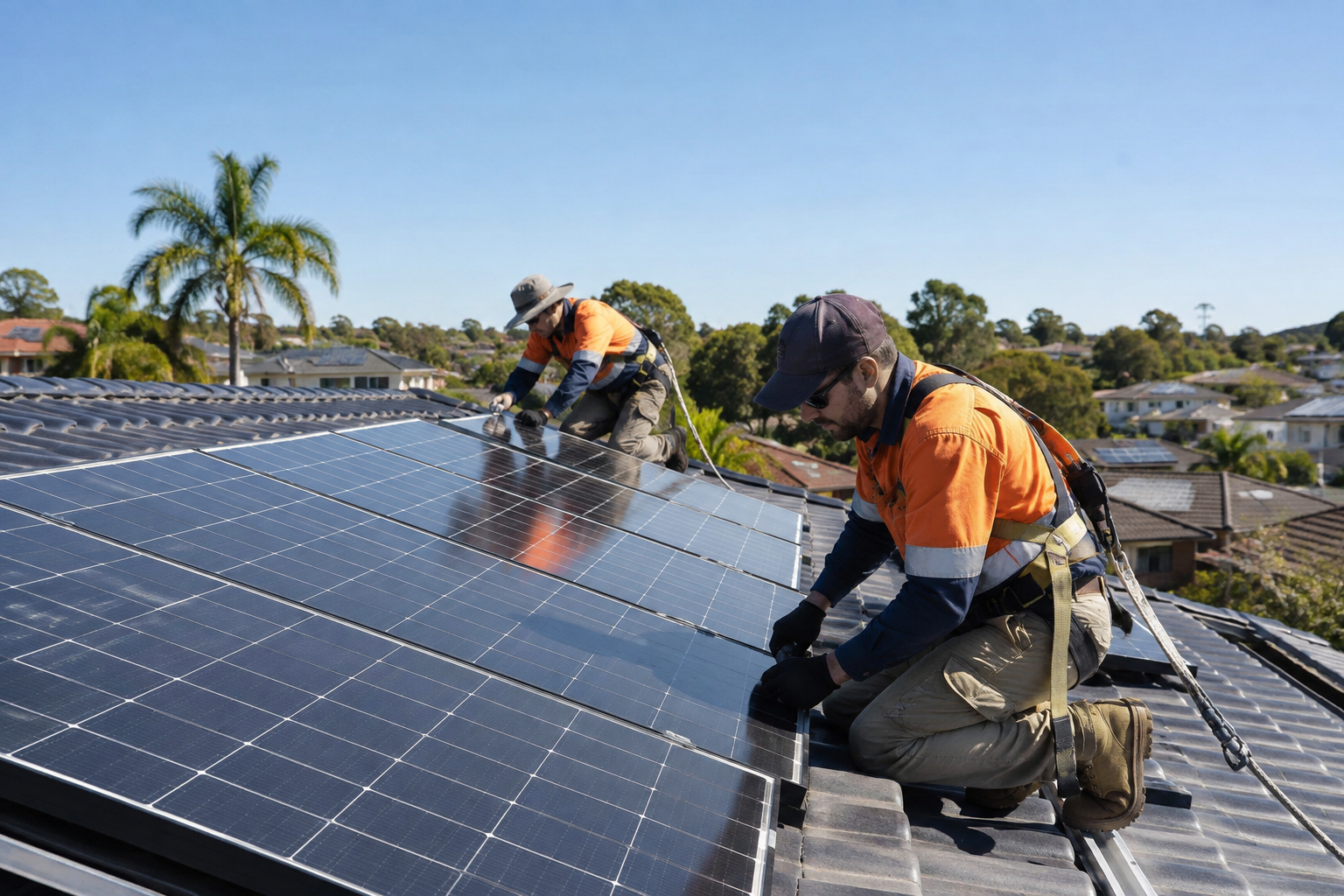
- Installation day (6 to 8 hours): A two-person team installs the mounting rails, fits the panels, runs DC cabling to the inverter, and connects the inverter to your meter board. The Endeavour Energy meter is typically already smart-meter capable, but if not, a meter upgrade is arranged with your retailer. The team commissions the inverter and walks you through monitoring setup.
- Grid connection and sign-off (1 to 4 weeks after installation): Endeavour Energy updates their network records and enables two-way metering. Your electricity retailer activates a feed-in tariff on your account. In 2026-27, IPART’s benchmark flat all-day feed-in tariff range is 3.4 to 6.5 cents per kWh, down from 4.8 to 7.3 cents in 2025-26, though some retailers pay more for exports during the 4pm to 9pm peak window under a time-of-use tariff. See the IPART benchmark determination for the current range before comparing retailer offers.
Total calendar time from first contact to generating power: typically 4 to 8 weeks. For residential solar installations, Interactive Solar aims for a 3 to 4 week total turnaround from signed contract to energisation.
Battery-Ready Design and the Cheaper Home Batteries Program
A major 2026 development that directly affects Western Sydney solar buyers is the federal Cheaper Home Batteries Program, which took effect from 1 May 2026. The program restructures the STC rebate specifically for batteries installed alongside solar (or retrofitted to existing solar systems), using a tiered scheme:
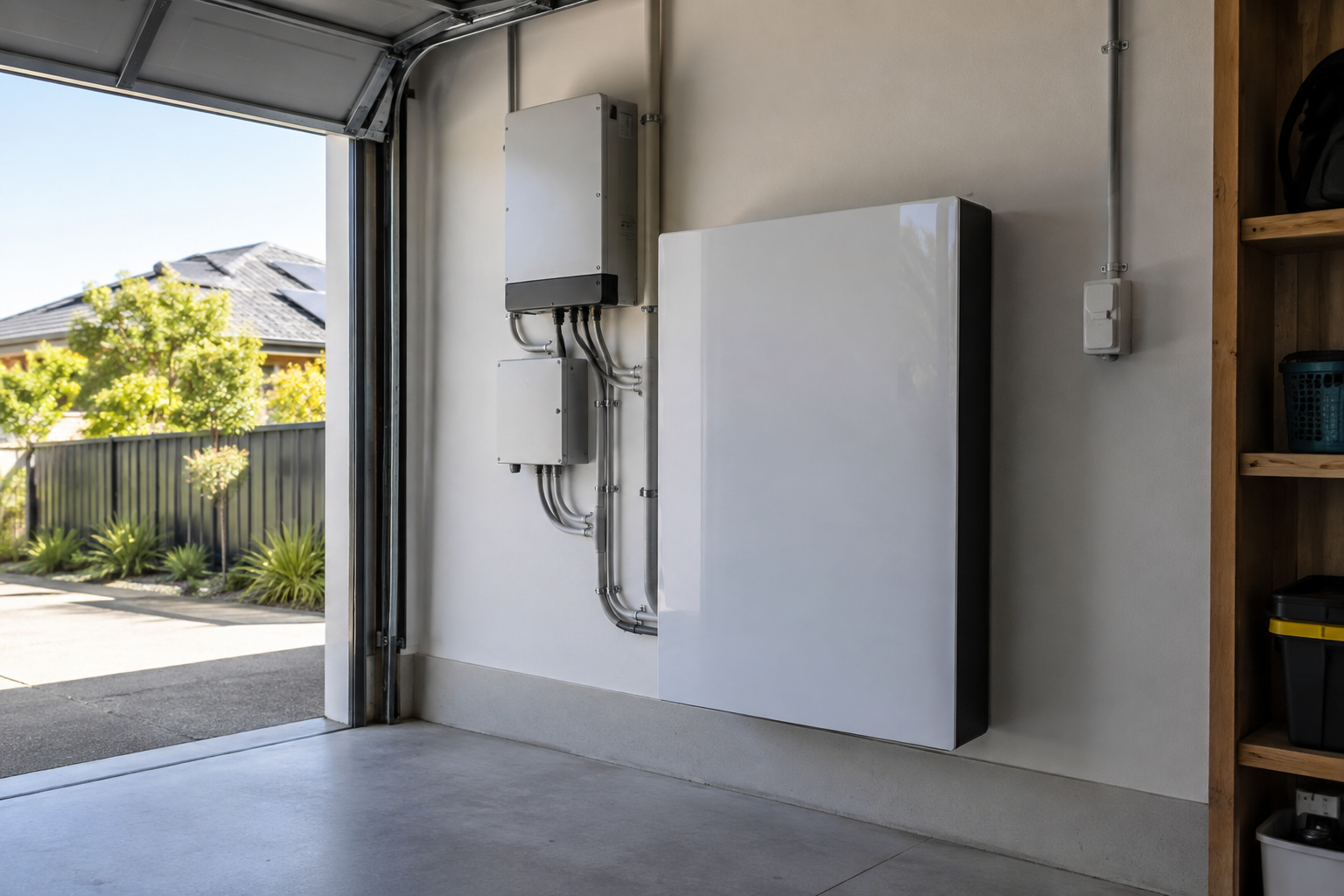
- 0 to 14kWh of battery capacity: 100 percent STC rebate on the battery component (approximately $272 per kWh of usable capacity).
- 14 to 28kWh: 60 percent rebate applies to the additional capacity above 14kWh.
- 28 to 50kWh: 15 percent rebate applies to the additional capacity above 28kWh.
For a typical 10kWh battery like the Tesla Powerwall 3 or Sungrow SBH10, the federal rebate alone is worth approximately $2,720, bringing the installed cost down from approximately $12,000 to around $9,000 to $10,500 depending on installation complexity. Combined with evening load-shifting and virtual power plant (VPP) participation opportunities, the payback on a battery in Western Sydney has dropped to 6 to 9 years in 2026, down from 10 to 12 years in 2023.
Even if you are not ready to add a battery right now, ask your installer to design your system as battery-ready. This means installing a compatible hybrid inverter (such as the Sungrow SH range or Fronius Symo Gen24) rather than a standard string inverter. The upfront cost difference is approximately $400 to $700, but a retrofit battery installation on a non-hybrid inverter requires replacing the entire inverter, which can add $2,000 to $3,000 to the cost later. Learn more about battery options and how they integrate with your solar system.
Suburbs and Local Network Coverage Across Western Sydney
Interactive Solar services all of the Endeavour Energy network area across Greater Western Sydney, including:
- Blacktown LGA: Blacktown, Seven Hills, Quakers Hill, Stanhope Gardens, Riverstone, Marsden Park, The Ponds
- Parramatta LGA: Parramatta, Wentworthville, Merrylands, Granville, North Parramatta, Woodville
- Penrith LGA: Penrith, St Marys, Glenmore Park, Werrington, Kingswood, Cranebrook
- Hills Shire: Castle Hill, Baulkham Hills, Kellyville, Rouse Hill, Norwest, Glenhaven
- Camden and Campbelltown: Camden, Narellan, Campbelltown, Leumeah, Minto, Gregory Hills
- Liverpool LGA: Liverpool, Casula, Prestons, Moorebank, Wetherill Park, Carnes Hill
- Cumberland LGA: Auburn, Berala, Regents Park, Guildford, South Granville
All of these areas are on the Endeavour Energy distribution network, which means the same export limit rules apply regardless of which suburb you are in. Interactive Solar’s team knows the local network well, having completed hundreds of installations across the region. Read verified customer reviews from Western Sydney homeowners who have installed with Interactive Solar.
How to Choose a Trustworthy Local Installer
With dozens of solar companies operating across Western Sydney, separating genuine quality installers from cut-price operators who may vanish after installation is one of the most important decisions you will make. Here is a practical checklist:
- SAA accreditation: Your installer must hold a current Solar Accreditation Australia accreditation for the type of installation being performed. You can verify any installer’s accreditation status on the SAA website. This is mandatory for STC eligibility, and the Clean Energy Council continues to run the approved product lists and the Solar Retailer Code of Conduct.
- Licensed electrical contractor: The business must hold a current NSW electrical contractor’s licence (not just an individual sparkies’ licence). Ask for the licence number and verify it on the NSW Fair Trading register.
- Structural engineering sign-off: For any system over 10kW, or for homes with older tile roofs, a structural report confirming the roof can handle the additional load is good practice and required by some councils.
- Workmanship warranty: At least 5 years of workmanship warranty on the installation itself (separate from the panel product warranty and the inverter warranty). Interactive Solar provides a workmanship warranty on all residential installs.
- Local presence: Choose an installer with a physical Sydney office and an established service track record. A company that can come back in 5 years for a warranty claim is worth more than one with the lowest quote today.
Interactive Solar is an SAA-accredited installer with a full Sydney team and years of experience across the Western Sydney market. Their aftercare program, Interactive Care, covers ongoing system monitoring, maintenance, and fault response.
Frequently Asked Questions: Solar Panel Installation Western Sydney
How much does solar panel installation western sydney cost in 2026?
A 6.6kW system costs $4,000 to $5,800 after the federal STC rebate. A 10kW system costs $6,200 to $8,500 after rebate. Prices vary by panel brand, inverter choice, and roof complexity. Most reputable installers include the rebate in their quoted price, so the number on your invoice is what you actually pay.
Which 2026 rebates apply to a Western Sydney solar installation?
The main rebate is the federal Small-scale Technology Certificate (STC) scheme, which reduces your upfront cost by $1,200 to $3,500 depending on system size. The federal Cheaper Home Batteries Program (from 1 May 2026) adds a further rebate for batteries of approximately $272 per kWh for the first 14kWh. NSW does not currently offer a state-level panel rebate, but interest-free loan programs exist for eligible low-income households through Services NSW.
How long does solar panel installation take in Western Sydney?
From first contact to a fully energised system typically takes 4 to 8 weeks. The installation itself (physical work on your roof) takes 6 to 8 hours for most residential systems. The longest delay is usually Endeavour Energy’s metering update, which can take 1 to 4 weeks after installation. You will see solar monitoring data from day one, but feed-in tariff payments begin once the meter is updated.
Does my Western Sydney home need council approval for solar panels?
In most cases, no. Residential rooftop solar installations in NSW are permitted development under the State Environmental Planning Policy (Exempt and Complying Development Codes) 2008, meaning they do not require a Development Application to council. Exceptions apply to heritage-listed properties and some strata buildings. Your installer will confirm whether any approval is required for your specific property.
What is the export limit for solar in Western Sydney?
Endeavour Energy’s standard export limit is 5kW for single-phase residential connections and up to 15kW for three-phase connections. Systems sized above these limits are permitted, but the inverter must be configured to cap export at the approved level. A battery system can absorb generation above the export cap and shift it to evening use, effectively eliminating clipping losses.
Is it worth getting a battery with my Western Sydney solar installation?
In 2026, the economics are considerably better than they were 2 to 3 years ago. The federal Cheaper Home Batteries Program has reduced the net cost of a 10kWh battery from approximately $12,000 to $9,000 to $10,500. Combined with Endeavour Energy’s 5kW export cap (which creates a strong incentive to self-consume rather than export), batteries now reach payback in 6 to 9 years for most Western Sydney households. If you run a pool, have an EV, or have a family that uses significant power in the morning and evening, a battery is strongly worth considering.
Can I add solar to my Western Sydney home if I have a strata title?
Strata solar is possible but more complex. You need approval from the owners’ corporation (a by-law change may be required), a structural assessment of the shared roof, and a clear arrangement for how the solar benefit is shared or metered. Interactive Solar has completed strata solar projects across the greater Sydney region. Contact the team to discuss your specific strata arrangement.
Make Interactive Solar a preferred source in Google
One click tells Google to surface our articles more often in Top Stories, AI Overviews and AI Mode.