Hybrid Solar Solutions: Cut Bills & Beat Blackouts in NSW
Last updated:
Your latest power bill lands, and it feels like the same story again. Usage you can't fully control, network costs you didn't ask for, and a summer blackout that seems to arrive right when the house is hottest and everyone's home.
That's why more NSW households are looking past basic solar and asking a better question. Not just, “How do I put panels on the roof?” but, “How do I use more of my own power, keep key circuits running when the grid drops out, and avoid building a system I outgrow in two years?”
Hybrid solar solutions sit in that gap between simple grid solar and full off-grid living. For many suburban homes, they're the practical middle ground. You stay connected to the grid, but you add battery storage and smart controls so your home can hold onto daytime solar and use it later, when it matters more.
Why More NSW Homes Are Choosing Energy Independence
A typical Sydney family already knows the pattern. Air-conditioning works hardest on the hottest days. Dinner, laundry, devices, and sometimes EV charging all pile into the evening. Then the grid has a wobble, and the one time you really need reliable power, the house goes dark.
That's where interest in hybrid solar solutions is coming from. People aren't chasing a gadget. They want control. They want to use their own solar after sunset, rely less on peak-period grid power, and avoid the frustration of having panels on the roof but no usable backup when an outage hits.
Australia gives NSW homeowners a strong starting point. The foundation is already there. By March 2024, Australia had installed over 4 million small-scale solar PV systems, and rooftop solar generated over 20% of the nation's electricity in the preceding year, according to market reporting citing Australian clean energy data. That matters because hybrid systems don't start from scratch. They build on an enormous rooftop solar base that's already part of everyday life.
Why basic solar no longer answers every question
A standard grid-connected solar system still makes sense for many homes. But it has limits. It produces power well during the day, then hands a lot of the value question over to your tariff structure, your export rate, and whether anyone is home using that energy when the sun is up.
For NSW households trying to stay ahead of rising electricity prices and prepare for what comes next, that's why hybrid is getting serious attention. It turns solar from a daytime-only asset into something you can use more strategically.
The shift isn't really about being “off-grid”. It's about being less exposed to the grid when prices spike or reliability slips.
What homeowners usually want
Individuals inquiring about hybrid systems often aim to solve one or more of these practical problems:
- Bill pressure: They want to use more of their own solar instead of buying power in the evening.
- Blackout protection: They need lights, refrigeration, internet, garage access, or medical devices to keep running.
- Future load growth: They're planning for an EV, pool equipment, or more air-conditioning.
- Less waste: They don't like exporting daytime solar cheaply, then buying it back later at a higher rate.
That's the appeal of energy independence in NSW. Not isolation. Control.
Understanding Hybrid Solar Power Systems
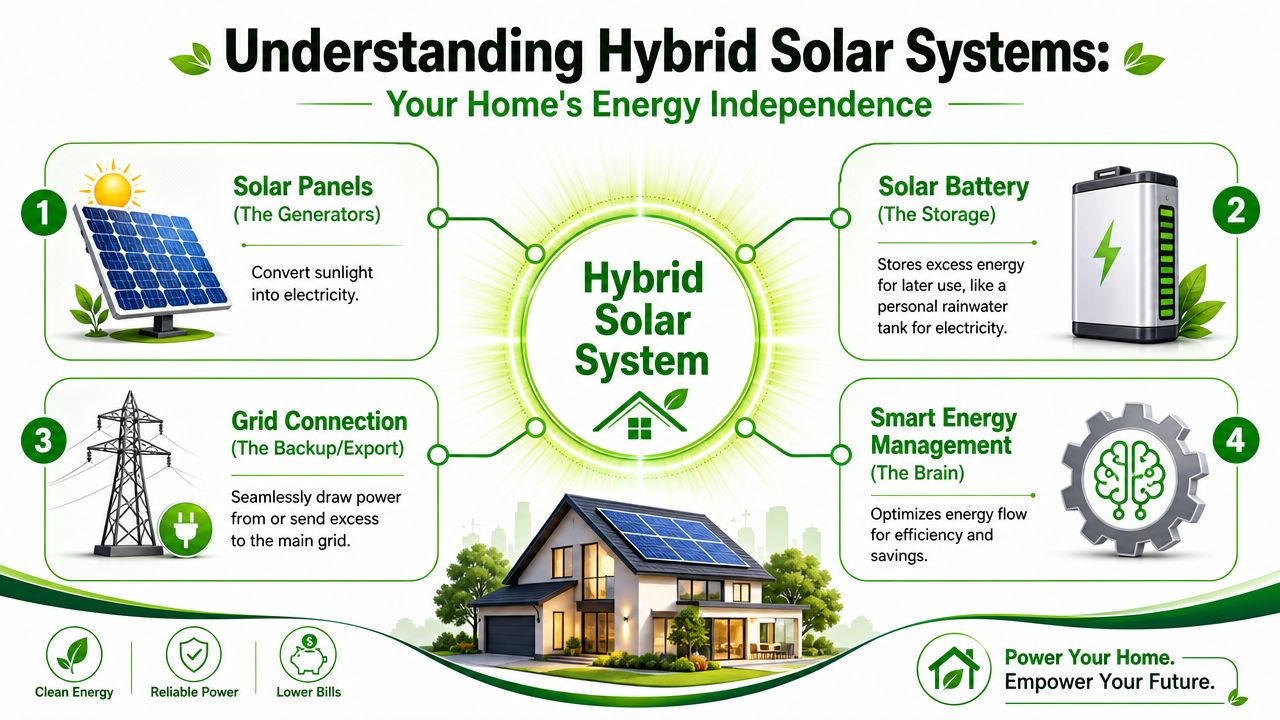
A hybrid solar system is easiest to understand if you consider it a rainwater tank for electricity. Your roof collects a resource when it's abundant. The home uses what it needs first. Instead of letting all the excess go straight away, the system stores some of it for later.
That “later” is where the value often sits. Evening cooking. Overnight refrigeration. The period when everyone gets home and the house suddenly needs more power than the sun is producing.
How the energy moves around your home
A hybrid setup combines solar panels, a battery, a hybrid inverter, and grid connection. The system constantly decides where energy should go.
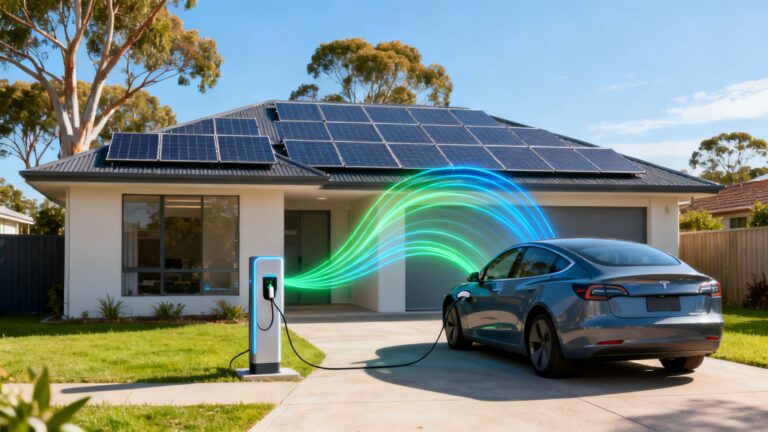
On a sunny day, the home usually uses solar first. If the panels are producing more than the house needs, the surplus can charge the battery. Once the battery is charged, extra power may still go to the grid. Later, when solar production fades, the house can draw from the battery before it pulls from the grid.
That's the basic operating logic. Generate. Use. Store. Then use again.
Practical rule: A battery works best when it's matched to your actual evening consumption, not chosen because “bigger sounds safer”.
Hybrid versus grid-tied versus off-grid
These three system types get mixed up all the time, but they serve different homes.
| System type | Best for | Main limitation |
|---|---|---|
| Grid-tied solar | Homes focused on daytime bill reduction | Usually won't provide backup in a blackout |
| Hybrid solar | Homes wanting bill savings plus backup capability | Needs careful design to avoid paying for unused battery capacity |
| Off-grid solar | Remote sites where grid access is impractical | Requires much stricter load discipline and larger storage reserves |
For most metro and suburban NSW properties, off-grid is unnecessary. You already have a grid connection, and walking away from it entirely often adds cost and complexity without solving the right problem. Hybrid keeps the useful part of grid access while giving you more control over how and when you use energy.
Why energy management matters
The smartest part of hybrid solar solutions isn't just the battery. It's the control logic. A well-designed system decides when to charge, when to discharge, and when it makes more sense to preserve stored energy for backup.
That's also why households with excess daytime generation sometimes choose to optimise solar for hot water rather than export every spare kilowatt back to the grid. In the right home, solar diversion and battery storage can complement each other, not compete.
If you're comparing battery-ready systems and integrated storage platforms, a guide to Tesla Powerwall 3 is a good place to understand how modern hybrid architectures handle storage and backup in a more efficient way.
The Core Components of Your Hybrid Solar Setup
A good hybrid system doesn't feel complicated once you break it into jobs. One part generates power. One part stores it. One part decides where it goes. That's the whole idea.
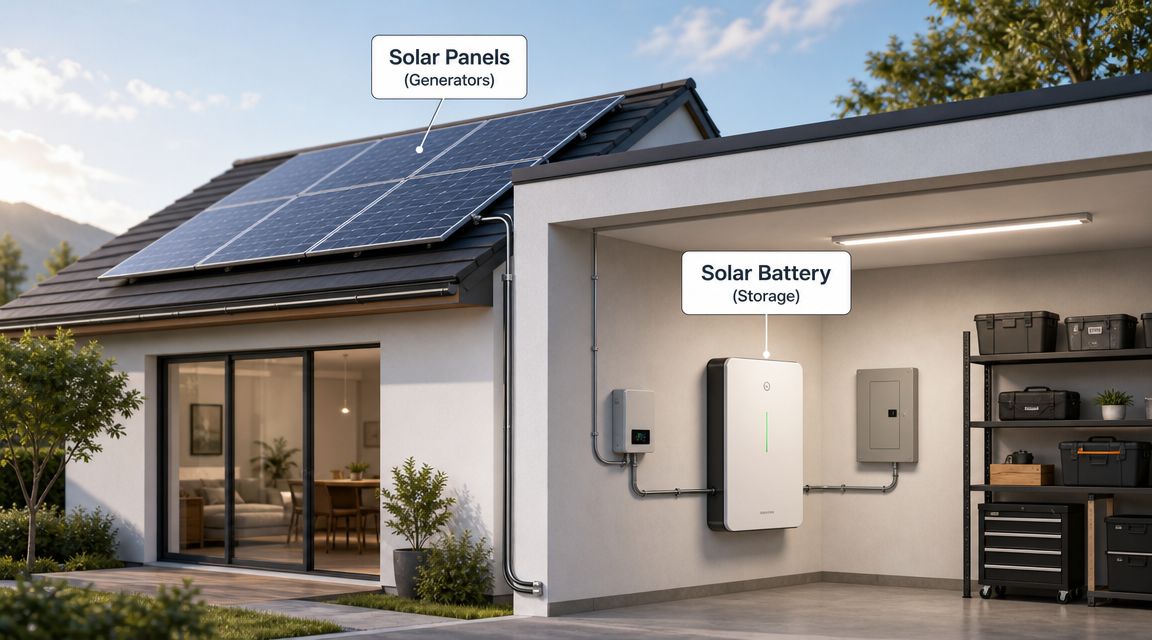
Solar panels as the generators
The panels are the fuel source. They convert sunlight into electricity during the day and form the front end of the entire system.
What matters most here isn't just panel wattage on paper. It's whether the array is arranged properly for your roof shape, orientation, seasonal shading, and expected daytime loads. A beautifully branded panel won't rescue a poor layout.
Panels also need ongoing care. Dust, debris, leaf build-up, and bird mess can drag down output over time, especially when one dirty area affects a string of panels. If you want a plain-English reference on proper solar panel maintenance, that's worth reviewing before assuming lower production is a battery issue.
The battery as the storage tank
The battery's job is simple. Hold onto excess solar so the home can use it later, or keep selected circuits running if the grid fails.
Where buyers go wrong is assuming the battery is there to run everything, all the time. In most homes, that's not the smartest use of storage. Better outcomes usually come from deciding what the battery is meant to do first. Cut evening imports. Support essential loads in a blackout. Buffer EV charging at selected times. The answer changes the design.
A battery that's too small empties too quickly and disappoints. A battery that's too large can sit underused if the home doesn't generate or consume enough energy to cycle it meaningfully.
The hybrid inverter as the brain
The hybrid inverter is the piece that makes the whole setup operate smoothly. It manages energy flow between the panels, battery, home, and grid.
Without a capable inverter, you don't have a coherent hybrid system. You have a collection of expensive components trying to cooperate.
Its practical jobs include:
- Converting power: Solar panels and batteries produce electricity in a form your home doesn't directly use, so the inverter converts it for household loads.
- Prioritising energy flow: It decides whether solar should run the home, charge the battery, or export to the grid.
- Handling backup behaviour: During an outage, it separates the backup circuits from the wider grid and supports the loads it was designed to carry.
A hybrid inverter should be selected around the home's load profile and backup goals, not simply matched to the panel count.
If you're weighing brands and storage combinations, a solid battery comparison guide helps cut through spec-sheet noise and focus on compatibility, backup behaviour, and expandability.
Key Benefits of Hybrid Solar for Your Property
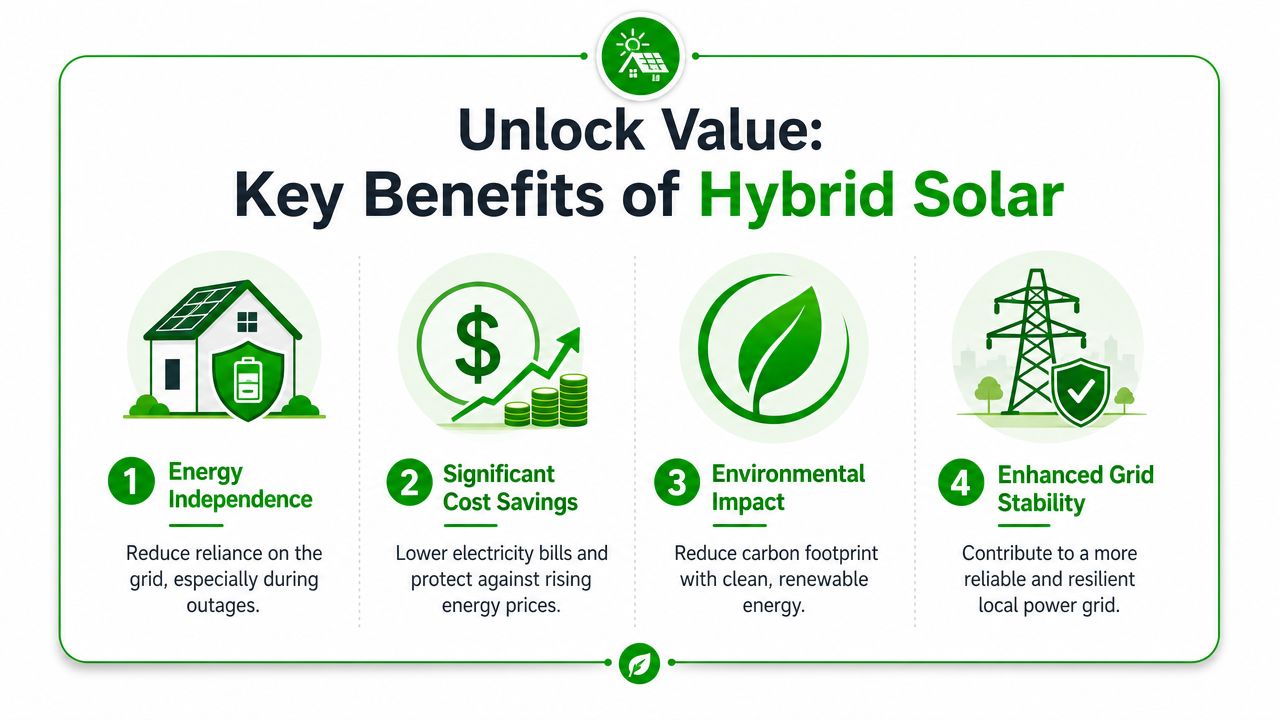
For most NSW households, hybrid solar solutions earn their place in three ways. They let you keep more of your solar, they give you a layer of blackout protection, and they make the home more ready for future electrical demand.
Better bill control through self-consumption
The cleanest savings usually come from using your own solar directly rather than exporting it and buying back power later. That's the everyday advantage of hybrid.
In NSW, this matters most for households that use a lot of energy outside solar production hours. If your biggest loads happen in the evening, storage can help move your own daytime generation into the period when grid reliance usually climbs.
A battery doesn't magically make every solar system more economical. If your home is empty all day, uses little power at night, or already has very low imports, the added complexity may not improve the result enough. But if your usage stacks up in the afternoon and evening, hybrid often solves a real mismatch between when solar is produced and when the home needs it.
Backup power that's actually useful
A lot of buyers discover too late that “battery backup” and “whole-home backup” are not the same thing.
The practical question isn't whether a battery can provide backup. It's what it can back up, for how long, and under what loads. A well-designed system can keep essentials like refrigeration, lighting, communications, and selected power circuits running during an outage. If you want ducted air-conditioning, cooking appliances, pool pumps, and EV charging all available at once during a blackout, the design becomes much more demanding.
Australian coverage has increasingly focused on resilience because it's becoming more relevant in real life. A 2025 Australian-focused overview of hybrid backup and grid stress notes that regulators have highlighted growing pressure on the grid during peak demand periods, which makes private backup capacity more valuable for homeowners.
Here's a good way to think about blackout design:
| Backup goal | What usually works best |
|---|---|
| Keep essentials on | A dedicated backup circuit for lights, fridge, internet, garage door, and key power points |
| Run comfort loads selectively | Careful planning around one or two larger appliances, with load management |
| Whole-home style coverage | Larger, more complex system design with close attention to simultaneous demand |
Before choosing battery size, decide whether your priority is resilience or pure bill reduction. Those aren't always the same system.
To see how these systems behave in a real-world format, this explainer is useful:
Future-proofing for EVs and electrification
Homes don't stay static for long. A property that uses moderate power today may look very different once an EV arrives, gas appliances are replaced, or a growing family spends more time at home.
That's where hybrid can be a strong long-term move. It creates a framework for adding more electrification without leaving the household fully exposed to future tariff shifts or evening peak dependence.
- EV charging: Stored solar can support cleaner home charging habits, especially when charging is timed intelligently.
- Appliance upgrades: Moving from gas to electric changes load patterns. A hybrid-ready design can absorb that shift better.
- Energy confidence: Even if you don't install every component at once, designing with future storage or charging in mind avoids expensive rework later.
How to Design the Right Hybrid System
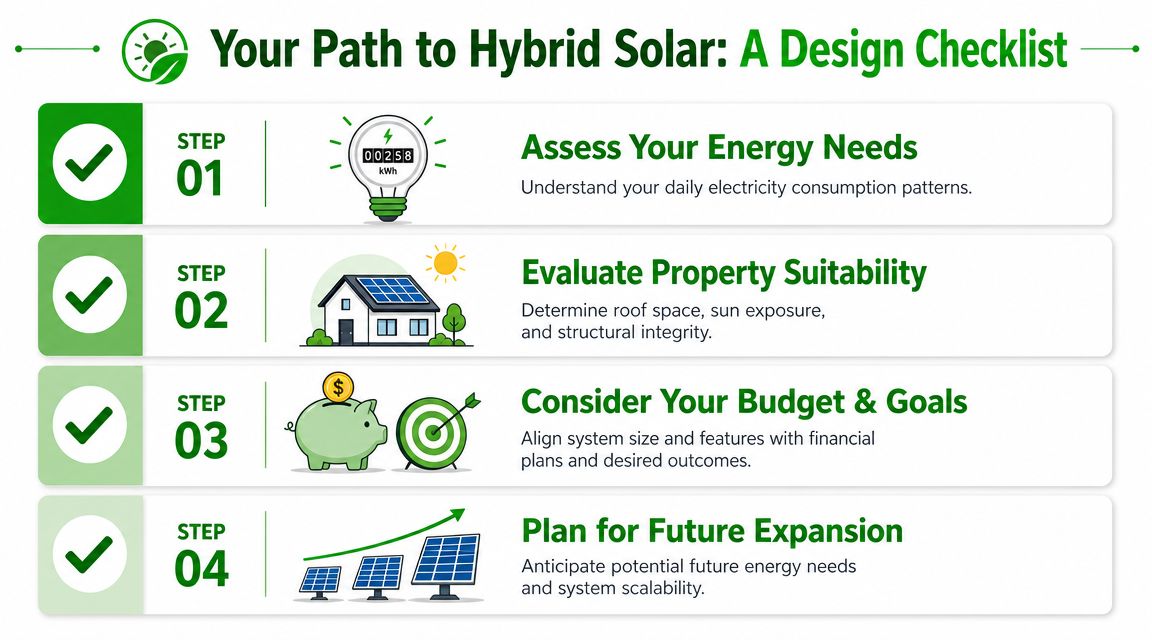
The best hybrid systems aren't built from a brochure. They're built from how the household lives. Two homes in the same street can need completely different battery sizes, inverter setups, and backup layouts, even if their roofs look similar.
That's why the design conversation should start with your habits, not hardware.
Start with when you use power
Most homeowners know roughly how much electricity they use. Fewer know when they use it. For hybrid design, that timing matters.
If the house is busy in the morning and evening, battery storage may do useful work. If most loads happen in the middle of the day, your solar may already be covering them well, and the battery decision becomes more nuanced.
A consultant should ask questions like:
- Who's home during the day: Retirees, remote workers, and home-based businesses often use solar differently from households that are empty until late afternoon.
- What loads dominate: Air-conditioning, electric hot water, pool pumps, and cooking loads all shape battery value.
- How regular the pattern is: Some homes have stable daily use. Others swing sharply between weekdays and weekends.
Define your blackout priorities clearly
Many projects either become excellent or become disappointing at this juncture.
Don't start with “I want backup.” Start with a specific list of what must stay on when the grid fails. A fridge has a different demand profile from a ducted system. Internet and lighting are easy to support compared with EV charging or electric cooking.
Keep your blackout list honest. Essential loads first, comfort loads second, luxury loads last.
A practical design discussion usually separates loads into three groups:
| Load type | Typical examples | Design approach |
|---|---|---|
| Essential | Fridge, lights, Wi-Fi, medical devices, garage door | Put these on the backup circuit first |
| Important | Selected cooling, home office, some kitchen power | Include if battery and inverter capacity allow |
| Heavy | EV charger, large air-conditioning, pool equipment | Often managed separately or excluded from blackout mode |
Plan for the home you'll have, not just the one you have now
A hybrid system should cope with your next phase of electrification, not just today's bills. If you know an EV is likely, or you're replacing gas appliances over time, bring that into the design from day one.
That doesn't always mean buying the largest system now. It often means selecting components that can scale sensibly later, especially the inverter platform and battery compatibility.
Don't ignore installation quality
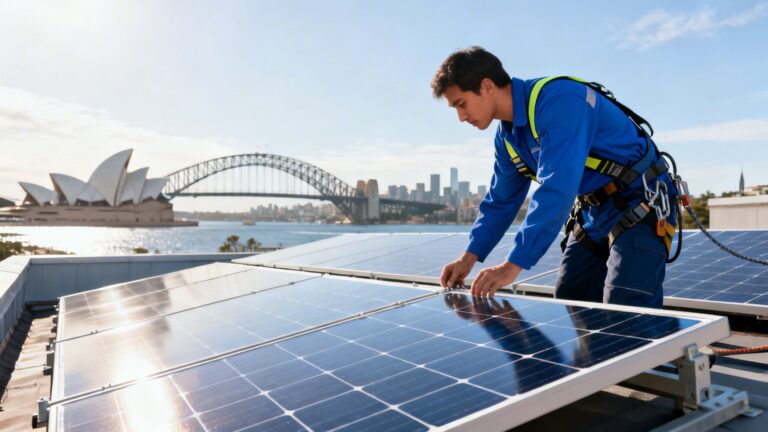
Good components can still underperform if the install is sloppy. Cable routes, isolator placement, switchboard integration, backup circuit separation, commissioning, and monitoring setup all affect how the system works in day-to-day life.
If you want to understand why workmanship matters so much, this article on why installation quality affects the value of advanced solar systems makes the point well. Hybrid systems ask more of the installer than basic PV. There are more interactions, more settings, and more opportunities to get a detail wrong.
Bring your bills, a rough appliance list, and your future plans to the consultation. That's what turns a generic quote into a system that fits.
Navigating Installation and NSW Solar Incentives
A hybrid project feels much easier when you know the path. For NSW homeowners, the process should be structured and predictable, not a string of vague promises followed by boxes showing up on the driveway.
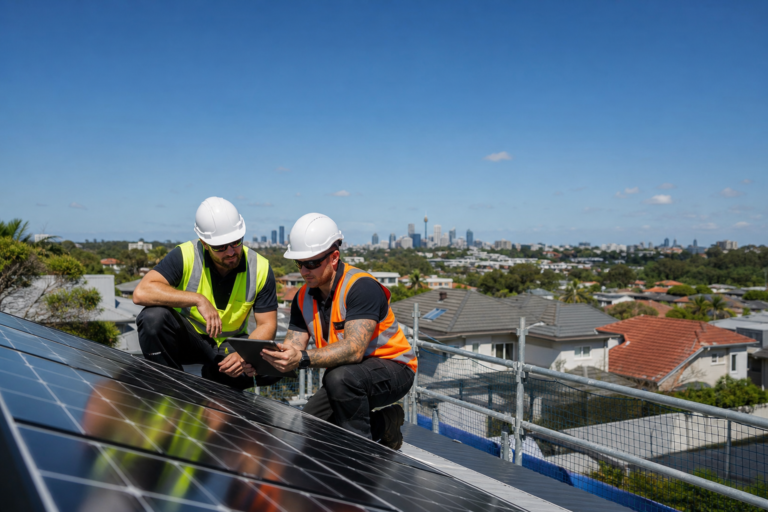
A proper installation journey usually starts with site assessment and load review. That includes roof suitability, switchboard condition, battery location, backup-circuit planning, and whether the home's usage pattern suits storage. After that comes system design, network approvals where required, installation, testing, commissioning, and monitoring setup.
What a smooth install process looks like
The strongest projects usually follow a sequence like this:
- Energy review: Look at usage habits, not just total consumption.
- Site inspection: Check roof space, shade, access, and electrical infrastructure.
- System design: Match panel capacity, inverter capability, battery role, and backup intent.
- Installation and commissioning: Fit, wire, test, and verify backup behaviour before handover.
- After-care: Confirm monitoring access and explain how to use the system sensibly.
That last part matters. A hybrid system isn't hard to live with, but homeowners should know how backup works, what the battery is prioritising, and what happens during an outage.
Where NSW incentives fit in
Battery-backed hybrid solar isn't operating on the fringe anymore. Policy support has played a role, especially in states and schemes that reward storage adoption. In NSW, the Peak Demand Reduction Scheme has rewarded batteries installed from 2020 onward, creating incentives for homeowners to add storage that can help stabilise the grid during peak periods, as noted in this market overview covering NSW battery policy support.
That doesn't mean every battery is automatically the right choice. Incentives can improve the case for storage, but they shouldn't override good system design. A battery still needs to match the property's usage profile and goals.
If you're trying to make sense of current program settings, eligibility, and the practical implications for a home installation, this overview of the NSW battery rebate launch and what homeowners need to know is a useful reference.
Seeing Hybrid Solar in Action in Sydney
A Sydney household in this position is easy to recognise. They already have high evening usage, they're tired of volatile bills, and they're planning to add an EV within the next few years. Their current solar helps during the day, but by dinner time they're back on the grid, right when power use rises across the house.
For that kind of home, hybrid solar solutions usually work best when the design starts with a simple question. What matters more, blackout backup or maximum bill reduction? In many cases, the answer is both, but one still needs to come first.
A practical example of a better fit
Take a family that wants refrigeration, lights, internet, garage access, and a few power points available during storms or summer outages. They don't need every appliance energised in blackout mode. They need the house to stay functional and calm.
That's a very achievable hybrid brief. The system can be designed around essential circuits, evening self-consumption, and future EV charging readiness without turning the project into an oversized, expensive attempt at full off-grid living.
What usually makes the outcome successful
The strongest results tend to come from three decisions:
- Clear priorities: The owners decide upfront what backup means to them.
- Realistic load planning: Heavy appliances are treated carefully instead of assumed.
- Expandability: The system leaves room for changing needs later.
When those pieces line up, the home feels different. You're not just generating solar. You're managing energy on your terms, with more resilience built in.
If you're weighing whether a hybrid system suits your property, the next step is a proper consultation built around your roof, your usage, and your plans for the next few years.
If you want advice on hybrid solar solutions, battery backup, EV charging integration, or the right solar setup for your NSW home or business, speak with Interactive Solar. Their team can assess how you use energy now, what you want protected during blackouts, and how to design a system that cuts grid reliance without adding unnecessary complexity.
Make Interactive Solar a preferred source in Google
One click tells Google to surface our articles more often in Top Stories, AI Overviews and AI Mode.