Best Commercial Solar Panel Companies NSW Guide
Last updated:
A lot of NSW business owners arrive at commercial solar in the same state of mind. The power bill has become unpredictable, margins are tighter than they should be, and every quote from a provider seems to promise savings without explaining what happens after the install crew leaves. That's usually the first mistake. Commercial solar isn't just a hardware purchase. It's a long-term operational decision that affects cash flow, site planning, maintenance, and how much control you have over future energy costs.
For small and medium businesses, the challenge is sharper because this part of the market is often underserved because the playbooks that work in residential or C&I don't translate cleanly, as noted by Solar Insure's analysis of the small commercial solar market. The same source notes that Australian SMEs employ approximately 3.2 million people, which helps explain why this gap matters. Many operators don't need an enterprise-scale energy strategy. They need a provider who understands a medical clinic, warehouse, retail site, workshop, or hospitality venue and can size a system around the way that business runs.
Beyond the Bill Shock Your Introduction to Commercial Solar
A common scenario looks like this. A business owner opens the latest electricity bill, sees another jump, and starts calling commercial solar panel companies for quotes. By the end of the week, they've got a few proposals with panel counts, inverter brands, and broad savings claims. What they usually haven't received is a clear explanation of fit. Will the system match daytime load, leave room for EV charging later, and still make sense years from now?
That's why the right starting point isn't “How cheap can I buy solar?” It's “Who can help me manage energy properly over time?” Good solar reduces exposure to volatile power costs, but the primary value is control. You're shifting part of your operating cost from a moving target into an asset on your roof.
Why small commercial sites get poor advice
Small commercial businesses often sit in an awkward middle ground. Residential installers may treat the project like a bigger house. Large-scale providers may chase only major industrial jobs. The result is generic design, generic proposals, and not much attention to operational detail.
What works better is a partner who asks practical questions early:
- When do you use the most power: During business hours, overnight, or across both?
- What's driving consumption: HVAC, refrigeration, machinery, lighting, or tenant loads?
- What's changing soon: Extra staff, added equipment, a battery, or EV chargers?
- Who will manage the site: An owner-operator, facilities manager, or landlord?
Those questions sound simple, but they reveal whether a provider is thinking about your business or just trying to close a sale.
Practical rule: If a company can't explain your energy profile in plain English, it probably shouldn't be designing your system.
There's also a sales reality many business owners never see. The strongest providers usually have better consultation processes, tighter follow-up, and clearer qualification of project fit. If you're curious how disciplined solar businesses structure that front end, this overview of scalable solar lead generation is useful because it shows how serious operators build a process around the right prospects, not just more enquiries.
Before you even request proposals, it helps to get your own footing on energy use. A practical starting point is learning how to reduce electricity bills in ways that combine efficiency and solar, rather than assuming panels alone will fix every cost issue. The businesses that get the best result usually treat solar as one part of a broader energy plan, not a standalone purchase.
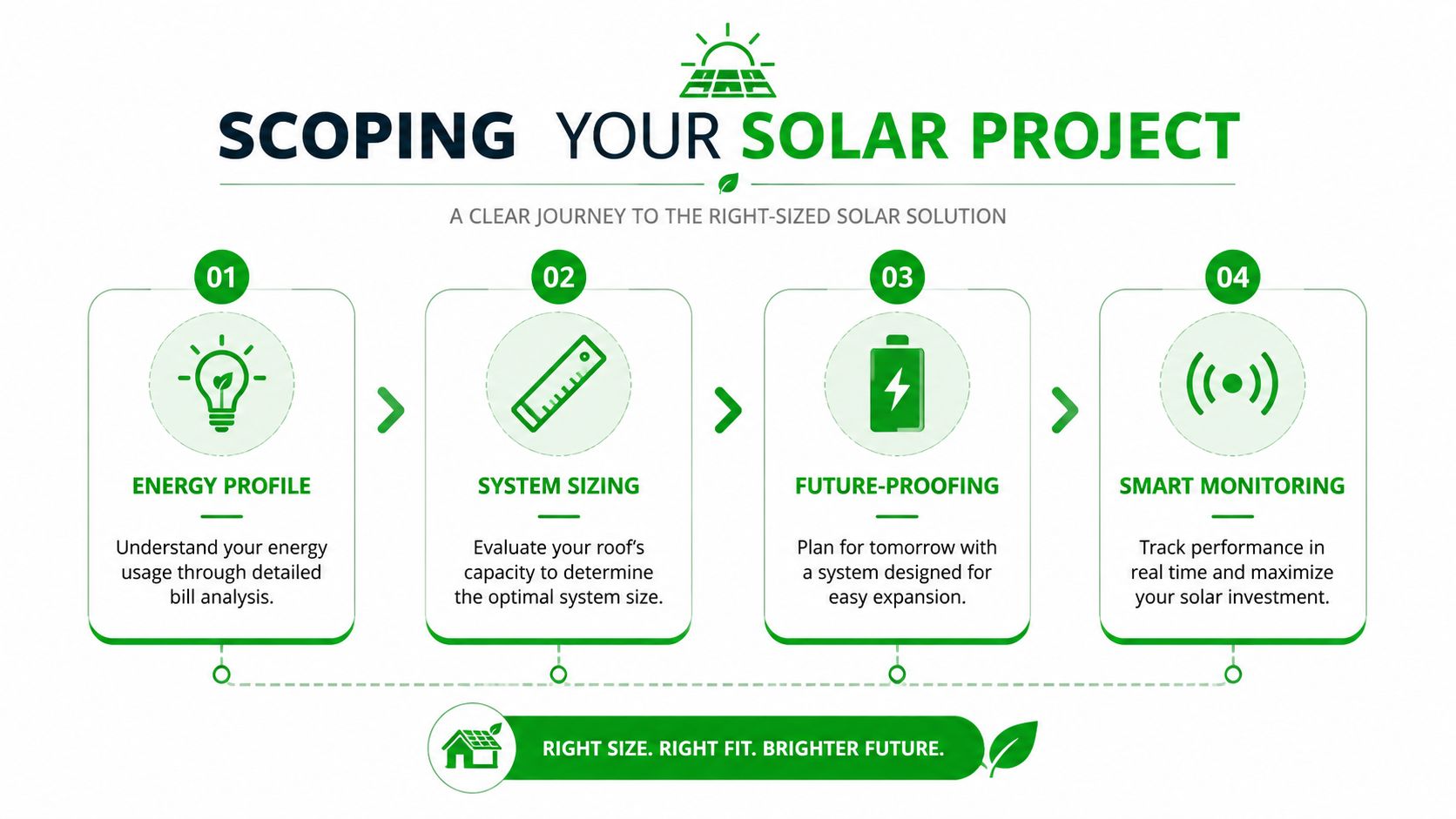
Scoping Your Project Needs Sizing and Future-Proofing
Most disappointing solar projects start with poor scoping, not poor equipment. If the system is sized without understanding your site's demand pattern, roof limitations, and future plans, you can end up with the wrong array before a panel is even installed.
Start with your last set of electricity bills and a simple site walk. You're trying to build an energy brief, not become an engineer.
Read the bill like an operator
Look for patterns that affect system design:
Base load
This is the power your business uses steadily through the day or night. Refrigeration, server racks, security systems, and some HVAC loads often sit here. Solar performs best when there's strong daytime demand to absorb generation on site.Peak demand windows
Some businesses spike hard at certain times. A gym might peak early morning and evening. A warehouse may ramp up across standard business hours. A café may surge around food prep and cooling loads. These peaks affect how much value solar can deliver without storage.Tariff structure
Time-of-use charges, demand components, and seasonal patterns all shape the business case. A quote that ignores tariff structure is incomplete.
Plan for the site you'll run later
Scoping shouldn't stop at current usage. Think about operational changes that could alter load over the life of the system.
A few examples matter more than people expect:
- EV charging plans: If you expect staff, customer, or fleet charging later, leave room in switchboard planning and consider cable pathways now.
- Battery readiness: Even if you're not installing storage immediately, your design should allow for it without expensive rework.
- Roof condition and access: Panel layout, walkways, and future maintenance all depend on a realistic roof plan.
- Business growth: New tenancies, machinery, HVAC upgrades, or extended operating hours can all shift the ideal system size.
A strong early design conversation also considers what happens around the building, not just on top of it. If your site needs civil works, trenching, drainage coordination, or charger foundations, this guide to successful project site preparation is worth reading because solar projects often intersect with broader site works more than owners expect.
A good scope turns “we want solar” into a working brief with load profile, roof constraints, future expansion needs, and operational priorities.
One more point. Future-proofing doesn't mean oversizing blindly. It means designing with sensible flexibility. The best commercial solar panel companies know when to stage a project, when to leave infrastructure ready for expansion, and when a business is better off solving an efficiency problem before adding more generation.
Evaluating a Company's Credentials and Expertise
Hardware matters. The company behind it matters more. In commercial solar, design accuracy, installation quality, and accountability decide whether the system performs as expected. That's why the safest way to compare commercial solar panel companies is to look past the sales deck and inspect how the business operates.
Start with the basics. Any provider you shortlist should be properly licensed for the work it performs and should be able to explain its compliance framework clearly. If a company gets vague when you ask about accreditations, electrical licensing, or who signs off the job, that's not a small issue. It's a warning.
In-house team or subcontract chain
This is one of the most revealing questions you can ask. Some providers manage design and sales in-house, then hand installation to subcontractors. That model can work, but it often creates blurred responsibility when details change on site or defects appear later.
An in-house team usually gives you tighter control in the places that count:
| What to check | Why it matters |
|---|---|
| Who designed the system | You want the design team close to the install reality, not working in isolation |
| Who installs it | Consistency improves when the same business owns workmanship |
| Who handles defects | One accountable contact is better than being bounced between companies |
| Who supports the system later | Ongoing service is easier when records and responsibility stay under one roof |
A serious commercial provider should also have a local presence you can verify. That could be a warehouse, office, showroom, or a clear operating base in NSW. Physical presence doesn't guarantee quality, but it does signal commitment and makes after-sales accountability more credible.
Questions that expose the real operator
Salespeople often know how to talk about panel brands. Fewer can explain process. Ask direct questions and listen for direct answers.
- Who will be on site during installation
- Do you use your own electricians or subcontract
- Who manages grid approvals and documentation
- How do you handle design changes if the roof layout differs from the proposal
- What happens if there's an issue after commissioning
If the answers sound scripted or fragmented, expect the project to feel the same.
There's also value in checking whether the business follows recognised consumer protections and clear documentation standards. This overview of the New Energy Tech Consumer Code is a useful reference because it shows what transparent conduct should look like in practice.
The best installer isn't the one with the slickest proposal. It's the one that can still be found, contacted, and held accountable years after commissioning.
That's the difference between a vendor and a partner. A vendor sells a system. A partner owns the result.
Comparing Solar Products and Performance Warranties
A lot of commercial proposals try to win the room with panel logos and headline wattage. That is rarely the deciding factor over the life of the system. The better test is whether the installer can show how the equipment will perform on your roof, how fast output will decline over time, and who carries the workload if something fails.
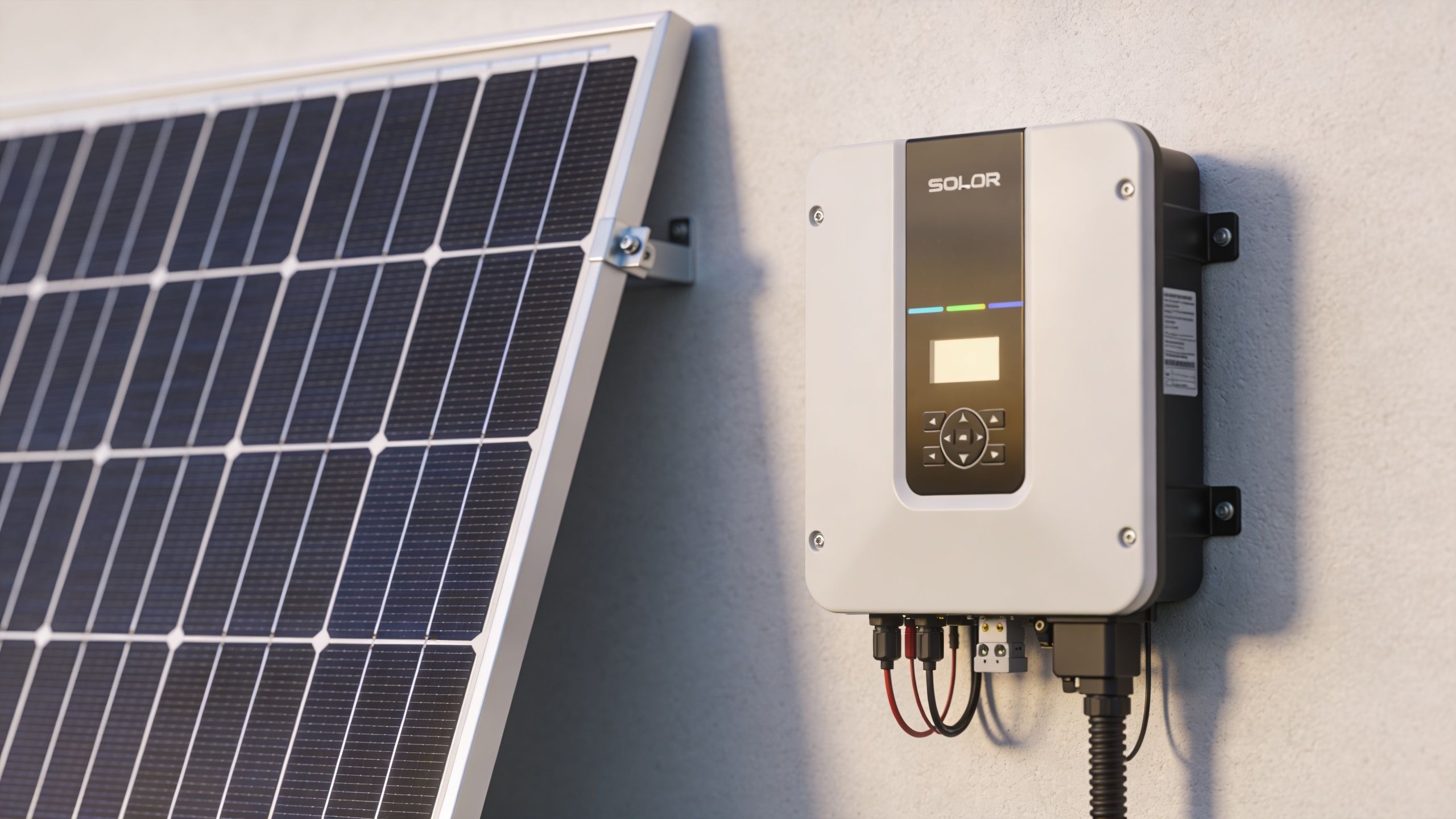
Panel efficiency still matters. It affects how much generation you can fit into a limited roof area. But it only matters in context. A business with tight roof space may need higher-efficiency modules. A site with plenty of usable roof area may get a better return from proven mid-tier panels backed by stronger local support. As noted in this commercial solar panel efficiency review, commercial panels commonly sit in the 17 to 23% efficiency range, and higher-quality panels also degrade gradually over time rather than holding flat output forever.
Degradation belongs in the decision, not the fine print
Weak proposals often slip through here. They show year-one production clearly, then glide past what happens in years ten, fifteen, and twenty. If degradation is missing from the modelling, the savings estimate is too optimistic. That affects payback, internal budgeting, and how the system stacks up against other capital projects.
The same discipline applies to inverters, optimisers, mounting systems, and monitoring. Panels get most of the attention, but service calls often start elsewhere. I would rather see a well-matched system with clear support pathways than a premium panel paired with unclear inverter warranty handling and outsourced service.
Here is what should be separated and explained in plain language:
- Product warranty covers defects in the panel or other hardware.
- Performance warranty sets the expected output level over the warranty term.
- Workmanship warranty covers installation issues such as faulty terminations, water ingress, or mounting defects.
- Inverter support terms often sit on a different timeline from panel coverage and should be reviewed on their own.
The question is not whether a warranty exists. It is whether your installer stays involved after the sale.
A partner will explain who monitors the system, who confirms underperformance, who manages the warranty claim, and whether labour, access equipment, and replacement logistics are covered. A vendor often stops at handing you a PDF from the manufacturer. That difference only becomes obvious when something goes wrong, and by then the cheap quote is no longer cheap.
Ask for direct answers to these points:
- Who diagnoses a fault and who lodges the claim
- Whether labour for replacement is included or billed separately
- How underperformance is measured against the original model
- What monitoring platform is included and who reviews alerts
- How long the installer has been supporting the brands it recommends
For businesses weighing newer module options, including bifacial designs, this guide to top bifacial solar panels to watch in 2025 is a useful technical reference. The practical takeaway is simple. Product selection should follow site conditions, energy profile, and serviceability. It should not be driven by whatever brand happens to be easiest for a salesperson to pitch.
The best equipment choice is usually the one your installer can stand behind for the next decade, not just the one that looks strongest on a datasheet today.
Navigating Financing Rebates and NSW Regulations
The commercial solar decision often stalls at the same point. The business can see the logic, but the proposal feels hard to trust because the financial model is cloudy. That usually happens when providers rush past method and sell the outcome instead.
The cleanest way to assess a project is to understand how payback is calculated. According to this commercial solar system guide, the payback period is calculated by dividing the total installed cost by the annual electricity savings. That's the core formula. Everything else depends on whether the inputs are realistic.

What should be inside the financial model
North American benchmarks cited in the same source show 4 to 8 year payback ranges, and it also notes that faster results often depend heavily on incentives. The source gives an example of a 30% federal tax credit materially improving payback in that market. That exact incentive structure is not the NSW framework, but the lesson still applies. Incentives can change the economics significantly, so a proposal that ignores them or oversimplifies them isn't complete.
In NSW, the model should account for:
- Installed system cost
- Expected annual bill savings
- The value of STCs
- Any relevant state-level rebates
- Operational assumptions behind the savings estimate
If any of those pieces are vague, challenge the proposal.
Choose the funding structure that matches the business
Different businesses prioritise different outcomes. Some want asset ownership. Others care more about preserving capital or matching repayments to savings. That's where financing structure becomes strategic, not administrative.
A provider should be able to talk through options such as outright purchase, finance arrangements, or service-based models in plain business terms. It must also explain trade-offs. Ownership may improve long-term value and control. Alternative funding structures may reduce upfront pressure but change who benefits most from the system's output over time.
A helpful test is to ask for one thing: the assumptions page. If the proposal can't show how savings were estimated, how incentives were treated, and what operating conditions the model relies on, you're not looking at a decision-grade document.
For NSW-specific context, this guide to solar rebates and government rebates in NSW is a practical reference point when you want to understand how incentives fit into the broader business case.
The Installation Journey and Long-Term Aftercare
A lot of businesses think the project ends when the panels go on the roof and the inverter powers up. That's only the handover point. The true test starts after commissioning, when the system has to perform through weather, operational changes, inverter alerts, and the slow drift that affects every long-life asset.
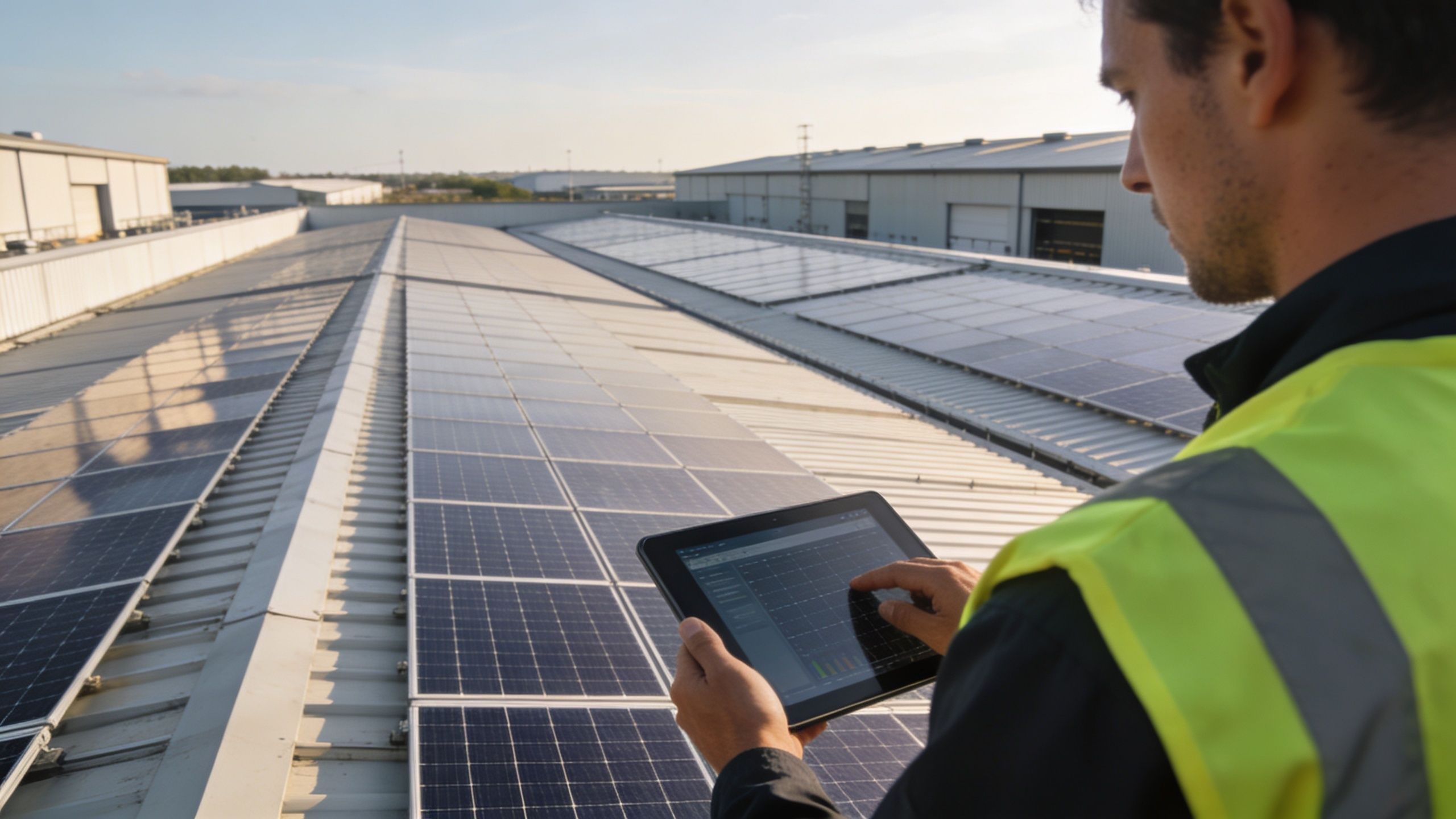
A professional commercial installation usually follows a disciplined path. Site assessment comes first, then engineering input where needed, design finalisation, approvals, installation, commissioning, and monitoring setup. If any provider presents installation as a quick roof job with paperwork added later, expect headaches.
What good installation management looks like
Well-run projects usually share a few traits:
- Pre-start clarity: Roof access, shutdown requirements, traffic flow, and safety controls are sorted before crews arrive.
- Design discipline: Cable routes, inverter placement, isolator locations, and access paths are planned properly.
- Commissioning records: The provider documents what was installed, how it was tested, and how the monitoring portal is configured.
- Operational handover: Someone shows your team what normal performance looks like and what alerts matter.
If you want a benchmark for workmanship expectations, this article on quality installations makes the point well. Advanced hardware can't compensate for weak execution on site.
The other issue is market stability. EnergySage's discussion of volatility in the solar sector notes that many conversations focus on installation while overlooking long-term accountability, even though businesses are making a 25-year asset commitment. The same source highlights why questions about monitoring, warranty claims, maintenance costs, and a company's commitment to responsive after-care and swift troubleshooting matter in a volatile market.
Aftercare is where the partner proves itself
This is the area many commercial solar panel companies undersell. They talk about panels and payback, then go quiet on service response. That's a mistake because post-installation support decides how issues are handled when they're inconvenient, not when they're theoretical.
A proper aftercare conversation should cover:
| Area | What to ask |
|---|---|
| Monitoring | Who watches system performance and how are faults flagged? |
| Service response | How quickly does the provider investigate faults? |
| Warranty support | Does the provider manage claims or leave you to chase manufacturers? |
| Maintenance | What routine checks are recommended for your site conditions? |
Here's a useful visual overview of what ongoing solar support and system care should involve:
If a provider can sell a 25-year asset, it should be able to explain how it will support that asset when output drops, alarms trigger, or a warranty claim needs action.
That's the practical difference between a transaction and a partnership.
Your Essential Checklist for Vetting Solar Providers
When you sit down with commercial solar panel companies, the goal isn't to collect the most quotes. It's to identify who can design, install, and support a system that fits your business for the long term. The fastest way to do that is to ask better questions than the average buyer asks.
Company stability and accountability
Start here because everything else depends on it.
How long have you been operating in this market?
You're not chasing a perfect answer. You're checking whether the business presents as established and serviceable, not temporary.Do you have a physical local base?
Office, warehouse, showroom, or service base all matter because they indicate operational presence.Who owns the project once the contract is signed?
Ask for a named contact and a clear chain of responsibility.Is your installation labour in-house or subcontracted?
This question often reveals more than the proposal itself.
Technical fit and design quality
At this juncture, poor proposals start to unravel.
Ask these directly:
What have you learned from my energy bills and site inspection?
A capable provider should answer without reading back generic assumptions.How did you size the system for my operating profile?
Look for discussion about daytime use, roof constraints, and future plans.What have you allowed for if we add batteries or EV charging later?
You want foresight, not patchwork.What risks do you see on this site?
Good designers mention roof condition, access, shading, switchboard limits, and staging issues.
A provider who identifies site risks early is usually safer than one who promises an effortless install.
Hardware, warranties, and support process
Many buyers often drift into brand-name shopping. Shift the focus to accountability.
- Show me the performance assumptions behind this proposal
- Explain the difference between product, performance, and workmanship warranty on this job
- Who handles manufacturer claims if a component fails
- What monitoring platform will I receive
- How will you know if the system is underperforming
Short, sharp answers are fine. Vague reassurance isn't.
After-sales support and service response
Most sales meetings gloss over this. Don't let them.
Use a practical final checklist:
- Fault response: What happens if the inverter trips or production drops unexpectedly?
- Monitoring alerts: Will someone contact us, or do we have to notice the problem ourselves?
- Maintenance guidance: What servicing or inspection schedule do you recommend for our site?
- Documentation: Will we receive handover documents, warranty information, and as-built records?
- Escalation path: If there's a dispute or unresolved issue, who handles it?
The provider worth backing is the one that stays clear and accountable when the conversation turns from sales to service. That's what protects the investment. Not the cheapest panel. Not the loudest savings claim. Not the flashiest brochure.
If you want a commercial solar partner that treats your system as a long-term business asset, not a one-off sale, Interactive Solar is worth speaking with. Their family-owned NSW team handles solar, batteries, EV charging, and after-care with in-house installers, licensed electrical work, and a practical focus on system quality, clear advice, and responsive support.
Make Interactive Solar a preferred source in Google
One click tells Google to surface our articles more often in Top Stories, AI Overviews and AI Mode.