How Much Battery Storage Do I Need? A NSW Sizing Guide
Last updated:
If you're asking how much battery storage do i need, you're probably already feeling the pinch at the worst time of day. The sun drops, everyone gets home, the oven goes on, the air con kicks in, and your house starts buying power from the grid right when NSW tariffs hurt the most.
That’s where a lot of online battery advice falls over. It gives you a generic number and ignores how homes in Sydney and greater NSW use energy. Your battery size shouldn’t come from a broad overseas calculator. It should come from your bill, your evening usage, your solar output, whether you want blackout backup, and whether an EV is now part of the picture.
A good battery system does two jobs. It stores your excess solar so you can use more of your own energy later, and it gives you useful backup when the grid drops out. The right size is the one that matches the way your home or business really runs. Not the biggest one on the brochure, and not the cheapest one that leaves you short.
Your Starting Point Understanding Your Energy Consumption
You get home on a January evening in Chipping Norton, the air con goes on, dinner starts, the hot water system has a run, and the EV might be plugged in by 8 pm. That is the period that matters most for battery sizing in NSW. Daily usage still matters, but the shape of your usage matters more.
Battery sizing starts with your own numbers. Pull out the bill first. Then check your smart meter or app if you have one. A battery is there to cover expensive grid imports after solar fades, so the question is not just how much electricity you use in a day. The question is how much you use after sunset, what your tariff charges during that window, and whether your daytime solar is being capped by export limits instead of earning much on feed-in.

Read the bill before you read the battery brochure
For homes on Ausgrid, Endeavour Energy, Essential Energy, or a retailer using time-of-use pricing, the bill gives you a decent starting point. Divide the total kWh on the bill by the number of days in the billing period and you have your average daily use.
Useful, yes. Enough, no.
I’ve seen plenty of homes with similar daily totals that need very different battery sizes. One family uses more power through the middle of the day while solar is producing. Another burns through power from 5 pm to 10 pm, right when import rates are higher and solar output has dropped away. The second home usually gets more value from a battery, even if the total daily kWh is the same.
What to pull from your bill and portal
Before talking to an installer, gather these details:
- Average daily usage in kWh. This gives the broad scale of the system you are considering.
- Seasonal peaks. Summer and winter bills usually show the pressure points, especially with ducted air con or electric heating.
- Time-of-use periods and rates. In NSW, this often matters more than the daily average because peak evening imports are what the battery is trying to avoid.
- Solar imports and exports. If you already have solar, check how much you still buy at night and how much surplus you send out during the day.
- Any new large load. An EV, pool pump, electric hot water, or induction cooking can change the sizing picture fast.
A practical rule is to size from the months that hurt your wallet, not the mild months that flatter your numbers.
Bills show totals. Monitoring shows the real problem.
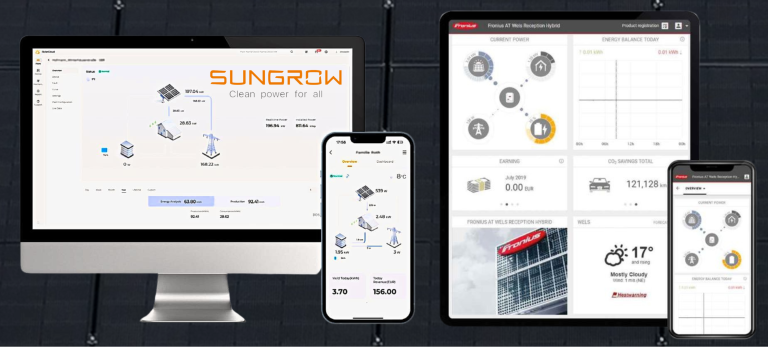
A smart meter graph, inverter portal, or home energy monitor shows the part the bill hides. It shows whether your house has a steady overnight base load, a sharp cooking spike at 6 pm, or a long evening ramp from cooling, entertainment, and EV charging all stacking up together.
That is where battery sizing becomes real. A home that exports plenty of solar at midday but imports hard between 4 pm and 9 pm is usually a better battery candidate than a home with the same quarterly usage spread evenly across the day.
If you want a simple appliance-by-appliance method, this guide on how to calculate home energy consumption is a useful companion to your bill data. If you want to trim usage before adding storage, have a look at these practical ways of reducing electricity bills at home.
Separate bill-saving loads from backup loads
Homeowners often bundle these together, but they are different jobs.
For bill savings, focus on the loads you want the battery to cover after solar production drops. In a typical NSW home, that might be cooking, lighting, refrigeration, TVs, Wi-Fi, cooling, and a few background loads through the evening and overnight.
For blackout backup, make a list of the circuits you want kept alive. Usually that is the fridge, some lights, internet, phone charging, garage door, and selected power points. Sometimes it includes medical equipment. Sometimes it includes part of the air con system, but that pushes battery size up quickly and needs careful circuit planning.
Whole-home backup sounds good on paper. In practice, many homes are better served by backing up the essentials and using the battery for tariff savings the rest of the time.
NSW-specific sizing traps people miss
Three things regularly skew battery sizing here.
First, time-of-use tariffs. A battery that covers a few expensive evening hours can make more financial sense than a larger unit sized to chase every last kWh.
Second, solar export limits. In parts of NSW, export can be capped or managed, which means excess solar has less value sent to the grid than stored and used later.
Third, EV charging. If the EV usually charges in the middle of the day from surplus solar, it may not push battery size up much. If it plugs in after work and charges through the evening peak, it changes the numbers in a hurry.
Good battery sizing starts with honest load data and a clear goal. That gives you a system that fits the house, the tariff, and the way you use power.
The Core Calculation Sizing Your Battery Capacity
Battery sizing gets clearer once the goal is clear. In NSW, the right number is usually the battery providing for the expensive evening import period, leaves some room for backup if you want it, and still makes sense against your tariff and export conditions.
The four parts that matter
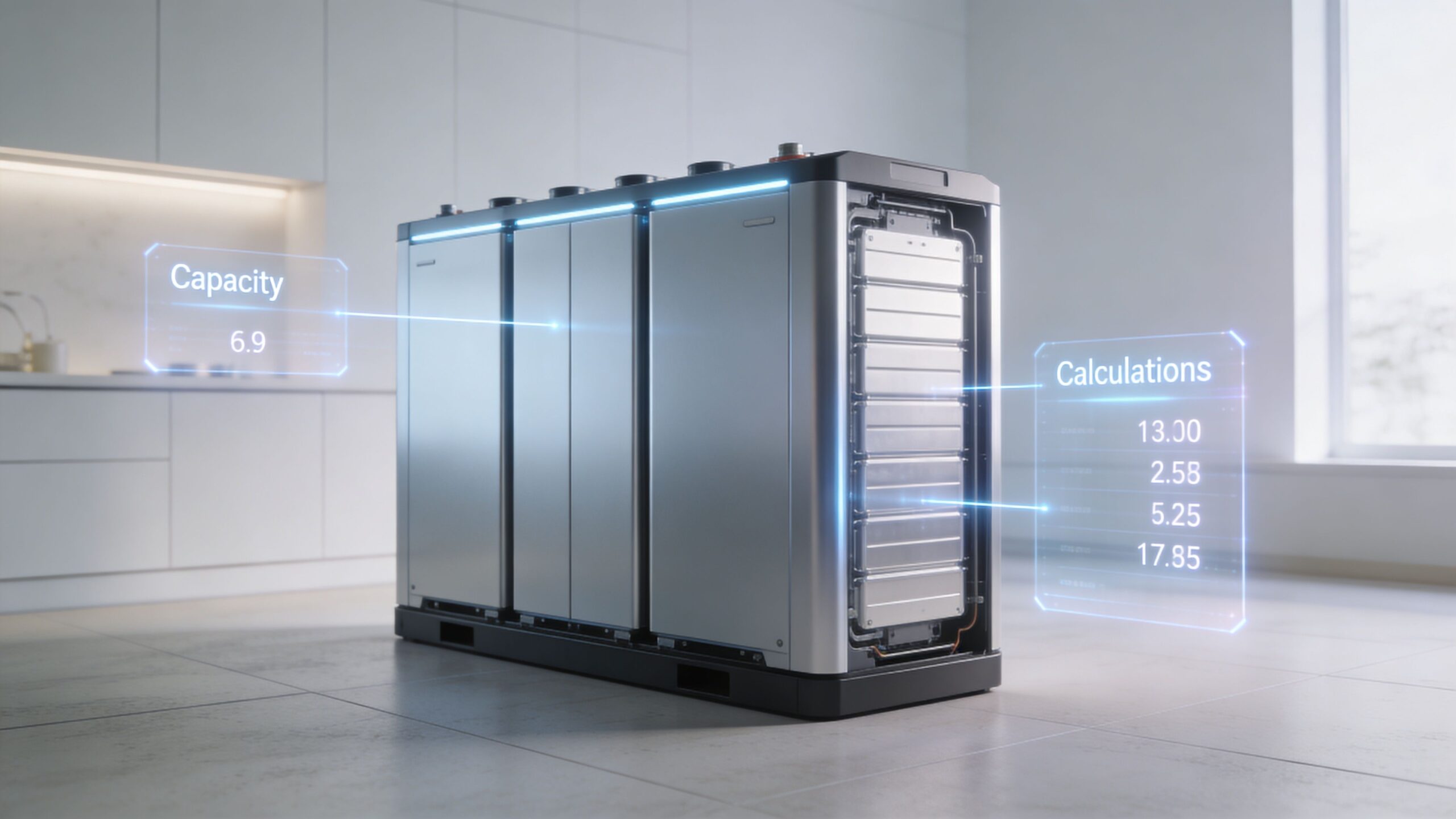
A practical battery calculation has four inputs:
- The load you want the battery to cover
- How long you want that load covered
- Usable capacity, not just advertised capacity
- Real operating losses
Miss one, and the battery can look right in a quote and feel undersized once it’s in service.
Start with the load you want shifted or backed up
Load is the part of your consumption the battery is meant to handle. For bill savings, that is usually the after-sunset period when solar production has dropped and grid rates are often higher. For backup, it is the selected circuits on the backup board.
That distinction matters in real jobs. A home might use a fair bit of energy across a full day, but if solar already handles most daylight demand, sizing the battery off total daily usage will overshoot. In Chipping Norton and similar parts of NSW, I’d rather look at the late afternoon through morning window, then check whether the battery can charge properly from your existing solar system.
A battery should solve a specific problem. It is there to carry certain loads for a certain period, not to make the daily usage figure look tidy.
Then decide the coverage period
This is your autonomy target. For grid-connected homes, that usually means hours, not days.
If the aim is tariff savings, a common target is enough storage to get through the evening peak and into the overnight shoulder period without importing too much expensive power. If the aim is backup, calculate from the circuits that stay live in an outage and the amount of time you want them to run. Fridge, lights, internet and a few power points are one thing. Adding ducted air con or heavy workshop loads is another.
NSW tariffs make this step more important than many online calculators suggest. A battery that covers a short, expensive time-of-use window can beat a larger battery that spends part of the year sitting half-used. The same goes for homes on tight export limits. If the network will not let you send much solar out, a battery with enough capacity to catch that surplus can earn its keep faster than the generic sizing charts imply.
Use usable capacity, not sticker size
Battery brochures usually lead with total capacity. What matters in practice is the usable portion.
That comes down to the battery’s allowed depth of discharge and the way the manufacturer manages the reserve. If a battery is sold as 10 kWh total and only around 9 kWh is usable, size it as a 9 kWh battery. Anything else causes confusion later, especially when the owner expects the full nameplate number every night.
This is also where product differences start to matter. Two batteries with similar advertised capacity can behave differently for backup, surge loads, and how much energy they let you access day to day. If you are comparing options, this battery comparison guide for usable capacity, backup support, and output limits is a useful shortcut.
Leave room for losses and seasonal reality
No battery system is loss-free. Energy is lost in conversion, charging, discharging, and standby operation. Winter solar production is lower too, which often matters more than the brochure efficiency figure.
A simple working formula is:
Battery size needed = load to be covered ÷ usable battery share, then add margin for losses and real operating conditions
For example, if the goal is to cover about 8 kWh overnight and the battery gives roughly 90 percent usable capacity, the raw maths points to just under 9 kWh before losses. In the field, that usually pushes the recommendation up a step rather than down. A battery that just scrapes through on a perfect day often disappoints on cloudy days, in winter, or once usage creeps up.
| Input | What it means in practice |
|---|---|
| Load | The part of your usage the battery is expected to carry |
| Coverage period | How long the battery needs to support that load |
| Usable capacity | The energy you can actually draw from the battery |
| Losses and margin | The allowance for conversion losses, weather, and changing household habits |
Two sizing mistakes that cost people money
The first is buying by price per kWh alone. A cheap battery is not good value if it empties before the peak period ends or cannot run the loads you assumed it would.
The second is ignoring future changes. An EV is the obvious one in NSW. If it charges from excess solar in the middle of the day, battery size might not need much change. If it arrives home every night and starts charging during peak tariff hours, the sizing answer shifts quickly, and sometimes the better fix is controlled EV charging rather than a much bigger battery.
A battery that matches your tariff, export limit, solar production, and evening load usually performs better financially than one sized from a generic online calculator.
This explainer is worth watching if you want the calculation shown visually before you start comparing systems:
Real-World Sizing Examples for NSW Homes and Businesses
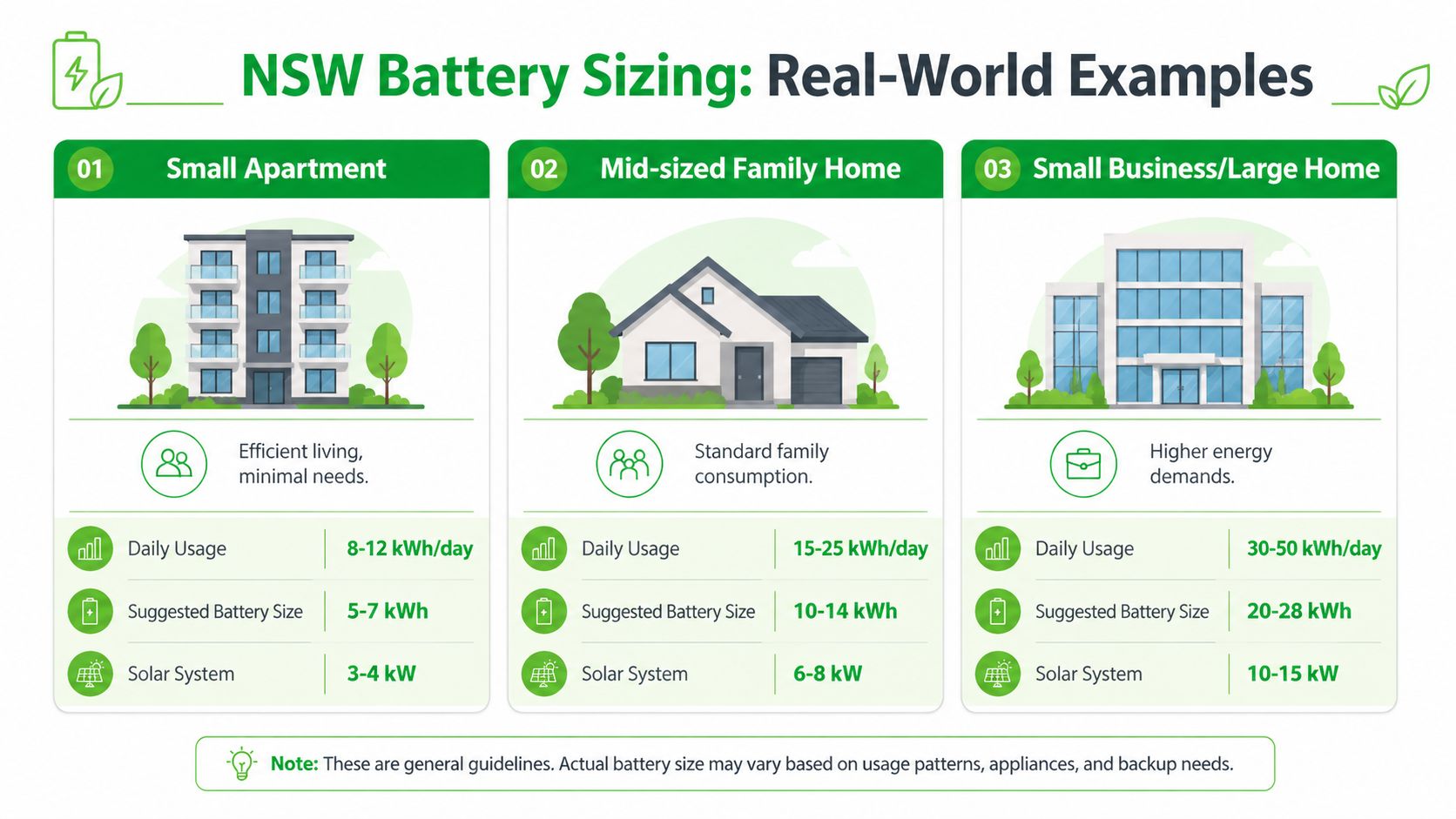
A battery looks sensible on paper until you put it into an actual NSW bill. The household that wants to avoid evening peak rates needs a different setup from the one hitting export limits at lunch, and both are different again from a site adding an EV.
Scenario one a Sydney family home chasing evening bill relief
A common suburban pattern is simple. Solar carries a fair bit of the house through the day, then the expensive imports start when people get home, the oven goes on, the lights come on, and the air con stays running into the evening.
In that situation, a battery in the low teens often lands in the right place. It is usually large enough to cover the evening gap without pushing the price so high that payback drifts out too far. It also leaves some room for backup settings if the owner wants to hold a reserve for the fridge, lights, internet, and a few power points during outages.
That is why units around the 10 to 15 kWh range are so common in family homes. A well-known example is the Powerwall class of battery. If you want to see how one fits into inverter choice, backup circuits, and system layout, this Tesla Powerwall 3 guide is a useful reference.
The practical test is straightforward. If the battery is empty well before off-peak rates return, it is too small for the job you gave it.
The right home battery usually covers the expensive evening window first. Backup is a bonus, not the sizing starting point.
Scenario two the same home after adding an EV
A key challenge for much sizing advice arises when the house itself may still suit a low-teen battery, but an EV can change the answer fast if charging starts after dinner.
An EV adds a large flexible load. Flexible is the key word. If the car is home in the middle of the day and you can charge it from surplus solar, battery capacity may not need to grow much at all. If the car arrives home flat each night and plugs in during peak tariff hours, the battery requirement jumps, and sometimes the smarter move is not a much larger battery. It is scheduled charging, load control, or a tariff change.
Power matters as much as storage here. A battery may have enough kWh on paper, but if it cannot supply the charger, induction cooktop, and ducted system at the same time, the grid still steps in. That catches people out.
A practical way to look at an EV home is to choose one of three jobs for the battery:
- Run the house in the evening, but leave EV charging separate
- Cover part of the EV load when there is spare solar
- Support both house and EV loads, which usually means a larger battery and higher inverter output
For many NSW households, option one gives the best value. The battery handles the expensive household peak. The car charges on a timer, on a controlled circuit, or on a sharper overnight tariff.
Scenario three a small business using solar for daytime capture and tariff control
Small business batteries are usually bought for economics first. A cafe, retail shop, workshop, or office often has enough daytime activity to use solar well already. The battery earns its keep by catching excess generation that would otherwise leave the site cheaply, then pushing that energy back into the late afternoon or early evening when grid rates are higher.
That changes the sizing logic. The goal is often not full backup and not overnight independence. The goal is targeted load shifting.
A business that runs hard through the day may only need enough storage to catch the excess that appears in a predictable solar window. A site with refrigeration, air conditioning, or process loads that carry on into the evening may justify more. Export limits also matter more than many owners expect. If the network caps what can be sent out, a battery can turn clipped or low-value solar into usable site energy instead of wasted opportunity.
I usually tell business owners to start with one question. How many kWh of good solar are you losing or exporting cheaply on a normal day? That answer does more for battery sizing than a generic autonomy target.
The NSW detail generic calculators miss
Two homes in the same suburb can use similar daily energy and still need different batteries.
One might have gas cooking, a modest evening load, and a retailer plan with a decent off-peak period. The other might have all-electric cooking, ducted cooling, a low feed-in tariff, and an EV plugging in at 6 pm. Daily consumption alone does not capture that difference.
The same applies to businesses. A battery that looks too small in a generic calculator can still be the right commercial size if it reliably shifts the site’s most expensive imports. A bigger unit is not automatically a better unit if it spends too many days half-used.
In NSW, the best battery size usually sits at the intersection of four things. Your evening load, your tariff windows, your export limit, and whether an EV is part of the picture now or soon.
Pairing Your Battery with Solar and the Grid
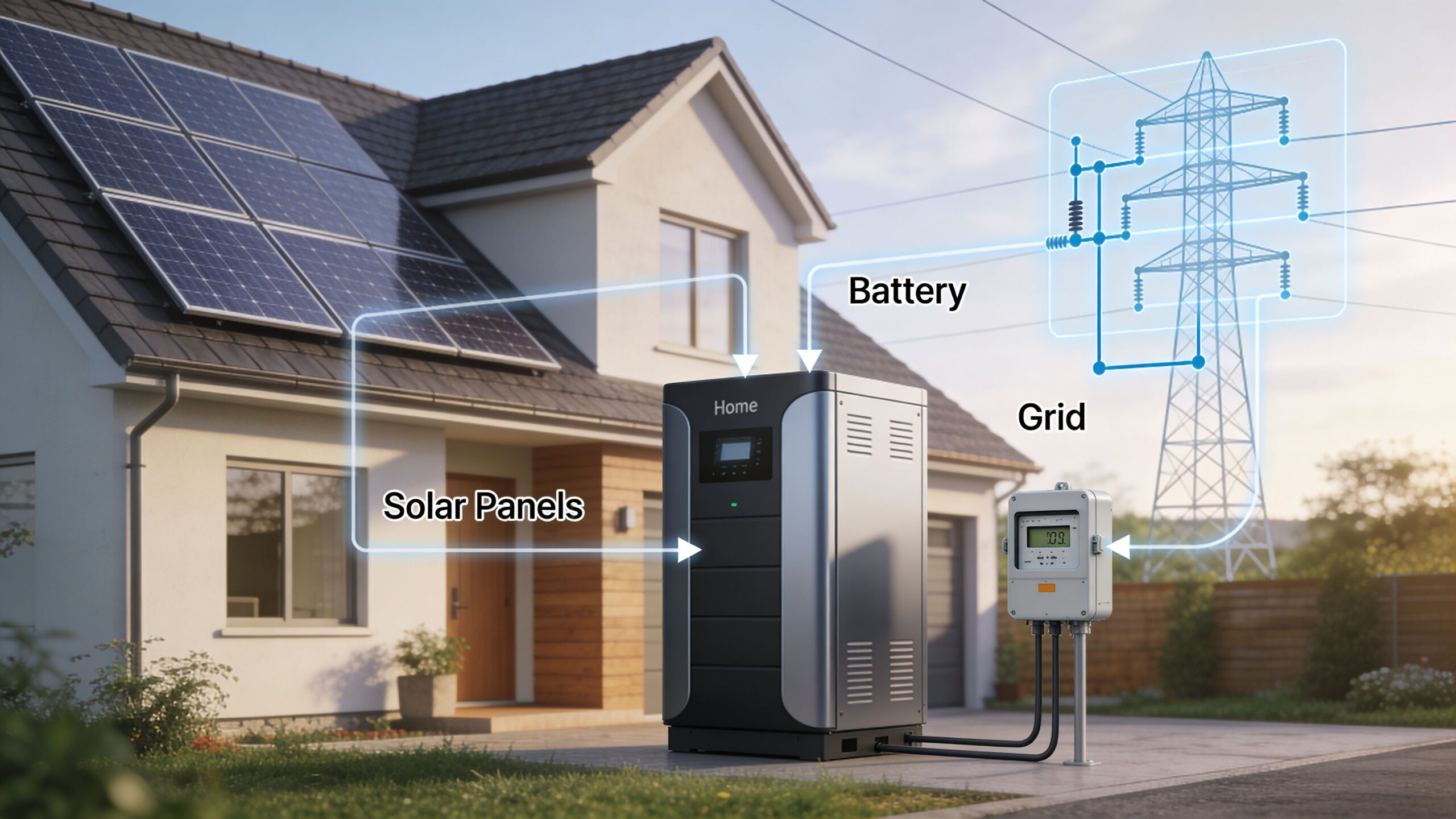
A battery works best when the solar array, inverter settings, and tariff plan are all pulling in the same direction. I see plenty of NSW systems with a decent battery on paper that still underperform because the solar side is undersized, the charging window is too short, or the grid settings were never tuned properly.
Solar has to cover today and charge tonight
Your panels have to do two jobs before a battery starts paying its way. They need to run the house during the day and still leave enough surplus to charge the battery for the evening peak.
That pairing matters more in NSW than many generic calculators allow for. A battery can look well sized against daily usage, then spend winter half full because the array cannot produce enough surplus after daytime loads are covered. The reverse happens too. An oversized array with a small battery can leave you exporting cheap power in the middle of the day, then buying expensive grid power after sunset.
The answer is not always a bigger battery. Sometimes the better fix is more panel capacity, especially on homes that are adding air conditioning or planning an EV within the next year. Anyone weighing that trade-off should look at the broader cost of solar panels in NSW, because battery value rises or falls with the amount of usable solar you can produce.
Tariffs decide whether storage saves money or just looks good
In NSW, battery sizing is tied to tariff structure as much as household consumption. If your retailer has a sharp evening peak and your feed-in tariff is modest, stored solar is usually worth more on site than exported.
That changes the sizing target. The goal is often to carry the home through the expensive import window, not to cover every last kilowatt-hour until sunrise. For many households, the most useful battery is the one that consistently gets through the dinner-to-bedtime stretch, because that is where the bill pain usually sits.
Grid charging can also be part of the plan. On the right time-of-use tariff, some owners charge partly from cheap off-peak power and save the battery for the expensive period the next day. That approach only makes sense if the tariff spread is wide enough and the battery controls are set up properly.
The inverter and switchboard determine how well the system behaves
Panels and battery modules get the attention, but the inverter handles the primary decision-making. It controls charge rates, discharge timing, backup behaviour, and how the system responds when solar production, house loads, and grid prices all change at once.
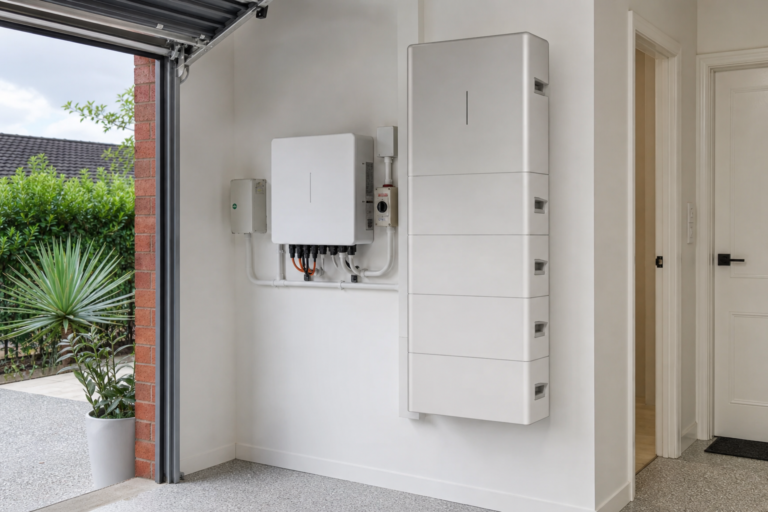
The switchboard matters too. If backup circuits, battery connection points, or protection gear are poorly planned, the system can become awkward to live with or costly to expand later. Good electrical design is less glamorous than battery branding, but it decides whether the system runs cleanly and safely. If you want a plain-English primer on the protection side, this guide to sizing circuit breakers covers the basic logic.
Where VPPs fit in NSW
A Virtual Power Plant can improve battery economics for some owners, but it comes with trade-offs. You may get bill credits or participation payments, but you also give up some control over when the battery charges and discharges.
That matters if your main goal is evening bill reduction, backup reserve, or EV support at home. Before joining a VPP, check three things. Whether the platform lets you keep a minimum backup reserve, whether your battery and inverter are fully compatible, and whether the payment model beats the value of using more of your own solar first.
Good battery sizing does not stop at the kWh number. It has to work with your panel output, your retailer plan, your export conditions, and the way your home will use power over a normal NSW week.
Looking Beyond Capacity Installation and Future-Proofing
A battery can be the right size on paper and still disappoint in daily use. I see that most often when the headline kWh looks fine, but the battery cannot deliver enough power at once, the switchboard was cramped from the start, or the system was installed with no allowance for an EV, extra solar, or backup expansion later.
Power output can be the real bottleneck
Capacity tells you how long a battery can run loads. Power rating tells you what it can run at the same time.
That distinction matters in NSW homes with ducted air conditioning, induction cooking, pool equipment, and an EV charger in the mix. A battery may hold enough energy to cover the evening, yet still fall short during the busy hour when dinner is on, the air con is running, and the car is charging. In that case, the issue is not storage. It is output.
For practical sizing, ask two separate questions:
- How many kWh need to be shifted from solar hours into the evening
- What loads are likely to run together during peak periods or backup mode
Those answers shape different parts of the system.
Usable capacity matters more than brochure capacity
The number that matters in real life is the energy you can use, not the biggest figure on the spec sheet. Battery chemistry, discharge settings, and the way the manufacturer manages reserve all affect that.
Heat also matters, especially through western Sydney summers. A battery tucked into a hot garage with poor airflow may still work, but high temperatures are harder on electronics and can affect how consistently the system performs over time. Location, ventilation, and manufacturer clearance rules should be treated as part of sizing, because they influence how well the battery holds up in normal NSW conditions.
Installation quality shows up later
Battery work is electrical design first and product selection second. Backup circuits need to match the loads you care about. Cable routes and protection devices need to suit bidirectional power flow. The switchboard needs enough room for clean isolation, metering, and future additions.
If you have ever looked at sizing circuit breakers, the same basic principle applies here. Protection has to match actual operating conditions, not a rough guess. With batteries, those conditions change throughout the day as the system charges from solar, discharges into the home, responds to tariffs, and switches behaviour during outages.
A tidy install usually costs less trouble later.
Future-proofing should match likely changes, not wishful thinking
Future-proofing does not mean buying the biggest battery available. It means setting up the parts that are expensive to rework so you are not paying twice.
If an EV is likely within the next couple of years, say that early. In many NSW homes, the car becomes the single biggest new load, and it can change the right battery size, inverter choice, and switchboard layout. The same applies if you may add more panels because your current export is capped and you want to capture more midday solar on site instead of sending it back for a low feed-in rate.
VPP participation also belongs in this discussion, because it can affect reserve settings, discharge timing, and how much control you keep over your own battery. Before signing up, read a plain-English guide to virtual power plants in Australia and the trade-offs involved. For some households it improves the numbers. For others, especially where backup or evening self-use matters most, it can be a poor fit.
The best battery plans leave room for the next likely change without overspending on day one.
Take Control of Your Energy Future
The honest answer to how much battery storage do i need is that it depends on what you’re trying to fix. If the goal is evening bill relief, size for that. If it’s blackout backup, size around the circuits that matter. If an EV is in the driveway or a business is trying to capture more daytime solar, the answer shifts again.
The good news is that battery sizing doesn’t need to be guesswork. Your electricity bill, your load timing, your solar production, and your future plans will point to a workable range pretty quickly once someone reads them properly. That’s how you avoid the two bad outcomes. Buying too little and regretting it every night, or buying too much and never using what you paid for.
A well-matched battery gives you more control over your bills, more use from your solar, and better resilience when the grid misbehaves. That's where the value lies. Not a headline capacity number on its own, but a system that fits the way your property uses power.
If you want a battery sized around your real usage instead of a generic online estimate, talk to Interactive Solar. Their team in Chipping Norton handles solar, batteries, and EV charging with in-house installers, practical system design, and straight answers about what will work at your property and what won’t.
Make Interactive Solar a preferred source in Google
One click tells Google to surface our articles more often in Top Stories, AI Overviews and AI Mode.