
Solar Battery Installation Cost in NSW: 2026 Guide
Last updated:
Your solar panels are working all day, then the sun drops, the family gets home, the oven goes on, the air con starts, and your most expensive power use lands right in the evening peak. That’s the point where a lot of Sydney homeowners start looking up solar battery installation cost and expecting a simple number.
It rarely works that way.
A battery isn’t a boxed appliance you pick off a shelf and plug in. It’s an electrical integration project. The battery itself matters, but so do the inverter setup, your switchboard, the age of your existing solar system, the grid-connection rules in NSW, your blackout priorities, and whether the install is being done as part of a clean new solar build or as a retrofit.
That’s also why two quotes can look similar on the front page and be completely different in real value. One may include proper backup configuration, compliance work, and compatibility checks. Another may leave out the awkward parts until the installer opens the switchboard and finds the job is more involved than expected.
Is a Solar Battery Worth It for Your Sydney Home
At 6:30 pm in a Sydney home, the solar production is gone, the lights are on, dinner is cooking, and the air conditioner is running. If the house has solar but no battery, that evening demand usually comes straight from the grid. If the house has a well-matched battery, some of that daytime generation is still available when power is most expensive and most useful.
That is the part many homeowners care about first. Lower grid reliance in the evening, more control over how solar is used, and optional backup for selected circuits if the system is designed for it.
Whether a battery is worth it depends less on the battery alone and more on the house it is being fitted to. A new solar and battery system is usually cleaner to design because the inverter strategy, switchboard layout, protection devices, and backup circuits can be planned together from day one. A retrofit can still be the right move, but it often carries extra labour, compatibility checks, and switchboard work that homeowners do not see in the headline figure.
Value depends on the job, not just the product
A battery usually stacks up better when the home has a clear reason to use one:
- High evening consumption: families who cook at home, run cooling late, or have pool and appliance loads after sunset
- A real backup requirement: keeping the fridge, lights, internet, garage door, or a medical circuit running during outages
- Future electrification plans: EV charging, heat pump hot water, or replacing gas appliances with electric loads
- Low export value: households that send out plenty of excess solar during the day but get limited benefit from exporting it
I tell homeowners to start with one practical question. What job do you want the battery to do in your house?
Sometimes the answer is bill reduction. Sometimes it is backup. Sometimes it is preparing the home for heavier electric loads over the next few years. Those are different design briefs, and they can lead to very different system recommendations.
Retrofit premiums are where many quotes separate
For an existing solar home in NSW, the decision is not only about storage capacity. It is also about what the installer has to work through to integrate the battery properly. Older inverters may not be battery-compatible. Some switchboards need upgrading before a battery can be connected safely and compliantly. Backup setup can add another layer again, because the protected circuits have to be identified, separated, and tested correctly.
That is why a retrofit quote can look expensive compared with a battery added to a new system. The battery may be the same. The installation pathway is not.
If you are comparing brands and system types before asking for quotes, this battery comparison guide for NSW homeowners is a useful place to start. It helps clarify the difference between all-in-one units, modular systems, and backup-ready configurations.
Good decision-making here is similar to the way homeowners assess the cost of installing skylights. The product matters, but roof type, access, integration work, and finishing details often decide the project's actual cost.
The best battery outcomes come from matching storage size, backup expectations, and site conditions to the way the household uses power. The poor outcomes usually come from chasing a generic payback promise without checking whether the existing solar system and electrical infrastructure are straightforward to retrofit.
Deconstructing Your Quote The Core Cost Components
A battery quote often looks simple on page one. Then the scope starts to widen. A battery needs a place to mount, a compliant electrical pathway, compatible control equipment, protection devices, testing, and paperwork. In retrofit jobs across NSW, that stack is usually where homeowners find the gap between a basic sales number and the final installed scope.
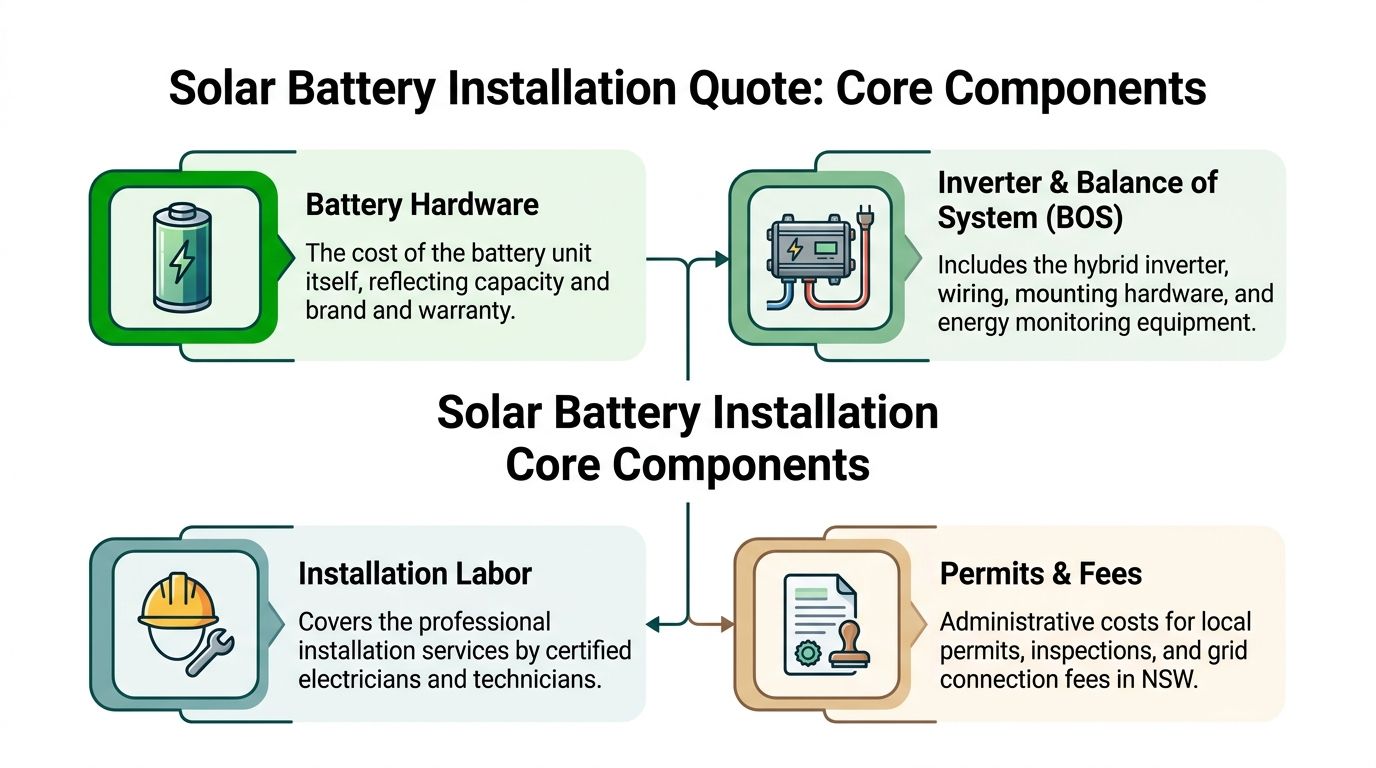
The clearest way to assess a proposal is to separate it into four parts. Battery hardware. Inverter and balance of system. Installation labour. Permits and compliance.
Battery hardware
This is the part homeowners notice first, and it should be. The battery unit sets the storage capacity, chemistry, warranty terms, physical footprint, and in many cases the monitoring platform you will live with for years.
For most homes in Sydney, LFP chemistry is now the standard discussion because it suits residential cycling and safety expectations well. What matters in a quote is not just the brand badge on the casing. Check the usable capacity, whether expansion is possible later, how warranty throughput is written, and whether the unit is approved to work cleanly with the rest of the proposed system.
On a new build or a full solar-and-battery install, hardware selection is usually more straightforward because the battery, inverter, and solar can be designed together from day one. On a retrofit, even a good battery can become the easy part if the existing system forces compromises elsewhere.
Inverter and balance of system
At this stage, quotes often separate into careful design and guesswork.
A battery has to charge, discharge, measure site loads, coordinate with solar production, and in some cases hold up selected circuits during an outage. That can mean a hybrid inverter, an AC-coupled battery inverter, consumption metering, CT clamps, isolators, circuit protection, communications gear, enclosure changes, and backup hardware. None of that is decorative. It is what makes the system function properly and pass inspection.
In practical terms, this category is often the difference between a tidy new installation and a more expensive retrofit. If the existing inverter is not battery-compatible, or the monitoring and control setup is limited, extra equipment gets added quickly. For homeowners weighing whether to keep, upgrade, or rebuild parts of an older solar setup, this NSW solar panel cost guide gives useful context.
A quote that just says "battery with inverter included" is not saying enough.
Installation labour
Labour covers far more than mounting the battery and pulling a few cables. It includes site assessment, cable routing, mechanical fixing, AC and DC terminations where applicable, switchboard work, protection upgrades, commissioning, testing, labelling, and system handover.
Retrofits usually carry more labour risk than new installs because electricians are working around an existing system, not building from a blank page. Cable paths may be poor. Wall space may be limited. The switchboard may be full, undersized, or non-compliant by current standards. Backup circuits, if requested, need to be identified, separated, and tested properly. That takes time, and it should.
If a quote barely describes the electrical scope, the full job cost may not be visible yet.
I would treat vague labour allowances as a warning sign, especially on older homes. Good installers specify what is included, what assumptions have been made about the existing infrastructure, and what could trigger variation after inspection.
Permits and compliance
This part rarely sells the job, but it protects the homeowner.
Battery systems in NSW need the right approvals, product compatibility checks, network compliance, shutdown and protection settings, and documented commissioning. Some sites also need extra assessment because of switchboard condition, fault levels, meter configuration, or the way the original solar system was installed. Those issues show up more often on retrofits than on integrated new systems.
That is one reason retrofit pricing can feel inconsistent between quotes. One contractor may have allowed for the compliance pathway properly. Another may have assumed the existing installation will accept the battery without much change, only to revise the scope later.
The pattern is similar to the cost of installing skylights. The visible product is only part of the project. Access, integration work, approvals, and site constraints often decide the final scope. With batteries, the added layer is electrical compliance and grid interaction.
Key Factors That Influence Your Final Investment
A battery quote can look simple until the installer has to make it work on your house, with your switchboard, your existing solar, and the circuits you want backed up. That is where project costs start separating. In Sydney, the biggest spread in battery pricing often comes from retrofit complexity, not from the battery box on the wall.
Capacity and household load
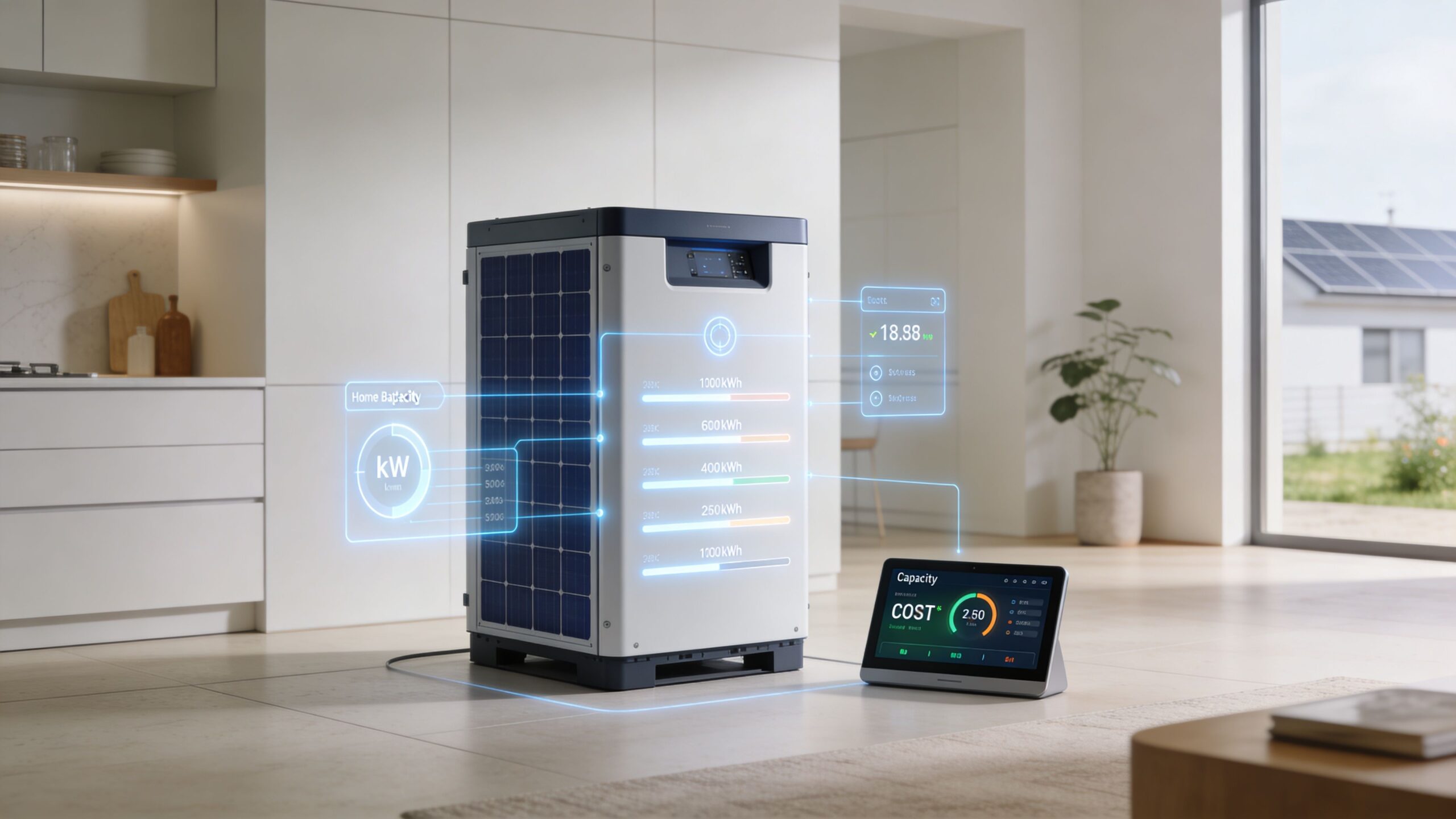
Battery size still matters, but the right size depends on what the home is trying to do.
Some households want to shave evening grid use and keep the fridge, lights, internet and garage door running during an outage. Others want the battery to carry heavier overnight loads, support ducted air conditioning for part of the evening, or prepare for an EV in the next few years. Those are very different design briefs, and they lead to different storage sizes, backup arrangements, inverter choices, and cabling scope.
Good sizing starts with interval data if it is available, then a close look at daily habits and future load growth. Without that, the battery can be oversized and underused, or undersized and disappointing from the first summer.
Battery chemistry and product quality
For residential work in NSW, LFP batteries are now the standard option in many quotes because they suit home installations well and have a good track record for safety and cycle life. That does not mean every LFP product performs the same in the field.
The difference often comes down to battery management, thermal design, enclosure rating, warranty support, software stability, and whether the manufacturer has a reliable service presence in Australia. Homeowners tend to focus on usable kilowatt-hours. Installers spend just as much time looking at how the system behaves after three or five years, how faults are diagnosed, and how realistic the warranty process will be if a module fails.
Cheap hardware can cost more later.
Backup scope and switchboard work
This is one of the most misunderstood parts of a battery quote.
“Battery backup” can mean a small protected loads circuit, a dedicated essential services sub-board, or a broader whole-home backup design with load management. Each option changes the amount of switchboard work, protection gear, testing, and commissioning required. On an older home, it can also expose issues that were not obvious before the battery was proposed.
I see this regularly on retrofits. The owner asks for blackout protection. Once we inspect the board, we find limited space, older breakers, mixed circuit identification, or a main switchboard that was never set up for selective backup. At that point, the actual cost driver is no longer just battery capacity. It is the electrical rework needed to build a system that operates safely and predictably.
AC-coupled versus DC-coupled design
System architecture has a direct effect on labour, equipment compatibility, and how much adaptation is needed on site.
An AC-coupled battery is often the practical path when solar is already installed. It can let the homeowner add storage without replacing the existing solar inverter, but it may involve extra integration work, additional protection equipment, and more switchboard changes. That is why retrofit quotes for AC-coupled systems vary so much between properties.
A DC-coupled setup is often cleaner on a new solar-plus-battery project because the system is designed as one package from the start. The cabling path, inverter selection, monitoring platform, and battery location can all be planned together. That usually means less compromise and fewer hidden integration tasks.
| Setup | Usually suits | Main advantage | Main trade-off |
|---|---|---|---|
| AC-coupled | Existing solar homes | Can add storage without replacing the whole PV system | More integration work is common, especially at the switchboard |
| DC-coupled | New solar-plus-battery installs | Cleaner system design and better coordination between components | Less practical if the home already has incompatible solar hardware |
Installation conditions and future plans
Site conditions also shape the final investment. Battery location, wall construction, clearances, cable run length, accessibility, shade, weather exposure, and distance back to the switchboard all affect labour and materials. A battery mounted near the board in an accessible garage is a different job from one that needs a long protected cable route across a finished home.
Future plans matter too. If the owner expects to add EV charging, go all-electric, or expand storage later, the system should be selected with that in mind now. It is usually cheaper to allow for expansion pathways early than to redo parts of the installation later.
If timing is part of the decision, review the current NSW battery rebate launch details and eligibility changes before signing a contract. Policy settings can affect payback expectations, but they do not remove the need for a design that suits the home properly.
A Tale of Two Projects New Install vs Retrofit
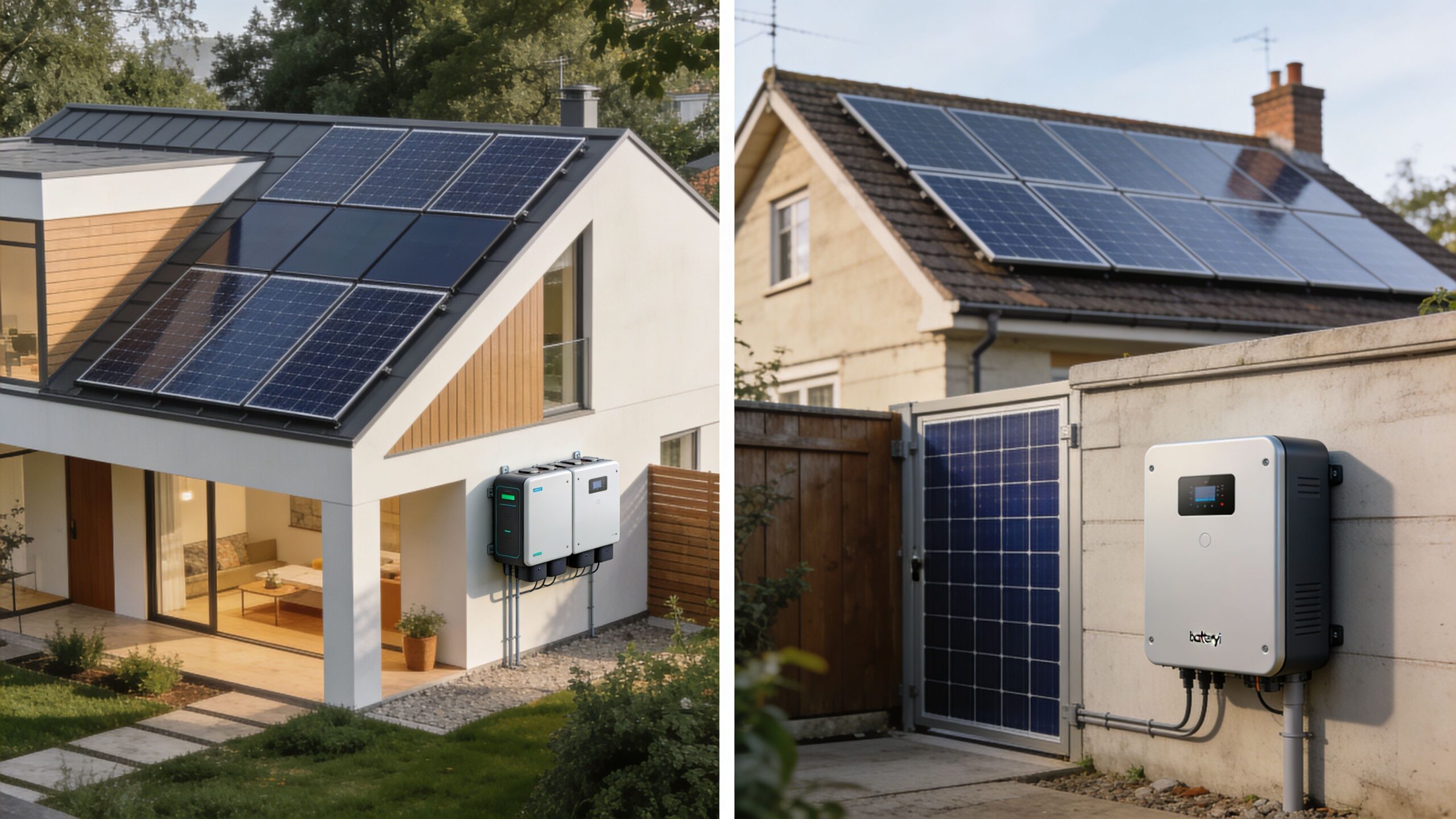
The easiest way to understand solar battery installation cost is to compare two jobs that sound similar from the street but aren’t similar at the switchboard.
The clean slate install
A homeowner is building or replacing the whole energy system at once. The solar array, battery, inverter strategy, monitoring platform, and backup circuits are all planned together before installation starts.
This type of job is usually cleaner for one reason. The electrician isn’t trying to make old and new equipment cooperate after the fact. Cable runs are planned once. The wall location is chosen with battery clearances in mind. The inverter is selected for battery compatibility from day one. The switchboard can be designed around the complete system rather than adapted later.
In practical terms, fewer surprises show up because the system architecture is coherent from the start. The homeowner usually gets a neater result, a simpler commissioning pathway, and clearer accountability if anything needs adjusting after handover.
The retrofit project
Now take a common Sydney scenario. The home already has solar installed from several years ago. The owner wants to add battery storage because evening bills are still painful.
On paper, that sounds straightforward. In reality, retrofit work is where hidden complexity often appears.
The existing inverter may not be battery-compatible. The switchboard may need reconfiguration to support backup circuits or meet current compliance expectations. The metering and monitoring setup may not communicate properly with the new battery platform. The old solar system may still function, but not in a way that allows an efficient battery addition without extra work.
That’s why the market gap identified in this SolarReviews discussion of battery cost blind spots matters. It notes that a common problem is the failure to quantify cost multipliers for retrofitting batteries into existing systems, and that many homeowners are surprised by mandatory electrical upgrades or inverter replacement costs missing from generic quotes.
A retrofit quote that doesn’t ask detailed questions about the existing inverter, switchboard, and protection gear usually isn’t detailed enough yet.
What makes retrofit pricing harder to predict
Retrofit jobs carry more variables because the installer is inheriting decisions made by someone else, at another time, under different product standards and household needs.
Typical friction points include:
- Older switchboards: they may be safe for the current solar system but not ideal for battery integration or backup separation.
- Non-hybrid inverters: these can work fine for solar-only generation while creating a bottleneck for storage.
- Monitoring mismatch: the battery may need extra controls or CT placement to manage import and export correctly.
- Space and access issues: the best wall location for a battery might not line up with the original solar equipment location.
Why homeowners should insist on a site-specific scope
The right way to price a retrofit is to inspect first, not assume. A proper site visit should identify what can stay, what must change, and what optional improvements are worth discussing.
That’s also where experienced installers separate themselves from generic quoting platforms. A generic quote tends to assume compatibility. A real inspection tests it.
When a retrofit is simple, battery storage can be added with minimal drama. When it isn’t, the hidden work isn’t “extra”. It’s the actual job.
Maximising Your Return on Investment in NSW
A common Sydney scenario looks like this. The home already has solar, the afternoon air conditioning runs hard, dinner loads hit after sunset, and the bill still climbs because most of the expensive grid use happens when the panels are no longer producing. That is where a battery can improve return, but only if the system is sized and configured around how the house uses power.

Shift energy into the expensive hours
For many NSW households, the strongest financial case is simple. Store excess solar generated through the middle of the day, then use it in the evening when grid electricity costs more.
That matters most for homes on time-of-use tariffs, but tariff structure is only part of it. A key question is whether the house has enough usable solar surplus to charge the battery properly and enough evening demand to empty it in a useful way. A battery that sits half-used for long periods will not deliver the same return as one that cycles consistently.
Homes with an existing solar system need this checked properly. I have seen retrofit sites where the customer expected large bill savings, but export history showed there was not much spare solar left after daytime appliances had done their work.
Use incentives and VPPs with a clear head
Rebates, incentives, and virtual power plant offers can improve the numbers. They should sit behind the core case, not replace it.
The better approach is to ask three practical questions. Does the battery still make sense with your normal load profile. Are the VPP terms reasonable. Are you comfortable with how much control the provider has over charging and discharging events.
Some households are happy to trade a degree of control for extra value. Others want the battery kept mainly for self-consumption and backup readiness. Neither approach is wrong, but the quote should reflect the priority clearly.
Backup value depends on design, not brochure promises
Return is not only about the bill.
For some households, the value lies in keeping key circuits alive during an outage. Fridge. Internet. Lights. Garage door. Medical equipment. A home office. That benefit matters more in some homes than any simple payback calculation.
Backup also adds design decisions that affect cost and performance. The installer may need to separate essential circuits, allow for surge loads, and confirm that the battery and inverter can support the intended backup demand. In retrofit work, this is one area where assumptions regularly cause trouble. A battery can be technically compatible with an existing solar setup and still fall short of the backup result the homeowner expected.
Judge battery return by bill reduction, usable backup, and how well the system fits the way the home will use electricity over the next several years.
Plan around future electrification
A battery should be sized for the house you are moving toward, not just the one you had last year.
If an EV is coming, if gas hot water will be replaced with electric, or if more of the family is working from home in the evening, your load shape can change quickly. That does not always mean installing the biggest battery available. It means checking whether the proposed system can still work well once those new loads arrive, especially on a retrofit where the original solar design may have been built for a very different household pattern.
Good monitoring helps here. Before changing system size or adding storage, review real usage and solar production data where possible. For homeowners who want a clearer picture of household consumption, export behaviour, and charging patterns, this guide to inverter remote monitoring and solar efficiency is worth reading.
A well-planned battery improves return because it matches the site, the tariff, and the future load. In NSW, that usually matters more than headline promises.
Understanding Warranty Maintenance and Long-Term Care
A battery is a long-term asset. The day it’s installed isn’t the finish line. The actual test is how it behaves over years of cycling, seasonal load changes, software updates, and the occasional fault or grid event.
The three warranties that matter
Homeowners should separate battery protection into three categories.
First is the product warranty. This covers the battery unit or related hardware against defects in materials or manufacturing.
Second is the performance warranty. This usually deals with retained capacity or expected battery performance over time. It tells you what level of storage capability the manufacturer is prepared to stand behind as the battery ages.
Third is the workmanship warranty. This one is often overlooked and it shouldn’t be. Workmanship covers the quality of the installation itself, including mounting, wiring, terminations, system integration, and commissioning. If a battery underperforms because the install was poor, the manufacturer may not be the party who fixes it.
What to read before you sign
Don’t just ask, “What’s the warranty?” Ask what each warranty applies to and who administers it.
Check these points:
- Who handles faults: Is the homeowner expected to chase the manufacturer, or does the installer coordinate the process?
- What voids cover: Some product warranties depend on the system being installed and maintained correctly.
- What backup setup is included: If blackout protection matters, confirm that the backed-up circuits and control logic are clearly documented.
- How service works locally: Fast after-care matters when a system error leaves the battery unavailable.
Good warranty paperwork is specific. If the wording is vague around labour, call-outs, exclusions, or commissioning responsibility, ask for it to be clarified in writing.
Maintenance is light, but support still matters
Modern LFP battery systems are generally low maintenance compared with older storage technologies. They don’t need the kind of routine hands-on attention that older battery types often required.
That doesn’t mean they should be forgotten once installed. The owner should monitor system performance, keep access clear around the battery, and respond quickly if the app reports faults or communication errors. Software, inverter settings, and tariff configurations can all affect day-to-day behaviour.
For homeowners who want local after-care rather than a distant support queue, it’s worth reviewing what an ongoing support pathway looks like through a service program such as Interactive Care.
Your Checklist for a Tailored Solar Battery Quote
A strong battery quote starts before the installer arrives. The better your preparation, the better the design conversation will be.
Gather the right information
Start with your real electricity use, not your best guess.
- Download your last 12 months of bills: Look for seasonal changes and whether your usage spikes in the evening.
- Identify your current solar setup: Note the solar system size, inverter brand, model, and install age if you can.
- Take clear photos: Include the switchboard, existing inverter, meter area, and any proposed battery wall location.
- List future electrical loads: EV charger, pool pump, electric hot water, air conditioning upgrades, or home office changes all matter.
Decide what you want the battery to do
Not every household wants the same outcome. Be clear about priority.
A useful shortlist looks like this:
- Lower evening imports from the grid
- Keep selected circuits running during blackouts
- Prepare for electrification and EV charging
- Improve self-consumption of existing solar
- Join a VPP if the terms suit your household
When owners can rank these priorities, battery sizing and configuration become far more accurate.
Ask better quote questions
A battery quote should do more than list equipment. It should explain how the system will work on your property.
Ask the installer:
- Is my current inverter compatible, or am I looking at a replacement path?
- Does my switchboard need changes for compliance or backup configuration?
- Is the proposal AC-coupled or DC-coupled, and why?
- Which circuits will stay on in a blackout?
- What monitoring platform will I use day to day?
- What parts of the job are allowances rather than confirmed scope?
The best quote is rarely the shortest. It’s the one that explains what’s included, what isn’t, and what could change after inspection.
Use the consultation properly
A site visit isn’t just for the installer to measure walls. It’s your chance to test whether the advice is specific, honest, and technically grounded.
If the conversation stays focused on a headline figure, you’re not getting enough detail. If the conversation moves through compatibility, backup loads, tariff timing, switchboard condition, and future demand, you’re much closer to a system that will perform the way you expect.
If you want a battery quote built around your actual home, not a generic template, speak with Interactive Solar. Their team handles consultation, system design, certified installation, and after-care in-house across Sydney and greater NSW, which makes it easier to get a quote that reflects the actual electrical scope from the start.
Make Interactive Solar a preferred source in Google
One click tells Google to surface our articles more often in Top Stories, AI Overviews and AI Mode.