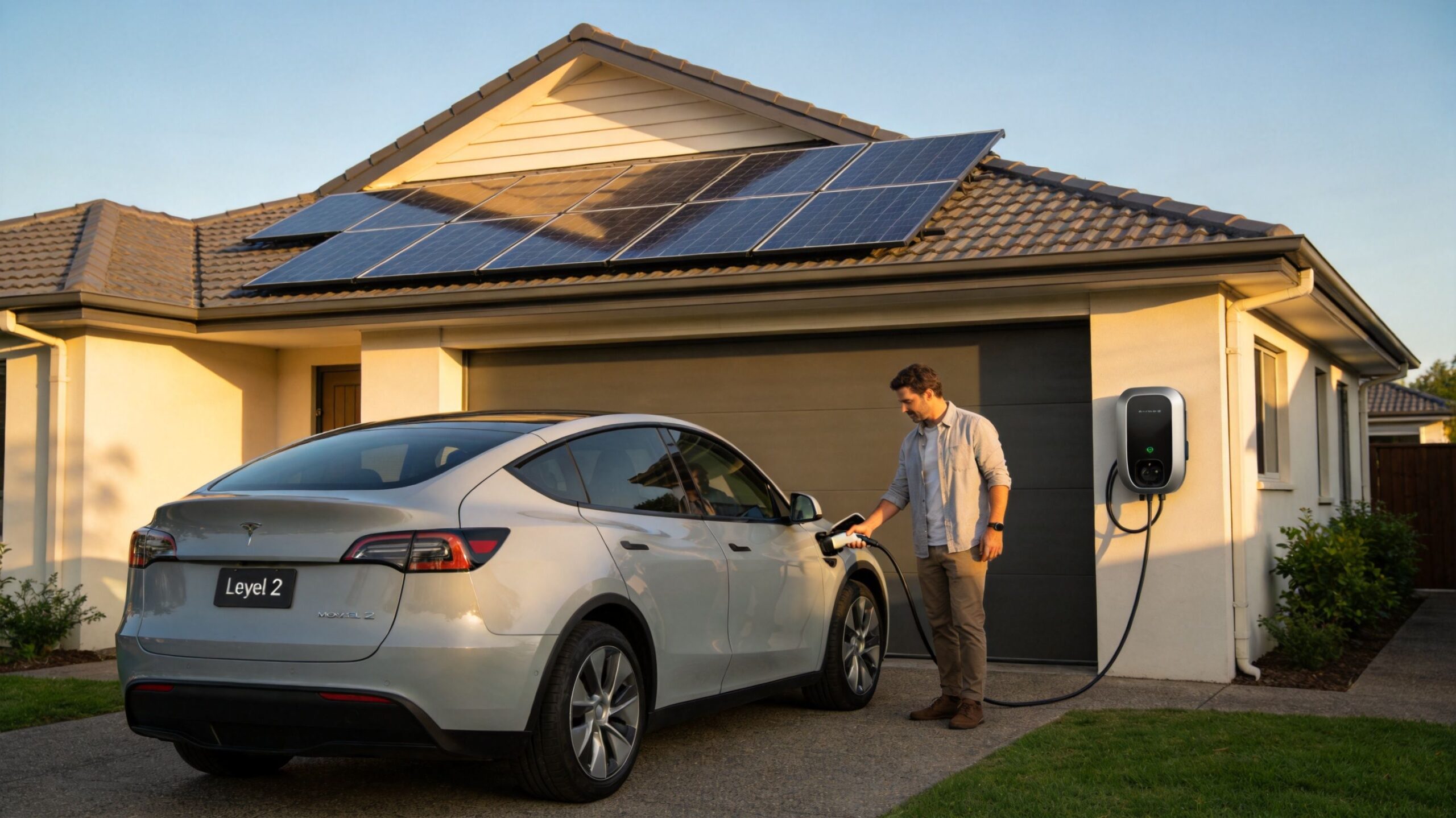
What Is EV Charging? A Sydney Homeowner’s Guide (2026)
Last updated:
You've probably had the same thought most new EV owners in Sydney have. The car is in the driveway, the novelty is real, and the first practical question arrives fast. How do I charge this thing at home without turning it into a hassle?
That question matters more than commonly assumed. EV ownership feels easy when charging fits your routine. It feels annoying when you're dragging out a portable lead, hunting for public chargers too often, or charging at the wrong time and missing the full savings.
The good news is that what is ev charging isn't hard to understand once you strip away the jargon. It's just a controlled way of moving electricity from your home, workplace, or a public charger into your car's battery. The smarter part is deciding where, how fast, and from what energy source you want that power to come.
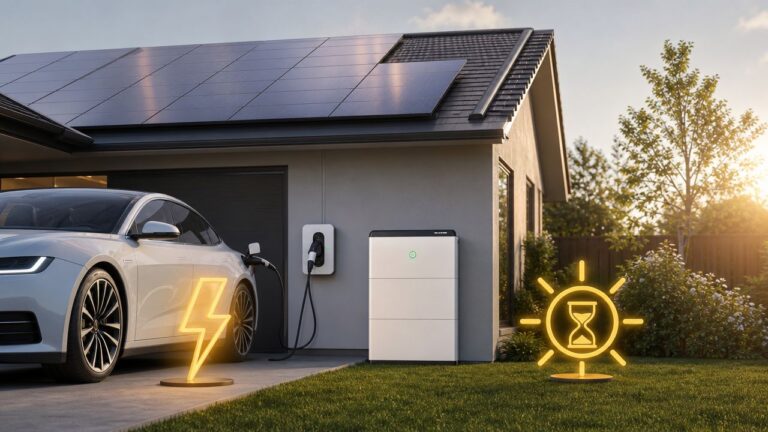
For Sydney households, that decision is no longer just about the car. It's about electricity bills, solar self-consumption, battery storage, and how much control you want over your energy. That's why the best EV charging setup usually isn't a charger on its own. It's a charger that fits into the rest of the home.
Your Guide to Electric Vehicle Charging
The dream is simple. You park the car at night and wake up to a full battery, much like having a petrol station built into your garage wall. That convenience is the reason home charging changes the whole EV experience.
You can charge from a standard outlet in some situations, but most homeowners quickly realise it's more of a backup than a proper long-term setup. It's slower, less convenient, and usually not the best match for a busy household that wants predictable daily charging.
A proper EV charging setup gives you three big advantages. It makes charging routine, it makes energy use easier to manage, and it opens the door to charging from your own solar instead of leaning on the grid every time.
Why charging at home matters most
For most drivers, the car spends far more time parked at home than anywhere else. That means your house becomes the natural refuelling point. Once that clicks, the conversation shifts from “Where do I find a charger?” to “How do I make my home charger smarter?”
That's also where EV ownership starts to link with the broader cost picture. If you're already looking at lower running costs compared with a petrol or diesel car, it helps to understand the wider ownership side too. This EV vs. ICE servicing guide is a useful companion read because it looks at what changes once you move away from internal combustion maintenance.
For NSW homeowners, energy costs are part of the same conversation. If electricity prices are already on your mind, it's worth understanding the pressure on household bills through this guide on rising electricity prices in NSW.
Practical rule: The best home EV charging setup is the one you don't have to think about. Plug in, let it charge safely, and let the timing work in your favour.
What a good setup should do
A sensible home charging arrangement should:
- Match your driving habits so you're not overbuilding or underbuilding the system
- Fit your switchboard capacity without pushing the home electrical system beyond what it can safely handle
- Work with solar if you have it, or leave room for solar later
- Be simple to use for everyone in the household, not just the most tech-savvy person
That last point gets overlooked. Fancy features sound good on paper, but if the charger is awkward, unreliable, or badly placed, people stop using it properly. Good EV charging should feel boring in the best possible way.
How Electric Car Charging Actually Works
An EV battery stores DC power. Your home and the grid supply AC power. So the whole charging process comes down to getting electricity from one form to the other and delivering it safely at the right speed.
A simple way to think about it is this. Your wall is supplying the raw energy. Your car battery is the storage tank. The charger and the car's electronics control how quickly that tank gets filled and how safely it happens.
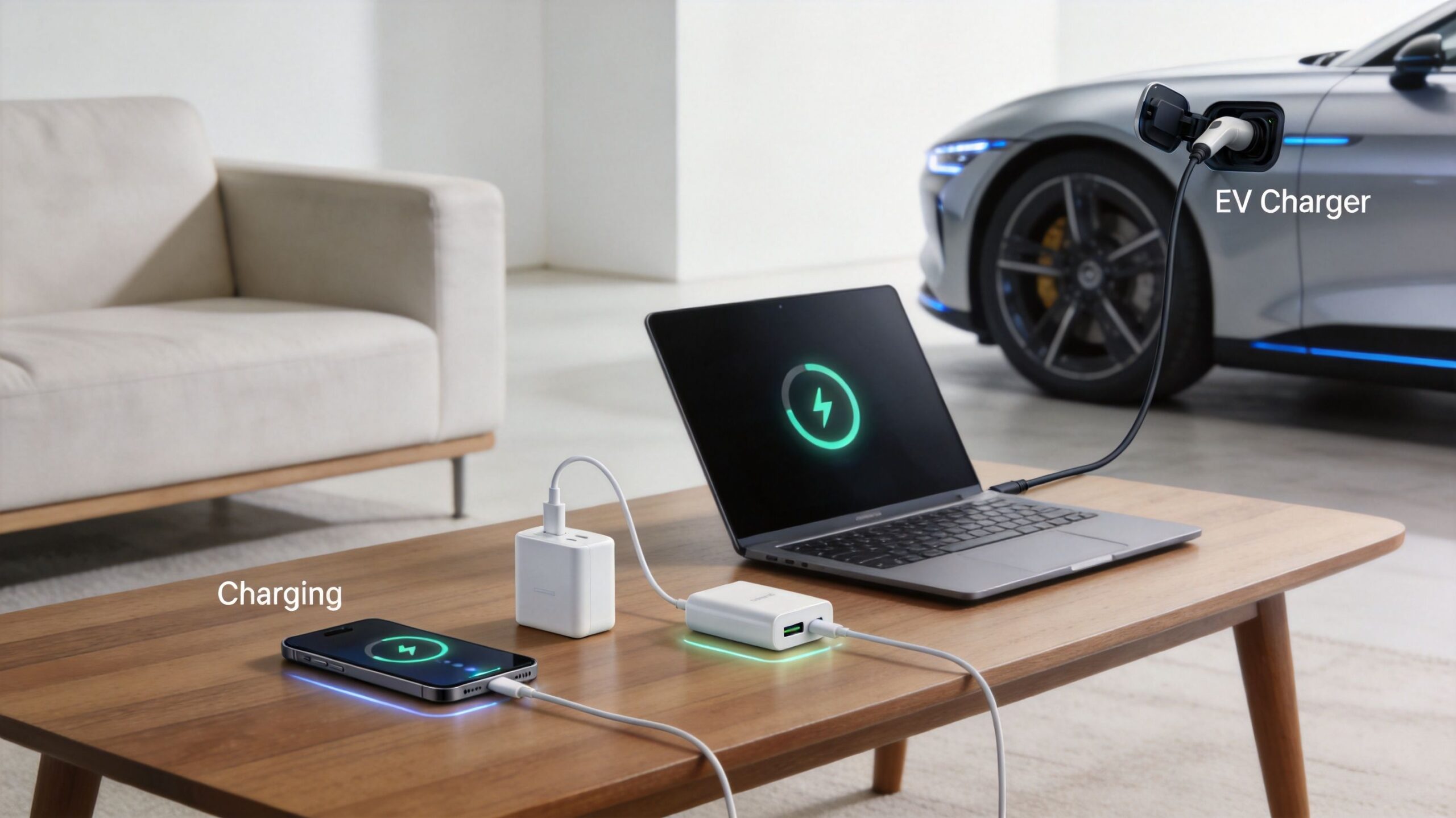
AC charging at home
At home, most charging is AC charging. That means the power comes from your switchboard and flows through the charger to the vehicle, where the car's onboard charger converts it into DC for the battery.
That's why home charging is usually slower than highway fast charging. The limitation often isn't the wall unit alone. It's also the vehicle's onboard charging capability and the electrical capacity available at the property.
This slower approach isn't a problem for everyday use. In fact, it suits home life well because the car is usually parked for long stretches. Real-world Australian Tesla data showed that approximately 80% of charging sessions happen at home or work, which is exactly why home charging deserves the most attention for daily convenience and reliability, as reported by The Driven's analysis of six years of charging data.
DC charging on the road
Public fast charging works differently. With DC fast charging, the conversion happens in the charger itself rather than inside the car. That lets much higher power flow straight into the battery.
This is why highway chargers are the go-to option for road trips, not garages. They're built for quick top-ups when time matters more than squeezing every bit of value from your home energy setup.
Think of AC charging like filling a water tank through a steady household tap. DC fast charging is more like using a high-pressure pump. Both fill the tank. One is designed for everyday routine, the other for speed.
Why charging speed changes as the battery fills
Many new EV owners assume a charger always runs at its maximum rated output. It doesn't. The car's battery management system constantly adjusts the charge rate to protect battery health.
That's why charging often starts faster and then slows down as the battery gets fuller. It's normal behaviour, not a fault. The system is managing heat, battery condition, and long-term durability.
Here's the practical takeaway:
- At home, slower AC charging is usually the right tool
- On the highway, fast DC charging saves time
- Inside the car, smart electronics decide how much power the battery should accept at any moment
Once you understand that, charger choices make far more sense.
Understanding Charger Speeds Levels and Connectors
Most confusion around EV charging comes from the labels. Level 1, Level 2, DC fast charging, Type 2, CCS2. It can sound more complicated than it is.
For a homeowner, the easiest way to compare chargers is by asking four questions. Where is it used? How quickly does it add usable range? What is it best for? And will it suit your car and your home?
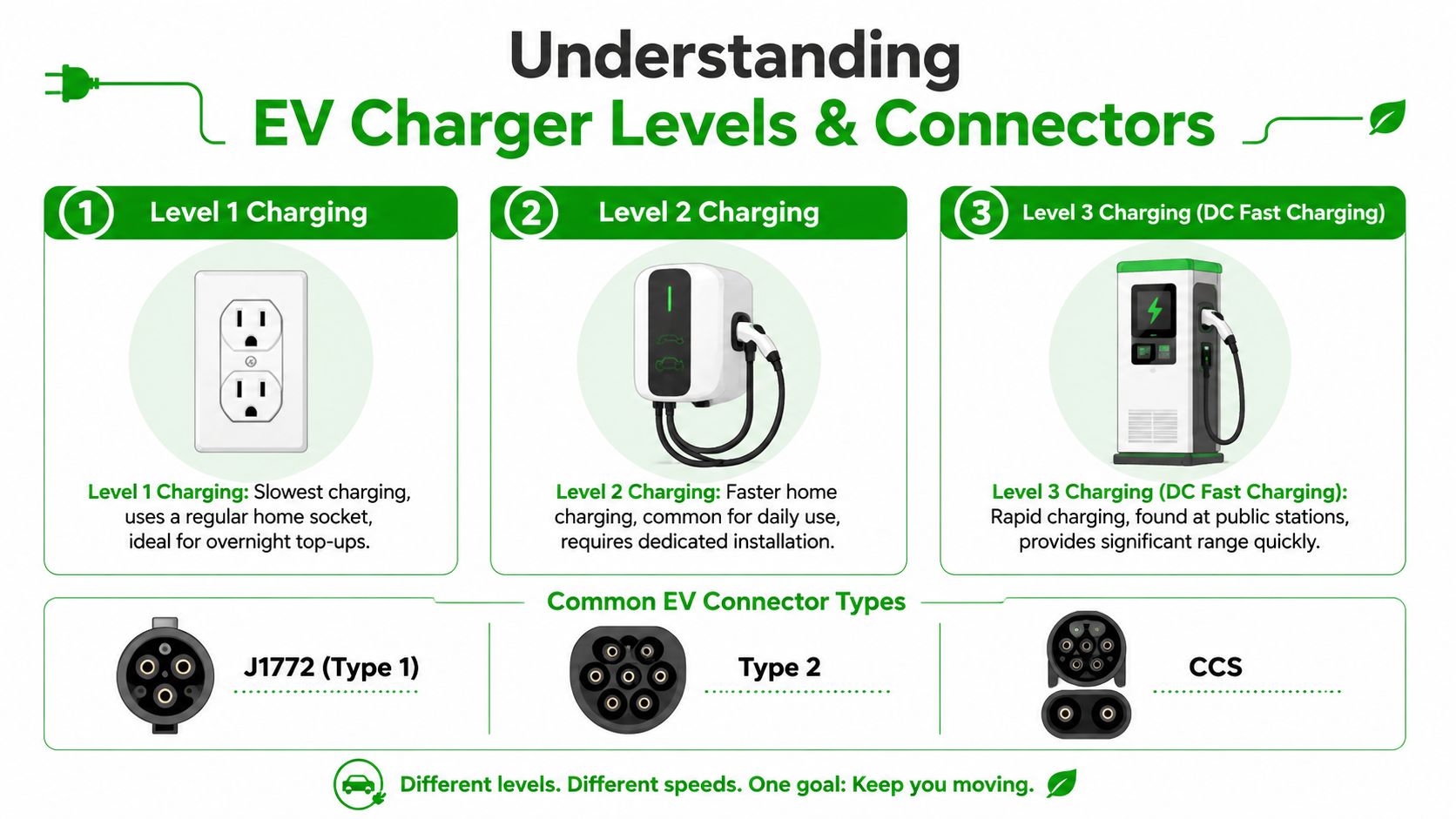
The three charging levels
Level 1 is the most basic option. It uses a regular household socket with the portable charging cable that often comes with the car. It's useful as a fallback, for light driving, or in temporary situations. It's rarely the setup people want long term.
Level 2 is the standard home upgrade. In Australia, a typical 7kW Level 2 charger adds about 40km of range per hour and is generally the maximum power supported on a standard single-phase home connection without costly electrical upgrades, according to Standards Australia guidance. For most Sydney homes, this is the sweet spot.
Level 3, also called DC fast charging, is what you see at public charging sites and along major travel routes. In Australia these chargers use the CCS2 connector standard and can operate from 50kW up to 350kW. For a compatible vehicle, a 350kW charger can add up to 400km of range in 20 to 30 minutes, though charging slows as the battery fills because the car protects itself, as explained in this overview of charging speeds and connectors.
EV Charging Levels at a Glance
| Charging Level | Typical Location | Charging Speed (Range per hour) | Best For |
|---|---|---|---|
| Level 1 | Home socket | Slow trickle charging | Backup use, light driving, temporary charging |
| Level 2 | Home or workplace | About 40km of range per hour on a typical 7kW unit | Daily charging, overnight charging, regular commuting |
| Level 3 | Public fast charging sites | Very rapid charging, designed for quick range recovery rather than hourly home-style charging | Road trips, travel stops, fleet turnaround |
Connectors in Australia
Connector confusion is fading in Australia because the market is becoming more consistent. For most current public fast charging, CCS2 is the key standard to know. It matters because it combines practical compatibility with faster charging access on the road.
At home, many AC chargers connect through the Type 2 style interface used across much of the Australian market. For everyday drivers, the main point is simple. You don't choose a connector in isolation. You choose a charger that matches both the car and the property.
If you're comparing home options, this page on EV chargers for Australian homes and businesses gives a good starting point for the types of wall-mounted systems commonly installed here.
Which level actually suits a Sydney homeowner
A lot of people ask if they should future-proof by going as fast as possible. Sometimes yes, often no.
A home charger should fit the electrical reality of the house and the driving reality of the car. If you mostly commute, do school runs, and drive locally, a standard Level 2 unit usually does the job cleanly. Chasing higher charging speed at home can push you into switchboard changes or supply upgrades you may not need.
Faster isn't always smarter. The right charger replaces your weekly petrol station habit with a simple overnight routine.
The best way to think about the levels is this:
- Level 1 gets you by
- Level 2 fits normal life
- DC fast charging gets you through long trips
That framework clears up most of the noise.
What a Home EV Charger Installation Involves
A proper home EV charger installation is less about mounting a box on a wall and more about making sure the house can support it safely, reliably, and neatly. The charger is the visible part. The actual work often starts at the switchboard.
When electricians assess a home for EV charging, we look at cable route, switchboard condition, available circuit capacity, charger location, and how the owner parks day to day. A technically correct install can still be a poor install if the cable is awkward, the unit is exposed unnecessarily, or the setup doesn't suit how the household uses the space.
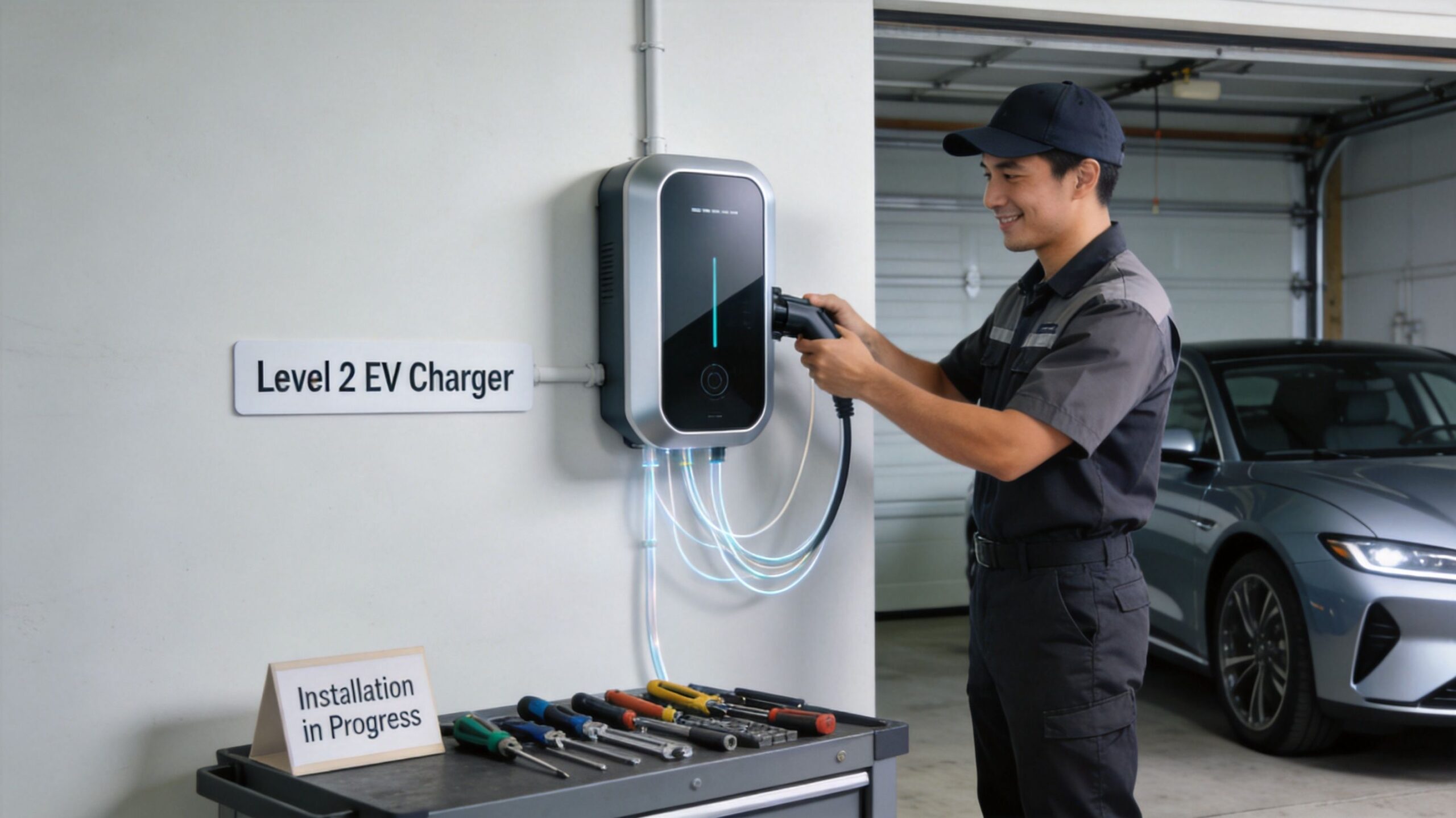
What gets checked first
Before installation day, a good assessment usually focuses on a few practical items:
- Switchboard capacity so the charger can run without overloading existing circuits
- Parking position because cable reach and port location matter more than people expect
- Mounting surface for weather protection, durability, and ease of use
- Future plans such as solar, a battery, or a second EV later on
This is also why generic advice doesn't help much. One home has a tidy modern switchboard and an internal garage. Another has an older board, limited wall space, and an outdoor driveway setup. Same car. Very different installation pathway.
For a broader industry view of what professionals consider in an electric vehicle charging installation, that overview is useful as a cross-check, especially if you're comparing providers.
What happens on installation day
Most residential jobs follow a straightforward sequence once the design is settled.
Isolate and prepare the electrical work
The electrician sets up the dedicated circuit and confirms the protection requirements for the charger.Run cabling and mount the unit
Cable routing matters. A neat route isn't just cosmetic. It protects the installation and usually makes maintenance easier later.Connect, test, and commission
The charger is tested for safe operation, correct communication, and practical use by the homeowner.
A good install should feel tidy and obvious once it's done. No guesswork. No dangling compromise.
Why dedicated circuits matter
EV chargers pull a sustained electrical load. That's different from an appliance that cycles on and off briefly. Because of that, chargers need the right circuit protection and proper installation methods.
That's one reason DIY thinking causes trouble here. Even if someone can physically mount the unit, the main issue is whether the system is designed and protected correctly at the board.
If you want to see the sort of setup and workflow involved in a home project, this short video is a helpful reference.
Common choices that work well
Most homeowners do best when they keep the brief simple:
- Choose a charger location near normal parking position
- Allow for load management if the house already has major electrical appliances
- Pick a unit with smart controls if solar integration is planned
- Use a licensed installer who can manage compliance from start to finish
For homeowners looking into the practical side of home EV charger installation in NSW, that process should include the site check, design, installation, and final testing as one complete job.
A charger should suit the house you have now, not just the brochure you read online.
Australian Safety Standards for EV Charging
Safety rules in EV charging aren't red tape for the sake of it. They exist because charging an EV involves a sustained electrical load, outdoor exposure in many cases, and a direct connection between your home's wiring and a very expensive battery system.
In Australia, EV charging installations must comply with AS/NZS 3000 and specific EV standards including AS/NZS 4760. For homeowners, that means the installation method, protective devices, cable sizing, and equipment selection all have to meet recognised safety requirements rather than guesswork.
Why compliance matters in real homes
A charger might look simple on the wall, but the hidden risks sit behind the plaster and inside the switchboard. Poor circuit design, incorrect protection, weak terminations, or non-compliant gear can lead to nuisance tripping, unreliable charging, or worse.
That's also why a typical 7kW Level 2 charger has become the practical benchmark for many single-phase homes. It offers useful charging speed without immediately pushing the property into larger and more disruptive electrical upgrades, as noted by Standards Australia.
What licensed installation protects
A compliant install protects more than the charger itself. It helps protect:
- Your home from overheating and electrical faults
- Your vehicle from poor-quality charging conditions
- Your warranty position because manufacturers and insurers expect compliant work
- Daily reliability so the charger works when you need it to
There's also a broader battery safety mindset that's worth keeping in view across electrified homes. While a home EV charger and loose lithium battery products aren't the same thing, this guide on how to safely store lithium batteries is still a useful reminder that battery systems deserve proper handling, proper environments, and proper respect.
What doesn't work well
Three approaches usually create headaches:
- Buying on price alone and ignoring certification or local suitability
- Treating the charger like a normal powerpoint job
- Installing for today only with no thought for solar, battery storage, or future load growth
Compliance is the boring part of EV charging. That's exactly why it matters. If it's done right, you barely notice it.
The safest charger is not the one with the most app features. It's the one that's correctly specified, correctly protected, and correctly installed for Australian conditions.
The Smart Way to Charge Your EV with Solar
This is the part most basic EV guides miss. The crucial question isn't only what is ev charging. It's how that charging fits into your home energy system so the car reduces your fuel costs without inadvertently increasing your power bill.
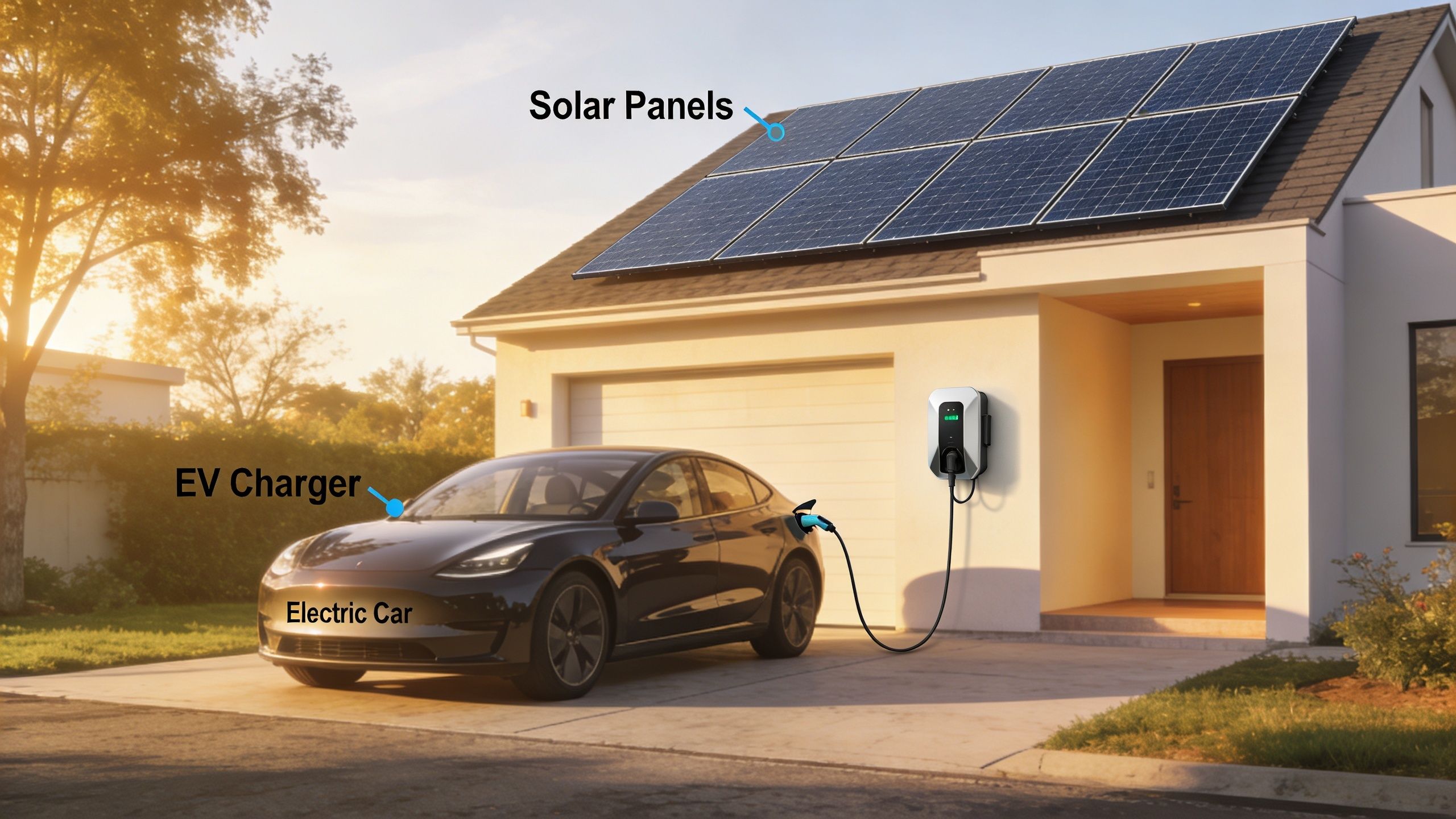
For Australian homeowners, especially in NSW, the best setup is usually one where the EV charger, rooftop solar, and battery storage work together. That changes the EV from being another electrical load into something you can run far more strategically.
Why solar-first charging makes sense
Most guides explain charger speeds, but they stop short of the more important household question. How do you use your own solar generation to charge the car well? That's the gap many homeowners care about.
As noted in this discussion of EV charging and home energy integration, the key issue for Australian households is how to size and coordinate charging with rooftop solar during the day or with battery storage at night. That's where meaningful cost savings and energy independence start to become real.
If your panels are generating power while the car is at home, a smart charger can prioritise that surplus instead of exporting it away. If the car usually arrives home after sunset, battery storage can help carry some of that solar value into the evening.
What smart charging looks like in practice
A smart setup usually works in one of three ways:
Solar-following mode
The charger adjusts output to use available excess solar rather than pulling heavily from the grid.Timed charging
The car charges during selected periods based on household routines and energy strategy.Battery-supported charging
Stored solar can help cover evening charging when direct solar production has ended.
Charger selection matters at this stage. Some units are much better at integrating with energy monitoring and solar control than others. Features like load management and flexible scheduling aren't gimmicks here. They're what turn charging into part of a coordinated home energy plan.
The trade-off most people miss
A lot of homeowners assume that adding an EV automatically increases energy independence. Not necessarily. If the car is charged without any strategy, it can become another large electrical load bought from the grid.
The smarter path is to design around self-consumption. Use the solar on your roof first. Store what makes sense. Charge the car in a way that supports the household rather than competing with it.
That's also why battery storage has become part of the EV conversation. A battery doesn't just help during outages or evening household use. It can play a role in how and when the EV gets charged. For households considering that next step, it helps to understand the role of solar battery systems in home energy storage.
The cheapest EV energy is often the energy you already produced on your own roof.
What works best for Sydney homes
The best setup depends on your pattern:
- Home during the day suits direct solar EV charging
- Away during work hours may suit battery support or scheduled charging
- Two-car households need more careful load planning
- Future-focused homes should leave room for extra generation or storage later
What doesn't work is treating the EV charger as separate from the rest of the home. Once the charger, solar, and battery are planned together, the economics and the convenience both improve.
Your Next Steps to Smart EV Charging in Sydney
Many drivers begin with a simple question about plugging in an EV. They finish with a larger one. How do I make this work properly with my home, my driving, and my electricity use?
That's the right question. A good EV charging setup should feel easy every day, safe in the background, and flexible enough to work with solar and battery storage when you're ready. For many Sydney households, that's where the primary value sits. Not just charging the car, but charging it in a way that cuts grid reliance and gives you more control.
If you're already thinking beyond the charger and looking at the broader home energy picture, it's worth keeping up with NSW policy changes too, especially around storage. This update on the NSW battery rebate launch is a useful place to start.
The main thing is not to guess. The right charger size, location, circuit design, and solar integration plan depend on the property and the way you live in it. Getting that mapped out properly saves a lot of frustration later.
If you want a practical plan for home EV charging, solar, or battery storage, Interactive Solar can help you design a setup that suits your home, your car, and the way you use energy in Sydney and across NSW.
Make Interactive Solar a preferred source in Google
One click tells Google to surface our articles more often in Top Stories, AI Overviews and AI Mode.