Electric Car Charger Home Installation: A NSW Guide
Last updated:
You’ve probably reached the point where the portable charger that came with the car no longer feels good enough. The car is in the driveway every night, you want a reliable full charge by morning, and you’re starting to realise that charging at home isn’t just about convenience. In NSW, it can become part of a much bigger energy plan.
A proper electric car charger home installation should be treated like any other major electrical upgrade. It needs to suit the car, the home, the switchboard, and the way you use power across the day. If you also have solar, or you’re planning it, the charger shouldn’t sit on its own. It should work as part of the same system.
That’s the difference between a charger that merely powers a vehicle and a charger that helps you take control of rising electricity costs.
Your Pre-Installation Home Assessment
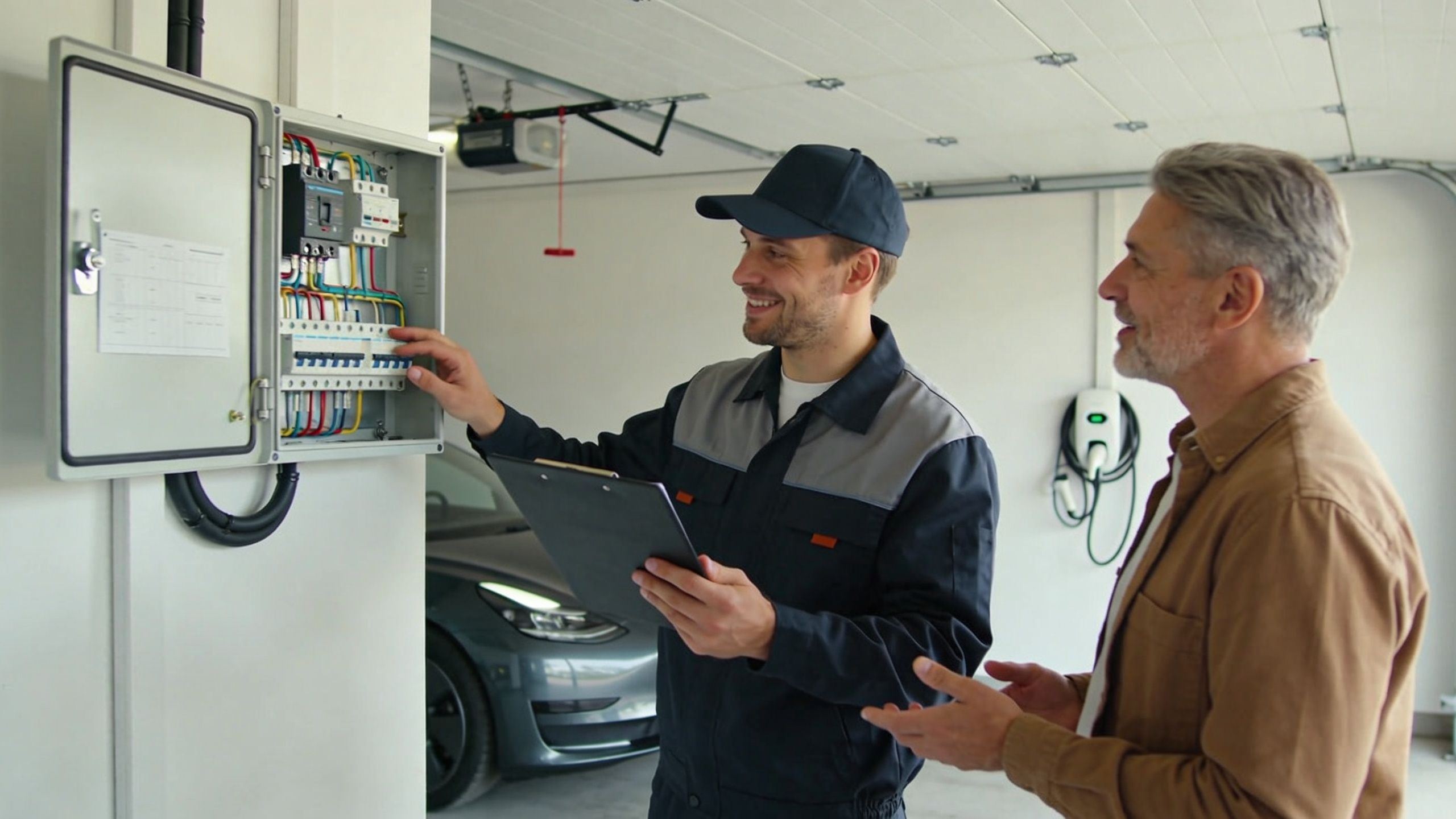
Before anyone mounts a charger, the job starts at the switchboard and the parking space. That first site assessment decides whether the installation is straightforward, whether the board needs work first, and how well the charger will fit into the rest of the home energy system.
In NSW, a compliant home EV charger install starts with a load calculation by a licensed electrician under AS/NZS 3000 wiring rules. For many homes, a standard single-phase charger will need its own dedicated circuit, with cable size and protection selected for the charger rating, cable run, installation method, and allowable voltage drop.
Start with the parking position
The charger needs to suit the way the car parks each day.
I look at where the charge port sits on the vehicle, whether the car usually reverses in or noses in, and whether the cable can reach without being stretched across a walkway or garage opening. A charger can be electrically perfect and still be annoying to use if the location is wrong. That usually shows up after the install, when the owner realises the cable is too short, the unit is behind a roller door track, or the car has to be parked in one exact spot every night.
The mounting surface matters too. Brick, masonry, fibre cement, timber framing, a detached garage wall, or a free-standing post all change the fixings, cable route, and labour involved. Outdoor locations also need more thought around weather exposure and long-term durability.
A quick self-check helps:
- Parking habit: Do you reverse in every day, or drive in nose-first?
- Charge port position: Is your car’s port at the front corner, rear side, or somewhere less convenient for a wall-mounted cable?
- Mounting surface: Is there a suitable wall or post close to where the vehicle normally sits?
- Cable route: Will the cable run be short and direct, or will it need to cross a ceiling space, exterior wall, driveway edge, or garden area?
- Outdoor exposure: If the charger is outside, is the location protected from constant sun, rain, and impact?
Check the switchboard, not just the power bill
A charger adds a sustained electrical load for hours at a time. That is different from appliances that cycle on and off.
The assessment looks at the incoming supply, main switch rating, spare capacity in the board, existing circuit protection, earthing arrangement, and the other loads likely to run at the same time. In older NSW homes, the switchboard is often the limiting factor. I regularly see boards with no spare ways, ageing protective devices, or layouts that need tidying before new equipment can be added safely.
A thorough load calculation by a licensed electrician is a required first step. If that work is skipped, the result can be overloaded circuits, nuisance tripping, or a charger that has to be artificially limited to avoid stressing the supply.
This is also where the bigger energy picture starts to matter. If the home already has solar, or plans for solar and a battery, the charger should be assessed as part of that system rather than as a stand-alone appliance. The goal is not only to charge the car safely. It is to set the house up so daytime solar generation, controlled charging, and future battery storage can work together to cut grid use as energy prices keep rising.
What you can inspect before booking
You do not need to diagnose the installation yourself, but a few checks will make the quoting process faster and more accurate.
| What to look at | Why it matters |
|---|---|
| Switchboard age and condition | Older boards often have limited space, older safety devices, or components that should be upgraded before adding a charger |
| Distance to charger location | Longer runs usually increase labour, cable size, and routing complexity |
| Detached garage or rear parking | These setups often need underground conduit, external cable containment, or extra protection from damage |
| Heavy evening loads | Air conditioning, electric hot water, pool equipment, ovens, and cooktops all affect charger design and load management options |
| Existing solar or battery plans | A charger can be selected and configured to make better use of self-generated energy instead of only drawing from the grid |
If your main goal is lower running costs, review the charger as part of the home’s full electricity use, not as a separate purchase. A good starting point is this guide on ways to reduce electricity bills at home, because the best charger setup is usually the one that works with your broader solar and energy strategy.
Choosing the Right Home EV Charger
The right charger is the one that fits how your home uses power. In NSW, that usually means looking past the charger itself and choosing equipment that works with your tariff, your solar production, and the times your car is parked long enough to charge properly.
For most homes, a dedicated wall-mounted charger is the practical choice. It gives you faster charging than a standard powerpoint arrangement, better control over when charging happens, and a setup that can be integrated into a broader home energy system instead of operating as a standalone appliance.
Charging speed in real life
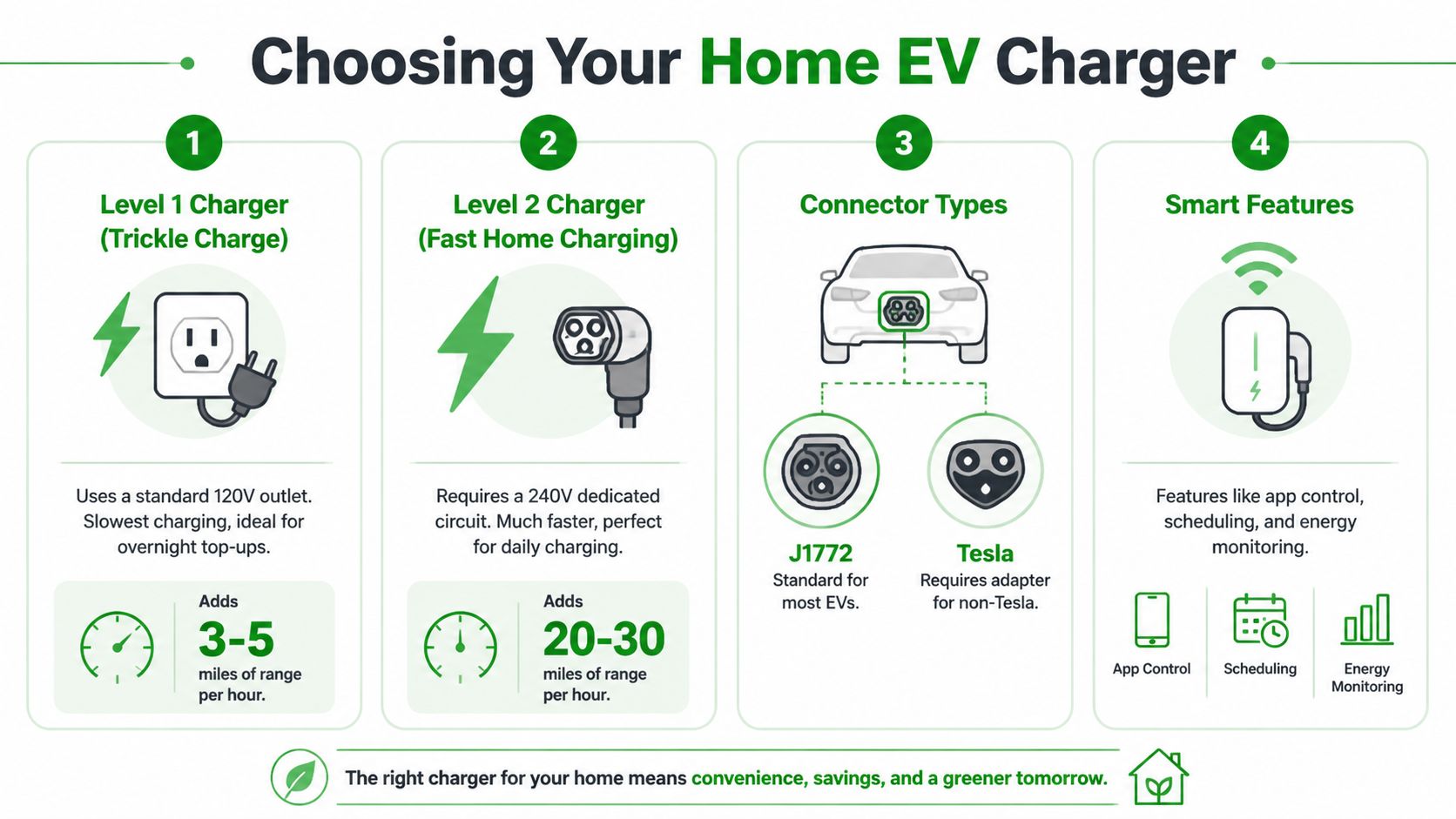
A 7kW single-phase charger is the standard fit for many Australian homes because it balances charging speed with what a typical single-phase supply can support. For a household doing school runs, commuting, and weekend driving, that is usually enough to refill daily use comfortably while the car is parked overnight.
Three-phase can make sense in the right property, especially if the home already has three-phase supply and the household expects higher future demand. I do not recommend selecting a larger charger just because the number looks better on paper. The better approach is to match charger size to the home’s electrical capacity, the car’s onboard charging limits, and whether solar or battery integration is part of the plan.
Future-proofing matters here. If you are renovating, upgrading the switchboard, or planning a battery later, it can be smart to install cabling and protection with the next stage in mind, even if the first charger is a standard single-phase unit.
Tethered or untethered
This decision affects day-to-day use more than many homeowners expect.
A tethered charger has the cable attached permanently. It suits households that park in the same position every day and want charging to be quick and tidy. In a narrow garage or exposed carport, that convenience often matters more than a cleaner-looking wall.
An untethered charger keeps the wall unit neater and gives more flexibility if cars change over time. It can be a good option where presentation matters or where different vehicles may need different cables.
I usually tell homeowners to think about who will use it at 6:30 on a wet winter morning. A tethered cable often wins because people use it properly every day.
One detail that gets overlooked is charger placement relative to the vehicle’s charge port. Left-front, right-rear, nose-in parking, reverse parking, shared garages, and door clearance all affect whether the charger feels easy to live with or awkward from day one.
Why smart features matter
A basic charger supplies power. A smart charger helps control cost.
The useful features are usually these:
- Scheduled charging: Charge at times that suit your tariff or household load profile.
- App control: Start, stop, and monitor charging without going to the garage.
- Energy tracking: See how much electricity the vehicle is using over time.
- Solar integration: Shift charging toward rooftop generation instead of drawing from the grid whenever possible.
- Load management: Reduce charging output automatically if the home is already carrying heavy demand.
That last feature is often the difference between a charger that functions and a charger that adds real value. In homes with air conditioning, electric hot water, ovens, pool pumps, and EV charging all competing in the evening, smart load control can prevent nuisance tripping and reduce the need for more expensive electrical upgrades.
If the goal is to cut running costs, choose from home EV charger options designed for solar integration and smart energy control rather than comparing units on charging speed alone. The charger should support the way the whole house buys, produces, stores, and uses electricity.
The Installation Process With a Licensed Electrician
The day the charger goes in should feel controlled and methodical. A good installer treats it like part of the home’s electrical system, because that is exactly what it is. Once an EV charger is hardwired into a NSW home, it affects circuit protection, switchboard capacity, daily load patterns, and, in many homes, how well solar and battery storage can reduce power bills.
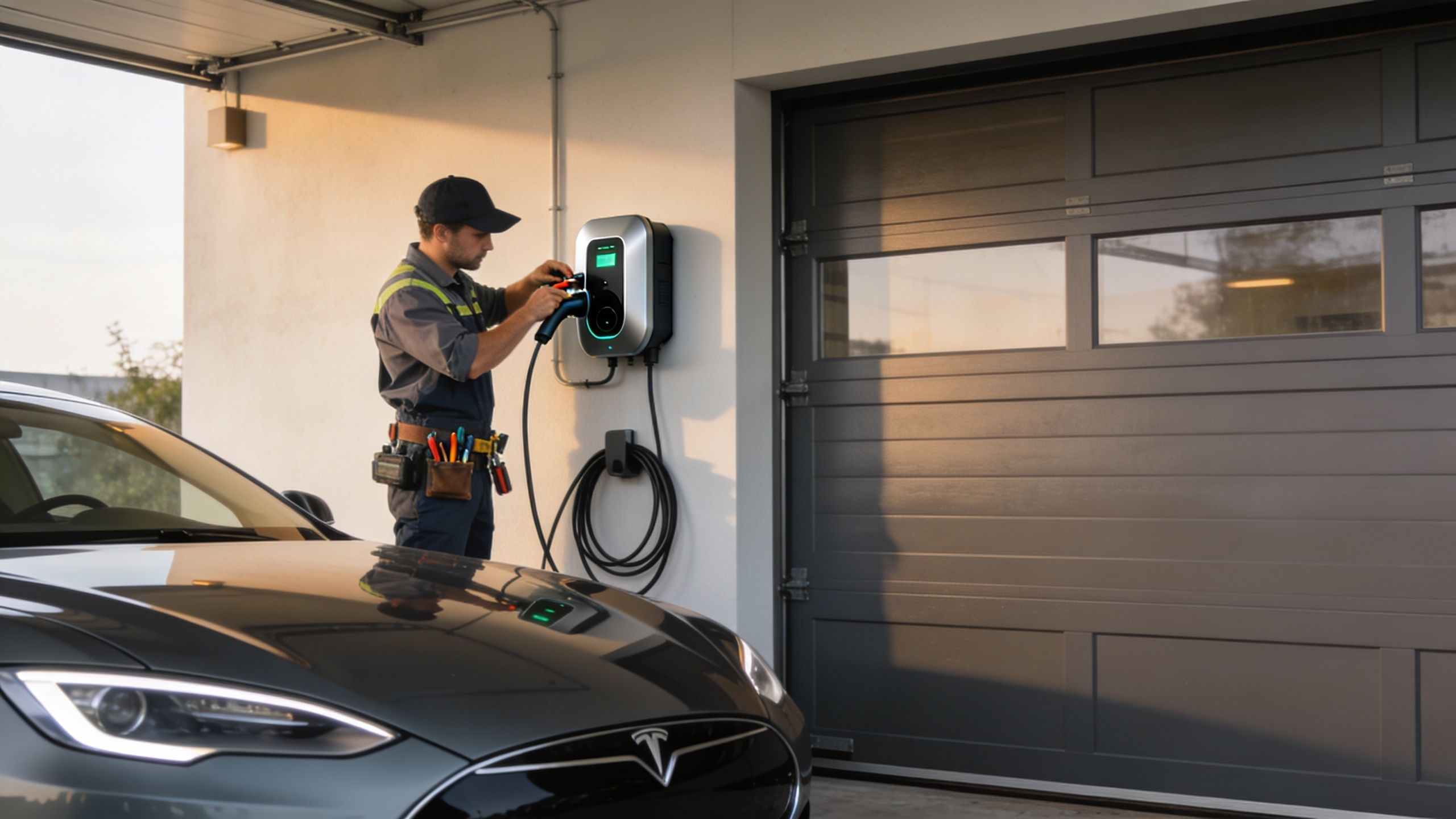
What happens on installation day
Straightforward jobs are usually in an attached garage with a clear cable path back to the switchboard and enough spare capacity to add a dedicated circuit. Older homes are different. We often find crowded switchboards, limited wall space, brittle conduit, or existing loads that need to be assessed properly before the charger can be energised.
A quality installation usually runs in this order:
Final site check
The charger location is confirmed against the actual parking position, cable reach, wall construction, and access back to the board. This last check matters because a charger that looked fine on paper can become awkward if the car parks differently in real life.Safe isolation and circuit preparation
Power is isolated before any work starts. The charger is then supplied by its own dedicated circuit, sized for the charger rating, cable run, and installation conditions.Protection device installation
The circuit protection has to suit both the charger and the wiring method. That includes selecting the right devices at the switchboard and making sure the overall installation remains compliant and testable.Mounting, wiring, and termination
The charger is fixed securely, cable support is installed neatly, penetrations are sealed where needed, and all terminations are completed to manufacturer requirements.Testing and commissioning
The electrician tests the new circuit, confirms correct operation, checks protection, and verifies the charger communicates and charges as intended before handover.
The physical install is only half the job. The other half is making sure the charger behaves properly within the house, especially if the home already has solar, a battery, electric hot water, or ducted air conditioning.
What separates a good install from a cheap one
Workmanship shows up in the details. You can see it in cable routing, board presentation, fixing points, weather sealing, labelling, and whether the installer has planned for the next upgrade instead of only today’s charger.
These points matter most:
- Cable routing: Cables need mechanical protection, tidy support, and a path that suits heat, weather, and the structure of the building.
- Switchboard quality: A neat board with clear labelling and correctly selected protection makes future servicing safer and easier.
- Real parking use: Charger placement should match how the household parks, not just the nearest wall.
- Future energy plans: If solar expansion, battery storage, or a second EV is likely, it is usually cheaper to allow for that now than reopen the job later.
Poor installs often still charge the car on day one. Problems show up later. Nuisance tripping, heat stress at bad terminations, damaged conduit, water ingress, and awkward cable reach are the sort of issues homeowners end up paying for twice. That is why installation quality across the whole energy system matters, not just the charger brand on the wall.
When the job gets more complex
Some homes need much more than a simple garage wall mount. Detached garages, carports, rear access parking, side-of-house charger positions, and long runs from the main switchboard all add labour, materials, and design decisions.
In those jobs, trenching or external conduit may be required. Depth, mechanical protection, location, and cable selection have to be handled to the applicable standard and the site conditions. Moisture exposure changes the enclosure and gland requirements. Long cable runs can affect voltage drop and cable sizing. Sun-exposed walls can change how the wiring is installed and protected.
This is also where strategy starts to matter. If a homeowner plans to add solar, battery storage, or upgrade to a larger EV charger later, the installation should be set up with that in mind. Sometimes that means allowing space in the switchboard. Sometimes it means running a larger conduit now, even if the first charger does not need it yet. Done properly, the charger becomes part of a modern home energy system rather than a standalone appliance.
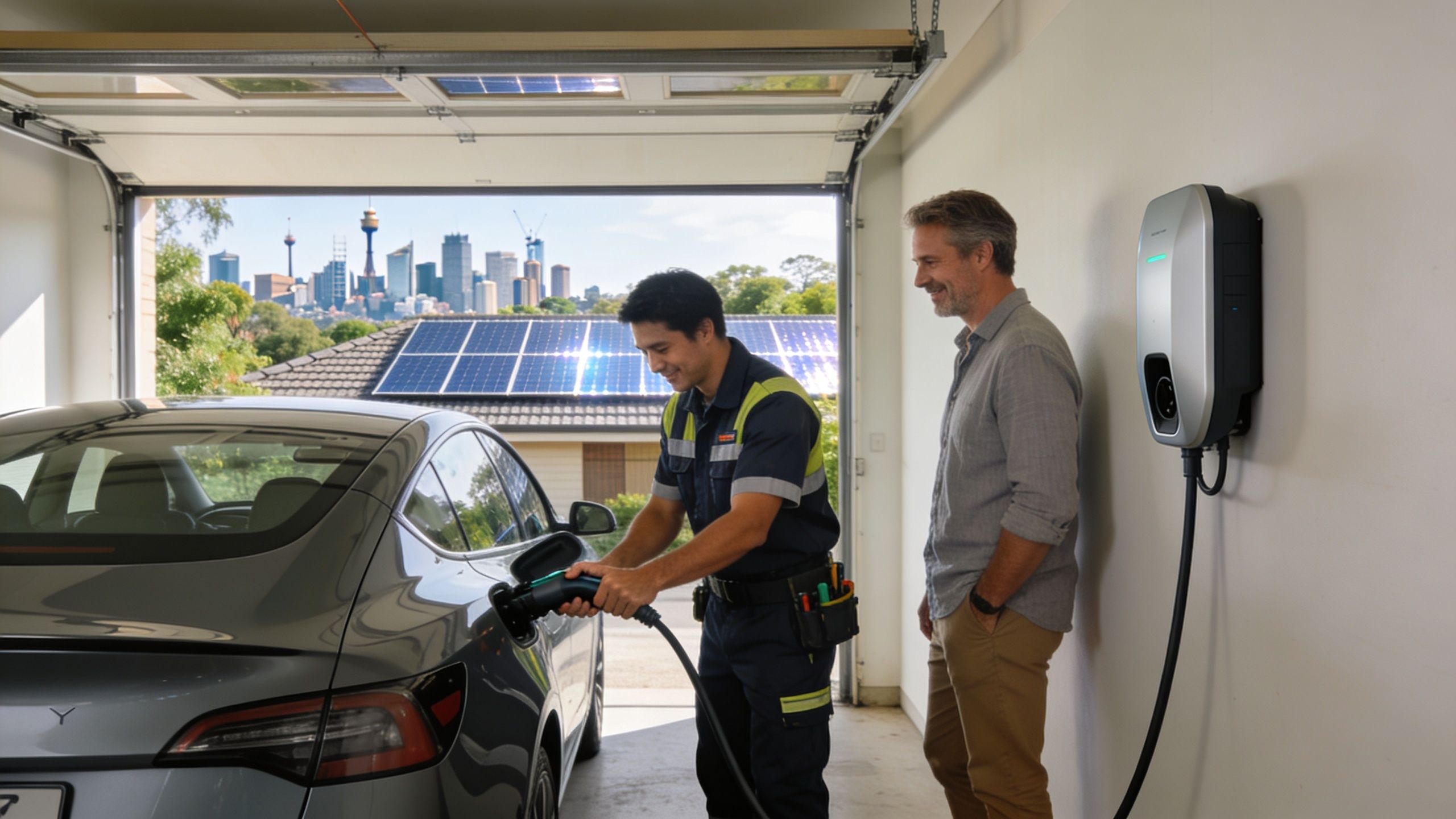
A short explainer helps if you want to see the physical install process in action:
Outdoor and exposed installations leave less room for shortcuts. Conduit type, sealing, fixing method, and termination quality all affect long-term reliability. In practice, the best EV charger installations are the ones that still look tidy, test correctly, and work cleanly years after the first charge.
Navigating NSW Permits and Compliance
A common NSW scenario goes like this. The charger is on the wall, the car starts charging, and everyone assumes the job is finished. The actual test is what sits behind it. Correct protection, compliant cabling, test results, and paperwork are what make that charger safe to keep using and safe to insure.
A home EV charger is fixed electrical equipment connected to one of the largest loads in the house. In NSW, that means the work has to be carried out by a licensed electrician and documented properly. If an installer cannot clearly explain what they are certifying, what protection has been installed, or what records you will receive at handover, that is a warning sign.
What proper compliance gives you
Good compliance is more than a box-ticking exercise. It confirms the charger has been installed to the applicable standards, tested before energisation, and recorded in a way that protects the homeowner later.
In practice, that gives you:
- A safer installation: The charger circuit, protection devices, earthing, and final testing have been checked by a licensed tradesperson.
- A clear paper trail: You have records showing what was installed, where it was connected, and that the work was certified.
- Fewer insurance disputes: Undocumented electrical alterations can become a problem after a fault, fire, or storm claim.
- Better long-term serviceability: If the home later adds solar, battery storage, or a switchboard upgrade, the next electrician can see what was done and build on it properly.
That last point matters more than many homeowners realise. An EV charger is rarely the final upgrade. It often becomes one part of a broader home energy system, so the compliance side needs to stand up not only for today’s charger, but for future changes as well.
What a licensed installer should handle
The homeowner should not be left sorting out standards, guessing whether extra protection is required, or chasing documents after the invoice has been paid. A competent installer handles the certification process as part of the job and explains any site-specific compliance issues before work starts.
On older NSW homes, that can include problems such as overcrowded switchboards, missing space for new protection devices, deteriorated enclosures, or supply arrangements that need to be checked before a charger is added. Those issues are not unusual. They just need to be addressed properly.
Ask direct questions before you accept a quote:
- Will you provide the compliance paperwork at completion?
- Who is carrying out the electrical work, and are they properly licensed?
- What protection devices are being installed for this charger circuit?
- Are there any switchboard defects or capacity issues that need to be rectified first?
- If I add solar or a battery later, will this charger setup still make sense?
Installers who follow recognised consumer protections also tend to be clearer about scope, variations, warranties, and after-sales support. The New Energy Tech Consumer Code overview is a useful reference point for what fair quoting, proper documentation, and accountable handover should look like.
For homeowners who want to confirm licensing requirements and electrical work obligations in NSW, NSW Fair Trading provides the relevant guidance on licensed trades and electrical work compliance.
Supercharge Your Savings With Solar Integration
A typical NSW pattern looks like this. The car gets home in the late afternoon, the air conditioner is running, dinner is on, and grid prices matter more than they did a few years ago. If the charger is set up as a basic add-on, it becomes another heavy load. If it is designed as part of the home energy system, it can use solar intelligently, limit peak demand, and work with battery storage instead of against it.
At that point, the charger is doing more than refuelling a car. It is helping manage how the house buys, stores, and uses energy.
Charge when the roof is producing
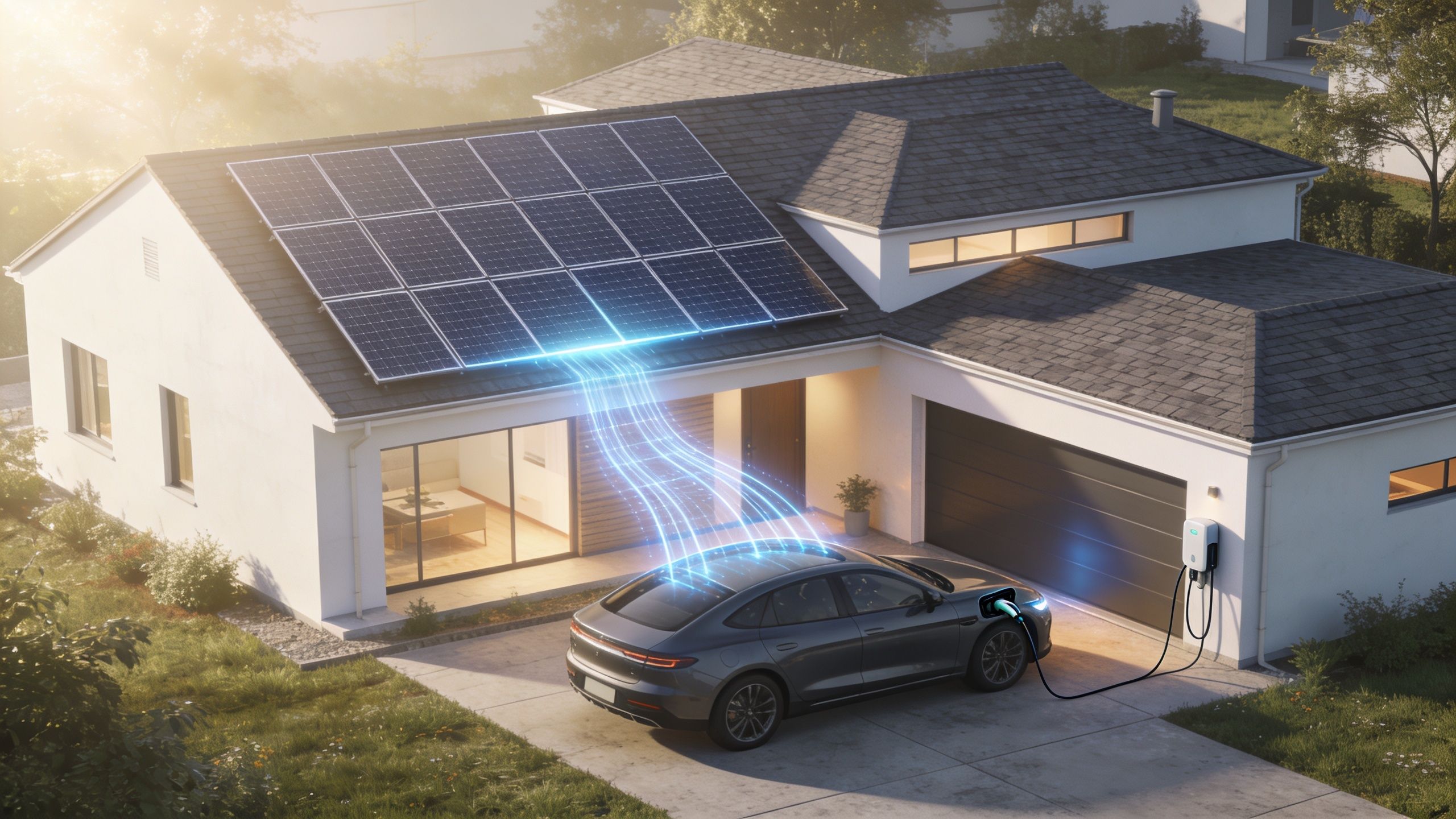
For many households in NSW, the strongest return comes from charging during the middle of the day while the solar system is generating well. That keeps more of your own solar on site rather than sending it back to the grid for a lower feed-in tariff and then buying power back later at a higher retail rate.
An EV is one of the best loads in the house for this job because charging can usually be shifted. If the vehicle is home during solar hours, or if charging can be scheduled for weekends and work-from-home days, the car can absorb excess generation that would otherwise be exported.
What smart integration actually does
A well-configured setup coordinates the charger with the rest of the house in real time.
| System part | What it does |
|---|---|
| Solar PV | Generates daytime energy for the home and vehicle |
| Smart EV charger | Adjusts charging rate based on available solar, household load, and user settings |
| Battery storage | Stores surplus solar for later use if that suits the household’s charging pattern |
The feature that makes this work properly is dynamic load management. In practical terms, the charger monitors what the home is using and adjusts its charging rate so it does not compete blindly with ovens, ducted air, pool pumps, or other large loads. On some homes, that avoids unnecessary limits. On others, it can reduce the scale of switchboard or supply upgrades needed to support EV charging.
This matters most on houses with solar already installed. A fixed-rate charger can pull hard from the grid even when solar output is fluctuating. A smarter charger can ramp up when rooftop generation is available and back off when the house needs the capacity elsewhere.
A good charger setup responds to the house you actually live in, not a perfect test scenario.
Where batteries fit in
Battery storage adds another layer of control. It does not automatically make EV charging cheaper, and it does not fix poor charger design, but it can help if the vehicle is usually plugged in after sunset or if the household wants to keep more solar available for evening use.
The trade-off is straightforward. Using battery energy for the car means that stored energy is not available for other night-time loads, so the system needs to be configured around your habits, tariff, and solar production rather than broad assumptions. In some homes, daytime solar charging delivers the best value on its own. In others, battery support makes sense because the car is rarely home during the day.
For homeowners planning storage as part of a wider electrification strategy, this guide to Tesla Powerwall 3 and how home battery storage supports household and EV energy use is a useful next step.
The best results come when the charger, solar, battery, and switchboard are planned as one system. That is how you turn an EV charger from a convenient appliance into a working part of the home’s energy infrastructure.
Common Questions About Home EV Charging
Can I install an EV charger myself
No. This is not optional.
A home charger requires electrical design, protection selection, fixed wiring, testing, and compliance documentation. Unlicensed work can create fire risk, nuisance tripping, equipment damage, and insurance problems. A charger is a permanent electrical installation, not a plug-in appliance upgrade.
What affects the final installation cost
The main variables are the cable route, distance from the switchboard, whether the board needs upgrading, whether trenching is required, and whether you’re preparing for future solar, battery storage, or faster charging later.
Outdoor runs and detached garages usually add complexity. Trenching for underground runs can also become a major part of the job, and this Australian guide notes that underground trenching can materially affect the scope of works.
How long does installation usually take
Straightforward jobs are commonly completed in a single visit. Complex work takes longer, especially if the home needs switchboard work, external conduit, trenching, or additional compliance steps.
Does the charger need maintenance
Very little, but not zero.
Keep the unit clean, check the cable for wear, make sure the mounting remains secure, and don’t ignore app faults or charging interruptions. If the charger is outdoors, occasional inspection is sensible after severe weather or any impact to the cable or enclosure.
Should I install a charger now if solar is planned later
Usually yes, but only if the charger is selected and installed with future integration in mind. That means thinking ahead about smart controls, load management, switchboard capacity, and where a battery may sit in the system later.
If you want a charger that’s designed as part of a complete home energy plan, Interactive Solar can help with the full path from site assessment and licensed installation to solar, battery, and EV charger integration across NSW.
Make Interactive Solar a preferred source in Google
One click tells Google to surface our articles more often in Top Stories, AI Overviews and AI Mode.