Tesla Gen 3 Wall Connector: Your Complete NSW Guide
Last updated:
Bringing home an EV feels like a big step forward until you try to live with slow charging. A standard outlet works as a stopgap, but it doesn't feel like a proper solution when the car needs long hours plugged in, cables end up where they shouldn't, and daily charging starts to dictate your routine.
Most Sydney and NSW homeowners who ask about the tesla gen 3 wall connector aren't really asking about a gadget. They're asking how to make EV ownership easy. They want to leave the house with a full battery, charge safely, and avoid building an electrical headache into a home that already has air conditioning, hot water, solar, and a busy switchboard.
That’s where a dedicated wall charger changes the experience. Done properly, it turns charging into background infrastructure. Park the car, plug in, and the system handles the rest.
Your Fast Lane to Home EV Charging
If you're still relying on a general power point, you're already seeing the gap between “possible” and “practical”. Basic charging can get energy into the car, but it rarely matches how people use their vehicle in NSW. Commutes change, weekend driving adds up, and households don't want to think about battery top-ups every evening.
A dedicated charger fixes the problem at the source. It gives the vehicle a circuit designed for sustained EV charging, rather than asking a standard outlet to do a job it was never meant to handle every day.
Three things matter most in a home charging setup:
- Charging speed: You want meaningful recovery overnight, not a marginal top-up.
- Electrical safety: The charger has to work with your switchboard, cable route, and protection devices.
- Daily convenience: The system should fit your garage, driveway, and routine without workarounds.
For NSW homes, that usually means looking beyond overseas reviews and asking better questions. Is the property single-phase or three-phase? Will the switchboard need work? Can the charger play nicely with rooftop solar? Is outdoor mounting realistic in the weather exposure you’ve got?
A good EV charger install doesn't start at the wall. It starts at the switchboard, the cable path, and how the house uses power across the day.
The tesla gen 3 wall connector stands out because it solves the home charging problem as a system, not just as a charger. It gives EV owners a cleaner, smarter setup and opens the door to proper solar integration. If you're comparing options for your property, it helps to start with a clear view of what home EV chargers in Australia should provide in practical use.
Tesla Gen 3 Wall Connector Features and Specs
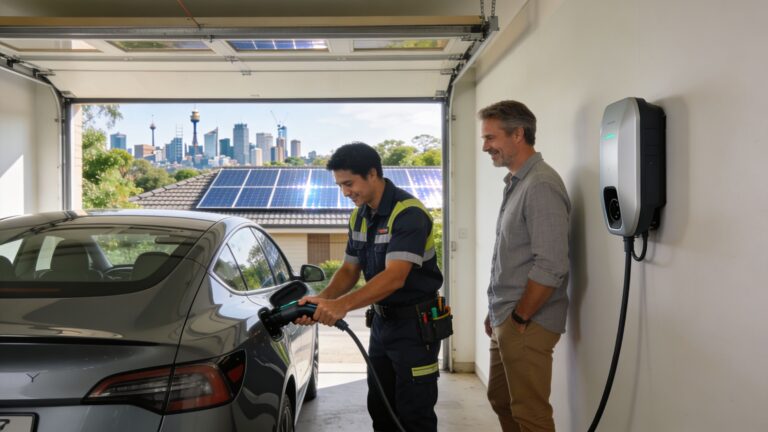
In a Sydney garage, the difference between a charger that merely works and one that suits the house shows up fast. Cable reach, switchboard limits, outdoor exposure, and whether the car is parked nose-in or reverse-in matter just as much as the brochure specs.
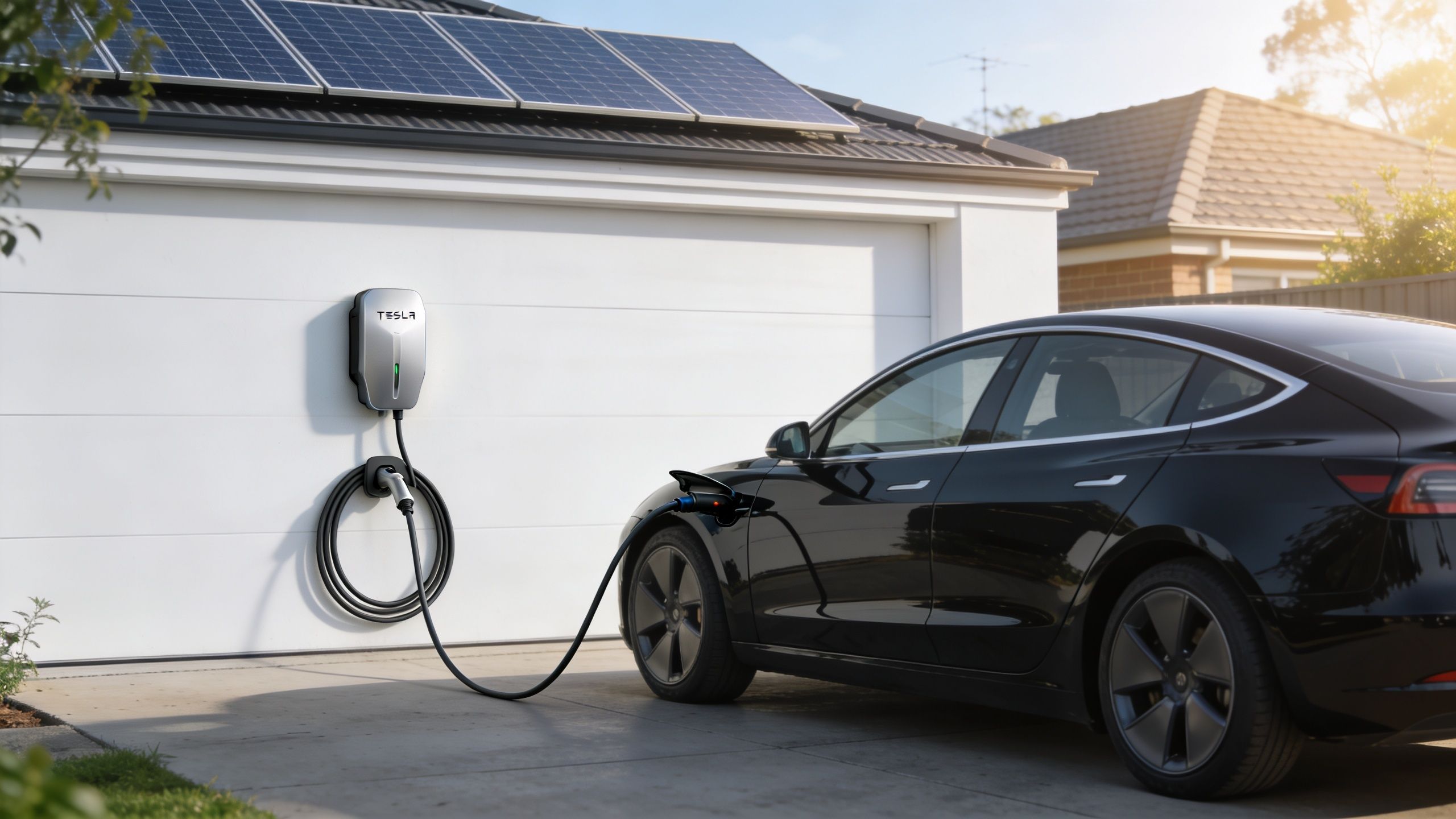
The tesla gen 3 wall connector is a clean, hardwired AC charger built for daily home use. For Australian homes, the practical headline is not just peak output. It is that the unit can be set to suit the available supply, mounted indoors or outdoors, and integrated properly into a home charging setup without the bulk of many commercial-style chargers.
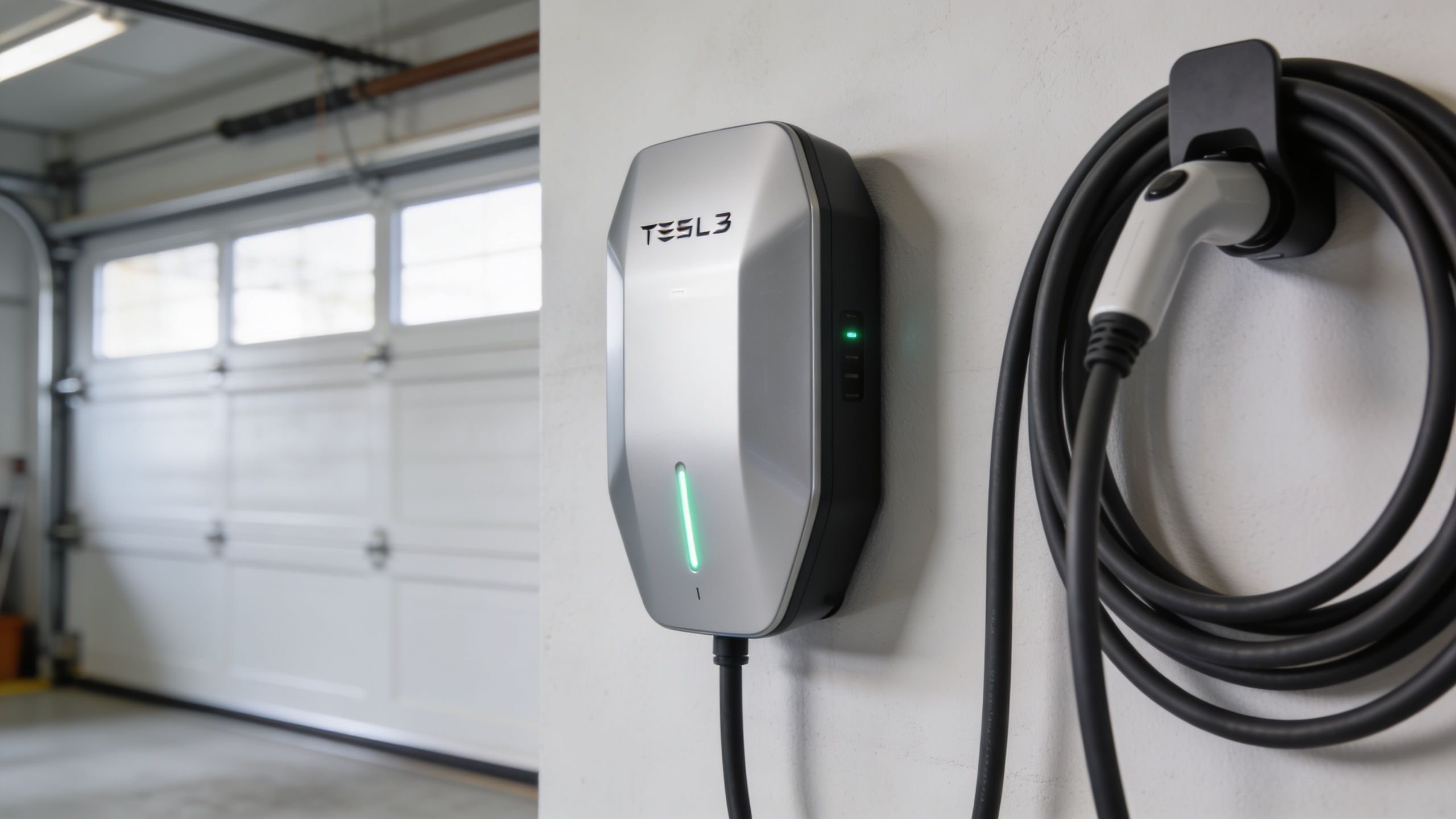
Tesla’s own Wall Connector technical details outline the key hardware points installers use on site, including configurable current settings, Wi-Fi connectivity, indoor and outdoor installation suitability, and support for single-phase and three-phase applications in markets where the local supply allows it.
Hardware details that matter in real homes
The spec sheet matters most at the switchboard and parking bay.
| Feature | Practical benefit in NSW homes |
|---|---|
| Adjustable charging current | Lets the charger be matched to the property’s available capacity and circuit design |
| Indoor and outdoor suitability | Works for garages, carports, side paths, and external walls if the mounting position is selected properly |
| Compact enclosure | Makes placement easier in tighter garages where clearance and cable storage matter |
| Hardwired installation | Gives a more durable, permanent setup than relying on a general power outlet or portable charger |
In practice, the adjustable current setting is one of the most useful parts of the Gen 3. Plenty of Sydney homes do not have spare capacity for a high-output charger running flat out during the evening peak. Being able to configure the charger to the site keeps the installation compliant and avoids forcing unnecessary switchboard upgrades where a lower charging rate will still cover the household’s overnight driving.
That trade-off gets missed in overseas reviews. A higher number on paper does not automatically mean a better result in an Australian home. What matters is whether the car, the supply, and the rest of the house can all work together without nuisance tripping or expensive rework.
Cable length and physical design
The enclosure is tidy, but the daily-use details matter more after handover. Cable reach affects where the charger can go, how easily different EVs can park, and whether the lead ends up dragged across a walkway.
I usually look at the parking position first, then the charge port location on the vehicle, then the cable path back to the switchboard. That order avoids a common mistake. The charger gets mounted where it looks neat on the wall, but the owner then has to reverse in every time or stretch the lead across the garage.
A good installation also leaves room for future monitoring and solar-related upgrades. If the home already has inverter monitoring, or plans to add it, it helps to understand how inverter remote monitoring improves solar efficiency before locking in charger position and circuit design.
Installer view: The right charger location gives safe cable routing, clean mounting, and easy access from the usual parking position.
For most NSW homes, the value of the tesla gen 3 wall connector comes from fit and configurability. It is compact, well-finished, and flexible enough to suit a wide range of Australian residential installs when the circuit, protection, and mounting position are chosen properly.
Smart Charging and Wi-Fi Power Sharing
The hardware gets attention first, but the intelligence built into the charger is what often saves a project from becoming awkward or expensive. The tesla gen 3 wall connector includes Wi-Fi connectivity, supports over-the-air updates, and offers Dynamic Power Management, which can adjust charging rates based on the home’s real-time electrical usage, as described in this InsideEVs review of the Gen 3 Wall Connector.
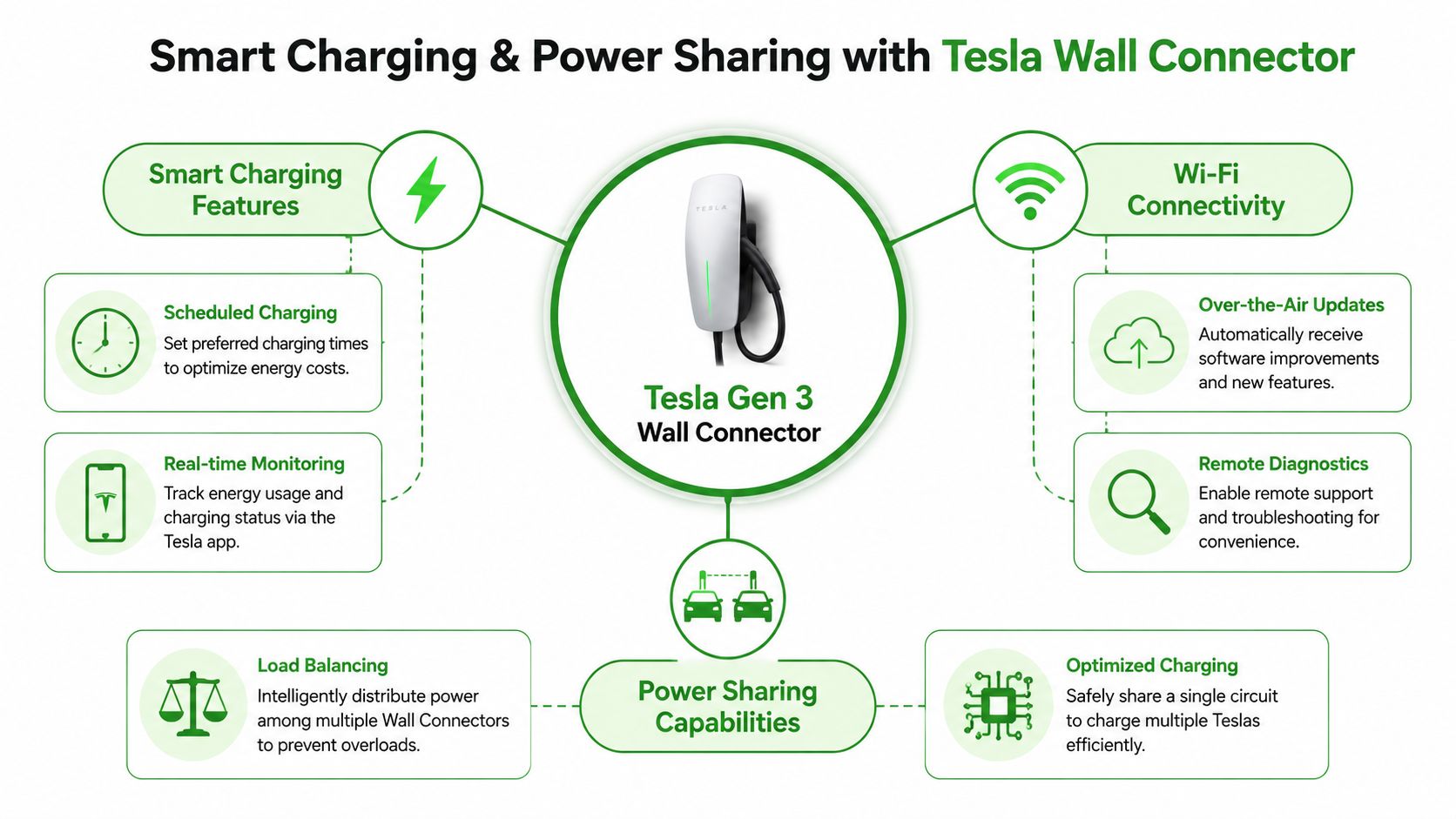
That matters because home charging doesn't happen in isolation. The charger shares a house with ovens, ducted air, pool equipment, batteries, inverters, hot water, and whatever else turns on during the evening peak.
Why Wi-Fi matters
A lot of people hear “Wi-Fi charger” and think it’s just an app feature. In practice, it's much more useful than that.
With a connected charger, the unit can receive firmware updates and support remote diagnostics. That helps keep the charger current and makes troubleshooting more straightforward when a homeowner reports unusual behaviour, connection issues, or charging interruptions.
It also improves day-to-day control:
- Scheduled charging: Charge at preferred times instead of plugging in and hoping the timing suits your tariff or household load.
- Remote visibility: Check charging status without walking to the garage.
- Access control: Useful where the charger is mounted in a shared or visible area.
If you already monitor your solar system remotely, the same mindset applies here. Good visibility helps prevent small issues from turning into call-backs. There’s a similar principle behind remote inverter monitoring for solar performance. Connected hardware is easier to manage well.
How power sharing works in plain English
Power sharing is best thought of as an air traffic controller for your available electricity. It doesn’t create more supply. It coordinates what’s already available so multiple chargers can operate without pushing the site beyond safe limits.
That’s useful in homes with two EVs, duplex developments, and small commercial sites. Instead of giving every charger unrestricted demand and hoping the main board can cope, grouped chargers communicate and divide available capacity.
This improves two things:
- It reduces the need for unnecessary electrical oversizing.
- It makes multi-charger setups more realistic on existing infrastructure.
What works and what doesn't
Power sharing works well when the installation is designed around the actual switchboard and site load. It doesn't work well when people assume any board can take multiple chargers just because the chargers support grouping.
A few practical realities apply:
- Good design works: Load-aware setups are much easier to live with than fixed high-output charging on a busy household supply.
- Poor commissioning causes problems: Wi-Fi setup, grouping, and final configuration need to be done properly on site.
- Solar households benefit more: Dynamic charging behaviour makes more sense when the house already has variable generation and changing daytime loads.
The smartest charger in the world still needs a sensible electrical design behind it. Software helps, but it doesn’t replace proper circuit planning.
EV and Home Electrical Compatibility in Australia
Compatibility questions usually fall into two buckets. The first is vehicle compatibility. The second, and more important one, is whether the house can support the charger safely and without constant compromises.
For Australian homes, the electrical side is where overseas content often falls short. Much of what you’ll find online is written around US supply standards, breaker conventions, and installation assumptions. That’s not much help when you're standing in front of an older NSW switchboard with solar already tied in.
Single-phase and three-phase in NSW
The Gen 3 Wall Connector is designed for Australian 230V, 50 Hz single-phase supply and can also be used in three-phase setups. It also supports power-sharing for up to six units, which is particularly useful in multi-unit developments and commercial sites, according to Tesla’s Wall Connector installation documentation for 1P systems.
That tells you two important things straight away. First, you don’t need to assume three-phase power is mandatory just to install the charger at home. Second, if you do have three-phase supply, the charger can be integrated into a more flexible site design.
What that means at the property level
The charger may be compatible with your house in principle, but the final answer depends on the board, cable route, available capacity, and the rest of the site load.
A practical assessment usually focuses on:
- Existing supply type: Single-phase homes can absolutely work, but available headroom matters.
- Switchboard condition: Older boards often need attention before adding sustained EV load.
- Other major loads: Air conditioning, electric cooking, hot water, and pool gear affect charger configuration.
- Future plans: A second EV, battery storage, or extra solar can change what “best practice” looks like today.
Compatibility with the wider EV market
Many NSW homeowners ask whether a Tesla-branded charger locks them into Tesla forever. In practice, the more relevant issue is connector standard and installer configuration for the intended vehicle fleet at the property. For mixed-vehicle households or commercial sites, that should be discussed before hardware is ordered.
What doesn’t work is choosing purely on brand appeal and sorting out electrical fit later. Charger selection should follow site reality.
For homeowners trying to understand what’s possible before they commit, a proper home electric car charger installation assessment is the fastest way to answer the core question, which is not “Can this charger exist on my wall?” but “Can this charger work properly in my home?”
Older homes can usually be adapted, but the answer often sits in the switchboard, not in the brochure.
Professional Installation and Site Prep for NSW Homes
A neat charger on the wall doesn't tell you whether the installation underneath is any good. In NSW, the quality of the site assessment, protection design, cable installation, and commissioning determines whether the tesla gen 3 wall connector operates flawlessly or becomes a source of nuisance trips and limitations.
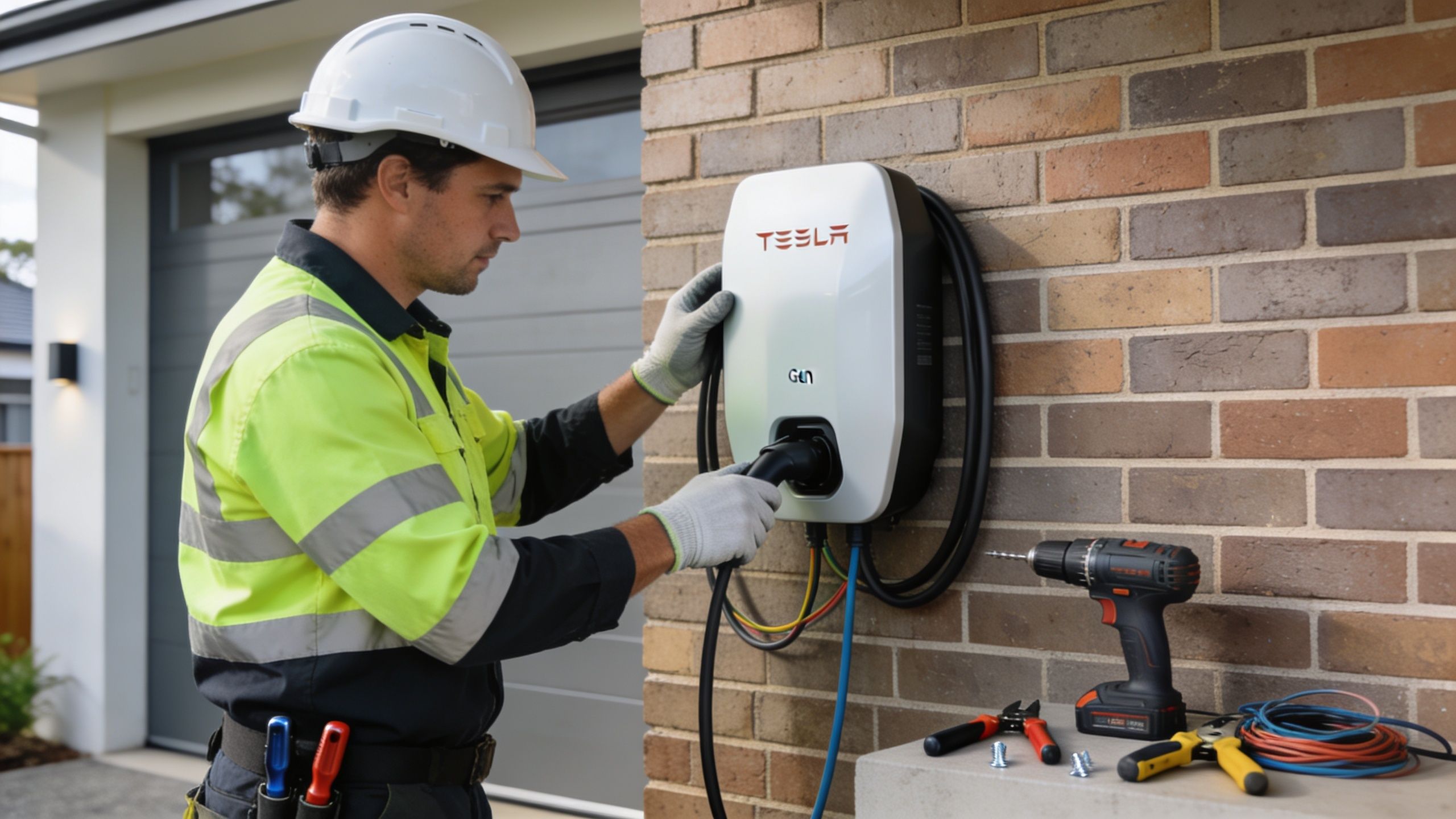
One built-in safety feature deserves specific attention. The Gen 3 Wall Connector includes an internal Type A RCD with DC 6 mA sensitivity, which is an important protection feature for EV charging and is particularly relevant in NSW homes with existing solar systems or older wiring, as outlined in Tesla’s Universal Wall Connector safety documentation.
That built-in protection helps. It does not remove the need for a proper installation.
What a proper site visit should uncover
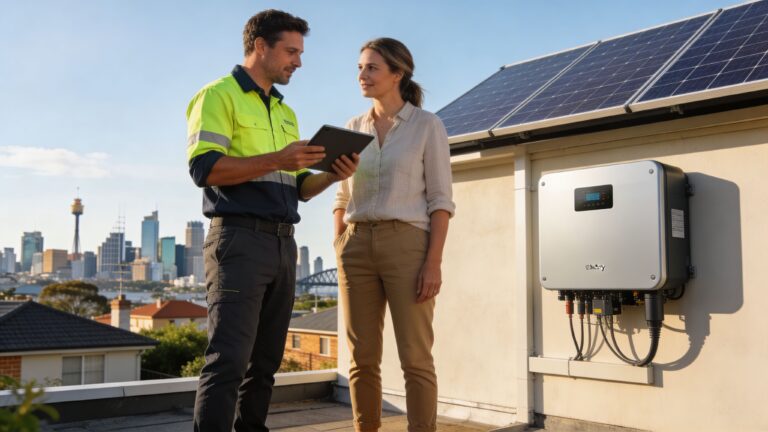
A professional installer should be looking far beyond wall space. The main work starts with how the house is built electrically.
A useful pre-install review will usually check:
- Switchboard capacity and layout: Is there room for a dedicated circuit and are the existing protective devices suitable?
- Cable route: Can the charger be fed cleanly without exposed shortcuts or ugly surface runs where they don’t belong?
- Mounting position: Will the cable reach the car naturally without stretching across walkways or garage doors?
- Interaction with solar and batteries: The charger shouldn’t be treated as separate from the rest of the home energy system.
If you're comparing installer standards in different regions, it can help to see how established electrical contractors approach the same job. For example, Black Rhino Electric outlines what’s involved when you get your Tesla charger installed in a residential setting. The key takeaway is universal. Proper EV charger work is always site-specific.
Why compliance isn't a box-ticking exercise
AS/NZS 3000 compliance matters because EV charging is a sustained load. Unlike occasional appliance use, the charger can pull significant power for long periods. That puts more importance on cable selection, circuit protection, termination quality, and load calculation.
A rushed install often shows up later as one of these problems:
| Common shortcut | What happens later |
|---|---|
| No serious switchboard review | The charger gets limited more than expected or causes nuisance issues |
| Poor cable path planning | The finished install looks untidy and is harder to use safely |
| Weak commissioning | Wi-Fi, scheduling, and load management never work as intended |
On-site rule: The best charger install is the one the homeowner stops thinking about. It works every day, charges safely, and doesn't create electrical drama elsewhere in the house.
A short walkthrough helps homeowners understand what good practice looks like in the field.
The finish matters too. Charger reliability starts with design, but it lasts because the installer cared about details. That’s the same principle behind high-quality solar installation workmanship. Premium hardware can't rescue careless installation.
Maximise Your Investment with Solar Integration
A common Sydney setup looks like this. Solar is producing well by late morning, the car is parked at home, and the wall connector is ready to charge. If charging is timed properly, a good share of that energy can come from your own roof instead of peak-rate grid supply.
That is where this charger starts to make more financial sense in an Australian home. The value is not only fast charging. It is the ability to line up EV charging with solar production, household demand, and, where installed, battery storage.
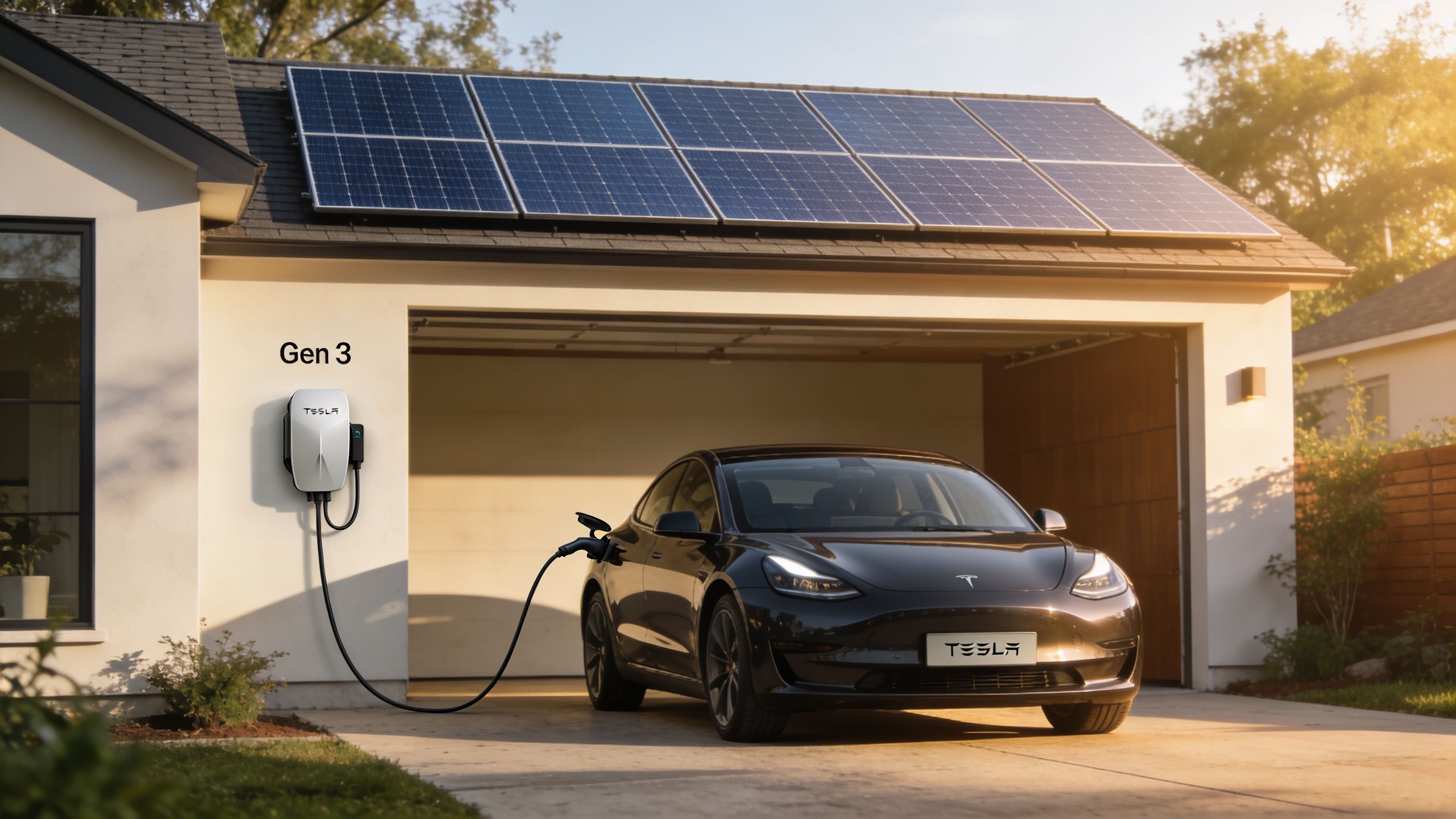
How the system works together
In practical terms, the best results come from charging in the middle of the day, not treating the EV as a night-only load by default. For many NSW households, that means using solar first, exporting less, and buying less electricity back later at a higher rate.
Battery storage can improve that strategy, but it depends on usage patterns. If the vehicle is usually home during solar hours, solar alone can already do a lot of the work. If the car returns late and still needs regular charging, a battery may help shift some stored solar into the evening, though that has to be weighed against battery capacity, backup priorities, and the rest of the home's overnight demand. The Australian Government’s energy guidance on using rooftop solar and home batteries effectively supports the broader principle that self-consumption improves the value of solar generation.
What tends to work well
The strongest solar-plus-EV outcomes usually include:
- Charging schedules matched to solar production hours
- Solar sized for both household use and expected vehicle charging
- Battery storage added for a clear reason, such as evening charging or backup needs
- Monitoring that shows when the car is charging from solar versus the grid
What often disappoints is simpler. The home exports solid solar output all day, then the EV charges after sunset on grid power. On paper, the house has solar and EV charging. In practice, the two are not working together.
I see this regularly in NSW homes with decent PV systems but no charging plan. The equipment is fine. The savings are just left on the table because the charging behaviour never changed.
For homeowners building a longer-term energy plan, the charger should sit inside that conversation early. If backup, self-consumption, and future load growth matter, it helps to understand how a Tesla Powerwall 3 setup fits into a broader home energy system.
Book Your Professional Installation with Interactive Solar
The tesla gen 3 wall connector is a strong piece of hardware, but the product alone isn't the whole story. The outcome depends on where it's mounted, how the circuit is designed, whether the switchboard is ready, and how well the charger is integrated with the rest of the home.
For NSW homeowners, the difference between an average install and a well-planned one shows up quickly. Good installations are easy to use, safe under sustained load, and ready for the realities of solar, battery storage, and future EV growth. Poor ones tend to create compromises from day one.
That’s why installer selection matters as much as charger selection. You want licensed electricians who understand local supply conditions, older Sydney homes, modern switchboards, solar integration, and the commissioning details that determine whether the smart features get used.
Interactive Solar brings that full-system approach. With over 20 years of combined experience, in-house licensed electricians, and a complete service model that covers consultation, design, certified installation, and after-care, the team is set up to deliver EV charging that works properly in real NSW homes. The business is family-owned, based in Chipping Norton, and supports homeowners and businesses across Sydney and greater NSW with turnkey solar, battery, and EV charging solutions.
If you're planning a charger for a Tesla, preparing for a new EV, or upgrading a home with solar and battery storage in mind, the best next step is a site-specific assessment. That will tell you what your home can support, what should be upgraded, and how to get the installation right the first time.
Interactive Solar helps Sydney and NSW homeowners turn EV charging into a properly integrated home energy solution. If you want expert advice on the right charger location, switchboard readiness, solar compatibility, and compliant installation, speak with Interactive Solar.
Make Interactive Solar a preferred source in Google
One click tells Google to surface our articles more often in Top Stories, AI Overviews and AI Mode.