
How Much to Install Solar Power in 2026?
Last updated:
For many, the search for solar solutions often begins with a similar experience. Another electricity bill lands, you open it with a bit of dread, and the total feels harder to justify than it did a year ago.
That’s usually when the question appears: how much to install solar power for my home?
It sounds simple, but it isn’t a one-line answer if you want a system that performs well for the next couple of decades. A solar quote isn’t just a count of panels and a final figure. It’s a mix of roof design, equipment choice, household usage, installation quality, rebates, and whether you want to stop at solar or build toward batteries and EV charging later.
A lot of homeowners make the same mistake early. They compare quotes the way they’d compare two televisions of the same size. Solar doesn’t work like that. Two systems can look similar on paper and deliver very different results once they’re on your roof.
This is the practical way to look at it. Not “what’s the cheapest number I can find?” but “what am I buying, and what will it save me from over time?”
That Feeling When the Electricity Bill Arrives
The bill lands after a hot month, and the number is high enough that everyone in the house suddenly notices how and when power gets used. Air conditioning feels expensive. The dryer starts looking optional. Even routine habits, like running the dishwasher after dinner, get questioned.
That moment is often when solar stops sounding like a general home improvement and starts looking like a practical way to control a recurring cost.
Homeowners usually begin with one question: what will it cost to install? Fair question. But the better question is what that spend gets you over the next 10, 15, or 25 years. A cheap system that underperforms, uses weak hardware, or is installed poorly can cost less upfront and still be the worse financial decision.
What homeowners usually want
In day-to-day terms, most households are not chasing technical bragging rights. They want a system that does the job properly:
- Cuts the daytime bill by using solar generation before buying from the grid
- Reduces exposure to future price rises
- Runs reliably without constant faults or warranty headaches
- Keeps options open for a battery or EV charger later
That is the shift that matters. The conversation moves from price alone to value. How much grid power can the home avoid buying? How well will the system hold up? Will the design still make sense if the family buys an EV in a few years or starts working from home more often?
A good solar system changes the way your home buys electricity every day, not just the total on the next bill.
Why bill shock turns into action
Most families try the obvious savings first. They swap lights, adjust usage habits, and become stricter with heating and cooling. Those changes help, and they are worth doing, but they only trim consumption around the edges if the home still buys most of its daytime electricity from the grid.
Solar changes the source of that power.
If you want to lower usage before choosing a system size, start with practical ways to reduce electricity bills at home. That gives you a cleaner baseline, which makes quote comparisons more useful.
And while roof design gets covered in more detail later, homeowners who want to understand why layout and roof complexity affect pricing can look at Exayard roofing estimating software. It helps explain why two homes with similar bills can still end up with very different solar quotes.
Beyond the Price Tag What Determines Solar Installation Cost
No reputable installer can give a meaningful price from your postcode alone. The roof, switchboard, cabling path, shade profile, and equipment choice all change the job.
That’s why one neighbour’s quote doesn’t tell you much about yours.
Your roof changes the labour and design
A clean, simple roof is cheaper to work on than a broken-up roof with multiple faces, awkward access, or shading from trees and nearby structures. Installers look at how many usable panel positions exist, how straightforward the mounting is, and whether the roof orientation supports strong output.
Roof material matters too. Mounting on one roof type can be more direct. Others need more care, more flashing work, or more time to keep everything weatherproof and tidy.
If you want a sense of how roofing professionals visualise measurement, access, and layout complexity before any job is priced, tools like Exayard roofing estimating software are useful for understanding why roof geometry affects project planning so heavily.
Equipment tier changes long-term value
Not all systems use the same hardware quality. A quote can be cheaper because it includes lower-tier panels, a more basic inverter, shorter support, or less allowance for difficult site conditions.
The major hardware choices are usually these:
- Panels. Panel efficiency, warranty support, brand track record, and appearance all affect value.
- Inverter. This is the system’s control centre. A weak inverter choice can undermine a good panel array.
- Mounting and electrical balance of system. Racking, isolators, protection gear, and cable management often separate clean installs from rushed ones.
House size doesn’t set the answer
People often assume a bigger home automatically needs a bigger solar system. It usually doesn’t work that way. Usage drives sizing more than floor area.
A smaller home with ducted cooling, a pool pump, and people home during the day may need more solar than a larger house with modest daytime load.
Practical rule: Ask the installer what part of the design is based on roof size, and what part is based on your actual electricity use. If they can’t explain the split clearly, keep looking.
The invisible part of the quote matters
The biggest mistakes happen when buyers compare only panel wattage and final figure. They miss the design work, electrical workmanship, compliance, and after-sales support behind the quote.
That’s where long-term performance is won or lost. A technically advanced system installed poorly is still a poor investment. This is why installation standards matter just as much as hardware quality, as explained in this guide to installation quality.
Choosing the Right System Size for Your Energy Needs
The most common sizing mistake is chasing a panel count instead of matching the system to the way your home uses power.
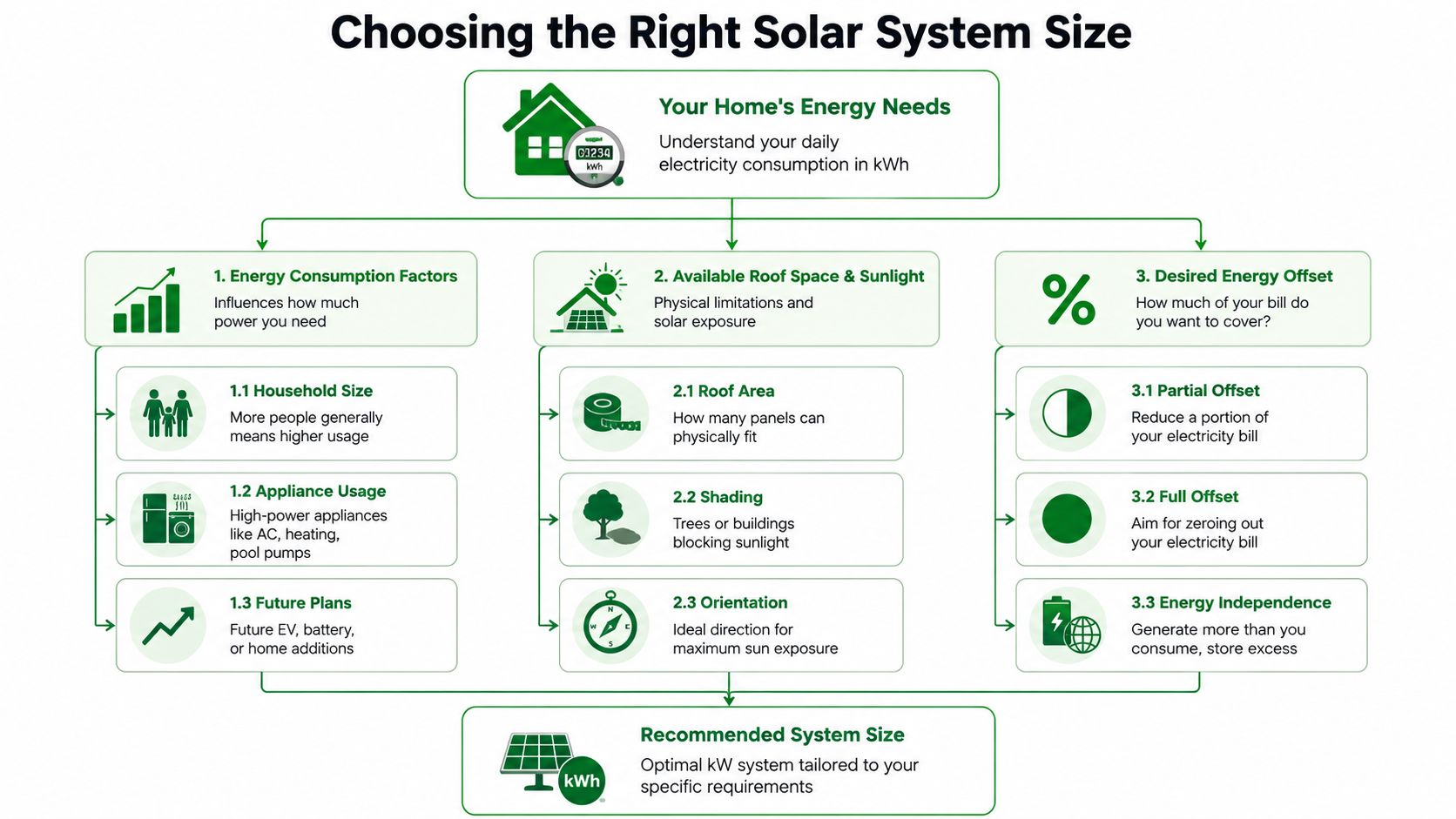
Your electricity bill is the better starting point. Look for your daily usage in kWh. That number tells you far more than the size of the house or how many people sleep there, because behaviour and appliances shift demand dramatically.
As of 2025, Australia had over 3.8 million residential solar installations, covering 32% of households nationwide, and 42% in NSW, according to this solar uptake summary. That level of adoption tells you something important. Households across NSW are already treating solar as a practical bill-management tool, not an experimental upgrade.
Start with your daytime load
A properly sized system should usually aim to offset 70-100% of usage when designed to match the property and household consumption pattern. That means the best size depends on more than total use. It also depends on when you use electricity.
A home that’s empty during the day may still benefit from solar, but the economics shift compared with a home where people are running cooling, appliances, or business equipment through daylight hours.
What pushes your size up or down
A realistic sizing conversation should include:
- People at home during the day. Daytime use increases the immediate value of solar generation.
- Large appliances. Air conditioning, electric hot water, pool pumps, and cooking loads all matter.
- Future electrification. If you’re planning an EV, induction cooking, or a battery later, size with that in mind.
- Roof limits. Shade, usable area, and orientation can cap what fits, even when your demand is higher.
For Sydney homeowners, one practical benchmark from the verified data is that a 10 kWh/day household needs roughly a 7-8 kW system to target strong coverage, based on the sizing guidance provided in the source material.
Don’t ask, “How many panels can I fit?” Ask, “How much of my real usage can I offset well?”
Recommended Solar System Size by Household Energy Profile
| Household Profile | Typical Daily Usage (kWh) | Recommended System Size (kW) |
|---|---|---|
| Couple in a small apartment or townhouse | Low | Small system sized to daytime essentials |
| Family of 3 to 4 with standard appliance use | Moderate | Mid-sized system matched to bill history |
| Family of 4 with regular air conditioning | Higher | Larger system designed to offset strong daytime demand |
| Family home with pool pump and heavy cooling load | High | Large system, subject to roof space and sun access |
| Household planning for an EV or battery later | Varies | Size for current usage plus future expansion |
What works and what doesn’t
What works is reviewing a full year of bills, checking seasonal spikes, and sizing around actual usage patterns.
What doesn’t work is choosing the smallest quote to save money upfront, then discovering the system was undersized from day one. An undersized system can still help, but it often leaves homeowners wishing they’d gone slightly larger while scaffolding, labour, and approvals were already part of the job.
The Anatomy of a Quality Solar Quote
A solid solar quote should tell you what hardware is included, how the system is designed, who is installing it, and what happens if something goes wrong later. If it doesn’t, the quote is incomplete no matter how attractive the total looks.

Read the hardware line by line
The visible parts of the system are easy to list, but they shouldn’t be treated as interchangeable.
Panels should be assessed on efficiency, warranty backing, degradation expectations, and manufacturer reputation. Verified data shows that higher efficiency solar panels now reaching 21-22% for Tier 1 brands can reduce the number of modules needed on a roof by 20-30%. That in turn cuts labour, which accounts for about 25% of total cost, and can reduce balance-of-system costs like racking by up to 15%.
That matters on tight roofs. Fewer panels can simplify layout, improve aesthetics, and leave room for later expansion.
Inverters deserve just as much scrutiny. This is the equipment that manages energy conversion and system performance. A quote should identify the inverter model clearly and explain why it suits your roof layout and future plans.
Racking and electrical components are less glamorous, but they tell you a lot about installation standards. Neat cable routing, proper isolator placement, compliant mounting, and weatherproof penetrations aren’t extras. They’re the basics of a system that lasts.
Cheap quotes usually cut where you can’t see
Many buyers are caught. The quote may look close enough on wattage and brand names, but corners are often cut in design time, roof work quality, switchboard integration, commissioning, or post-install support.
Use this checklist when reading any proposal:
- Named hardware. If brands or model numbers are vague, ask why.
- System layout. You should know where the panels go and how shade was considered.
- Installer credentials. Ask who is doing the electrical work and whether the team is in-house or subcontracted.
- Support after handover. Find out who answers the phone if a fault appears later.
A good quote makes the invisible work visible.
Consumer protection matters
Solar is a long-term purchase. That means paperwork, warranties, and sales conduct matter more than many buyers expect.
If you want to understand the standards that should sit behind a residential solar sale, review the New Energy Tech Consumer Code guide. It’s one of the clearest ways to separate professional operators from companies focused only on closing the deal.
Slashing Your Upfront Cost with Solar Rebates and Incentives
A homeowner gets three solar quotes and assumes the cheapest one is giving the best rebate. In practice, the rebate is usually the easy part. The real question is how each installer has applied it, and what sits underneath the final number.
Most households are not trying to work out the full retail price of a solar system. They want to know the net cost after incentives, and whether that lower upfront figure still buys a system worth having for 10 to 20 years.
How the main rebate works
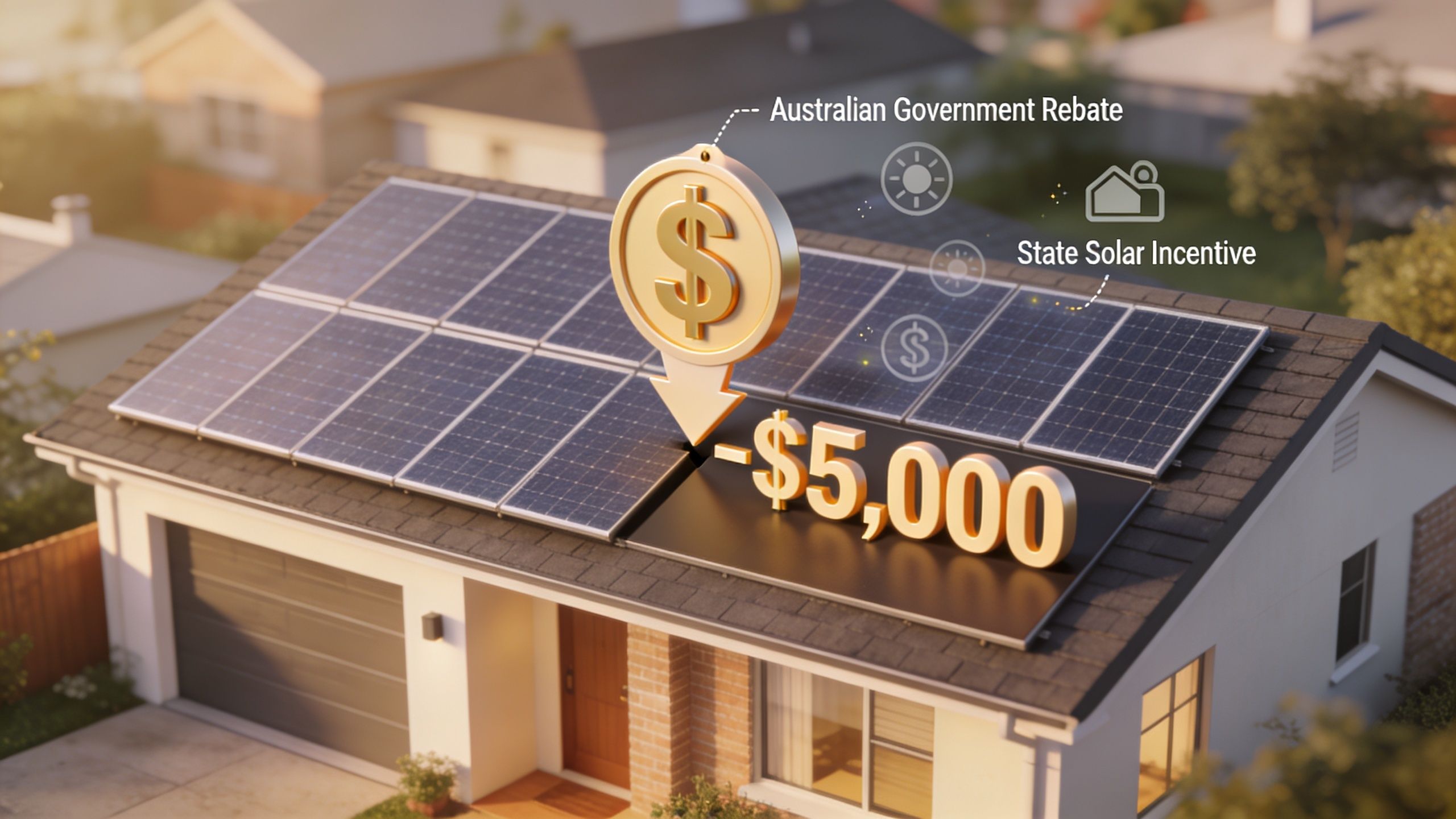
For NSW homeowners, the main federal solar incentive is the Small-scale Technology Certificates program, or STCs. In most residential quotes, the installer applies the STC value as an upfront discount at the point of sale, so you see the reduction in the proposal rather than waiting for a separate payment later.
The catch is simple. STCs lower the entry cost, but they do not make two quotes equivalent. A cheaper net figure can still hide lower-grade components, rushed installation, weak after-sales support, or a design that leaves future battery options awkward and expensive.
Payback can still be attractive for the right household, especially if daytime solar use is high and grid power prices keep rising. But payback is never just a rebate story. It depends on system quality, usage habits, roof conditions, and how much of your own generation you use at home.
Why the same rebate still leads to different prices
I see this confusion often. Homeowners assume that if every installer is using STCs, the quotes should land in roughly the same place. They often do not.
Price differences usually come from a few practical areas:
- Panel and inverter quality
- Roof access, pitch, and installation difficulty
- Switchboard work or electrical upgrades
- Time spent on system design and shade planning
- Workmanship standards and support after commissioning
- Allowance for future battery or EV charger integration
That is why rebates should be treated as one line item, not the whole value equation.
For homeowners trying to understand what other household support may be available around energy costs more broadly, this overview of financial assistance for NSW power can be a useful starting point alongside solar-specific programs.
Ask for the net figure and the rebate breakdown
A proper quote should show the installed price before STCs, the STC discount applied, and the final amount you are expected to pay. It should also explain who is handling the paperwork and whether the eligibility assumptions are based on your property and system size.
If any quote only pushes a headline discount, ask better questions. What hardware is included? What output has been assumed? What happens if the roof layout changes on installation day? Those answers matter more than a big rebate graphic on page one.
If you want a plain-English summary of current support options, this guide to solar rebates in NSW and government solar incentives is a useful reference before comparing proposals.
Here’s a short explainer that helps visualise how installers usually frame the rebate side of the conversation:
Future-Proofing Your Energy with Batteries and EV Chargers
A solar system doesn’t need to do everything on day one, but it should leave the door open for what your home may need next.
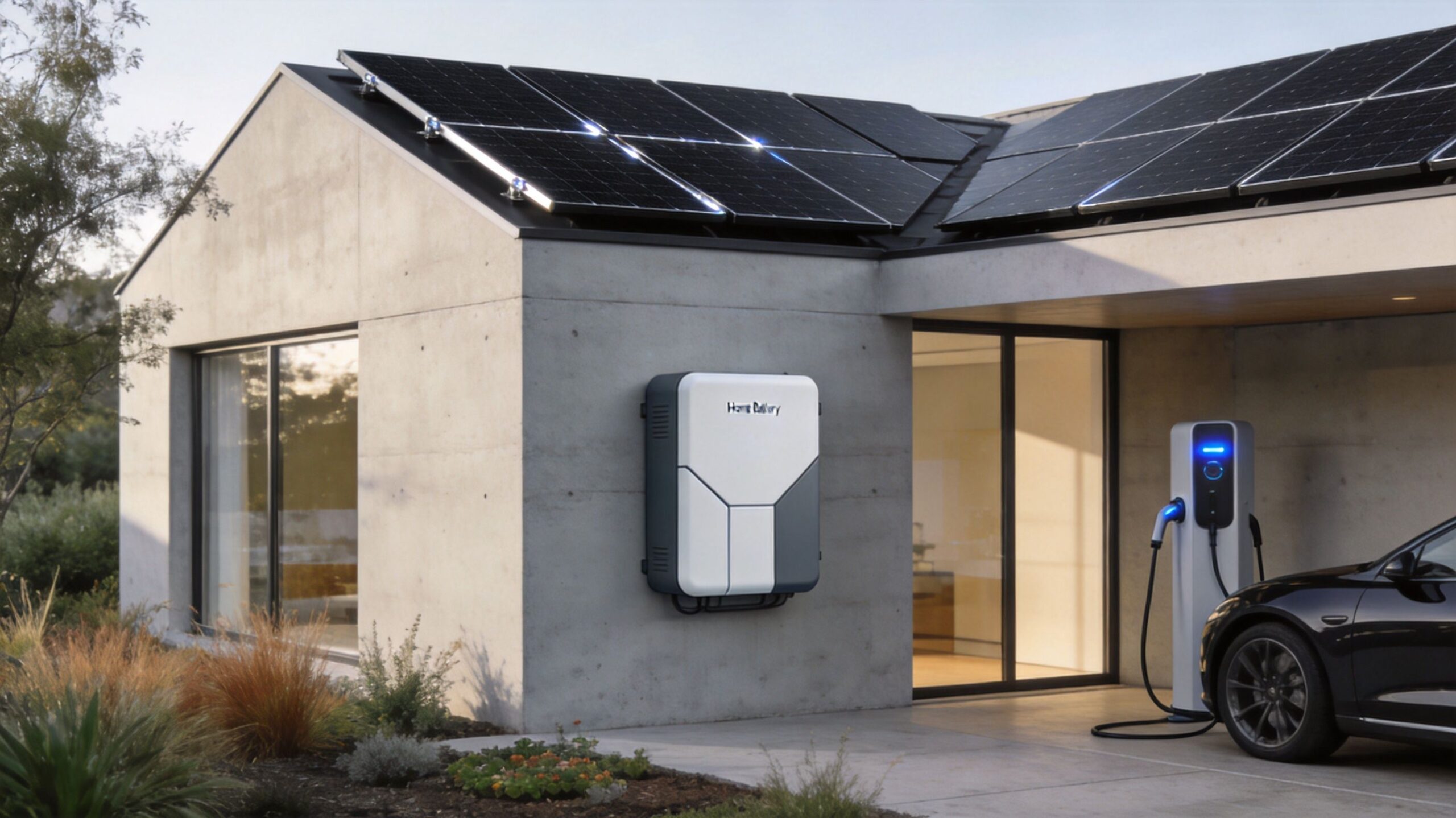
That usually means two additions. A battery for storing daytime generation, and an EV charger that lets the home use solar as transport fuel.
Where batteries change the value equation
Without a battery, excess daytime solar often goes back to the grid. With a battery, more of that production stays on site for evening use.
Verified data notes that for NSW businesses and forward-thinking homeowners, pairing a solar system with a battery can increase self-consumption of generated power to over 50% and can also open access to Virtual Power Plant participation, which may create additional value streams.
That doesn’t mean every household should buy a battery immediately. Sometimes the smarter move is to install solar now with a hybrid-ready design, then add storage later once your usage pattern is clear.
EV charging changes system planning
If you own an electric vehicle, or know one is coming, mention it before the system is designed. EV charging can shift how much daytime generation you can use directly at home.
That’s where integrated planning helps. A system sized only for today’s bill may feel undersized once a vehicle starts charging from the same property.
If a battery or EV is even a medium-term plan, design for it now. Retrofitting is easier when the inverter choice, switchboard space, and cable routes were considered from the start.
For a practical overview of storage options and what to compare, this battery comparison guide is a helpful next read.
Your Next Steps to Energy Independence in Sydney
By this point, the answer to how much to install solar power should feel clearer, even if it isn’t reduced to one universal figure. The right cost is the cost of a system that fits your roof, your usage, and your long-term plans without cutting corners.
The fastest way to get a reliable answer is a proper quoting process, not a rough estimate pulled from an ad.
What a professional quote process should look like
A strong installer will usually work through these stages:
Energy review
They’ll look at recent bills and ask about daytime versus evening use, major appliances, and future changes like an EV.Site assessment
They’ll review roof layout, shade, switchboard condition, and any access issues that affect design and labour.System design
Panel placement, inverter selection, and future battery readiness should be mapped properly during this stage.Clear proposal
You should receive named equipment, an explanation of the design, incentive treatment, and warranty information.
Questions worth asking before you sign
Not every useful question is about price.
Ask these:
- Who is installing the system?
- Is the design based on my usage or just my roof size?
- Is the inverter suitable for battery integration later?
- What support do I get if performance or hardware issues appear?
A good installer won’t rush these answers. They’ll welcome them.
The best solar quote is the one you can still defend five years after installation.
If you approach the process that way, you’re far more likely to end up with a system that keeps delivering, rather than one that looked cheap at signing and expensive in hindsight.
If you want a customized answer for your roof, usage, and future plans, speak with Interactive Solar. Their team can assess your property, explain your options clearly, and provide a no-obligation quote that shows what a well-designed solar system could look like for your home in Sydney or greater NSW.
Make Interactive Solar a preferred source in Google
One click tells Google to surface our articles more often in Top Stories, AI Overviews and AI Mode.