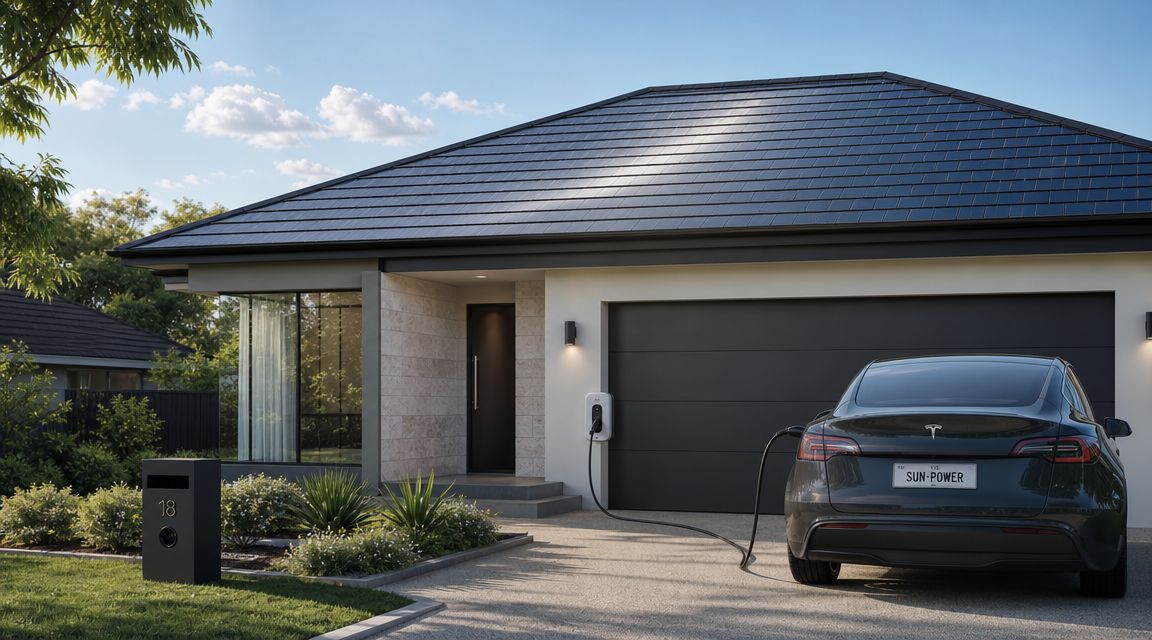
Solar Energy Roof Tiles: An Australian Homeowner’s Guide
Last updated:
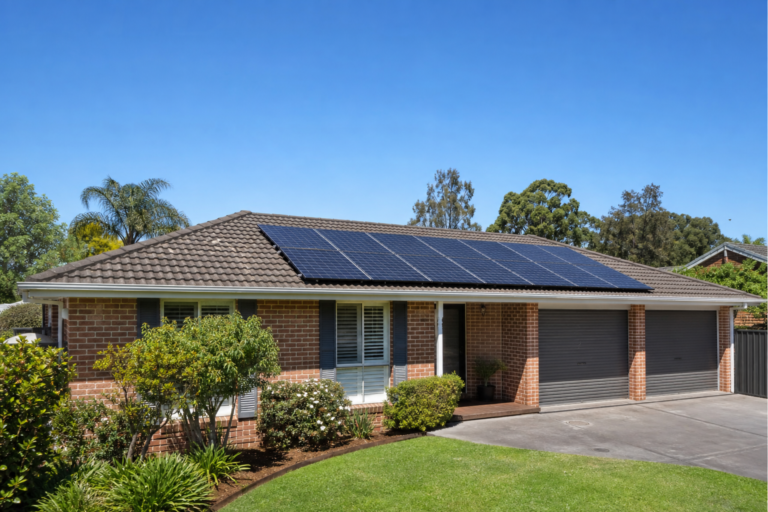
You're probably here because you like the idea of solar, but you don't like the look of standard panels on your roof. That's common with architect-designed homes, premium renovations, heritage-sensitive streets, and projects where the roofline matters as much as the power bill.
Solar energy roof tiles promise a cleaner answer. They sit within the roof rather than above it, so the home keeps a more integrated look. For the right property, that can be a genuine advantage. For the wrong property, they can become an expensive way to chase aesthetics when a conventional solar system would do the practical job better.
That's the key conversation NSW homeowners need. Not “do they look good?” Most do. The better question is whether they make sense for your roof, your build stage, your council setting, and your long-term energy plans.
The Dream of a Seamless Solar Roof
A well-designed roof changes how a home feels from the street. If you've spent time choosing cladding, roof colour, window lines, and landscaping, the idea of mounting a standard panel array on top can feel like a compromise.
That's where solar energy roof tiles attract attention. They aim to make generation part of the architecture instead of an add-on. On the right home, that matters. It's often the deciding factor for owners who care as much about finish as function, especially on visible front-facing roof planes.
Australia is also the right market for this conversation. Rooftop solar isn't experimental here. Australia passed 4 million rooftop solar installations in 2024, which means any solar tile product is entering a country where rooftop generation is already mainstream, with mature installer, policy, and grid support behind it, as noted by the Clean Energy Council and AEMO discussion referenced here.
Why the idea is appealing
Solar tiles usually appeal to homeowners in a few specific situations:
- New custom homes: The roof is still being designed, so integration can be planned properly.
- Full re-roof projects: If roofing material has to be replaced anyway, combining roofing and generation can be more rational.
- High-visibility homes: Street-facing elevations and premium builds often place a higher value on appearance.
- Design-controlled areas: Some homes sit in estates or neighbourhoods where visible hardware is a sticking point.
If you want to see how integrated energy systems can complement well-finished homes, a visual reference like this project gallery of completed installs helps frame what's possible.
A seamless roof only works when the energy side and the building side are designed together. If either one is treated as an afterthought, the result usually disappoints.
The question that matters more than looks
The mistake I see homeowners make is assuming “better looking” automatically means “better solution”. It doesn't. A premium roof-integrated system has to justify itself through the whole project. Roof timing, orientation, shading, usable area, access, maintenance, and future serviceability all matter.
For some NSW homes, tiles are exactly the right answer. For many others, standard panels remain the more practical choice, even when aesthetics matter. The rest of the decision comes down to understanding the technology and being honest about trade-offs.
What Are Solar Energy Roof Tiles?
Solar energy roof tiles are a form of Building-Integrated Photovoltaics, usually shortened to BIPV. That means the solar technology is built into the structure of the building rather than mounted onto it afterwards.
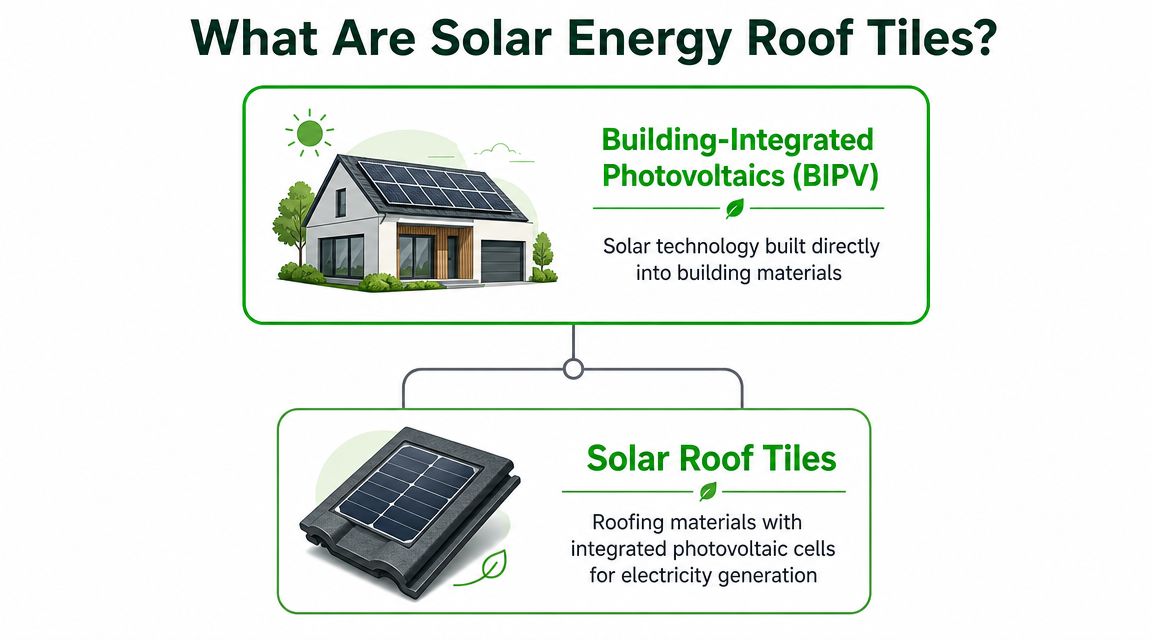
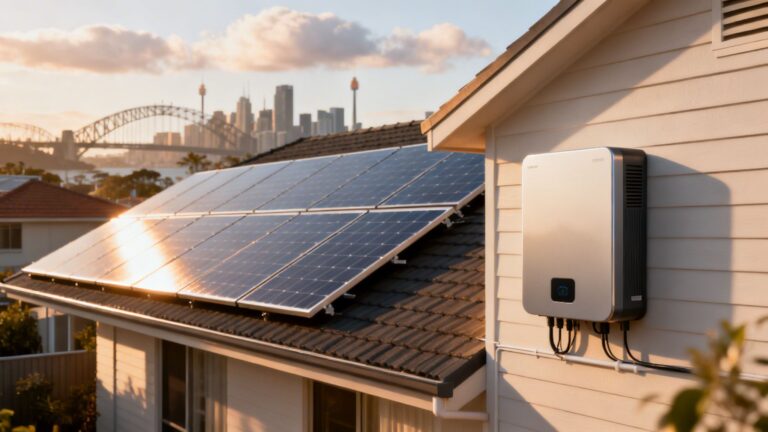
Think of them as roofing material that also generates electricity. A standard panel system sits above an existing roof on rails and brackets. A solar tile system forms part of the roof surface itself. It still produces solar power, still connects through electrical cabling, and still needs an inverter. The difference is where the generation layer sits.
Active tiles and non-active tiles
Most solar tile roofs are not made entirely from electricity-generating pieces. They usually include a mix of tile types.
- Active tiles: These contain photovoltaic cells and generate electricity when exposed to sunlight.
- Non-active tiles: These match the appearance of the active tiles but function only as roofing material.
- Perimeter and detail pieces: Ridge, edge, flashing, and transition components finish the roof and keep it weather-tight.
That mix matters because not every section of a roof is suitable for generation. South-facing sections, heavily shaded areas, valleys, and awkward cut-up roof zones may be better finished with non-active components so the roof stays visually consistent without wasting solar hardware.
How they actually work on a home
At system level, the process is familiar. Sunlight hits the active tiles. They produce direct current electricity. That electricity is routed through the roof system and then converted for household use by an inverter.
What changes is the construction method. Instead of mounting a framed module over existing roofing, the installer has to think like both a roofer and a solar electrician. The roof covering, drainage path, waterproofing layers, cable routes, and electrical isolation all need to work as one integrated assembly.
Practical rule: If someone explains solar tiles as “just solar panels in a different shape”, they're oversimplifying the job.
What they are not
It helps to be clear about what solar tiles don't solve.
They don't automatically outperform conventional panels. They don't suit every roof shape. They also don't remove the need for proper solar design, inverter selection, monitoring, or future service access. They are best understood as a premium building product with solar capability, not just a prettier version of mainstream PV.
That distinction matters, because once you understand solar tiles as both roofing and electrical infrastructure, the next decision becomes much clearer: are you better off with integrated tiles, or with a high-quality conventional panel system?
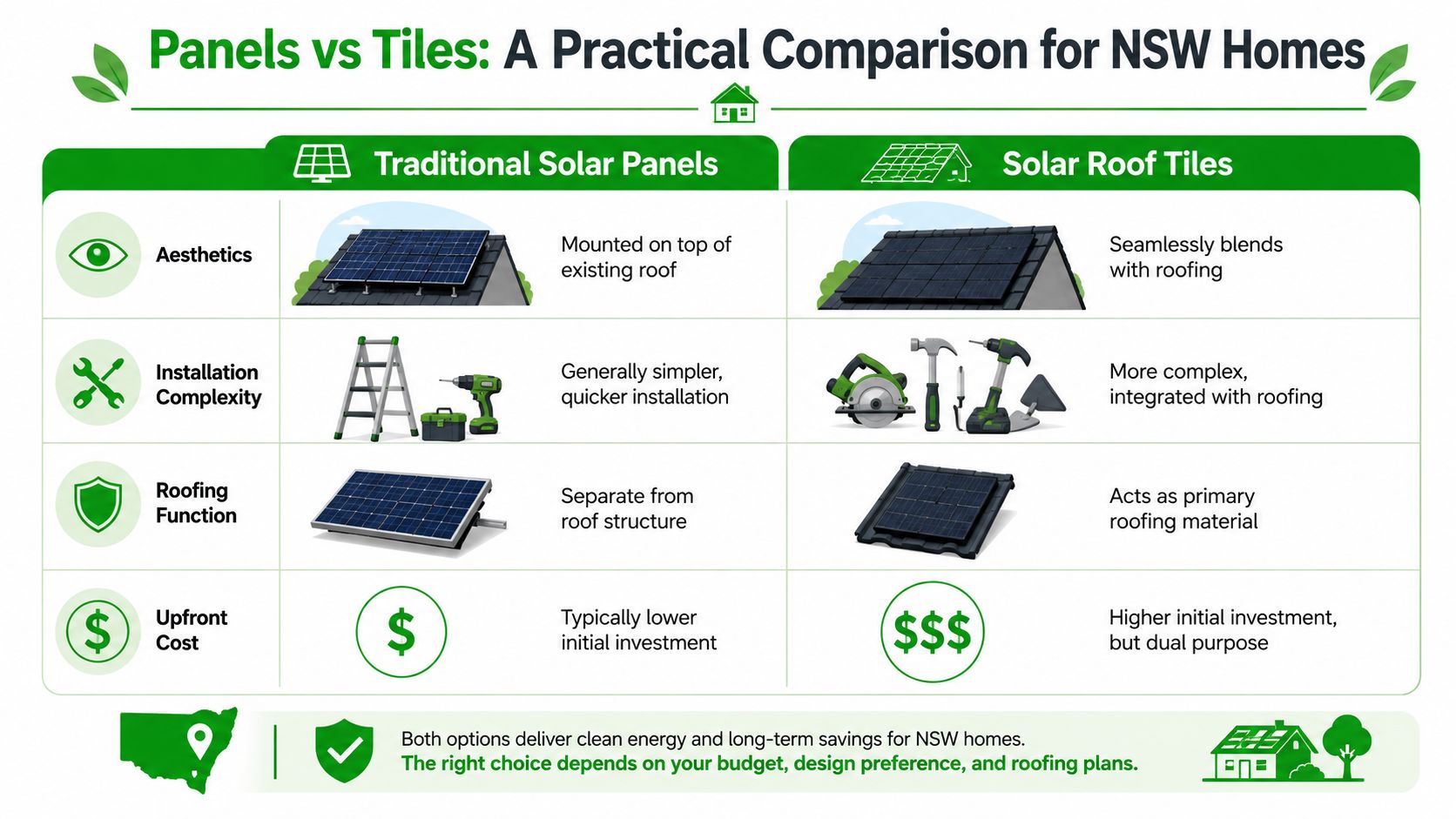
Panels vs Tiles A Practical Comparison for NSW Homes
The cleanest way to assess solar tiles is to stop treating them as a fashion choice and compare them against the system they usually compete with. In NSW, that's not another premium niche product. It's a conventional rooftop PV system with quality panels, proper layout, and proven serviceability.
Solar roof tiles are a premium building product in Australia, and they're generally most viable for new builds and full roof replacements because the project combines architecture, roofing and generation in one scope, rather than chasing the lowest-cost electricity that drove Australia's conventional solar boom, as discussed in this industry market overview.
Where standard panels usually win
For most existing NSW homes, conventional panels still lead on practicality.
| Option | Strongest advantage | Main limitation | Best fit |
|---|---|---|---|
| Traditional solar panels | Lower-cost path to rooftop generation | More visible on the roof | Existing homes, straightforward retrofits |
| Solar roof tiles | Cleaner architectural integration | More complex roofing and electrical scope | New homes and full re-roofs |
A standard panel system usually gives you more flexibility in layout and future service. If one panel is damaged, access is more familiar. If an inverter needs replacement, the roof structure itself usually isn't part of the problem. If your main goal is bill reduction, panels are hard to beat.
For homeowners comparing module quality rather than roof-integrated products, reviewing a mainstream option such as this JA Solar panel overview can help set a benchmark for what conventional PV offers.
Where tiles make a real case
Tiles come into their own when the roof itself is part of the value equation.
That usually includes homes where visible panels would undermine the design intent, projects where roofing material is already being replaced, or homes in tightly controlled aesthetic environments. In those cases, the integrated look is not a cosmetic extra. It becomes part of the project brief.
Aesthetics and roofline
Tiles sit far closer to the architecture. They don't create the same mounted appearance as framed modules on rails. On premium homes, that can be a decisive benefit.
Roofing function
Panels generate power, but they are not the roof. Tiles do both jobs at once. That changes how the whole project is designed, approved, installed, and maintained.
Retrofit suitability
Many homeowners often miss this point. Tiles usually make less sense as a simple upgrade to an otherwise sound existing roof. If the roof doesn't need replacement, the economics often lean heavily back toward conventional panels.
The NSW reality check
Most homeowners aren't choosing between “good” and “bad”. They're choosing between better-looking integration and better-performing financial logic.
A simple way to frame it is this:
- Choose panels when your roof is in good condition, you want straightforward solar generation, and visual integration is not the highest priority.
- Choose tiles when you are already building, already re-roofing, or you place a high value on the roof's finished appearance.
- Pause the decision if your roof has structural unknowns, shading issues, or unresolved council constraints.
The right answer depends less on taste than on timing. If the roof project and the solar project belong together, tiles deserve a close look. If they don't, standard panels are usually the stronger option.
Installation and Council Requirements in NSW
A solar tile project is not a standard solar install with different hardware. It's a combined roofing and electrical build. That changes who needs to be involved, how the roof is detailed, and what must be checked before work begins.
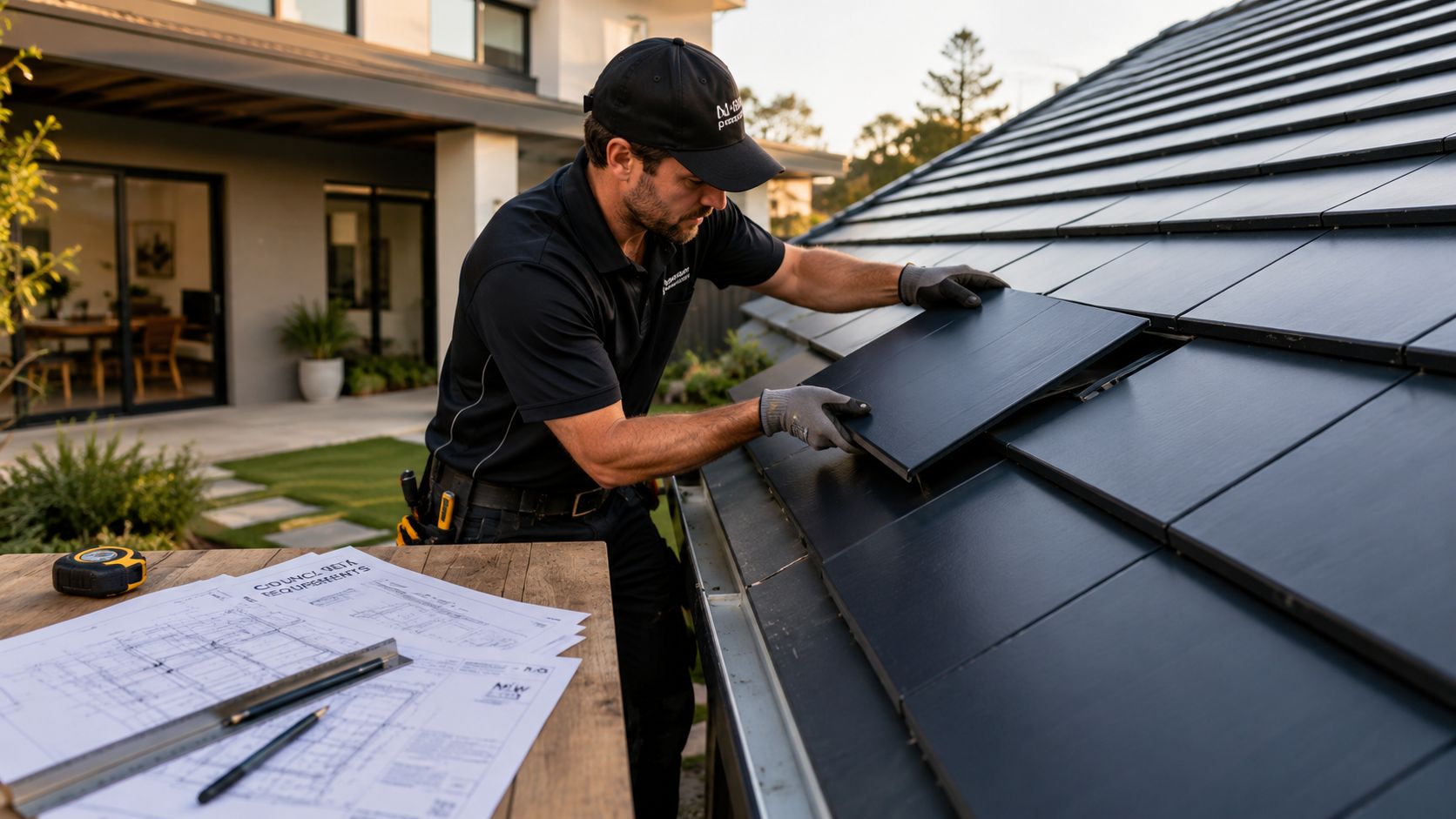
If you're assessing feasibility, I'd start with the building side before the solar yield discussion gets too far. Roof pitch, access, penetrations, drainage paths, and the condition of the supporting structure all shape whether a solar tile design is sensible.
What the installation really involves
On a conventional solar job, the sequence is comparatively simple. On solar tiles, the sequencing matters much more because every trade can affect the others.
- Roof assessment first: The roof structure, existing materials, and weatherproofing strategy need review before final design.
- Electrical pathways planned early: Cable routes, isolation points, inverter placement, and monitoring hardware need to be coordinated with roofing details.
- Water management is critical: Flashings, underlayments, junctions, and terminations must be resolved before anyone starts laying product.
- Commissioning comes last: Like any solar system, the electrical side still requires testing, sign-off, and grid connection processes.
A good code and compliance checklist can help homeowners ask better questions before signing a contract. Tools like Audit Genius's code tools are useful for understanding the kinds of roof and construction issues that can affect project quality.
Who should be on the job
You don't want a general roofer learning solar on your house. You also don't want a solar crew treating the roof as a secondary issue.
The safest projects are managed by teams that understand both disciplines and can document responsibility clearly. If a future problem appears, there shouldn't be any debate over whether it came from roofing work, electrical work, or the interface between the two.
If the quote separates roofing responsibility from solar responsibility without a clear integration plan, expect trouble later.
NSW approvals and practical constraints
Council and planning requirements vary across NSW. Some homes fall under straightforward pathways. Others sit in heritage areas, conservation streetscapes, bushfire-related zones, or estates with stricter design controls.
Roof-integrated products can help, but they don't bypass approvals. You may still need drawings, product details, electrical documentation, and evidence that the final roof form remains compliant. If the property has an ageing solar system already in place, issues around reuse, rewiring, or upgrade pathways should also be clarified early, especially where an old inverter may need attention. A guide on replacement solar inverter planning is relevant when existing equipment forms part of the conversation.
A short walkthrough of the broader installation context helps here:
Questions worth asking before approval starts
- Has the roof been assessed as a roofing project, not just a solar project?
- Who holds responsibility for waterproofing details at transitions and penetrations?
- Will council, certifier, or estate guidelines affect the visible roof finish?
- Who handles the electrical compliance package and final commissioning?
If the answers are vague, keep looking. Solar tiles reward careful planning and punish loose coordination.
Understanding the Financial Value of a Solar Roof
Homeowners often ask the wrong financial question first. They ask whether solar tiles are cheaper than panels. In most cases, that's not the useful comparison.
The better question is whether the project delivers enough value to justify choosing an integrated roof product instead of separate roofing and separate solar. That's a different calculation.
A key issue for Australian buyers is the financial rationality of solar tiles compared with conventional rooftop PV, and that assessment should include lifecycle costs plus the fact that, on a new build or full roof replacement, the avoided cost of separate roofing materials can partly offset the higher initial price per watt of the tile system, as outlined in this Australian-focused discussion of the comparison.
What affects value most
The final value proposition depends on several moving parts, not one headline figure.
- Project timing: Tiles make more sense when roofing work is already part of the budget.
- Roof complexity: Valleys, multiple facets, shading, and awkward geometry can reduce the amount of productive tile area.
- Active versus non-active coverage: A uniform look often requires non-generating sections, which changes the output-to-material balance.
- Design priority: Some owners place genuine value on visual integration and resale appeal. Others care only about generation.
That's why a dollar-per-watt mindset can mislead. For standard panels, it's often the clearest measure. For solar tiles, it only tells part of the story because the product also replaces visible roofing material.
How to assess the decision properly
I'd frame the financial conversation around three scenarios.
Existing roof in good condition
This is usually the hardest case for tiles to justify. If the roof still has good life in it and your goal is straightforward bill reduction, conventional panels usually remain the stronger financial option.
Full roof replacement
The discussion now achieves a more balanced perspective. You're no longer comparing solar tiles against solar panels alone. You're comparing one integrated roof-and-energy project against two separate projects.
New build
New homes give the best opportunity to design the roof around the technology from day one. Orientation, visual symmetry, service locations, and battery readiness can all be planned in advance.
Good solar tile economics often come from avoiding duplication. If you were going to pay for a premium roof anyway, an integrated system deserves a serious look.
Don't ignore the policy side
Financial value also depends on what support or scheme settings apply to your project. Before comparing proposals, it's worth checking the current NSW solar rebate and incentive information so you understand which parts of a system may attract support and which may not.
The right installer should be able to discuss value in plain terms. Not just output, but roofing scope, maintenance implications, replacement pathways, monitoring, and how the system fits the home over the long term. If that conversation never moves beyond aesthetics, you're not getting proper advice.
Integrating Tiles with Batteries and EV Charging
A solar roof works best when you don't treat it as a stand-alone feature. The more practical way to look at it is as the generation layer in a wider home energy system.
During the day, the roof produces electricity. What you do with that electricity matters just as much as how elegant the roof looks. If most of it is used well on site, the roof becomes far more valuable to the household.
Why batteries change the conversation
Solar generation and household demand don't always line up. Many homes use more power early in the morning and again in the evening, while the roof does its best work in the middle of the day.
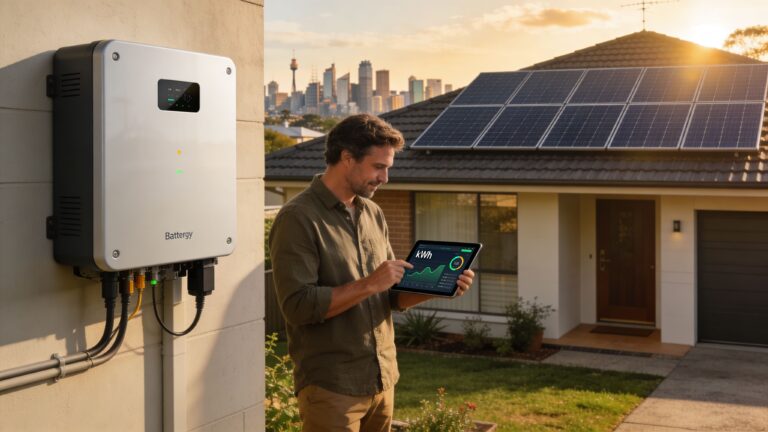
A battery helps close that gap. Instead of sending unused daytime generation away and buying power back later, the home can hold more of its own solar for evening use. That makes a premium integrated roof feel more like part of an energy strategy rather than a design statement alone.
If you're weighing battery options alongside the roof decision, a structured home battery comparison guide is a good place to start.
EV charging is where the system becomes more tangible
For NSW households with an electric vehicle, the benefit is easier to understand. Solar from the roof can become transport energy at home.
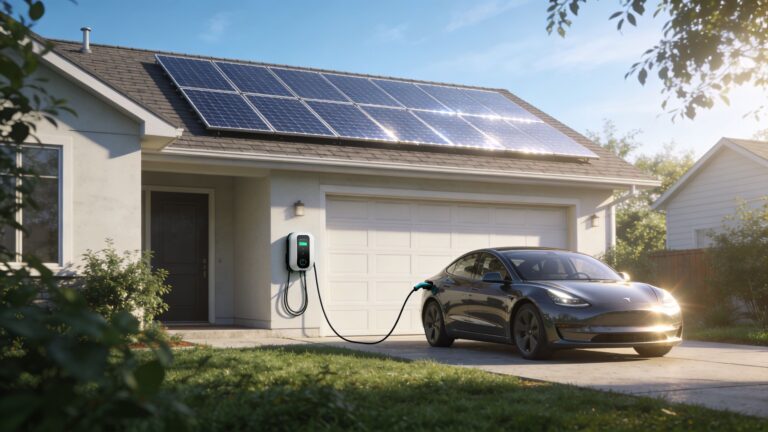
That changes the homeowner mindset. Instead of thinking only about bill offset, they start thinking about the home as its own small energy hub. The roof generates. The battery stores. The EV charger uses that stored or live solar energy in a predictable daily pattern.
A practical setup usually comes down to these choices:
- Daytime charging: Best for households where the car is often home during solar production hours.
- Battery-assisted charging: Useful when the car is charged later and the home wants to retain more solar energy.
- Smart load management: Important if the property already has significant electrical loads and limited capacity.
What works best in real homes
The strongest outcomes usually come from planning all three layers together:
| Component | Role in the home | Why it matters |
|---|---|---|
| Solar roof tiles | Generate daytime electricity | Forms the architectural and energy foundation |
| Battery storage | Shifts solar use into later hours | Improves self-consumption and resilience |
| EV charger | Uses solar for transport | Turns the home into a broader clean-energy system |
This matters even if you don't install everything on day one. A homeowner may start with the roof, leave space for a battery, and prepare the switchboard for future EV charging. That staged approach is often smarter than forcing every upgrade at once.
A premium solar roof makes more sense when it anchors a complete home energy plan, not when it sits alone as an expensive roof feature.
How to Choose a Licensed Solar Tile Installer
With solar tiles, the installer matters as much as the product. Sometimes more. A good product installed badly can create roof leaks, hard-to-diagnose faults, poor drainage detailing, and future warranty arguments nobody wants.
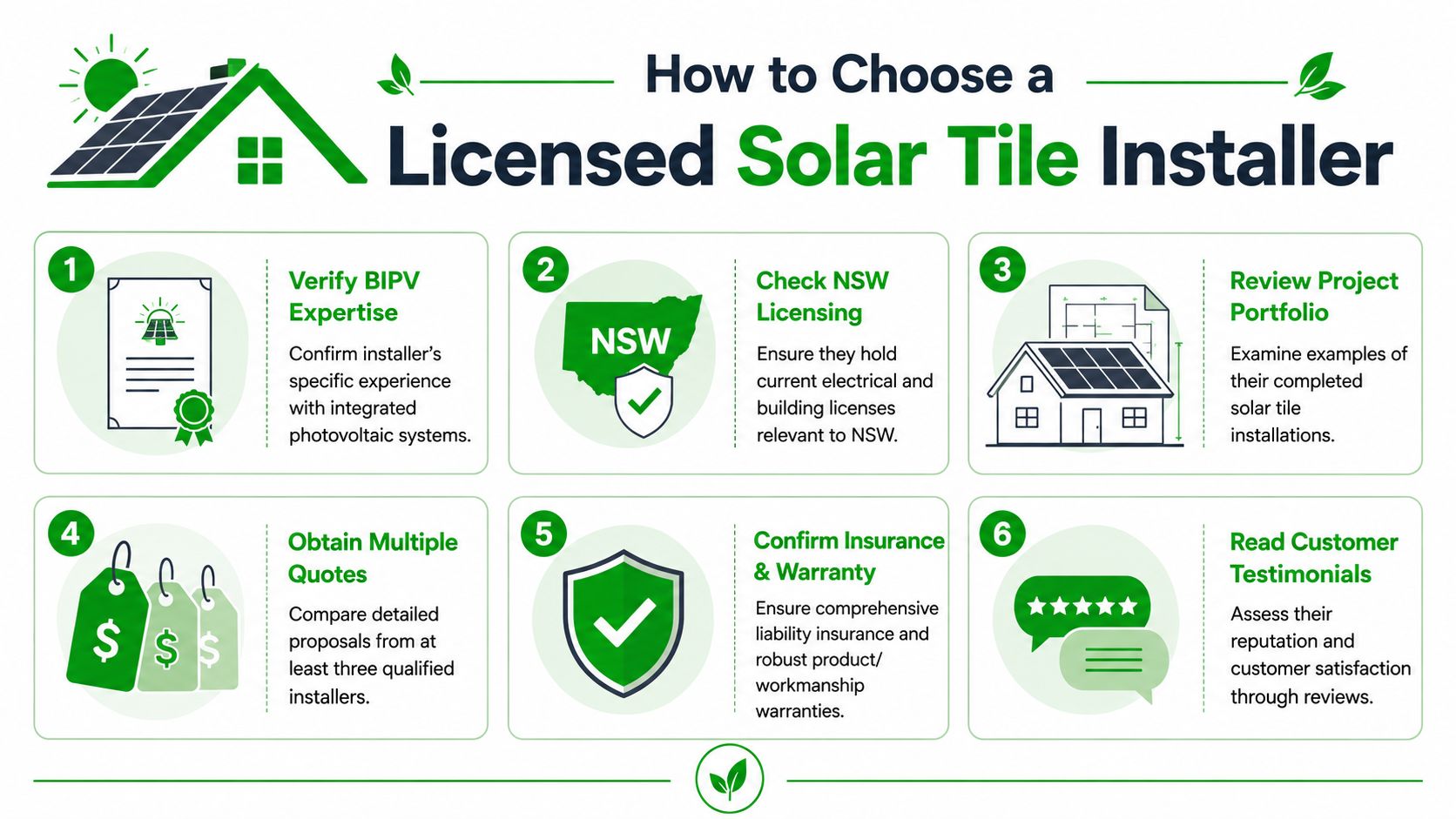
This isn't a category where you should buy on a glossy brochure or a slick sales pitch. You need proof that the company can handle an integrated roofing-and-electrical project in NSW conditions.
What to verify first
Start with the basics, but don't stop there.
- Relevant NSW licensing: They should be able to show current electrical and building or roofing credentials relevant to the work being performed.
- Specific BIPV experience: Ask for examples of completed solar tile or integrated PV projects, not just standard panel installs.
- Clear scope ownership: One party should take responsibility for how roofing and electrical work interface.
- Local service presence: A business with a real office, warehouse, or service footprint is generally easier to hold accountable after installation.
Questions that expose weak operators
Some installers sound capable until you ask detailed questions. That's when the gaps appear.
Ask them:
- Who designs the weatherproofing details at ridges, valleys, and edge transitions?
- What happens if a tile fails later and adjacent components need to be removed?
- How is monitoring set up, and who diagnoses faults after handover?
- Which parts of the system are covered by product warranty, and which by workmanship warranty?
- Can they show projects similar to your roof type and home style?
If the answers stay broad, move on.
What a strong proposal looks like
A proper proposal for solar tiles should feel more like a building package than a basic solar quote. It should explain materials, layout logic, active and non-active areas, inverter strategy, approvals, exclusions, and after-sales responsibility.
A quick checklist helps:
- Detailed drawings: Roof zones, active tile placement, and service components should be identified.
- Written assumptions: Structural or council assumptions should be stated clearly.
- Warranty clarity: Roofing integrity and electrical performance should not be left vague.
- Service pathway: You should know who to call if the issue is generation, roof integrity, or both.
Choose the installer who makes the complicated parts easy to understand. Avoid the one who pretends there are no complicated parts.
Reputation still matters
Reviews, referrals, and previous jobs matter more on tile projects because the margin for error is smaller. Look for evidence of careful project management, not just happy comments about sales staff.
The best solar tile installer is usually not the one promising the fastest close. It's the one asking better questions about your roof, your design priorities, your council pathway, and how the system will be serviced years from now.
If you're weighing up solar energy roof tiles against conventional panels and want advice grounded in real NSW installation experience, Interactive Solar can help you assess the practical fit for your home, your roof, and your long-term energy plans.
Make Interactive Solar a preferred source in Google
One click tells Google to surface our articles more often in Top Stories, AI Overviews and AI Mode.