Cost of Skylight Installation NSW: Your 2026 Guide
Last updated:
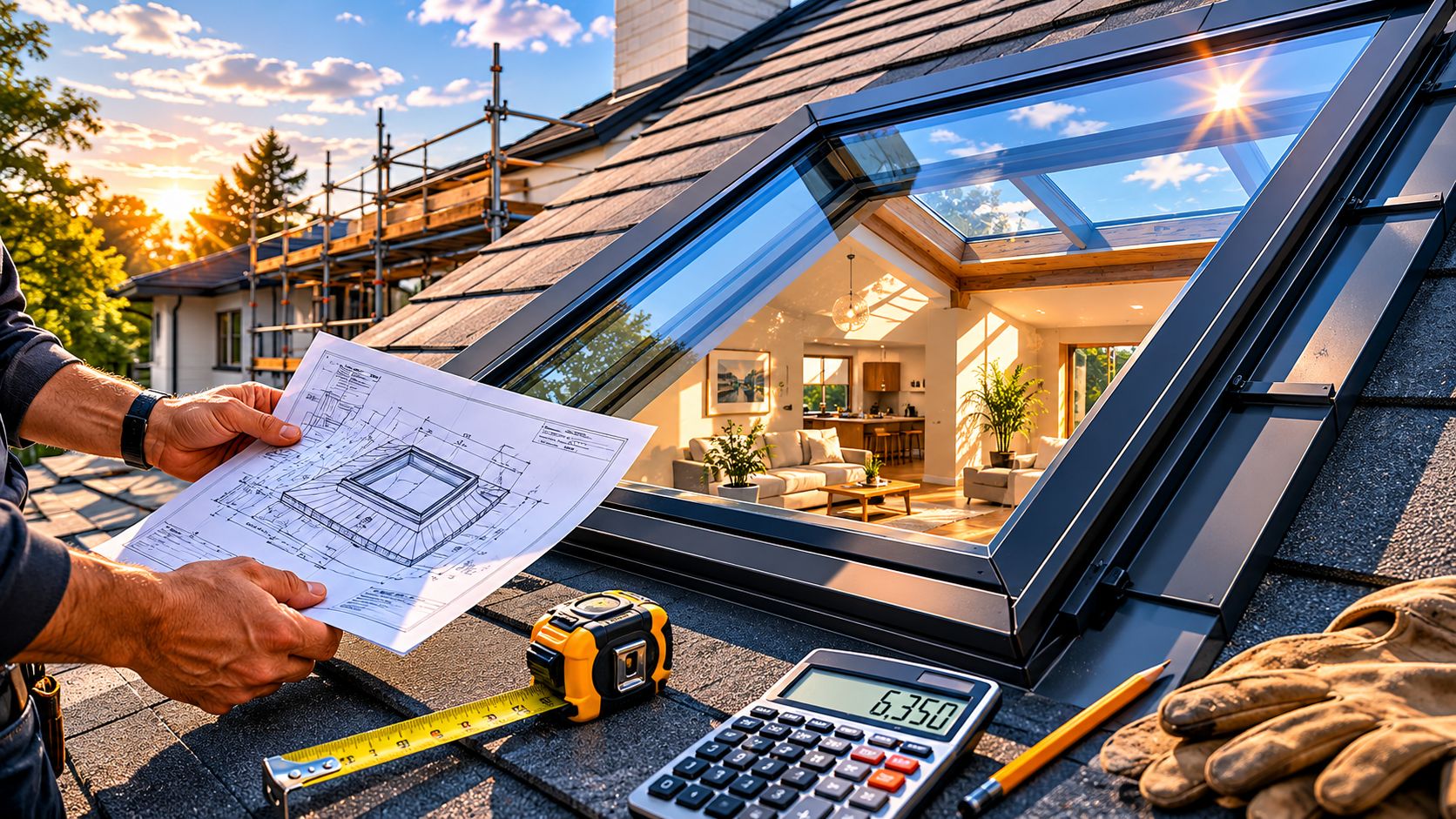
You get a skylight quote, look up the same unit online, and wonder why the installed price is so much higher. In my experience, that's the point where many homeowners realise they are not comparing a product cost with a product cost. They are comparing a boxed skylight with roof work, structural alterations, waterproofing, internal finishing, site setup and warranty risk.
The cost of skylight installation is driven less by the unit on its own and more by what has to happen around it. A roofer has to open the roof without weakening it, adjust framing where needed, integrate flashing to suit the roof profile, and make sure water still sheds cleanly in heavy NSW rain. Then the inside has to be finished properly so the shaft, plasterboard and trim do not look like an afterthought.
That is why two quotes for a similar-looking skylight can be far apart. One may allow for proper underlay repairs, custom flashing, safe roof access and ceiling making-good. Another may cover little more than fitting the unit and sealing around it, which is where cheap jobs start to leak.
Budgeting for a skylight means looking past the sticker price and checking what the installed price covers. If your roof already carries other systems, such as solar energy roof tiles, that planning matters even more because every roof penetration affects layout, waterproofing and future access.
Bringing Natural Light into Your Home
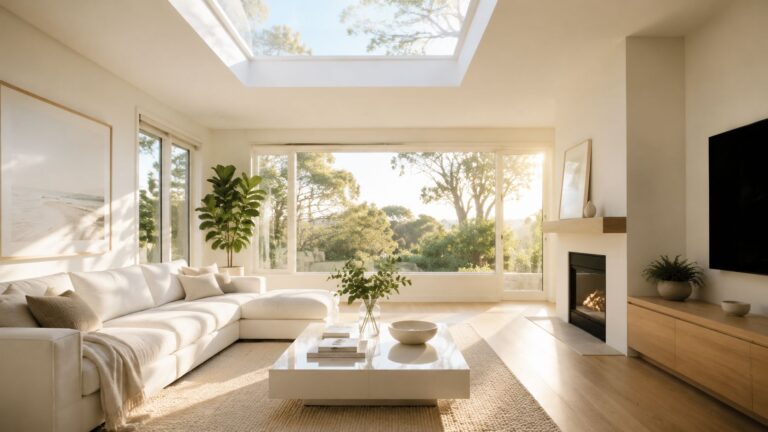
Natural light changes how a room feels. A hallway stops feeling narrow. A bathroom feels cleaner. A kitchen gets that open look people usually try to create with paint, mirrors and more downlights, but daylight does the heavy lifting better than any fitting on a switch.
The part most homeowners struggle with isn't whether a skylight is worth having. It's whether the quote in front of them reflects the full job or only the attractive part of it. A cheap-looking figure can hide missing items. A higher quote can be the safer one if it includes proper flashing, internal shaft work and allowance for roof access.
Why skylight quotes vary so much
Two houses in the same street can have very different installation scopes. One might be a straightforward replacement into an existing opening. The other might need a brand-new penetration through roof cladding, sarking, battens, framing and plasterboard.
That's why experienced installers look at more than the skylight model number. They check:
- Roof construction: Tile, metal, flat sections, pitch changes and old repairs all affect the work.
- Ceiling type: A vaulted ceiling is one job. A flat ceiling with roof space above is another.
- Access conditions: Safe access, setup area, and how easily trades can move materials matter.
- Water management: The roof has to shed water cleanly after the opening is made.
Practical rule: If a quote focuses mostly on the skylight brand and barely mentions flashing, framing or internal finishing, it probably isn't showing the full project.
The right way to approach the cost of skylight installation is to treat the unit as one line item, not the whole job. Once you do that, quotes make a lot more sense.
Understanding Different Skylight Types
Not all skylights create the same amount of work. Homeowners often compare products on appearance and features, but from an installer's side the bigger question is what each type demands from the roof, ceiling and trades on site.
Fixed skylights
A fixed skylight is the simplest format. It doesn't open, so there's no ventilation hardware, no actuator, and no extra controls to install. In many homes, that makes it the cleanest option for living areas, stair voids and spaces where the goal is daylight rather than airflow.
That doesn't mean the job is automatically simple. If it's a new opening, the installer still has to cut the roof, frame the aperture, flash it correctly and finish the shaft inside. But compared with opening units, fixed skylights usually keep the build-up more straightforward.
Ventilated skylights
A ventilated skylight adds another layer of complexity. Manual opening models need accessible operation. Electric units may also require power supply and coordination with an electrician, especially if controls or sensors are involved.
These are excellent in bathrooms, kitchens and upper-storey spaces that trap heat, but they ask more from the install. The frame detail matters more, the sealing detail matters more, and the internal setup has less tolerance for sloppy work.
A ventilated skylight can solve two problems at once, light and stale air. But it only works well if the installer treats it as both a window and a roof penetration.
Tubular skylights
Tubular skylights are often the smart choice where a full skylight would be excessive or awkward. Hallways, laundries, walk-in robes and smaller bathrooms are common examples. They deliver daylight through a reflective tube rather than a large glazed opening.
For many homes, a smaller penetration makes installation more manageable. A smaller penetration generally means less structural disruption and less time on the roof. The practical takeaway for Australian homeowners is that tubular or compact skylight solutions are substantially more accessible to install than full traditional skylights because the smaller roof penetration needs less structural modification and a shorter installation time, which lowers labour and risk, as noted in Guild TX's comparison of traditional and tubular skylights.
Skylight type comparison
| Skylight Type | Primary Benefit | Ventilation | Relative Installation Complexity |
|---|---|---|---|
| Fixed skylight | Daylight and sky view | No | Lower |
| Manual ventilated skylight | Daylight plus airflow | Yes | Moderate |
| Electric ventilated skylight | Daylight, airflow and convenience | Yes | Higher |
| Tubular skylight | Daylight in tight or enclosed areas | No | Lower |
If you're comparing real products and local applications, looking through Skydome skylights in Sydney is useful because it helps match the product style to the room before you start pricing labour.
Key Factors That Influence Your Installation Quote
Most skylight quotes are shaped by the roof, not by the brochure. The skylight you choose matters, but the site conditions decide how many trades are needed, how long the work takes and how difficult it is to make the opening weatherproof for the long term.
Size and specification
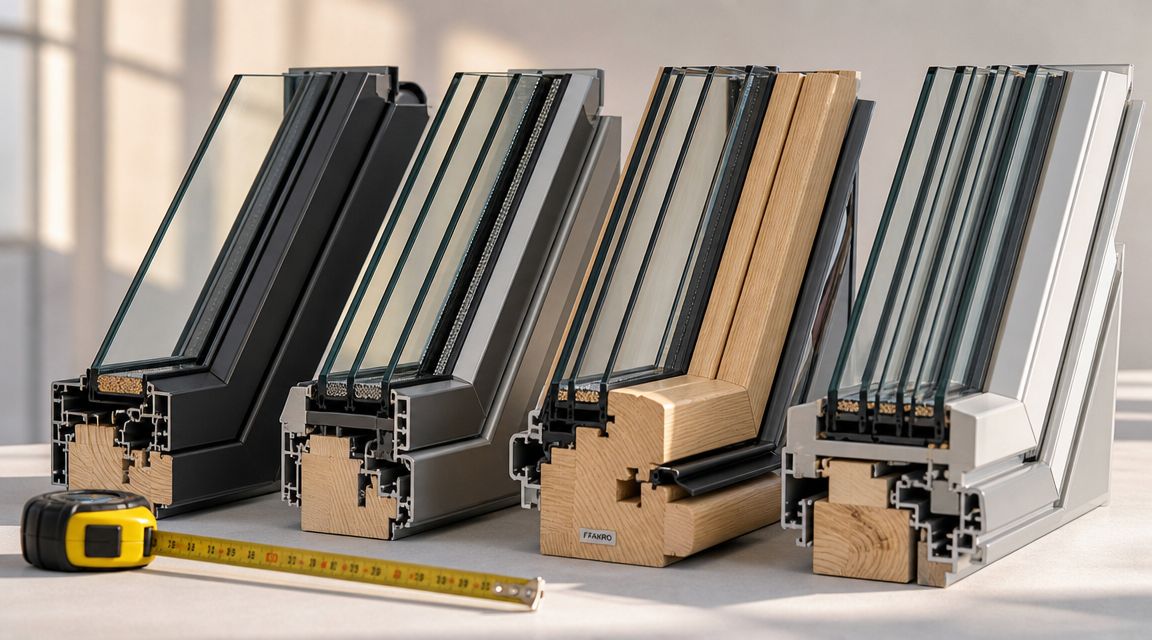
Larger units usually create more work. A bigger opening can trigger more framing detail, more careful support planning and a larger internal shaft. Special glazing and higher-spec units can also change handling, flashing details and lead times.
Homeowners often think the premium is all in the glass. In practice, the install can become more demanding as the unit grows or adds features.
Roof type and pitch
Many quotes diverge sharply. In Australia, skylight installation cost is driven heavily by roof access, flashing integration, and whether a new roof opening must be framed and weatherproofed. Roof plumbing and carpentry for a new penetration can become a major cost component because labour, roof pitch and waterproofing complexity dominate the final price, according to Homewyse guidance on framing a skylight opening.
A tiled roof and a metal roof aren't the same job. Neither is a low-pitch roof versus a steeper one. Steeper roofs can require slower work, stricter safety setup and more care with material handling. Complex roof lines, valleys, ridges and nearby penetrations can also force custom flashing details instead of an easy standard install.
New opening versus replacement
This is one of the biggest pricing split points.
A replacement into an existing opening is usually more controlled because the structure is already there. A first-time install is broader in scope. It may involve roof cutting, framing, waterproofing, plastering and painting. If the shaft has to travel through a wide roof cavity, the internal work can become as significant as the external work.
For a solid consumer-facing overview, Vivid Skylights' complete price guide is worth reading alongside any quote because it helps homeowners compare product choices against installation realities.
Access and workmanship quality
Even a good product fails if the install is poor. Limited side access, fragile landscaping, difficult roof approach and restricted internal working room all affect labour and sequencing.
That's why experienced trades put so much weight on installation standards. The same principle applies across roof work and energy upgrades. A system can use excellent components and still underperform if the workmanship is careless, which is why installation quality matters as much as advanced equipment.
Uncovering Potential Hidden Costs and Complexities
The skylight unit is the visible purchase. The hidden part is what the house asks for once you start opening the roof and connecting that opening cleanly to the ceiling below.
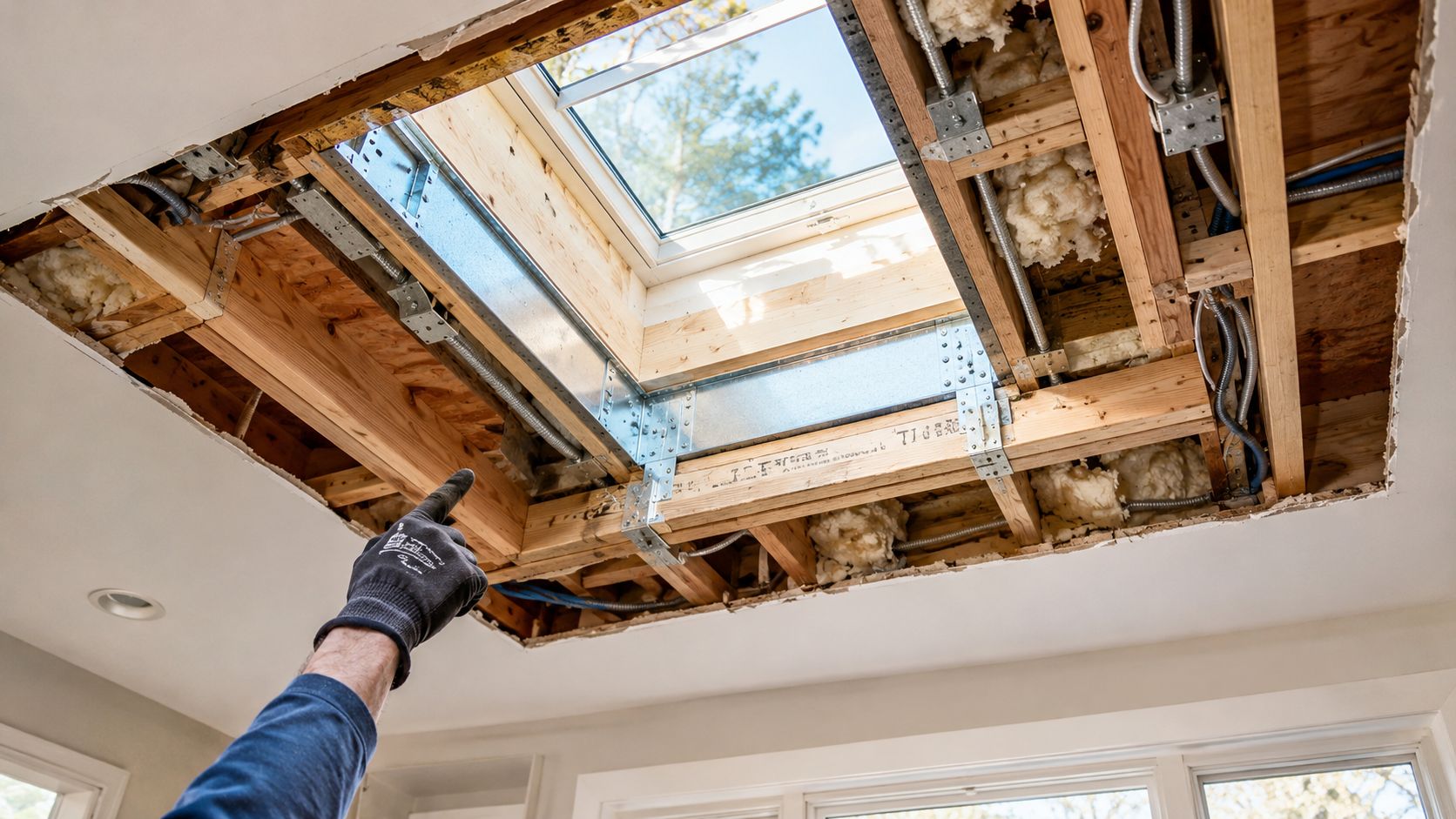
A major underserved angle is hidden structural costs. Framing a skylight opening is a distinct and significant cost, and installation labour can also vary widely depending on complexity. Overall project cost can be materially higher than the headline sticker price of the unit, as outlined in This Old House's skylight installation cost breakdown.
The light shaft is part of the real job
On a flat ceiling, the skylight doesn't just sit overhead and finish itself. Someone has to build the shaft between roof and ceiling, line it, set corners straight, stop cracking, and prepare it for paint. If the shaft is long or has to dodge framing and services, labour grows quickly.
This part is often underexplained in basic quotes. Homeowners hear “skylight install” and assume the room below will be finished neatly. Sometimes the quote only covers the roof work and leaves plastering or painting as separate items.
Structural changes can't be guessed from the driveway
Larger skylights can require rafter alteration or additional framing detail. Older homes can reveal previous repairs, sagging members or non-standard construction once the roof is opened. That's why a proper inspection matters.
A neat-looking roof from the street doesn't tell you what's happening under the tiles or sheeting.
- Existing roof condition: Broken tiles, ageing fasteners, rust and brittle materials can complicate tie-ins.
- Obstructions: Ducting, wiring, plumbing vents and trusses can limit placement options.
- Unusual profiles: Some roofs need custom flashing rather than an off-the-shelf approach.
- Ceiling finishes: Cornices, bulkheads and textured ceilings can make internal finishing more involved.
If you want to understand why flashing deserves close attention, Contractor's Den roof flashing price breakdown gives useful context around how much detail sits in what many homeowners assume is a minor accessory.
A related point people miss is whole-roof airflow. Adding daylight without considering heat build-up in the roof cavity can create comfort issues in summer. That's why it helps to think about roof ventilation at the same time rather than treating each roof upgrade as isolated.
Here's a useful visual on what proper installation work can involve inside the roof and ceiling build-up:
Cheap quotes usually hide labour, not magic. If the installer hasn't allowed for structural work, waterproofing detail or interior making-good, the cost doesn't disappear. It just appears later as a variation.
How to Plan for a Smarter Installation
A homeowner buys a skylight online, sees a sharp unit price, then gets a much higher install quote once the roofer inspects the job. That gap usually comes from the work around the skylight, not the skylight itself. Cutting the opening, framing it properly, tying flashing into the roof covering, making the ceiling good again, and dealing with access all shape the actual price.
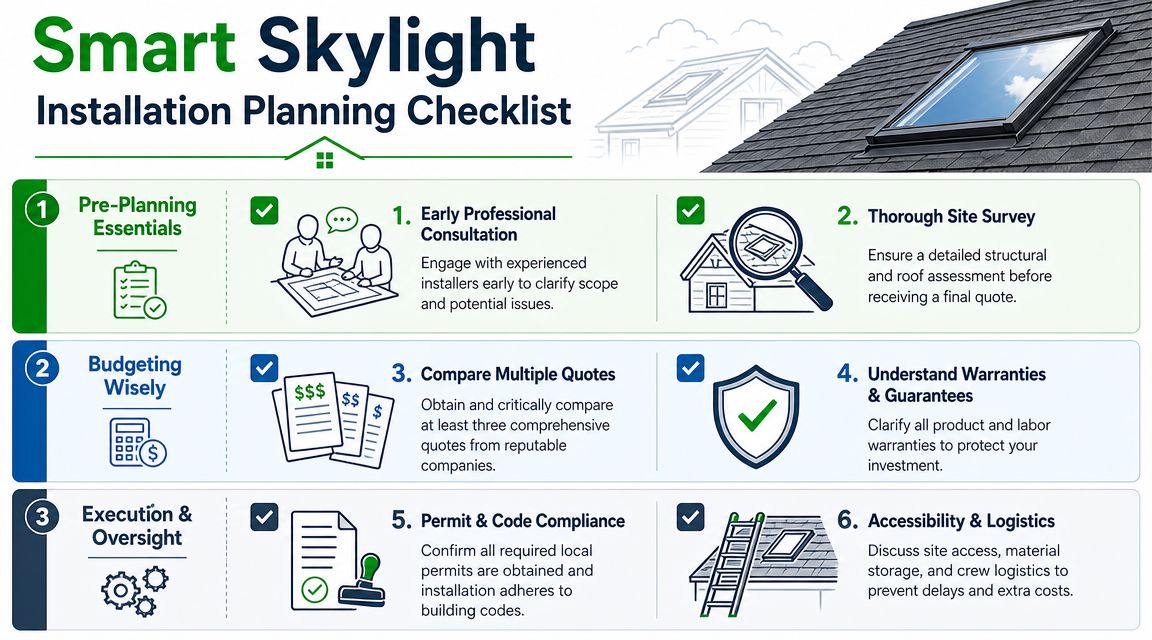
The smartest way to control cost is to plan around roof structure and waterproofing before anyone starts cutting. A cheap unit in the wrong spot can end up costing more than a better unit installed where the roof and ceiling layout already work in your favour. In NSW, that matters even more on older tiled roofs, low-pitch metal roofs and homes where access is tight.
Choices that usually save money for the right reasons
Some decisions reduce labour and risk. Those are the savings worth chasing.
- Choose a location that works with the roof framing: If the opening can sit cleanly between structural members, the job is usually simpler than a position that triggers extra carpentry.
- Keep the light shaft direct: A straight, compact shaft generally means less framing, less plaster work and a neater finish inside.
- Time the work with roof repairs or replacement: If roof work is already happening, the installer can often handle set-out, access and waterproofing more efficiently.
- Match the skylight type to the room: A small bathroom, hall or walk-in robe may suit a tubular unit better than a larger framed skylight that needs more structural and internal work.
- Allow proper site access: Clear the room below, protect furnishings and make sure the crew can get materials to the work area without wasting half the day on setup.
Planning also means checking who is responsible for what. If the job involves electrical components, interior finishing or compliance paperwork, get that written into the scope early. Homeowners can also read up on the New Energy Tech Consumer Code and what it means for home upgrade protections before signing off on works that involve supplied products and installation promises.
Inspection first, quote second
A proper inspection saves money because it exposes the expensive parts before the quote is locked in. I would rather tell a client up front that the roof needs extra flashing detail or local repairs than surprise them halfway through the install.
If there's any doubt about the roof condition, get that checked first. In some situations, detailed drone roof condition reports can help identify access limits, damaged roof sections and layout issues before installation day.
On-site advice: The cheapest way to avoid variations is to find the problem before the opening is cut.
Good planning does not mean trimming the quote until it looks comfortable. It means choosing a skylight, location and scope that the roof can handle properly, so the finished job stays watertight and does not come back as a ceiling stain or leak call-out in the next storm.
Questions to Ask Your Skylight Installer
A good installer won't be bothered by detailed questions. If anything, the right contractor will welcome them because clear scope protects everyone.
Ask these before you accept the quote
- What exactly is included in the quote? Ask whether it covers the skylight unit, roof work, flashing, framing, plastering, trim and painting.
- Is this a replacement or a full new-opening quote? The difference matters because the labour scope is completely different.
- How will you make the roof watertight around the opening? You want a clear answer about flashing integration, not vague reassurance.
- What happens if you find structural issues once the roof is opened? Variations aren't always avoidable, but the process should be explained upfront.
- Who handles electrical work if the skylight is electric? Make sure responsibilities are clear.
- What workmanship warranty applies to leaks? Product warranty and installation warranty are not the same thing.
- Will you inspect roof condition around the install area before starting? This helps avoid tying a new skylight into a failing section of roof.
- Are all compliance and licensing requirements covered? Homeowners should know who is responsible for doing the work to the required standard.
Ask how they deal with consumer protection
It's also worth asking whether the business follows recognised consumer standards for energy-related home upgrades and how complaints, variations and warranty support are handled. For broader context on those expectations, homeowners can review the New Energy Tech Consumer Code.
Watch for weak answers
If the installer can't explain shaft finishing, flashing details, or what happens when hidden roof issues appear, slow down. The risk with skylights isn't usually the day of installation. It's the first heavy rain, the first hot summer, or the point where internal cracking and staining start to show.
The best quote is rarely the shortest one. It's the one that makes the work visible before the work begins.
If you want a roof team that looks at the full picture, not just the product on the box, Interactive Solar can help with practical advice on roof penetrations, ventilation and installation quality across NSW. Reach out for a proper assessment so you can plan the job around structure, weatherproofing and long-term performance, not guesswork.
Make Interactive Solar a preferred source in Google
One click tells Google to surface our articles more often in Top Stories, AI Overviews and AI Mode.