kW vs kWh: A Guide for Solar & EV Owners in Australia
Last updated:
You're probably here because you've looked at a solar quote, an EV charger spec sheet, or your power bill and encountered a common difficulty. One document talks about kW, another talks about kWh, and both seem important. They are. They're just not the same thing.
That confusion causes expensive decisions. People buy a solar system with a headline size that sounds impressive but doesn't match how their home really uses electricity. Others choose a battery that stores plenty of energy but can't deliver enough power when several appliances switch on together. EV owners often focus on charger speed without thinking through how much energy they truly need to add across a normal week.
If you want solar, a battery, or an EV charger to lower bills and fit your day-to-day life in Australia, understanding kW vs kWh is the starting point.
Why kW and kWh Matter for Your Energy Future
The reason this matters isn't academic. It affects what equipment works in your home, how well it performs, and whether it solves the problem you face.
A lot of homeowners ask, “How many kW do I need?” That sounds sensible, but it often skips the actual question. Are you trying to handle short bursts of high power demand, or are you trying to offset total energy use over the day?
That distinction matters more as homes add EVs, batteries, larger air conditioning systems, induction cooking, and electric hot water. It also matters as more households pay close attention to self-consumption, export limits, and how much grid power they still need after installing solar. The same broader thinking shows up in discussions around virtual power plants in Australia, where stored energy, timing, and controllable loads all shape the result.
Practical rule: kW tells you whether a system can keep up right now. kWh tells you whether it can carry you through the day or night.
People usually feel the difference in three places:
- Solar system sizing: The panel system's kW rating is only the starting point. Savings depend on the kWh it produces over time.
- Battery selection: Power and capacity are separate decisions. One affects what can run at once. The other affects how long it runs.
- EV charging: Charger kW affects speed. Battery kWh affects how much range you can add overall.
Get those mixed up and the system might still be “working” on paper while disappointing you in real life.
Kilowatts (kW) vs Kilowatt-Hours (kWh) The Essential Difference
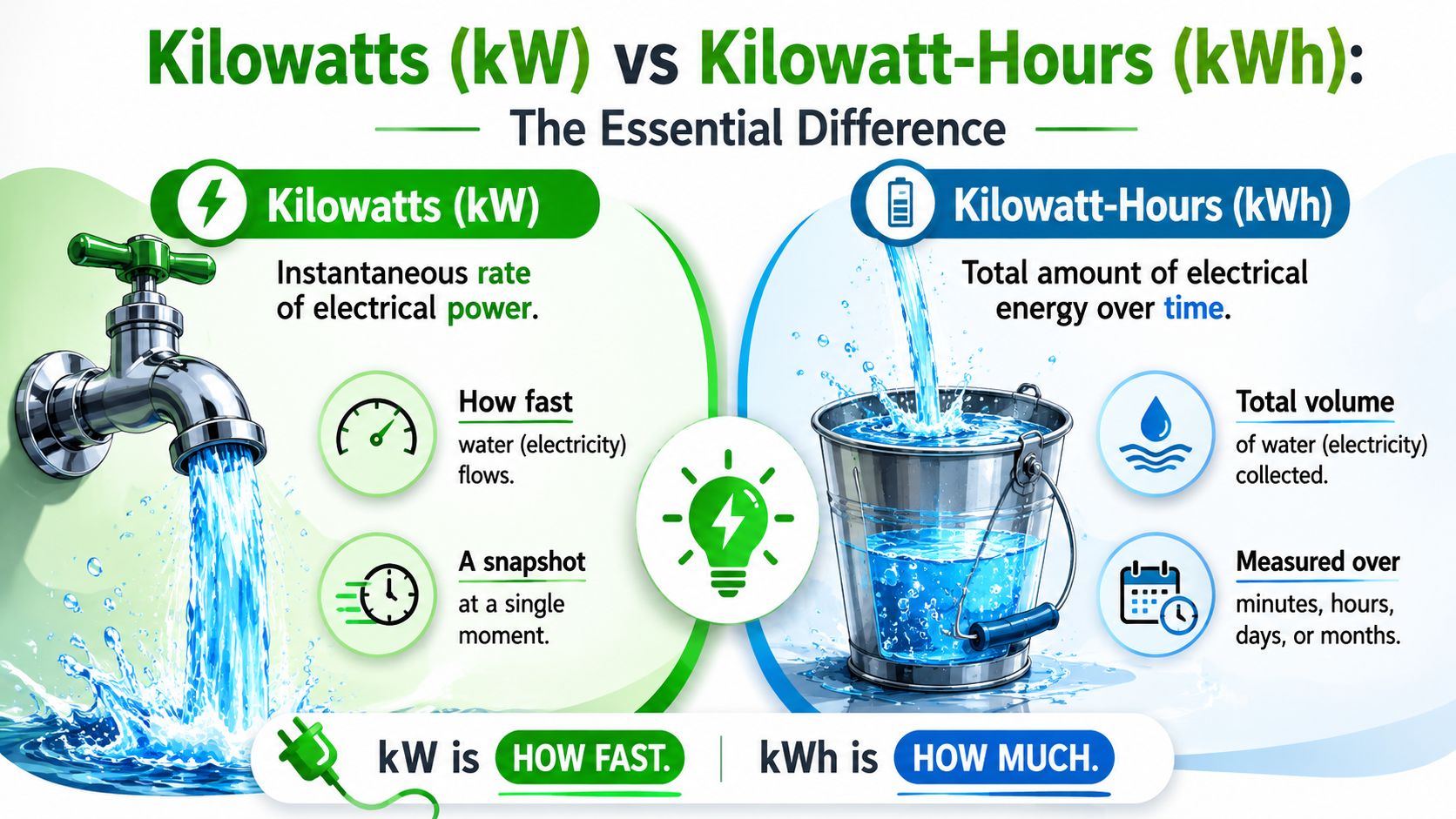
The simplest way to understand kw vs kwh is to separate rate from total.
Kilowatts (kW) measure power. That's the rate electricity is being used or produced at a given moment.
Kilowatt-hours (kWh) measure energy. That's the total amount of electricity used or produced over time.
A good analogy is water.
- kW is the flow rate from the tap
- kWh is the amount of water collected in the bucket
If the tap runs fast, that's high power. If it runs for a long time, the bucket fills with more total water. Electricity works the same way.
kW vs kWh at a Glance
| Attribute | Kilowatt (kW) | Kilowatt-Hour (kWh) |
|---|---|---|
| What it measures | Power | Energy |
| What it means | How fast electricity is used or produced | How much electricity is used or produced over time |
| Time involved | Instantaneous | Cumulative |
| Water analogy | Flow from the tap | Water collected in the bucket |
| Common use | Appliance demand, inverter output, charger speed | Electricity bills, battery capacity, solar generation over time |
A simple way to calculate it
If you know the power level and the running time, you can work out the energy:
kWh = kW × hours
A heater drawing 1 kW for 1 hour uses 1 kWh of energy.
That formula matters because people often compare things that sit on opposite sides of it. They compare a battery's stored energy to an appliance's power draw. They compare a solar system's nameplate power to household consumption. Those comparisons only make sense when time is included.
Why people mix them up
The abbreviations look similar, and sales material often puts them close together. But they answer different questions:
- Can this unit deliver enough power right now? That's kW.
- Will this cover enough usage over the day, evening, or billing period? That's kWh.
A system can have plenty of power but not enough stored energy. It can also store plenty of energy but fail when too many loads turn on together.
Once that clicks, solar quotes, battery brochures, and EV charger specs become much easier to read.
Sizing Your Solar System How kW and kWh Determine Your Savings
A bigger solar system isn't automatically a better solar system.
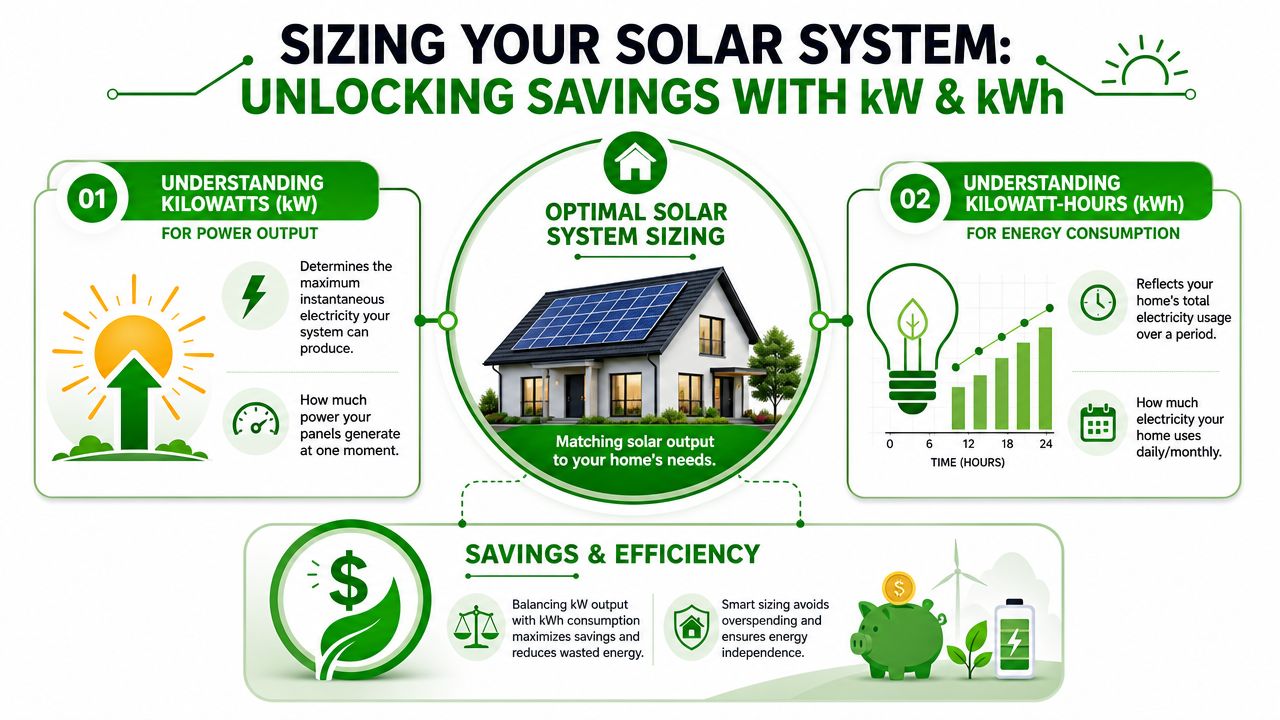
That's one of the most common mistakes in solar buying. People see a larger kW number and assume it must mean proportionally better savings. In practice, the better question is how many usable kWh the system is likely to produce for your roof, your site, and your pattern of electricity use.
Nameplate size isn't the whole story
A solar system's headline kW figure tells you its rated output under standard conditions. It does not tell you how many kWh it will produce across real days, weeks, and seasons.
As explained in this overview of how kW and kWh differ in solar performance, a system's nameplate kW doesn't tell consumers how many kWh they'll get over time, because output is shaped by temperature, shading, orientation, inverter performance, and local sunlight conditions. That's why panel size alone doesn't predict savings nearly as well as expected kWh yield matched to your load profile.
Here, good design beats generic quoting.
A north-facing roof section behaves differently from a roof that leans more to the east or west. Trees, nearby structures, roof geometry, and inverter setup all affect the energy harvested. If two homes install systems with the same kW rating, they can still end up with noticeably different real-world outcomes.
What usually works better
The strongest solar designs start with usage patterns, not just roof capacity.
Look at things like:
- Daytime load shape: If people are home during the day, higher self-consumption often becomes easier.
- Evening-heavy usage: If most demand lands after sunset, battery planning may matter as much as panel sizing.
- Large flexible loads: Pool pumps, electric hot water, and EV charging can often be shifted to solar hours.
- Roof limitations: The “largest possible system” isn't always the most efficient use of the available roof planes.
For teams that sell solar well, this customer-first approach is also what makes quoting more accurate. The OnRoute solar sales playbook is useful because it frames solar selling around site realities and buyer needs rather than just pushing a bigger array.
The role of monitoring and adjustment
Even a well-sized system benefits from ongoing visibility. Production and household behaviour don't stay static forever. Seasonal changes, new appliances, and EV adoption can shift the best operating pattern.
That's why system monitoring matters. With inverter remote monitoring for solar efficiency, owners can spot whether the system is delivering as expected and whether load shifting opportunities are being missed.
Solar should be sized to produce useful energy for your household pattern, not just to win a headline-number comparison.
Choosing a Solar Battery Power vs Capacity
Battery specs confuse people for a simple reason. A battery has two jobs, not one.
It has to store energy and it has to deliver power. Those are different functions, so they use different measurements.
What kW means in a battery
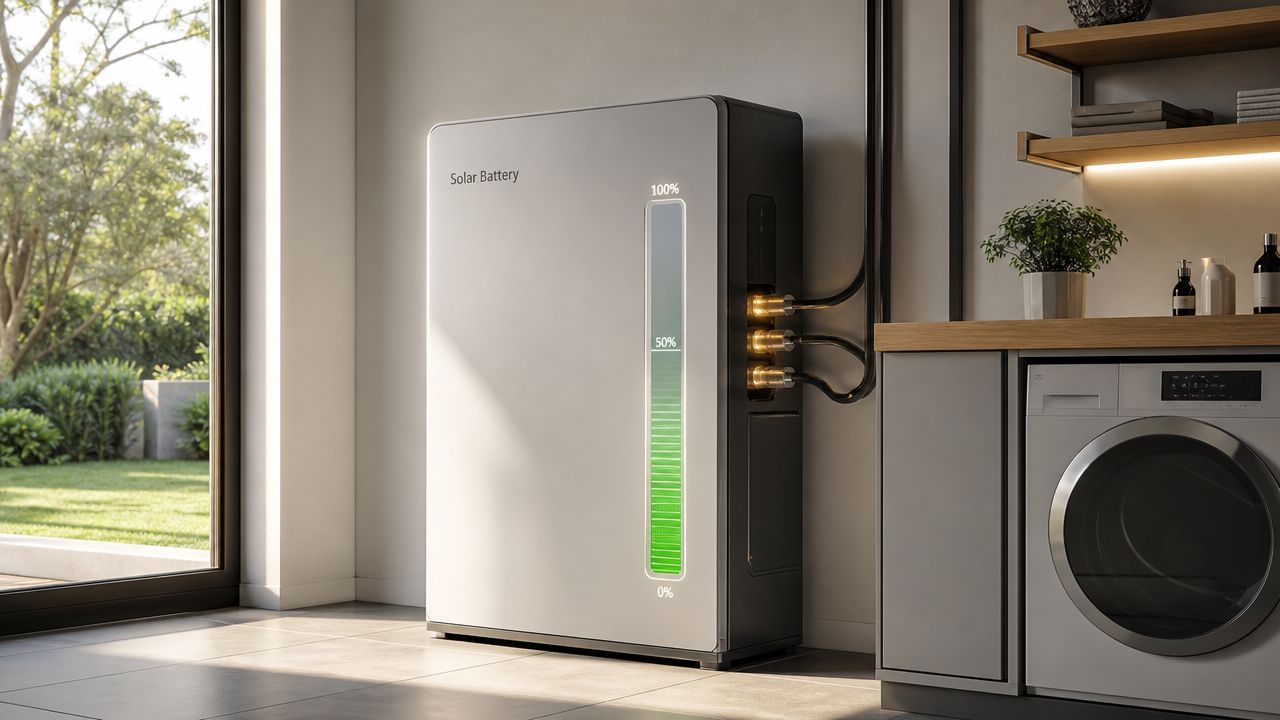
A battery's kW rating tells you how much power it can supply at a moment in time.
That matters when several appliances run together. If the battery's power output is limited, it may support lighting and refrigeration comfortably but struggle once a kettle, cooktop, ducted air conditioning, or another heavy load joins in.
This is why backup expectations need to be specific. Plenty of households say they want “blackout protection”, but backup quality depends on the battery's power capability, the backup circuit design, and which loads are included.
What kWh means in a battery
A battery's kWh rating tells you how much total energy it can store.
That answers a different question. Not “what can it run right now?” but “for how long can it keep supplying energy before it needs recharging?”
A battery with strong capacity can carry evening usage further into the night or provide a longer cushion during an outage. But if its power output is modest, it may still require careful appliance management.
A blackout example that makes this clear
Think about a home during a grid outage.
One battery might have enough stored energy to last through much of the evening, but if too many appliances switch on together, the issue becomes instantaneous demand. Another battery might deliver stronger power, but if its stored energy is smaller, the available backup window shortens.
That's why battery selection should be based on both of these:
- Essential loads you want to run at the same time
- How long you want the battery to sustain them
A lot of buyers look only at capacity because it sounds like the bigger number. In practice, that can be the wrong priority if backup performance matters.
Battery use isn't just about the spec sheet
How you charge and discharge a battery also affects how useful it feels day to day. Solar charging patterns, evening demand, EV charging habits, and backup strategy all interact.
For a broader battery-care perspective, some of the thinking in these electric motorbike battery tips is helpful because it reinforces the value of sensible charging habits and long-term battery stewardship.
If you're comparing battery options, a proper battery comparison guide helps more than a single brochure page. The right choice usually comes from matching the battery to the home's load behaviour, not chasing the biggest storage number available.
EV Charging Explained Power for Speed Energy for Range
EV charging is where kw vs kwh becomes immediately practical.
Drivers usually care about two outcomes. They want charging that fits their routine, and they want enough energy in the battery for the trips they do. Those two goals involve different measurements.
Charger power affects charging speed
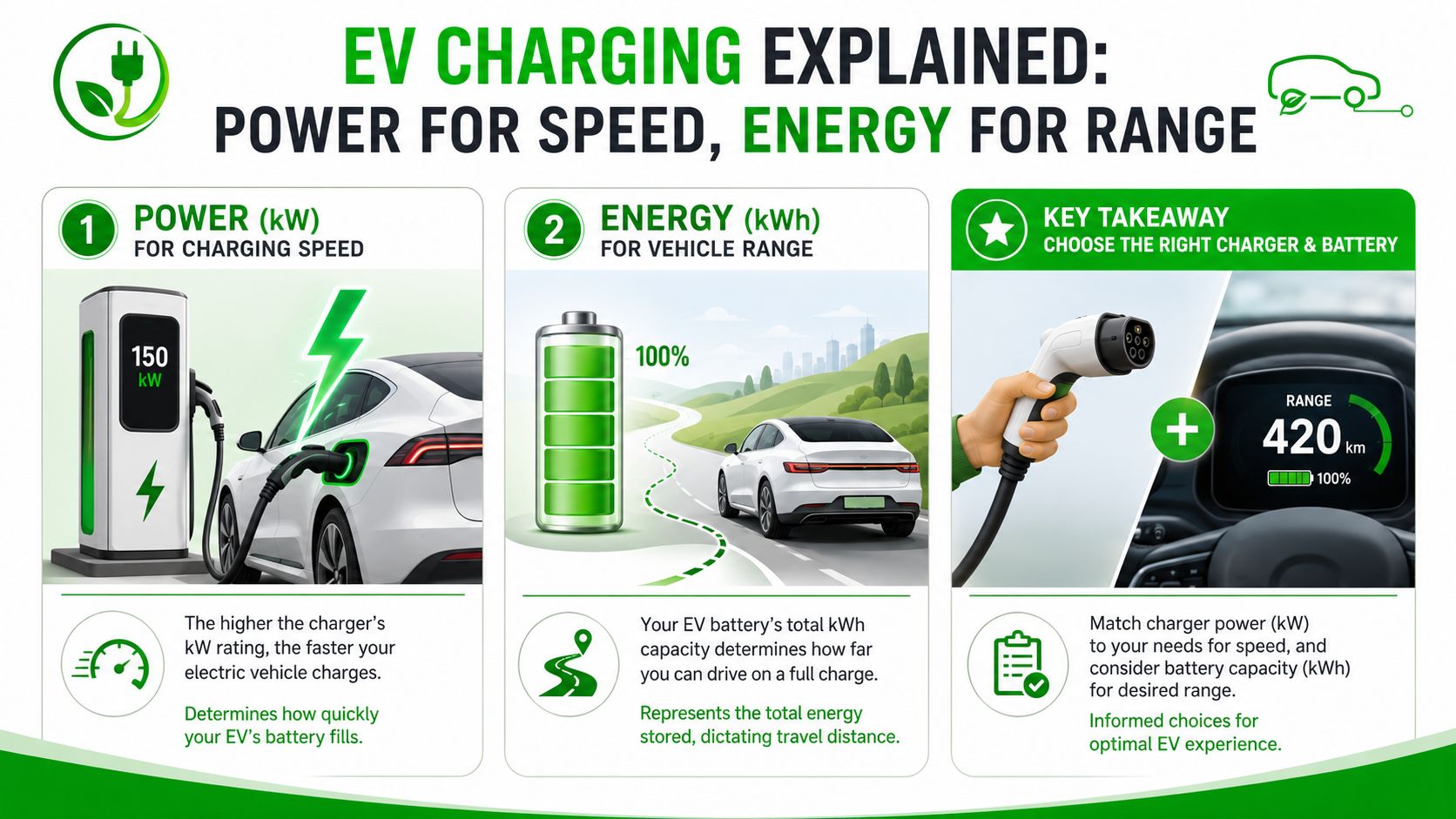
A charger's kW rating tells you how fast it can draw and deliver power.
That's the “speed” side of the equation. If your charger is rated higher, it can add energy to the vehicle more quickly, assuming the vehicle can accept that rate and the installation supports it.
The vehicle battery, though, is measured in kWh. That's the energy side. It reflects how much electricity the battery can hold overall, which then shapes usable driving range.
Aurora Solar puts the distinction well in its explanation of kW vs kWh for energy decisions: kW vs kWh is not just a terminology issue; it determines whether a design solves a power problem or an energy-bill problem. The same source notes that for EV charging, the charger's kW rating controls how fast it draws power while the battery or session energy is measured in kWh. In practical terms, a 7 kW charger running for 3 hours can add about 21 kWh.
That example is useful because it turns abstract terms into a normal home charging session.
Battery energy affects how much range you can add
If you know how much energy you're adding in a session, you can better judge whether home charging suits your routine.
A short overnight top-up may be plenty for one driver and not enough for another. The right charger depends on:
- Your daily driving pattern
- How long the car is parked at home
- Whether you want to align charging with solar production
- How much spare electrical capacity the site has
A common mistake is buying on maximum speed alone. Fast charging sounds attractive, but many homes don't need the fastest available option. Others do, especially when multiple drivers, short dwell times, or workplace charging schedules are involved.
This short explainer adds useful visual context:
Matching the charger to the household
Home EV charging works best when the charger, switchboard, solar production, and driving routine are considered together.
If the goal is solar-friendly charging, mid-day timing can matter more than headline speed. If the goal is fast turnarounds between trips, higher charger power may matter more. If the goal is reliable overnight replenishment, a balanced setup often performs better than an oversized one.
For homeowners comparing options, reviewing dedicated EV charger solutions for homes and workplaces helps clarify what setup fits the property rather than just the car.
A charger's kW tells you how quickly energy moves. The car battery's kWh tells you how much energy you're trying to add.
How to Read kW and kWh on Your Electricity Bill
Your electricity bill is where these terms stop being theoretical.
Most households focus on the total amount due. Fair enough. But if you want to understand whether solar, a battery, or load shifting will help, you need to look at the units behind the charges.
Where kWh usually appears
On a typical residential bill, kWh appears in the usage or consumption section.
That's the total energy you imported from the grid across the billing period. When people say they want solar to “cut the bill”, this is usually the figure they're trying to reduce. Solar can lower imported energy during the day. Batteries can help shift some of that reduction into the evening by storing excess solar for later use.
If you're trying to make sense of your charges before getting quotes, this guide on how to reduce electricity bills is a sensible starting point because it links bill line items to practical energy actions.
Where kW may show up
Some tariffs also include demand-related charges. Those are tied to kW or another demand-based measure, depending on the tariff design.
Many homeowners often get caught out. They focus only on total energy use and ignore short periods of high simultaneous demand. In homes with EV charging, electric cooking, battery charging, and heavy climate control, those peaks can matter more than expected.
What to check on your bill
When reading a bill, look for these items:
- Usage or consumption: This is usually the kWh component.
- Tariff type: Flat, time-of-use, and demand-based tariffs affect how savings show up.
- Export information: If you have solar, check how exported energy is shown separately from imported energy.
- Billing period patterns: Compare one bill to another based on season and household changes, not just the bottom-line total.
A bill can tell you whether the bigger issue is total energy consumption, poor timing, or short bursts of very high demand. Those are different problems, and they rarely call for the same solution.
Quick Calculations and Common Questions
How do I calculate kWh from kW
Use this formula:
kWh = kW × hours
If a device runs at a certain power level for a certain amount of time, multiply the two. That gives you the total energy used or delivered over that period.
This is the easiest way to cut through charger specs, battery runtime estimates, and appliance usage.
What size solar system do I need
Start with your energy pattern, not a target system size.
Look at when your home uses electricity, whether you're usually home during the day, and which loads can be shifted into solar production hours. Roof direction, shading, and inverter setup also matter. Two homes with similar bills can need different system designs because their load profiles and roof conditions differ.
If a quote starts and ends with a kW figure, ask what kWh yield is expected across seasons and how that matches your usage.
Can a larger kW solar system guarantee better savings
No. A larger nameplate system can still disappoint if site conditions are poor or if the design ignores how the household uses energy.
The useful question isn't “How big is it?” It's “How much usable solar energy is it likely to produce for this property, and how much of that energy will the household consume or store?”
Can my solar power my EV charger all day
Sometimes, but not in a simple one-line way.
Solar output changes across the day. It rises, peaks, and falls. Clouds, orientation, shading, and other loads inside the house all affect how much solar power is available for EV charging at any given moment. A charger may be capable of drawing power steadily, but rooftop generation rarely stays flat for the whole charging window.
That's why solar-integrated EV charging works best when charging behaviour is matched to the production curve rather than assumed from the system's headline size.
What should I ask before buying a battery
Keep the questions practical:
- Which appliances do I want backed up together
- How long do I want backup to last
- Am I trying to reduce evening grid use, improve blackout resilience, or both
- Will I likely add an EV or electrify more loads later
Those answers usually tell you more than a brochure does.
If you want a solar, battery, or EV charging setup designed around how your home uses energy, Interactive Solar can help you map the right balance of power, storage, and bill reduction without guessing from headline specs alone.
Make Interactive Solar a preferred source in Google
One click tells Google to surface our articles more often in Top Stories, AI Overviews and AI Mode.