Australian EV Charging Cost Calculator: 2026 Guide
Last updated:
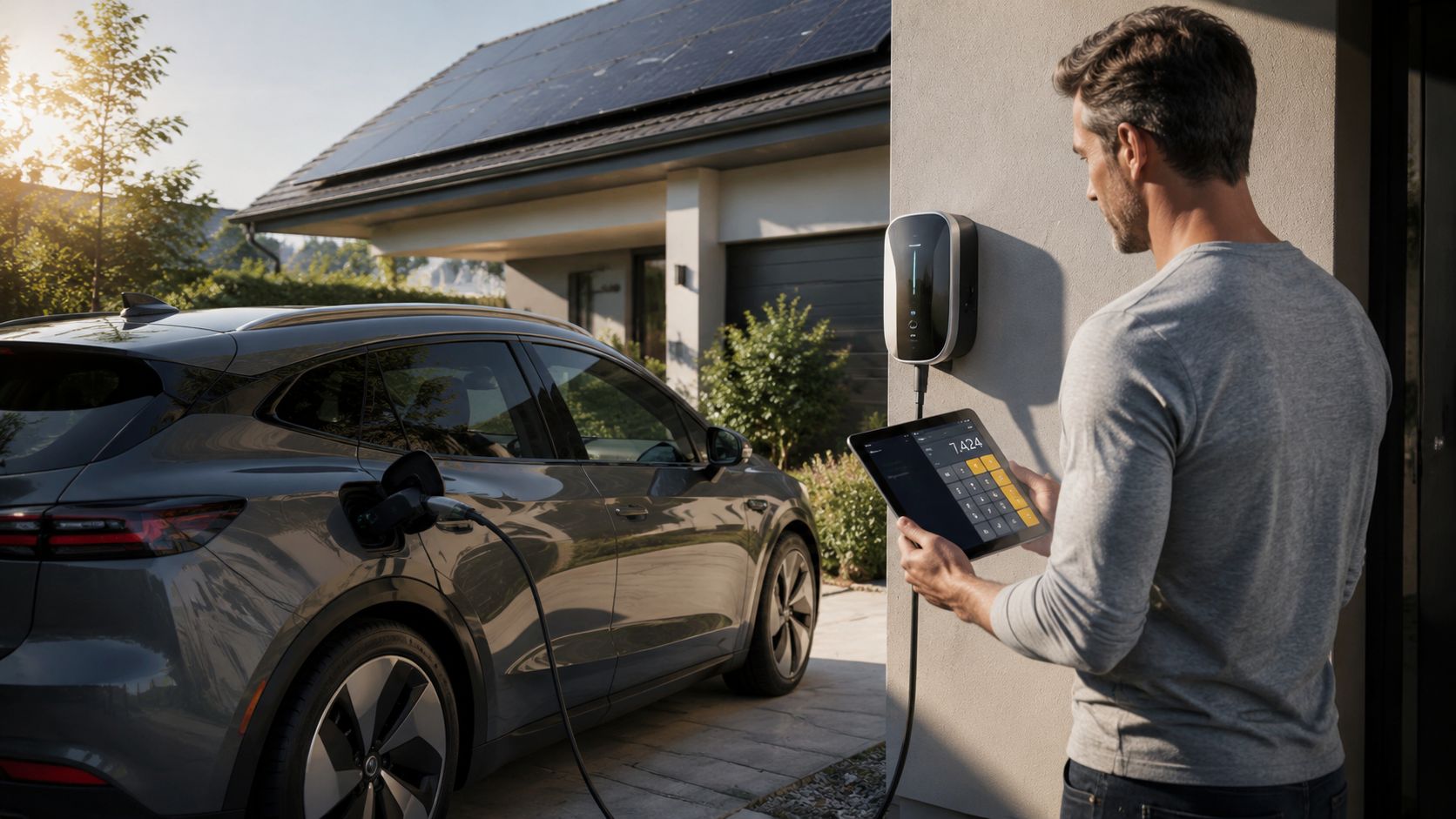
You've probably done the same comparison most new EV owners do. Petrol is easy to price because the bowser shows you the number. EV charging feels murkier because the bill is buried in kilowatt-hours, charger settings, and whatever tariff your retailer has put on your account.
The good news is that an EV charging cost calculator doesn't need to be complicated. The bad news is that many users employ it too loosely. They plug in a battery size, assume a perfect charge, ignore their actual tariff, and end up with a figure that looks tidy but doesn't match the bill.
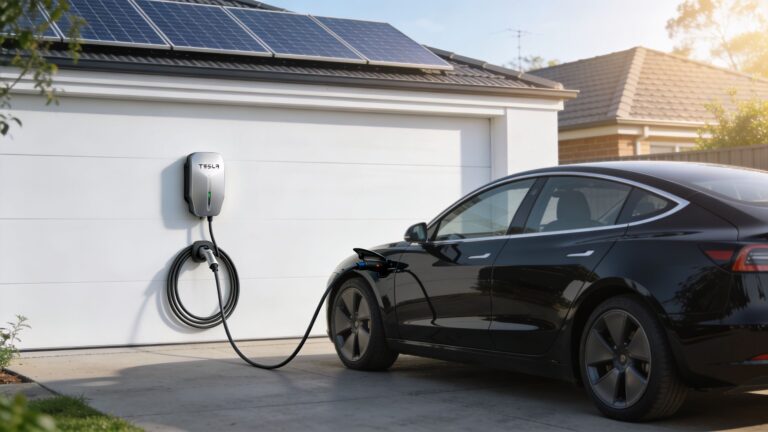
That matters because where you charge changes everything. In Australia, the average cost to fully charge an EV with a 60 kWh battery at home is about $15.20, while a full charge at a DC fast charger ranges from $34 to $59, according to Electric Choice's 2026 charging cost analysis. If you're comparing an EV to a petrol car, that gap is the first thing to understand. Public charging is useful. Home charging is where cost control starts.
The Real Cost of Fuelling Your Electric Vehicle
Most EV owners don't need more theory. They need a number they can trust.
The mistake I see most often is treating all charging as if it costs the same. It doesn't. A driver who mainly tops up at home will have a very different running cost from someone relying on public DC sites for convenience. That's why any good EV charging cost calculator has to begin with charging location, not just battery size.
Using the national benchmark above, a home full charge on a 60 kWh battery sits far below a DC fast charge. That's not a small pricing difference. It changes how you should plan ownership, daily charging habits, and the kind of hardware you install at home. If you haven't already looked into understanding home EV charger installation price, it's worth doing because the installation side affects how easily you can shift charging away from expensive public sessions.
Why home charging sets the baseline
Home charging gives you predictability. You know your tariff. You know when the vehicle is plugged in. You can schedule overnight charging instead of accepting whatever public charger pricing is in front of you.
That's also why a proper home setup matters more than many buyers expect. A dedicated wall charger, correct circuit design, and sensible load management turn charging from an occasional workaround into a routine. For readers comparing hardware options, these EV charging stations in Sydney show the type of home-first setup that makes cost forecasting much easier.
Practical rule: If you want the lowest EV running cost, use public charging as a backup tool, not your main fuelling method.
What calculators often miss
A quick online estimate can be useful, but it only gives you a starting point. It won't tell you whether your current tariff is the wrong one for EV ownership. It won't tell you whether your charger output matches the assumptions. And it definitely won't tell you whether the smartest move is to stop buying most of that charging power from the grid in the first place.
That's the core shift. First calculate the grid cost accurately. Then work out how to reduce it. Then work out how to avoid it.
Gathering Your Inputs for an Accurate Calculation
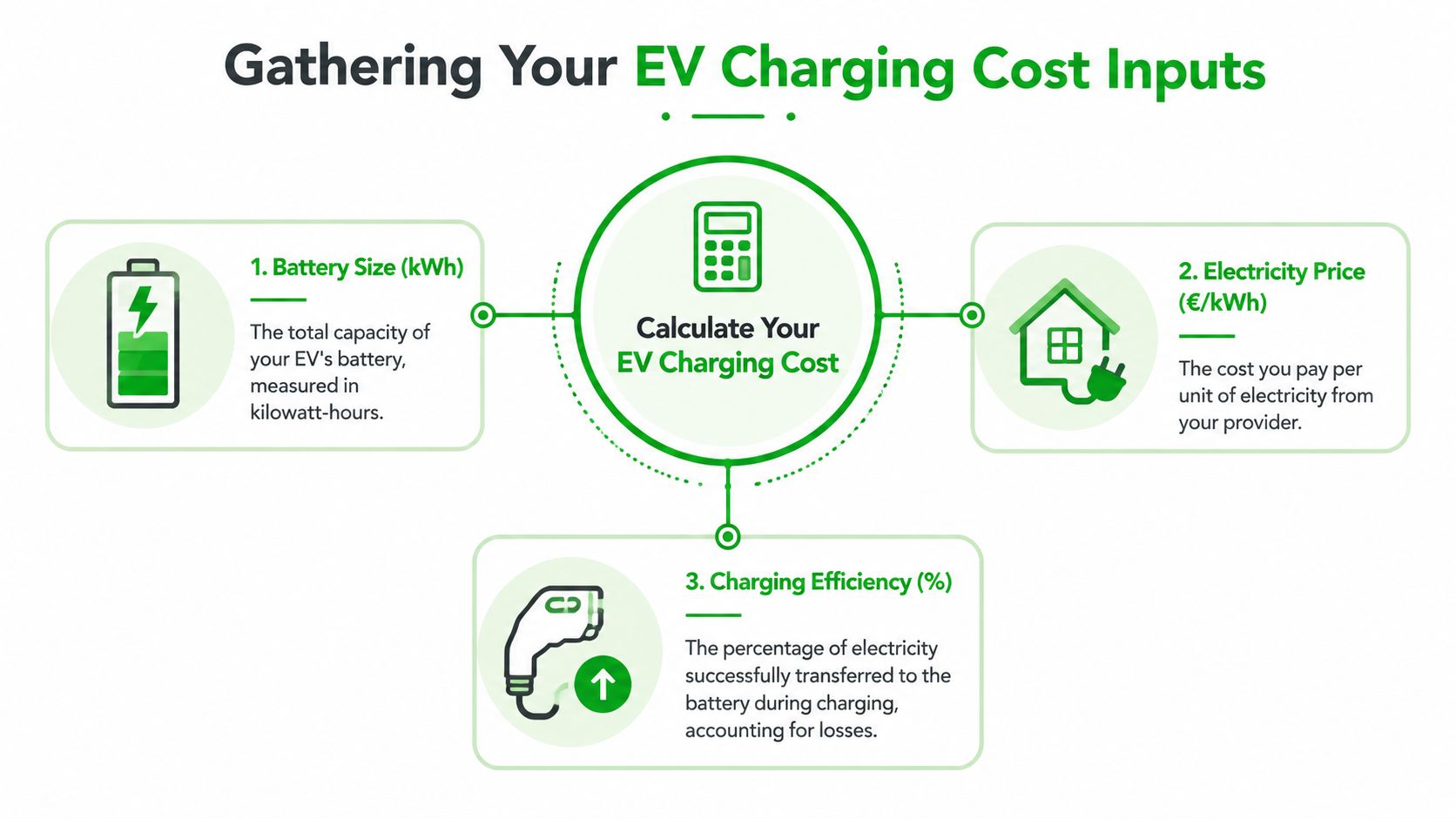
A reliable EV charging cost calculator starts with three inputs you can verify, not guess. If any one of them is wrong, the result will be off.
The official Australian Government calculator on the Green Vehicle Guide uses a three-variable method based on charger rate of charge, vehicle battery size, and electricity price, which is why generic “cost per charge” estimates often miss the mark. You can see that method in the Green Vehicle Guide home charging calculator.
Battery size is your starting point
Battery size, measured in kWh, is the closest EV equivalent to fuel tank capacity. It tells you how much energy the battery can hold, which gives you the base figure for a full-charge estimate.
That doesn't mean you'll always charge from empty to full. In normal use, most drivers top up only part of the battery. Still, battery capacity is the cleanest place to begin because it anchors the calculation in something fixed and easy to confirm in the vehicle specs or app.
Electricity price must match your real tariff
Many calculations prove unreliable because people use the first number they find on a bill, or they use a flat estimate from a comparison article, even though their actual rate changes by time of day or plan type.
Look at your electricity bill and identify the tariff that applies when the car usually charges. If your charger runs overnight, the overnight tariff matters. If you charge after getting home from work, the evening rate matters. If your retailer has multiple usage periods, your EV charging cost calculator should too.
If tariff language still feels fuzzy, this guide on kW vs kWh helps clear up the difference between charging power and energy consumed, which is where many billing mistakes start.
Charger rate affects time and realism
The Green Vehicle Guide includes charger rate for a reason. Charging cost and charging time are linked in practical use. A slow charger and a faster wallbox may both put energy into the same battery, but the way they fit with your tariff window can be very different.
A charger that completes the session inside your cheaper tariff period is easier to budget around than one that spills into a higher-rate window.
Match the calculator to the charger you actually use, not the charger the dealer mentioned and not the charger you plan to buy later.
A quick input checklist
Before you calculate anything, gather these:
- Vehicle battery capacity from the manufacturer spec sheet or EV app.
- Your charging tariff from the electricity bill, with attention to time-of-use periods.
- The charger's real output so the estimate reflects your actual setup, not a generic assumption.
If you can collect those three inputs accurately, you're already ahead of most rough online estimates.
The Simple Formula to Calculate Your Charging Cost
The base formula is straightforward. That's why it works.
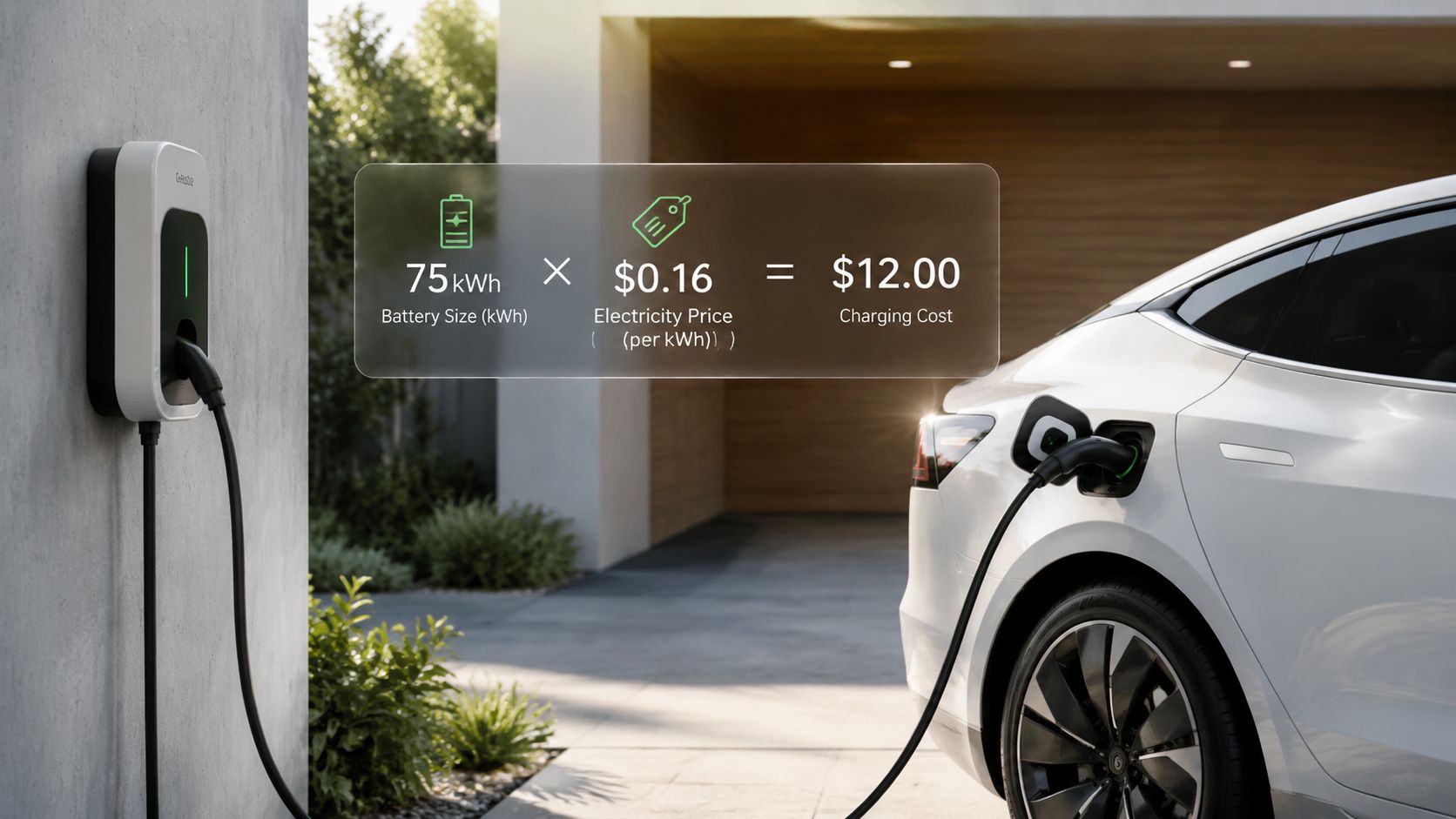
Charging cost = Battery energy charged × Electricity price
If you're estimating a full charge, battery capacity is the starting point. If you're estimating a top-up, use the amount of energy you need to add instead. In day-to-day practice, top-up calculations are usually more useful because that's how most owners charge.
The manual method that works
Use this sequence:
Find the energy to add
Use the battery capacity for a full charge estimate, or the planned top-up amount for a session estimate.Use your actual electricity price
Pull the tariff that applies when the charging happens.Adjust for charging losses
A technically sound method adds about 5% for charging losses, based on the method explained in Eleport's charging cost guide.
The last step is the one many calculators skip. Wall power doesn't flow into the battery with perfect efficiency. Some energy is lost in conversion, heat, and system overhead. Ignore that, and your estimate will almost always come in low.
Why the loss factor matters
On paper, a simple battery-size-times-tariff formula looks clean. In practice, it's incomplete.
That's especially true when owners compare charger app data, vehicle dashboard data, and electricity bill data. Those three don't always line up neatly because they may be measuring different parts of the charging process. Adding a loss allowance gives you a more honest billing estimate.
For households trying to reconcile vehicle charging with total home energy use, learning how to read an electricity meter can be surprisingly helpful. It gives you a cleaner way to check whether your charging assumptions match what the site is drawing.
Don't build your EV budget on perfect efficiency. The bill won't.
A visual walk-through can also help if you prefer to see the arithmetic in action.
What doesn't work
Three shortcuts usually produce bad numbers:
- Using full battery size for every charge when you mostly top up smaller amounts.
- Using a generic grid rate instead of your actual tariff period.
- Ignoring losses and assuming every kWh bought becomes a kWh stored.
A good EV charging cost calculator isn't fancy. It's honest about inputs.
Worked Examples for Common Australian EVs
Worked examples are where the calculator becomes useful. Not because the maths changes, but because you can see how two similar households end up with different charging costs by charging at different times.
I'm keeping these examples practical rather than pretending there's one universal tariff. The point is to show the structure of the calculation and the effect of tariff choice. Use your own bill rates in place of the sample figures below.
Sample EV Charging Costs in Sydney
| EV Model (Battery Size) | Tariff Type (Cost per kWh) | Estimated Cost per Full Charge |
|---|---|---|
| Tesla Model Y (Battery Size) | Standard flat rate (your bill rate) | Battery size × tariff × loss adjustment |
| Tesla Model Y (Battery Size) | Off-peak rate (your bill rate) | Battery size × tariff × loss adjustment |
| Tesla Model Y (Battery Size) | Super off-peak rate (your bill rate) | Battery size × tariff × loss adjustment |
| MG4 (Battery Size) | Standard flat rate (your bill rate) | Battery size × tariff × loss adjustment |
| MG4 (Battery Size) | Off-peak rate (your bill rate) | Battery size × tariff × loss adjustment |
| MG4 (Battery Size) | Super off-peak rate (your bill rate) | Battery size × tariff × loss adjustment |
How to read the table properly
The vehicle model matters less than many buyers assume. What changes the result most in everyday home charging is usually the tariff period, not the badge on the bonnet.
Take a Tesla Model Y owner charging whenever they get home. If that charging lands in a higher-rate period, the full-charge estimate rises. The same household can often bring that cost down by scheduling the charger to begin later. No change to the car. No change to driving style. Just better timing.
The same logic applies to an MG4. The battery may be different, but the budgeting principle is the same. The EV charging cost calculator only becomes useful when it reflects the time window the charger uses.
Two real-world patterns
Here's what usually separates a tidy estimate from a useful one:
Routine top-up household
This driver plugs in several nights a week and uses scheduled charging. Their calculator should focus on tariff timing and average top-up size, not dramatic empty-to-full scenarios.Catch-up charger
This driver waits until the battery is low, then charges in a longer session. Their estimate needs to allow for longer charger runtime and greater exposure to the wrong tariff period if scheduling isn't set correctly.Mixed charging household
This driver mostly charges at home but still uses public chargers on busy weeks or regional trips. Their home charging calculator remains important, but it won't tell the whole ownership story unless they separate home charging from occasional public charging.
The best estimate is the one that matches your charging habit, not the one that produces the prettiest number.
What I'd use in practice
For home budgeting, I'd calculate three versions:
- your standard charging pattern
- your cheapest scheduled charging pattern
- your fallback charging pattern when routine slips
That gives you a realistic range without inventing false precision. It also shows whether changing charging behaviour alone is enough, or whether it's time to think bigger and change where the energy itself comes from.
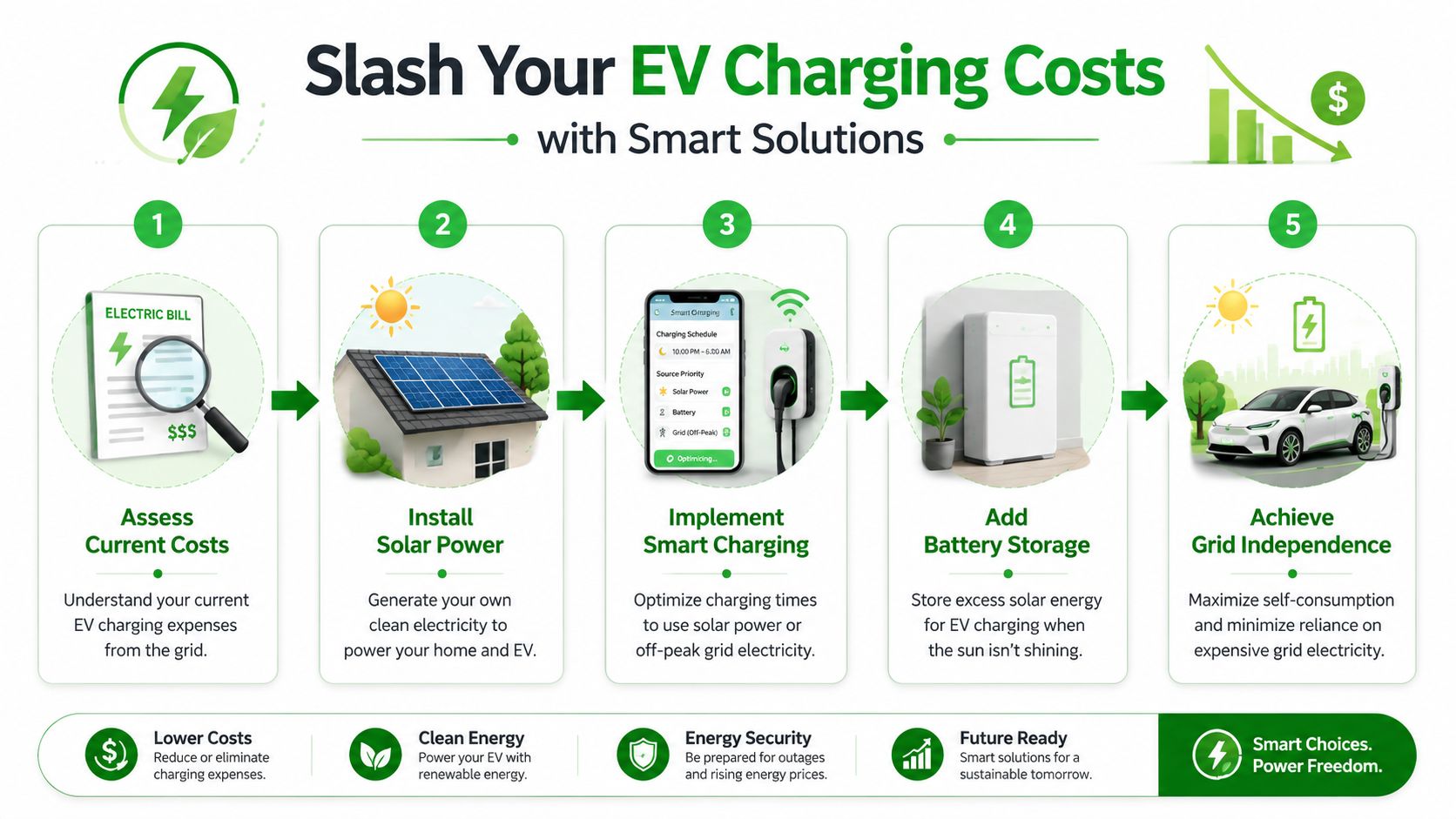
Slash Your Costs with Solar and Smart Charging
Many individuals search for an EV charging cost calculator because they want a lower number. Fair enough. But the more strategic question is different. Why keep optimising a grid cost you may be able to avoid for much of the year?
That's where solar changes the conversation. A calculator tells you what charging costs when you buy electricity from the grid. A solar-integrated setup changes the source of that energy. Instead of chasing a better retail tariff forever, you start shifting EV charging into self-generated daytime power.
Smart charging first
Not every household can charge in the middle of the day. That doesn't mean solar is off the table, but it does mean the charging strategy has to be deliberate.
Smart chargers and charger apps let you schedule sessions to align with cheaper tariff periods, available solar generation, or both. That's the first financial win because it removes accidental charging during expensive periods. If you're comparing broader system design choices, this overview of EV charging components and ROI is a useful outside reference for understanding how charging hardware fits into a larger energy system.
Solar turns the calculator into a baseline, not a destiny
Once rooftop solar is in play, the EV charging cost calculator stops being the final answer. It becomes the baseline you're trying to beat.
The strongest financial move is usually simple in principle. Run the car from your own solar production whenever possible. When the home generates power during the day, an EV becomes another controllable load. Instead of exporting power cheaply and buying it back later at a retail rate, you use more of your own generation on site.
For households exploring the mechanics of using solar power to charge a car battery, the key idea is self-consumption. The more charging you can shift into solar hours, the less your grid-based calculator matters.
A grid charging estimate is useful. A self-generated charging strategy is better.
The night charging problem
There's one obvious obstacle. Many owners plug in at night.
That's where battery storage becomes the missing piece. If rooftop solar generates daytime energy and a home battery stores the excess, the charging plan gets much more flexible. You're no longer choosing only between daytime solar and night-time grid power. You can bank solar production for later use.
EV charging doesn't happen in isolation. The car competes with air conditioning, cooking, hot water, and the usual evening household load. A well-designed solar-and-battery setup gives you more control over when each load draws from self-generated energy and when the grid needs to step in.
What works and what doesn't
Some approaches consistently perform better than others:
What works well
Scheduling the charger to align with solar production, setting charge limits sensibly, and using battery storage where evening charging is dominant.What usually disappoints
Installing solar with no thought to EV load, relying on manual plug-in habits, or assuming any charger can intelligently respond to site generation.Where the best value sits
In the integrated setup. Solar panels create the energy. A smart EV charger helps direct when charging happens. A battery fills the gap when the car arrives home after sunset.
That's why the smartest financial move isn't just “calculate the cost better”. It's “design the system so the grid cost becomes less relevant”.
Your Next Step Towards Cheaper EV Driving
A good EV charging cost calculator gives you clarity. It tells you what charging really costs under your current setup, with your current tariff, and with your current habits.
That's useful, but it's only the starting point. The bigger opportunity is to stop treating EV charging as a separate bill and start treating it as part of your home energy system. Once you do that, the goal changes from estimating cost to shrinking it, controlling it, and in the best setups, replacing much of it with your own solar generation.
The practical next move is to look at your home as a complete charging environment. Check the charger you have or plan to install. Check when the car is usually at home. Check whether your tariff supports overnight scheduling. Then look at whether solar and battery storage can turn charging from a grid purchase into a self-powered routine.
If you're still comparing home hardware, this guide to electric car charger home installation is a useful place to start.

The cheapest long-term EV driving usually comes from a simple sequence. Charge at home. Charge intelligently. Generate as much of that energy yourself as possible.
If you want more than a rough calculator result, Interactive Solar can help you assess the full picture, including solar panels, battery storage, and EV charging designed around your home, your vehicle, and how you drive.
Make Interactive Solar a preferred source in Google
One click tells Google to surface our articles more often in Top Stories, AI Overviews and AI Mode.