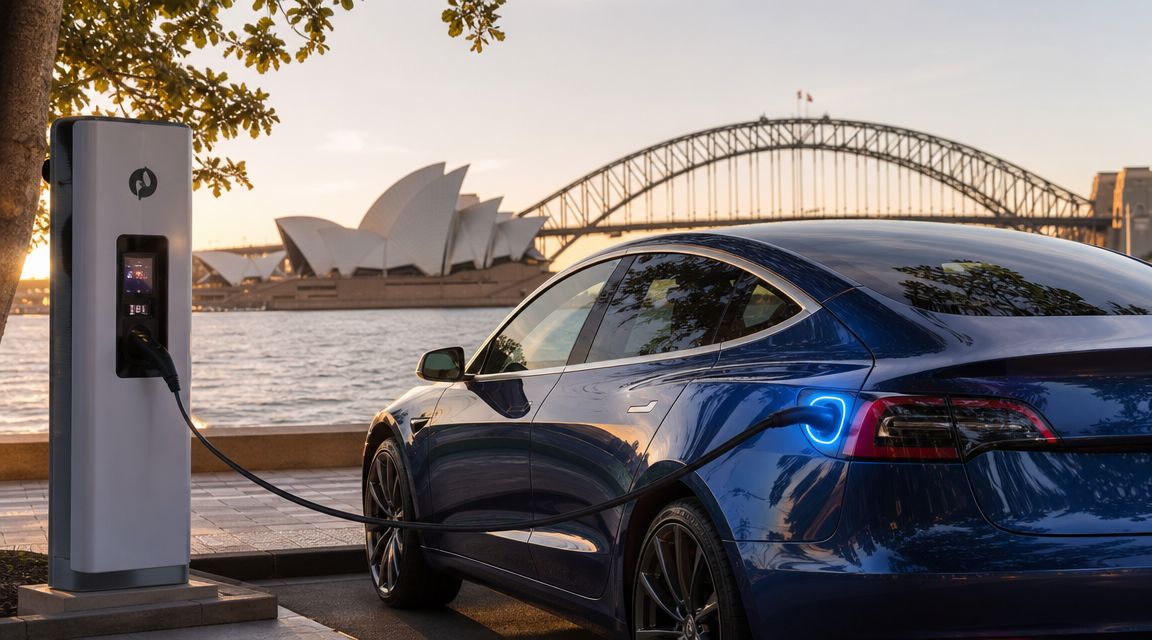
EV Charging Stations Sydney: 2026 Guide to Your Charge
Last updated:
Buying an EV in Sydney is the easy part. The question that lands straight after it is usually more practical. Where am I going to charge it, day after day, without turning it into a hassle?
That question comes up for almost everyone. A homeowner in the Inner West wants overnight charging without overloading an older switchboard. A family in the Hills District wants to use rooftop solar to cover most of their driving. A business owner in South Sydney wants staff charging in the car park, but doesn't want billing disputes or power issues. The charging journey is never just about the car. It's about the property, the electrical supply, the way you park, and how much convenience you want.
Sydney drivers are in a stronger position than they were a few years ago. Public charging across New South Wales has expanded quickly, and private charging options for homes and workplaces are much more mature than many people realise. If you're comparing public options with a private setup, or weighing whether a charger is worth installing at all, the answer usually comes down to one thing. Reliable charging at your own property changes the ownership experience.
Your Guide to EV Charging in Sydney
A common Sydney EV scenario looks like this. You've ordered the car, downloaded a charging app, and started spotting chargers in shopping centre car parks you never noticed before. Then the practical doubts start. Will public charging be enough? Can your home handle a proper charger? If you're in a unit, is it going to be a battle with strata?
Those are the right questions to ask early, not after the car arrives.
Sydney sits inside New South Wales, which remains Australia's largest fast-charging market. According to the Electric Vehicle Council, NSW had 357 total charging locations in mid-2025, made up of 214 fast chargers and 143 ultrafast chargers, while the national network had grown to 1,272 fast-charging locations, a 20% increase in locations from the previous year, as reported by EV Infrastructure News on Australia's fast-charging growth. That matters for Sydney because day-to-day public charging is no longer a fringe option. It's part of a maturing network.
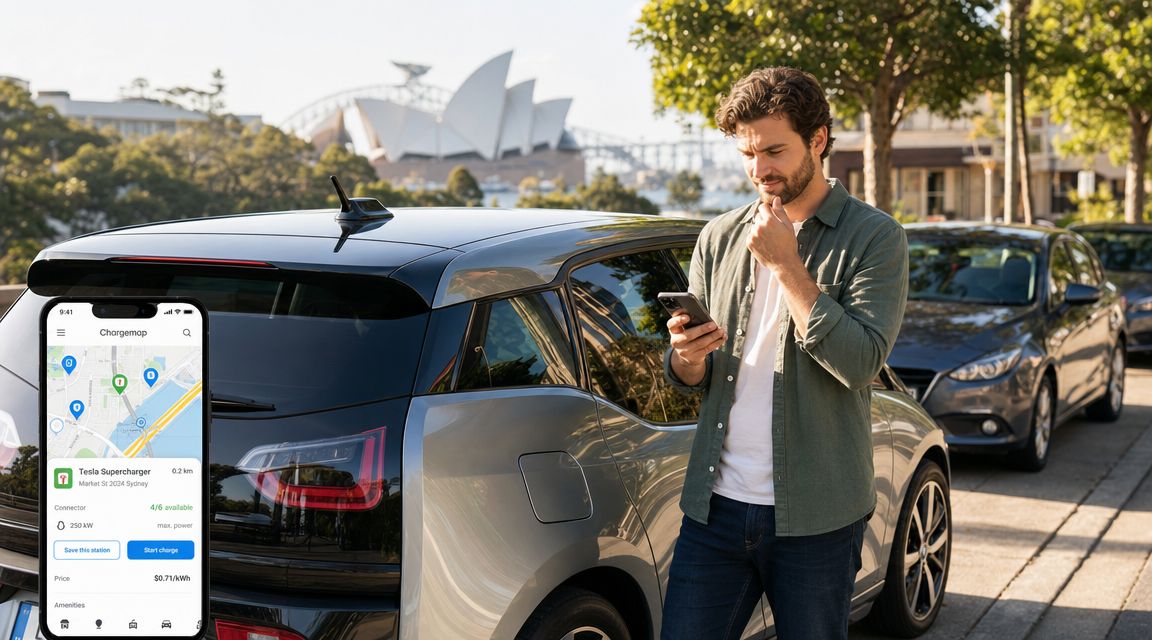
Still, many drivers prefer not to build their routine around waiting at public chargers. They want their car ready in the morning, just like a phone charged overnight. That's why the main conversation around EV charging stations Sydney usually shifts from “what's nearby?” to “what should I install at home or at work?”
If you're exploring private charging options, a useful starting point is to compare the available EV charger solutions for homes and businesses.
Practical rule: Public chargers are useful backup and travel infrastructure. Private charging is what makes EV ownership feel easy.
The Three Main Types of EV Charging Explained
Not all EV charging is the same. The easiest way to think about it is like filling a water tank with different hose sizes. A small hose works, but it's slow. A larger hose is what you want for regular use. A high-pressure commercial line fills quickly, but it needs very different plumbing.
Level 1 charging
This is the slowest option. It's the basic charge from a standard power outlet using the portable cable supplied with many vehicles. It can be fine as a temporary measure, especially for very low daily driving, but it's not what most Sydney households stick with long term.
For practical use, Level 1 often becomes frustrating when driving patterns change. A few extra school runs, a weekend of errands, or a couple of longer commutes can leave the car playing catch-up.
Level 2 charging
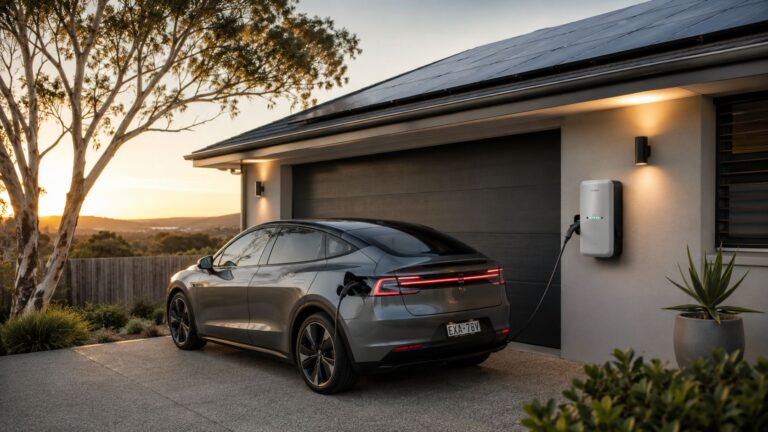
Level 2 is what most homeowners and many workplaces should focus on. This is AC charging, typically through a wall-mounted charger installed on a dedicated circuit. It's the sweet spot for overnight charging, routine top-ups, and destination charging at offices, shopping centres, and hotels.
The technical side matters here. In NSW, public EV charging should be engineered around a mix of AC destination charging and DC fast charging because connector and load profiles differ materially. CHAdeMO-based DC systems are specified across roughly 6 kW to 400 kW, while SAE J1772 supports up to 80 A at 240 V for Level 1 and Level 2 charging in many markets, as outlined by element14's guide to charging protocols and safety standards. The practical takeaway is simple. AC chargers and high-power DC chargers need very different electrical designs.
Level 3 charging
Level 3 means DC fast charging. These are the chargers you'll typically see on major routes, at service locations, and at some high-traffic commercial sites. They're designed for speed, not all-day parking. They're ideal when you need a rapid top-up away from home.
For a homeowner, DC charging isn't the target. For a fleet operator or major commercial site, it may be part of the strategy, but it brings heavier supply-side requirements, thermal considerations, and network coordination.
EV Charging Levels at a Glance
| Charging Level | Power Output | Charging Speed (Approx. km/hour) | Typical Location | Best For |
|---|---|---|---|---|
| Level 1 | Lower-power AC from standard outlet | Slow | Home | Emergency use, very light driving |
| Level 2 | AC charging | Moderate | Home, workplace, shopping centre | Daily charging, overnight charging |
| Level 3 | DC fast charging | Fast | Roadside, arterial routes, commercial hubs | Travel top-ups, quick turnaround |
The mistake many owners make is choosing by charger label instead of charging habit. Daily routine should drive the equipment choice.
How to Find Public EV Charging Stations in Sydney
If you're relying on public charging even part of the time, the process needs to be organised. Sydney has enough activity in the market that random searching wastes time. You want a simple method.
Start with apps, then filter hard
Most Sydney EV drivers end up using a mix of map-based discovery apps and network-specific apps. The map app helps you find options. The network app helps you start sessions, check live status, and manage payment.
When searching for EV charging stations Sydney, filter by:
- Connector compatibility so you don't arrive at a charger your car can't use
- Charging speed based on whether you're staying for ten minutes or two hours
- Location type such as shopping centre, roadside stop, workplace precinct, or destination parking
- Availability signals so you avoid driving to an occupied or faulted unit when the app provides live information
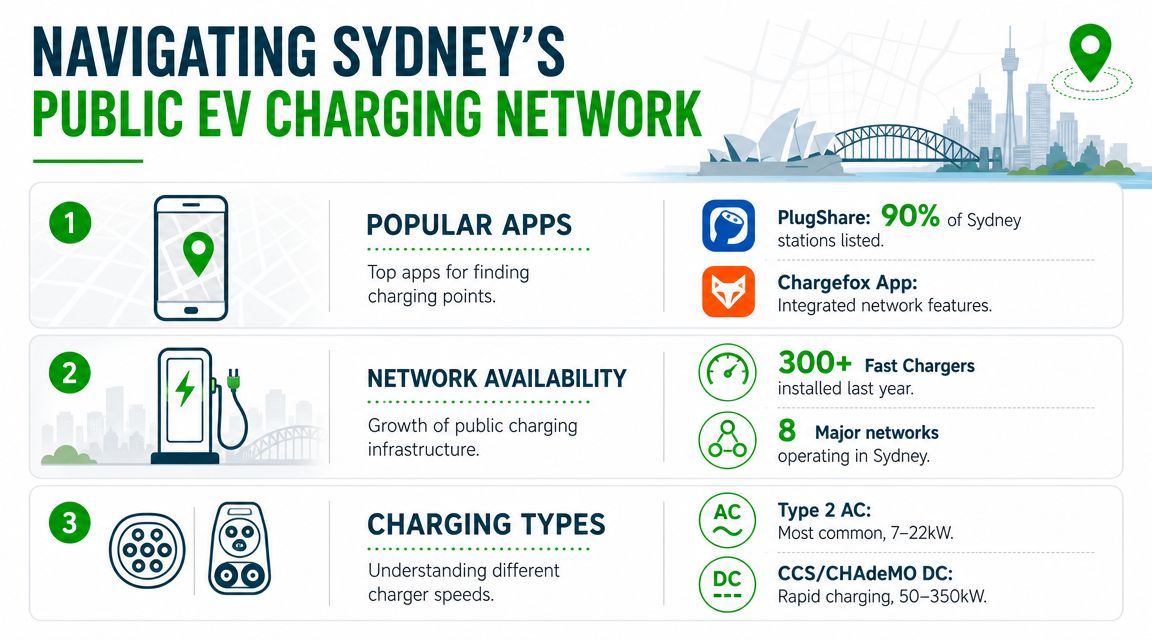
A practical move is to save a short list of dependable chargers near home, near work, and along your regular weekend route. That way, if one site is occupied or offline, you're not starting from scratch.
Expect different payment setups
Public charging doesn't always feel as simple as a petrol bowser. Some sites rely on an app. Some require account setup. Some allow direct card payment. For drivers who can't charge at home, that friction matters. The World Resources Institute notes that public charging is often more expensive than home charging and may require smartphone or credit-card payment, which can create barriers for some users, especially in dense cities where apartment and renter access matters most, as explained in WRI's analysis of EV charging access.
That's one reason home or workplace charging is so valuable when it's possible.
Public charging etiquette matters
Sydney sites get busy, and charger etiquette makes a real difference.
- Move once charging is complete: Don't leave the car sitting on a charger longer than needed.
- Use fast chargers for fast charging: If you're parked for hours, slower destination charging is usually the better fit.
- Check access conditions: Some chargers are inside paid parking areas or time-limited sites.
- Have a backup option: A second nearby charger saves frustration.
If you want to see charging points and service areas in a broader geographic format, Interactive Solar also provides a locations file for mapping and coverage reference.
The Process for Installing a Home EV Charger
You get home with 12 percent battery left, plug into a standard power point, and realise by morning the car still will not be where you need it. That is usually the point Sydney homeowners start looking at a proper EV charger.
A reliable home setup starts with the electrical design. Charger speed matters, but switchboard capacity, cable sizing, protection devices, Wi-Fi stability, and where the charger sits in relation to the car all affect how well the system works day to day.
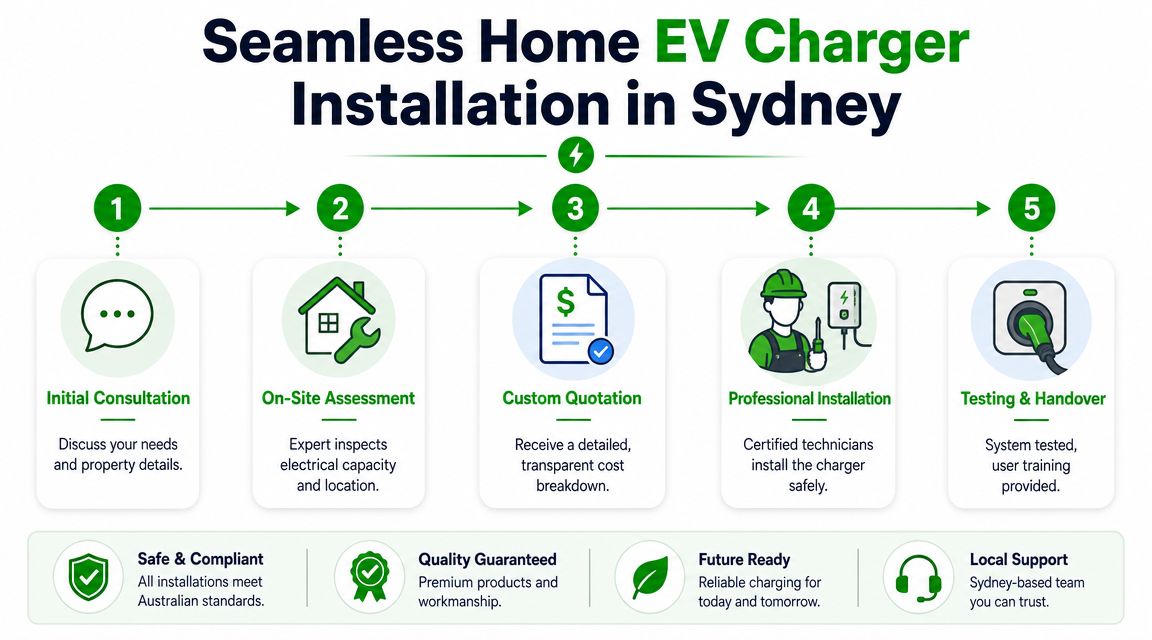
Step 1. Start with how the property is actually used
The right charger depends on the car, the parking setup, and how much flexibility you have in your charging window.
A garage with the switchboard on the other side of the wall is a different job from an open driveway with a long cable run back to the meter panel. A household with one EV charging overnight has different needs from a family expecting a second EV within a year. Some owners want basic overnight charging. Others want solar-aware charging during the day, app control, or the ability to prioritise charging around other large household loads.
That early scoping stage avoids a common mistake. Buying hardware first, then trying to make the site fit it.
Step 2. Assess the switchboard and supply before anything is quoted
This is the part that decides whether the installation will be safe, compliant, and trouble-free.
Australian installation practice requires each charger to be on a dedicated circuit, hard-wired to mains, protected by an individual circuit breaker and RCD, installed by a licensed electrician, and properly cable-sized to AS/NZS 3008.1.1:2017, according to Australian EV charger installation requirements. On site, that means checking the existing switchboard, confirming available capacity, reviewing earthing and protection, and working out the cable route before installation is approved.
Older Sydney homes often need extra attention here. We regularly see full switchboards, limited spare ways, awkward meter locations, or consumer mains that leave little room for added load. In those cases, the answer may be load management, a switchboard upgrade, or a charger set to a lower output that better suits the property.
Future planning belongs in this stage too. If solar expansion, a battery, or another EV is likely, it is smarter to design for it now. For households comparing charging with energy storage, a guide to home batteries like the Tesla Powerwall 3 helps frame how those systems can work together.
Step 3. Choose features that match real charging habits
Plenty of homes do well with a straightforward wall charger. Others benefit from smarter controls because the site has tighter electrical limits or the household wants more control over costs.
Useful features can include:
- Dynamic load management: Adjusts charging to avoid overloading the home supply when other appliances are running
- Scheduled charging: Suits time-of-use tariffs or homes that only need the car ready by a set time
- Solar integration: Allows charging to better align with daytime solar generation where the vehicle is home often enough
- User monitoring: Helps track charging sessions, energy use, and charger status
The trade-off is simple. More features can improve control, but only if they solve a real site problem or fit the way the household lives. Interactive Solar supplies EV charging as part of a wider solar, battery, and electrical installation pathway, so the charger can be selected as part of the full system rather than in isolation.
Step 4. Install, test, and hand over properly
A proper install is more than mounting the unit and turning it on. It includes compliant cabling, correct protection, secure terminations, commissioning, and testing under operating conditions.
The handover matters just as much. Homeowners should leave knowing how to start and stop charging, how any scheduling works, what the protection devices do, what fault lights mean, and when to call an electrician instead of trying to reset the system repeatedly.
For a visual walkthrough of the process, this video is a useful reference.
The best result is simple. You park, plug in, and charge reliably without stressing the switchboard or guessing whether the installation was done properly.
Bringing EV Charging to Your Workplace or Apartment
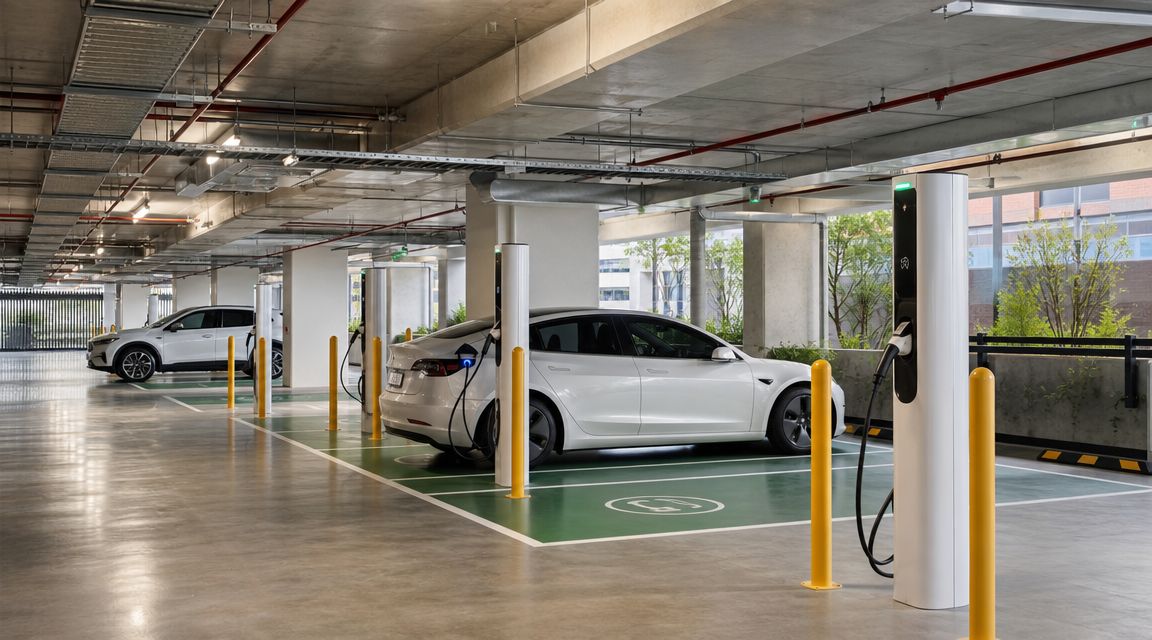
Workplaces, apartment buildings, and strata sites are where EV charging gets more complex. The technical challenge isn't just mounting chargers on a wall. It's managing multiple users, shared infrastructure, and fairness around access and electricity use.
Why apartment and workplace charging is different
A detached home usually has one owner, one switchboard, and one charging decision-maker. An apartment building or business site rarely works that way. There may be tenant bays, visitor bays, common property rules, embedded networks, after-hours access issues, and disputes over who pays for what.
For dense cities like Sydney, curbside and apartment charging is a key strategy because renters and multifamily residents are overrepresented. Often, the challenge lies not with the charger hardware itself, but with permitting, equitable access, and transparent pricing for residents who can't install a private charger at home, as highlighted in the earlier WRI analysis.
What works in multi-user sites
The sites that work well usually share a few characteristics:
- Load management is planned upfront: Chargers are coordinated so the building supply isn't overloaded when several vehicles plug in at once.
- Billing is clear: User consumption should be attributable, whether to a tenant, fleet vehicle, employee, or visitor.
- Rules are documented: Booking, access, idle time, and responsibility for faults should be settled before rollout.
- Expansion is designed in: The first chargers shouldn't block practical growth later.
What often fails
Workplace and strata charging usually struggles when a single charger is added without thinking about the full site.
Common weak points include:
- No allowance for future users
- Unclear ownership of cabling and protection
- Poor charger placement that creates trip hazards or parking conflicts
- No governance around shared access
For commercial property owners already considering broader site energy upgrades, EV charging often sits alongside other building efficiency investments such as commercial solar system planning.
In apartment and workplace settings, the charger is only one piece of the project. The operating model matters just as much.
Understanding NSW Incentives and Safety Rules
NSW has signalled clear support for EV infrastructure, but support and compliance aren't the same thing. Incentives can help move projects forward. They don't remove the need for sound electrical design.
What the policy direction tells you
The NSW Government's EV public charging master plan is backed by a $209 million investment to develop a world-class fast-charging network, and the state's high-power public charging locations increased from 174 in mid-2023 to 357 by mid-2025, according to the NSW EV public charging master plan map and program information. For Sydney drivers and site owners, that says something important. EV charging isn't being treated as a niche add-on. It's becoming part of mainstream infrastructure planning.
For businesses and property groups, that policy direction can influence timing. If you're expecting staff, tenants, or customers to ask for charging soon, planning before demand becomes urgent is usually the better move.
Safety rules are not optional
The compliance side is where many people underestimate the job. EV charging involves sustained electrical load, often for long periods, and that changes how the installation needs to be approached.
A compliant installation should account for:
- Dedicated supply to the charger
- Correct protection devices
- Appropriate cable sizing and cable route
- Switchboard capacity and condition
- Mounting position suited to regular use and weather exposure where relevant
This is also where broader home energy planning becomes useful. A property owner looking at batteries as well as EV charging may want to understand current NSW support settings around storage, including practical summaries such as this NSW battery rebate overview.
Incentives don't fix a poor design
Some owners get caught focusing on possible support programs before they've answered basic design questions. Where will the charger go? Can the switchboard support it? Will the installation still make sense if a second EV arrives? Will a workplace site need user authentication or cost allocation?
Those decisions have more impact on long-term satisfaction than any headline program announcement.
How to Choose a Licensed EV Charger Installer
Choosing an installer for EV charging in Sydney shouldn't come down to who can put a box on the wall fastest. It should come down to who can make the system safe, compliant, and practical for the way the property operates.
What to check before you commit
Start with the essentials.
- Electrical licensing: The installer should be properly licensed for the work being performed.
- EV charger experience: General electrical experience helps, but EV charging has its own load, protection, and usage considerations.
- Switchboard competence: If the installer doesn't want to inspect the board or discuss capacity, that's a warning sign.
- Clear product matching: The charger should suit the vehicle, parking arrangement, and future plans.
- After-care support: Faults, software settings, and user questions don't always happen on installation day.
Then look at integration capability. If you already have solar, want a battery later, or expect another EV in the household, the installer should be able to design around that. A charger installed in isolation can create avoidable rework later.
Good installers talk about trade-offs
The right advice usually sounds measured. You might not need the fastest AC charger available. You might not need every smart feature. You might need a switchboard upgrade before anything else. An experienced installer says that plainly.
Selection test: If the quote focuses on charger brand but barely mentions protection, cable route, switchboard capacity, or usage pattern, it's incomplete.
A strong EV charger installation feels routine after it's finished. That's the goal. Quiet reliability, compliant workmanship, and a setup that suits how you drive.
If you want a charger installed at home, at your workplace, or as part of a broader solar and battery plan, Interactive Solar handles the full process from site assessment and system design through to licensed installation and handover across Sydney and greater NSW.
Make Interactive Solar a preferred source in Google
One click tells Google to surface our articles more often in Top Stories, AI Overviews and AI Mode.