Commercial Solar Installation Parramatta: 2026 Step-by-Step Guide
Last updated:
Commercial solar installation Parramatta businesses choose in 2026 typically pays for itself in 3.5 to 4.5 years. Federal STCs cover roughly 20 to 30% of upfront costs for systems under 100kW, Endeavour Energy’s revised connection rules make grid approval more predictable, and panel prices have continued to fall. If your business operates through daylight hours and pays commercial electricity rates, a system sized and installed correctly in the Parramatta area will typically pay for itself within 3.5 to 4.5 years and continue generating savings for 25 years or more.
Key Takeaways
- A correctly sized commercial solar system in Parramatta typically pays for itself within 3.5 to 4.5 years and keeps saving for 25 years or more.
- Federal STCs cover roughly 20 to 30% of upfront costs, with a 20kW system costing around $14,800 to $20,800 after rebate.
- Endeavour Energy connections typically take 10 to 15 business days for approval, with the full project taking 6 to 10 weeks from contract to energised system.
- Most Parramatta commercial sites have three-phase supply, allowing systems up to about 50 to 60kW without triggering network augmentation costs.
- Adding a battery, such as a 20kWh unit, can attract a rebate of approximately $4,000 to $5,000 under the 2026 Cheaper Home Batteries Program.
The Full Commercial Solar Project Journey, Step by Step
Most commercial solar guides skip straight to cost tables. This one starts somewhere more useful: what actually happens from your first phone call to the day your system exports to the grid. Commercial solar installation Parramatta projects involve more moving parts than residential jobs, and understanding each stage helps you avoid the delays that cost businesses money.
A typical Parramatta commercial installation moves through six stages: initial consultation and site assessment, energy audit and system design, proposal and approval, Endeavour Energy connection application, installation, and final inspection with grid connection. Each stage has its own timeline, and skipping steps or choosing an installer who does not handle them properly is the single biggest source of project blowouts in Western Sydney.
Stage 1: Site Assessment and Load Analysis
The starting point is understanding how your business actually uses electricity, not guessing from the bill total. A qualified installer reviews 12 months of interval data from your smart meter (available from Endeavour Energy on request) to map consumption by hour and day. This reveals peak demand windows, overnight base loads, and the hours where solar generation will overlap most with your usage.
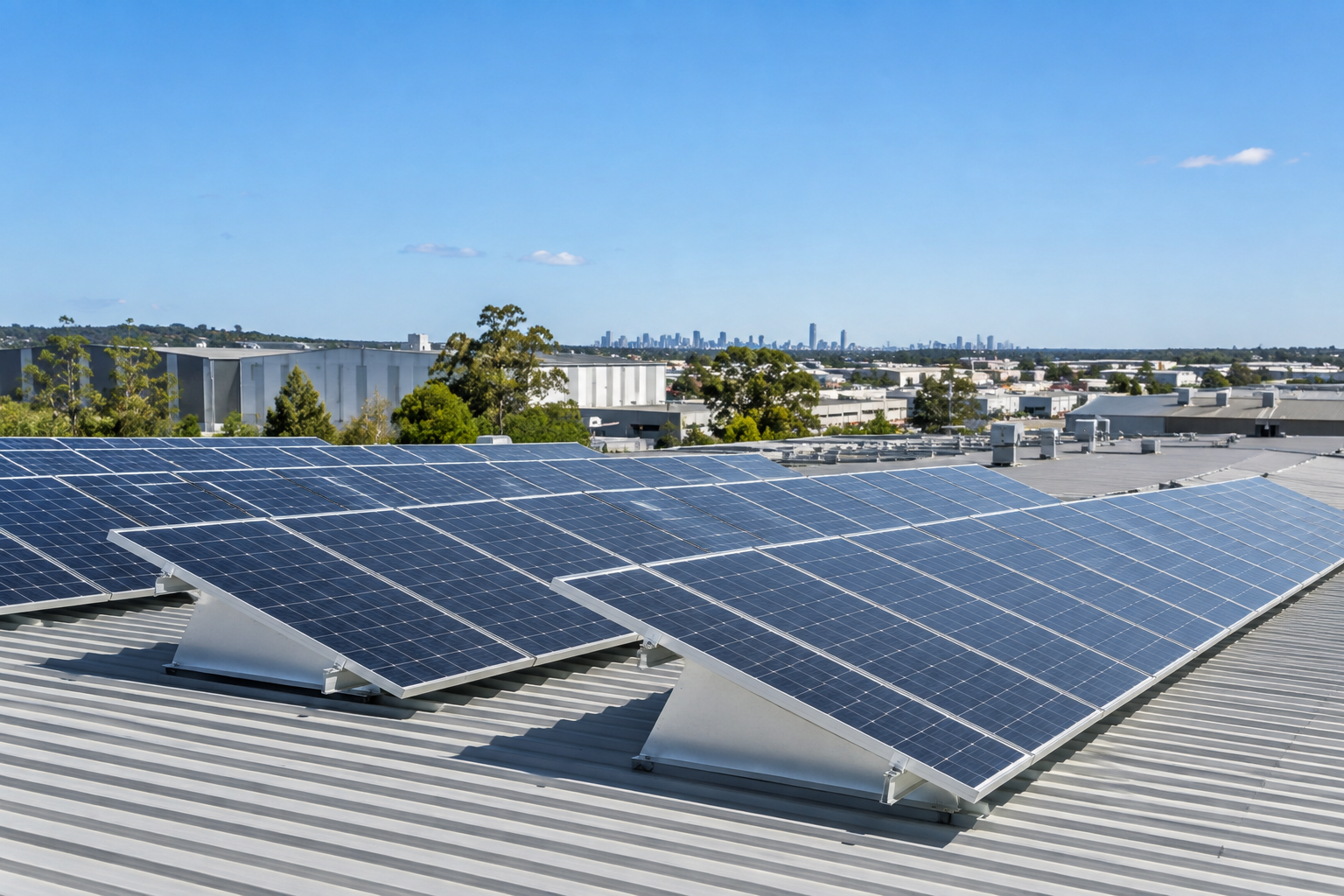
For a Parramatta site, the installer also evaluates roof orientation and pitch, shading from nearby buildings, structural load capacity, and the condition of the existing switchboard. Flat commercial roofs common in the Rydalmere and Silverwater industrial precincts typically use tilt frames to angle panels north at 10 to 15 degrees, adding a small cost but significantly improving annual yield compared to a flat-mounted array.
Stage 2: System Design and Sizing
Once the load profile is clear, the design phase matches system size to your specific consumption curve. The goal is not to install the largest possible system: it is to maximise self-consumption, which is the proportion of solar energy your business uses directly rather than exporting at a low feed-in tariff rate.
For a Parramatta business with a typical commercial electricity rate of 26 to 34 cents per kilowatt-hour and a feed-in rate of 3 to 7 cents, electricity you use yourself is worth four to ten times more than electricity you export. A hospitality site running a kitchen from 6am to 3pm, for example, has excellent solar alignment: a 20kW system on a 200sqm north-facing roof section would generate roughly 28,000 kWh per year in the Parramatta climate, offsetting $7,280 to $9,520 worth of consumption annually at current commercial tariffs.
Commercial Solar Installation Parramatta: 2026 Rebates and Incentive Breakdown
Commercial solar installation Parramatta projects under 100kW qualify for Small-scale Technology Certificates (STCs), which are the primary federal rebate mechanism. In 2026, the deeming period is 5 years (down from 6 in 2025), and the STC spot price has traded between $36 and $40 through the first half of the year.
Here is how the rebate works in practice for typical Parramatta commercial system sizes:
| System Size | Approx. STCs Generated | Estimated Rebate Value | Typical Gross Cost (before rebate) | Net Cost (after rebate) |
|---|---|---|---|---|
| 10 kW | 69 STCs | ~$2,620 | $12,000 – $15,000 | $9,400 – $12,400 |
| 20 kW | 138 STCs | ~$5,240 | $20,000 – $26,000 | $14,800 – $20,800 |
| 30 kW | 207 STCs | ~$7,870 | $28,000 – $36,000 | $20,100 – $28,100 |
| 50 kW | 345 STCs | ~$13,110 | $44,000 – $56,000 | $30,900 – $42,900 |
| 99 kW | 684 STCs | ~$25,990 | $80,000 – $100,000 | $54,000 – $74,000 |
Systems at or above 100kW switch from STCs to Large-scale Generation Certificates (LGCs), which are claimed annually rather than upfront. For most Parramatta SMEs, staying under 100kW keeps the upfront cash rebate intact, which simplifies financing significantly. Installers claiming STCs on your behalf must use panels and inverters on the Clean Energy Regulator’s approved product list: verify this before signing any contract.
On the tax side, the $20,000 instant asset write-off for small businesses (aggregated turnover under $10 million) is now permanent from 1 July 2026. Most commercial systems cost more than $20,000, so they go into the small business depreciation pool instead: 15% deduction in the first year, then 30% a year after that. Note that the 20% Small Business Energy Incentive only applied to spending between 1 July 2023 and 30 June 2024, so it does not apply to a 2026 installation. Confirm your position with your accountant.
For authoritative information on STC eligibility and the approved product list, refer to the Clean Energy Regulator’s small-scale installations guidance.
Endeavour Energy Grid Connection in Parramatta
Commercial solar installation Parramatta sites sit within Endeavour Energy’s distribution network, which covers the greater Parramatta LGA including Westmead, Rydalmere, Silverwater, Granville, Merrylands, Harris Park, and Northmead. Understanding Endeavour’s specific connection rules avoids the most common source of installation delays.
Endeavour Energy allows single-phase connections to export up to 10kW and three-phase connections to export up to 30kW without requiring an augmentation or capacity upgrade. Most commercial sites in Parramatta have three-phase supply, so a system up to approximately 50 to 60kW can generally be installed without triggering network upgrade costs, provided the inverter export limit is configured correctly.
What the Connection Application Involves
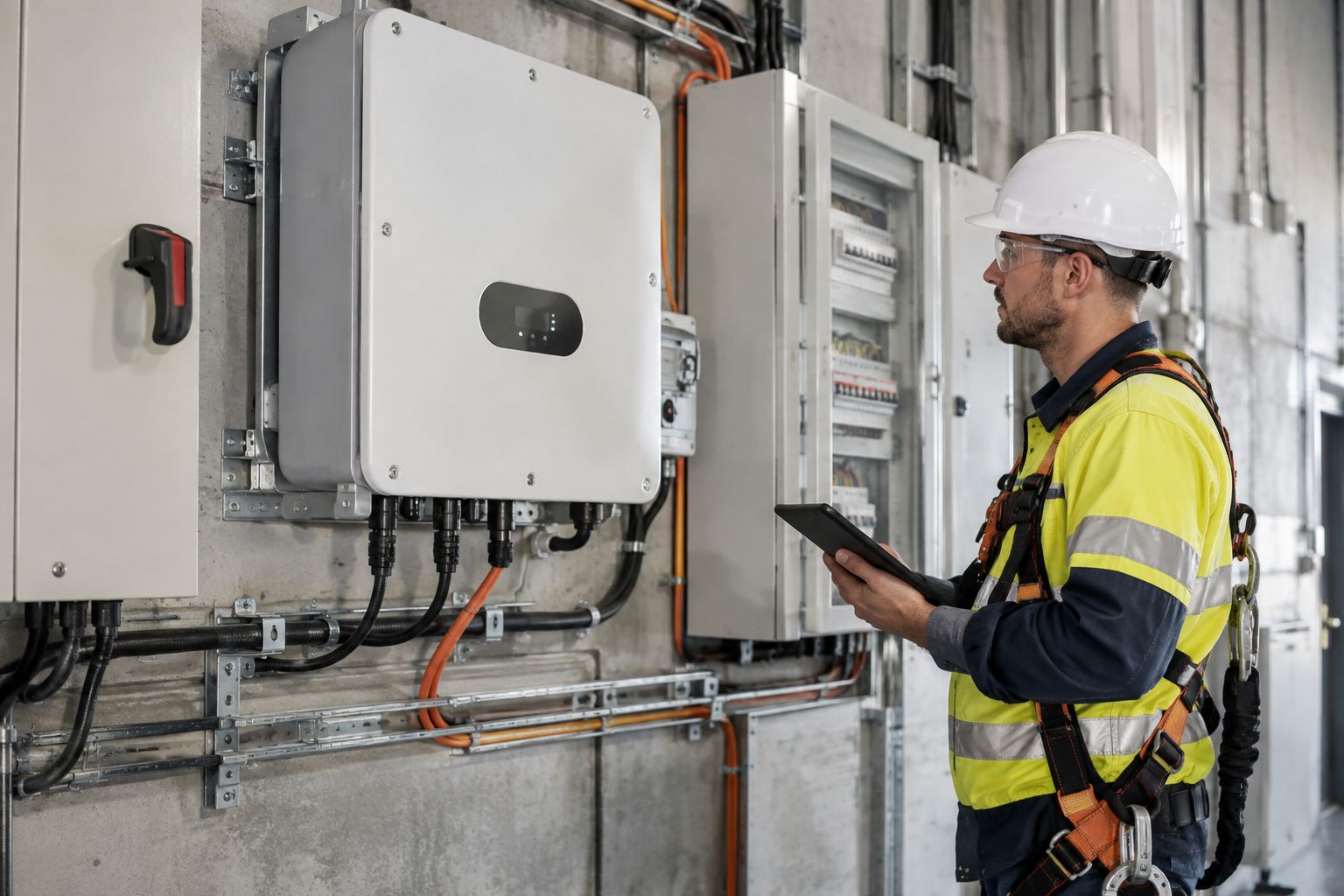
Your Solar Accreditation Australia (SAA) accredited installer submits the connection application to Endeavour Energy on your behalf. The application includes the proposed system size, inverter specifications, and a single-line electrical diagram. Endeavour typically takes 10 to 15 business days to issue an approval or request additional information. Projects over 30kW three-phase may require a power quality study. Rushed installers sometimes skip the pre-application site check that identifies potential issues early: this is where choosing an experienced commercial installer pays off.
Once the approval is issued, installation can proceed. After installation, a registered electrical inspector must issue a certificate of compliance (CC), which is lodged with Endeavour to trigger the final grid connection and bidirectional meter installation. The meter installation itself is handled by Endeavour and typically takes 3 to 10 business days after the CC is lodged.
Export Limiting and Demand Charges
Some Parramatta commercial sites are asked by Endeavour to install export limiting, which caps the amount of solar energy sent to the grid. This is increasingly common as more sites in the area go solar. Export limiting does not reduce the value of solar for a business with good daytime self-consumption: it just means any excess generation is curtailed rather than exported. If your business runs 5 days a week from 7am to 5pm and uses most of its power during those hours, export limiting has minimal impact on your return.
Businesses on demand tariffs (common for sites above 160MWh/year) should also look at how solar interacts with demand charges. If the demand peak occurs on a cloudy morning or during a period of high load not offset by solar, the demand charge is unaffected. A battery paired with a solar system can specifically target demand peak shaving, but this adds cost and complexity. Interactive Solar’s commercial team assesses demand tariff structures as part of every commercial proposal for Parramatta clients.
Worked Example: A 20kW System for a Granville Business
The following is an illustrative worked example, not a specific client project, built from typical Parramatta figures. Consider a food service and catering business in Granville, operating Monday to Saturday from 6am to 3pm, with annual consumption of 42,000 kWh and a quarterly bill averaging $4,200.
The site assessment identified a 200sqm flat roof section facing within 15 degrees of due north. A 20kW system using 48 x 420W Jinko Tiger Neo panels with a 20kW Sungrow three-phase string inverter was designed, with tilt frames to achieve a 12-degree pitch. The system generates approximately 27,500 kWh per year in Parramatta’s climate (Zone 3 for solar deeming purposes).
Financial outcome after installation:
- Annual solar generation: 27,500 kWh
- Self-consumption rate: 82% (22,550 kWh used directly at 30c/kWh value)
- Grid export: 18% (4,950 kWh at 5c/kWh feed-in tariff)
- Annual bill savings: $6,765 (consumption offset) + $248 (export credits) = $7,013
- Net system cost after 138 STCs at $38 each: approximately $17,000
- Simple payback period: about 2.4 years
- 25-year cumulative savings (at 3% annual tariff increase): approximately $260,000
This example reflects a high self-consumption profile, which is the key driver of outstanding payback. Businesses with lower daytime consumption or significant evening loads will see longer payback periods, typically 3.5 to 5 years for commercial sites with less optimal consumption alignment.
SRES Cap Expansion: What 100kW to 1MW Means for Parramatta Businesses
From 1 October 2026, solar PV systems up to 1MW can earn upfront STCs under the Small-scale Renewable Energy Scheme, up from the previous 100kW limit. The Clean Energy Regulator has confirmed the regulations are amended, with applications for the larger systems expected to open from mid-to-late November 2026 while processes are finalised.
100kW to 1MW: the new SRES eligibility ceiling for solar PV installed on or after 1 October 2026 (Clean Energy Regulator).
For Parramatta this matters most in the Rydalmere, Camellia, Silverwater and Clyde industrial precincts, where warehouse and manufacturing roofs can comfortably hold 150kW to 400kW. Until now those sites either capped their system at 99kW to keep the upfront rebate or went large and dealt with annual LGCs. From October, a single right-sized array can claim the upfront certificate value, which shortens payback and simplifies financing. Grid approval from Endeavour Energy still applies, and larger systems usually need export limiting or a network study, so talk to our commercial solar team early if you have been holding a project at 99kW.
The Clean Energy Council’s short explainer on the Solar Retailer Code of Conduct is worth watching before you compare quotes:
Commercial Solar Installation Parramatta: Choosing the Right Installer
The commercial solar installation Parramatta market has grown considerably since 2020, and the quality of installers varies significantly. Accreditation is the minimum threshold: since 29 May 2024, installer accreditation has been run by Solar Accreditation Australia, and all design and installation work on systems claiming STCs must be done by an SAA-accredited installer. The Clean Energy Council still maintains the approved product lists and the Solar Retailer Code of Conduct. Beyond that baseline, look for three additional qualifications.
What to Verify Before Signing
First, confirm the installer holds a current electrical contractor licence in NSW. This is separate from CEC accreditation and is required for the CC that enables grid connection. Second, check that the installer has specific commercial experience: ask for references from commercial projects of similar size to yours, and verify that those projects included Endeavour Energy connection applications, not just residential-style approvals. Third, confirm the installer uses products on the Clean Energy Regulator’s approved product list for both panels and inverters. A contract that lists “approved brands to be confirmed” is a red flag.
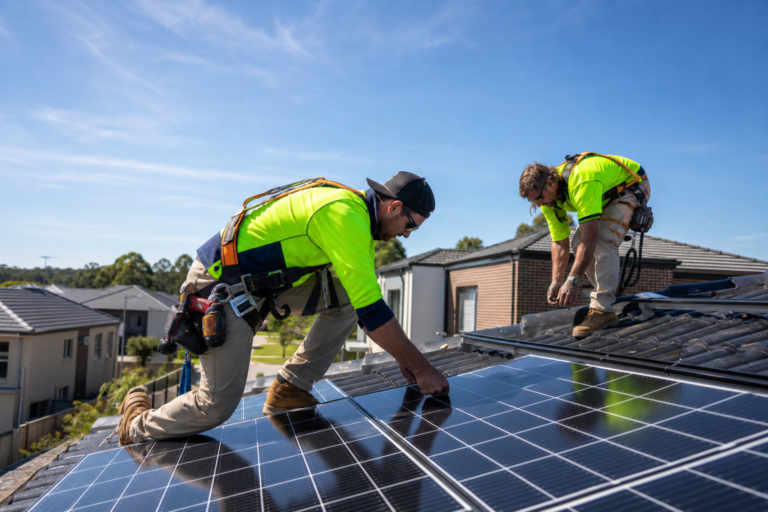
Interactive Solar uses SAA-accredited in-house install teams (no subcontracted crews), has installed more than 1,300 systems and supplied over 10MW of solar, and runs a dedicated commercial team that has completed commercial solar installations across Parramatta, Rydalmere, Granville, Silverwater, Westmead, Merrylands, and surrounding Western Sydney LGAs. You can view completed commercial projects in our project gallery and read verified customer reviews at our reviews page.
Adding Battery Storage to a Commercial System in 2026
Commercial solar installation Parramatta businesses increasingly pair with battery storage, particularly after the Cheaper Home Batteries Program expanded in May 2026. The federal program now applies to commercial batteries up to 50kWh and is tiered: 100% of STCs for the first 14kWh of storage capacity, 60% for 14 to 28kWh, and 15% for 28 to 50kWh. For a 20kWh commercial battery, this translates to a rebate of approximately $4,000 to $5,000 depending on STC spot price and the date of installation, as the STC factor steps down over time.
In Western Sydney, battery storage serves two commercial functions: overnight load coverage (useful for businesses with some evening or early morning consumption) and demand peak shaving (reducing the highest 30-minute demand reading that drives demand tariff charges). Not every Parramatta business benefits equally from batteries: sites with strictly daytime operations and no demand tariff typically get better value from a larger solar array than from adding storage. Interactive Solar’s commercial proposals include a battery feasibility section when the load profile suggests potential value. For more detail on battery options and sizing, visit our solar batteries page.
Common Commercial Solar Mistakes and How to Avoid Them
Commercial solar installation Parramatta projects go wrong in predictable ways. Understanding the most frequent mistakes helps you ask the right questions before committing.
Oversizing for Export Rather Than Self-Consumption
Some installers propose the largest system that fits the roof, maximising the installation value but not necessarily your return. If a 50kW system generates 40kW of excess power on a slow Tuesday that gets exported at 5 cents per kWh, that capacity is not working hard for your business. The right size is determined by your consumption profile, not the available roof space. A well-designed 20kW system will often outperform a poorly designed 50kW system for a small business in Parramatta.
Choosing on Price Alone
The cheapest quote in the Parramatta market often reflects compromises in panel quality, inverter brand, or installation workmanship. A budget panel with 0.7% annual degradation loses 15% of its output by year 10 and 30% by year 25. A premium panel degrading at 0.35% retains 91% of output at year 25. Over a 25-year asset life, the gap in energy production is substantial. The rebate-adjusted cost difference between mid-tier and premium panels on a 30kW system is often $2,000 to $4,000, a fraction of the lifetime production difference.
Ignoring the Connection Timeline
Many Parramatta businesses plan solar around a lease renewal, a fitout, or a financial year deadline. Endeavour Energy’s connection approvals and meter installations add 6 to 10 weeks after signing the contract. Factor this into any deadline planning. A good commercial installer will sequence the Endeavour application early in the project to avoid holding up installation completion.
Suburbs Serviced by Interactive Solar for Commercial Installations
Interactive Solar handles commercial solar installations across the Parramatta LGA and surrounding Western Sydney areas including Parramatta CBD, Westmead, Rydalmere, Silverwater, Granville, Merrylands, Harris Park, Northmead, Woodville, South Granville, Wentworthville, Pendle Hill, and Toongabbie. Our commercial team is also active in adjacent LGAs including Cumberland, Blacktown, and Hills District. If your site is in Greater Western Sydney, contact us for a commercial assessment.
Frequently Asked Questions: Commercial Solar Installation Parramatta
How much does commercial solar installation Parramatta cost in 2026?
After STCs, a 10kW commercial system in Parramatta typically costs $9,400 to $12,400. A 20kW system costs $14,800 to $20,800, a 30kW system $20,100 to $28,100, and a 50kW system $30,900 to $42,900. Costs vary based on roof type, switchboard upgrades required, and brand selection. These figures include GST and installation using Clean Energy Council approved products.
How long does a commercial solar installation take in Parramatta?
From signed contract to system energised, a typical Parramatta commercial installation takes 6 to 10 weeks. This includes Endeavour Energy connection application (10 to 15 business days), installation (1 to 3 days depending on system size), electrical inspection, CC lodgement, and meter installation (3 to 10 business days). Projects requiring a power quality study or switchboard upgrade take longer.
What size solar system does my Parramatta business need?
The right size depends on your annual consumption, daily usage pattern, and roof area. As a rough guide, businesses consuming 30,000 to 60,000 kWh annually with daytime operations are good candidates for 20 to 50kW systems. Interactive Solar provides a load analysis using your actual interval data to design the optimal system for your site rather than relying on rules of thumb.
Does my Parramatta business qualify for the STC rebate in 2026?
Yes, if your system is under 100kW, installed by an SAA-accredited installer using approved products, and your business is located in Zone 3 (which covers Parramatta). The deeming period is 5 years in 2026. The rebate is typically assigned to the installer and deducted from your contract price, so you receive the benefit upfront without paperwork.
Can I add a battery to my commercial solar system in Parramatta?
Yes. Batteries can be added at installation or retrofitted later. In 2026, the federal Cheaper Home Batteries Program applies to commercial batteries up to 50kWh, with a tiered rebate structure. A 20kWh commercial battery attracts a rebate of approximately $4,000 to $5,000 via STCs. Not all businesses benefit equally: Interactive Solar assesses battery feasibility as part of every commercial proposal.
What network covers Parramatta for solar grid connection?
Parramatta is in the Endeavour Energy distribution network. Endeavour allows single-phase sites to export up to 10kW and three-phase sites up to 30kW without augmentation. Most commercial sites in Parramatta have three-phase supply. The connection application is submitted by your installer and typically takes 10 to 15 business days for approval.
How do I verify an installer is legitimate for commercial solar in Parramatta?
Check for CEC accreditation (search the Clean Energy Council’s accredited installer database), confirm an active NSW electrical contractor licence, ask for references from commercial projects of comparable size, and verify that panels and inverters are on the Clean Energy Regulator’s approved product list. Do not sign a contract listing products “to be confirmed” after signing.
For a no-obligation commercial site assessment, contact Interactive Solar’s Western Sydney commercial team via our contact page. You can also learn more about our residential services at residential solar and explore our Interactive Care aftercare program for long-term system protection.
Make Interactive Solar a preferred source in Google
One click tells Google to surface our articles more often in Top Stories, AI Overviews and AI Mode.