Solar Panel Installation Parramatta: 2026 Cost, Rebates & ROI Guide
Solar panel installation Parramatta homeowners are completing in 2026 delivers a payback period as short as 3 to 4 years, with a well-sized 6.6kW system cutting annual electricity bills by $1,800 to $2,400. This guide goes beyond the basics: you will find exact 2026 STC rebate figures, a cost-by-system-size table, Endeavour Energy export limit rules for Parramatta’s network, and a worked ROI example so you can calculate your actual return before signing anything.

Solar Panel Installation Parramatta: What It Costs in 2026
Solar panel installation Parramatta quotes in 2026 typically range from $4,200 to $13,500 after the federal Small-scale Technology Certificate (STC) rebate is deducted at the point of sale. The table below shows realistic installed costs across common system sizes, with the STC rebate already removed.
| System Size | Panels (415W) | STC Rebate Est. | Net Cost After Rebate | Annual Bill Saving Est. | Payback (est.) |
|---|---|---|---|---|---|
| 3kW | 7-8 | ~$800 | $3,500 – $5,000 | $900 – $1,200 | 4-5 yrs |
| 6.6kW | 16 | ~$1,750 | $5,500 – $8,000 | $1,800 – $2,400 | 3-4 yrs |
| 10kW | 24 | ~$2,600 | $8,000 – $11,500 | $2,700 – $3,500 | 3-4 yrs |
| 13.3kW | 32 | ~$3,500 | $10,500 – $13,500 | $3,400 – $4,200 | 3.5-4.5 yrs |
All figures assume a north-facing roof in Parramatta’s climate zone, self-consumption rate of 30 to 40%, and a feed-in tariff of 5 to 7 cents per kWh. The STC rebate is calculated for Zone 3 (where Parramatta sits) using a 2026 STC price of approximately $38 per certificate.
Solar Panel Installation Parramatta: 2026 STC Rebate Explained
Solar panel installation Parramatta buyers receive the federal STC rebate as an upfront discount on the invoice, so you never need to claim it yourself. Here is exactly how the 2026 numbers work.
STCs are calculated using a formula: system output in kWh x deeming period x zone rating. In 2026, the deeming period is 5 years (stepped down from 6 in 2025). Parramatta falls in Climate Zone 3, which carries a rating of 1.382 kWh per Watt. The current STC spot price sits around $38.
For a 6.6kW system: 6.6 kW x 1.382 x 5 years = approximately 45.6 STCs. At $38 each, that is roughly $1,733 wiped off the purchase price before you pay a cent. For a 10kW system the rebate jumps to around $2,626. Your installer must be accredited by the Clean Energy Council (CEC) for your system to qualify, so always verify their accreditation status before signing.
The STC scheme runs until 2030, but the deeming period decreases by one year each January, meaning rebates shrink every year you wait. A 6.6kW system installed in 2027 will attract roughly $1,386 in STCs, around $350 less than today. Locking in before 31 December 2026 gives you the best 2026 rebate value.
Solar Panel Installation Parramatta: Sizing Your System to Your Bill
Solar panel installation Parramatta sizing depends on two things: how much electricity you use and when you use it. A common mistake is oversizing a system without checking the Endeavour Energy export limit, which caps how much excess power you can push back to the grid.
Parramatta and most of Western Sydney fall under Endeavour Energy’s distribution network. As of 2026, Endeavour Energy allows a maximum export of 10kW for single-phase connections and 30kW for three-phase. Most Parramatta homes have single-phase power, which means installing more than about 10kW of panels delivers diminishing returns unless you also add battery storage to soak up the surplus.
Use this rule of thumb to right-size your system:
- Quarterly bill under $300: 3kW to 5kW system is likely sufficient.
- Quarterly bill $300 to $600: 6.6kW is the sweet spot for most Parramatta households.
- Quarterly bill $600 to $900: 10kW to 13.3kW, or 6.6kW plus a battery to reduce evening grid draw.
- Quarterly bill over $900: 13.3kW with battery storage, or consider whether a three-phase upgrade makes economic sense.
Families running air conditioning heavily from December to February see the biggest gains from larger systems. In Parramatta’s climate, where summer temperatures regularly exceed 35 degrees Celsius, a well-sized solar array can offset the heaviest air-con loads during peak afternoon sun hours.
For a full breakdown of residential solar options, Interactive Solar’s team can model your specific roof and usage profile before quoting.
Solar Panel Installation Parramatta: ROI and Payback Worked Example
Solar panel installation Parramatta gives the clearest picture when you run a real numbers example. Here is a worked scenario for a typical three-bedroom Parramatta home.
Household profile: 4 people, quarterly bill $580, daily usage 22kWh, home from 4pm onwards (low daytime self-consumption), north-facing roof, no shading.
System chosen: 6.6kW (16 x 415W panels), Growatt or Sungrow 6kW inverter. Net cost after STC rebate: $6,800.
Annual generation: 6.6kW in Parramatta (Zone 3) produces approximately 8,700kWh per year based on average peak sun hours of 3.6 per day.
Self-consumption (30%): 2,610kWh used directly at home, saving 2,610 x $0.30 (retail rate) = $783 per year.
Feed-in earnings (70%): 6,090kWh exported at $0.06 = $365 per year.
Total annual benefit: $783 + $365 = $1,148 per year.
Simple payback: $6,800 / $1,148 = 5.9 years (daytime-absent household, low self-consumption).
Now add a battery: A 10kWh battery at $8,500 installed captures an extra 3,500kWh of evening usage at $0.30 = $1,050 saved per year. Combined annual benefit rises to $2,198, payback on the whole system drops to around 6.9 years on total outlay of $15,300. Over a 25-year system life the projected net gain exceeds $40,000.
This example illustrates why daytime-absent households benefit most from adding solar battery storage to their installation. Families who work from home or have a member at home during the day will see higher self-consumption naturally, and payback periods closer to 3 to 4 years without a battery.
Solar Panel Installation Parramatta: Approved Panels and Inverters in 2026
Solar panel installation Parramatta carried out by a CEC-accredited installer must use products on the Clean Energy Regulator’s approved list to qualify for STCs. Not all panels sold in Australia meet this requirement, so checking the approved list is a critical step most homeowners skip.
Premium panel brands for 2026: Aiko (ABC cell, industry-leading 23%+ efficiency), Jinko Solar (TOPCon N-type, 440W to 580W range), REC Group (TwinPeak 5, excellent warranty terms), and SunPower (Maxeon cells, 40-year performance warranty). Interactive Solar specifies panels from the CEC approved product list on every installation.
Inverter brands: Fronius (premium, Austrian-made, 10-year warranty standard), SolarEdge (optimiser-based, ideal for partial shade), Sungrow (best value for money, widely supported), and Growatt (budget-conscious builds with solid track records). For homes with shading from trees or neighbouring buildings, a SolarEdge or Enphase microinverter system reduces losses dramatically.
Panel efficiency matters in Parramatta: Western Sydney’s intense summer heat reduces panel output. Premium TOPCon and ABC-cell panels lose less efficiency at high temperatures (lower temperature coefficient) compared to older PERC cells. On a 40-degree day, a premium panel might outperform a budget PERC panel by 4 to 6% on actual output, which accumulates into hundreds of kilowatt-hours over a year.
Solar Panel Installation Parramatta: The Approval and Grid Connection Process
Solar panel installation Parramatta requires a grid connection approval from Endeavour Energy before the system can export power. Many homeowners are surprised to learn that installation and grid activation are two separate steps, and the approval can take one to three weeks.
Here is the standard sequence for a Parramatta installation:
- Site assessment and quote: Your installer visits, checks roof structure, orientation, and existing switchboard. A detailed quote with system specs is provided (1 to 2 days).
- Design and paperwork: The installer prepares a system design, selects approved products, and lodges a connection application with Endeavour Energy on your behalf (1 to 3 days).
- Council and DA: In most Parramatta LGA cases, solar panels are exempt development under NSW planning rules and do not need a Development Application. However, heritage-listed homes or those in Conservation Areas may need council approval (add 4 to 8 weeks if required).
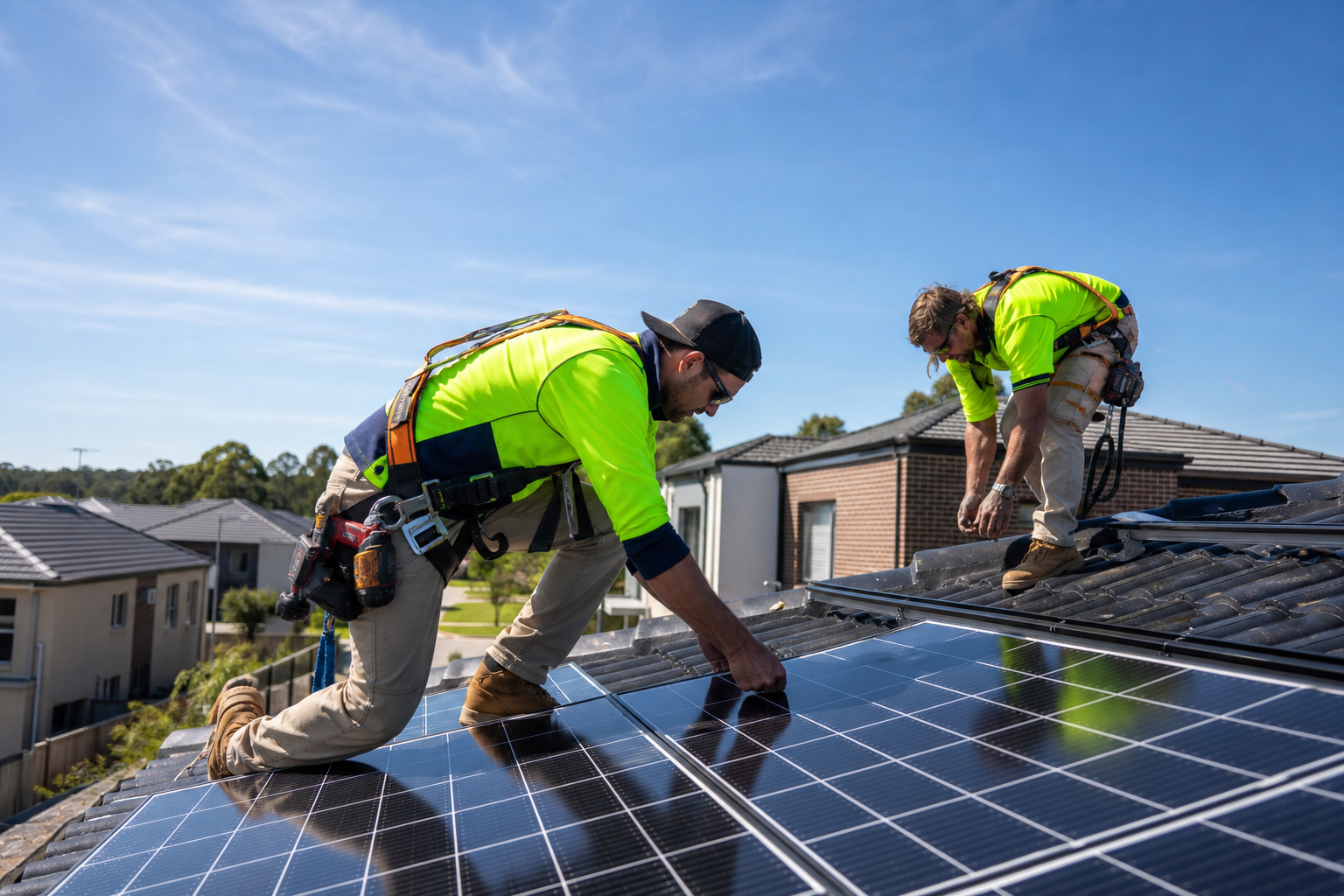
- Installation day: Panels are mounted, wiring run, inverter connected. A typical 6.6kW residential system takes 4 to 6 hours for the install crew.
- Electrical inspection: A licensed electrician (often the same team) certifies the wiring and switchboard connections.
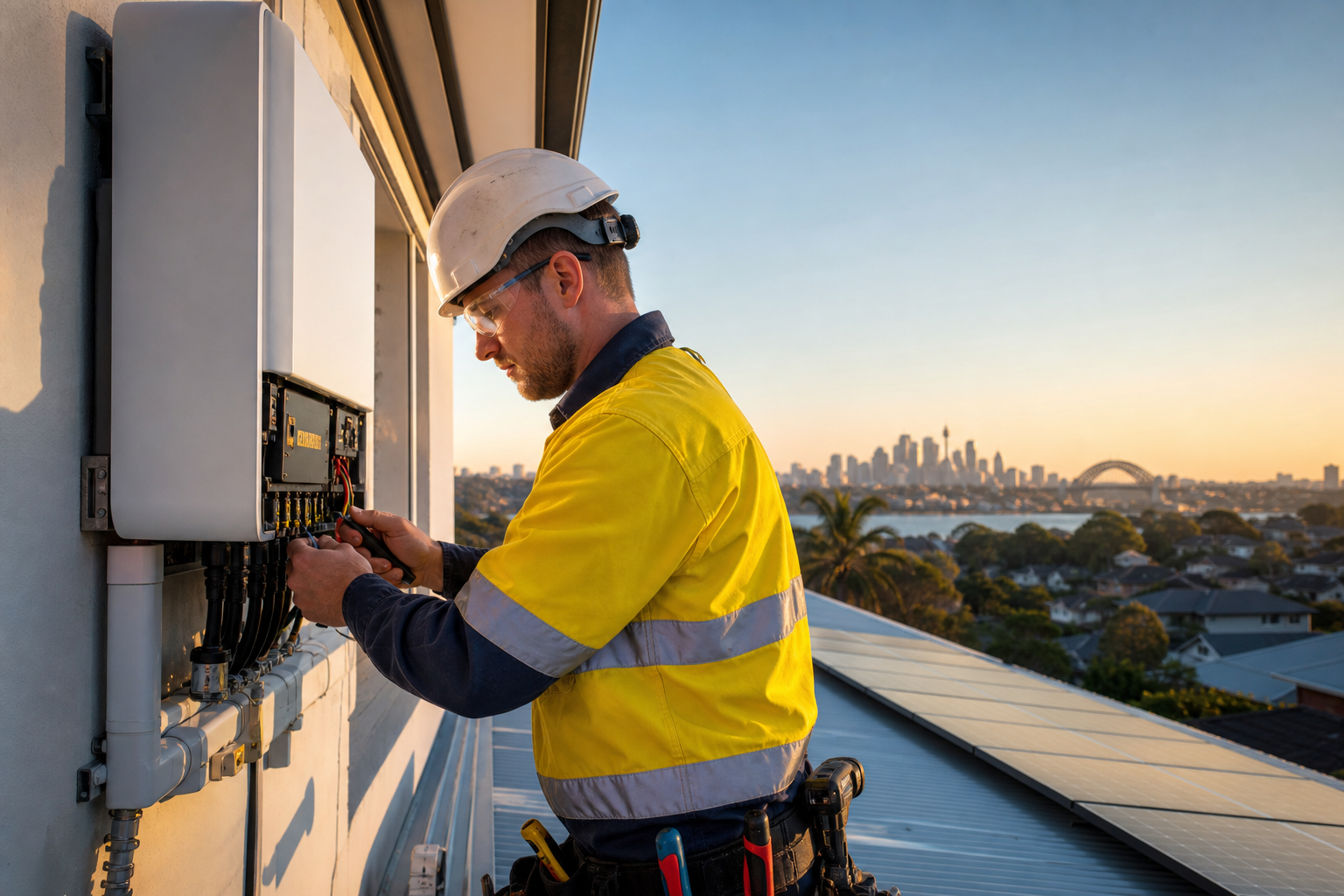
- Endeavour Energy notification: Your installer notifies Endeavour Energy that the system is installed and ready for grid connection.
- Meter upgrade or configuration: Endeavour Energy or your retailer upgrades your meter to a bi-directional smart meter if not already fitted (1 to 15 business days).
- System live: Once the meter is configured, you begin exporting and earning feed-in tariff credits.
The total elapsed time from signing a contract to a live, exporting system is typically 2 to 5 weeks. Delays most commonly occur at the Endeavour Energy meter configuration step. Interactive Solar manages the entire process for Parramatta clients from quote through to system commissioning, and you can view past installations in the project gallery.
Solar Panel Installation Parramatta: Roof Types and Structural Considerations
Solar panel installation Parramatta presents unique structural considerations because the suburb’s housing stock ranges from post-war brick veneer homes with terracotta tiles to newer double-storey homes with Colorbond steel roofing. Each roof type has different mounting requirements and potential load considerations.
Terracotta and concrete tile roofs: Common in older Parramatta streets. Tiles must be lifted to attach mounting feet to the rafters beneath. Cracked or brittle tiles may need replacing before installation. The added panel weight (approximately 11kg per panel for a 415W module) is generally within the structural capacity of standard timber-framed roofs.
Colorbond metal roofs: Faster to install and easier to seal against leaks. Clamps attach directly to the ribs without penetrating the sheeting. Newer homes in suburbs like Woodville and Merrylands West typically have Colorbond, making installation cleaner and sometimes cheaper.
Asphalt shingle roofs: Less common in Western Sydney but present in some renovated homes. Standard flashing and lag bolt mounting works well. Ensure the shingles are in good condition before installation.
Flat roofs: Parramatta’s commercial and mixed-use buildings often have flat or near-flat roofs. Tilt frames are used to angle panels at 10 to 15 degrees for optimal generation and self-cleaning by rain. Ballasted racking systems (no roof penetrations) are popular for flat commercial applications.
A reputable installer will conduct a structural assessment as part of the site visit and flag any roof remediation needed before mounting panels. If your home is older than 30 years, ask specifically about rafter and batten condition, as these carry the panel loads.
Solar Panel Installation Parramatta: Battery Storage Options in 2026
Solar panel installation Parramatta paired with battery storage is growing rapidly as battery prices continue to fall in 2026. A battery shifts the solar energy you generate during the day to the evening hours when your household is home and actively using power, lifting self-consumption from 30% to 70% or higher.
The federal Cheaper Home Batteries Program, effective 1 May 2026, introduced a tiered STC rebate for batteries:
- 0 to 14kWh: 100% STC rebate applied, worth approximately $2,500 to $3,000 for a 10kWh battery.
- 14 to 28kWh: 60% STC rebate on the capacity in this tier.
- 28 to 50kWh: 15% STC rebate on the capacity in this tier.
In practical terms, a 10kWh battery that retails at around $11,000 installed now costs approximately $8,000 to $8,500 after the tiered STC rebate is applied at point of sale. Popular 2026 battery options include the Tesla Powerwall 3 (13.5kWh, integrated inverter, best for whole-home backup), Sungrow SBR series (modular 9.6 to 25.6kWh, excellent value), and BYD Battery-Box HVM (scalable lithium iron phosphate, strong warranty).
All three use lithium iron phosphate (LFP) chemistry, which does not use cobalt, is safer at high temperatures, and typically lasts 6,000 to 10,000 full charge cycles, far exceeding the 10-year warranty period. Learn more about solar battery storage options on the Interactive Solar site.
Solar Panel Installation Parramatta: Choosing the Right Installer
Solar panel installation Parramatta is only as good as the installer who designs, supplies, and fits the system. The solar industry has a long tail of undercapitalised operators who offer low prices but go out of business before honouring a 10-year workmanship warranty.
Look for these non-negotiable credentials:
- CEC Accreditation: Only a CEC-accredited installer can legally claim STCs on your behalf. Verify the installer’s accreditation on the Clean Energy Council website before signing.
- Electrical contractor licence: In NSW, the installer must hold a valid electrical contractor licence issued by Fair Trading NSW.
- CEC Approved Retailer status: This voluntary code commits the installer to ethical sales practices, transparent quoting, and clean contracts.
- Product approval list compliance: Confirm that every panel and inverter in your quote is on the Clean Energy Regulator’s approved product list.
- Local presence and track record: An installer with a physical presence in Western Sydney is more likely to honour warranties and return for service calls than one operating from interstate.
- Detailed written quote: Any reputable installer provides a written quote specifying exact panel model, inverter model, mounting system, warranty terms, and a clear payment schedule.
Interactive Solar is CEC-accredited and has been installing solar across Sydney, including Parramatta, Blacktown, Liverpool, Penrith, and the Hills District, for many years. Read what Parramatta area clients say on the reviews page or visit the contact page to request a no-obligation quote.
Frequently Asked Questions: Solar Panel Installation Parramatta
How much does solar panel installation Parramatta cost after the rebate in 2026?
A 6.6kW system costs between $5,500 and $8,000 net after the STC rebate is deducted at point of sale. The rebate for a 6.6kW system in Parramatta (Zone 3) is approximately $1,733 in 2026, based on around 45 STCs at $38 each. Larger systems attract proportionally larger rebates up to the 100kW threshold where the STC scheme applies.
Is Parramatta a good location for solar panels?
Yes. Parramatta averages 3.6 peak sun hours per day and sits in Climate Zone 3, which is one of the better solar zones in NSW. A 6.6kW north-facing system in Parramatta will typically generate around 8,700kWh per year, sufficient to offset the majority of a typical household’s electricity consumption.
What is the export limit for solar in Parramatta?
Parramatta is in the Endeavour Energy distribution network. In 2026, Endeavour Energy’s standard export limit for single-phase residential connections is 10kW. If you install a system larger than 10kW on a single-phase connection, the excess capacity cannot be exported and is only useful if you add battery storage to absorb it internally.
How long does solar installation take in Parramatta?
Installation day for a 6.6kW residential system typically takes 4 to 6 hours. However, from contract signing to a fully live, exporting system, allow 2 to 5 weeks to account for the Endeavour Energy grid connection approval and meter configuration process.
Do I need council approval for solar panels in Parramatta?
In most cases, no. Solar panels on residential rooftops in the Parramatta LGA qualify as exempt development under NSW State Environmental Planning Policy, meaning no Development Application is required. Exceptions include heritage-listed properties and homes in designated Conservation Areas, where Parramatta City Council approval is needed before installation can proceed.
What size solar system do I need for a Parramatta home?
A 6.6kW system is the most popular choice for Parramatta households with a quarterly electricity bill between $300 and $600. Households with higher bills or heavy air-conditioning use benefit from a 10kW system. For families home during the day, a 6.6kW system without a battery often achieves payback in 3 to 4 years.
Can I add a battery to an existing solar system in Parramatta?
Yes, provided your existing inverter is a hybrid model or is compatible with AC-coupled battery systems. Sungrow, Fronius, and SolarEdge inverters commonly support battery retrofits. The 2026 Cheaper Home Batteries Program STC rebate applies to new batteries installed alongside existing solar systems, not just new combined installations, so retrofitting is now significantly more affordable than it was in 2025.
For a personalised assessment of your Parramatta home, including roof suitability, system sizing, and a full financial model, contact the Interactive Care team at Interactive Solar.