Commercial Solar Installation Sydney: 2026 Cost, Rebates & ROI Guide
Last updated:
Commercial solar installation Sydney businesses rely on has never offered better returns than in 2026. A properly sized commercial system can slash your electricity bill by 60-85%, deliver a payback period of 3-5 years, and generate government-backed STC rebates worth thousands of dollars. This guide covers everything Sydney business owners need to know: costs by system size, current 2026 incentives, grid export limits, equipment choices, ROI tables, and what to look for in an accredited installer.
Key Takeaways
- Commercial solar in Sydney costs $0.85 to $1.20 per watt in 2026, with a 30kW system netting roughly $18,000 to $27,000 after about $7,900 in STC rebates.
- Payback periods typically range from 2 to 4 years, with systems cutting electricity bills by 60 to 85 percent.
- Systems under 100kW earn STC rebates of about $2,600 (10kW) to $26,000 (99kW); from 1 October 2026 the STC cap lifts to 1MW.
- Installation takes 4 to 8 weeks from site visit to grid connection, with the physical install itself taking just 1 to 3 days.
- NSW offers up to $1,500 in VPP incentives for paired commercial battery systems up to 50kWh, on top of federal rebates.
Commercial Solar Installation Sydney: What Does It Cost in 2026?
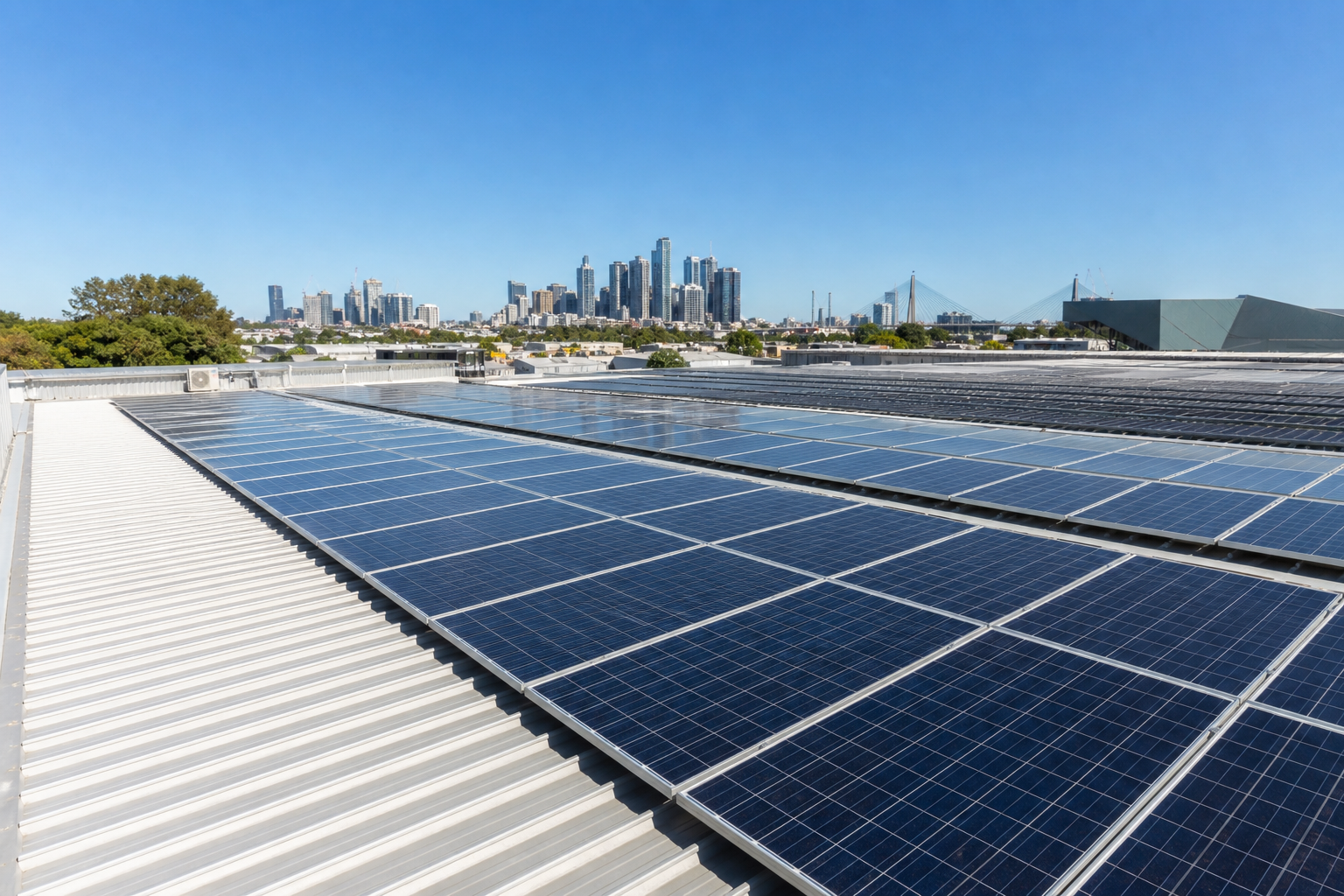
Commercial solar installation Sydney pricing in 2026 ranges from approximately $9,000 for a 10kW rooftop system up to $150,000 or more for a 100kW industrial array. Cost per watt has continued to fall, now sitting between $0.85 and $1.20 per watt installed depending on system size, roof type, and equipment tier. The table below gives a practical breakdown for Sydney businesses.
| System Size | Gross Cost (Before Incentives) | STC Rebate (Est.) | Net Cost | Typical Annual Saving | Payback Period |
|---|---|---|---|---|---|
| 10 kW | $11,000–$14,000 | ~$2,600 (69 STCs) | $8,400–$11,400 | $3,500–$4,500 | 2–3.5 years |
| 20 kW | $18,000–$24,000 | ~$5,250 (138 STCs) | $12,700–$18,800 | $6,500–$8,500 | 2–3.5 years |
| 30 kW | $26,000–$35,000 | ~$7,900 (207 STCs) | $18,100–$27,100 | $9,000–$12,000 | 2–3.5 years |
| 50 kW | $40,000–$55,000 | ~$13,100 (345 STCs) | $26,900–$41,900 | $14,000–$18,000 | 2–3.5 years |
| 100 kW | $75,000–$105,000 | LGC-eligible (ongoing) | $75,000–$105,000 | $28,000–$38,000 | 3–4 years |
Note: STC figures use the Sydney (Zone 3, 1.382) rating, a 5-year deeming period and about $38 per certificate, and are estimates only. STC rebates apply to systems under 100kW installed capacity; a 99kW system earns roughly 684 STCs (about $26,000). Systems at or above 100kW transition to Large-scale Generation Certificates (LGCs), which are created and sold annually rather than as an upfront rebate. For most Sydney SMEs a system between 10kW and 99kW will deliver the fastest payback.
How to Size Your System
The right system size for commercial solar installation Sydney businesses should choose depends primarily on two factors: your average daily electricity consumption (in kWh) and how much of that load occurs during daylight hours. A common starting point is to match your system output to your daytime load rather than your total daily consumption, since energy fed back to the grid earns far less than energy you self-consume.
Sydney sits in solar zone 3 and averages 4.2–4.6 peak sun hours per day across the year. A 30kW system in Sydney will generate roughly 120–135 kWh on a typical weekday. If your business consumes 120 kWh between 8am and 5pm, a 30kW system is an excellent match. If you run a second or night shift, adding a battery system allows you to store surplus daytime generation for after-hours use.
Key sizing rules for Sydney commercial installs:
- Rule of thumb: 1 kW of solar generates roughly 4–4.5 kWh/day in Sydney
- Target self-consumption ratio above 70% for maximum ROI
- Three-phase power is standard for systems above 10kW and enables larger inverters
- Roof orientation: north-facing delivers peak output; east-west split arrays reduce the midday spike and spread generation across more hours
- Factor in shading from HVAC units, skylights, and neighbouring buildings before specifying panel count
2026 Government Rebates and Incentives for Commercial Solar
Sydney businesses considering commercial solar in 2026 can access meaningful financial incentives through the federal Small-scale Technology Certificate (STC) scheme and, for larger systems, through Large-scale Generation Certificates (LGCs). The federal Cheaper Home Batteries Program launched 1 May 2026 also expands rebates for battery storage paired with commercial installs.
Small-scale Technology Certificates (STCs)
For commercial systems under 100kW, STCs are the primary upfront rebate. Each STC is worth roughly $38 at current market rates. The number of STCs is calculated as system capacity (kW) x zone rating x deeming period. Sydney is in Zone 3 (rating 1.382) and the deeming period is 5 years for 2026, so a 30kW system earns about 207 STCs, worth roughly $7,900 as a point-of-sale discount applied by your installer. A 10kW system earns about 69 STCs and a 99kW system about 684. The scheme closes in 2030 and the deeming period shortens each year, so earlier installs earn more certificates. See the Clean Energy Regulator for current figures.
SRES Cap Expansion: 100kW to 1MW From 1 October 2026
The federal government has legislated an expansion of the Small-scale Renewable Energy Scheme so that solar PV systems up to 1MW installed on or after 1 October 2026 become eligible for STCs, instead of the previous 100kW limit. Applications are not expected to open until mid-to-late November 2026 while the Clean Energy Regulator finalises its processes. For Sydney warehouses, factories and large retail roofs, this could turn a 250kW array from an LGC-only project into one with an upfront rebate of around 20% of install cost. If your roof can host more than 100kW, talk to us about timing before you sign anything. Details are on the Clean Energy Regulator website.
1MW is the new STC eligibility cap for solar PV installed on or after 1 October 2026, up from 100kW. Source: Clean Energy Regulator, September 2026.
Large-scale Generation Certificates (LGCs)
Until the 1 October 2026 changes apply, systems above 100kW are not eligible for STCs. Instead they accrue LGCs, one per MWh of electricity generated above the baseline. LGCs are sold quarterly or annually on the wholesale market, typically at $55–$75 each in 2026. A 100kW system in Sydney generates approximately 140–160 MWh per year, producing 140–160 LGCs worth $7,700–$12,000 annually. This ongoing income stream materially improves the long-term economics of larger industrial installs.
NSW Battery Rebate Expansion (July 2026)
From 1 July 2026, NSW expanded the Virtual Power Plant (VPP) incentive to cover commercial battery systems up to 50kWh, paying up to $1,500 in incentives for businesses enrolling their battery in a VPP scheme. This stacks with the federal Cheaper Home Batteries Program STC tiering (100% STC value for the first 14kWh of battery capacity, 60% for 14–28kWh, 15% for 28–50kWh). For businesses pairing a 20–30kW solar array with a 14–28kWh battery, the combined incentives can cut battery payback to under 4 years.
Tax Deductions: Instant Asset Write-off and Depreciation
The $20,000 instant asset write-off for small businesses (turnover under $10 million) is now permanent from 1 July 2026, per the Australian Taxation Office. It applies per asset, so a system costing more than $20,000 is generally depreciated through the small business pool or standard effective-life rules instead. The temporary 20% Small Business Energy Incentive bonus deduction ended on 30 June 2024 and no longer applies. Confirm treatment with your accountant, as it depends on your structure and the size of the system.

Grid Export Limits and Network Rules for Sydney Businesses
Commercial solar installation Sydney installers must navigate network export limits set by Ausgrid and Endeavour Energy, the two distributors covering metropolitan Sydney. Getting this right is essential: oversizing your inverter beyond the approved export limit does not increase your savings and can delay your connection approval.
Current 2026 export limits for the Sydney metro area:
- Ausgrid (inner and eastern Sydney, northern suburbs, lower north shore): single-phase sites can use inverters up to 30kVA if export is limited to 10kW; larger or three-phase systems need a network application
- Endeavour Energy (western Sydney, Parramatta, Blacktown, Liverpool, Penrith): standard fixed export limit of 5kW per phase, with Flexible Exports lifting eligible customers to 10kW; larger systems need a negotiated connection (see Endeavour Energy)
- Systems above 30kW (three-phase): require a Controlled Load or negotiated export agreement; the application process adds 4–12 weeks to the project timeline
For businesses whose rooftop can accommodate more than 30kW, a common approach is to install a larger array (say 50–99kW of panels) but limit the inverter output to 30kW export, maximising self-consumption while staying within the network limit without a lengthy connection negotiation. Your installer should model both scenarios and present the payback comparison before you commit to a system size.
Equipment and Brands in 2026
Equipment quality directly determines the long-term performance and reliability of your commercial solar installation in Sydney. In 2026 the most trusted commercial panel brands are Aiko, Jinko Tiger Neo, REC Alpha, Trina Vertex, and SunPower Maxeon, all of which appear on the Clean Energy Council (CEC) approved product list and carry at minimum a 12-year product warranty and a 25-year performance guarantee.
For inverters, the leading commercial-grade options are:
- Fronius Symo Gen24: European-engineered, string inverter suitable for 10–25kW three-phase commercial installs; highly regarded by installers for reliability and monitoring
- SMA Sunny Tripower: German-made, widely used in industrial settings; strong track record in Australian conditions
- Sungrow SG series: Cost-competitive Chinese inverter with strong 10-year warranty and local service network; popular for larger 30–110kW commercial arrays
- Huawei SUN2000: Smart string inverter with integrated AI optimisation; increasingly popular for commercial rooftop installs where partial shading is a factor
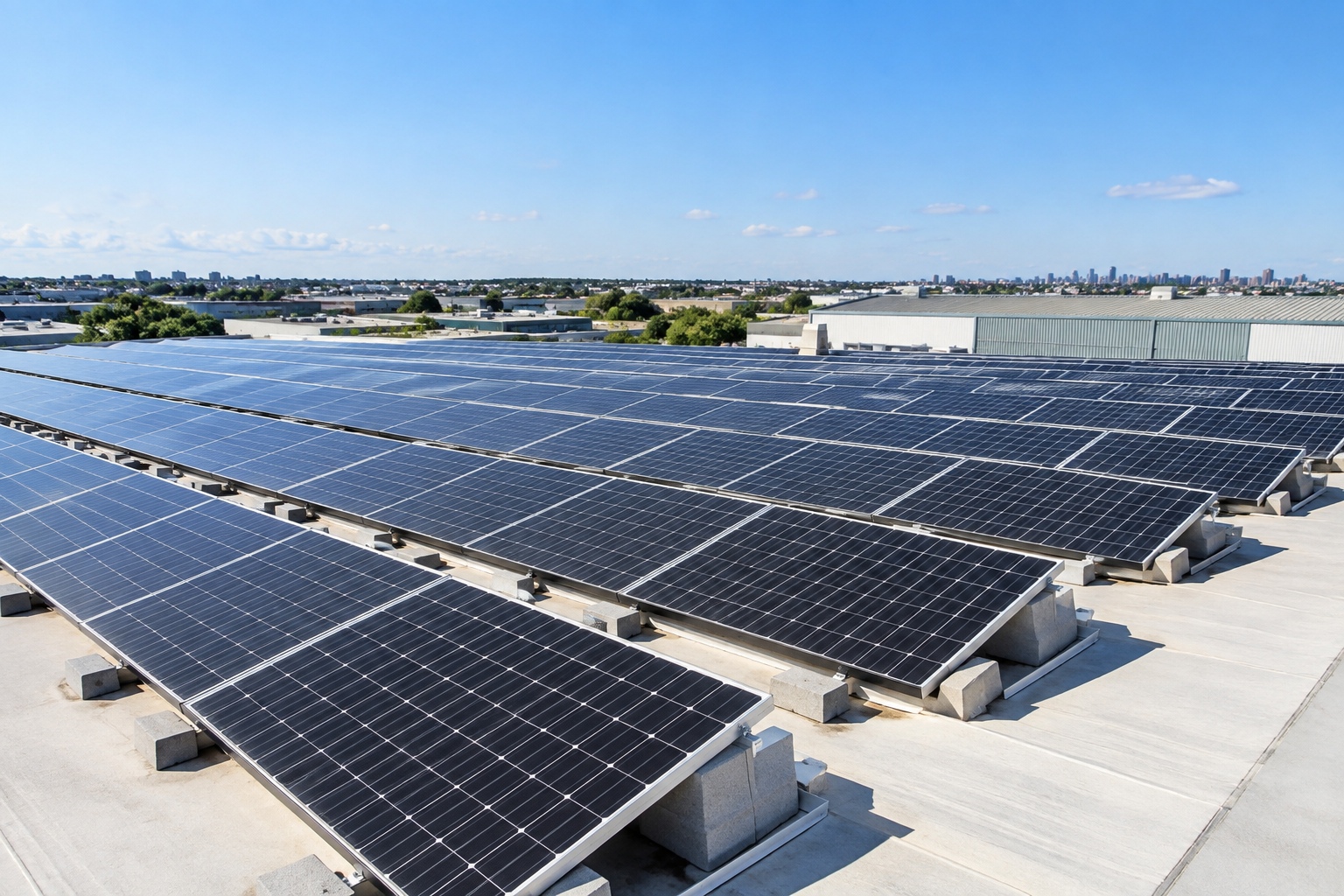
Mounting systems should be designed by a licensed structural engineer for flat-roof commercial installations, particularly for buildings in coastal or high-wind zones. Ballasted (non-penetrating) mounts are common for flat commercial roofs, but the load-bearing capacity of the roof must be verified before proceeding.
Commercial Solar Installation Sydney: Choosing an SAA-Accredited Installer
Installer accreditation matters. Since 29 May 2024, solar installers and designers are accredited by Solar Accreditation Australia (SAA), which took over from the Clean Energy Council (CEC). STCs require an accredited installer and CEC-approved panels and inverters. The CEC still runs the approved product lists and the Solar Retailer Code of Conduct. Check an installer on the SAA register, and look for:
- Active NSW electrical contractor licence (check the NSW Fair Trading register)
- Structural engineering sign-off on the mounting design for commercial roofs
- Evidence of public liability insurance (minimum $10 million recommended for commercial work)
- A written Performance Estimate showing expected annual generation, self-consumption rate, and payback timeline
- References from similar-sized commercial installations in Sydney
- Experience with your specific network (Ausgrid or Endeavour) to avoid connection delays
Interactive Solar uses SAA-accredited installers and holds the required NSW licences. We have installed more than 1,300 systems and supplied over 10MW of solar, run in-house install teams of our 15 staff from our own Sydney warehouse and showroom, and carry 134 Google reviews on our reviews page. Our team handles the full project lifecycle: site assessment, system design, network connection application, installation, commissioning, and ongoing support through Interactive Care.
Commercial Solar Installation Sydney: The Installation Process Step by Step
Understanding what the commercial solar installation process involves in Sydney helps you plan your project timeline and minimise disruption to your operations. A typical 20–50kW commercial installation follows these stages:
- Site Assessment (Week 1): An SAA-accredited designer visits to assess roof structure, orientation, shading, and existing electrical infrastructure. Electricity bills from the past 12 months are reviewed to model your load profile.
- System Design and Quote (Weeks 1–2): A detailed design is produced including panel layout, inverter specification, string configuration, mounting plan, and metering requirements. You receive a written proposal with performance estimates.
- Network Connection Application (Weeks 2–6): Your installer lodges a connection application with Ausgrid or Endeavour Energy. Standard connections under 30kW are typically approved within 2–4 weeks. Larger systems or constrained network areas can take 8–12 weeks.
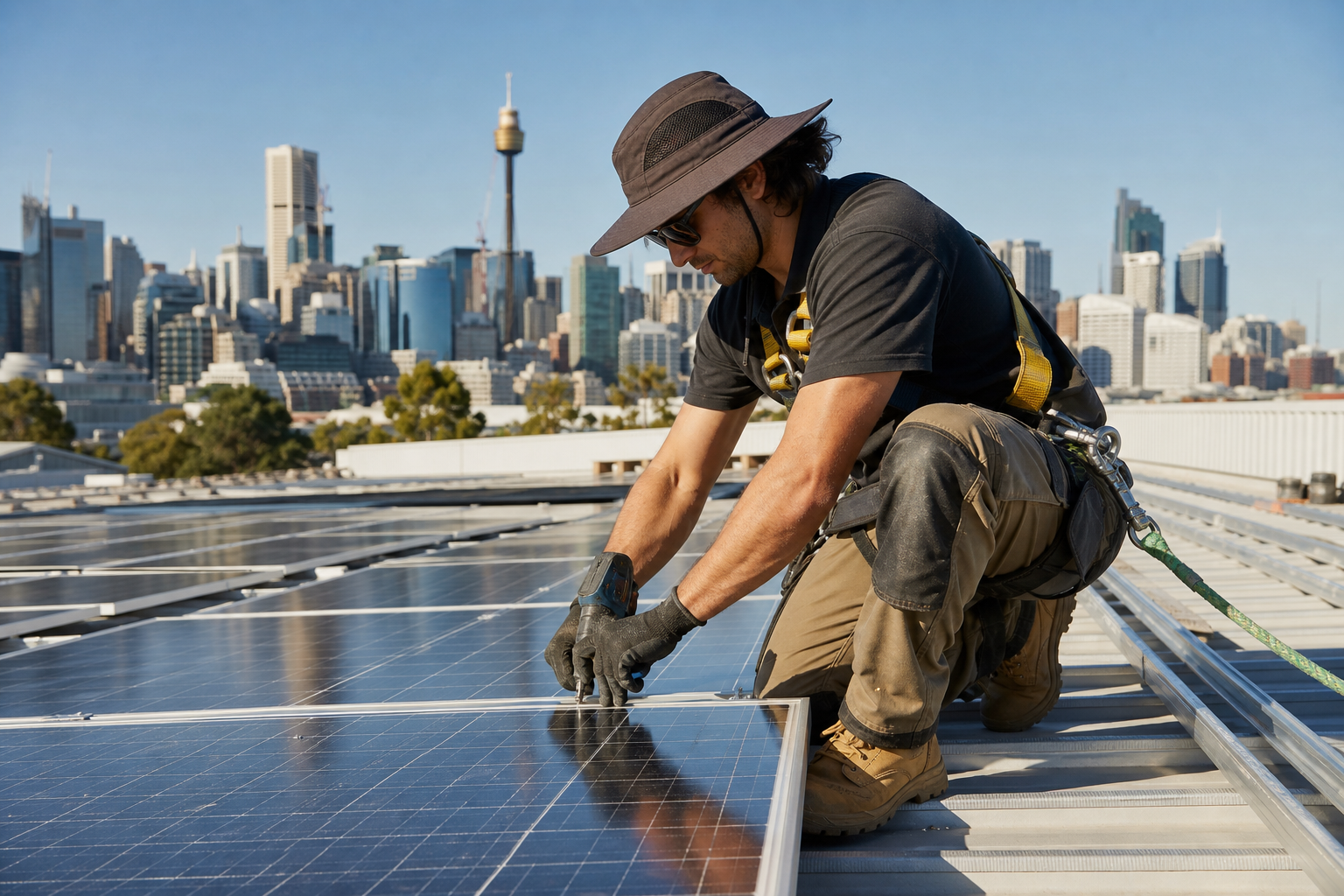
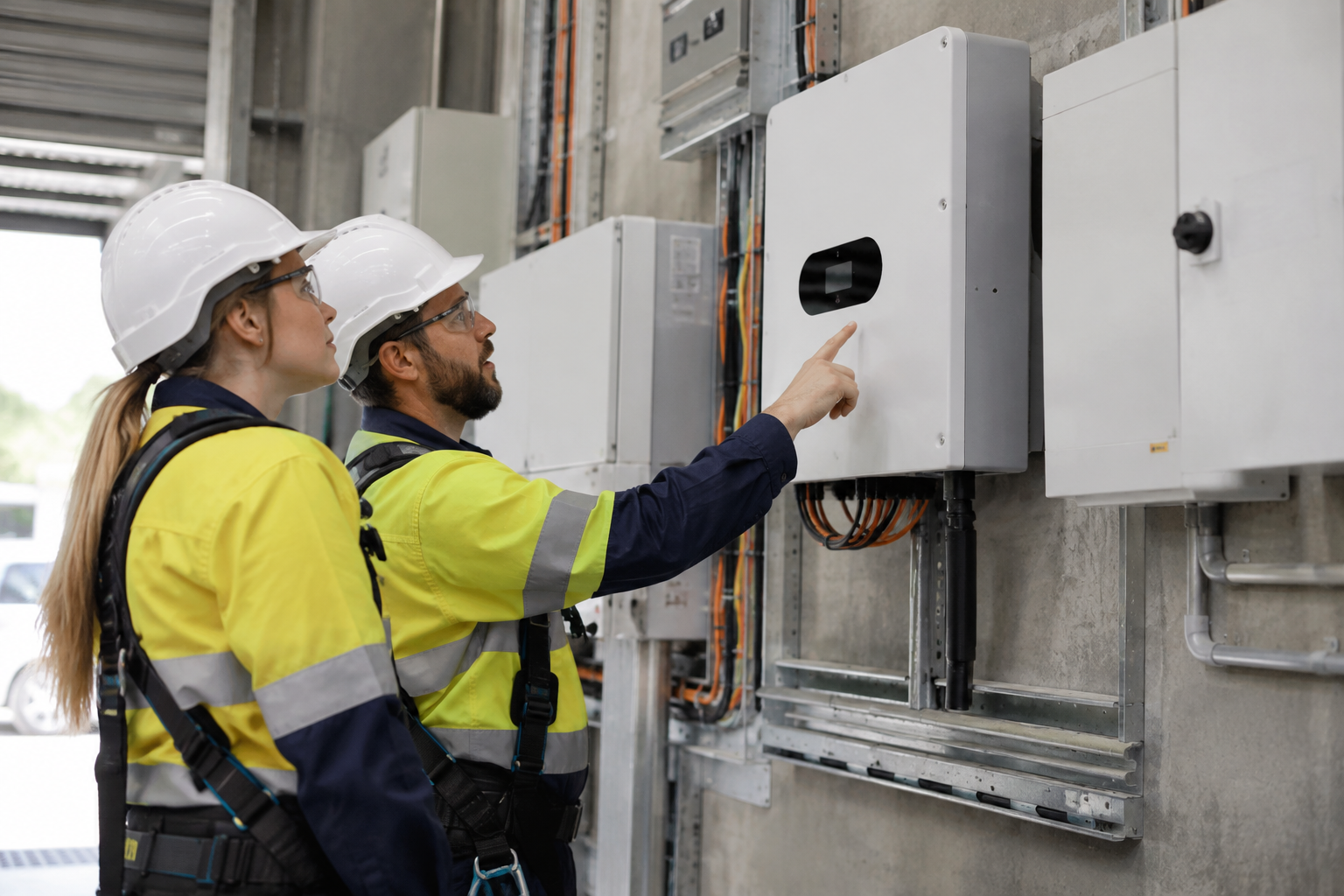
- Installation (1–3 days): Panels, racking, inverters, and electrical wiring are installed by licensed tradespeople. Commercial installations are usually completed in 1–3 days depending on system size, though large industrial arrays may take a week.
- Inspection and Commissioning (Week 6–8): The installation is inspected by a licensed electrical inspector, the inverter is commissioned, and the system is connected to the grid. Your monitoring system is set up.
- STC Assignment and Rebate (Post-commissioning): Your installer lodges your STCs with the Clean Energy Regulator. The rebate is already factored into your invoice as a point-of-sale discount.
From site visit to switch-on, most standard commercial installs in Sydney take 4–8 weeks. Planning around your business calendar for the 1–3 day installation window will help avoid disruptions.
Common Mistakes to Avoid
Commercial solar installation in Sydney is a significant capital investment and some businesses fall into avoidable traps. The most common mistakes we see are:
- Chasing the lowest price: A quote 20–30% below competitors almost always means cut-price panels, uncredentialled labour, or a system that underperforms. The cheapest system is rarely the cheapest over its 25-year life.
- Ignoring daytime load profile: Installing more capacity than your business can self-consume during the day dramatically extends the payback period, since the feed-in tariff (IPART benchmark 3.4–6.5 c/kWh for 2026-27) is far below the grid rate you pay ($0.28–$0.35/kWh).
- Oversizing the inverter for export: Specifying an inverter above the network export limit without lodging a negotiated connection agreement will result in your connection application being rejected, delaying the project.
- Not verifying accreditation: Only installations by SAA-accredited installers using CEC-approved products qualify for STCs. An uncredentialled installer may offer a lower price, but you will not receive the government rebate, which effectively wipes out their discount and more.
- Skipping battery storage modelling: For businesses with evening loads or high after-hours electricity costs, a paired battery may deliver better overall economics than a solar-only system. Ask your installer to run both scenarios.
- Ignoring roof condition: Solar panels are warranted for 25 years. If your roof is 15 years old and due for replacement in the next decade, it may be worth replacing the roof before the panels are installed, rather than incurring removal-and-reinstall costs later.
Why Sydney Businesses Are Going Solar in 2026
The economics of commercial solar have reached a tipping point in 2026. Sydney commercial electricity tariffs have risen to $0.28–$0.38/kWh for small to medium businesses, while panel and inverter prices have continued to fall. The combination means payback periods have compressed to the 2.5–4 year range for most commercial installs, with systems generating positive returns for 20+ years after payback.
Beyond cost savings, Sydney businesses are also motivated by corporate sustainability commitments, tenant and customer expectations, and energy security. With Ausgrid and Endeavour both forecasting tighter grid capacity through the late 2020s, locking in rooftop generation now insulates your business from future tariff increases.
For businesses that lease their premises, Power Purchase Agreements (PPAs) are increasingly available from commercial solar providers, allowing you to go solar with zero upfront cost and simply pay a fixed per-kWh rate for the energy the system generates, typically $0.08–$0.14/kWh, well below grid rates.
If you are considering adding battery storage, explore the Solar Batteries page, which covers Tesla Powerwall, Sungrow SBR, and BYD Battery-Box options alongside the latest 2026 rebate tiers. For businesses that also want to charge an EV fleet, pairing solar with EV chargers creates a closed-loop energy ecosystem where your panels power both your operations and your vehicles.
Explore recent commercial solar projects across Sydney in the Interactive Solar gallery and read verified customer feedback on the reviews page before requesting your quote.
Frequently Asked Questions: Commercial Solar Installation Sydney
How much does commercial solar installation in Sydney cost per kW in 2026?
Commercial solar installation in Sydney costs between $0.85 and $1.20 per watt installed in 2026, or roughly $8,500–$12,000 per 10kW before government rebates. After about $7,900 in STCs, a 30kW system typically nets out at $18,000–$27,000. Larger systems above 100kW sit at the lower end of the per-watt range due to economies of scale.
What size commercial solar system do I need for my Sydney business?
The right system size depends on your daytime electricity consumption. As a starting point, divide your average daily kWh usage by 4.2 (Sydney’s average peak sun hours) to get a rough system size in kW. A business using 120 kWh per day would look at a 28–30kW system. Your installer will refine this using 12 months of interval meter data and your operating hours.
Are there government rebates for commercial solar in Sydney?
Yes. Systems under 100kW earn Small-scale Technology Certificates (STCs) worth about $2,600 (10kW) to $26,000 (99kW) as an upfront discount. Systems above 100kW generate LGCs annually, until the legislated 1MW STC cap expansion applies from 1 October 2026. NSW also offers VPP incentives up to $1,500 for paired battery systems. The 2026 deeming period for STCs is 5 years.
How long does commercial solar installation take in Sydney?
From site visit to grid connection, commercial solar installation in Sydney typically takes 4–8 weeks. The physical installation is 1–3 days for most systems. Network connection approval is the main variable: standard connections under 30kW are approved in 2–4 weeks, while larger or constrained-network installs can take 8–12 weeks.
What is the payback period for commercial solar in Sydney?
Payback periods for commercial solar installation in Sydney range from 2.5 to 4 years for most systems in 2026. The key driver is your self-consumption ratio: businesses that use most of their solar generation on-site (rather than exporting it) achieve the fastest paybacks. With 25-year panel warranties, even a 4-year payback delivers 20+ years of near-free electricity.
Do I need to be the building owner to install commercial solar in Sydney?
Not necessarily. If you lease your premises, you will need written consent from your landlord. Many landlords are willing to approve solar installations, particularly when the system adds value to the building. Alternatively, Power Purchase Agreement (PPA) structures allow solar under a third-party ownership model, which can be easier to negotiate with landlords since the system remains the provider’s asset.
Does Interactive Solar install commercial solar across all of Sydney?
Yes. Interactive Solar installs commercial solar systems across greater Sydney, including the CBD, inner suburbs, eastern suburbs, northern beaches, western Sydney, Parramatta, Blacktown, Liverpool, Penrith, and the Hills District. Contact the team for a no-obligation site assessment and system design quote.
Make Interactive Solar a preferred source in Google
One click tells Google to surface our articles more often in Top Stories, AI Overviews and AI Mode.