Commercial Solar Installation Western Sydney: 2026 Cost & Rebate Guide
Last updated:
Commercial solar installation western sydney businesses are choosing in 2026 costs between $0.85 and $1.20 per installed watt before rebates, delivers payback in 3 to 5 years, and cuts electricity bills by 60 to 80 percent. A typical 30 kW system installed on a Blacktown or Parramatta industrial roof lands between $22,000 and $32,000 after the federal Small-scale Technology Certificate (STC) discount is applied at point of sale. Interactive Solar designs, engineers and installs these systems across Blacktown, Parramatta, Liverpool, Cumberland and the wider Endeavour Energy network.
This guide covers the real 2026 numbers: system sizing by business type, how the STC rebate works today, the newly announced expansion of that rebate to systems up to 1 MW, network and export rules by Western Sydney council area, and the full installation timeline from first site visit to switch-on.
Commercial Solar Installation Western Sydney: 2026 Cost by System Size
Pricing scales with roof access, switchboard capacity and whether the site is single-phase or three-phase. These are current, verified 2026 figures for Western Sydney commercial and industrial sites, after the STC discount is applied for systems under 100 kW.
- 10 kW (small retail, café, trades workshop): $8,800 to $11,800
- 20 kW (medium warehouse, medical centre, childcare): $13,500 to $19,500
- 30 kW (light industrial unit, cold storage): $18,300 to $26,300
- 50 kW (larger warehouse, manufacturing floor): $27,800 to $39,800
- 100 kW (distribution centre, large factory): $70,000 to $95,000
Three-phase sites generally cost less per watt than single-phase upgrades because the switchboard and metering infrastructure is already business-grade. Roof condition matters too: Kliplok and trimdeck profiles common on Western Sydney industrial estates typically install faster and cheaper than older corrugated roofs that need additional flashing and structural checks.
How the STC Rebate Works, and the 1 MW Expansion Coming in October 2026
Systems under 100 kW currently qualify for Small-scale Technology Certificates (STCs), the main federal solar rebate. STCs are calculated as system size (kW) multiplied by a deeming period (5 years for 2026 installs) multiplied by a zone rating, then sold at the prevailing STC spot price.
Western Sydney sits in Zone 3 under the Clean Energy Regulator’s solar zone map, with a rating of 1.382. A real-world 30 kW system generates:
- 30 kW x 5 years x 1.382 = 207 STCs
- At roughly $38 to $40 per STC in mid-2026, that is a $7,900 to $8,300 upfront discount, deducted at point of sale rather than claimed later
The deeming period drops by one year every 1 January, so acting before year-end preserves the higher rebate. For systems above 100 kW, the pathway currently switches to Large-scale Generation Certificates (LGCs), earned annually on actual output rather than as an upfront lump sum.
That is about to change. In August 2026 the federal government announced it will expand the Small-scale Renewable Energy Scheme to cover systems up to 1 MW, ten times the current 100 kW cap, cutting the upfront cost of mid-scale commercial and industrial solar by roughly 20 percent. The change is intended to start from 1 October 2026, subject to the required regulations, with applications expected to open mid to late November 2026 once the Clean Energy Regulator’s systems are ready. For a Western Sydney business planning a 150 kW to 500 kW rooftop system, this is the single biggest financial development to factor into 2026 planning, an upfront STC-style discount instead of a slower annual LGC return.
Network Rules by Western Sydney Council Area
Roof stock, network zone and council heritage overlays all affect what a business can install and how fast it gets connected. Here is what applies across the areas Interactive Solar services.
Blacktown, Cumberland and Parramatta LGAs
These areas sit on the Endeavour Energy network. The standard fixed export limit today is 5 kW per phase, but Endeavour’s Flexible Exports program is becoming the default connection option for eligible new and upgraded systems from November 2026, lifting most sites to export up to 10 kW per phase using a smart inverter that Endeavour can remotely adjust down only when the local grid needs it. Systems above 30 kW three-phase typically require a formal connection study before approval.
Liverpool and Fairfield LGAs
Also Endeavour Energy territory, with the same Flexible Exports rollout applying. Industrial estates around Moorebank, Prestons and Wetherill Park commonly run three-phase supply already, which simplifies larger commercial installs and avoids a costly phase upgrade.
Every site still needs a formal application through the relevant distributor before installation, and systems above 30 kW usually trigger a network impact assessment. Interactive Solar’s commercial solar team manages these applications directly so business owners are not chasing paperwork between installer, network and retailer.
Sizing a Commercial Solar Installation Western Sydney System Correctly
The right system size depends on daytime consumption, not roof area alone. A cold storage facility running compressors around the clock has a very different load profile to a retail showroom that closes at 5pm.
- Retail and hospitality: size to daytime peak load, typically 10 to 30 kW, with battery storage optional for after-hours refrigeration
- Warehousing and light industrial: 30 to 100 kW, sized against forklift chargers, lighting and HVAC
- Manufacturing and cold storage: 50 kW to 250 kW+, often paired with battery storage to flatten demand charges
- Medical and childcare centres: 15 to 40 kW, prioritising reliability and backup power options
Interactive Solar reviews 12 months of interval meter data where available to model exactly how much of a system’s output the business will self-consume, since self-consumption, not just system size, drives the actual payback period.
Equipment and Battery Storage for Commercial Sites
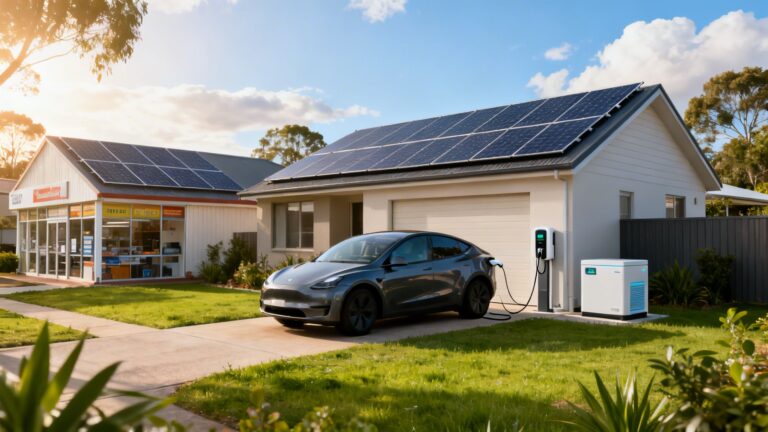
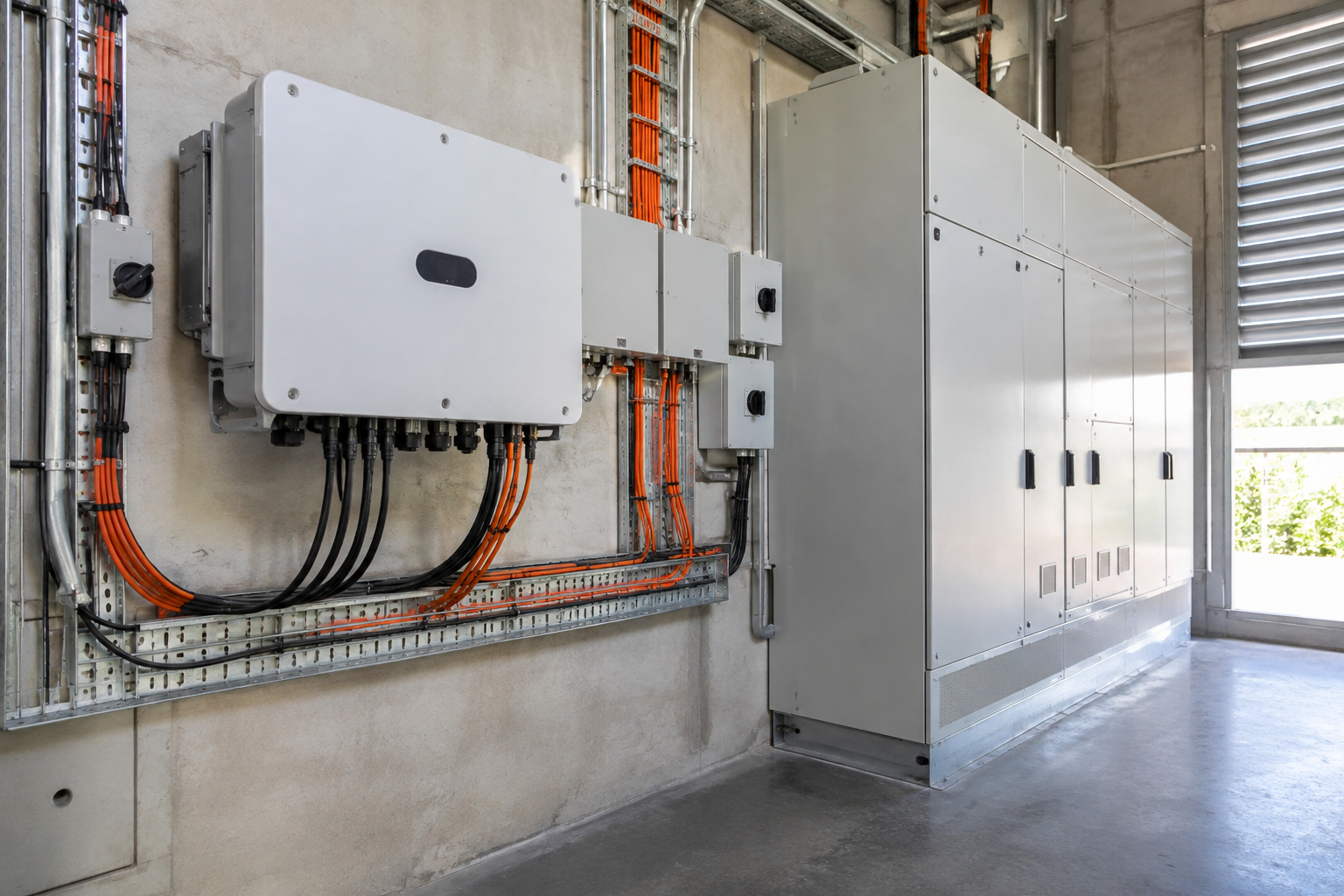
Commercial installs use Tier 1 panels rated for higher irradiance and commercial-grade string or hybrid inverters designed for continuous daytime load. For businesses wanting to shift more consumption to solar hours or add resilience against outages, solar battery storage such as Tesla Powerwall or Sungrow commercial units can be integrated at install or added later, provided the switchboard and inverter were specified with expansion in mind.
Financing a Commercial Solar Project in Western Sydney
Most Western Sydney businesses fund solar through one of three routes: cash purchase (fastest payback since there is no interest cost), an equipment finance or chattel mortgage loan against the asset, or a power purchase agreement where a third party owns the system and the business simply pays a lower rate per kWh than the grid. Cash and finance purchases retain the STC rebate and any future 1 MW-scheme discount for the business itself; under most PPA structures the financier claims the rebate and passes on a smaller portion of the saving. For businesses claiming the instant asset write-off, outright purchase or a chattel mortgage (where the business is the legal owner from day one) is usually the only structure that qualifies.
Interactive Solar works with several equipment finance brokers experienced in commercial solar lending and can model cash flow for all three options side by side as part of the initial consumption-based design, so a business can compare the real after-tax cost of ownership rather than just the sticker price.
Comparing Network Export Limits Across Western Sydney
Export limits materially affect how large a system a site can install without a costly network upgrade. The table below summarises current Endeavour Energy limits relevant to Western Sydney commercial connections.
| Connection type | Current fixed export limit | Flexible Exports limit (from Nov 2026) |
|---|---|---|
| Single-phase | 5 kW | Up to 10 kW |
| Three-phase (per phase) | 5 kW per phase | Up to 10 kW per phase |
| Systems over 30 kW three-phase | Formal connection study required | Formal connection study required |
A business currently constrained to a 15 kW three-phase export limit under the fixed scheme could see that lift to 30 kW once Flexible Exports becomes the default late in 2026, which is worth factoring into system sizing decisions made now: an inverter specified today can often be configured to take advantage of the higher limit later without replacement, provided it is selected with headroom from the outset.
Timeline: Site Assessment to Commissioning
- Days 1 to 14: site assessment, roof and switchboard inspection, 12-month consumption analysis, system design
- Days 15 to 35: engineering sign-off, network connection application to Endeavour Energy, council approval if required
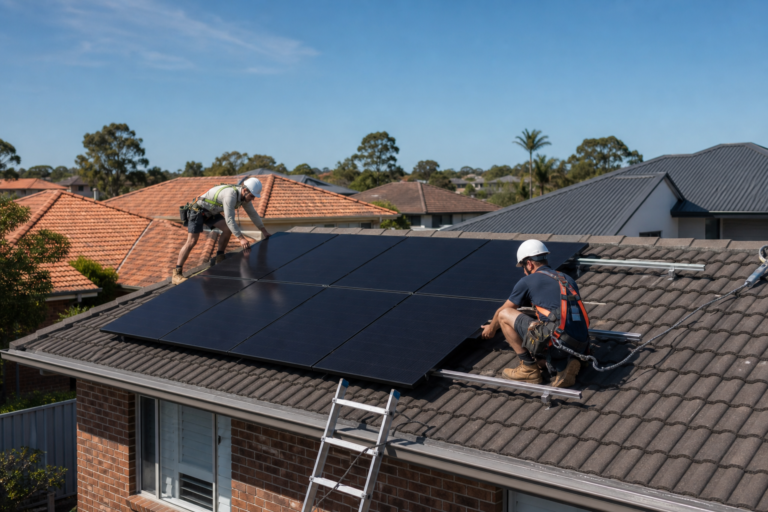
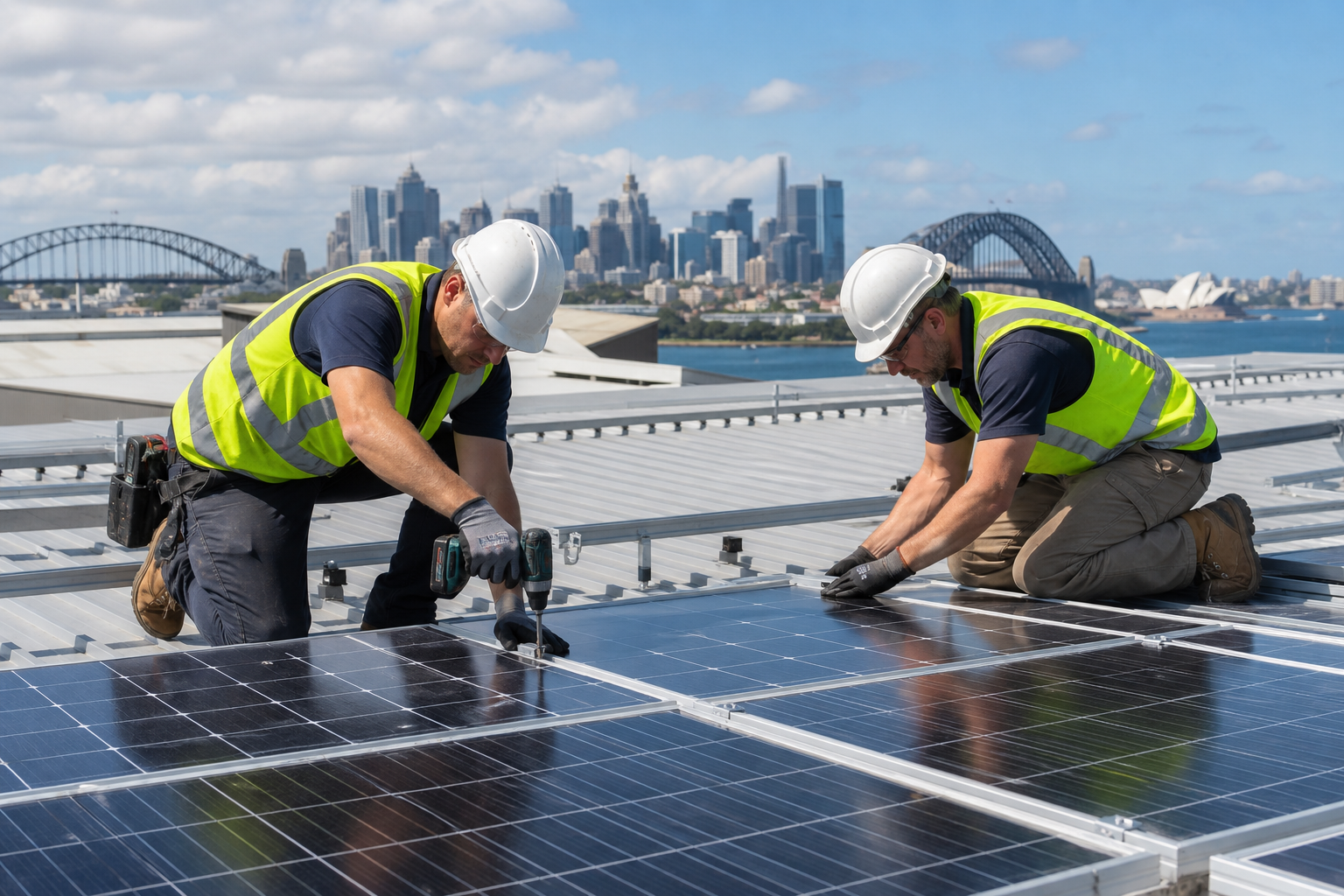
- Days 36 to 60: installation, typically 2 to 5 days on-site depending on system size and roof access
- Days 61 to 90: commissioning, metering upgrade, network approval to energise, and STC paperwork lodged
Tax Treatment and the Business Case
Commercial solar is a depreciating business asset. The instant asset write-off threshold for eligible small businesses using simplified depreciation is a permanent $20,000 per asset from 1 July 2026, so smaller systems can often be deducted in full in the year they are installed; larger systems enter the depreciation pool at accelerated first-year rates. Businesses should confirm current thresholds with their accountant, since eligibility depends on aggregated turnover and asset cost after the STC discount is applied.
Beyond the tax and rebate mechanics, solar reduces exposure to rising commercial electricity tariffs and, for many businesses, supports procurement and sustainability credentials increasingly requested by landlords, tenants and supply chain partners.
Why Choose an Accredited Installer for Commercial Solar Installation Western Sydney Projects
Installer accreditation for solar work in Australia transferred from the Clean Energy Council to Solar Accreditation Australia in May 2024. The Clean Energy Council still runs the approved product lists and the Solar Retailer Code of Conduct, which reputable installers sign up to voluntarily.
When comparing quotes for commercial solar in Western Sydney, check that the installer:
- Uses installers currently accredited with Solar Accreditation Australia, not an outdated CEC-only claim
- Provides a written 12-month consumption-based design, not just a roof-area estimate
- Handles the full network application with Endeavour Energy, including any connection study
- Offers post-install monitoring and maintenance through a program such as Interactive Care
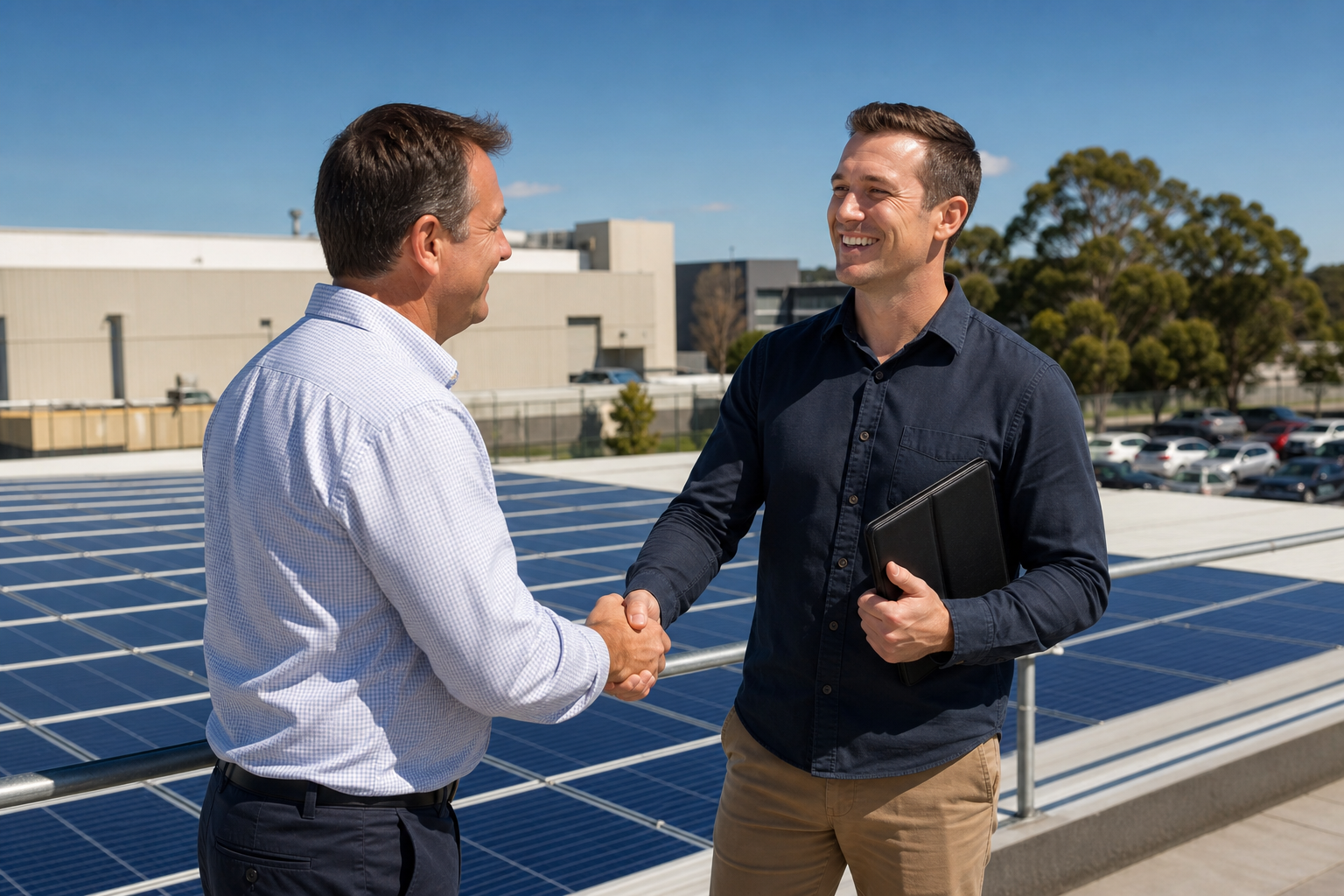
Interactive Solar has completed more than 1,300 residential and commercial installations across Sydney, with in-house install teams rather than subcontracted crews, giving businesses a single accountable point of contact from design through to warranty support.
Watch the Clean Energy Council’s explainer on the Solar Retailer Code of Conduct below, which sets the minimum service standards every reputable commercial solar retailer should meet.
FAQ: Commercial Solar Installation Western Sydney
How much does commercial solar cost in Western Sydney in 2026?
Between $0.85 and $1.20 per watt installed before rebates. After the STC discount, a 30 kW system typically costs $18,300 to $26,300 and a 50 kW system $27,800 to $39,800.
What rebates are available for commercial solar in Western Sydney?
Systems under 100 kW currently qualify for STCs, an upfront discount worth roughly $260 to $270 per kW installed in 2026. From 1 October 2026, the government intends to expand this scheme to cover systems up to 1 MW, cutting upfront costs on mid-scale systems by around 20 percent.
How long does installation take from enquiry to switch-on?
Most projects run 60 to 90 days end to end: 2 weeks for design, 3 weeks for network approval, up to a week on-site for installation, and up to 4 weeks for commissioning and metering.
Which Western Sydney suburbs does Interactive Solar service?
Blacktown, Seven Hills, Parramatta, Merrylands, Auburn, Liverpool, Fairfield, Wetherill Park, Prestons, Moorebank and surrounding Endeavour Energy network areas.
Do I need council approval for commercial solar in Western Sydney?
Rooftop solar on an existing commercial building is usually exempt development, but heritage overlays, flood-prone land or structural changes can trigger a development application. Interactive Solar checks this during the site assessment.
What size system does my business need?
Size to daytime consumption, not roof area. A 12-month meter data review is the most accurate way to model the right system size and expected payback.
Is commercial solar worth it for a Western Sydney business in 2026?
With payback periods of 3 to 5 years, bill reductions of 60 to 80 percent, and a rebate scheme about to expand to cover much larger systems, 2026 is a strong year to lock in commercial solar before the deeming period steps down again in January 2027.
Ready to get a site-specific quote? Contact Interactive Solar for a consumption-based system design, or browse recent commercial installation projects in our gallery.
Make Interactive Solar a preferred source in Google
One click tells Google to surface our articles more often in Top Stories, AI Overviews and AI Mode.