Maximize Your Swim: Pool Heating System Solar 2026
A lot of NSW pool owners know the pattern. The pool looks brilliant, the paving is finished, the landscaping's done, and then the water spends a big part of the year sitting just cold enough that nobody really wants to get in. You still pay to filter it, clean it and maintain it, but actual swim days don't match the promise of the backyard.
That's usually when heating comes up. The problem is that many homeowners first think of gas or straight electric heating, then pull back once they realise the running cost and how often those systems end up being used sparingly instead of properly. A heater that's too expensive to run doesn't solve much. It just turns into equipment you switch on reluctantly.
A pool heating system solar setup changes that conversation. Instead of treating heating as an expensive luxury, it makes it part of the way the home uses energy more intelligently. In NSW, that matters because sun availability, roof space and home electrification all affect what kind of system will deliver a longer, more comfortable swimming season.
Extend Your Swimming Season with Solar Power
The most common complaint I hear isn't that a pool is unusable all winter. It's that it's underused for most of the year. The water is a bit too cool in the shoulder months, mornings are unpleasant, and evening swims drop off fast once summer peaks. That's where solar-based heating starts to make sense.
For many homes, the goal isn't tropical water every day of the year. It's simpler than that. You want more swimmable days, less hesitation before jumping in, and a pool that feels like part of daily life rather than something reserved for the hottest stretch of summer.
Why traditional heating often disappoints
Gas and electric resistance systems can heat a pool, but they often create a behaviour problem. Homeowners watch the meter in the back of their mind, so they run the system less than they planned. The result is stop-start heating and a pool that never feels consistently inviting.
Solar approaches fit a different pattern:
- Lower-friction use because the system is built around sunshine or daytime solar generation
- Better match for regular pool use instead of occasional “special event” heating
- Stronger long-term logic if you already have solar PV, are considering a battery, or want to reduce reliance on purchased energy
Practical rule: The right pool heater isn't the one with the most aggressive output on paper. It's the one you'll actually run often enough to keep the pool comfortable.
What makes solar practical in Australia
Solar pool heating has been mainstream in Australia for a reason. The Australian Government's guidance notes that solar pool heating systems are commonly sized at about 50% to 100% of the pool surface area, with larger ratios needed in cooler or cloudier climates, and it adds that well-designed systems can significantly reduce pool heating costs (Australian Government guidance on solar swimming pool heaters).
That practical history matters. Solar pool heating isn't experimental. It suits the way many Australian households use pools, especially when the system is sized correctly and the pool owner pays attention to heat retention.
How a Solar Pool Heating System Works
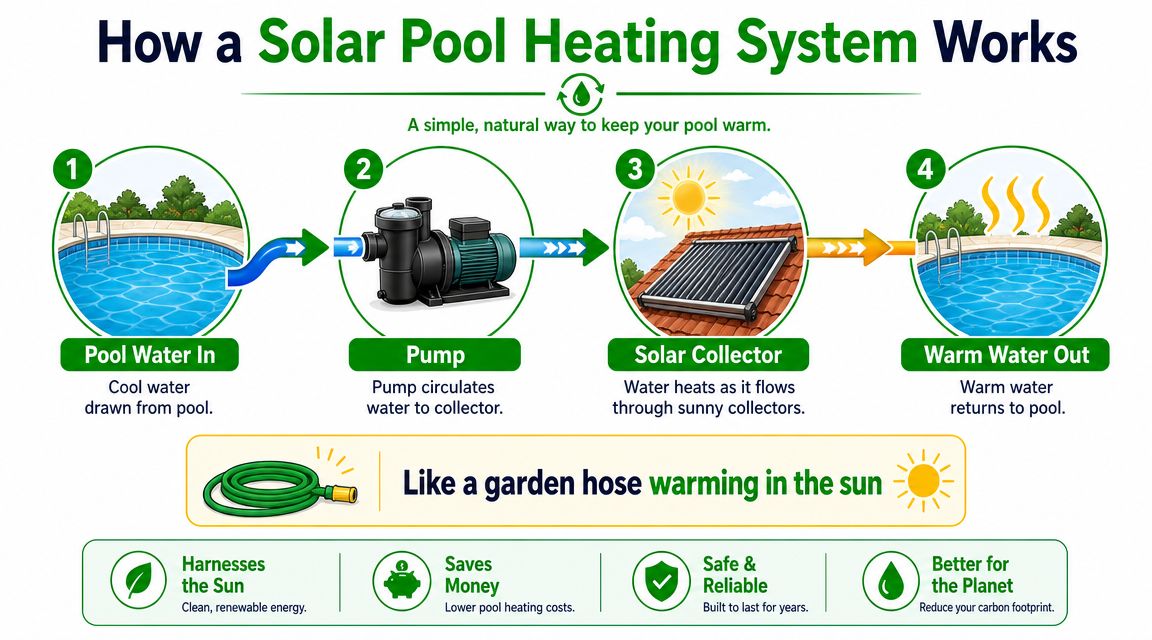
At the simplest level, solar thermal pool heating works like a garden hose left in the sun. Water moves through dark material exposed to sunlight, it picks up heat, and it comes back warmer than it left. Pool systems take that same basic idea and turn it into a controlled loop that works automatically.
The core components on a real home
A standard solar thermal setup usually includes a few key parts:
- Collectors on the roof. These are often black polymer mats or panels designed to absorb heat.
- A pump that moves pool water through the filtration and heating loop.
- A filter to keep debris out of the system.
- A valve and controller that decide when water should bypass the roof and when it should circulate through the collectors.
On a sunny day, the controller checks conditions and diverts water up to the collectors. The water travels through sun-warmed channels, gains heat, and returns to the pool. If the roof isn't warm enough, the system bypasses the collectors rather than cooling the water.
What kind of heating gain you can expect
The performance most homeowners notice first is the steady accumulation of warmth across the day and over a run of good weather. The International Energy Agency's solar heating programme states that each pass of pool water through solar collectors typically raises water temperature by 2 to 5°C, and a correctly sized system can raise pool temperature by about 10 to 20°C overall (IEA pool heating overview).
That doesn't mean instant heat on demand. It means gradual, usable heating that builds and holds when the system is well matched to the pool and the site.
A solar thermal system works best when you treat it like season extension, not a last-minute event heater.
Where homeowners get confused
Many people mix up solar thermal with solar PV. They're different technologies. Solar thermal uses the sun's heat directly to warm pool water. Solar PV makes electricity. Both can play a role in pool heating, which is why plenty of myths still float around. If you want a clear explanation of what solar can and can't do, this guide on common solar myths and misconceptions is worth reading.
Two Paths to a Solar-Heated Pool
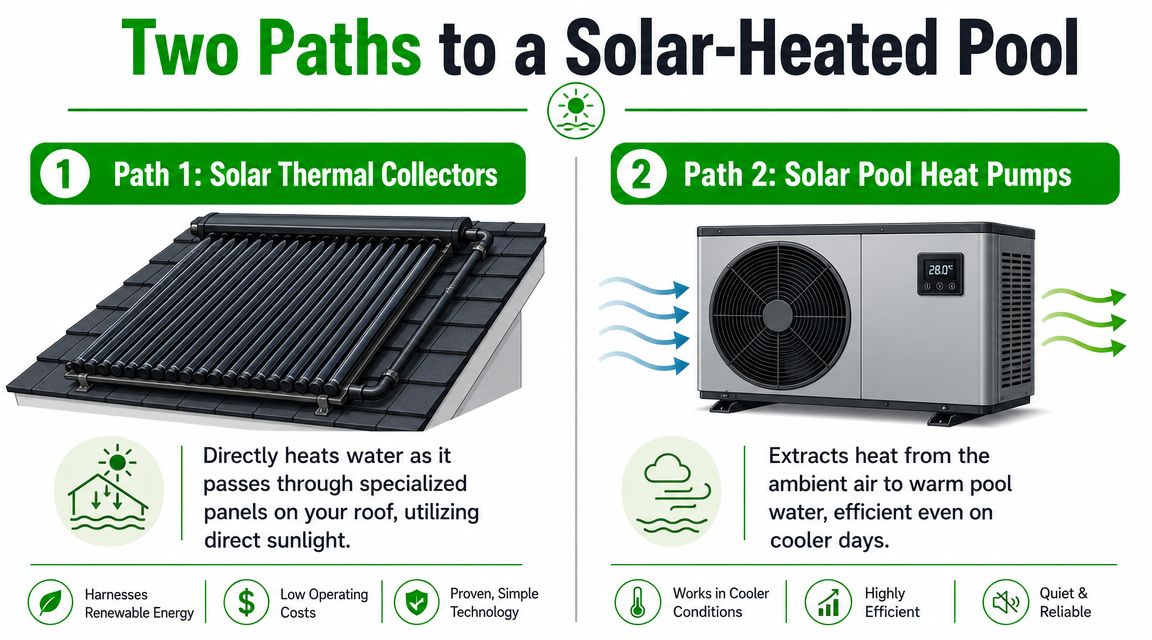
Once you move past the generic idea of “solar pool heating”, there are really two practical paths for NSW homeowners. They solve the same problem differently, and the right choice depends on how you use the pool, what roof space you've got, and whether the house already has solar PV.
Path 1 with solar thermal collectors
This is the classic option. Water circulates through rooftop collectors and comes back warmer. It's straightforward, proven and well suited to homes that get good sun on a usable roof plane.
It usually works well when:
- You want low-complexity heating with a direct connection between sunshine and water temperature
- You have enough roof area in the right orientation
- Your goal is season extension rather than strong year-round control
Solar thermal is a good fit for people who swim regularly through warmer months and want a system that unobtrusively does its job with minimal intervention.
Path 2 with a PV-driven heat pump
The second path is different. A pool heat pump doesn't create heat in the same way a resistance heater does. It moves heat from the surrounding air into the pool water. If that heat pump runs on electricity generated by rooftop solar PV, it becomes a very strong solar-based heating solution.
This path usually suits households that want:
- More control over water temperature
- Better performance outside bright peak-sun conditions
- Stronger integration with the rest of the home's energy system
For homeowners comparing units, controls and installation pathways, Interactive Solar's overview of pool heat pump options is a useful place to start.
A short walkthrough helps if you want to see the concept in action.
Which path works better
There isn't one universal winner. There's a better match for a given property.
| Decision point | Solar thermal collectors | PV-driven heat pump |
|---|---|---|
| Main strength | Direct heating from sunshine | Better controllability and integration |
| Best fit | Sunny roof, regular seasonal use | Homes with solar PV, batteries, or year-round ambitions |
| Limiting factor | Roof space, orientation, shading | Electrical design and operating strategy |
| Home energy synergy | More standalone | Stronger whole-home alignment |
If the house already has a serious PV system, a heat pump often makes more sense than homeowners first expect.
The biggest mistake is choosing based on one feature alone. A homeowner sees “solar” and assumes rooftop thermal collectors must always be the answer. Another sees “heat pump” and assumes it isn't solar-related. Both can be wrong. The better approach is to assess the pool, the roof, the home's electrical setup and how often you want to swim.
Sizing Your System for the NSW Climate
A pool in Newcastle, Orange and the Southern Highlands does not need the same heating plan. That is where sizing goes wrong. Homeowners are often sold a generic setup, then wonder why the water still feels cold in October or costs more than expected to keep comfortable.
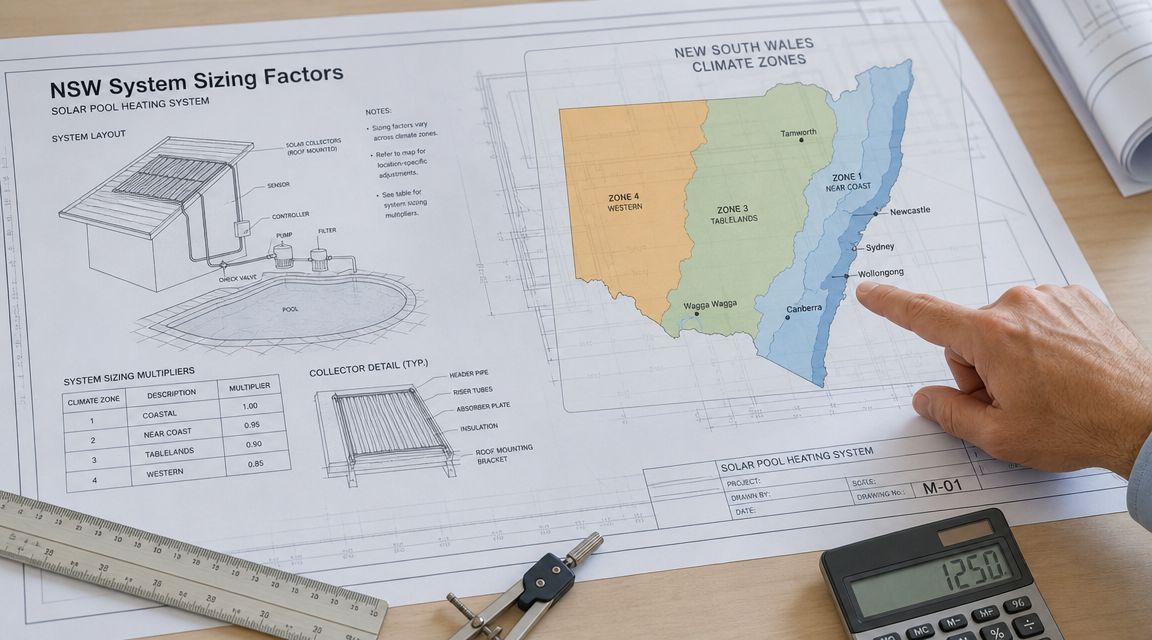
Start with the season you actually want
The first sizing question is not collector brand or heat pump model. It is how far you want to push the season.
If the goal is summer plus a bit of shoulder season, the design can stay relatively simple. If the goal is reliable swimming through cooler months, the system has to be sized around heat loss, not just sunny-day performance. In NSW, that difference matters. Coastal sites usually have milder air temperatures, while inland areas and higher-altitude suburbs lose heat faster overnight.
A pool cover changes the maths more than many equipment upgrades. The NSW Government's swimming pool guidance points homeowners toward practical steps that improve pool efficiency and safety, and in real projects the cover is often what makes a modest heating system perform like a larger one.
Roof and site conditions decide whether solar thermal is viable
For solar thermal, usable roof space matters more than total roof space. I look for a roof plane with good sun access during the months you want to swim, enough area in one workable section, and a plumbing run that does not turn the install into a compromise.
These site details usually decide the result:
- Orientation and sun access. North-facing is preferred, but unshaded east or west roof sections can still work depending on the target season.
- Shade during winter and shoulder months. A roof that looks sunny in January can be a poor heating roof in April.
- Wind exposure around the pool. Wind strips heat out of the water fast, especially in exposed backyards.
- Pipe run and plant location. Long or awkward runs add installation complexity and can reduce system efficiency.
A collector array can be correctly installed and still be the wrong choice for the house.
Heat pump sizing is different
A PV-driven heat pump is sized around how quickly it can replace heat loss and how often it will be allowed to run. That is why I ask about your existing solar PV, any planned battery, your pool filtration schedule and whether daytime operation is realistic.
A larger heat pump can recover temperature faster after cold nights or weekend use. A smaller unit may be fine if the pool is covered and the home has enough daytime solar generation to run it consistently. The right answer is rarely the biggest unit the budget can stretch to. It is the unit that matches the pool volume, local climate and the home's energy profile.
That integration angle matters in NSW homes with rooftop PV. If the house already exports plenty of solar power during the day, using some of that generation for pool heating can make more sense than chasing a roof collector layout that is only partly suitable.
Match the system to the property, not the label
I would generally lean solar thermal where the roof is well suited, the homeowner wants a longer warm-season swim period, and the pool cover habits are realistic. I would usually lean toward a PV-backed heat pump where roof collector space is compromised, the home already has solar, or the owner wants better control across variable weather.
Before signing off on any design, check four things:
- Target months of use
- Pool cover discipline
- Available roof area or daytime solar generation
- Exposure to wind, shade and cold overnight conditions
Homeowners planning broader energy upgrades should also look at current NSW solar rebates and government incentives because the economics can shift if the pool heater is being planned alongside PV or battery work. Ongoing ownership costs matter too, so this pool maintenance budget guide is worth reading before you choose a system size or heating path.
Integrating Pool Heating with Your Home Solar and Battery
Many pool heating guides stop short, treating the pool as a separate project. In practice, the most interesting setup often isn't a standalone heater at all. It's a pool that becomes part of the home's wider energy system.
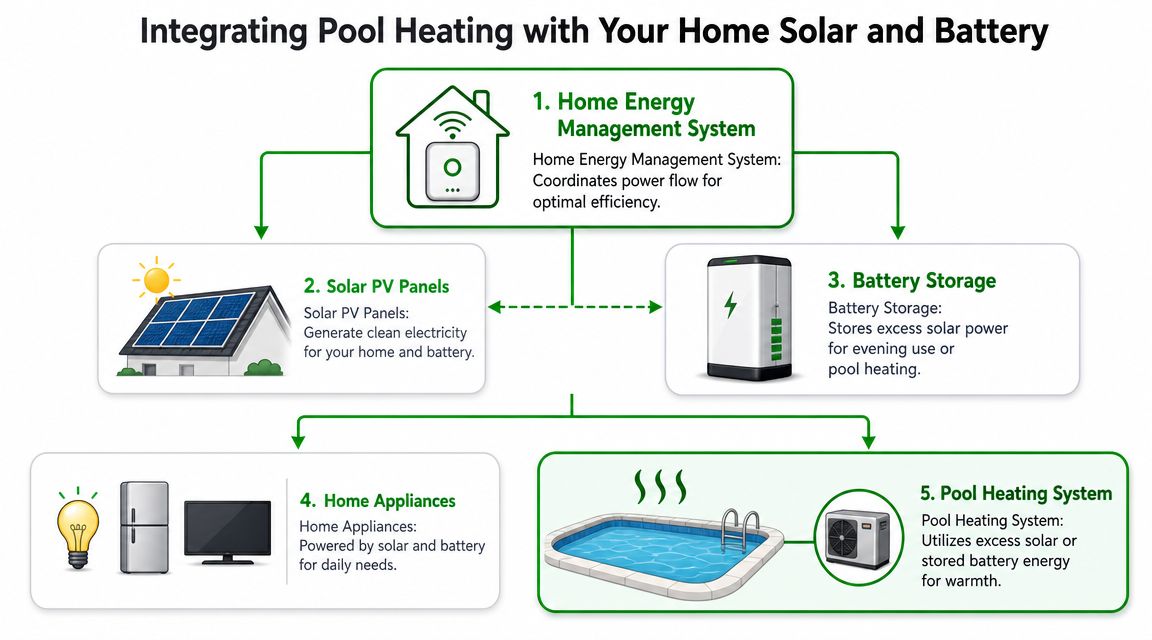
Why PV and pool heating work so well together
During the day, a solar PV system often produces electricity when the home itself doesn't need all of it. That creates an opportunity. Instead of thinking only about exports, you can use daytime generation to run a pool heat pump and turn excess solar electricity into stored heat in the pool water.
That changes the economics and the logic of heating. The pool stops looking like an energy burden and starts acting like a flexible daytime load.
A practical integrated setup can do a few things well:
- Prioritise daytime heating while the roof is producing strongly
- Avoid unnecessary grid draw during expensive periods
- Make better use of solar generation that would otherwise leave the home
- Coordinate pool heating with other major loads such as hot water, EV charging and general household demand
Where a battery changes the picture
A battery doesn't turn a poor pool heating design into a good one. What it does do is add flexibility. If the day is mixed, or you want controlled heating later in the afternoon or evening, battery storage can support that strategy.
For homeowners deciding whether a battery belongs in the mix, a side-by-side home battery comparison guide is useful because battery suitability depends on more than simple storage capacity. It depends on how the household uses energy, when the pool heating load appears, and whether backup matters.
The smartest pool heating upgrade is often not the heater alone. It's the way the heater fits into the rest of the home.
Think in systems, not products
This is the shift that leads to better outcomes. Instead of asking, “What heater should I buy?” ask:
| Better planning question | Why it matters |
|---|---|
| When does the house produce excess solar? | That's often your cheapest heating window |
| Do you already have PV, or plan to install it? | That can push the decision toward a heat pump |
| Would a battery improve control? | It may support heating outside peak generation periods |
| What else competes for daytime power? | EV charging, hot water and appliances affect load planning |
If you're budgeting for ownership more broadly, it also helps to understand where heating sits alongside chemicals, cleaning, servicing and repairs. This pool maintenance budget guide gives a practical overview of the other costs pool owners usually juggle.
Interactive Solar handles solar PV, batteries, EV chargers and pool heating, so it's one of the few providers positioned to assess the integration side properly rather than treating the pool as a separate add-on.
Installation and Long-Term Maintenance Explained
A properly installed pool heating system solar setup shouldn't feel mysterious once the work starts. On site, the job usually comes down to roof mounting or placing equipment, plumbing tie-ins, controller setup, and making sure the water flow and switching logic behave as intended.
For solar thermal, installers connect the pool plumbing so water can be directed through rooftop collectors when conditions are right. For a heat pump, the work is more about hydraulic connection, electrical supply, positioning for airflow and controller programming. In both cases, neat routing and tidy commissioning matter because poor installation creates the service problems homeowners blame on the product later.
What ongoing ownership usually looks like
Maintenance is generally manageable if the system was designed well.
- Solar thermal systems usually need periodic checks for leaks, valve function, collector condition and general plumbing integrity.
- Heat pumps are closer to outdoor air-conditioning equipment. They need clean airflow, sound electrical work and routine attention if performance drifts.
- Controllers and sensors should be checked if the system starts running at odd times or heating becomes inconsistent.
Most long-term issues come from installation shortcuts, not from the basic idea of solar pool heating.
That's why workmanship matters. If you're comparing providers, this article on why installation quality matters in solar systems applies just as much to pool heating as it does to rooftop PV.
Take Back Control of Your Pool Season
A lot of NSW pool owners know this moment. The sun is out, the backyard looks perfect, but the water is still too cold to enjoy for long. The pool is there, the running costs are there, and the swimming season still feels shorter than it should.
The fix is not picking the most expensive heater. It is choosing a setup that suits the way the pool is used and the way the home already uses energy.
For one home, that might be solar thermal on a north or west-facing roof with enough usable area. For another, it is a heat pump timed to run from rooftop PV generation, with a battery helping cover late afternoon demand. In some cases, a mixed strategy makes sense. The practical goal stays the same. More swimmable months, more stable running costs, and fewer compromises about when the pool can be used.
That integration piece gets missed in a lot of pool heating advice. Pool heating should not be treated as a stand-alone purchase if the home already has solar PV, is planning a battery, or will soon add bigger daytime loads such as EV charging. The better approach is to look at the whole site together, then decide whether solar thermal, a PV-supported heat pump, or a staged upgrade path will deliver the best return in comfort and operating cost.
The homeowners who are happiest with the result usually ask the right questions early. How warm should the water be in spring and autumn? Are weekday morning swims important, or is most use on sunny weekends? Is the roof suitable for collectors without compromising future PV space? If a battery is added later, will the heating controls and electrical design still make sense?
Those questions lead to a system you will run often enough to get value from, not one that looks good on paper and disappoints in practice.
If you want a custom recommendation for your pool, roof and home energy setup, book a consultation with Interactive Solar. They can assess whether solar thermal, a PV-driven heat pump, or a broader solar-and-battery integration makes the most sense for your property.
Make Interactive Solar a preferred source in Google
One click tells Google to surface our articles more often in Top Stories, AI Overviews and AI Mode.