
Expert Tesla Powerwall Installation Sydney 2026
Last updated:
A lot of Sydney homeowners start looking at battery storage after the same two frustrations hit at once. The power bill lands, then another outage warning or storm alert pops up on the phone. If you’ve already invested in solar, it’s even more frustrating watching cheap daytime exports leave your roof, then buying expensive grid power back at night.
That’s where tesla powerwall installation sydney becomes more than a product search. It becomes a practical decision about control. A properly designed Powerwall setup can store your excess solar, support key circuits during outages, and make your home far less exposed to retailer pricing and grid instability. In NSW, though, the battery itself is only part of the job. The local grid rules, site layout, switchboard condition, VPP eligibility, and approval pathway matter just as much as the hardware on the wall.
Why Sydney Homeowners Are Choosing Tesla Powerwall
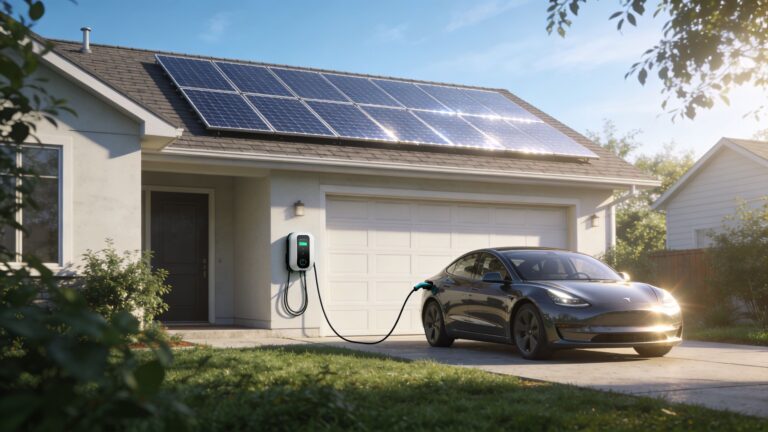
A common Sydney scenario looks like this. Solar is already on the roof, the household load rises after 5 pm, feed-in tariffs feel underwhelming, and one storm warning is enough to remind everyone how dependent the house still is on the grid. At that point, a Powerwall stops being a nice add-on and starts looking like a practical way to keep more of your own generation on site.
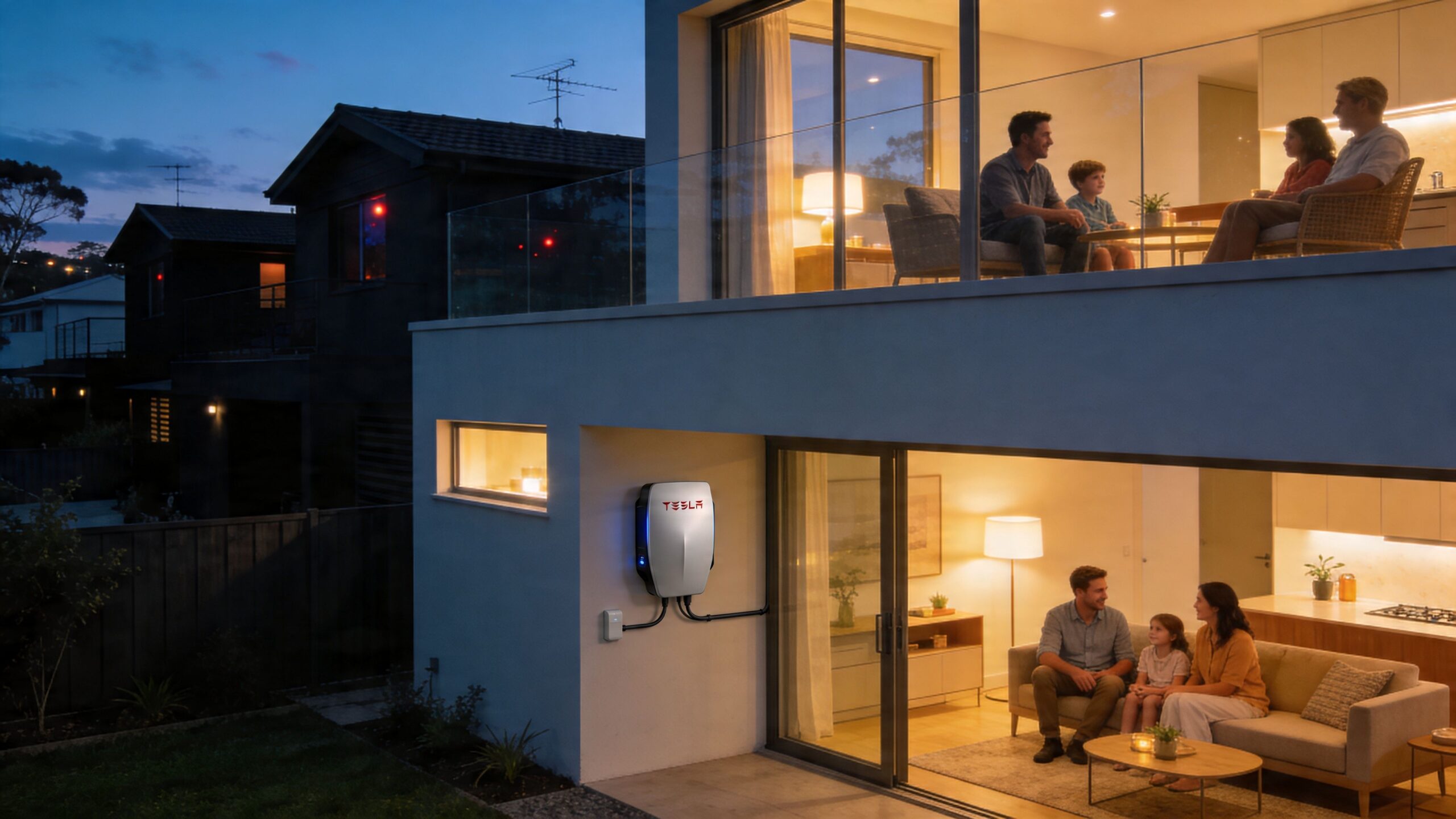
Sydney is a strong battery market for a simple reason. A large share of homes already have solar, but many still buy expensive evening power because the system exports during the day and the household uses energy later. A battery shifts that equation. Instead of treating solar as something that only helps in daylight hours, the home can use more of that energy when people are cooking, cooling, washing, charging devices, and settling in for the night.
That financial case matters, but in NSW the decision is rarely just about bill reduction. Tariff structures, export limits, Virtual Power Plant eligibility, and retailer settings all affect how well a battery performs on paper and in real life. Generic battery advice misses that. A Powerwall installed in Sydney has to be set up around local network rules and the customer’s actual usage, otherwise the headline savings rarely match the result.
The shift from passive customer to active energy user
The households that get the most value from a Powerwall usually have one thing in common. They want more control.
Control over when solar is used. Control over what stays on during an outage. Control over whether the battery is reserved for backup or cycled daily to reduce imports. That is why the early conversation matters so much. We look at interval data, switchboard layout, backup expectations, and retailer plan settings before we recommend a configuration.
For homeowners comparing models and setup options, our guide to Tesla Powerwall 3 for Sydney homes explains the hardware and planning considerations in more detail.
Why resilience matters in NSW
Backup power is one of the strongest reasons Sydney homeowners proceed with battery storage. In practical terms, people want refrigeration, lighting, internet, garage access, phones, and selected power circuits to keep running when the grid drops out. The detail that gets missed is that backup performance depends on design, not just battery capacity.
A well-planned installation considers which circuits are backed up, whether large loads should be excluded, how the switchboard is arranged, and whether the property has any site constraints that affect installation. Older homes in Sydney often need switchboard upgrades. Some terraces and semis have tight access. Apartment and townhouse owners can face strata approval issues that have nothing to do with the battery itself but can delay the project if they are not handled early.
What makes a Powerwall installation work well
The best results come from matching the battery to the home, the tariff, and the local approval path.
That means checking solar size against evening consumption, confirming network requirements, reviewing meter and switchboard conditions, and deciding how the customer wants the battery to behave day to day. It also means being realistic. A premium battery installed badly is still a poor outcome. Clean cable routing, compliant clearances, correct commissioning, and proper grid paperwork all matter.
This is where local experience makes a real difference. Interactive Solar handles the design, approvals, installation, and commissioning with NSW requirements in mind, including the extra care needed for older switchboards, export-constrained sites, and strata properties where the paperwork can be more complex than the electrical work itself.
Understanding How Powerwall Integrates With Solar
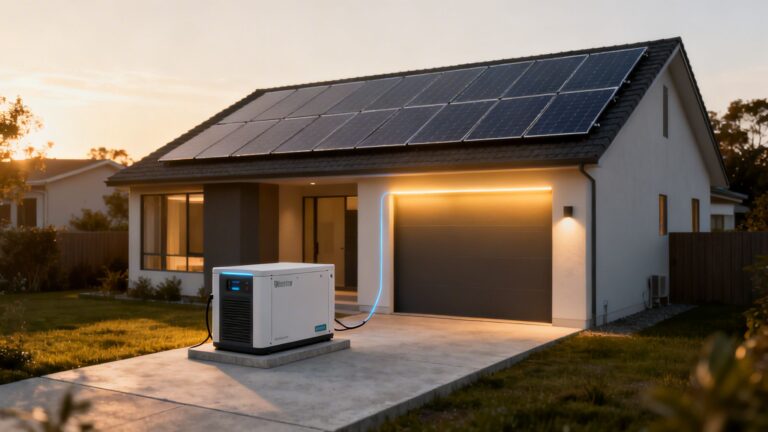
A Powerwall stores the solar your home does not use in the middle of the day, then feeds it back when demand rises later. In Sydney, that matters most in the late afternoon and evening, when solar output drops, air conditioning is still running, and grid electricity is usually at its most expensive.
The basic flow is simple. The design work is not.
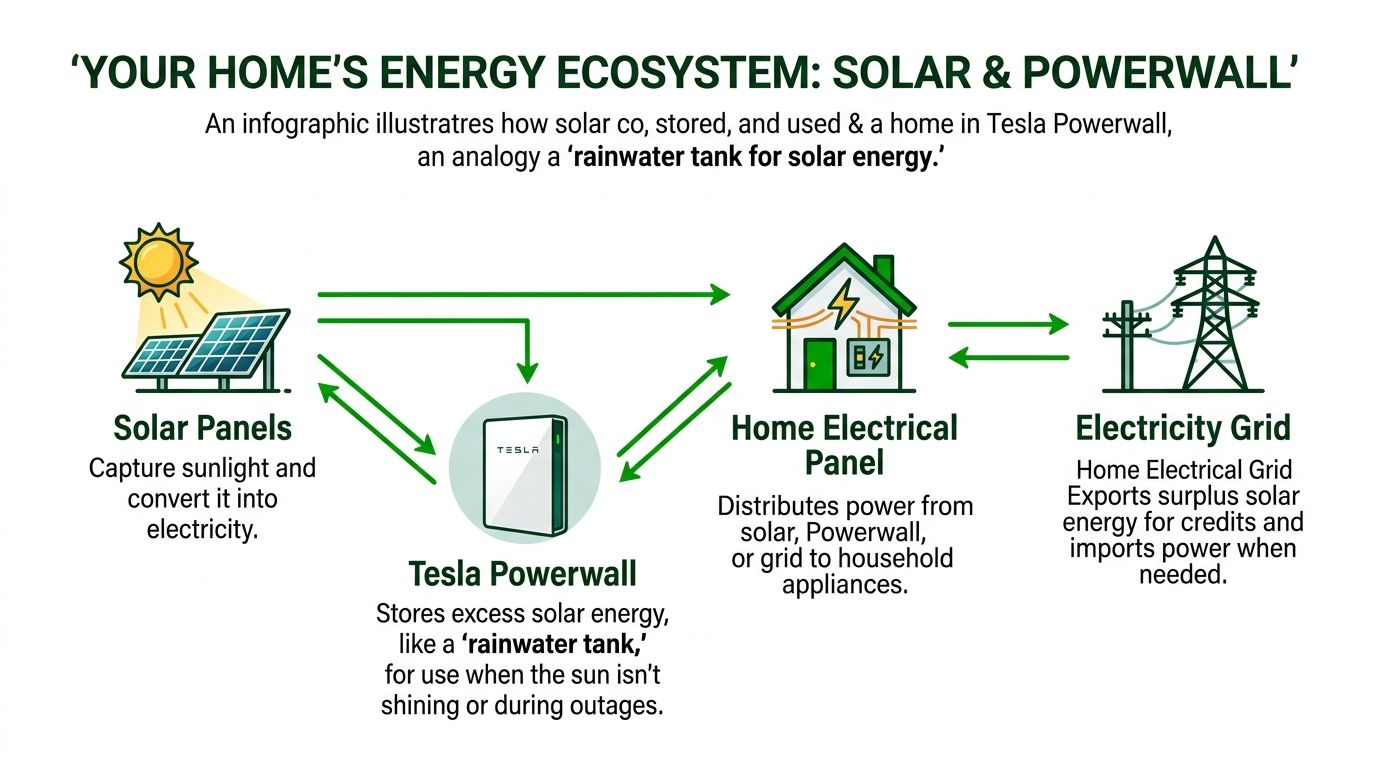
How the energy flow works in a real home
In a properly configured system, energy usually moves in this order:
- Solar runs the house first. Daytime appliances use rooftop generation before anything else.
- Surplus solar charges the battery. Extra production is stored instead of being sent straight to the grid.
- The battery supports the home after sunset. As solar output fades, the Powerwall supplies evening loads.
- The grid covers any shortfall. If household demand exceeds what solar and battery can provide, power is imported as needed.
That is the practical value of battery storage. More of your own generation stays on site, and less of your evening usage is bought back from the retailer at a higher rate.
In NSW, the financial result depends on more than the battery itself. Feed-in tariffs, time-of-use pricing, export limits, and whether the home joins a virtual power plant all affect how the system should be configured. A generic battery layout can work electrically and still be a poor financial fit.
AC coupling and DC coupling
This is the part many homeowners get vague advice on.
AC-coupled installation usually makes sense for homes that already have solar. The battery is added to the existing setup, which can reduce disruption and avoid replacing working equipment too early. The trade-off is that the final design has to work around the current inverter, switchboard, and site constraints.
DC-coupled installation is more common when solar and battery are planned together. It can be a neater solution on a new system, particularly where equipment selection is being made from scratch. It also gives more flexibility at the design stage, but that only helps if the solar size, battery behaviour, and backup requirements have been thought through properly.
| Setup type | Best suited to | Main benefit | Main trade-off |
|---|---|---|---|
| AC coupling | Existing solar homes | Practical retrofit option | Must fit around current hardware |
| DC coupling | New solar and battery installs | Cleaner integrated design | Usually tied to a full system build |
For homeowners comparing retrofit and new-system options, our detailed guide to Tesla Powerwall 3 installation options explains what each setup covers and where each one tends to suit Sydney homes.
A good installer chooses the coupling method based on the house, not the sales script.
What Sydney owners often miss
Integration is not just about getting the battery to charge and discharge. It is about setting the system up to match NSW rules and the way the household uses power.
On some Sydney sites, export limits from the network mean midday solar is already being curtailed. In that case, battery charging strategy matters more. On time-of-use tariffs, the battery may need to hold energy for the evening peak rather than empty too early. On VPP-compatible setups, the hardware may allow participation, but the tariff terms, control settings, and customer priorities still need to line up. In strata properties, the electrical design can be straightforward while approvals, metering, and common property issues take longer than expected.
That is why proper integration starts with load patterns, existing solar performance, switchboard layout, and network requirements. Then the battery can be configured to do its intended purpose: lower bills, provide backup where needed, or support a future move into a VPP.
Your Tesla Powerwall Installation Timeline From Start to Finish
A Powerwall install feels much simpler from the customer side when the project is organised properly from day one. The smooth jobs usually follow a clear sequence. The messy jobs are the ones where the site was never assessed properly, the switchboard surprises everyone on installation day, or approvals were treated as an afterthought.
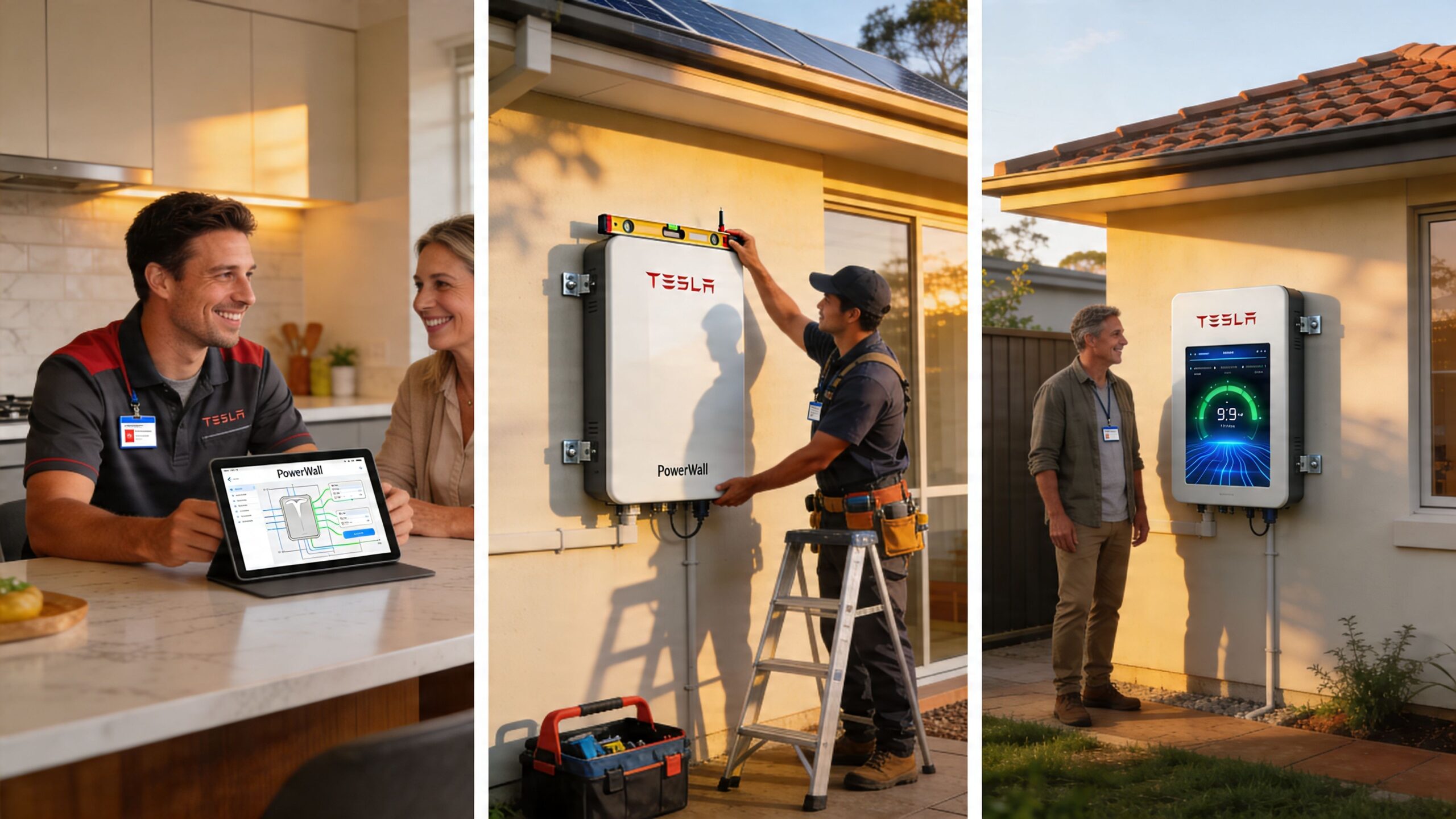
Step one is the site assessment
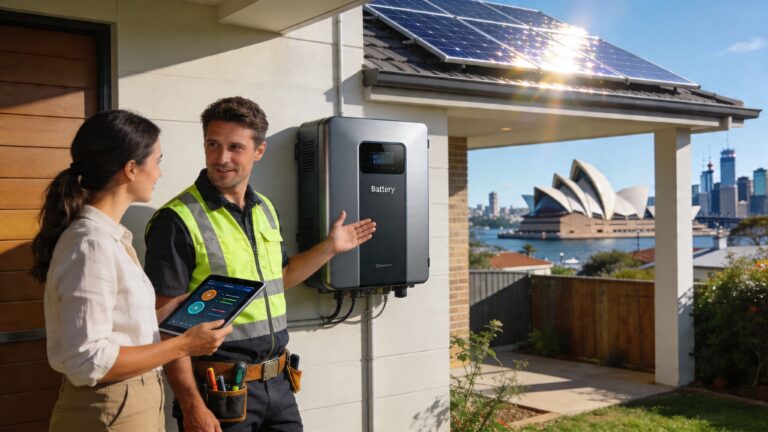
Every solid battery install starts with the same practical checks. The installer needs to inspect the switchboard, look at the existing solar arrangement, confirm wall or floor mounting options, and work out the cleanest cable path to the main board. This last point matters more than many homeowners realise.
The distance between the battery location and the main switchboard affects efficiency and compliance. Reporting on outdoor Powerwall 3 installations notes that longer cable runs may lead to 2% to 5% efficiency losses per 10 metres, depending on wire gauge and current load, in PSC Energy’s discussion of Powerwall 3 placement considerations. That’s why experienced installers spend time choosing location carefully instead of just picking the first blank wall.
System design is where most of the value is created
After the inspection, the design gets locked in. This includes:
- Battery placement based on wall strength, weather exposure, access, and cable route.
- Backup strategy for whether the system supports essential circuits or a broader part of the home.
- Solar integration method based on whether the job is a retrofit or a new combined system.
- Switchboard scope if the existing board needs reconfiguration for compliance or battery integration.
Three-phase homes often need extra thought here. They can require additional load-balancing components, and that makes the design phase more important than it would be on a simple single-phase home.
Installation day should feel controlled, not chaotic
On installation day, there’s usually a planned shutdown period while the team works safely on the switchboard and battery connection. The physical battery mounting, cabling, gateway work, protective devices, labelling, and final checks all happen in sequence. A clean install should look tidy and deliberate when it’s finished, not like extra hardware was patched onto the side of the house.
This is also where quality shows up in visible ways. Cable runs should be neat. Mounting should be level. The battery location should respect the manufacturer’s clearance requirements and leave room for service access later.
For a closer look at what workmanship standards should look like, this piece on why installation quality matters in advanced solar systems is worth reading.
A visual walkthrough helps if you want to see the process in context.
Commissioning and handover
The final stage is where the system gets tested, commissioned, and handed over properly. The homeowner should leave that handover understanding:
- How the battery behaves during normal solar production
- What happens in a blackout
- How to monitor performance in the app
- What settings may affect charging and backup behaviour
The handover matters. A customer who doesn’t understand their app or backup settings usually thinks the system is underperforming when it’s actually doing exactly what it was configured to do.
A proper finish also means all compliance documentation is in order, labels are complete, and the homeowner knows what to expect from support if they need help after commissioning.
Navigating NSW Permits Grid Connection and Inspections
Battery installation in Sydney is not just an electrical job. It’s an approvals job, a compliance job, and a documentation job. Homeowners usually don’t see most of that work because the installer handles it behind the scenes, but local experience proves invaluable.
Grid connection is where NSW knowledge matters
Before a battery can operate as intended, the project usually needs the right network approvals and grid connection pathway. The exact process depends on the local network area, the existing solar setup, and whether the system will participate in programs such as backup-only operation or a Virtual Power Plant.
The paperwork side can include network application details, equipment specifications, installer accreditation requirements, and final commissioning records. It isn’t glamorous, but it has to be right. If the application is sloppy or the site details don’t match reality, delays follow.
VPP value depends on proper compliance
This is one of the most overlooked parts of tesla powerwall installation sydney. A lot of people ask whether a VPP is worth joining before they ask whether their system is being installed in a way that supports it.
That order should be reversed.
Participation in NSW Virtual Power Plant programs can shorten battery payback by 20% to 30%, and Sydney households in Tesla’s VPP have earned $250 to $400 annually from grid services, according to MPV Solar’s overview of Powerwall installation and NSW VPP returns. But those benefits depend on compliant installation and grid connection. If the design, approvals, or commissioning aren’t handled properly, those opportunities can be limited or lost.
Site note: The battery isn’t what unlocks VPP participation on its own. The approved installation does.
Inspections and electrical standards
NSW battery work has to meet electrical safety requirements, manufacturer instructions, and network expectations. That includes correct protection devices, compliant labelling, safe isolation, and a switchboard arrangement that supports the battery architecture.
For customers, the useful question isn’t “Will there be paperwork?” There will be. The better question is “Who is managing it, and have they done it in my network area before?”
A practical checklist looks like this:
- Installer accreditation matters because some incentive and VPP pathways depend on compliant, accredited installation.
- Network submission accuracy matters because incorrect technical details can hold up approval.
- Switchboard suitability matters because old boards often need work before battery integration.
- Final inspection readiness matters because incomplete labelling or untidy board work can create rework.
If you want to understand the consumer protections that should sit behind this process, the New Energy Tech Consumer Code overview is a good reference point.
Why generic advice often falls short
Many national guides talk about battery installs as if every property follows the same path. Sydney doesn’t work like that. A freestanding house in a newer estate, a federation home with an older board, and a strata apartment can all end up with very different approval and installation pathways.
That’s also why local installers who know Ausgrid, Endeavour Energy, and the usual NSW compliance bottlenecks tend to save customers time. They’re not learning the process on your job. They’ve already built systems around it.
Maximising Your Investment With NSW Rebates and Warranties
A Sydney battery job can look straightforward on the quote and still end up costing more than expected if the incentive pathway, VPP eligibility, or warranty conditions are handled poorly. That usually shows up later, not on install day. It shows up when a customer realises the system was not set up to suit NSW program rules, or the paperwork does not support a claim if something goes wrong.
The best return comes from getting the structure right at the start. That means matching the battery to the solar system, checking whether the property and network setup suit a VPP, confirming any current NSW support before installation, and documenting the job properly for warranty and future service. Generic battery guides rarely cover that level of detail. In Sydney, it matters.
Incentives affect more than upfront cost
NSW battery support can change the economics of a Powerwall, but it can also shape the design and approval path. Some customers are focused on reducing the purchase price. Others want the battery configured so it remains eligible for a virtual power plant, export arrangement, or future state-based program. Those are different decisions, and they should be made before hardware is ordered.
For NSW-specific battery support, this update on the NSW battery rebate and what to know before applying is a practical starting point.
If you want a broader tax and household budgeting view of Australian energy incentives, that resource is useful for context.
A few checks make a real difference:
| Area | Why it matters |
|---|---|
| Current NSW battery support | Program settings can affect timing, installer requirements, and the final net cost |
| VPP compatibility | Some households value bill savings. Others want access to ongoing VPP credits or grid services income |
| System configuration | The way the battery is installed and commissioned can affect whether it suits available programs |
| Property type | Freestanding homes, strata lots, and multi-meter sites can face different approval and metering issues |
The overlooked part is that incentive value is not always just a rebate figure. In NSW, the better financial outcome can come from combining the right installation pathway with a tariff strategy, backup priorities, and VPP participation that suits the household.
Warranty value depends on installation quality
Tesla’s product warranty matters, but it does not cover poor installation practice. If the battery location is wrong, the switchboard work is rushed, the commissioning records are incomplete, or the owner is left without clear shutdown and backup instructions, the warranty paperwork will not fix that.
Good installers treat warranty protection as part of the job, not a document handed over at the end. That means clear photos, correct labelling, compliant isolation, manufacturer-approved mounting positions, and commissioning records that can be pulled up later if support is needed. We also look closely at site conditions that often get missed in Sydney homes, especially older properties and strata buildings where access, ventilation, and common property rules can complicate the install.
One more point matters here. Customers should know who will support the system after handover. A long manufacturer warranty is useful. A local installer who can service the job, explain fault history, and deal with warranty claims in NSW is what usually saves time and frustration.
The practical comparison is simple. Do not judge Powerwall value on battery price alone. Check the current NSW support, ask how the system will be configured for local rules and VPP options, and make sure the workmanship and after-sales support are as solid as the hardware.
Sizing Your Powerwall and Future-Proofing Your Energy Needs
Battery sizing is where many homeowners either set themselves up well or box themselves into a compromise. The right size isn’t just about what you use today. It’s about what your home will need over the next several years.

Start with how your home uses power
The most useful sizing questions are practical ones:
- When does your household use the most electricity?
- How much of that demand lands after sunset?
- Do you want backup for a few essentials, or for a much larger portion of the house?
- Does your current solar array generate enough surplus to charge a battery properly?
A family that cooks at home every night, runs ducted air-conditioning, and charges devices after dark will have a different battery profile from a household that is mostly out during the day and uses very little power overnight.
If you want a better baseline before talking to an installer, using an electricity usage monitor can help you understand where and when your energy is being consumed.
Think beyond today’s appliance list
Future-proofing is where experienced system design earns its keep. A battery sized only around your current loads may feel undersized once lifestyle changes arrive.
Common triggers include:
- An EV purchase that shifts large charging demand into the home
- Pool equipment adding recurring electrical load
- Ducted air-conditioning increasing summer evening demand
- Home office growth making backup power more important than it used to be
This is why a battery consultation shouldn’t be reduced to a single question like “How many kilowatt-hours do I need?” The better question is “What kind of home energy system am I trying to build?”
Placement and technical constraints also shape size decisions
Physical layout affects what’s practical. Tesla’s installation requirements include 100 mm minimum clearance on the left and right sides, 50 mm above, 20 mm below, 150 mm between side-by-side units, and 300 mm in front of the unit, as set out in Tesla’s Powerwall 3 installation manual. The unit also weighs 130 kg, so the mounting surface and access plan need to be taken seriously.
Those details matter because some homes have plenty of demand for storage but limited practical installation space. In those cases, design becomes a balance between ideal capacity, safe placement, ventilation, and future expandability.
A good sizing conversation should cover these points
| Question | Why it matters |
|---|---|
| How much evening usage do you have? | Determines how much stored energy you can realistically use |
| What needs backup during outages? | Changes switchboard design and battery strategy |
| Will your demand grow soon? | Helps avoid a too-small system |
| Where can the battery go safely? | Affects mounting, cabling, ventilation, and service access |
For homeowners comparing battery options more broadly, this battery comparison guide is useful for understanding where Powerwall fits relative to other storage choices.
The best-sized battery is not always the largest one. It’s the one that matches your solar production, your evening loads, your outage priorities, and your likely future demand.
Sydney Powerwall Installation Frequently Asked Questions
Can I install a Powerwall in a strata apartment or townhouse
Yes, but strata projects are usually more administrative than standalone house installs. For strata properties in Sydney, a Powerwall installation requires navigating NSW strata by-laws and gaining body corporate approval, and that process can add weeks to the timeline compared with a freestanding home, as outlined in Tesla’s installation overview for Powerwall.
The main issue isn’t the battery itself. It’s approval, shared infrastructure, placement rights, and how cabling interacts with common property. The earlier these questions are raised, the smoother the project tends to be.
Where can a Powerwall be installed on a Sydney property
The battery needs a suitable wall or floor location with the required clearances, ventilation, and structural support. Outdoor installs are common in Sydney, but the exact wall matters. A surface that gets excessive reflected heat, has poor airflow, or forces a very long cable run back to the switchboard may not be the best choice.
Installers also need to think about practical service access. A battery should be mounted somewhere compliant and sensible, not hidden in a tight corner that makes future maintenance difficult.
What should I expect during a blackout
That depends on how the system has been designed and what loads are included in backup. Some homes prioritise essentials such as lighting, refrigeration, internet, and key power circuits. Others aim to carry a broader household load.
The mistake is assuming every appliance will run indefinitely just because a battery is installed. Real backup performance depends on battery state of charge, solar availability, and what the home is demanding at the time. A well-designed system can provide excellent resilience, but it still needs a realistic backup plan.
During outages, households that know which circuits are backed up and how to manage heavy loads tend to get far more value from their system.
Take Control of Your Energy Future Today
A Powerwall can shift your home from reactive to prepared. Instead of watching bills rise and hoping the grid stays on, you store your own energy, use more of your own solar, and build real backup capability into the house.
That said, the battery is only one part of the outcome. In Sydney, the best results come from getting the design, approvals, installation quality, and long-term support right. NSW grid rules, VPP pathways, rebate settings, and strata issues can all affect the final result, and that’s where local expertise matters.
If you’re serious about tesla powerwall installation sydney, the next step isn’t guessing from a generic online quote. It’s getting a site-specific assessment that looks at your roof, your switchboard, your usage, and your goals for backup and bill reduction.
If you want clear advice and a properly planned system, speak with Interactive Solar. Their family-owned NSW team handles the full journey, from site assessment and system design through to licensed installation and after-care, so you can move to solar storage with confidence.
Make Interactive Solar a preferred source in Google
One click tells Google to surface our articles more often in Top Stories, AI Overviews and AI Mode.