Tesla Powerwall 3 Installation Sydney: 2026 Guide
Last updated:
Tesla Powerwall 3 installation Sydney pricing typically runs from around $12,000 to $16,500 fully installed for a single unit, depending on your switchboard, roof access and whether you are retrofitting an existing solar system or installing panels and battery together. A Powerwall 3 stores 13.5kWh of usable energy, includes its own hybrid inverter, and can be installed by Interactive Solar as a CEC-accredited installer in one to two days for most Sydney homes. The rest of this guide covers sizing, cost, rebates and the exact installation process so you know what to expect before you book a site assessment.
Sydney households are moving to battery storage for a simple reason: solar exports are worth far less than the electricity you buy back from the grid. The IPART feed-in tariff benchmark for 2026-27 sits at roughly 3.4 to 6.5 cents per kWh, while grid import in Sydney is commonly 30 to 40 cents per kWh. Storing your own solar and using it at night is worth five to ten times more than exporting it.
Export Limits and Why Sydney Homes Need a Battery Now
Network export limits are another reason Tesla Powerwall 3 installation in Sydney has picked up pace through 2026. Ausgrid generally allows single-phase sites up to a 30kVA inverter if the export is limited to 10kW or less, while Endeavour Energy’s standard fixed export limit is 5kW per phase, rising to 10kW for customers approved under its Flexible Exports program. In practice, this means a household installing a larger solar system, say 10kW or more, may not be allowed to export all of it to the grid without a battery to absorb the excess. A correctly sized Powerwall 3 lets you keep generating at full capacity without curtailment, storing anything above your export limit instead of losing it.
What Makes Tesla Powerwall 3 Different From Powerwall 2
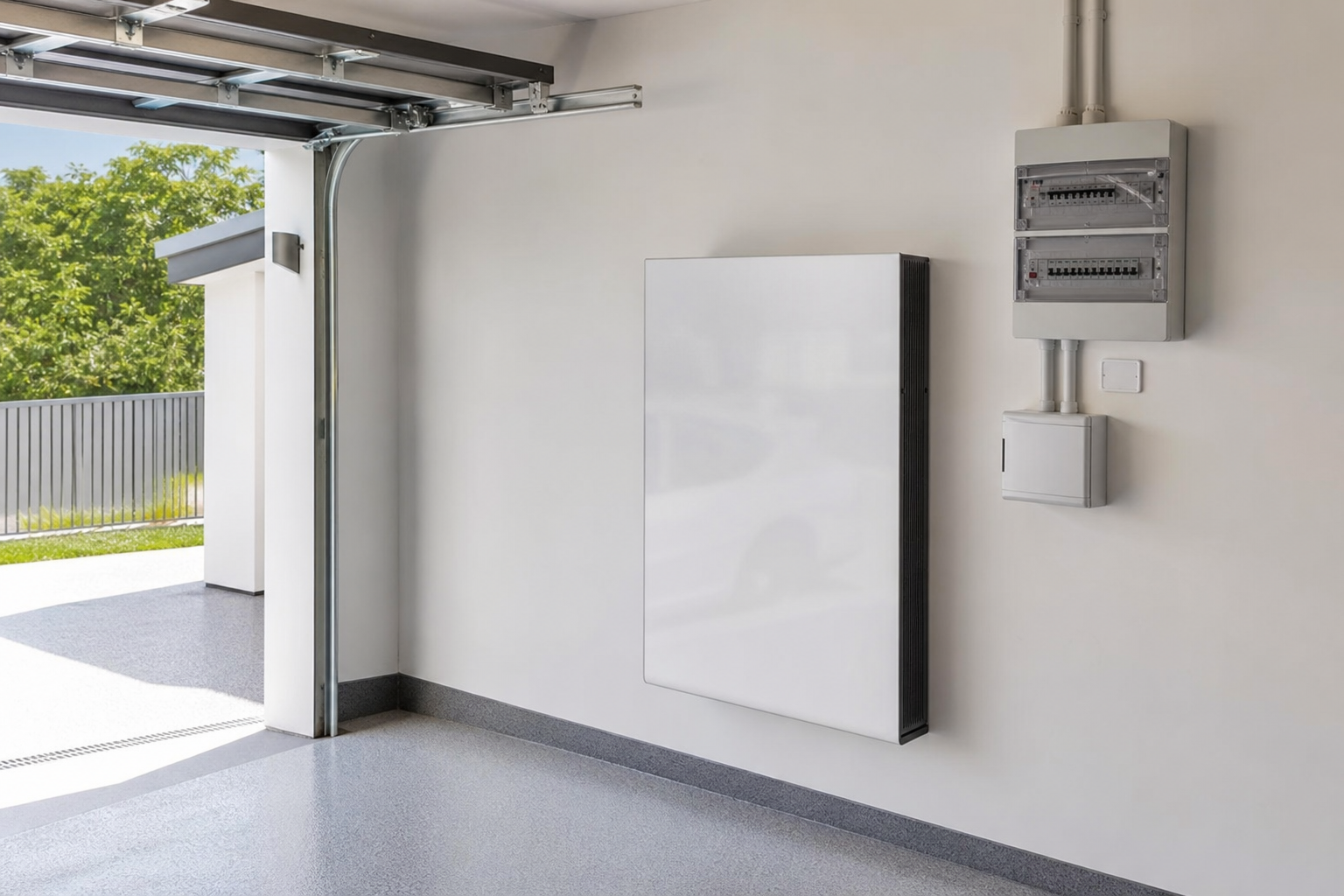
Powerwall 3 is Tesla’s third-generation home battery, released in Australia in mid-2024 and now the standard recommendation for new solar batteries installs. Unlike Powerwall 2, which needed a separate hybrid inverter (Solar Edge or similar), Powerwall 3 has a built-in 11.04kW hybrid inverter and can accept up to 20kW of DC solar input directly.
- Usable capacity: 13.5kWh AC per unit, expandable up to 4 units (54kWh) on one system
- Continuous power output: 5kW single-phase or up to 10-11.04kW depending on configuration
- Built-in inverter: removes the need for a separate string inverter on new installs
- Round-trip efficiency: around 97%, among the best of any battery on the Sydney market
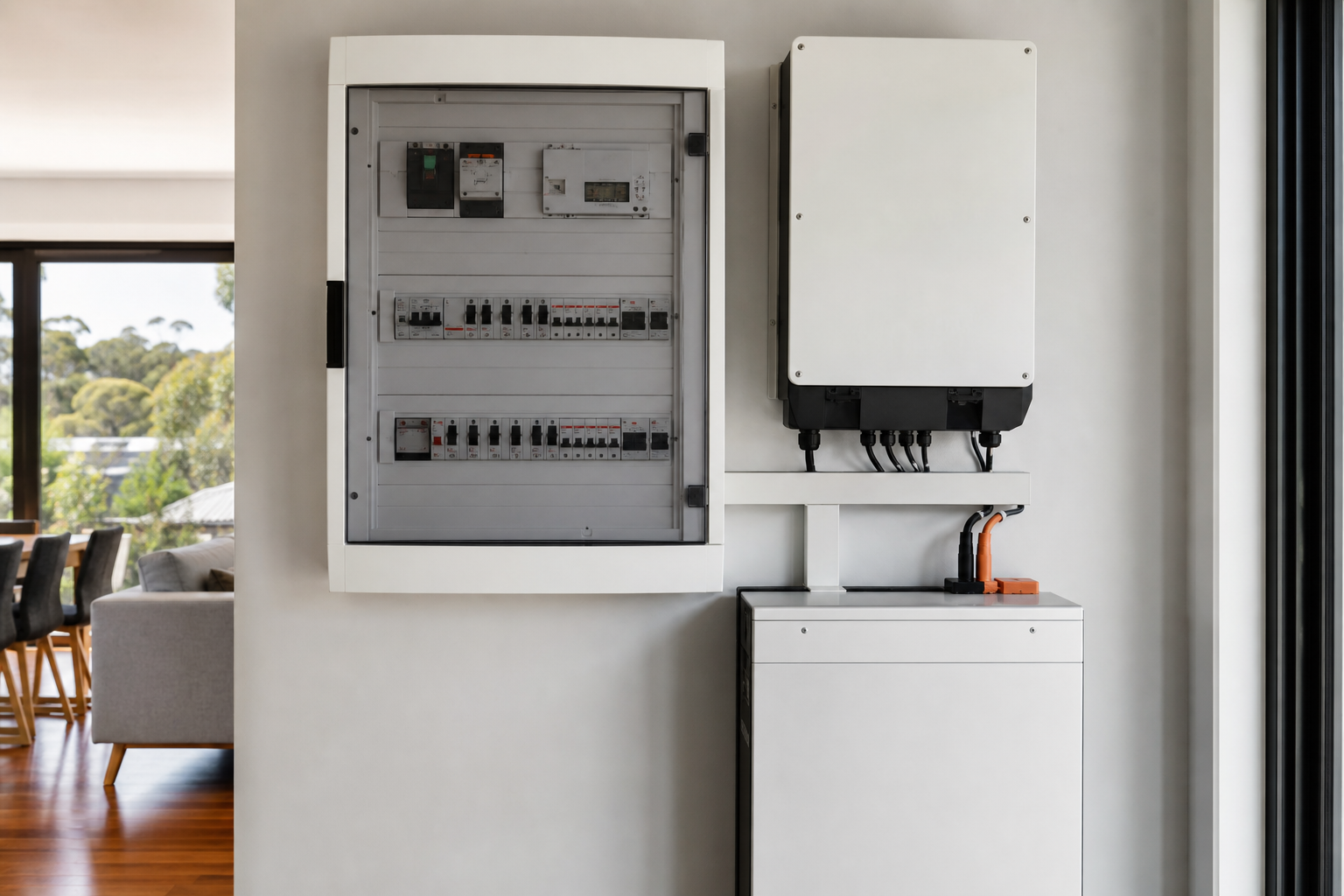
- Backup capability: can run essential circuits, or a whole home, during a grid outage with a compatible switchboard setup
- Warranty: 10 years, with a 70% capacity retention guarantee at end of warranty
For a household already running solar with a string inverter, Powerwall 3 can still be installed as an AC-coupled retrofit, though the DC-coupled configuration with a compatible existing inverter or a full system replacement usually delivers better round-trip efficiency.
Tesla Powerwall 3 Installation Sydney: Cost Breakdown
The exact figure depends on three things: whether you already have solar panels, your switchboard condition, and whether you want backup for the whole home or just essential circuits.
| Scenario | Typical installed cost (Sydney, before rebates) |
|---|---|
| Single Powerwall 3, retrofit to existing solar | $13,500 – $16,500 |
| Single Powerwall 3 + new 6.6-10kW solar system | $18,500 – $24,000 |
| Two Powerwall 3 units (whole-home backup, larger household) | $26,000 – $32,000 |
| Switchboard upgrade (if required for backup) | $800 – $2,500 additional |
These figures already assume the federal battery rebate has been applied at the point of sale, which is how Interactive Solar and most accredited installers structure the paperwork so you never have to claim it back separately.
Rebates That Apply to Tesla Powerwall 3 Installation in Sydney
Three rebate and finance programs currently apply to a Powerwall 3 installation for Sydney homeowners:
Federal Cheaper Home Batteries Program
This program provides a tiered, STC-style discount based on usable battery capacity. For May to December 2026, the support factor is 6.8 per kWh of usable capacity on the first 14kWh, tapering to 60% support from 14kWh to 28kWh and 15% support from 28kWh to 50kWh. A single 13.5kWh Powerwall 3 sits almost entirely within the highest-support first tier. To qualify your battery must be new, sit between 5kWh and 100kWh nominal capacity, be paired with a solar system of 100kW or less, use CEC-approved equipment, comply with AS/NZS 5139, and be installed by a battery-endorsed installer under Solar Accreditation Australia. See the Clean Energy Regulator for the current factor and eligibility rules.
NSW VPP incentive (PDRS BESS2)
From 1 July 2026, NSW households installing an eligible battery can access a Virtual Power Plant incentive that stacks with the federal rebate. The incentive is calculated on capacity made available to the VPP operator, up to 28kWh, and the exact dollar figure depends on the provider you sign up with. Check current terms at energy.nsw.gov.au before choosing a retailer partner.
NSW Home Energy Saver finance
Eligible NSW homeowners can access a zero-interest loan of up to $15,000 through approved finance partners to cover the gap between the rebate and the full install cost, spreading the remaining cost over several years with no interest charged.
Is Tesla Powerwall 3 the Right Battery for Your Sydney Home?
Powerwall 3 suits most single-phase Sydney homes with daytime solar generation and evening electricity use, which describes the majority of the households Interactive Solar assesses. It is a strong fit if:
- You already have, or are installing, 6.6kW or more of solar and want to shift that generation into the evening peak
- You want whole-home or partial backup during Ausgrid or Endeavour Energy outages
- Your household uses more than 15-20kWh per day, common for homes running electric hot water, a pool pump, or EV charging overnight
- You plan to add an EV charger and want to charge from stored solar rather than the grid
For larger three-phase homes or small commercial sites, our team sometimes recommends a Sungrow or two-Powerwall configuration instead. This is assessed individually during your site assessment, not decided from a brochure.
The Tesla Powerwall 3 Installation Process
Interactive Solar follows a standard sequence for every Powerwall 3 installation in Sydney, whether you are in Parramatta, the Eastern Suburbs, or Western Sydney:
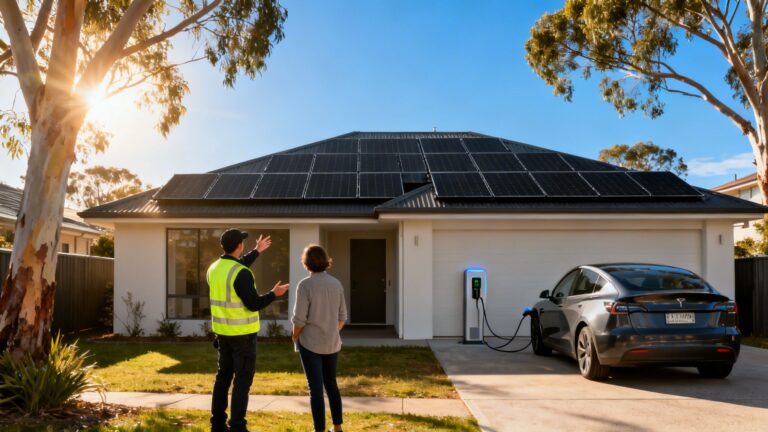
- Site assessment: our team reviews your switchboard, meter position, roof orientation and existing solar (if any) either in person or via satellite imagery and photos you provide
- System design: we confirm whether AC-coupled retrofit or DC-coupled replacement suits your existing inverter, and size the battery and any new solar to your usage pattern
- Paperwork and network approval: we lodge the connection application with Ausgrid or Endeavour Energy and confirm your export limit, which affects whether backup gateway hardware is needed
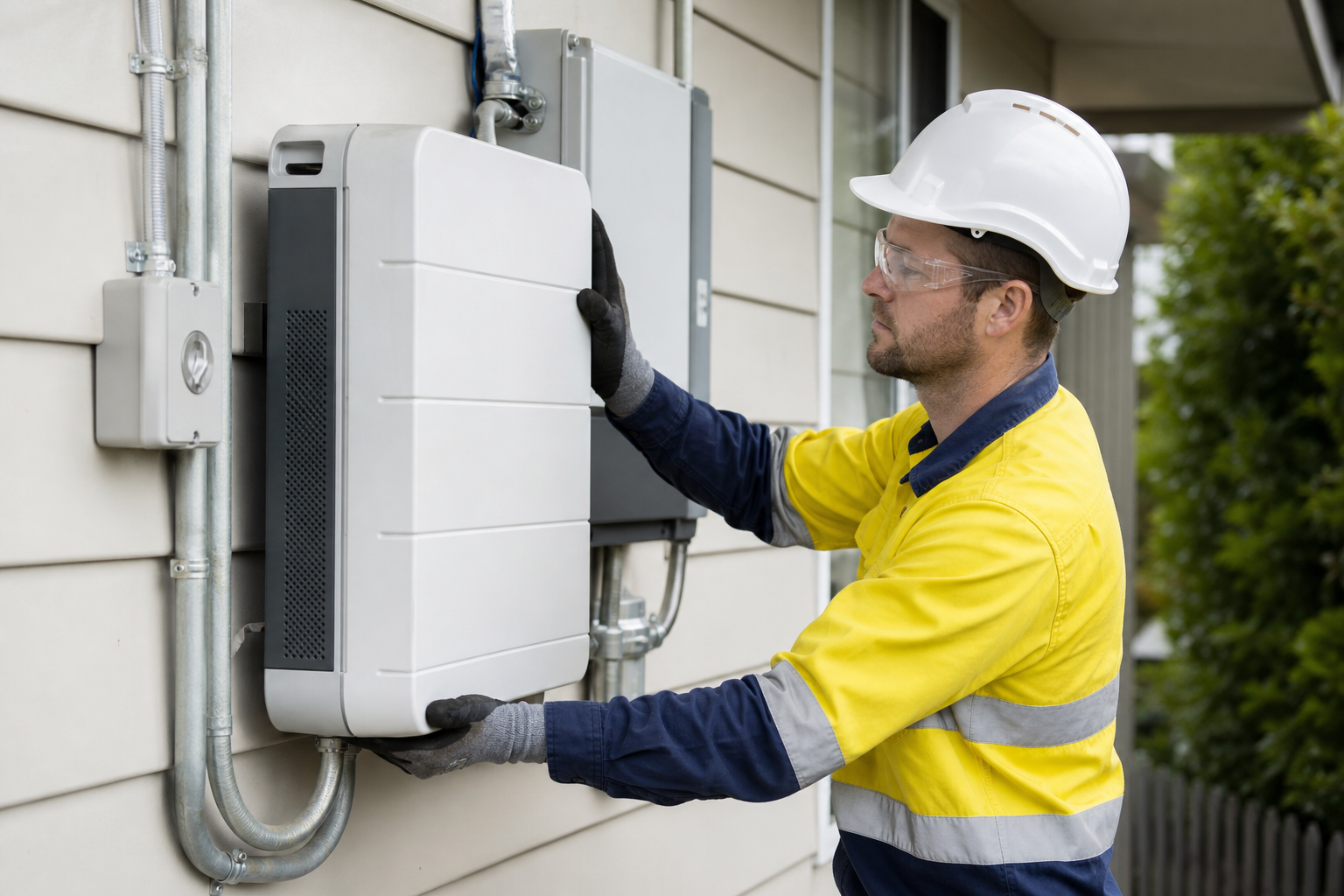
- Installation day: our licensed electricians mount the Powerwall 3, connect it to your switchboard, commission the backup gateway if included, and complete the electrical safety certificate
- Handover and app setup: we walk you through the Tesla app, set your backup reserve and time-based control preferences, and confirm your Solar Accreditation Australia compliance paperwork
Most single-unit Powerwall 3 retrofits are completed in one day. Installs that include new solar panels, a switchboard upgrade or dual-unit backup configurations typically take one to two days.
Tesla Powerwall 3 vs Other Batteries: Where It Fits in Sydney
Interactive Solar installs several battery brands, and Powerwall 3 is not automatically the best choice for every home. Compared with a Sungrow SBR or FoxESS setup, Powerwall 3’s main advantages are its integrated inverter (fewer components to fail, cleaner install) and the Tesla app’s mobile experience. Its main trade-off is a fixed 13.5kWh module size, so a household needing an odd capacity like 20kWh may get better value from a modular competitor. We cover this comparison in more depth in our guide to solar battery installation in Sydney.
Choosing an Installer for Tesla Powerwall 3 Installation in Sydney
Not every solar company holds Tesla’s certified installer status, and battery work carries real electrical risk if it is done poorly. Before booking a tesla powerwall 3 installation sydney quote, check that the installer can show you:
- Current Solar Accreditation Australia (formerly Clean Energy Council) accreditation for the electrician doing the work, not just the business
- A Tesla Certified Installer badge, which Tesla only issues after installers complete factory training and pass an audit of completed jobs
- A written quote that separates the battery, inverter, switchboard work and any backup gateway hardware, so you can see exactly what you are paying for
- A clear answer on network approval timelines with Ausgrid or Endeavour Energy, since this affects when your system can be switched on
- Reviews from real local customers, not just a star rating with no detail
Interactive Solar is a CEC-accredited, Tesla-authorised installer with more than 1,300 completed solar and battery systems and 15 in-house staff, meaning the electrician who designs your system is also on the roof on install day. We do not subcontract installation crews, which is one of the more common ways battery jobs go wrong across the industry. This is the standard we apply to every tesla powerwall 3 installation sydney customers book with us, whether it is a single retrofit unit or a whole-home backup system with new solar.
Sizing a Tesla Powerwall 3 System for Your Sydney Household
Correct sizing matters more for a battery than for solar panels, because an undersized battery leaves you buying expensive evening power anyway, while an oversized one adds cost without a matching increase in savings. As a rough guide for Sydney households:
| Household profile | Typical daily usage | Recommended configuration |
|---|---|---|
| Small household, daytime-light usage | 10-14kWh | 1 x Powerwall 3 (13.5kWh), 6.6kW solar |
| Family home, evening-heavy usage | 15-22kWh | 1 x Powerwall 3, 8.8-10kW solar |
| Large household, pool, EV or electric hot water | 25kWh+ | 2 x Powerwall 3 (27kWh), 10-13.2kW solar |
These are starting points only. Interactive Solar sizes every Tesla Powerwall 3 installation against your actual NMI interval data from your electricity retailer wherever possible, rather than a generic household average, so the quote reflects how your home actually uses power.
Frequently Asked Questions
What does Tesla Powerwall 3 installation Sydney cost?
A single Powerwall 3 retrofitted to existing solar typically costs $13,500 to $16,500 installed, before rebates are applied. Adding new solar panels or a second unit increases this range. Exact pricing depends on your switchboard, meter position and backup requirements.
How long does a Tesla Powerwall 3 installation take?
Most single-unit retrofits are completed in one day. Installations that include new solar panels, a switchboard upgrade, or whole-home backup wiring usually take one to two days.
Do I need existing solar panels to install a Tesla Powerwall 3?
No. Powerwall 3 has a built-in hybrid inverter and can be installed as a standalone battery charged from the grid, though most Sydney customers pair it with solar to maximise the federal and state rebates and reduce grid reliance.
What rebates apply to Tesla Powerwall 3 in Sydney in 2026?
The federal Cheaper Home Batteries Program provides a tiered discount on usable capacity, and NSW households can also access the PDRS VPP incentive and Home Energy Saver zero-interest finance. Interactive Solar applies the federal rebate at point of sale so it is reflected in your quoted price.
Can Tesla Powerwall 3 provide backup power during a blackout?
Yes, when installed with a compatible backup gateway and switchboard configuration. You can choose to back up your whole home or just essential circuits like the fridge, lighting and internet, depending on your budget and switchboard setup.
Which suburbs does Interactive Solar service for Tesla Powerwall 3 installation?
Interactive Solar installs Powerwall 3 across Sydney, including Western Sydney, Parramatta, Blacktown, Liverpool and surrounding areas, with in-house licensed electricians rather than subcontracted crews.
Is Tesla Powerwall 3 better than Powerwall 2?
For new installations, yes in most cases. Powerwall 3’s built-in inverter removes a component, supports more solar input, and generally offers better round-trip efficiency. Powerwall 2 is still supported for households expanding an existing Powerwall 2 system, since Powerwall 3 units cannot be mixed with Powerwall 2 on the same backup circuit.
Interactive Solar has installed more than 1,300 solar and battery systems across Sydney, with our own in-house install teams rather than subcontractors. Read verified customer feedback on our reviews page, browse recent installs in our gallery, or start with a free site assessment to get an exact Tesla Powerwall 3 installation quote for your Sydney home.
Make Interactive Solar a preferred source in Google
One click tells Google to surface our articles more often in Top Stories, AI Overviews and AI Mode.