Tesla Powerwall 2 Installation Sydney: 2026 Guide
Last updated:
Tesla Powerwall 2 installation Sydney requests can no longer be filled with a new unit. Tesla issued a voluntary ACCC recall of the Powerwall 2 in September 2025 over an overheating risk, and the unit’s Clean Energy Council product listing lapsed on 24 August 2025, so it can no longer be sold as a new install or claim a federal battery rebate. Homeowners planning a battery installation in 2026 are quoted on the Powerwall 3 instead, which shares the same 13.5kWh usable capacity but adds a built-in hybrid inverter and roughly double the continuous power output. This guide covers what changed, what a Sydney installation costs after rebates today, and how to choose an accredited installer.
Tesla Powerwall 2 Installation Sydney: What Changed in 2026
The Powerwall 2 was the dominant home battery in the Sydney market from 2017 through 2024, and thousands are still running in local homes. Tesla stopped taking new orders in late 2024 as the unit’s original NMC-based cell design fell behind an updated Australian battery standard, and its ACCC recall notice published 16 September 2025 confirmed a fault where affected cells “may fail and overheat” in a subset of units. According to the Clean Energy Council’s approved battery list, the Powerwall 2 listing lapsed on 24 August 2025 and has not been reinstated.
Practically, this means two things for anyone searching for a Powerwall 2 installation in Sydney today. First, no new Powerwall 2 units can be sold or installed with a federal battery rebate attached, because the rebate only applies to CEC-listed products. Second, if you already have a Powerwall 2 running in your home, you do not need to remove it: Tesla is managing the recall directly with affected serial numbers, and units outside the recall scope continue operating under their original 10-year warranty.
Interactive Solar tracks every regulatory change that affects a client’s rebate eligibility and equipment options, and quotes the current-generation Powerwall 3 for all new Sydney battery installations.
Powerwall 2 vs Powerwall 3: What Actually Changed
Both units store 13.5kWh of usable energy, but the internal chemistry and power electronics are different generations of Tesla’s design.
| Specification | Powerwall 2 (discontinued) | Powerwall 3 (current) |
|---|---|---|
| Battery chemistry | Lithium-ion NMC | Lithium Iron Phosphate (LFP) |
| Usable energy capacity | 13.5kWh | 13.5kWh |
| Continuous power output | 5kW | 11.04kW (up to 11.5kW peak) |
| Round-trip efficiency | 90% | approx. 97% |
| Built-in solar inverter | No, AC-coupled only | Yes, up to 20kW DC input |
| CEC product listing (2026) | Lapsed, 24 Aug 2025 | Current |
| Federal battery rebate eligible | No | Yes |
| Warranty | 10 years | 10 years, 70% capacity retention guarantee |
LFP cells are more thermally stable and tolerate deeper daily cycling with less long-term degradation than the older NMC chemistry, which is one reason the standard tightened. The jump from 5kW to roughly 11kW continuous output also matters in a blackout: a Powerwall 3 can run ducted air conditioning, an induction cooktop and an EV charger at the same time, where a Powerwall 2 would trip on load.
Battery Installation Process in Sydney: Site Assessment to Commissioning
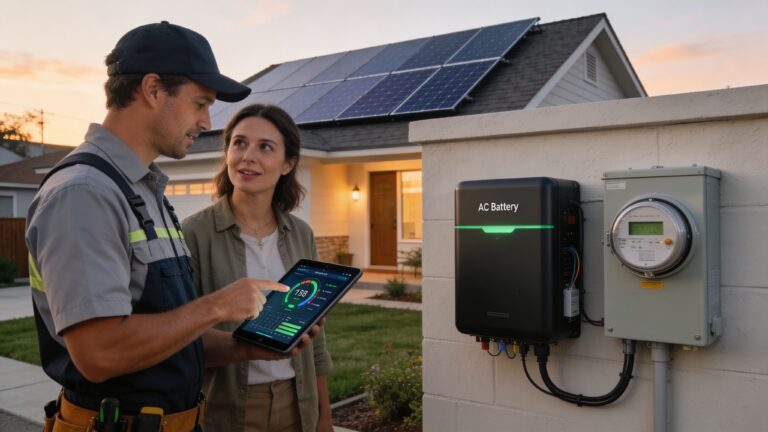
A Tesla battery installation follows the same structured process whether it is a retrofit to existing solar or a combined solar-and-battery system.
Site Assessment and System Design
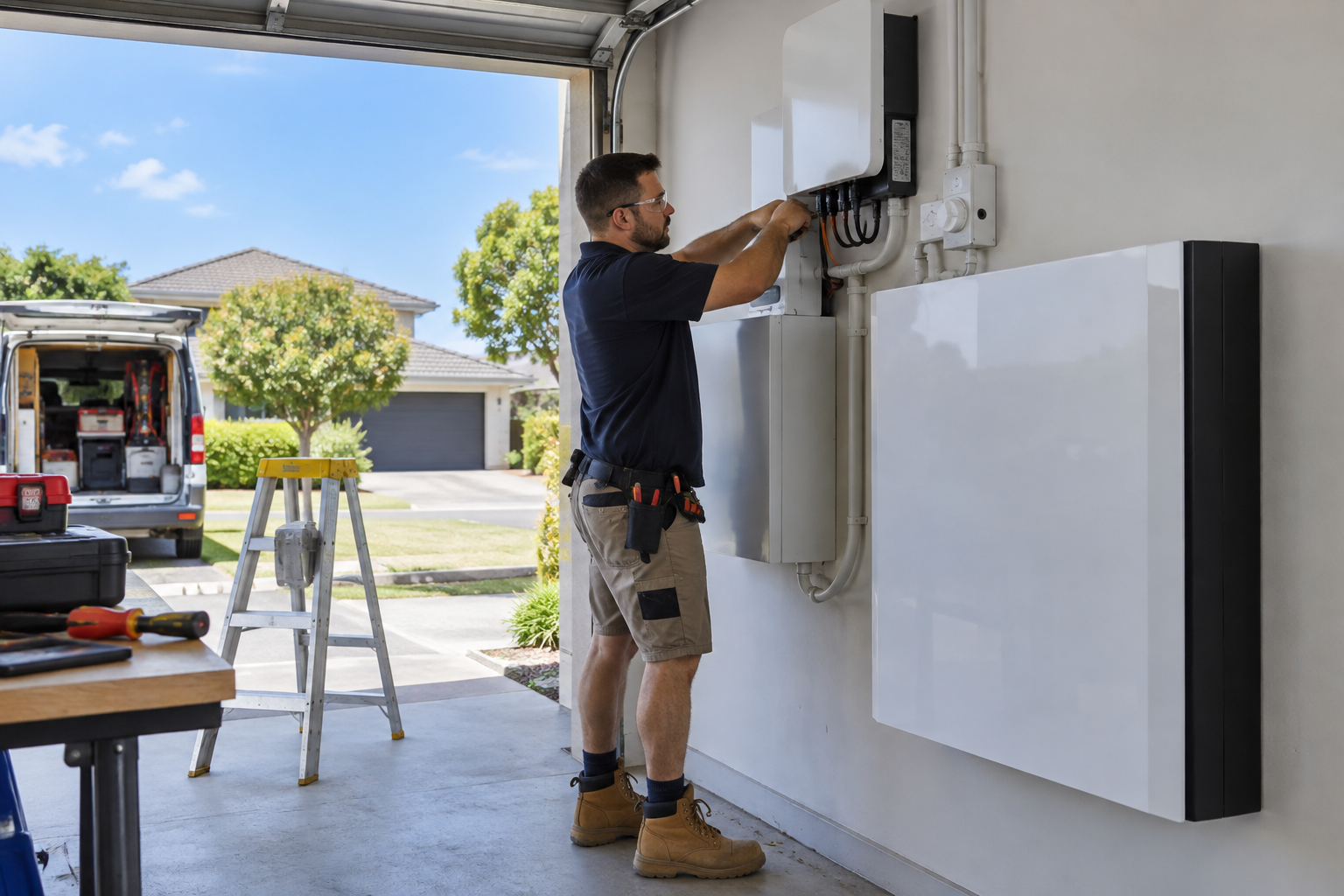
An accredited installer visits the property to check the switchboard, meter box compatibility, existing inverter (if solar is already installed) and the best physical location for the battery: commonly a garage wall, an external wall under a pergola, or an internal meter cupboard in Sydney homes. The installer also confirms which network distributor applies, since export rules differ.
Ausgrid, which covers the inner city, northern beaches and eastern suburbs, permits single-phase sites up to 30kVA of inverter capacity provided the system is export-limited to 10kW. Endeavour Energy, which covers Western Sydney including Parramatta, Blacktown and Liverpool, is moving new and upgraded systems onto its Flexible Exports program, which allows up to 10kW export per phase most of the time and will become the default connection option from November 2026.
Paperwork, Rebate Calculation and Approvals
Before any electrical work starts, the installer lodges a connection application with the relevant network distributor. For the federal battery rebate, the installer completes the STC paperwork and deducts the rebate value from the invoice up front, so the homeowner never claims it separately. Only businesses with an accredited installer on the job can lodge these claims.
Installation Day
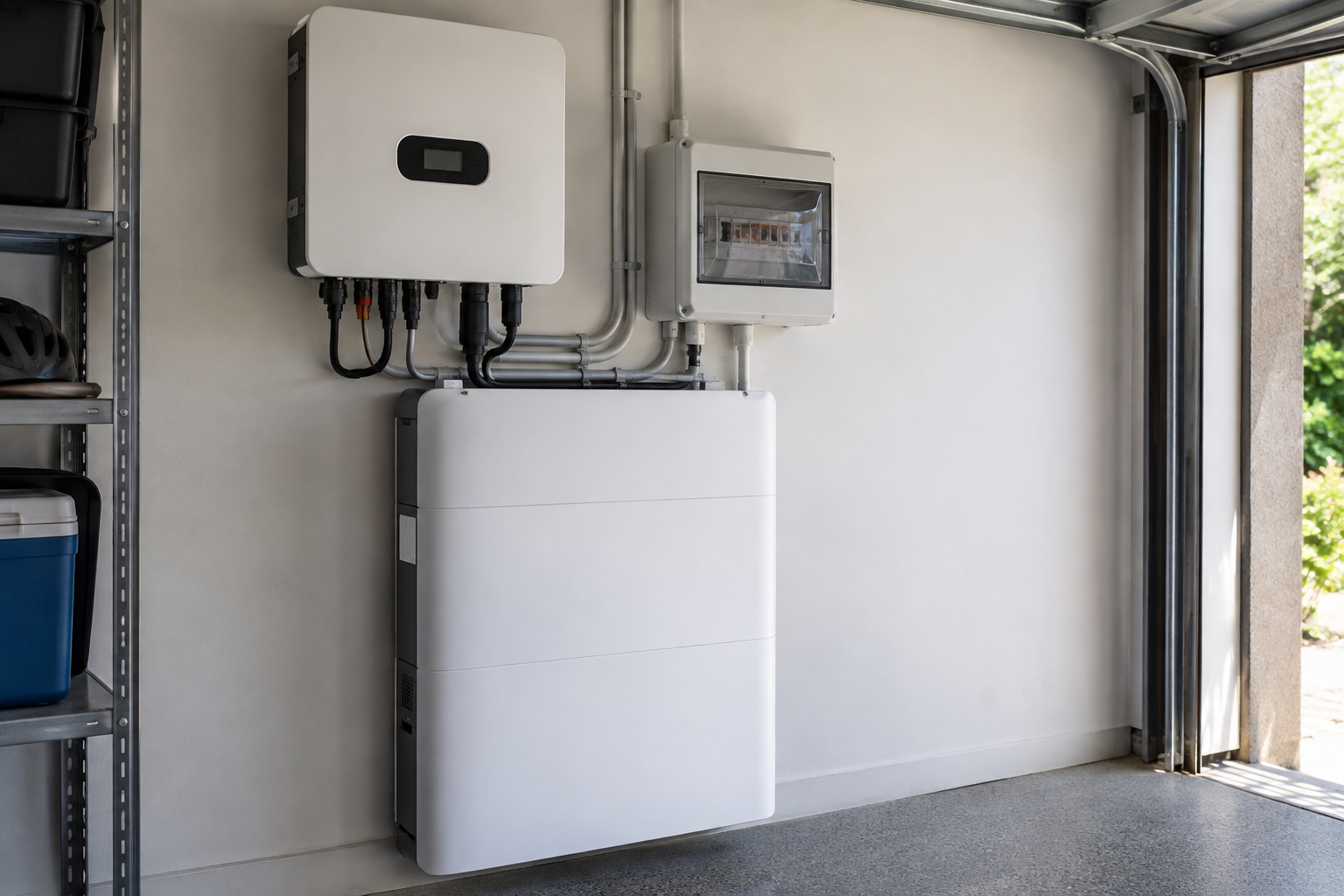
A straightforward retrofit onto an existing solar system typically takes four to eight hours. The electrician mounts the battery, connects it to the switchboard, installs the Tesla Backup Gateway (required on every Tesla battery installation), and configures the operating mode: self-powered, time-based control, or backup-only reserve.
Network Inspection and Grid Connection
The network distributor completes a metering inspection and, if needed, upgrades the meter to a bi-directional smart meter. This is coordinated by the installer and usually takes two to four weeks, during which the battery runs in self-consumption mode.
Sydney Battery Installation Cost in 2026, After Rebates
Current Powerwall 3 pricing in the Sydney market, reflecting the federal rebate step-down that took effect 1 May 2026, looks like this:
| Cost Component | Typical Range (Sydney, 2026) |
|---|---|
| Powerwall 3 unit, supplied | $13,500 to $16,500 |
| Installation and Backup Gateway | $2,000 to $4,500 |
| Switchboard upgrade, if required | $500 to $2,500 |
| Full installed price, before rebates | $16,000 to $21,500 |
| Federal battery rebate (6.8 STCs/kWh, May-Dec 2026 tier) | approx. $3,400 to $3,700 |
| NSW VPP incentive, if enrolled | up to $1,500 |
| Net out-of-pocket cost | $11,000 to $16,500 |
The federal rebate is calculated on 6.8 small-scale technology certificates (STCs) per usable kWh for installations from 1 May to 31 December 2026, at the prevailing STC price of roughly $37 to $40. For a 13.5kWh Powerwall 3, that is around 91 STCs, or approximately $3,400 to $3,700 deducted directly from the invoice. This is lower than the 8.4 STCs/kWh rate that applied from 1 January to 30 April 2026, so the rebate is now smaller than it was in early 2026 for the same battery.
See our Solar Batteries page for current package pricing, or check the Solar Specials page for active promotions.
Rebates and Incentives Available for a 2026 Battery Installation
Three incentives can apply to the same Sydney installation, and a properly itemised quote should show all three.
Federal Cheaper Home Batteries Program
Administered through the STC scheme, this rebate applies to CEC-listed batteries between 5kWh and 100kWh, installed by an accredited installer, paired with no more than 100kW of solar. Only the Powerwall 3 qualifies for new Tesla installations in 2026; the Powerwall 2 does not. Full detail is on the Clean Energy Regulator site.
NSW Virtual Power Plant Incentive
From 1 July 2026 the NSW VPP incentive (PDRS BESS2) covers batteries up to 50kWh and stacks with the federal rebate. Enrolling with an approved VPP provider can add up to $1,500 up front plus ongoing export payments during peak demand events.
NSW Home Energy Saver
Households on incomes up to $210,000 can access an interest-free loan of up to $15,000 through energy.nsw.gov.au-listed providers such as Brighte and Plenti, covering batteries, solar and other home electrification upgrades. A separate discount of up to $4,000 is available to owners and renters on incomes up to $80,000 or holding a concession card, via Creditex; apply for the discount before the loan if using both.
Retrofitting a Battery vs a New Combined Solar and Battery System
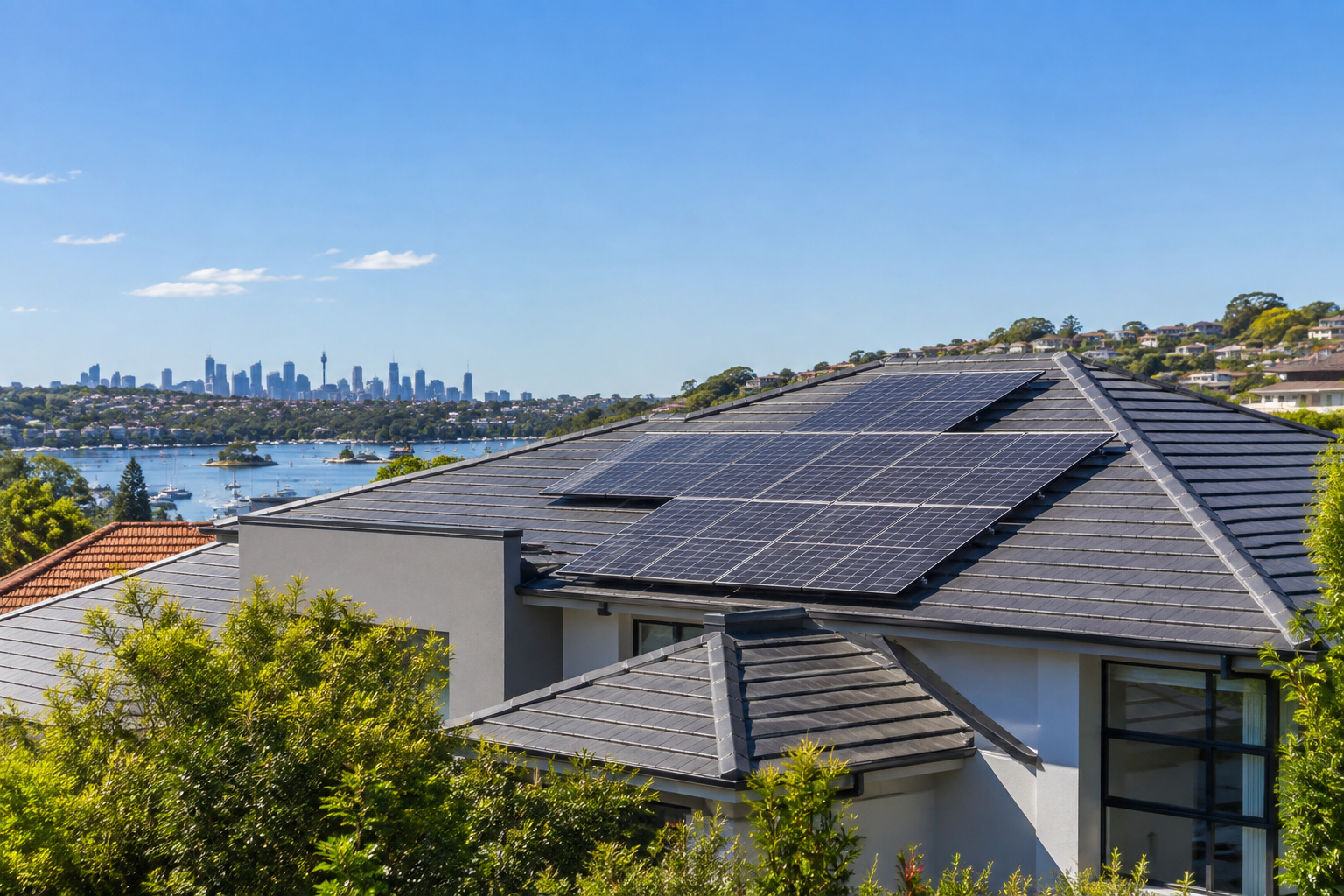
Anyone weighing up a battery upgrade in Sydney faces one core decision: retrofit onto existing solar, or install solar and battery together.
Retrofitting to an Existing Inverter
The Powerwall 3 supports both AC-coupled and DC-coupled retrofits, which makes it compatible with most inverters installed from 2020 onwards. A compatible hybrid inverter allows DC-coupling for slightly higher efficiency; a standard string inverter uses AC-coupling instead. The installer confirms the right method during the site visit, at no charge.
New Solar and Battery Package
For a first-time solar installation, pairing panels with a Powerwall 3 in one project is usually the more cost-effective route, since it uses the Powerwall 3’s own 20kW solar input capacity and avoids a second inverter altogether. It also simplifies the network connection application into a single approval. See our Residential Solar page for combined package options, or Commercial Solar for business-scale systems.
Tesla Powerwall 2 Installation Sydney: Choosing an Installer
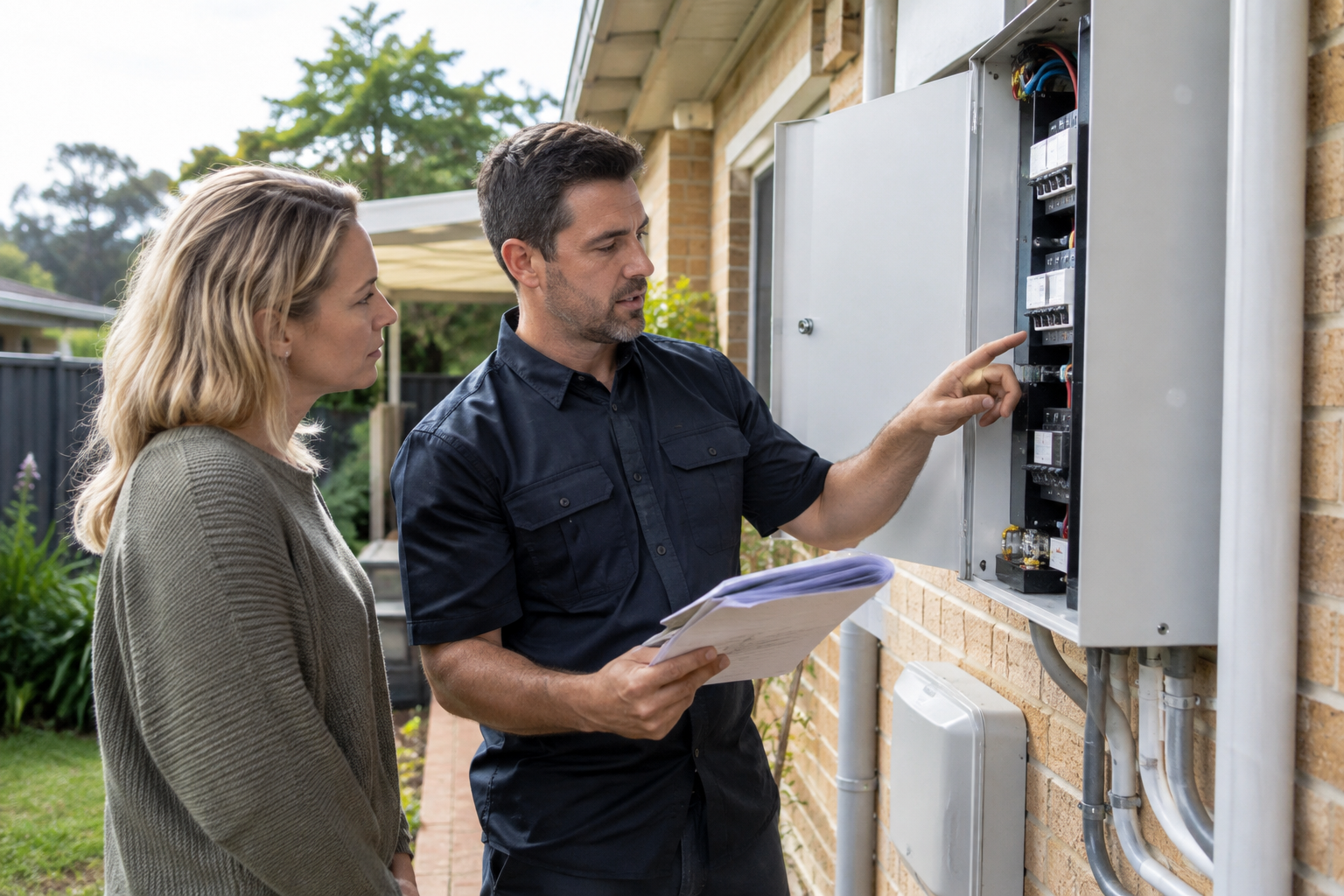
Not every solar company holds the licences and accreditation required for battery and switchboard work. Look for:
- Current accreditation: Since 29 May 2024, installer accreditation for solar and battery systems has been administered by Solar Accreditation Australia, not the Clean Energy Council directly. The CEC still maintains the approved product list and the Solar Retailer Code of Conduct, and a rebate claim requires an SAA-accredited installer working with CEC-listed equipment.
- Authorised Tesla installer status: Tesla maintains a network of authorised installers who receive direct product training and warranty backing. Interactive Solar is an authorised Tesla Powerwall installer across Sydney.
- Electrical contractor licence: battery installation involves live switchboard work, so confirm a valid NSW electrical contractor licence.
- Certificate of Electrical Safety: issued by the installing electrician on completion; ask for a copy.
- Commissioning and app setup included: the Tesla app and Backup Gateway need commissioning as part of the installation, not as a billable extra.
Interactive Solar’s installers hold current Solar Accreditation Australia credentials and provide ongoing aftercare through our Interactive Care program. Read verified customer feedback on our Reviews page, where Interactive Solar has 134 Google reviews.
Payback Period for a Sydney Battery Installation
A typical Sydney household with a 6.6kW solar system and a 13.5kWh Powerwall 3 can expect:
- Self-consumption lift: from roughly 30-40% on solar alone to 70-85% with a battery added
- Annual electricity bill savings: $1,500 to $2,500, depending on usage and tariff
- VPP earnings: $300 to $800 per year if enrolled in an active program
- Net payback period after rebates: approximately 5 to 7 years
Homes on time-of-use tariffs benefit most, charging the battery from cheap overnight solar and discharging during the 4pm to 9pm peak. IPART’s benchmark feed-in tariff for 2026-27 sits at 3.4 to 6.5 cents/kWh, well below the 30 to 40 cents/kWh typically charged for grid import, which is exactly the gap a battery is designed to close.
Contact Interactive Solar for a free, itemised quote modelling your specific payback scenario, or browse completed projects in our Gallery.
Watch: Understanding the Solar Retailer Code of Conduct
The Clean Energy Council’s Solar Retailer Code of Conduct sets consumer protection standards that reputable installers, including Interactive Solar, operate under for every quote and installation.
Frequently Asked Questions
Is Tesla Powerwall 2 installation Sydney still possible in 2026?
No. The Powerwall 2’s Clean Energy Council product listing lapsed on 24 August 2025 following a voluntary ACCC recall, so new units cannot be installed with a federal battery rebate attached. The current model for new Sydney installations is the Powerwall 3.
What happens to a Powerwall 2 already installed in my Sydney home?
It does not need to be removed. Tesla is managing the recall directly with affected serial numbers, and Powerwall 2 units outside the recall scope continue running under their original 10-year warranty. Contact Tesla or your original installer to check your unit’s status.
How much does a Powerwall 3 installation cost in Sydney after rebates in 2026?
After the federal battery rebate (roughly $3,400 to $3,700 at the current 6.8 STCs/kWh rate) and the NSW VPP incentive (up to $1,500 if enrolled), most Sydney households pay between $11,000 and $16,500 for a fully installed Powerwall 3. Households eligible for the NSW Home Energy Saver discount may pay less again.
How long does a battery installation take in Sydney, start to finish?
The physical installation typically takes four to eight hours. Grid connection and any meter upgrade, handled by the network distributor, add a further two to four weeks, during which the battery runs in self-consumption mode.
Can I add a Powerwall 3 to my existing solar panels?
Yes, in most cases. The Powerwall 3 supports both AC-coupled and DC-coupled retrofits and is compatible with most inverters installed since 2020. An installer confirms compatibility and the best coupling method during a free site assessment.
Do I need to join a VPP to get the NSW battery incentive?
The federal battery rebate does not require VPP enrolment. The NSW VPP incentive is a separate, additional payment that does require enrolling with an approved VPP provider, and the two can be claimed together.
Is Interactive Solar an accredited Tesla Powerwall installer in Sydney?
Yes. Interactive Solar holds current Solar Accreditation Australia credentials and authorised Tesla installer status, and services all Sydney suburbs including the inner city, Northern Beaches, Eastern Suburbs, Western Sydney, Parramatta, Blacktown and Liverpool. Contact us for a free quote, or view our FAQ page for more detail.
Make Interactive Solar a preferred source in Google
One click tells Google to surface our articles more often in Top Stories, AI Overviews and AI Mode.