Commercial Solar Installation Blacktown: 2026 Step-by-Step Guide
Last updated:
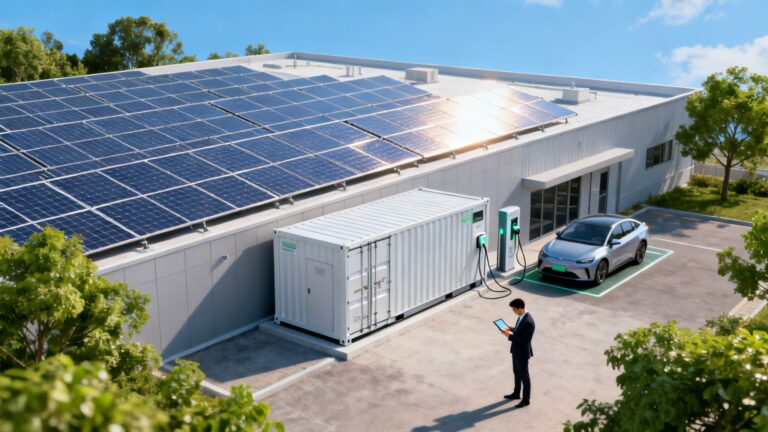
Commercial solar installation Blacktown businesses need in 2026 follows a clear process: load analysis, system design, network approval from Endeavour Energy, CEC-accredited installation, and grid connection. A typical 30-50kW system on a Blacktown commercial rooftop costs $25,000-$55,000 before rebates, qualifies for large STC parcels under the federal Cheaper Home Batteries Program rules, and delivers a payback period of 3.5-5 years for businesses with strong daytime electricity demand. This guide covers every stage of that process, with 2026 pricing, rebate calculations, and a worked example for a mid-size Blacktown site.
Commercial Solar Installation Blacktown: The 2026 Step-by-Step Process
The commercial solar installation Blacktown process in 2026 involves six sequential stages: site and load assessment, system design and engineering, Endeavour Energy network application, physical installation, inspection and grid connection, and ongoing monitoring. Skipping or rushing any stage creates problems downstream, particularly for sites over 30kW where a formal network impact assessment is mandatory before work begins.
Here is what each stage involves for a typical Blacktown commercial site:
Stage 1: Load Profile and Site Assessment
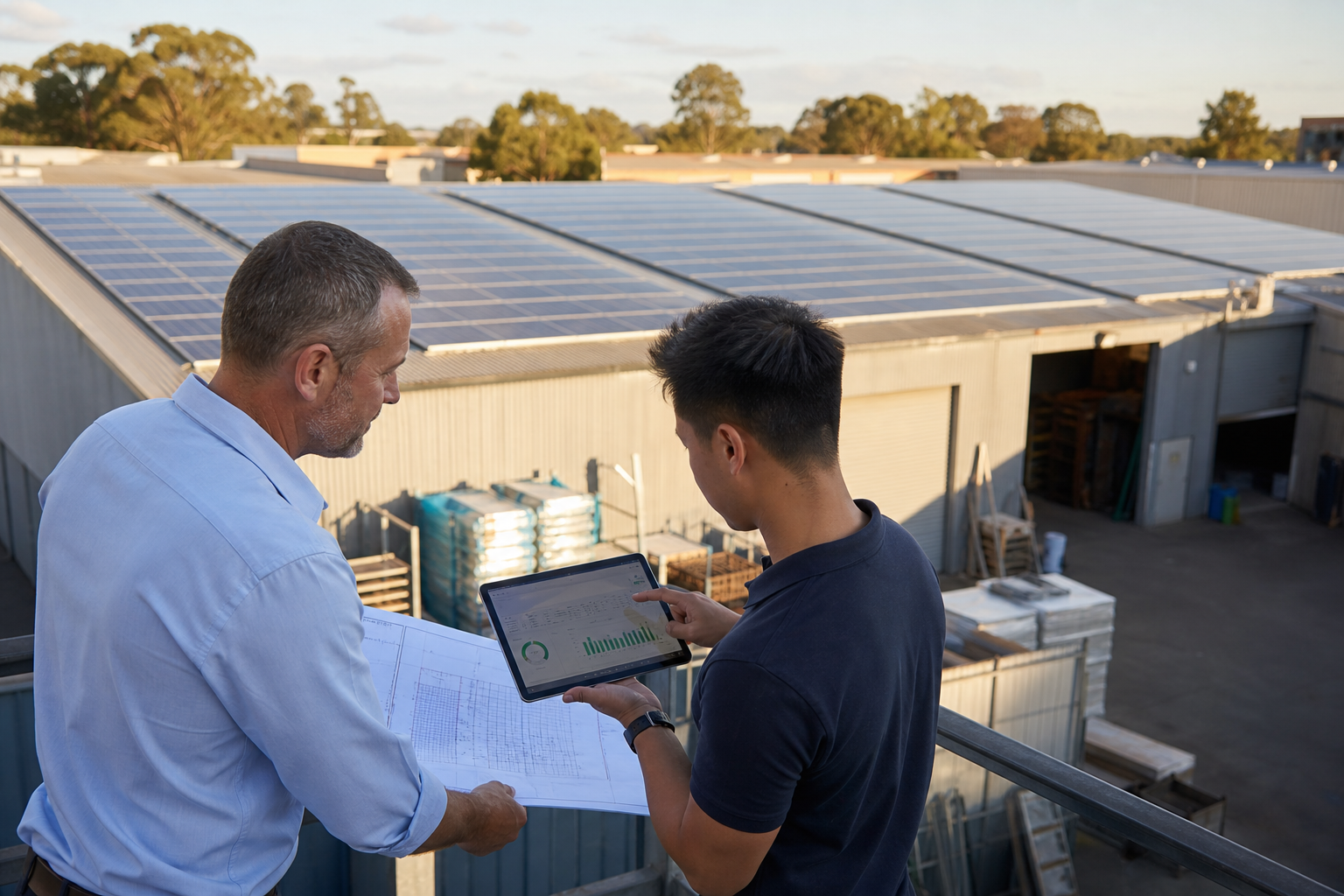
A load profile analysis examines your electricity bills and interval data (half-hourly consumption) to understand when your business uses the most power. For commercial solar to deliver maximum bill savings, generation must overlap with consumption. Blacktown businesses typically fall into two groups: daytime-heavy operations (warehouses, manufacturing, childcare, medical) where solar alignment is excellent, and mixed or evening-heavy operations (hospitality, some retail) where storage becomes more important.
The site assessment covers roof structure, orientation (north-facing is optimal), shading from neighbouring buildings or plant equipment, and available metering/switchboard capacity. Blacktown’s commercial precincts, including Kings Park, Prospect, and the Blacktown CBD, have a mix of tilt-roof warehouses and flat commercial rooftops, each requiring a different racking solution.
Stage 2: System Design and Engineering
A CEC-accredited designer produces a system layout, single-line electrical diagram, and structural sign-off. For commercial sites over 100kW, the system transitions from Small-scale Technology Certificates (STCs) to Large-scale Generation Certificates (LGCs), which changes the rebate structure significantly. Most Blacktown SME sites fall in the 10-100kW STC range, making system sizing decisions commercially important.
In 2026, common commercial system sizes for Blacktown businesses are:
| Business Type | Typical System Size | Daily Generation (est.) | Annual Saving (est.) |
|---|---|---|---|
| Small office (5-10 staff) | 10-20kW | 40-80kWh | $4,000-$9,000 |
| Retail showroom or childcare | 20-40kW | 80-160kWh | $9,000-$18,000 |
| Warehouse or light industrial | 40-100kW | 160-400kWh | $18,000-$45,000 |
| Large industrial or multi-tenant | 100-250kW | 400-1,000kWh | $45,000-$110,000 |
Panel selection in 2026 centres on TOPCon and ABC (all-back-contact) cell technology. Leading Tier 1 panels used on Blacktown commercial rooftops include Aiko (23.6% efficiency, voted #1 in the 2026 SolarQuotes Installer’s Choice Awards), Jinko Solar Tiger Neo, REC Alpha Pure-R, and Trina Vertex S+. For Blacktown’s typical solar irradiance (4.4 peak sun hours per day average), a 50kW system generates approximately 220kWh per day or 80,300kWh per year.
Stage 3: Endeavour Energy Network Application
Blacktown sits within the Endeavour Energy distribution network. Before installation can proceed, your installer must lodge a connection application with Endeavour Energy. The key export limits for 2026 are:
- Single-phase connection: Up to 10kW inverter export capacity
- Three-phase connection: Up to 30kW inverter export capacity
- Above 30kW: Formal network impact assessment required (typically 10-15 business days)
For commercial sites above 30kW, Endeavour Energy may require a dynamic export limiting device or, in some cases, a controlled load tariff structure. An experienced Blacktown commercial solar installer will prepare the application correctly and manage the back-and-forth with the network, which for larger sites can take 4-6 weeks from lodgement to approval.
Stage 4: Physical Installation
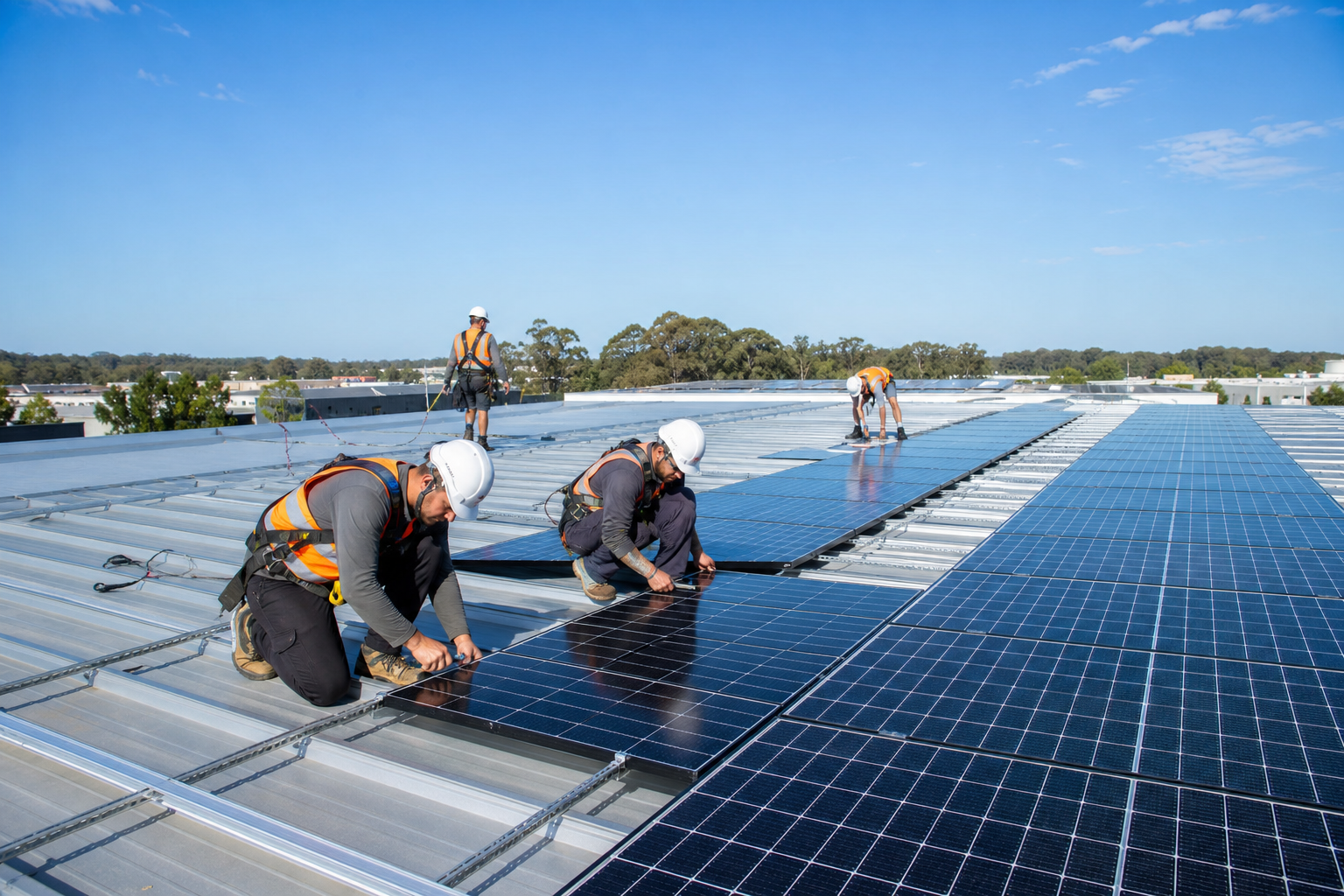
Commercial solar installation Blacktown projects typically take 1-3 days for systems under 50kW, and 3-7 days for larger 50-200kW systems. The installation crew must follow AS/NZS 5033 (solar panel installation standard) and AS/NZS 3000 (wiring rules). All commercial installers must hold a CEC accreditation and the relevant electrical contractor licence for NSW.
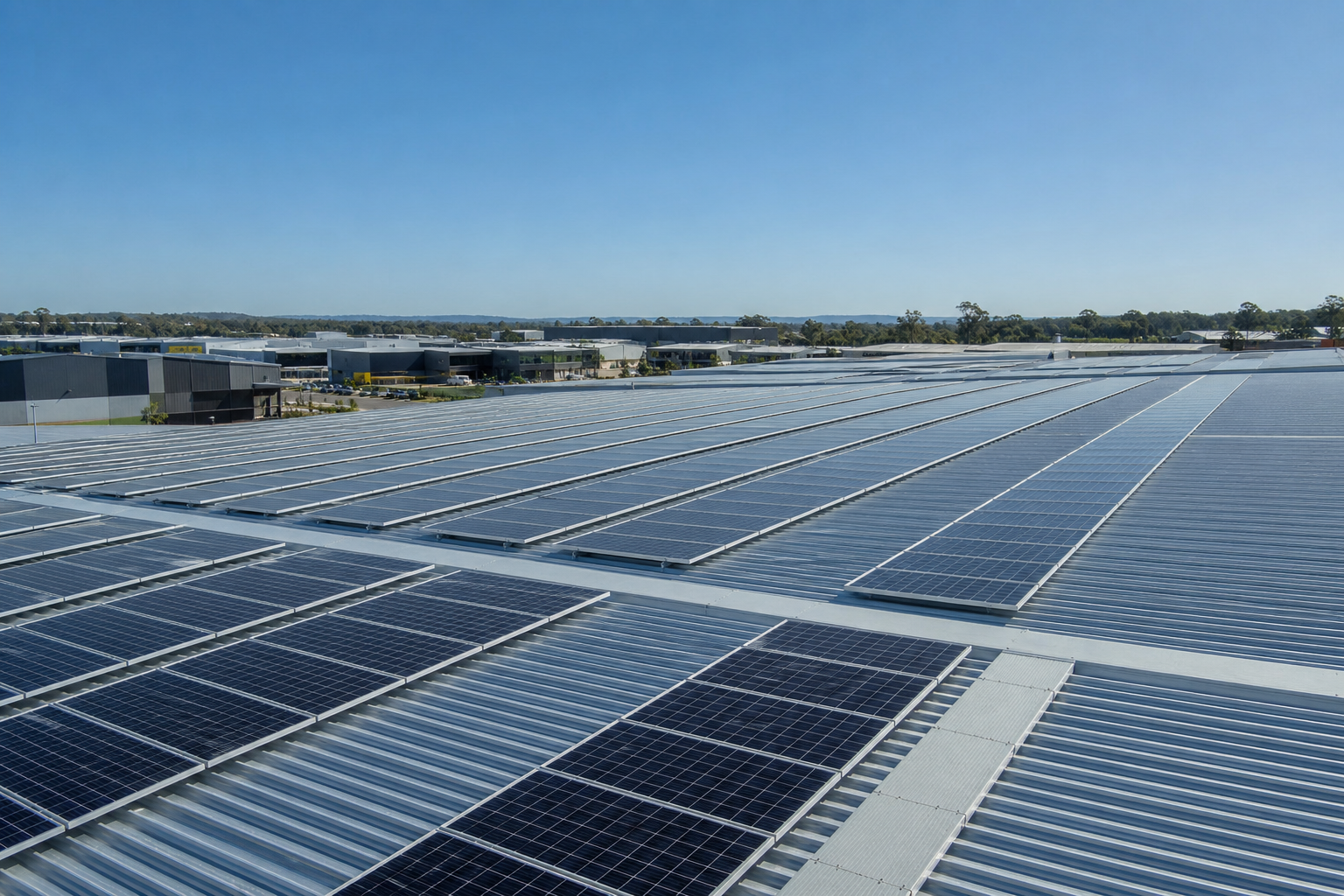
Racking selection depends on roof type. Flat commercial rooftops (common in Blacktown’s industrial precincts) use ballasted or penetration-free tilt frames angled at 10-15 degrees for optimal generation. Pitched metal rooftops use flush-mount rails with manufacturer-approved brackets. Inverter selection for 2026 commercial projects typically favours Fronius, SMA, Sungrow, or Huawei string inverters, with micro-inverters or optimisers used where shading is a concern.
Stage 5: Inspection, Metering, and Grid Connection
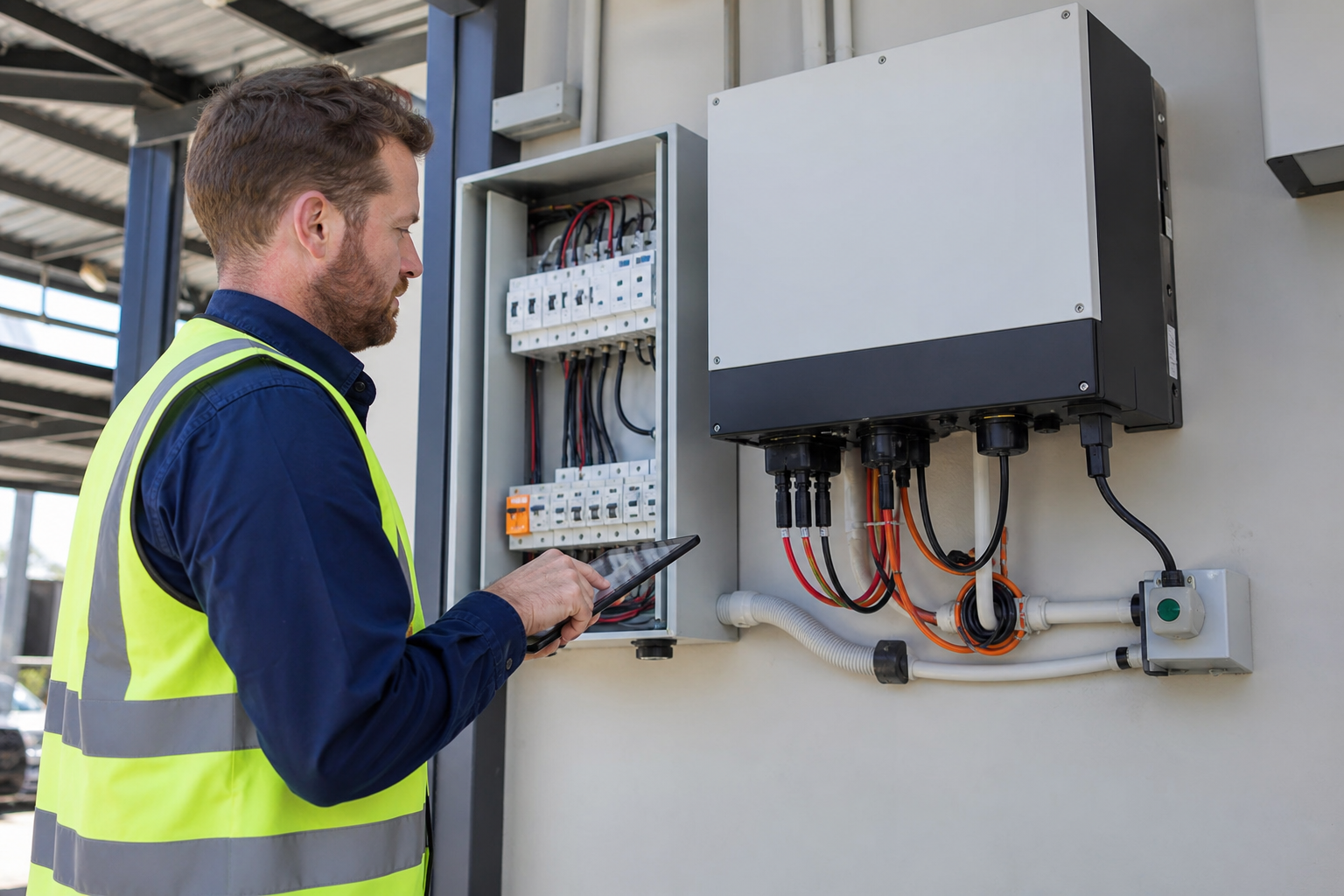
After installation, the system must pass inspection by a licensed electrical inspector and a metering coordinator must arrange a new bi-directional meter (smart meter) installation. Endeavour Energy typically completes meter exchanges within 5-10 business days of a passed inspection. The system is commissioned once the new meter is installed and the retailer confirms the export tariff arrangement.
Commercial Solar Installation Blacktown: 2026 STC Rebate Calculations
Commercial solar installation Blacktown businesses claim via the federal Small-scale Renewable Energy Scheme (SRES), which issues STCs for systems under 100kW. In 2026, the STC deeming period is 5 years (down from 6 years in 2025), and the STC spot price trades around $36-$40 per certificate.
Blacktown falls in Zone 3 on the Clean Energy Regulator’s solar zone map, which means the zone rating factor is 1.382. The STC formula is:
STCs = (System Size kW x Zone Rating x Deeming Period) / 1.536
Here are worked STC calculations for common Blacktown commercial system sizes in 2026:
| System Size | Zone Factor | Deeming (years) | STCs Generated | STC Value (at $38) | Net Cost After Rebate |
|---|---|---|---|---|---|
| 20kW | 1.382 | 5 | 90 | ~$3,420 | ~$16,000-$22,000 |
| 30kW | 1.382 | 5 | 135 | ~$5,130 | ~$22,000-$32,000 |
| 50kW | 1.382 | 5 | 225 | ~$8,550 | ~$33,000-$46,000 |
| 99kW | 1.382 | 5 | 446 | ~$16,950 | ~$60,000-$90,000 |
STCs are typically assigned to the installer at point of sale, so the rebate amount is deducted from your upfront cost rather than claimed retrospectively. For Blacktown businesses considering a system just below 100kW (often called a “99kW system”), the STC value is substantially higher than for a 100kW+ system that instead earns LGCs over time. Your installer should model both scenarios if your load is in that range.
For authoritative rebate information, see the Clean Energy Regulator’s STC calculator and guidance.
As of September 2026, the STC spot price is trading close to the $40 clearing house cap (around $39.85-$39.90), slightly higher than earlier in the year, which marginally improves the rebate value in the table above. Feed-in tariffs for exported energy have also moved: the Independent Pricing and Regulatory Tribunal (IPART) set an all-day benchmark range of 3.4-6.5 cents per kWh for 2026-27, underscoring why self-consumption, not export, drives commercial solar ROI in Blacktown.
Commercial Solar Installation Blacktown: ROI and Payback by System Size
Return on investment for commercial solar installation Blacktown depends primarily on your daytime electricity consumption, your grid electricity rate, and the feed-in tariff your retailer offers. In 2026, Blacktown commercial electricity rates typically range from 28-38 cents per kWh for SMEs on market offers, while feed-in tariffs are lower (5-10 cents per kWh), making self-consumption the primary financial driver.
Commercial Solar Installation Blacktown: Worked ROI Example (Blacktown Light Industrial, 50kW)
Scenario: A fabrication workshop in Kings Park Industrial Estate, Blacktown. Three-phase connection, daytime operations 7am-5pm Monday to Friday, average electricity rate 32c/kWh, 80% self-consumption rate, 20% exported at 7c/kWh feed-in tariff.
- System size: 50kW
- Annual generation: 80,300kWh (at 4.4 peak sun hours, 86% performance ratio)
- Self-consumed (80%): 64,240kWh x $0.32 = $20,557/year saved
- Exported (20%): 16,060kWh x $0.07 = $1,124/year earned
- Total annual benefit: $21,681
- System cost (after STCs): ~$42,000
- Simple payback: 1.94 years
- 10-year ROI: ~416%
This scenario reflects a best-case alignment between generation and consumption. Sites with lower daytime demand (say, 50% self-consumption) see payback stretch to 3.5-5 years, which is still well within the system’s 25-year warranty period. Adding battery storage can push self-consumption above 90% on suitable sites.
Commercial Solar Installation Blacktown: Tax and Financing Options
Blacktown businesses have multiple financing pathways for commercial solar in 2026. The instant asset write-off threshold for small businesses (turnover under $10M) allows the full system cost to be written off in the year of installation, reducing the effective cost by 25-30% depending on your company tax rate. Larger businesses (turnover $10M-$50M) can pool the asset for accelerated depreciation.
Commercial solar-specific financing products available in 2026 include:
- Solar-secured business loans: 5-7 year terms at 6.5-9% p.a., often with no upfront payment required. Monthly repayments can be structured to sit below the projected electricity saving, making cash flow neutral from day one.
- Commercial solar PPAs (Power Purchase Agreements): A third party owns and installs the system; the business pays a fixed rate per kWh (typically 18-24c/kWh, below grid rates). No upfront cost, but the long-term saving is lower than ownership.
- Green finance from major banks: NAB, ANZ, and Westpac all offer business green loans with preferential rates (some as low as 5.5% for eligible commercial renewable projects in 2026).
- CEFC finance: The Clean Energy Finance Corporation provides debt finance for eligible commercial and industrial projects, particularly those over 100kW.
Interactive Solar’s team can provide a financing comparison as part of your quote, helping you identify which structure delivers the best after-tax outcome for your Blacktown business. See our commercial solar services page for more about how we structure proposals.
Commercial Solar Installation Blacktown: Equipment and Brand Guide
Choosing the right equipment for a Blacktown commercial installation determines long-term performance, warranty protection, and eligibility for STC rebates. All equipment must appear on the Clean Energy Council’s approved products list to qualify for STCs.
Inverters for Blacktown Commercial Sites
String inverters remain the standard choice for commercial rooftops with minimal shading. Leading brands for 2026 commercial projects:
- Fronius Symo Advanced: Austrian-engineered, excellent monitoring, 5+10 year warranty. Benchmark for quality.
- SMA Sunny Tripower Core1: German reliability, widely used in large commercial arrays, strong local service network.
- Sungrow SG series: Cost-competitive, now with 10-year extended warranty option, widely used in Australian commercial projects.
- Huawei SUN2000 series: Strong performance data, integrated arc-fault protection, competitive pricing.
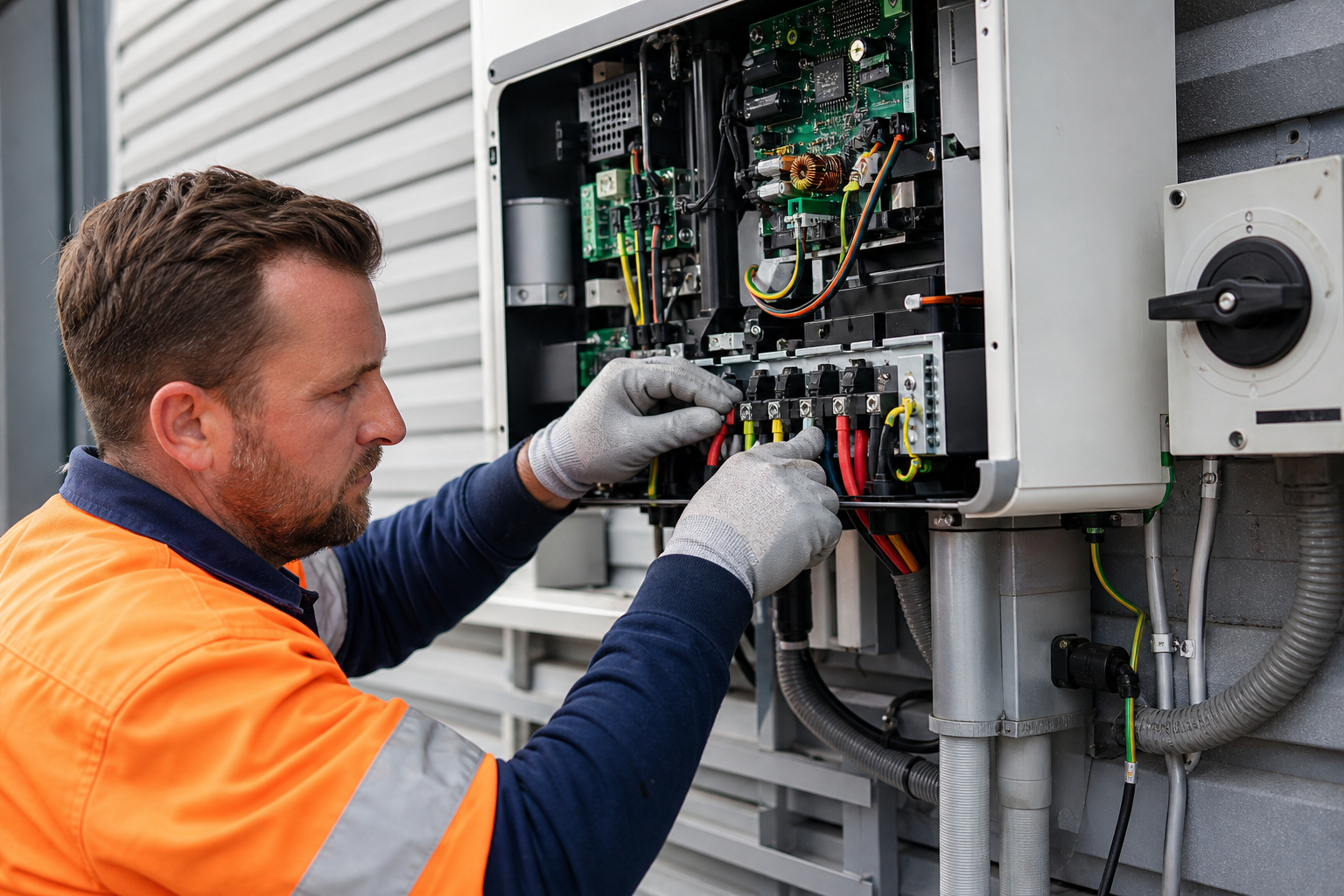
For shaded commercial rooftops (common near multi-storey buildings in Blacktown CBD), module-level optimisers (SolarEdge) or micro-inverters (Enphase) recover significant generation losses and provide per-panel monitoring.
Adding Battery Storage to Blacktown Commercial Projects
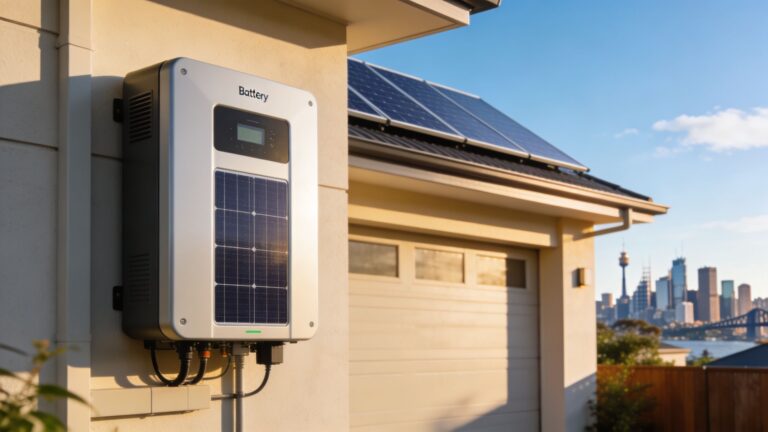
Commercial battery storage options have expanded significantly in 2026. For Blacktown businesses, the primary use cases are peak demand charge reduction (where your retailer charges a premium for the highest 30-minute demand in a billing period) and evening load shifting. As of 1 September 2026, NSW businesses can stack a new commercial battery incentive on top of the federal STC scheme via two Peak Demand Reduction Scheme activities: BESS4 for small and medium businesses installing 20-200kWh batteries, and BESS5 for larger commercial and industrial sites up to 30MWh. Eligible Blacktown SMEs can see installed battery costs reduced by roughly 20-50%, subject to site eligibility and the approved battery products list. Full eligibility criteria are published by NSW Climate and Energy Action.
Learn more about battery storage options and how they complement commercial solar at our dedicated solar batteries page.
Choosing a CEC-Accredited Commercial Solar Installer in Blacktown
Not every installer that quotes commercial solar in Blacktown holds the relevant credentials. Here is what to verify before signing any contract:
- CEC Design Accreditation: The designer of any STC-eligible system must be CEC-accredited (check at cec.org.au).
- CEC Installer Accreditation: The on-roof installer must also hold CEC accreditation.
- NSW Electrical Contractor Licence: Required for any licensed electrical work on the system and switchboard.
- Structural sign-off: For flat commercial rooftops, a structural engineer’s report confirming the roof can handle the additional load is standard practice and required by most certifiers.
- Public liability and professional indemnity insurance: Confirm the installer carries both, with at least $10M public liability.
- References from comparable commercial projects: Ask for 2-3 Blacktown or Western Sydney commercial references you can contact directly.
Interactive Solar is CEC-accredited and has completed commercial solar projects across Blacktown, Penrith, Parramatta, and greater Western Sydney. View completed projects in our project gallery or read verified reviews from commercial clients on our reviews page.
Commercial Solar Installation Blacktown: Timeline from Quote to Switch-On
One of the most common questions from Blacktown business owners is how long the whole process takes. Here is a realistic 2026 timeline for a 30-50kW commercial system:
| Stage | Typical Duration | Notes |
|---|---|---|
| Site assessment and quote | 3-7 days | Includes roof inspection, load analysis, design draft |
| Contract, approvals, and Endeavour Energy lodgement | 5-15 days | Network application lodged after contract signed |
| Endeavour Energy assessment | 10-30 days | Standard connection under 30kW is faster; impact assessment for larger systems takes longer |
| Installation | 1-3 days | For 30-50kW; larger systems up to 7 days |
| Inspection and meter exchange | 5-15 days | Endeavour Energy meter installation after passed inspection |
| Total typical duration | 6-10 weeks | Faster if connection under 30kW; longer for large or complex sites |
The timeline can compress to 4-5 weeks for straightforward single-phase or smaller three-phase connections where no network impact assessment is triggered. Planning ahead of a financial year end (often June 30) is wise if you want the tax deduction in the current year, as the meter exchange is outside the installer’s control.
To start the process for your Blacktown site, request a detailed assessment via our contact page.
Commercial Solar Installation Blacktown: Common Mistakes to Avoid
Based on assessments of commercial projects across Western Sydney, these are the most costly mistakes Blacktown businesses make when going solar:
- Undersizing based on current usage: If your business is growing, size for projected 3-year demand, not today’s load. Adding panels later costs significantly more per watt than including them now.
- Ignoring the export limit: A 50kW system on a single-phase connection will have 40kW of generation curtailed during low-demand periods unless three-phase is arranged or a battery is added. This can dramatically reduce the ROI.
- Choosing on price alone: A system installed with uncertified panels or by a non-CEC-accredited installer voids the STC rebate and leaves you without manufacturer warranty support.
- Not reading the tariff structure: Demand tariffs (charged on your peak 30-minute interval in a billing period) are common on commercial accounts. Solar alone does not reduce demand charges; battery storage or controlled load management is needed.
- Skipping monitoring: Commercial systems without performance monitoring can underperform for months without the owner noticing. Insist on a monitoring solution (most modern inverters include this) and review the data monthly.
Our Interactive Care aftercare program includes system performance monitoring and annual health checks to prevent these issues on systems we install.
Commercial Solar Installation Blacktown: Watch the Retailer Code of Conduct Explained
Before signing a contract, Blacktown business owners should understand the consumer protections that apply to solar retailers. The Clean Energy Council’s Solar Retailer Code of Conduct sets minimum standards for sales conduct, contracts, and after-sales service that signatories must follow.
Frequently Asked Questions: Commercial Solar Installation Blacktown
How much does commercial solar installation cost in Blacktown in 2026?
Commercial solar installation Blacktown costs in 2026 range from approximately $0.80-$1.10 per watt installed before rebates for well-specified systems. A 30kW system costs roughly $27,000-$38,000 before STCs; after applying the STC rebate (approximately $5,130 for a 30kW system in Zone 3), the net cost is around $22,000-$33,000. Pricing varies based on roof type, inverter brand, and site complexity.
What government rebates are available for commercial solar in Blacktown?
Blacktown commercial solar projects under 100kW are eligible for federal STCs under the Small-scale Renewable Energy Scheme. In 2026, with a 5-year deeming period and an STC spot price around $38, a 50kW Blacktown system generates approximately 225 STCs worth around $8,550. Systems over 100kW earn LGCs annually. NSW businesses may also access the expanded commercial battery rebate (July 2026) for battery add-ons of 20-200kWh.
Does my Blacktown commercial property need council approval for solar?
Most commercial solar installations in Blacktown are exempt development under NSW State Environmental Planning Policy (Exempt and Complying Development Codes) SEPP 2008, meaning no council DA is required. Exceptions apply for heritage-listed buildings, systems on certain building types, or where roof alterations are required. Your installer will confirm exemption status as part of the assessment.
How long does commercial solar installation take in Blacktown?
A typical 30-50kW commercial solar installation in Blacktown takes 6-10 weeks from signed contract to system switch-on. The longest stage is usually the Endeavour Energy network assessment (for systems over 30kW), which takes 10-30 business days. The physical installation itself takes 1-3 days for most commercial systems in this size range.
What is the payback period for commercial solar in Blacktown?
Payback periods for commercial solar in Blacktown range from 2-5 years depending on system size, self-consumption rate, electricity tariff, and financing structure. Businesses with strong daytime loads (warehouses, manufacturing, childcare, medical) typically see payback in 2.5-4 years. Adding battery storage extends the upfront cost but can reduce payback if demand charges are a factor on the account.
Can I add battery storage to a commercial solar system in Blacktown?
Yes. Battery storage can be added at the time of initial commercial solar installation or retrofitted later. For Blacktown businesses on demand tariffs, a commercial battery (typically 20-100kWh) can reduce peak demand charges by 30-60%, adding a significant financial benefit beyond simple bill reduction. Sungrow, BYD, and Tesla commercial battery systems are all used on Blacktown projects and can now access the expanded NSW commercial battery rebate introduced July 2026.
Does Interactive Solar install commercial solar in Blacktown?
Yes. Interactive Solar is a CEC-accredited installer serving Blacktown and all of Western Sydney, including Kings Park, Prospect, Marayong, Seven Hills, Woodcroft, and surrounding areas. We design and install commercial solar systems from 10kW to 250kW+, handle all Endeavour Energy network applications, and manage metering and connection on your behalf. Contact us for a no-obligation commercial assessment.
Make Interactive Solar a preferred source in Google
One click tells Google to surface our articles more often in Top Stories, AI Overviews and AI Mode.