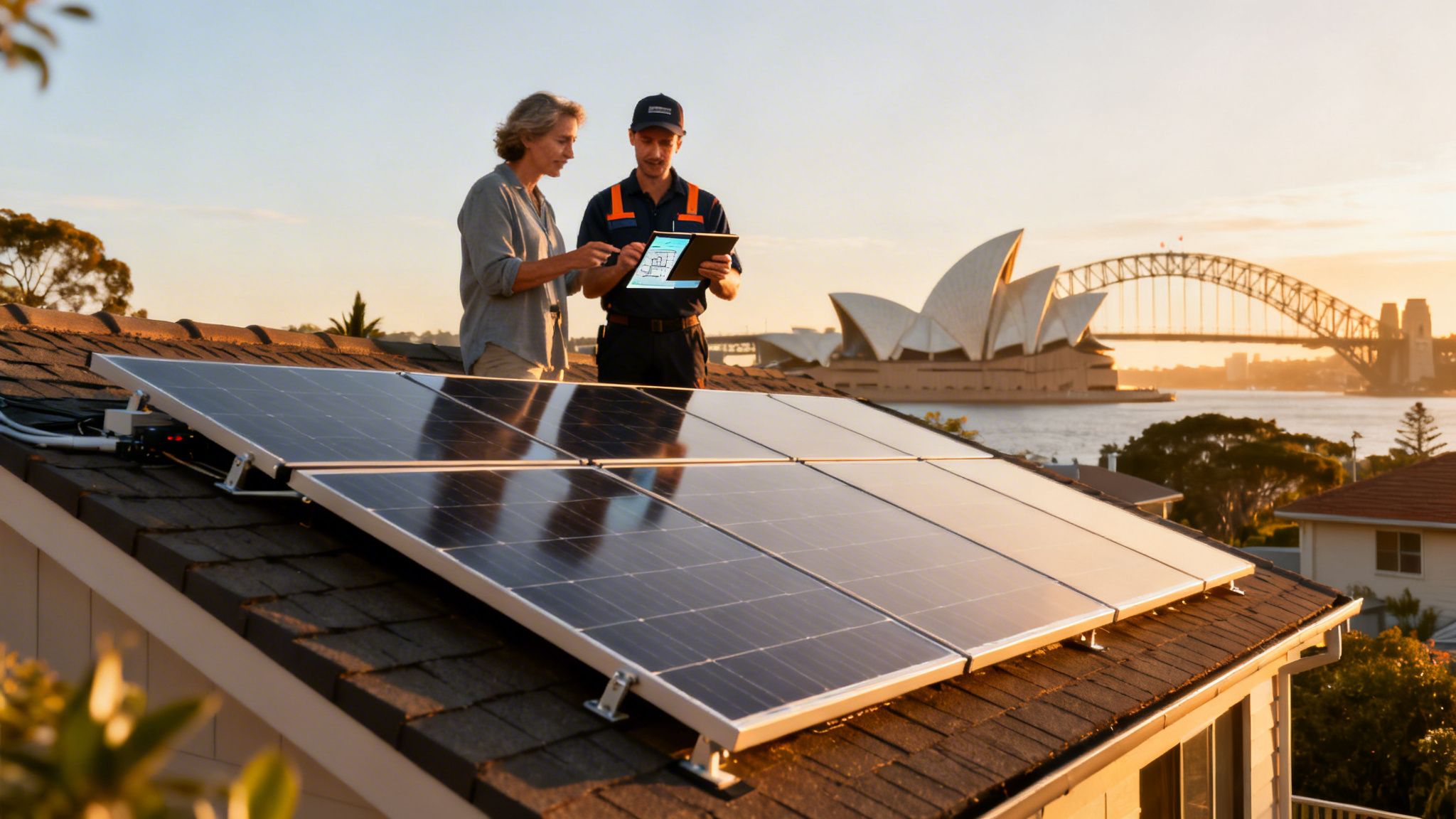
Solar Panels Sydney Supply and Install: Cost Guide
A solar panels sydney supply and install package in 2026 typically costs $5,000 to $8,000 for a 6.6kW system, $7,500 to $11,000 for 10kW and $9,500 to $13,500 for 13.2kW, with the federal STC discount already deducted at the point of sale. The price covers panels, inverter, mounting, wiring, grid application, commissioning and paperwork. Most Sydney households pay it back in three and a half to five years. The variable that decides whether the system is a bargain or a headache is not the sticker price, it is who bolts it to your roof.
What a Solar Panels Sydney Supply and Install Price Actually Includes
Supply and install means one company sells you the hardware and completes the electrical work, rather than you buying panels and finding a sparky afterwards. A complete quote from Interactive Solar should show every one of these line items.
- Panels, listed by exact model number, wattage and quantity, not just “tier 1 panels”
- Inverter, string or hybrid, with its model and warranty term
- Mounting and rail system rated for your roof type and local wind region
- DC and AC cabling, isolators and any switchboard upgrade
- Grid connection application to Ausgrid or Endeavour Energy, plus export limit configuration
- STC assignment, applied as an upfront discount so you never touch the certificate market
- Commissioning, monitoring setup and the accredited installer compliance certificate
If a quote is a single number with a system size next to it, ask for the itemised version before you sign anything. The gaps are where the cost blowouts live: a switchboard upgrade alone runs $800 to $2,500 on older Sydney homes, and a tile-to-metal roof transition or a second-storey access issue can add labour that a phone quote never captured.
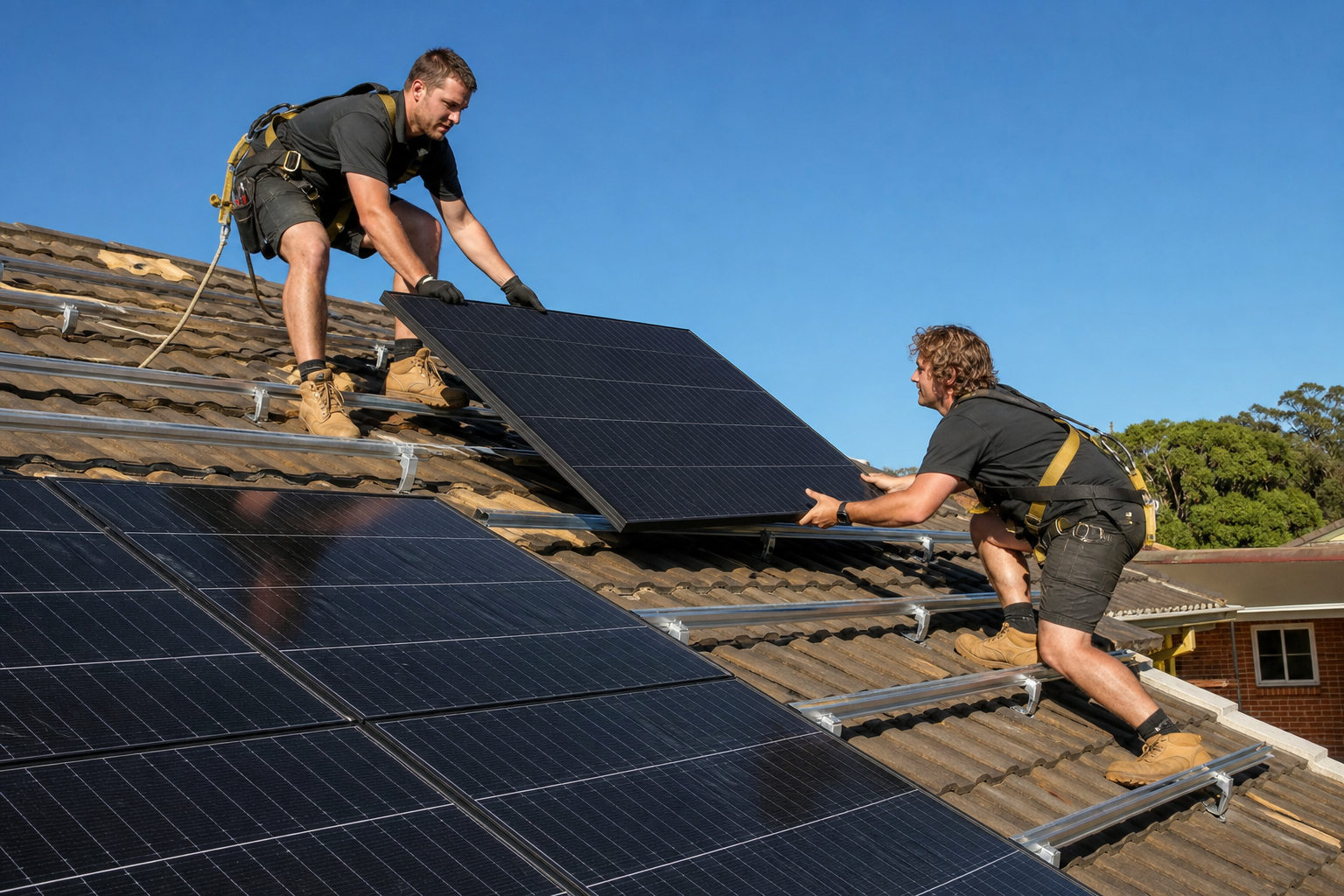
Typical Sydney System Prices in 2026
| System size | Installed price after STCs | Suits | Typical annual bill saving |
|---|---|---|---|
| 6.6kW | $5,000 to $8,000 | 3 to 4 person home, average daytime use | $1,400 to $2,200 |
| 10kW | $7,500 to $11,000 | Larger home, pool pump, ducted air con | $2,000 to $3,000 |
| 13.2kW | $9,500 to $13,500 | Big family home, EV, future battery | $2,600 to $3,800 |
Premium panel and micro-inverter builds sit above these bands, sometimes by 40 to 60 per cent. Savings depend on how much of your generation you use in the home rather than export, which matters more in 2026 than it ever has.
Rebates: What the 2026 STC Discount Is Worth
The federal Small-scale Renewable Energy Scheme is still the main subsidy on rooftop solar, and it shrinks every calendar year. Sydney sits in STC Zone 3 with a rating of 1.382, and the deeming period dropped to five years for systems installed during 2026.
- 6.6kW in Sydney: roughly 45 STCs, about $1,700 to $1,800 off the price
- 10kW in Sydney: roughly 69 STCs, about $2,600 to $2,800 off
- 2027 install: the same 6.6kW system earns about 36 STCs, roughly $360 less
The deeming period steps down by one year every January until the scheme ends in 2030, so waiting has a measurable price. The Clean Energy Regulator publishes the deeming table if you want to check the arithmetic yourself.
On top of that, the NSW Home Energy Saver program offers a zero interest loan of up to $15,000 for property owners, repayable over up to ten years, with a discount of up to $4,000 opening for households under $80,000 income or holding an eligible concession card. The sequencing catches people out: you must apply for the discount before drawing the loan if you want to use both on the one purchase, and your installer has to be an approved supplier under the program. Adding a battery brings the federal Cheaper Home Batteries discount into play as well, which is why many Sydney households now quote solar and storage together on the solar batteries side of the job.
Sizing: How to Match a System to Your Actual Usage
Get sizing wrong and everything downstream is wrong. The starting point is your last four quarterly bills, not a rule of thumb.
Read Your Bill Before You Read Any Quote
Find your average daily consumption in kilowatt hours. A typical Sydney household lands between 16 and 25kWh a day. Then work out roughly how much of that you burn between 9am and 4pm, because that is the electricity solar replaces at full retail rate. Anything you export earns far less.
That gap has widened. IPART’s all-day feed-in tariff benchmark for 2026-27 is 3.4 to 6.5 cents per kWh, down from 4.8 to 7.3 cents the year before, while grid electricity in Sydney costs roughly 30 to 40 cents. In practical terms, a kilowatt hour you use yourself is worth five to ten times a kilowatt hour you export. That single ratio should drive your system design.
Design for the Load You Will Have in Five Years
Roof space is the constraint you cannot buy back later. Households that add an EV charger, a hot water heat pump or a battery within a few years almost always wish they had gone bigger at the start. An EV alone adds 8 to 12kWh a day for average commuting. Switching an electric resistive hot water tank to a heat pump cuts that load by around two thirds and shifts it into the middle of the day, where your panels can cover it.
Practical sizing advice for Sydney homes:
- Cover daytime use first, then oversize modestly for future electrification
- Use a hybrid inverter if a battery is likely within five years, so you are not replacing the inverter twice
- Split the array across two roof faces (typically north plus west) to broaden the generation curve rather than spiking at noon
- Leave a clear, unshaded roof section reserved for a future expansion string
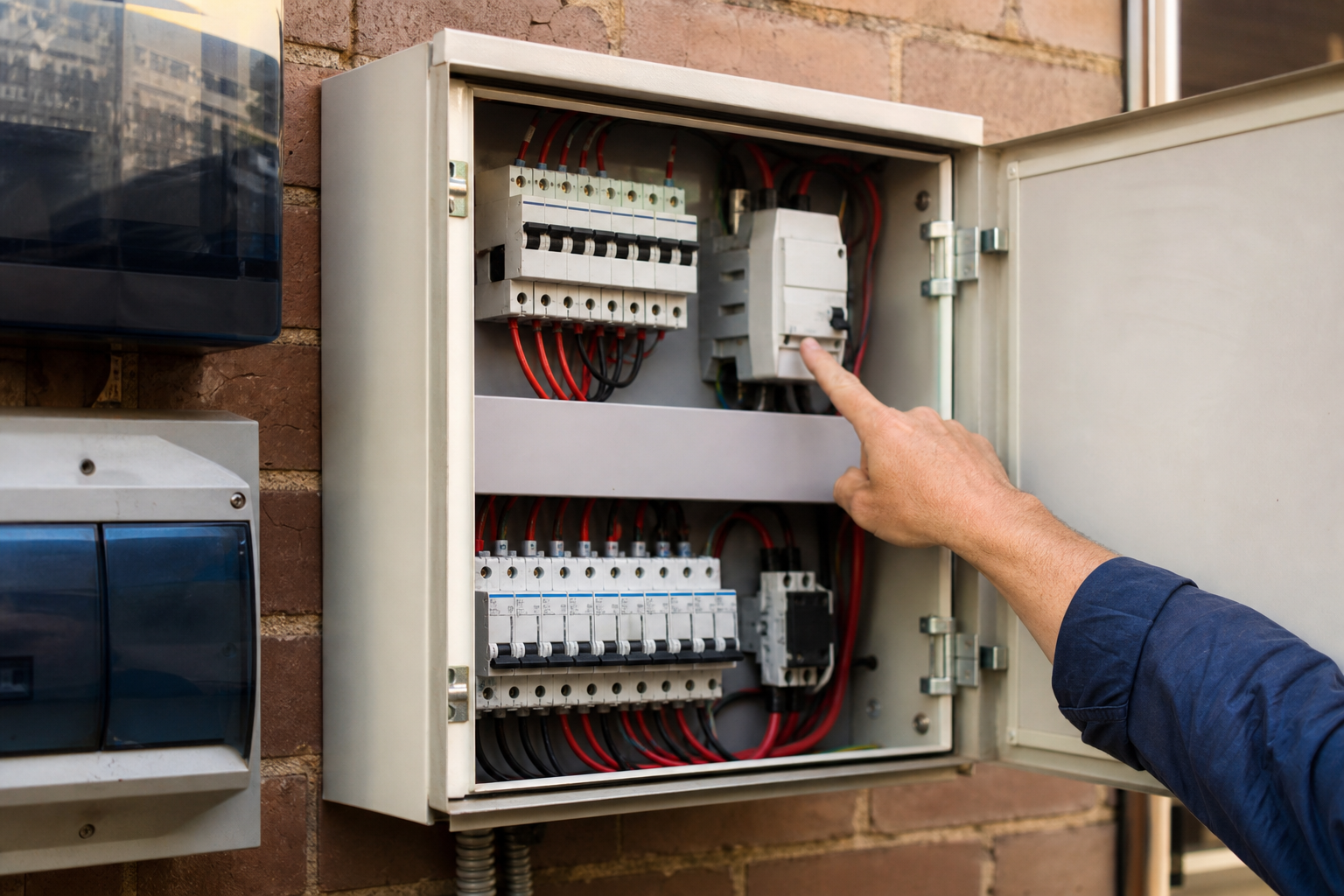
Grid Rules Every Sydney Install Has to Meet
Sydney is split between two distributors, and their rules shape what you can install. Ausgrid covers the CBD, Eastern Suburbs, Inner West, North Shore, Northern Beaches, the Central Coast and the Hunter. Endeavour Energy covers Western Sydney, Parramatta, Blacktown, Liverpool, the Blue Mountains and the Illawarra.
Both allow substantially more inverter capacity than export capacity. Ausgrid permits single-phase sites up to 30kVA of inverter capacity provided the system is export limited to no more than 10kW, and the application must document how the limitation is enforced. Endeavour Energy’s standard fixed limit is 5kW per phase, with its Flexible Exports program lifting eligible customers to 10kW most of the time using a compliant smart inverter.
Two consequences for buyers:
- A large array is still viable on a single-phase home. It is exported energy that is capped, not generation, and generation you consume or store is unaffected.
- Your inverter must be on the approved list for flexible or dynamic exports if you want the higher limit, so brand choice and connection approval are linked.
Any installer quoting you a 13kW system without mentioning your distributor, your phase configuration or your export limit has not done the design work yet.
Choosing Who Supplies and Installs: The Part That Decides Everything
Panels from the same factory perform very differently depending on how they were mounted, wired and commissioned. Australia’s solar complaints history is overwhelmingly an installation quality and aftercare story, not a hardware story.
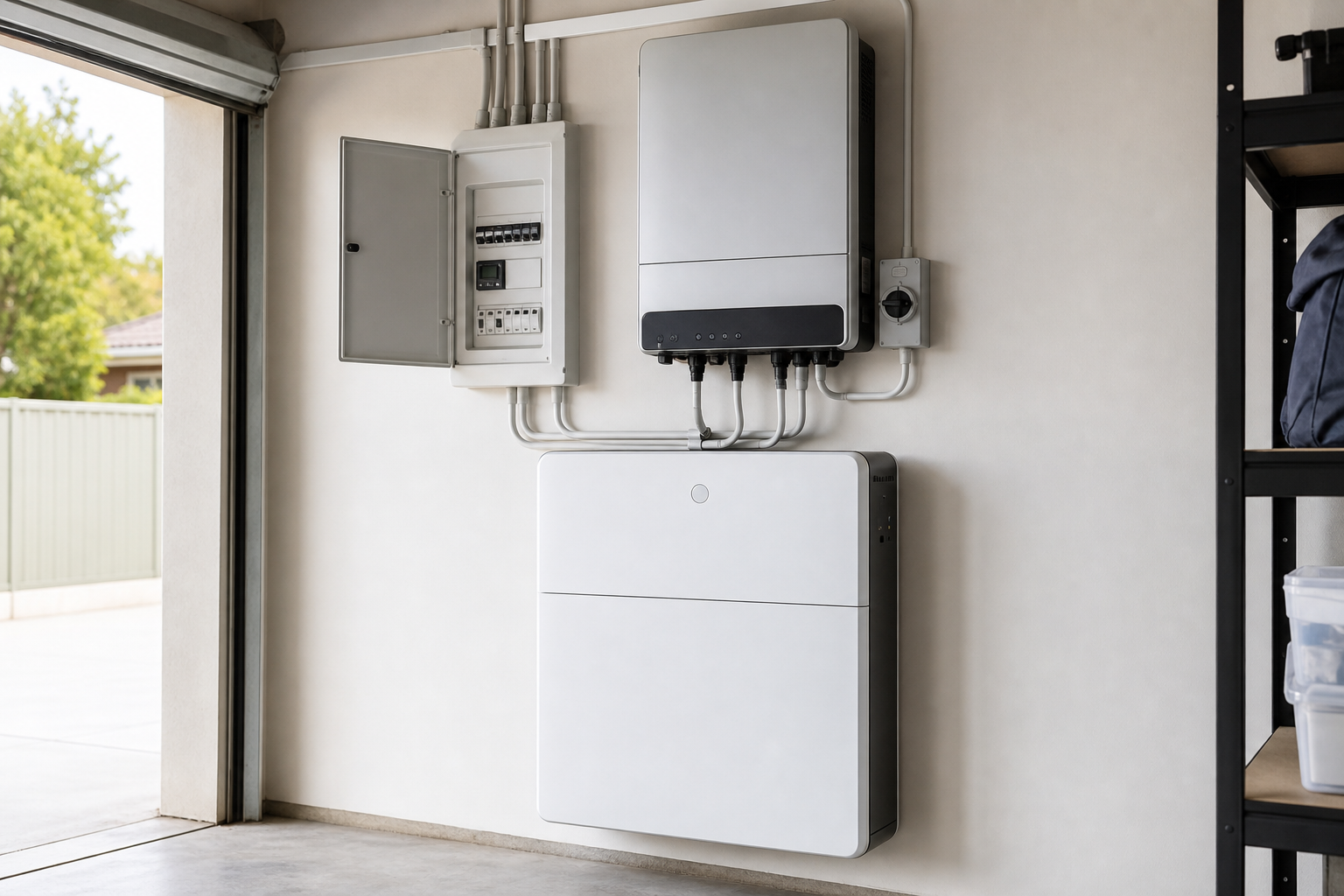
In-House Crews Versus Subcontractors
Many retailers sell the job and hand it to whichever subcontract crew is available that week. That model can work, but accountability gets slippery when a roof leak or an inverter fault appears two years later.
Interactive Solar runs in-house installation teams from its own Sydney warehouse, office and showroom, with 15 staff, more than 1,300 systems installed and over 10MW of capacity supplied. The company was founded by two partners with backgrounds in the Australian Army and the Royal Australian Air Force alongside solar installation and sales experience, and its Google review profile currently carries 134 reviews. One recent customer, Ashour Barkho, described a 10.2kW solar and battery installation this way: “Communication was clear at every stage, timelines were honoured, and the workmanship was neat and well executed.” That is the standard to benchmark other quotes against.
Ten Questions to Ask Every Sydney Installer
- Is the person physically on my roof accredited with Solar Accreditation Australia, the scheme that took over installer accreditation from the Clean Energy Council in 2024, and can I see the number?
- Are your installers employees or subcontractors?
- What is the workmanship warranty in years, and who honours it if you close?
- Exactly which panel and inverter models, and what are their product and performance warranties?
- Who lodges the Ausgrid or Endeavour Energy application, and what export limit are you applying for?
- Is a switchboard upgrade or isolator replacement included or excluded?
- How is the array split across roof faces, and what shading modelling did you run?
- What happens on the day if the roof turns out to need extra work?
- Do you handle warranty claims directly with the manufacturer, or do I?
- What monitoring is installed, and will someone tell me if production drops?
An installer who answers all ten without hesitating is worth paying a little more for. You can compare Interactive Solar’s approach on the Our Company page and see completed Sydney work in the project gallery.
Sales Tactics Worth Walking Away From
- Today-only pricing. A real quote holds for at least a week. Urgency is a closing technique, not a supply constraint.
- “Government approved” claims. No installer is government endorsed. The STC discount is available through every accredited retailer.
- Unnamed hardware. “Premium European panels” is not a model number.
- No site inspection or roof imagery. A design produced without seeing your roof will change on install day.
- Cash deposits over 10 per cent before any equipment is ordered.
What Happens on Installation Day
A standard residential job in Sydney takes one day for the roof and electrical work, with grid connection following separately.
- Site inspection and design, including roof condition, rafter spacing, meter box and shading assessment
- Grid pre-approval lodged with Ausgrid or Endeavour Energy, generally five to ten business days for standard residential systems
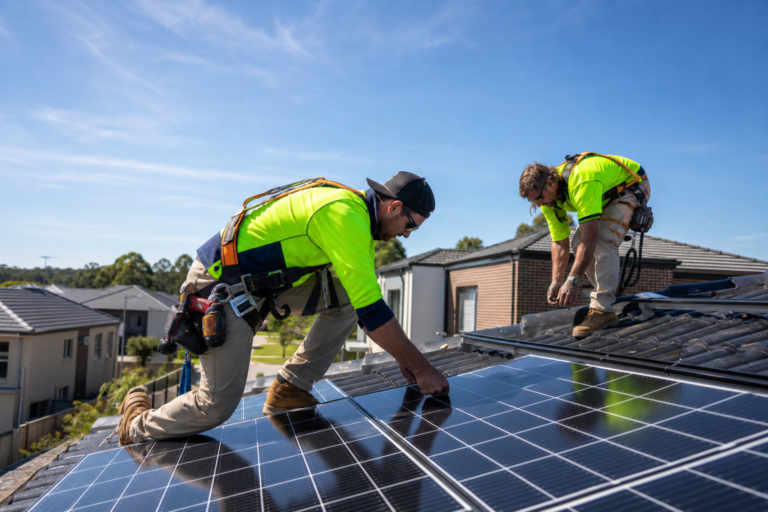
- Install day: rails and flashings first, then panels, then DC runs, inverter mounting and AC connection
- Commissioning: inverter configured, export limit set, system tested and monitoring paired to your phone
- Paperwork: installer compliance certificate, electrical certificate of compliance and the STC assignment
- Meter reconfiguration by your retailer so exports are recorded, usually one to four weeks later
Until the meter is reconfigured, your system will still power the house but exports may not be credited. Ask your retailer to book the meter change as soon as the install is confirmed rather than waiting for the paperwork to arrive.
Solar Panels Sydney Supply and Install With a Battery
Falling feed-in tariffs have changed the maths. When exports earn 3.4 to 6.5 cents and imports cost 30 to 40 cents, storing your surplus is worth far more than selling it. That is the core reason battery attach rates on new Sydney installs have climbed sharply through 2026.
Two rules make a solar and battery combination work:
- Size the solar to charge the battery as well as run the house. A 10kWh battery paired with a 6.6kW array will often sit part-charged in winter. Ten to thirteen kilowatts of panels is a better match.
- Install a hybrid inverter up front if storage is on the horizon. Retrofitting AC-coupled storage later works, but it costs more than doing it once.
The federal Cheaper Home Batteries discount applies to new systems between 5kWh and 100kWh nominal capacity, paired with solar up to 100kW, using approved equipment on the Clean Energy Council product lists installed by a SAA battery-endorsed installer. One eligible battery system per premises, and certificates are calculated on the first 50kWh of usable capacity, with the support tapering above 14kWh. NSW’s VPP incentive can stack on top if you join an approved virtual power plant.
Ongoing Performance and Aftercare
Solar is close to maintenance free, but “close to” is not “entirely”. Sydney panels accumulate salt near the coast, dust and pollen inland, and bird nesting under arrays in every suburb.
- Check monitoring monthly. A dead string or a failing optimiser is invisible from the ground and can cost hundreds a year.
- Professional inspection every two years. Torque checks on clamps, DC isolator condition, cable UV degradation and inverter fault logs.
- Clean only when output tells you to. Sydney rainfall handles most soiling. Never hose hot panels or walk on them.
- Bird proofing pays for itself if you have pigeons, both for output and for roof damage.
Interactive Solar’s Interactive Care program covers ongoing monitoring and maintenance after commissioning, which is the part most cheap supply-only deals never include.
Solar Panels Sydney Supply and Install: How the Investment Stacks Up
Run the numbers on a typical scenario. A Sydney household using 20kWh a day installs a 10kW system for $9,500. It generates roughly 13,000 to 14,000kWh a year. If 55 per cent is self-consumed at 35 cents and the rest is exported at 5 cents, the annual benefit lands near $2,800 to $3,000. Payback arrives inside four years, and the panels carry a 25 to 30 year performance warranty.
Three things move that outcome more than panel brand does:
- Self-consumption rate. Shifting the dishwasher, pool pump and hot water into daylight hours can lift it 15 points at no cost.
- System sizing. Undersizing to save $2,000 upfront routinely costs more than that in forgone savings within four years.
- Installation quality. A poorly clamped or badly strung array underperforms its model every single year of its life.
If you want a figure for your own roof and bill rather than a range, the Interactive Solar team runs a free onsite consultation across Sydney and Western Sydney and puts the itemised numbers in writing. Current package pricing is listed on the solar specials page, and full system detail is on the residential solar page.
Frequently Asked Questions About Solar Panels Sydney Supply and Install
How much does a 6.6kW solar panels sydney supply and install package cost in 2026?
Between $5,000 and $8,000 fully installed after the federal STC discount, for a quality mid-range panel and inverter combination. Budget packages appear below that range and premium builds with micro-inverters sit above it. The STC component of that price is worth roughly $1,700 to $1,800 in Sydney this year and falls again in January.
Is there still a NSW government solar rebate?
There is no NSW cash rebate for panels alone. What NSW offers is the Home Energy Saver program: a zero interest loan of up to $15,000 for owners and a discount of up to $4,000 for lower income households and renters, plus a VPP incentive for batteries. The federal STC discount is the rebate that reduces the panel price directly, and it applies statewide.
How long does installation take from signing to switch on?
The roof and electrical work is usually one day. Grid pre-approval before that takes five to ten business days for standard residential systems, and your retailer’s meter reconfiguration afterwards takes one to four weeks. Two to five weeks end to end is normal in Sydney.
Can I install solar on a tile roof, and does it leak?
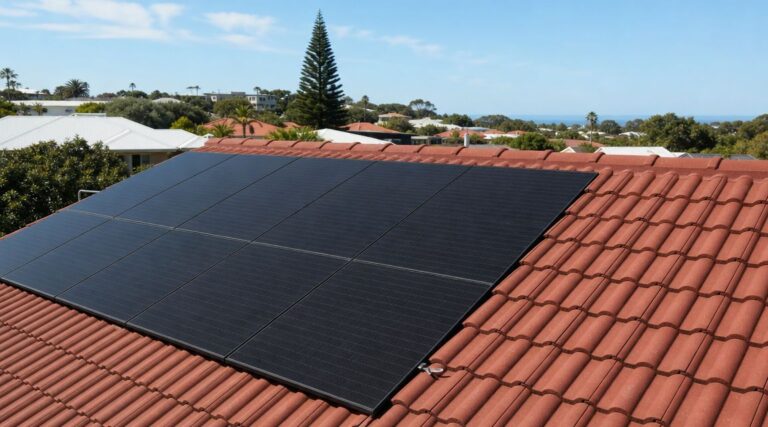
Yes. Tile is the most common roof type in Sydney, and correctly installed tile mounts use a flashed bracket that sits under the tile course rather than a screw through the tile. Leaks come from rushed work, not from the roof type. Ask specifically what tile bracket and flashing system is being used and whether broken tiles are replaced at the installer’s cost.
What size system does a typical Sydney home need?
Most Sydney households land between 6.6kW and 13.2kW. Match the system to daytime consumption first, then oversize if an EV, heat pump or battery is coming. A home using 20kWh a day with a future EV is usually best served by 10kW or more, subject to available unshaded roof area.
Do I need three-phase power for a larger system?
No. Single-phase homes can run substantial arrays because distributors cap exports rather than generation. Ausgrid allows single-phase sites up to 30kVA of inverter capacity with export limited to 10kW, and Endeavour Energy’s Flexible Exports program lifts eligible single-phase customers from 5kW to 10kW. Three phase helps if you plan a large battery or fast EV charging.
Should I add a battery now or later?
Add it now if your evening usage is high, if you value blackout backup, or if you qualify for the federal battery discount stacked with the NSW VPP incentive. Add it later only if you install a hybrid inverter today so the retrofit is straightforward. Given feed-in tariffs have dropped to 3.4 to 6.5 cents, storage is a stronger investment in 2026 than it was two years ago.
What happens to my system if I sell the house?
It stays with the property and typically adds to the sale value, particularly with documented monitoring history and transferable warranties. Keep the accredited installer compliance certificate, the electrical certificate of compliance and the warranty paperwork together, and confirm with your installer that workmanship cover transfers to the new owner.
Make Interactive Solar a preferred source in Google
One click tells Google to surface our articles more often in Top Stories, AI Overviews and AI Mode.