Solar Panel Installation Sydney: Roof-to-Grid Guide
Last updated:
A solar panel installation Sydney homeowners can rely on starts with three decisions: size the array from actual electricity use, design it around the usable roof and network connection, then specify approved equipment installed by a properly accredited professional. For many Sydney homes, 6.6kW to 10.3kW is the practical range, but an all-electric home, pool, EV or future battery can justify a larger array. Interactive Solar handles the roof assessment, network application, rebate paperwork, installation, commissioning and monitoring as one coordinated project.
This guide focuses on the design choices that determine whether a system performs for decades. For a separate market price comparison, see our Sydney residential solar cost and sizing guide.
Solar Panel Installation Sydney: The Short Checklist
A sound proposal should answer the following questions before any equipment is ordered:
- How many kilowatt-hours does the property use each day, and when is that electricity used?
- Which roof planes are structurally usable after setbacks, shading, vents and access paths are considered?
- Is the property single-phase or three-phase, and what connection or export conditions apply?
- Will the system need to support a battery, EV charger, pool, heat pump or future electrification?
- Are the exact panel and inverter models approved for the Small-scale Renewable Energy Scheme?
- Who will design, install, test and commission the system, and what accreditation do they hold?
- What product, performance and workmanship warranties are provided in writing?
If a quote is based only on a power bill total and a generic package, it is not yet a complete design. A professional solar panel installation Sydney assessment should connect usage, roof geometry, equipment limits and grid requirements in one documented plan.
Start With Load, Not a Panel Count
The right system size is based on electricity demand, not the number of bedrooms. Two similar Sydney homes can need very different arrays if one is empty during the day and the other runs ducted air conditioning, a pool pump, a home office and an EV charger.
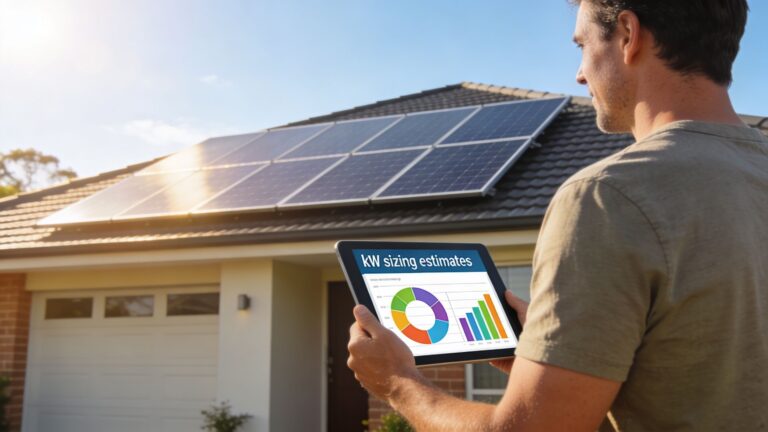
Collect 12 months of bills or interval data where possible. The useful figures are average daily consumption in kWh, seasonal peaks, the portion used between roughly 8am and 4pm, and any large loads likely to be added. Daytime self-consumption normally has more value than exporting surplus power, so timing matters as much as the annual total.
A practical sizing framework
- Smaller home or moderate load: begin modelling around 6.6kW, then test whether roof orientation and daytime use support it.
- Family home with air conditioning or a pool: compare systems around 8kW to 10.3kW.
- All-electric home, EV or high daytime load: model 10kW to 13.3kW and assess whether three-phase power or export control affects the design.
- Future battery: size the solar array to cover daytime loads and create enough surplus to charge storage during useful solar hours.
These are design starting points, not promises of output. Shading, azimuth, roof pitch, temperature, system losses and local connection conditions all change the result. Interactive Solar’s residential solar team assesses those variables before confirming a system.
A Real Interactive Solar Package Example
Interactive Solar’s current NSW package structure provides a concrete example of how modern high-output panels change the design. The packages use 515W Trinasolar Vertex S+ modules and are configured as 13 panels for a 6.695kW array, 20 panels for a 10.30kW array, or 26 panels for a 13.39kW array. The site estimates typical Sydney production at about 26kWh, 40kWh and 52kWh per day respectively, subject to the property and conditions.
This is a first-hand product configuration offered by Interactive Solar, not a generic industry example. It shows why panel wattage and roof layout should be considered together. A 515W module can reach a target array size with fewer panels than a lower-wattage module, which can be valuable when roof space is interrupted by valleys, skylights, vents or required access paths.
Trinasolar’s Australian specification lists the 515W Vertex S+ G3 at approximately 1842mm by 1134mm, up to 24.7% module efficiency, with a 25-year product warranty and 30-year power warranty. The module still has to be checked against the current approved-product list and matched correctly to the inverter. Review the available configurations on the Interactive Solar NSW solar specials page, then request a site-specific design rather than assuming a package will fit unchanged.
For the manufacturer’s current technical details, see the Trinasolar Australia Vertex S+ G3 page.
Solar Panel Installation Sydney: Roof Design
The best panel layout is the one that produces useful energy safely across the day. North-facing panels generally concentrate output around the middle of the day, while east and west arrays can broaden generation into the morning and afternoon. A mixed orientation can therefore match household demand better than filling only one roof plane.
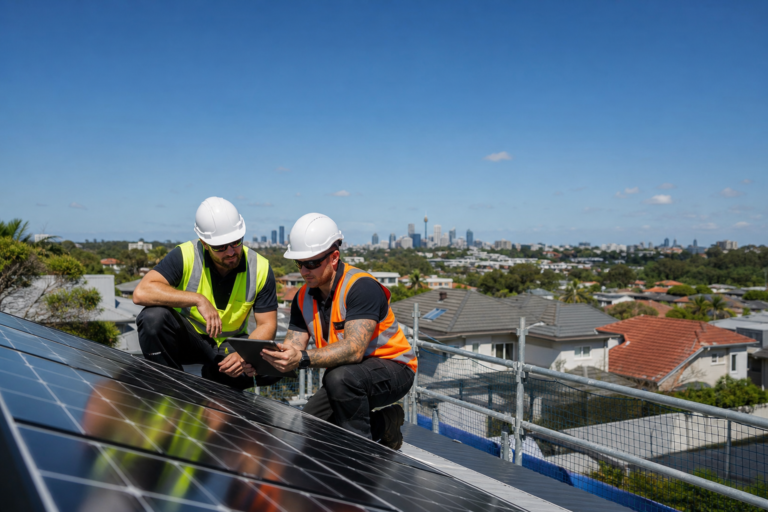
What the site assessment should check
- Usable roof area: measure around ridges, hips, valleys, skylights, vents, aerials and required access.
- Shading: account for trees, neighbouring buildings, chimneys and seasonal sun angles, not only the conditions at the inspection time.
- Roof condition: identify cracked tiles, corrosion, weak fixing points or an ageing roof that should be repaired before panels cover it.
- Orientation and pitch: model expected production rather than treating every roof plane as equal.
- Wind and structural loads: specify mounting and fixing appropriate to the roof material, location and applicable standards.
- Cable routes: plan protected, neat pathways between array, inverter, switchboard and any future battery.
High-efficiency modules help where usable roof space is scarce, but they do not correct a poor layout. A smaller unshaded array can outperform a larger array that places modules under persistent shade. Module-level optimisation can help in some designs, but it should solve a demonstrated problem rather than compensate for avoidable placement.
You can inspect examples of completed work in the Interactive Solar project gallery.
Inverter, Switchboard and Battery Readiness
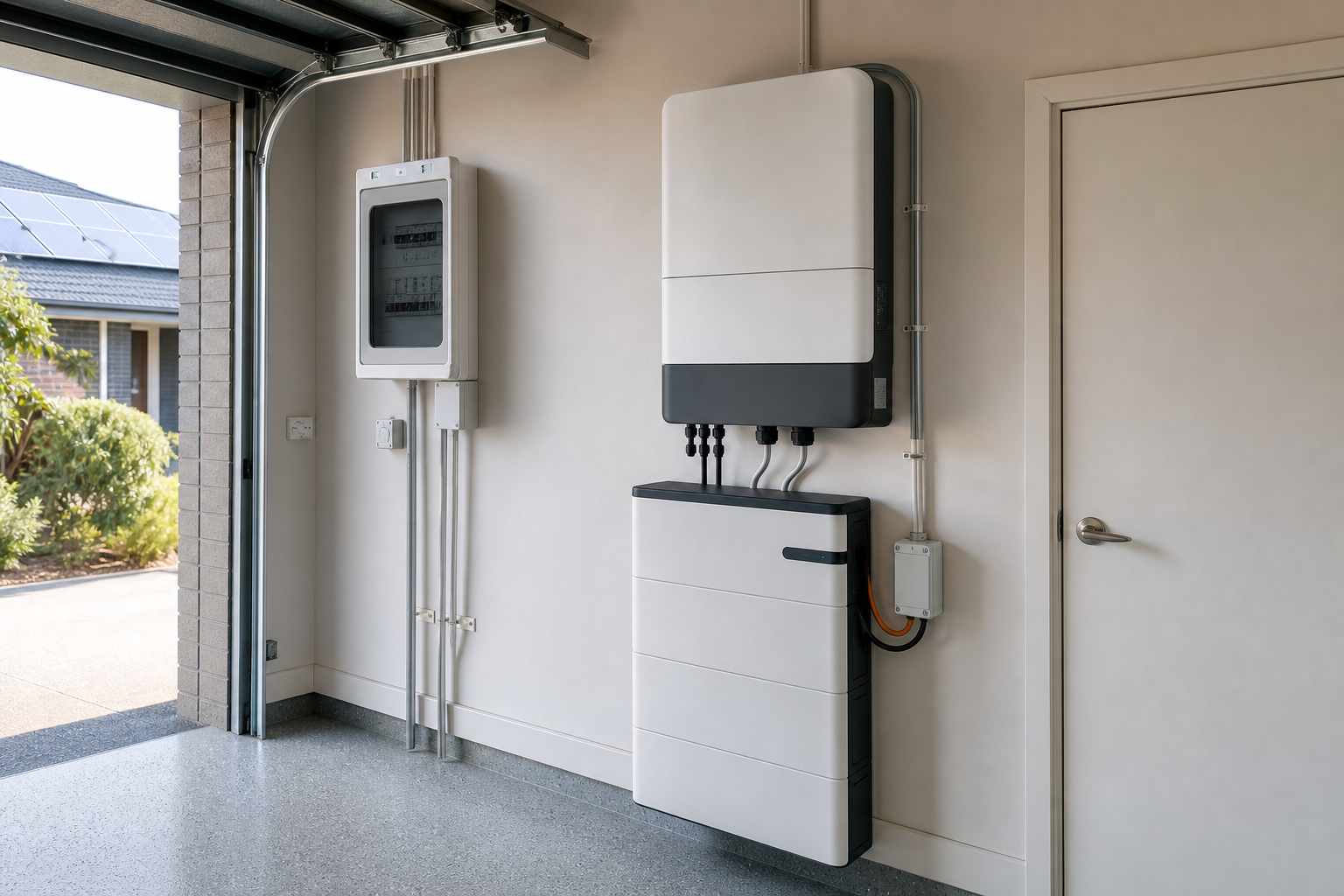
The inverter is not an accessory. It controls power conversion, monitoring, protection and, in many systems, export limiting or battery integration. Its capacity, voltage window, current limits and number of maximum power point trackers must suit the final string design.
A larger panel array can sometimes be paired with a smaller inverter within manufacturer and connection rules because panels rarely operate at nameplate output all day. This practice can improve inverter utilisation, but excessive oversizing creates clipping and may breach permitted ratios. The proposal should state both DC array capacity and AC inverter capacity so the comparison is transparent.
Check the switchboard before signing
Older Sydney homes may need switchboard work, safety switch upgrades, metering changes or relocation of equipment. Ask whether those items are included, excluded or provisional. A cheap headline price can rise quickly if electrical work was never assessed.
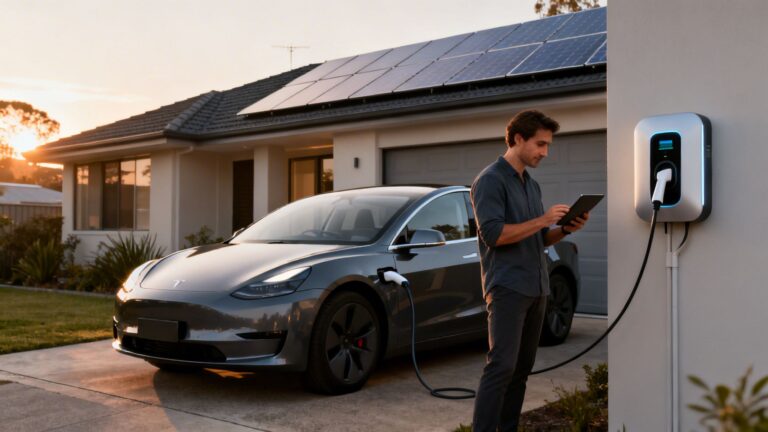
If storage is likely, compare a battery-ready hybrid inverter with the option of adding an AC-coupled battery later. The better choice depends on the existing equipment, backup requirements and expansion plan. Interactive Solar can design solar battery storage alongside a new array, and can also plan an EV charger so the electrical capacity and solar controls work together.
Network Approval and Export Limits
A system can generate electricity for the property while being limited in how much surplus it sends to the grid. The distributor assesses the connection, not the electricity retailer. Much of Sydney is served by Ausgrid or Endeavour Energy, and the applicable offer depends on the address, phase supply, inverter capacity and local network conditions.
Do not confuse array size with export limit. A 10kW rooftop array may still make sense with a lower export setting if the home uses substantial daytime power or charges a battery. The objective is to maximise useful self-consumption, not to build the project around a feed-in tariff that can change.
Endeavour Energy states that its existing fixed limit for single-phase solar customers is 5kW and that eligible flexible exports, planned to phase in as a standard offer from late 2026, can allow up to 10kW most of the time. Dynamic limits reduce exports only when needed for local grid stability. Availability and compatible inverter requirements must be confirmed for each connection. Read the distributor’s official flexible exports guidance.
Your installer should submit the network application with accurate existing and proposed generation details. Installation should not be treated as approved until the relevant connection offer is received.
2026 STCs and NSW Finance Support
Eligible rooftop solar systems can receive an upfront discount through Small-scale Technology Certificates, usually assigned to the installer or agent and shown as a deduction on the quote. The certificate count depends on system capacity, location and installation year.
The Clean Energy Regulator confirms that the solar PV deeming period is five years for installations in 2026. It decreases by one year annually until the scheme ends in 2030. That means the discount should be calculated for the actual installation year, not copied from an older advertisement.
Eligibility also depends on compliant design and installation. The regulator requires an appropriately accredited Solar Accreditation Australia designer and installer, approved panels and inverter, applicable Australian standards, and local grid requirements. Ask for the exact models and accreditation details rather than accepting a vague statement that the equipment is “rebate approved”.
NSW Home Energy Saver
The NSW Government’s Home Energy Saver program currently offers eligible owners a zero-interest loan of up to $15,000 for approved energy upgrades, including rooftop solar. The stated household taxable-income cap is $210,000. A separate discount of up to $4,000 is marked as coming soon for eligible lower-income households and concession card holders.
If a household intends to use both supports on the same purchase, NSW advises applying for the discount first and then seeking a loan for the balance. Product, property, supplier, residency and finance-provider rules apply, so confirm current eligibility before committing to a contract.
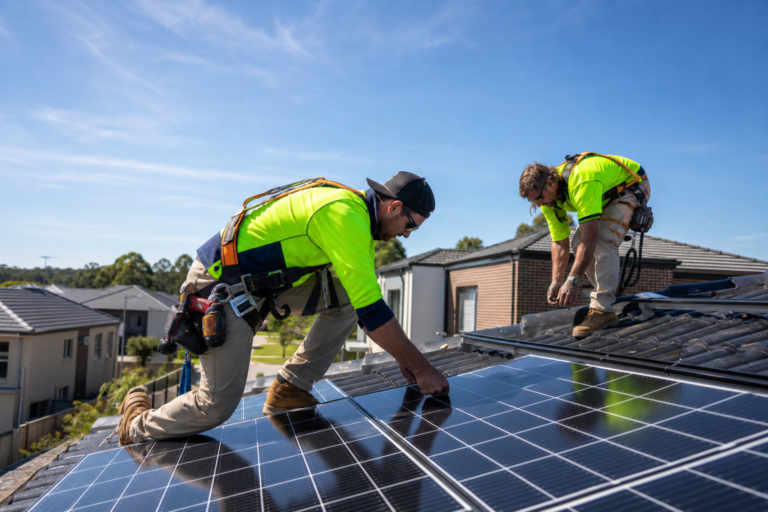
Installation Day and Commissioning
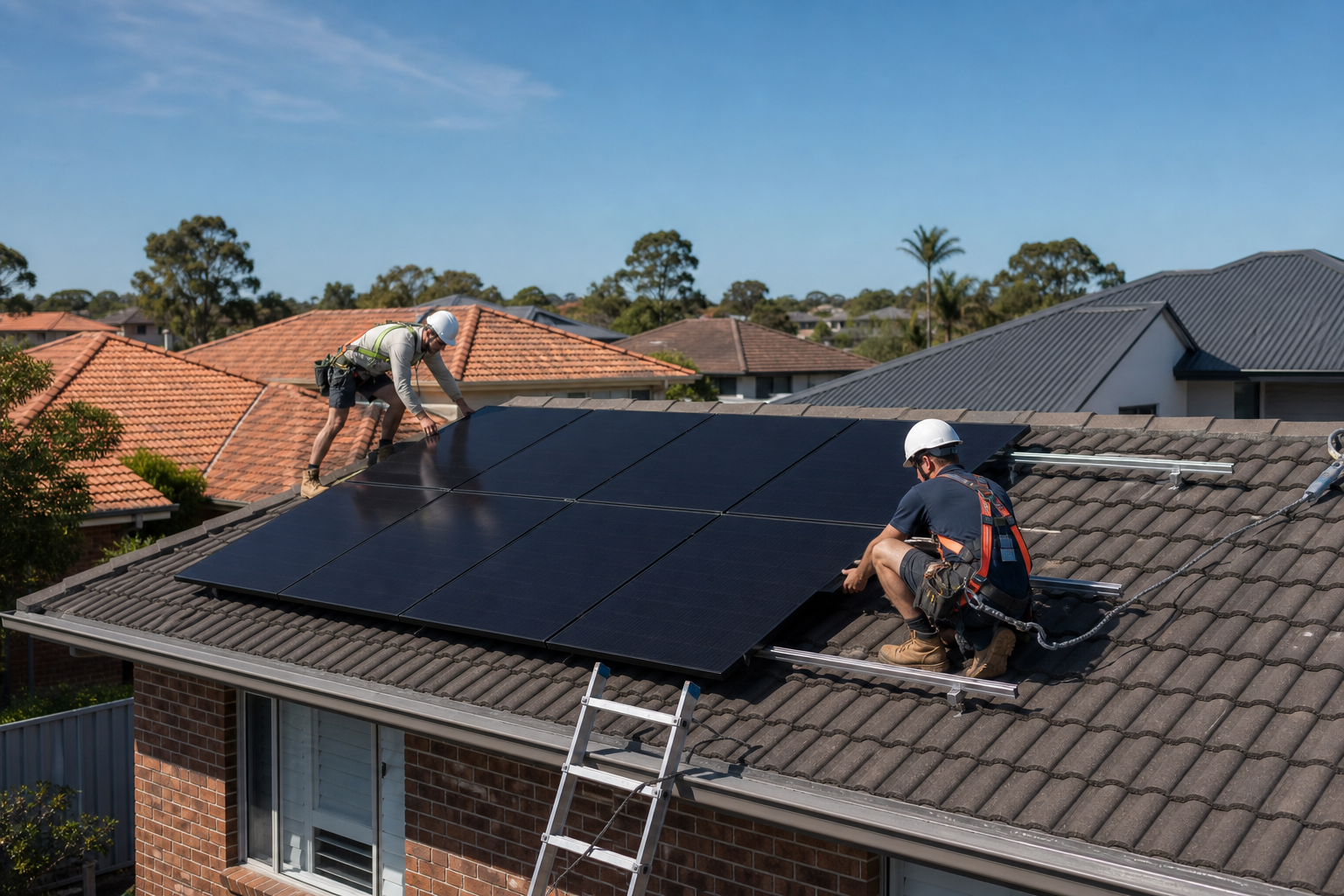
A typical residential installation may be physically completed in one or two days, but the whole project includes design, network approval, scheduling, metering and commissioning. Complex roofs, switchboard work, three-phase upgrades or battery integration can extend the timeline.
What should happen on site
- The team confirms the approved design and safe work method before starting.
- Mounting is fixed to the structure and weather sealing is completed for the roof type.
- Modules are clamped within the manufacturer’s permitted zones.
- DC and AC cabling, isolators, protection and labels are installed to current requirements.
- The inverter and monitoring platform are configured with the correct network settings.
- The system is tested, commissioned and documented by the responsible licensed installer.
- The owner receives shutdown instructions, warranties, compliance records and monitoring access.
The Clean Energy Regulator’s installer requirements state that the installer completing testing and commissioning must ensure compliance, complete the electrical safety or compliance certificate, and sign the required written statement.
How to Compare Solar Quotes
Compare scope and assumptions before price. Every serious quote should identify:
- panel make, full model and quantity
- DC array capacity and AC inverter capacity
- proposed roof layout and orientation
- estimated annual generation and the assumptions behind it
- network application and export-control scope
- switchboard, metering, access and roof-work allowances
- STC quantity and value deducted
- product, performance and workmanship warranties
- monitoring setup and aftercare process
- final price, exclusions and payment milestones
Be cautious if the salesperson will not name the exact models, claims every roof produces the same result, bases savings entirely on exports, or pressures you to sign before a technical assessment. The stronger proposal explains why the design fits your usage and property.
Interactive Solar provides residential and commercial solar, batteries, EV charging and aftercare across Sydney from its Chipping Norton base. Learn about the company and NSW electrical licence details on the Our Company page, then request a site-specific solar assessment.
Solar Panel Installation Sydney FAQs
What size solar system suits a Sydney home?
Many homes fall between 6.6kW and 10.3kW, while high-use or all-electric properties may benefit from around 13kW. The correct size depends on interval usage, usable roof area, phase supply, export conditions and future loads such as a battery or EV.
How many panels are needed for a 6.6kW system?
It depends on module wattage. Interactive Solar’s current 515W configuration uses 13 panels for 6.695kW. A lower-wattage panel would require more modules, so compare total capacity and roof fit rather than panel count alone.
Does a bigger system always save more?
No. Extra capacity helps when the home can use or store the output, but persistent surplus exported at a low tariff may produce a weaker return. The design should model self-consumption, seasonal generation and planned electrification.
Can I install more than 5kW on single-phase power?
Often the rooftop array can exceed 5kW, but inverter and export conditions are network-specific. Some systems use export limiting, and Endeavour Energy plans eligible flexible exports of up to 10kW most of the time from late 2026. Your address requires a formal connection assessment.
Who must install solar panels to qualify for STCs?
The system must be designed and installed by people holding the appropriate Solar Accreditation Australia accreditation, with an unrestricted electrical licence where required. The panel and inverter models must also meet the scheme’s approved-product and compliance rules.
Do Sydney solar panels need council approval?
Many standard rooftop systems may be exempt development in NSW when they meet applicable planning criteria, but heritage properties, strata, unusual structures and local controls can change the answer. Confirm the requirements for the address before work begins.
Should I make a new solar system battery-ready?
Yes, if storage is a realistic future plan. Battery readiness means considering inverter architecture, switchboard space, cable routes, backup circuits and where equipment can be installed safely. It does not always mean buying a hybrid inverter, so compare AC-coupled and DC-coupled paths for the property.
Make Interactive Solar a preferred source in Google
One click tells Google to surface our articles more often in Top Stories, AI Overviews and AI Mode.