Solar Power Systems Cost: An NSW Homeowner’s Guide 2026
Last updated:
Your power bill lands, you open it, and the first thought is simple. How much does a solar system cost, and how quickly can I stop this happening again?
That's a fair question. It's also the wrong place to stop.
In NSW, the smartest solar buyers don't fixate on the cheapest quote. They focus on what the system will do for their household over years of use. A solar setup is no longer just a way to send spare power back to the grid and hope for a decent credit. The bigger win is producing your own energy, using more of it yourself, and reducing how much expensive grid power you need to buy.
Rethinking the Real Cost of Solar Power
Individuals often begin their inquiry with the phrase solar power systems cost because they want a number. I get it. But if you only ask for a price, you'll usually get a sales answer, not a useful one.
The better question is this. What system will cut your dependence on the grid without boxing you into a poor decision later? In Australia, that's the core issue. With high rooftop solar penetration, the key factor isn't just the upfront installation figure. It's how system design affects price and payback, and how much of your own solar you can use directly rather than export. That's the point made in this Australian solar cost context guide.
Upfront cost is only the entry ticket
A cheap system can still be expensive if it's poorly designed. An undersized system, weak inverter choice, bad panel placement, or no thought for future battery storage can lock you into mediocre results for years.
A well-designed system does three things:
- Matches your daytime usage so you consume more of what you generate
- Accounts for your roof and switchboard realities before installation day
- Leaves room for battery or EV charging later if your home is heading that way
Practical rule: Don't compare quotes by panel count alone. Compare how each design helps your household use more of its own solar.
If you're trying to sense-check maintenance expectations as part of the broader ownership picture, even resources outside NSW can be useful. For example, this guide for Phoenix solar homeowners gives a practical reminder that solar value isn't just about purchase day. It includes care, monitoring, and keeping output consistent over time.
Your bill savings come from behaviour and design
Two homes on the same street can install similar-sized systems and get very different outcomes. One family runs appliances during the day, charges an EV at home, and plans for battery storage. The other exports most of its solar and buys heavily from the grid at night.
The second household may still like having solar, but the first household usually gets the stronger long-term value because the system fits how they live.
If you want a rough starting point before speaking with anyone, use a proper solar savings calculator for NSW households. It won't replace a site inspection, but it will help you think in terms of savings and self-consumption instead of sticker shock.
The Anatomy of a Modern Solar Power System
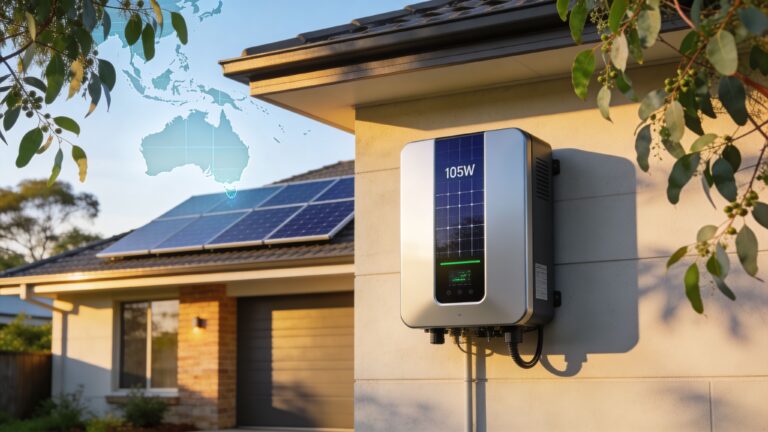
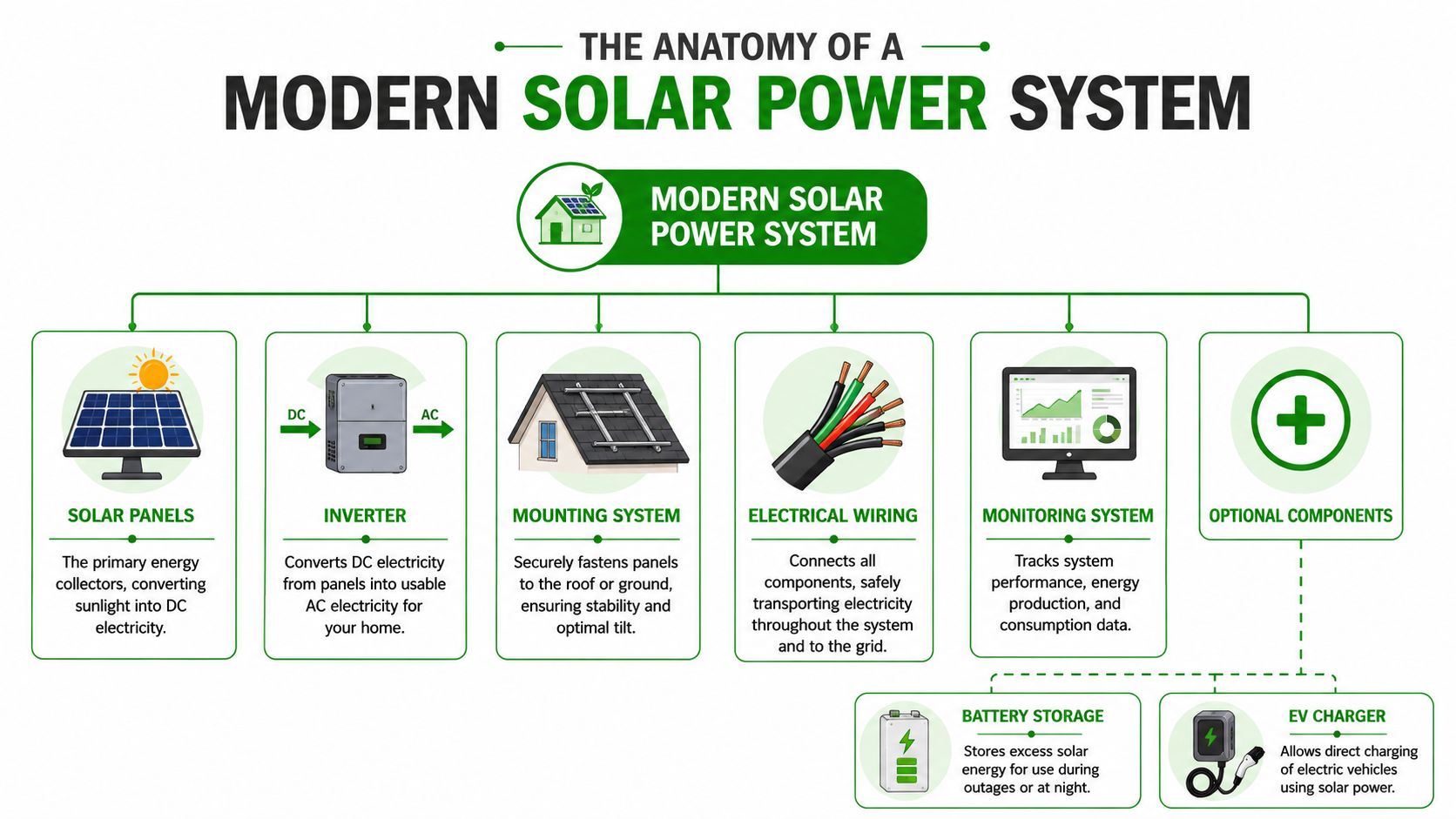
Before you can judge value, you need to know what you're buying. A rooftop system isn't “some panels and an inverter”. It's a small power station attached to your home.
Here's the visual breakdown.
The parts that matter most
Solar panels do the obvious job. They collect sunlight and produce DC electricity. They're the most visible part of the system, but they're not the only part that determines performance.
The inverter is where many homeowners make or lose value. It converts DC electricity into usable AC electricity for your home. It also affects monitoring, fault management, system flexibility, and how well the system handles shade or panel-level variation. If you're comparing system architectures, it's worth understanding how Enphase microinverters differ from traditional setups.
The mounting system keeps everything secure on your roof. Good mounting isn't a glamorous topic, but bad mounting becomes a very expensive topic. Roof compatibility, corrosion resistance, flashing, and installation quality matter.
The less glamorous parts that still matter
The rest of the system does the quiet work:
| Component | What it does | Why it matters |
|---|---|---|
| Electrical wiring | Connects panels, inverter, switchboard, and grid | Safety, compliance, and reliable performance |
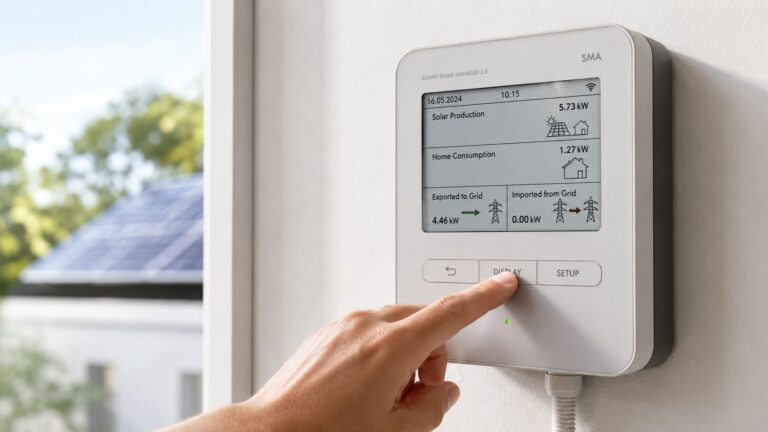
| Monitoring system | Tracks generation and system health | Lets you spot faults early and understand usage |
| Battery storage | Stores excess solar for later use | Helps shift solar into night-time demand |
| EV charger | Charges your vehicle at home | Turns your roof into a fuel source |
A solar system should be judged like any other major home asset. By how well the parts work together, not by how cheap one part looked in the quote.
What homeowners often misunderstand
People often assume the panels are the whole story because that's what they can see. In practice, reliability and long-term satisfaction usually come down to the invisible decisions. Cable runs, inverter placement, roof layout, switchboard condition, monitoring quality, and room for upgrades all affect the result.
That's why good installers ask detailed questions. They're not making the process harder. They're trying to stop you buying a system that looks fine on paper and disappoints in real life.
Key Factors That Shape Your System Investment
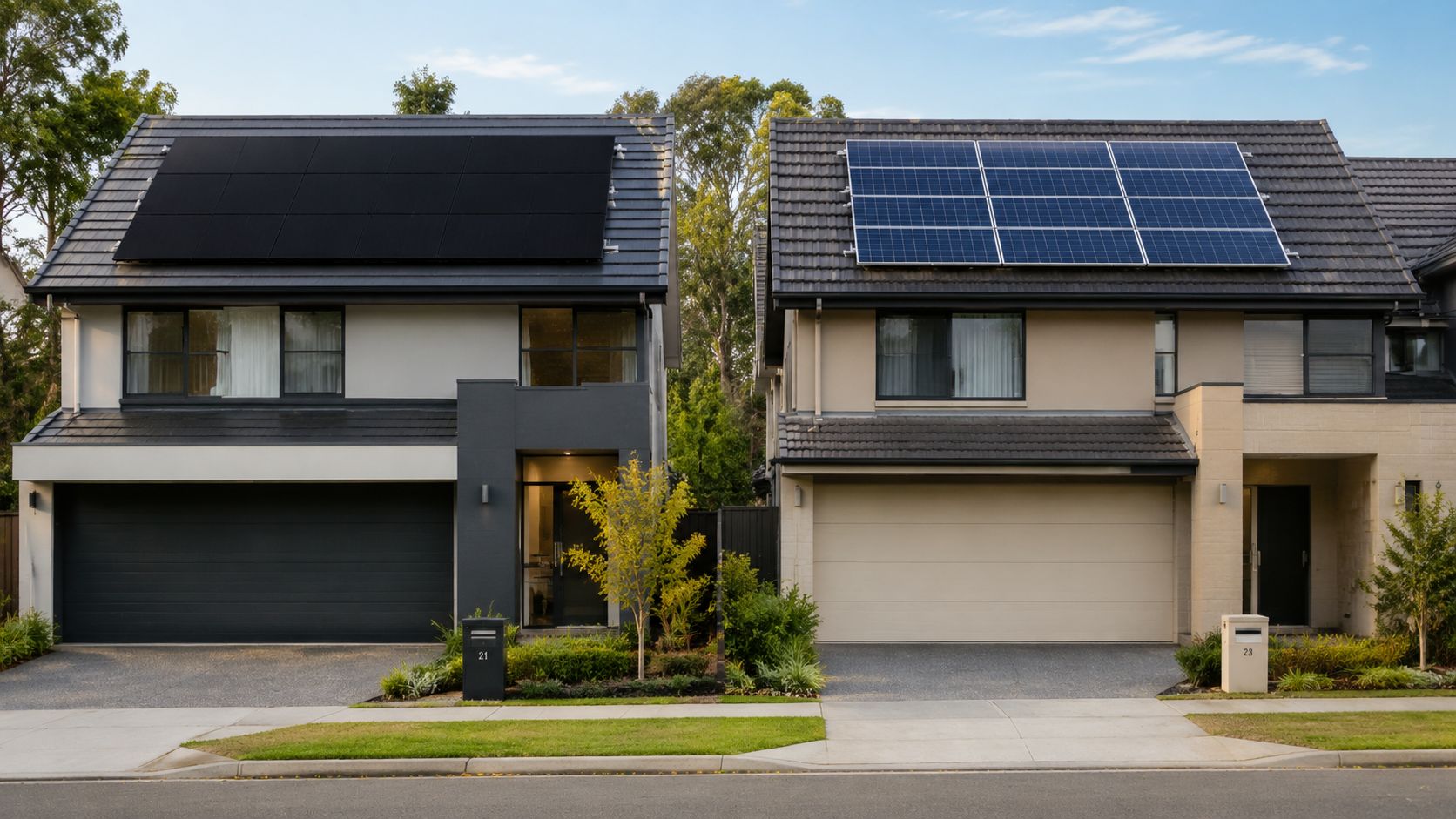
Two neighbours can both say they bought “a 6.6 kW system” and still have very different experiences. That's because the quoted system size doesn't explain the whole investment.
Many solar sales conversations go off the rails when the discussion gets reduced to panel brand and total capacity, while the bigger cost drivers get ignored.
What changes the final quote
Independent cost analysis shows that in solar installations, soft costs such as labour, permitting, wiring, and overhead can exceed the hardware share. That's why roof complexity, inverter selection, and switchboard upgrades can affect the quote more than small panel-brand differences, as noted in this solar installed system cost analysis.
Cause and effect matters here:
- Complex roof layout means harder access, more labour, and often more mounting hardware.
- Shade or awkward orientation can push the design toward panel-level optimisation or different inverter choices.
- Older switchboards may need upgrades before the system can be installed safely.
- Long cable runs increase materials, labour, and design complexity.
The real drivers of value
A better way to assess solar power systems cost is to break the quote into decisions.
System size should follow your usage pattern, not a generic package. If you work from home, run air-conditioning through the day, or plan to charge an EV, that changes the design logic.
Inverter choice shapes flexibility. A basic inverter may do the job. A more advanced setup may offer better monitoring, easier battery integration, and stronger performance on roofs with multiple orientations.
Roof suitability can make a modest-looking house harder to install on than a larger one. Tile roof condition, pitch, access, and layout all matter.
If you want a fuller breakdown of how NSW-specific variables affect quotes, this guide to the cost of solar panels in NSW is a useful reference point.
A quick comparison mindset
When you review quotes, don't ask only “Which one is lower?”
Ask:
- What assumptions did this installer make about my energy use
- What roof or electrical issues are already included
- What hardware decisions were made, and why
- What has been left out that may appear later as a variation
The cheapest quote is often the quote with the most missing detail.
That's why two systems that look similar in an email can be very different once the truck arrives and the installers step onto the roof.
Future-Proofing Your Investment with Batteries and EV Chargers
A standard solar PV system is a good start. It is not the finish line.
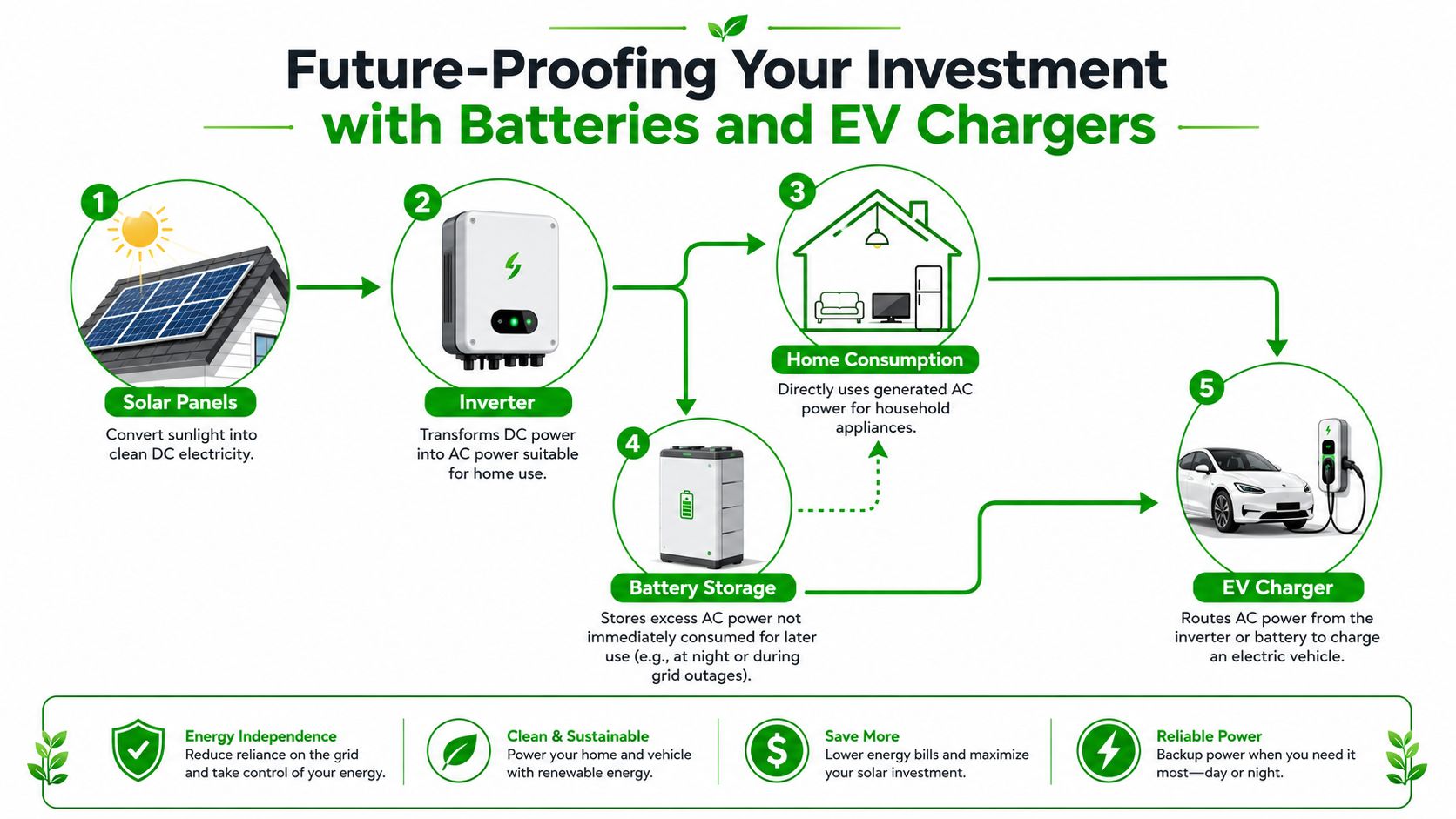
If your household uses a lot of energy outside the middle of the day, then rooftop solar on its own only solves part of the problem. The next level is keeping more of that generation in your home and directing it where it creates the most value.
Here's how the pieces work together.
Why battery-readiness matters now
This is my blunt advice. If you're installing solar in NSW today, battery-readiness should be part of the conversation from the start.
The reason is simple. The lowest upfront PV quote can be a false economy if the system isn't battery-ready. More value now comes from shifting solar generation into evening loads with a battery, rather than treating export as the whole strategy, as discussed in this solar savings and storage perspective.
That doesn't mean every home should install a battery immediately. It means every home should avoid backing itself into a corner.
What future-proofing actually looks like
A future-proofed system usually includes decisions such as:
- An inverter pathway that supports storage without forcing a major redesign later
- Switchboard planning so added components don't become a headache
- Panel placement that supports daytime generation strong enough to serve home loads and future storage
- Space planning for EV charging, especially in garages, carports, or side access areas
A battery changes the economics of your solar because it lets you use daytime generation after sunset. An EV charger changes the equation again because it gives you a major controllable load that can absorb solar generation directly.
The strongest combination for the right household
If you own an electric vehicle, or you're likely to own one soon, pairing solar with home charging makes a lot of sense. You're not just reducing house bills. You're also changing how you fuel a major part of daily life.
For households considering storage, this home battery storage system guide is worth reading before you lock in a solar-only design.
Buy the system you can grow into, not the system you'll outgrow.
That's the difference between a short-term purchase and a long-term energy plan.
Navigating Rebates and Calculating Your Real Payback
Most Australians still call it a solar rebate. That's understandable, but it's not quite how the main federal incentive works.
The Small-scale Renewable Energy Scheme, or SRES, lowers upfront solar costs through Small-scale Technology Certificates, known as STCs. These certificates are typically applied as a point-of-sale discount rather than a cheque that arrives later.
How the federal incentive actually works
The key point is this. The discount isn't fixed.
Under the SRES, the number of STCs depends on system size and the remaining years until 2030, so installing earlier in the scheme period and installing a larger eligible system generally improves the effective upfront discount, as explained in this STC and solar cost overview.
You don't need to master certificate mechanics. You just need to understand what they mean for your decision:
- Bigger eligible systems create more STCs
- Earlier installation matters because the scheme phases down toward 2030
- The discount is built into the installed price, not handled like a separate cashback process
Payback isn't a fixed number
Homeowners often ask for a guaranteed payback period. A serious installer shouldn't give you a canned answer.
Your real payback depends on how much grid electricity the system helps you avoid buying. That's why export credits are only one part of the picture, especially in NSW. If you want to understand how exports fit into the equation, read this NSW feed-in tariff guide.
The households that tend to get stronger value usually do a few things well:
- They size the system around real usage, not just package deals.
- They shift consumption into solar hours where possible.
- They plan ahead for storage or EV charging if those upgrades are likely.
Payback improves when your home uses more of the energy your roof generates.
As a side note, plenty of buyers compare every major household expense before committing. The mindset is similar to how shoppers use a Cashback Australia review and comparison to understand value beyond the headline offer. Solar deserves the same discipline. Look past the flashy promotion and focus on what improves your position over time.
Choosing a Trusted Installer Over a Cheap Quote
Here, good solar projects separate from bad ones.
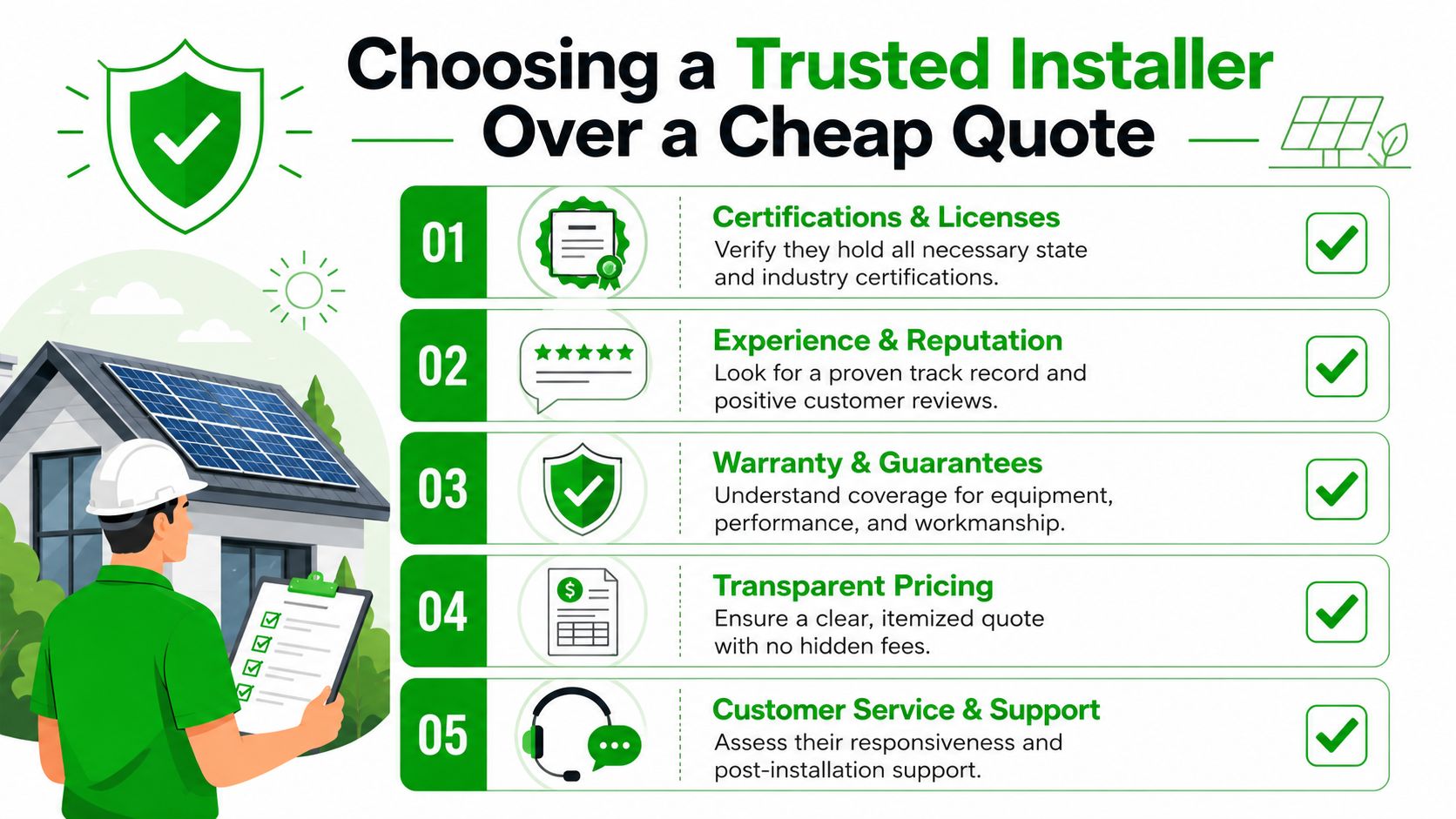
A poor installer can ruin a good product. A strong installer can build a system that performs properly, is documented properly, and is still supported when you need help later.
Start with the essentials.
Red flags and green flags
Here's the simplest comparison I can give you.
| Cheap quote warning sign | Trusted installer signal |
|---|---|
| Quote sent fast with little site detail | Questions about roof, switchboard, usage, and future plans |
| Focus on “lowest price” | Focus on design, fit, and long-term output |
| Vague warranty language | Clear equipment and workmanship explanations |
| Unknown subcontractors | Accountable installation team and local presence |
| Hard close on the first call | Willingness to explain and let you compare properly |
A proper quote should read like a design document, not a flyer.
What to ask before you sign
Ask direct questions and judge how clearly they answer.
Who installs the system
If the seller can't tell you who's turning up on the day, that's a problem.What happens if there's a fault later
After-sales support matters more than smooth sales talk.What exactly is included
Mounting, wiring, monitoring, switchboard allowances, and battery compatibility should be spelled out.
There's also value in understanding how professional estimating should work behind the scenes. Tools such as Exayard electrical estimating software show the level of detail serious electrical pricing can involve. You don't need to use the software yourself. You do want an installer whose quoting process reflects that level of care.
A quick visual explanation can help clarify what separates a rushed sale from a properly planned job.
If an installer avoids specifics before the contract, expect frustration after installation.
The installer is part of the system
People shop for panel brands because branding is easy to compare. The harder truth is that installer quality often has a bigger effect on your experience.
Good installers catch roof issues early. They explain trade-offs. They leave you with a system that's documented, compliant, monitored, and supported. That's what protects your investment.
Your Next Step Towards Energy Independence
The question isn't really “What is the solar power systems cost?” It's “What system will give my home the best long-term outcome?”
That shift matters. It stops you buying on price alone and starts you thinking like an owner. The right system is sized for how you live, designed around your roof and electrical setup, and ready for where your home is going next. That may include battery storage, EV charging, or both.
The wrong system usually looks attractive at the start. Lower quote, faster promise, less detail. Then the compromises show up. Limited flexibility, weaker performance, annoying support, and upgrade costs that should have been avoided from day one.
The right next step isn't guessing from online price ranges. It's getting a custom design based on your usage, your roof, and your plans for the next several years.
Good solar reduces bills. Smart solar gives you control.
If you want to move with confidence, ask for a proper site-based assessment, compare design quality instead of headline price, and treat the installer decision as seriously as the hardware decision. That's how you turn solar from a purchase into an asset.
If you're ready to turn rising power bills into a long-term energy plan, speak with Interactive Solar. Their team can assess your home, explain the right solar, battery, and EV charging options for your situation, and give you a specific recommendation built around value, reliability, and energy independence.
Make Interactive Solar a preferred source in Google
One click tells Google to surface our articles more often in Top Stories, AI Overviews and AI Mode.