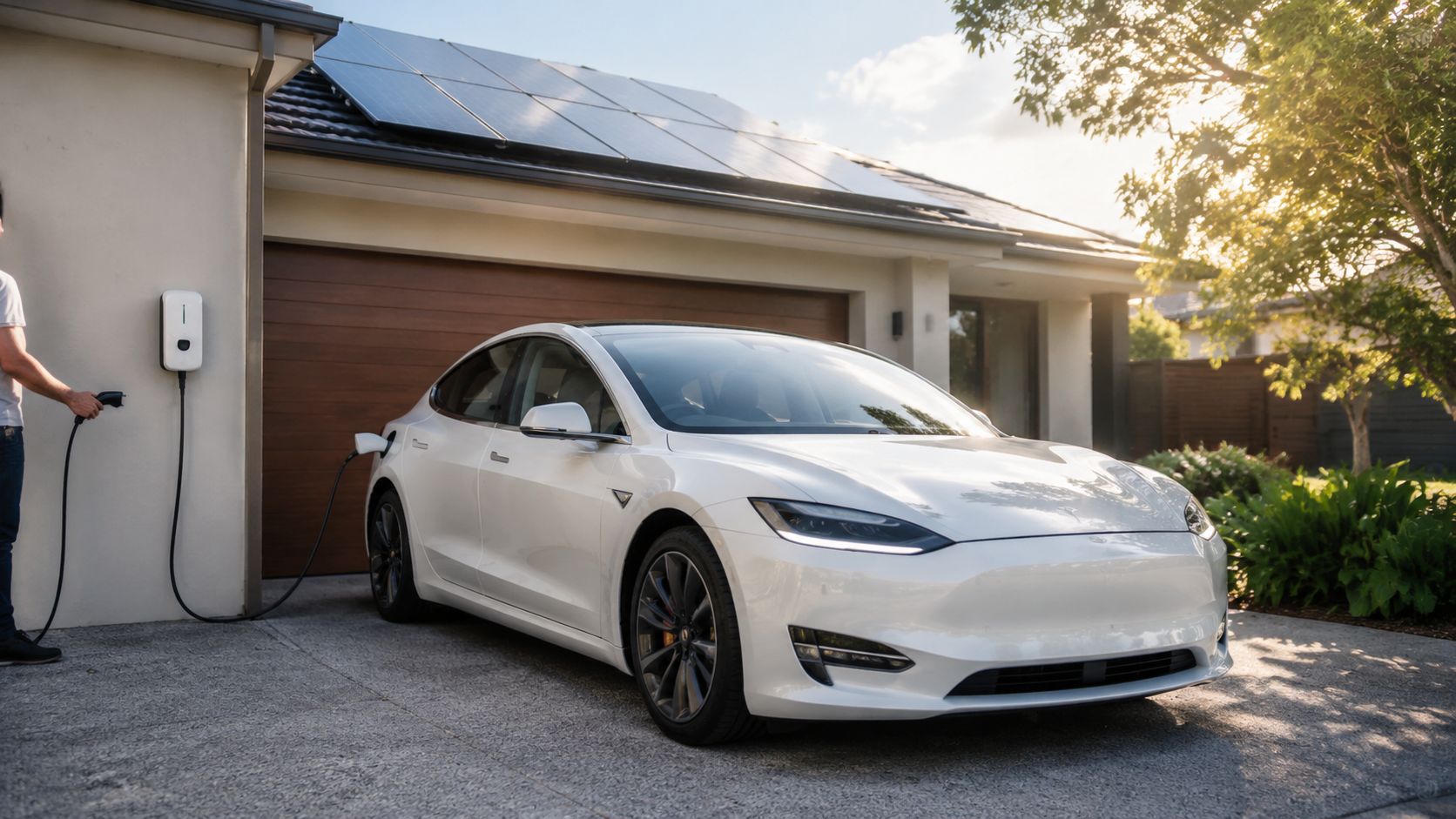
Learn How to Charge Electric Car at Home: Your 2026 Aussie
Last updated:
Driving a new EV home feels simple right up until you park it, grab the charging cable from the boot, and stand there looking at the nearest powerpoint. That first night is when most owners realise an electric car isn't just a new vehicle. It's a new appliance, and in many homes it becomes the biggest regular electrical load you add.
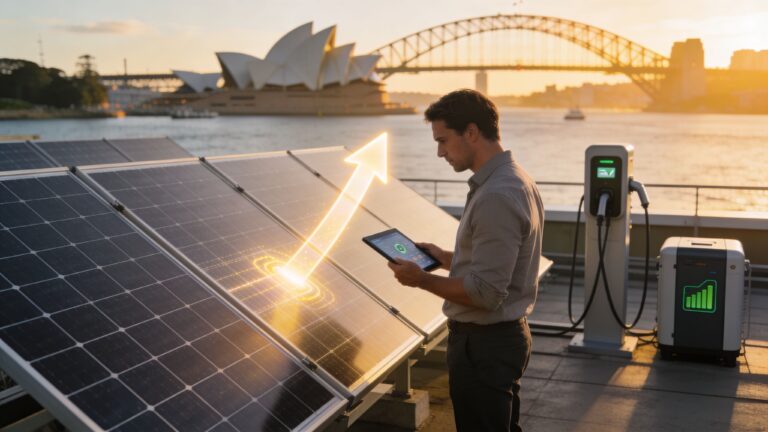
The good news is that home charging suits the way drivers typically drive. You're not trying to recreate a public fast charger in your garage. You're building a safe, repeatable routine that fits your car, your switchboard, and ideally your solar system as well. If you want to understand how to charge electric car at home properly in Australia, the answer usually starts with a dedicated AC charger and then gets much more interesting when you connect that charger to the rest of the home.
Your First Night with a New EV
Most new EV owners do the same thing first. They use the portable cable that came with the car, plug into a normal outlet, and tell themselves they'll sort out a proper setup later. That's reasonable for a short period. It gets the car charging, and it helps you learn the basic routine of plug in, confirm the car has started charging, and leave it overnight.
But the limits show up quickly.
The core issue isn't that a standard outlet never works. It's that it usually isn't the best long-term answer for daily charging. According to the U.S. Alternative Fuels Data Center home charging guidance, most EV owners can meet daily driving needs by charging overnight at home with Level 1 or Level 2 AC equipment, and Level 2 (240 V) is the faster home option. That same guidance also notes installations must comply with local and state codes and regulations, which matters in Australian homes where wiring condition, switchboard capacity, and licensed electrical sign-off decide what can be added safely.
Why the first setup often becomes the wrong setup
A portable charger on a standard socket is a short-term fix. It can be fine while you're waiting for installation, or if your driving is very light. It's not the setup I'd recommend building your routine around if you want convenience, reliability, and the option to integrate with solar later.
A home EV charger works best when it's treated as part of the house, not as an extension of a temporary cable.
Most problems don't come from the car. They come from treating a permanent charging need like a temporary one.
The first practical question is usually location. Can you reach the vehicle comfortably without stretching the cable across a walkway? Is the parking spot always the same? Is the charger going in a garage, carport, or exposed driveway? Those details matter because the neatest installation is usually the one that gets used properly every day.
What a good home charging habit looks like
A workable home setup is boring in the best way. You arrive home, plug in, and the charger either starts automatically or waits for its scheduled window. You check progress in the car or app, and you unplug once the charger releases the cable. That basic workflow is the one most owners end up wanting.
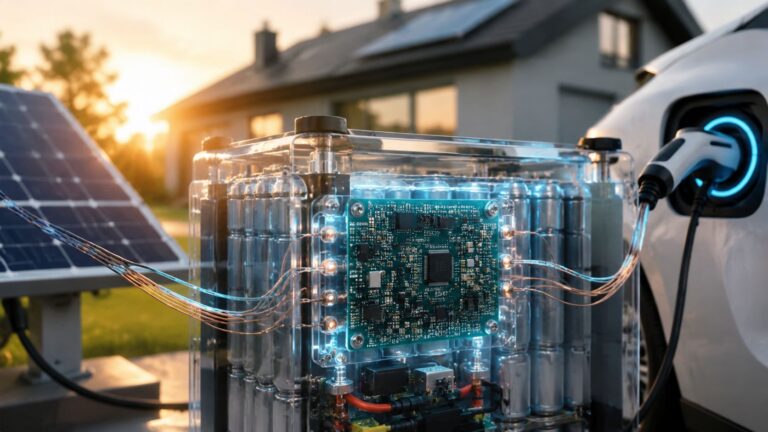
The bigger opportunity sits behind that routine. Once the charger is on a dedicated circuit and connected to a smart home energy system, the car stops being just something you charge. It becomes part of how your house uses solar, battery storage, and off-peak power more intelligently.
Your Home Charging Options Explained
The choice at home is usually straightforward after the first week of ownership. You either keep relying on a standard outlet, install a dedicated AC charger, or use public fast charging only when you are away from home. Each option has a place, but they do very different jobs.
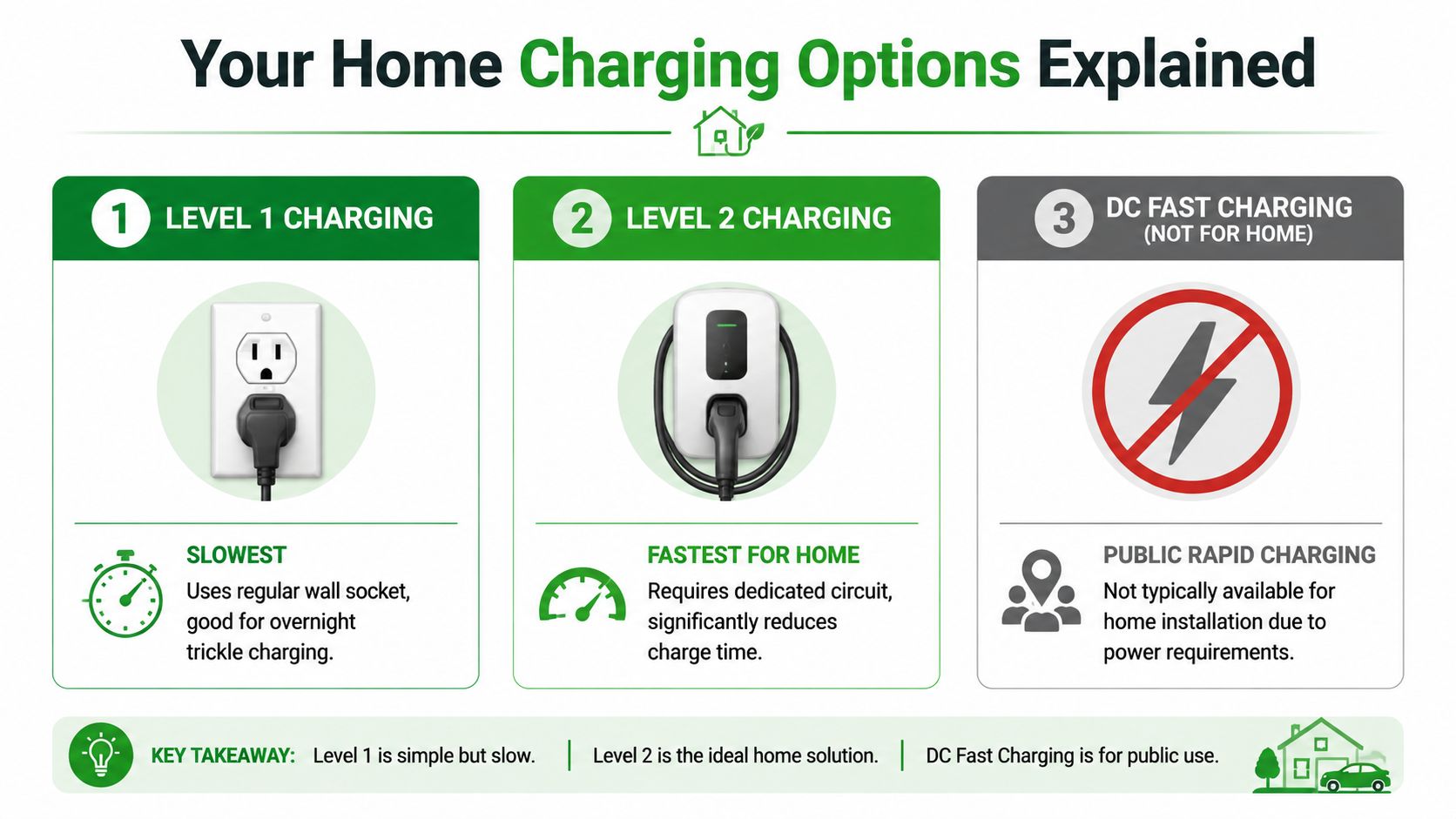
For a home that also has solar, the decision matters even more. The charger is not just a way to fill the car battery. It becomes another major load that can be timed, limited, and integrated with the rest of the house so more of your daytime solar stays on-site instead of going back to the grid.
The three charging levels in plain English
| Charging type | What it uses | Best use | Practical verdict |
|---|---|---|---|
| Level 1 | Standard household outlet | Short-term or emergency charging | Usually too slow for regular EV use |
| Level 2 | 240 V dedicated AC charger | Everyday home charging | The standard setup for most homes |
| DC fast charging | High-power public infrastructure | Road trips and quick top-ups away from home | Rarely suitable for residential installation |
Level 1 charging
Level 1 uses the portable charger and a normal household socket. It works, and for some owners that is enough at the start.
I treat it as a temporary arrangement unless the driving pattern is very light. Charging is slower, the outlet and circuit need to be in good condition, and the cable path is often less tidy than people expect. If a household plans to keep the EV long term, add more solar later, or replace a second car with another EV, Level 1 usually becomes the limiting factor.
It can still earn its place as a backup option.
Level 2 charging
Level 2 is the proper home charging setup for most Australian households. It uses a dedicated 240 V circuit and a wall-mounted charger sized to the house supply, the car, and how the family drives.
The practical benefit is not just speed. A dedicated charger gives you controlled charging, cleaner cable management, safer protection devices, and a better foundation for solar-aware charging. That last part matters. A smart charger can be configured to soak up surplus solar during the day, respect off-peak tariffs overnight, or hold charging power below the limit of the home's available supply.
That is where the whole-of-home approach starts to pay off. The EV charger stops behaving like an isolated appliance and starts working with the rest of the energy system. If future vehicle-to-home capability is on your radar, it is worth understanding how bidirectional EV charger technology fits into that longer-term plan.
DC fast charging
DC fast charging belongs mainly in public infrastructure. It is built for travel, fleet use, and quick turnarounds, not for the average house switchboard or suburban connection.
Homeowners sometimes ask for the fastest option available. In practice, home charging is better judged by reliability, electrical capacity, and how well it lines up with your solar production and tariff windows. A charger that fits the house properly will usually deliver better value than chasing maximum power for its own sake.
Connector compatibility matters
Before choosing hardware, check what AC connector standard your vehicle uses. In Australia, Type 2 is the standard most homeowners will be dealing with, so compatibility is usually straightforward if the charger is chosen properly from the start.
That check matters more in mixed households, especially where one car is hybrid and the next may be fully electric. If you are still weighing up those ownership patterns, these Blade Auto Keys hybrid insights are useful for understanding how charging habits differ. From an installation point of view, that difference affects whether a simple charger is enough or whether it makes sense to prepare now for solar integration, load management, and a second EV later.
Choosing the Right EV Charger for Your Home
Once you've decided on Level 2, the next mistake is choosing a charger by brand alone. Hardware matters, but fit matters more. The right charger is the one that matches your home's electrical supply, your parking layout, and the way you want to use solar.
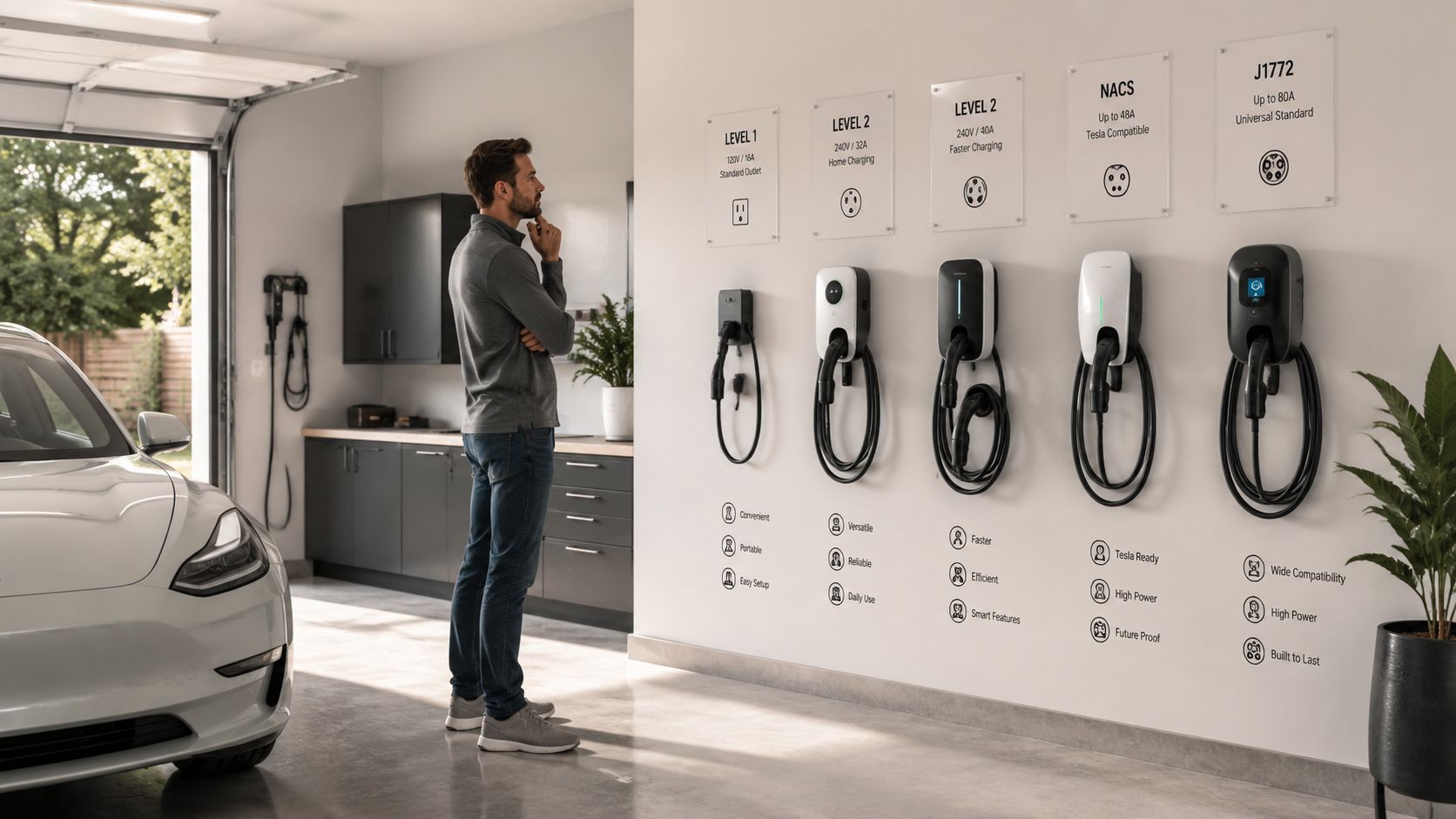
The speed gap is what drives this decision. The EPA charging basics page notes that DC fast chargers can add hundreds of miles in 20 to 30 minutes, but that isn't the normal home setup. In the same source set, EVBox reports a 2.3 kW standard outlet can take about 24 hours to charge a 50 kWh battery to 80%, while a home charger can fully charge a medium EV in 3 to 7 hours. The same verified data also notes that over 64% of EV drivers regularly charge at home, and ChargeHub reports that most plug-in vehicle drivers do more than 80% of their charging at home. That's why charger selection is an infrastructure decision, not just an accessory purchase.
Start with your home supply
The first thing to check is whether your house is single-phase or three-phase. That determines what charging power is practical.
A lot of homes suit a 7 kW class charger very well. Some properties can support 22 kW charging, but only where three-phase supply is available and the rest of the electrical design makes sense. More charger power doesn't automatically mean better results if the vehicle's onboard AC charger limits what it can accept.
Practical rule: Match the charger to both the house and the car. The slower component sets the real charging speed.
Smart charger or basic charger
A basic charger can deliver power reliably. That may be enough if your only goal is to charge overnight.
A smart charger adds the features that make a whole-of-home energy strategy work:
- Scheduled charging helps you align charging with off-peak tariffs.
- Load management helps the charger avoid clashing with other heavy appliances.
- App control makes it easier to monitor and adjust charging behaviour.
- Solar integration readiness gives you a better path if you want the charger to follow excess solar generation.
That's why I usually favour smart units for owner-occupiers. Even if you don't have solar today, a charger with intelligent controls keeps your options open. If you're comparing models, this guide to best EV car chargers is a good starting point for the questions worth asking before you buy.
Tethered or untethered
This comes down to daily convenience.
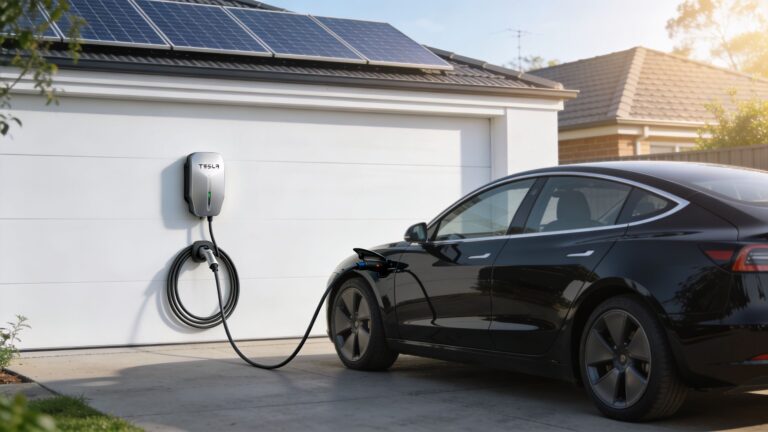
A tethered charger has the cable attached. It's easy to use, quick to plug in, and usually the most convenient option if one vehicle uses the space most of the time.
An untethered charger has a socket only. It looks tidier on the wall and can suit households that prefer to store the cable away when not charging.
Here's the practical trade-off:
- Choose tethered if you value speed and ease every night.
- Choose untethered if appearance matters more and you don't mind handling the cable each time.
- Choose based on parking behaviour if more than one EV may use the charger over time.
Think ahead, not just for today
A charger often stays on the wall longer than the car stays in the driveway. So choose for your likely next EV, not only the current one. Solar compatibility, dynamic load management, access control, and neat cable handling all become more important over time.
Planning Your Home EV Charger Installation
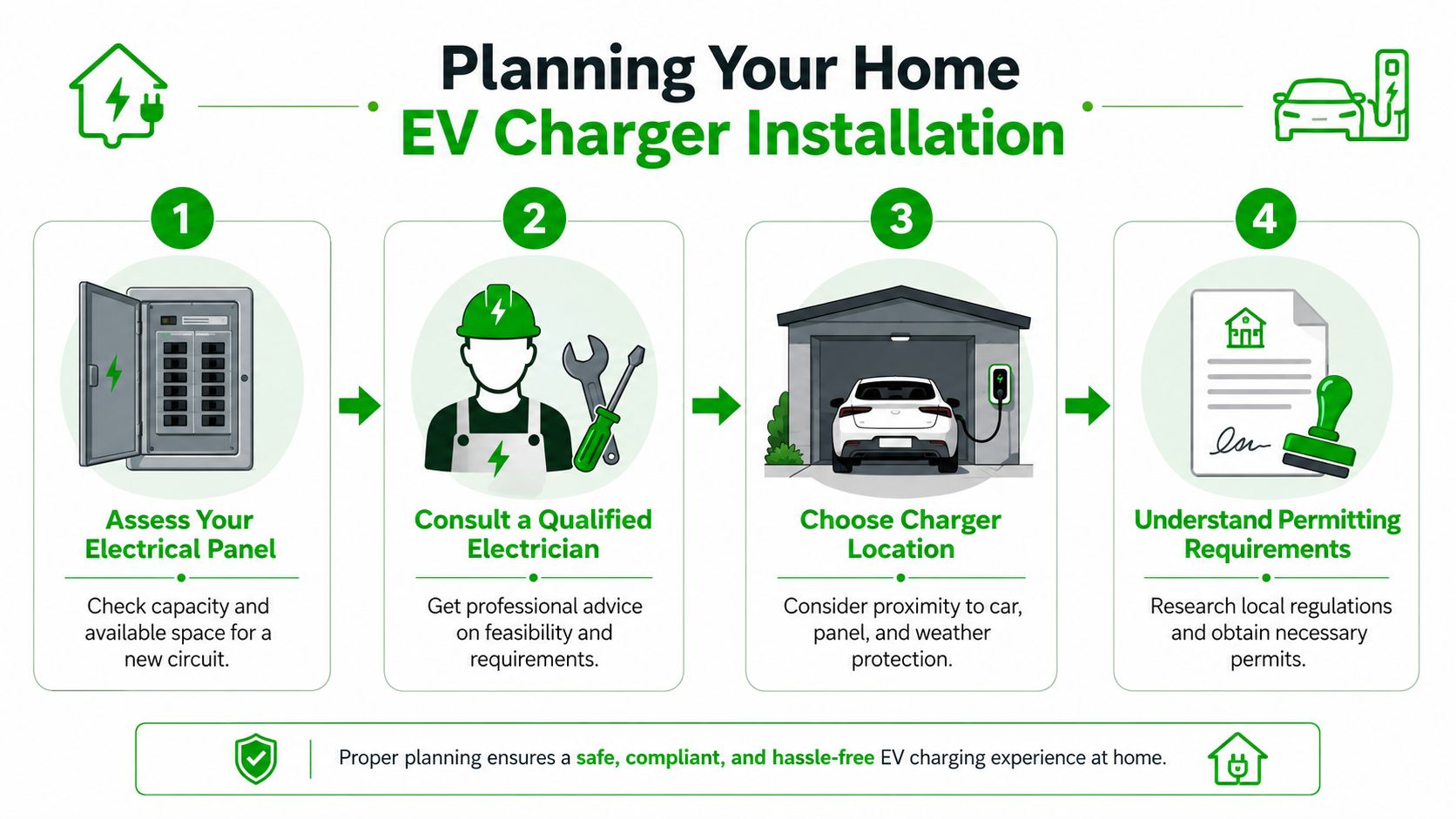
Good EV charger installations are won before the electrician opens the toolkit. Most of the important decisions happen earlier, during the site check and design. These earlier steps determine whether safe charging, tidy cable runs, and future solar integration are planned properly or left to chance.
Pick the charger location properly
The charger should be easy to reach from the car's charge port without stretching the lead or creating a trip hazard. That sounds obvious, but it's often missed when people choose the wall first and think about the car second.
Look at the space in real use:
- Garage installs usually give the cleanest finish and best weather protection.
- Carport installs can work very well if the unit is suited to the environment.
- Driveway installs need more thought around exposure, cable storage, and vehicle position.
Also think about how you park. If one driver reverses in and another drives in nose first, the charge port location becomes a daily annoyance unless the charger is placed with that behaviour in mind.
The electrical assessment isn't optional
Home charging adds a long-duration AC load. That changes what the switchboard and cabling need to support. The EVBox home charging guide states that a safe installation involves a dedicated AC wallbox on a properly rated circuit, and the U.S. Department of Energy warns that using an extension cord for EV charging increases the risk of fire, overheating, and electric shock.
Never use an extension cord for regular EV charging.
That warning matters in Australia because many households try to bridge the distance from the house to the car with temporary cabling. It's not a proper solution. A licensed electrician needs to inspect the switchboard, confirm available circuit capacity, assess cable routes, and decide whether upgrades are needed before installation goes ahead.
What the installer should check
A proper site assessment usually covers more than people expect.
Switchboard capacity
The installer checks whether there's space and capacity for a new dedicated circuit.Cable route
The neatest route isn't always the shortest route. Sometimes the better option avoids heat, weather, or difficult wall penetrations.Charger mounting point
The unit needs a sensible height, solid fixing, and enough room for cable handling.Future energy plans
If solar, battery storage, or a second EV may be coming later, the charger should be selected and positioned with that in mind.
People looking for a broad overview of what professional charger work involves can also look at EV charger installation services from Forward Electrical. It's a useful comparison point for the sort of installation considerations homeowners should expect any provider to address.
A local installer should then tailor that thinking to Australian compliance requirements and site conditions. If you want to see what that process looks like for a home setup, this page on electric car charger home installation outlines the kind of planning involved.
The visual below is a helpful walkthrough before installation day.
Temporary fixes usually become permanent problems
The homes that run smoothly are the ones where owners avoid shortcuts. No outdoor extension leads. No powerpoints being used as a long-term EV bay solution. No guessing whether the switchboard “should be right”.
If charging is going to be part of daily life, the wiring has to be set up for daily life.
That's the mindset that keeps the installation safe and keeps options open for the next stage, which is making the charger work with the rest of the home energy system.
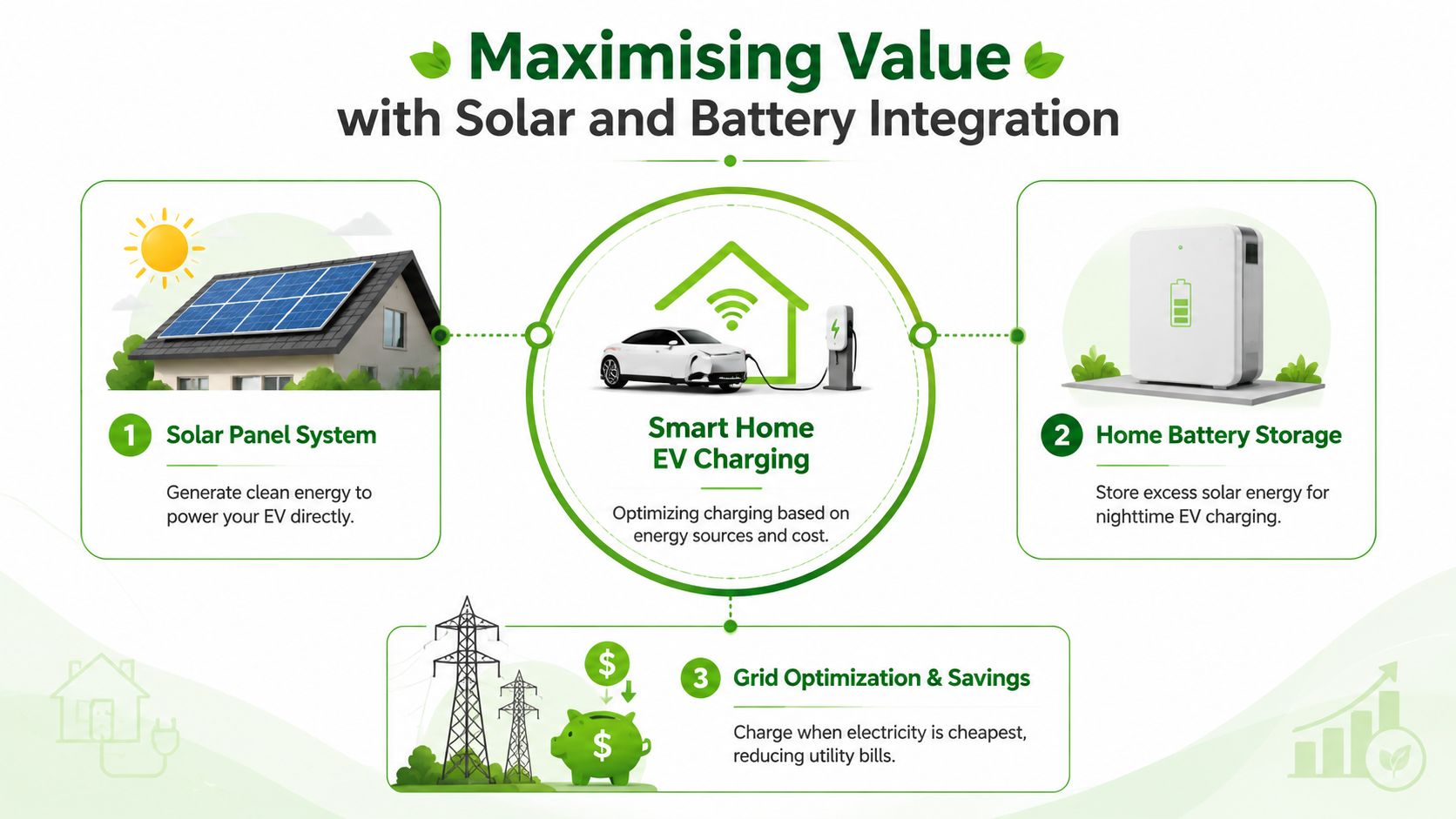
Maximising Value with Solar and Battery Integration
A home charger solves the convenience problem. Solar and battery integration solve the value problem.
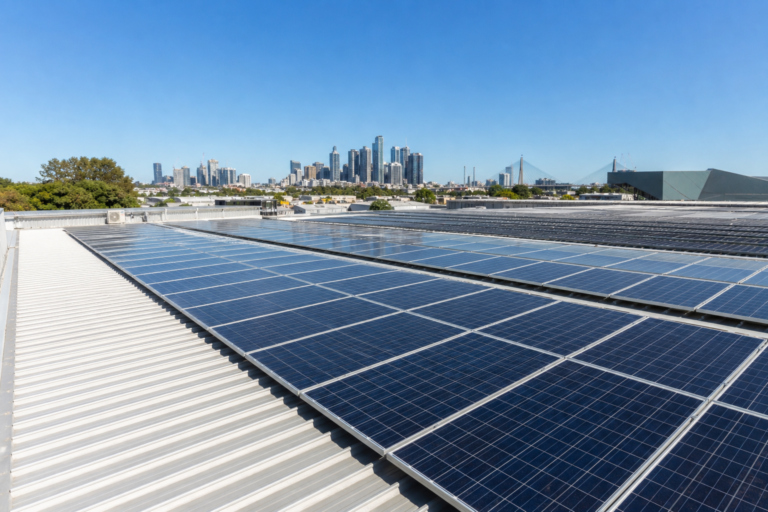
The economics of EV ownership improve. Instead of treating the car as a separate load that buys electricity from the grid, you make it part of a planned home energy system. Done well, the EV becomes one of the best uses for your solar generation because it can absorb energy that would otherwise be exported.
Use solar first
The simplest high-value strategy is to charge the car when your solar system is generating strongly and the rest of the house isn't consuming all of that power. That turns the EV into a flexible daytime load.
The Pod Energy charging guide notes that the cheapest charging strategy is to align with rooftop solar generation or off-peak grid tariffs. It also states that a smart charger with load management can be configured to avoid running alongside other high-load appliances, which helps prevent tripped breakers and maximises self-consumption from a solar system.
That's the heart of the whole-of-home approach. Your charger shouldn't just deliver power. It should respond to when power is cheapest and most available.
What smart charging does in a real home
A well-configured charger can be set to behave differently depending on the house's energy conditions.
- Solar priority mode lets the charger favour excess solar when available.
- Timed charging shifts EV demand into lower-tariff periods when solar isn't available.
- Load balancing reduces the chance that the charger and other appliances will push the home too hard at the same time.
That matters because EV charging is usually a long-duration load. If the charger starts just as the oven, ducted air conditioning, and hot water system are all working hard, the result can be annoying at best and disruptive at worst.
Where a home battery fits in
A battery adds another layer of control. It can store surplus solar energy generated during the day and make some of that energy available later, including in the evening when the car is back home and ready to charge.
That won't mean every household should charge the EV from the battery every night. The right strategy depends on your solar production, your evening household demand, and how you prioritise backup versus vehicle charging. But the combination of solar, battery, and smart charging gives you options that a charger alone can't.
If that broader setup is what you're aiming for, a home battery storage system becomes part of the EV charging conversation, not a separate purchase decision.
A charger on its own moves energy. A charger connected to solar and battery storage manages energy.
Future-proofing the home energy system
Some vehicles and chargers are also moving towards more advanced energy use cases, including Vehicle-to-Load and broader bidirectional operation. Those technologies aren't the reason most households install a charger today, but they are a reason to avoid buying the most basic hardware if you want the home to stay adaptable.
The practical takeaway is straightforward. If you're investing in EV charging, think about the driveway, the switchboard, the solar inverter, and the battery together. That's how you get closer to charging on your own energy rather than relocating your fuel bill from the servo to the electricity account.
Your Next Steps to Smart EV Charging
Your EV is in the driveway, the charger is on the shortlist, and the next decision is the one that affects how the whole system performs for years. The right setup is the one that matches the car, the switchboard, your parking habits, and the way the home already uses power.
For many households, that still means a professionally installed Level 2 wallbox on a dedicated circuit. It charges at a practical speed, avoids the long-term strain that comes with regular charging from a standard outlet, and gives you a safer starting point for load management, solar integration, and future upgrades.
The bigger decision is whether you want a charger, or an energy setup that works as one system. Once EV charging is planned alongside solar, battery storage, tariffs, and household demand, the car stops being just another appliance load. It becomes part of how the home buys less grid energy, uses more of its own solar, and stays flexible as energy prices and technology change.
A practical checklist before you go ahead
- Confirm your parking routine so the charger is easy to reach every day, not just on install day.
- Get the switchboard assessed by a licensed electrician before locking in charger size or extra circuits.
- Choose smart control features if you want solar-first charging, timer-based charging, or better visibility of energy use.
- Plan for the next vehicle if a second EV is even a realistic possibility over the next few years.
Don't leave the numbers to guesswork
If you're comparing solar, battery storage, and EV charging, assess them together. A charger that looks cheap in isolation can turn into the wrong choice if it cannot follow solar output, fit within site limits, or adapt to a future battery.
A proper estimate helps before money gets spent in the wrong place. The solar savings calculator is a useful starting point if you want to see how EV charging may fit into the broader economics of your home energy system.
The main thing is to do it once and do it properly. Safe wiring, correct circuit design, sensible charger placement, and future-ready controls all matter because fixing a rushed installation later usually costs more than planning it properly at the start.
Working with an experienced installer helps tie those pieces together early, before the charger location, switchboard capacity, solar setup, and future battery plans start pulling in different directions.
If you want a charging setup that works with your car, your switchboard, and your solar plans, talk to Interactive Solar. Their team can assess your home, recommend the right EV charger configuration, and design a complete solution that ties together EV charging, solar panels, and battery storage without the guesswork.
Make Interactive Solar a preferred source in Google
One click tells Google to surface our articles more often in Top Stories, AI Overviews and AI Mode.