Solar Power for Homes Australia: Complete 2026 Guide
Opening your electricity bill can feel like a loss of control. You use the air con when Sydney turns sticky, run the dishwasher after dinner, maybe charge devices overnight, and the bill still lands heavier than expected. Most homeowners don't need a lecture on energy markets. They want a practical way to stop being exposed to every retail price jump.
That's why solar power for homes in Australia has moved from “nice idea” to mainstream household planning. As of 30 June 2025, Australia had 4,154,426 solar panel installations, and 43.29% of households had solar panels installed, according to Green. That tells you something important. Solar isn't experimental anymore. It's a normal part of how Australian homes manage electricity.
For NSW homeowners, the opportunity isn't just putting panels on a roof. It's making one smart energy decision that still makes sense years from now.
Your Guide to Taking Control of Home Energy
A common starting point is simple. A homeowner gets a higher-than-expected bill, starts comparing retailers, then realises the bigger problem isn't the bill itself. It's the lack of control behind it. If your home depends entirely on imported electricity, your budget depends on decisions made somewhere else.
Solar changes that equation. It gives your home its own daytime generation, which means more of your electricity can come from your roof instead of the grid. For many households, that's the first real step toward predictable energy costs.
NSW homeowners are in a strong position to act on this because solar is already a proven part of Australian housing, not a fringe upgrade. If you're building or renovating, it also helps to combine generation with smarter building design. Practical custom home builder insights on energy efficiency can make solar work harder by reducing how much power the home needs in the first place.
What control actually looks like
Control doesn't mean disconnecting from the grid. For most homes, it means reducing how much electricity you need to buy at full retail rates and using more power when your system is producing.
If you're still getting familiar with solar terminology, the difference between system size and energy use matters more than most quotes suggest. This guide to kW versus kWh in home solar is worth reading before you compare proposals, because many bad buying decisions start with mixing up those two terms.
A good solar decision usually starts with one question: when does your home use power, not just how much power it uses.
How Solar Power Works on Your Roof
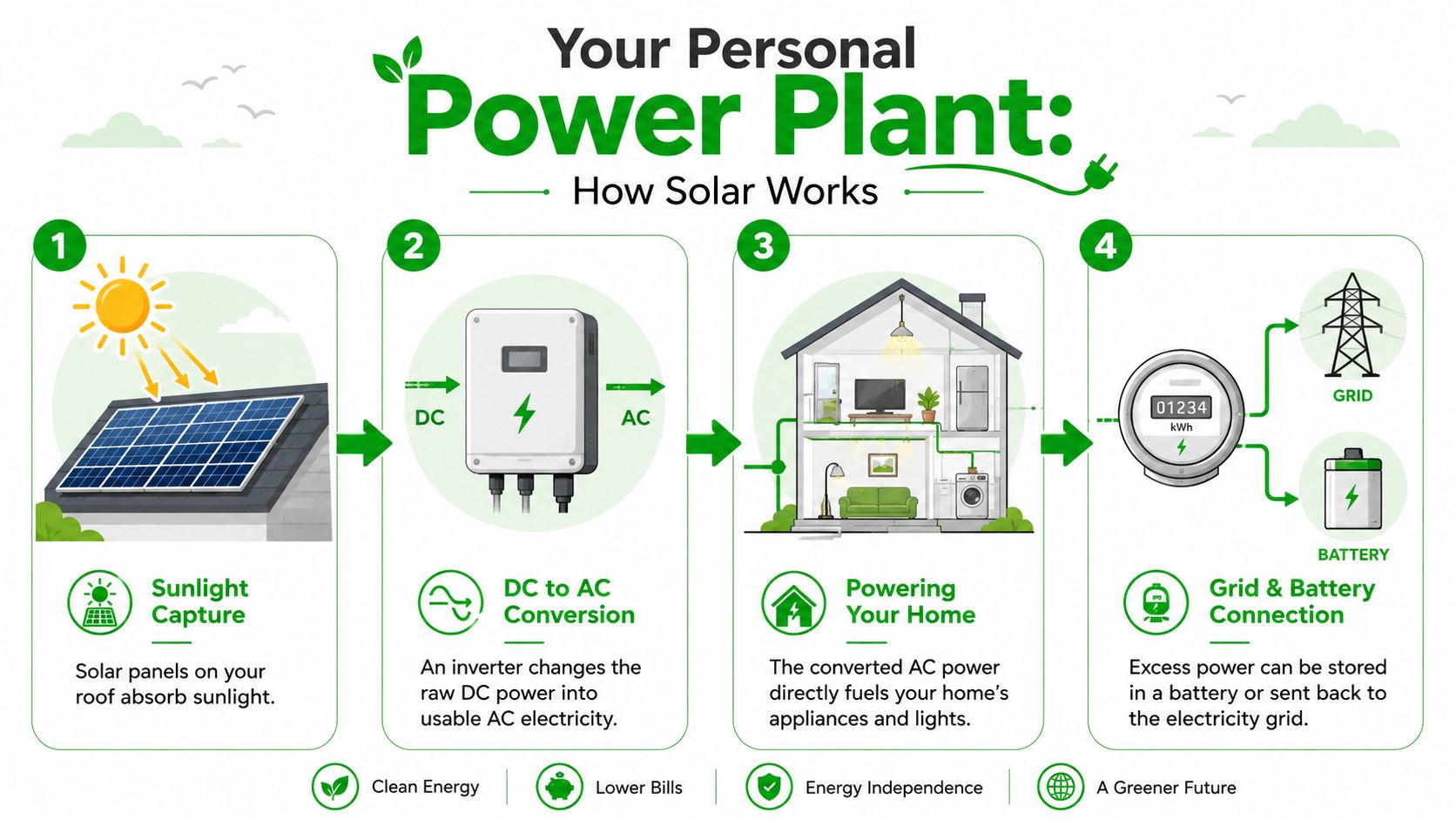
Think of a rooftop solar system as a personal power plant. It does four jobs. It catches sunlight, converts that energy into usable electricity, sends that electricity to your home first, then deals with any excess through a battery or the grid.
That sounds technical, but the process is straightforward once you break it into pieces.
Catch the sunlight
Solar panels sit on the roof and absorb sunlight. They don't need blazing heat to work. They need daylight. When light hits the cells, the panels produce electricity in a raw form.
The quality of the panel matters, but so does where and how it's installed. Roof angle, shading from trees, nearby buildings, and available roof area all affect what the system can produce in real conditions.
Convert it into usable power
The electricity from panels isn't the kind your home appliances use directly. That's the inverter's job. It converts the raw electricity into usable household power.
If the panels are the engine, the inverter is the translator. When it's chosen well and matched properly to the array, your system runs smoothly. When it's undersized, poorly configured, or installed carelessly, performance suffers.
Use solar first
Your home generally uses solar power before drawing from the grid. So if the sun is up and your system is producing, appliances running at that time can use that power directly. Lights, fridges, dishwashers, pool pumps, and air conditioning all become part of the equation.
That's why the best solar outcomes often come from changing habits slightly, not dramatically. Running major loads during daylight hours can improve the value of the system without adding hardware.
For homeowners comparing different roof-integrated options, this overview of solar shingle costs and ROI gives useful context on how solar shingles differ from standard panel systems in practicality and return expectations.
Send or store the excess
When your system produces more than the home is using, the extra energy has to go somewhere. Depending on the setup, it can flow into a battery for later use or be exported back to the grid.
A simple way to think about it is this:
| Component | What it does | Why it matters |
|---|---|---|
| Panels | Capture sunlight | Determine how much generation is available |
| Inverter | Converts power for household use | Affects performance and system control |
| Switchboard and meter | Direct electricity where it's needed | Supports safe operation and grid interaction |
| Battery or grid connection | Handles surplus generation | Shapes how much value you keep on-site |
If you want a clearer sense of how panel performance differs across products, a solar panel efficiency comparison can help you read beyond headline wattage.
The technology isn't the hard part. Matching it to the way your household actually lives is where good outcomes happen.
The True Value of a Home Solar System
Many begin with one goal: cut the power bill. That's fair. But the strongest reason to install solar isn't a single quarter's savings. It's the long-term value of producing part of your own electricity in a market where retail energy has become more expensive and less predictable.
The Australian Bureau of Statistics reported that in 2024–25 households consumed almost $24 billion of electricity, with about $1 billion supplied directly by rooftop solar and $23 billion supplied by retailers. The ABS also noted that retail electricity prices had doubled since 2009–10 to $0.29/kWh in 2024–25, and that Queensland and New South Wales account for half of the rooftop solar in Australia. You can read that in the ABS article on household solar electricity generation.
Solar is a hedge, not just a gadget
A properly designed system gives you a measure of protection against future retail price rises. It doesn't remove your electricity bill entirely in every case, but it shifts part of your energy supply into something your home generates itself.
That changes the conversation. Instead of asking only, “How much will I save this year?” the better question becomes, “How much of my future electricity use can I supply on my own roof?”
Self-consumption is where the value lives
Years ago, plenty of homeowners focused on exporting excess solar. Today, the smarter design principle is usually self-consumption. That means using as much of your solar generation on-site as possible.
For a typical household, direct use often beats passive export as a strategy because it turns your system into a daily working asset. The more of your own generation you use in real time, the less exposed you are to retail electricity purchases.
Practical rule: Don't buy a solar system like a billboard that sends power away. Buy one like a household tool that serves your own loads first.
Appliance timing matters. Hot water, pool equipment, air conditioning, and EV charging can all be scheduled or managed to align with solar production. Those design decisions often matter more than chasing the biggest panel count.
Batteries add another layer of control
A battery isn't mandatory for every home, but it can be the right move when a household uses more electricity in the evening, wants backup capability, or plans to electrify more of the home over time.
Battery value is strongest when it supports a clear pattern of use. Homes with heavy night-time consumption, regular cooking and cooling loads after sunset, or an EV that returns home in the evening often benefit from planning for storage early, even if the battery is added later.
A useful starting point is to run your own usage pattern through a solar savings calculator for Australian households. The point isn't to chase a perfect prediction. It's to understand whether your household creates value through daytime use, battery-shifted evening use, or both.
Solar can future-proof an all-electric home
The strongest systems are designed around where the home is heading, not just where it is now. If you expect to add an EV charger, replace gas appliances, or install a battery later, those possibilities should be built into the original design.
That means checking switchboard capacity, inverter compatibility, roof layout, and cable pathways early. It's far cheaper and cleaner to plan for future additions than to retrofit under pressure later.
Designing the Right Solar System for Your NSW Home
A NSW homeowner signs for the biggest system that fits the roof, then finds out six months later that most of the value is being exported cheaply in the middle of the day while the expensive evening usage barely changes. That problem usually starts in the design stage, not after installation.
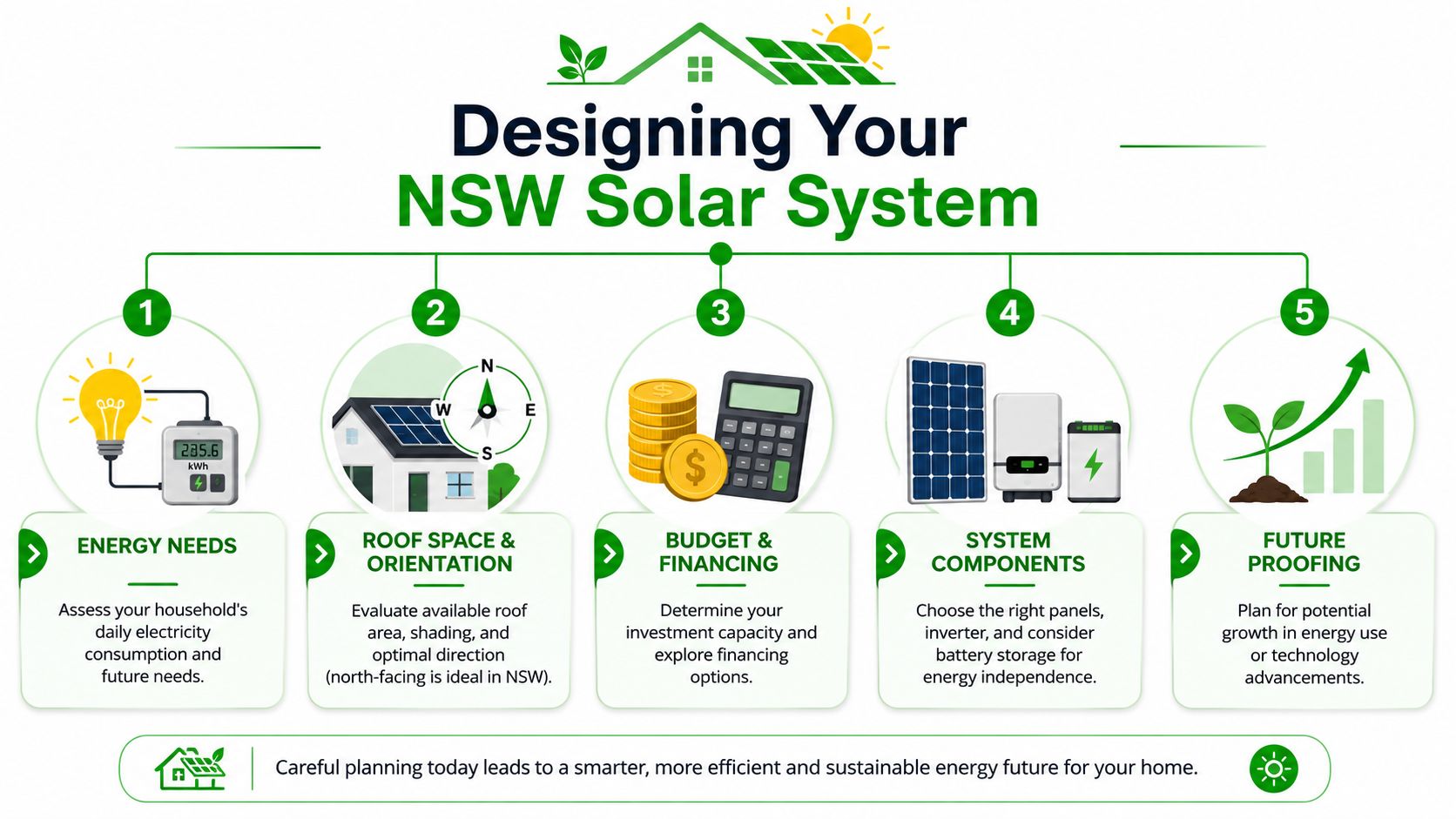
Good solar design starts with how the house uses energy, how the roof behaves across the day, and what the home is likely to add over the next five to ten years. Panel brand matters, but it comes after the bigger decisions on sizing, layout, inverter choice, and future expansion.
Start with the load profile, not the panel count
The first design question is simple. What does the home use, and when does it use it?
For NSW households, the long-term value of solar usually comes from using more of your own generation on site. A family with someone home during the day, electric hot water on a timer, or regular cooling load can often support a different system size from a household that is empty until 6 pm. The roof might be the same. The right design often is not.
A practical review should cover:
- Daytime occupancy. Remote workers, retirees, and homes with young children often have stronger daytime demand.
- Shiftable appliances. Pool pumps, dishwashers, washing machines, and some hot water systems can be scheduled to run in solar hours.
- Likely changes. EV charging, a future battery, air conditioning upgrades, or replacing gas appliances can all change the right system size.
If you are comparing quotes and trying to match system size to real household demand, this guide on what size solar system you need helps frame the decision properly.
Roof layout changes the result
On paper, two homes may both suit a 10 kW system. On the roof, they can perform very differently.
North-facing roof space is still useful in NSW, but east and west arrays often make more sense than homeowners expect, especially when usage is spread across the morning and late afternoon. A well-balanced layout can improve self-consumption and reduce reliance on the grid later in the day. That matters more than chasing the highest estimated production number from a single orientation.
Shade also needs a realistic assessment. Trees, vent pipes, neighbouring buildings, and second-storey roof lines can all reduce output during key production windows. I have seen plenty of proposals that looked fine on a sales sketch and fell apart on site because one section of the array was shaded at the wrong time of day. A proper inspection avoids that mistake.
Here's a practical visual overview of what a planned solar journey can involve:
Build the system around where the home is heading
A solar system installed today should still make sense after the home changes.
That means asking a few forward-looking questions before anything is approved. Will the household add an EV within a few years? Is gas hot water likely to be replaced with a heat pump? Is there a battery plan, even if it is not part of stage one? Those decisions affect inverter capacity, switchboard work, cable routes, and hardware placement.
Cheap designs often leave no room to grow. The result is extra labour, replacement hardware, or awkward add-ons later. A system designed with expansion in mind usually costs less over its full life, even if the initial quote is not the cheapest on the table.
| Design approach | What happens later |
|---|---|
| Built only for current demand | You may need redesign work when adding an EV charger or battery |
| Planned for future electrification | Expansion is cleaner, faster, and usually less disruptive |
Interactive Solar's home energy services are one example of a provider that treats solar, battery planning, and EV charging as part of one design process rather than separate jobs. That approach reduces the risk of paying twice for decisions that should have been made once.
For homeowners who also run a business from home or operate a small commercial site, tax treatment can affect timing and equipment choices, and 2023-24 business energy incentives may be worth reviewing alongside the solar design itself.
Good design holds up under change. That is the standard worth paying for.
Navigating Australian Solar Rebates and Incentives
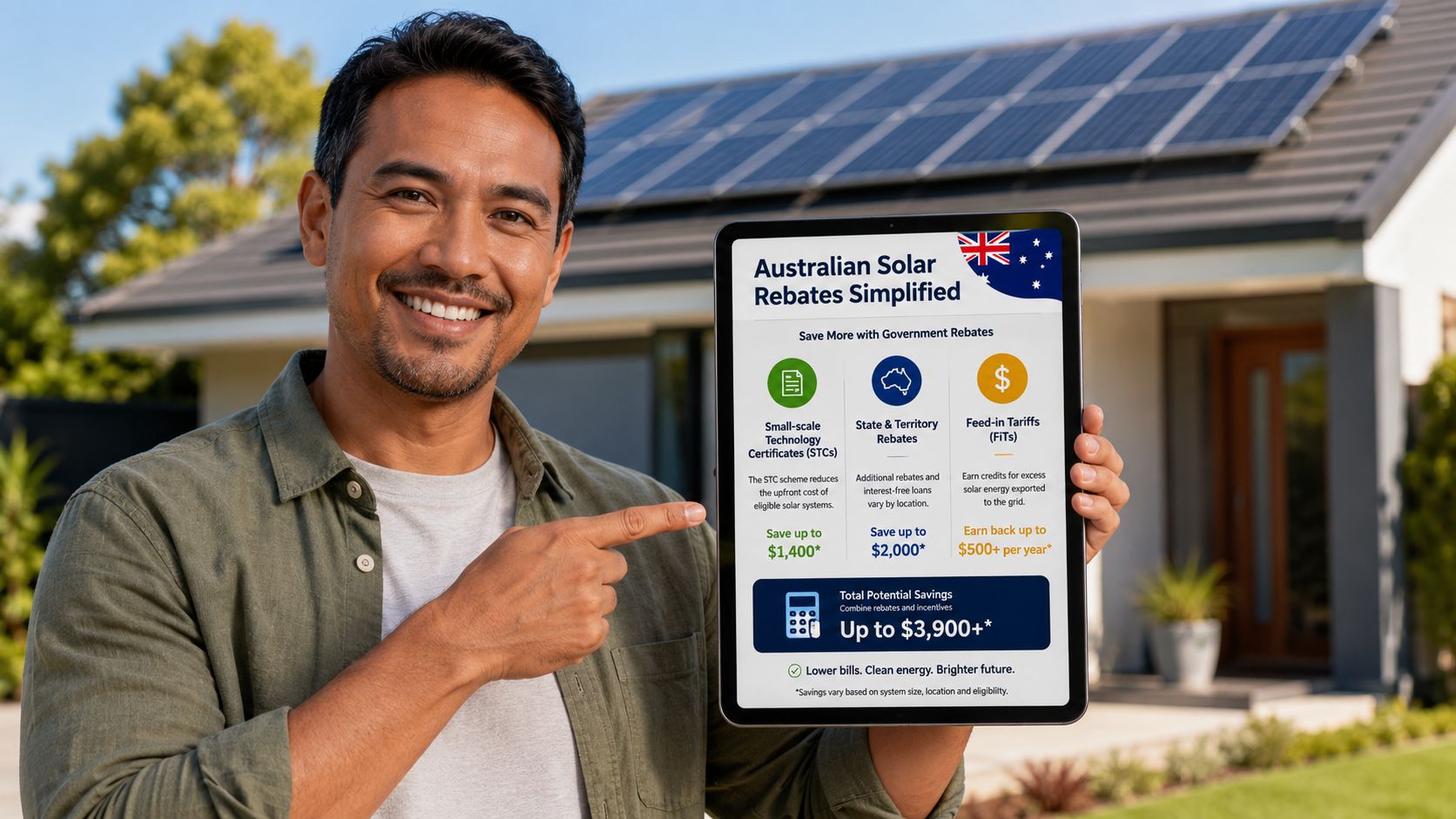
The rebate conversation confuses a lot of homeowners because people use the word “rebate” to describe several different things. In practice, the key point is simple. Incentives can reduce the upfront cost of installing a system, but they don't rescue a poor design.
Understand the role of incentives
For most homeowners, the federal small-scale scheme is commonly experienced as an upfront point-of-sale reduction handled through the installer. You don't usually need to become an expert in the paperwork, but you do need to understand that eligibility and claim handling should be clearly explained before you sign.
The mistake I see most often is treating incentives as the reason to buy. They should be treated as support for a well-planned investment, not a reason to rush into a system that isn't right for the property.
Incentives matter more in a changing grid
Stanwell notes that Australia's world-leading rooftop solar adoption has contributed to record lows in demand from the National Electricity Market, which makes it more important for new solar owners to combine incentives with smart usage patterns such as load shifting. That broader context is outlined in Stanwell's article on why we don't use more solar power.
That matters because incentives reduce entry cost, but day-to-day value still depends on how the household uses the system. The homes that get the most long-term benefit are usually the ones that pair solar with practical daytime energy use.
Ask these questions before relying on any rebate claim
Not all incentive discussions are equal. A careful homeowner should ask:
- Who is processing the claim. Your installer should explain exactly how the incentive is applied.
- What equipment is covered. Don't assume every product configuration is treated the same way.
- What rules may change. State programs can shift, and battery-related pathways may have separate conditions.
- How does this affect system design. The incentive should support the right system, not push you into the easiest one to sell.
If you run a home business or operate from mixed residential and business premises, it can also help to understand the broader tax and incentive environment around energy upgrades. This overview of 2023-24 business energy incentives gives useful context for owners who need to discuss structure and eligibility with their accountant.
Why Your Choice of Solar Installer Is Critical
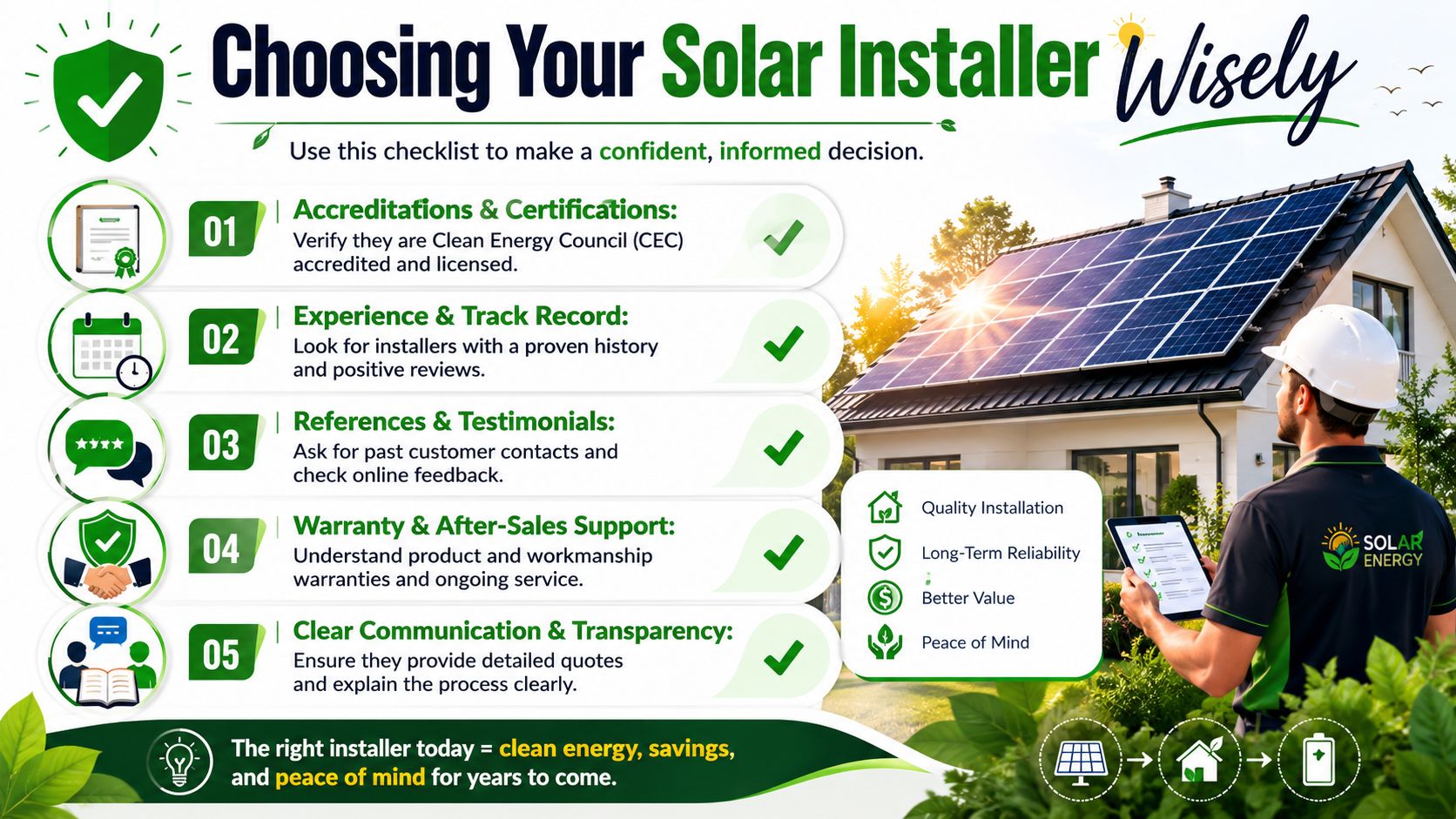
If the system is poorly installed, the theoretical benefits of solar stop mattering very quickly. That's why installer selection is the part of the process where homeowners should be most demanding.
A recent Australian media report said a regulatory review found up to 60% of installations failed quality standards, and it warned consumers to confirm that the installer is accredited for both panels and batteries, especially as scheme requirements changed from 1 May. The report is available via this media coverage of solar installation quality and accreditation risk.
Cheap quotes can hide expensive problems
A low quote often looks attractive because solar shopping usually starts with bill stress. But the cheapest system on paper can create the highest long-term cost if it leads to poor yield, water ingress risk, rushed cable runs, weak after-sales support, or warranty arguments between installer and manufacturer.
That's especially true once batteries, EV chargers, or switchboard work enter the picture. These aren't products to bolt on casually. They need proper electrical planning and a team that can stand behind the result.
What a careful homeowner should check
Use this as a working checklist when comparing installers:
- Accreditation for the actual scope. If the project includes solar and battery planning, confirm the installer is accredited and licensed for both types of work.
- Clarity on who installs the system. Ask whether the job is done by an in-house crew or passed through layers of subcontracting.
- Local accountability. A physical NSW presence makes support easier when you need service, inspection, or warranty assistance.
- Detailed design, not a generic template. The quote should reflect your roof layout, usage pattern, and future plans.
- Workmanship support in writing. Product warranties matter, but so does the installer's commitment to rectify installation issues.
A useful step during comparison is to review how local providers present licensing, process, and support. For example, this page on solar panel installers in Sydney shows the kind of information homeowners should expect to see before accepting a proposal.
“The cheapest quote can become the most expensive outcome” is more than a sales warning. It's what happens when rework, lost production, and warranty disputes land back on the homeowner.
The installer shapes the system's real performance
Panels and inverters get most of the attention, but the installer determines whether the design is delivered properly. Cable management, roof penetrations, isolator placement, array layout, switchboard integration, commissioning, and monitoring setup all affect long-term performance and serviceability.
A strong installer also gives honest advice when a battery should wait, when a roof section should be avoided, or when an EV charger should be included from day one. That kind of restraint is usually a good sign. It means the design is being built around the home, not around a sales target.
From Quote to Power On Your Solar Installation Journey
The process feels much simpler once you know what a normal project looks like. Most homeowners aren't worried about the idea of solar itself. They're worried about surprises, delays, and ending up with something they don't fully understand.
A good installation journey is structured, documented, and easy to follow.
The early stage
The first step is usually a consultation and site review. That should cover your electricity use, roof layout, switchboard condition, shading, and future plans such as battery storage or EV charging. A proper quote should then reflect those details rather than dropping a standard package onto every home.
Once the design is agreed, the installer usually handles the relevant approvals and grid application requirements. This is one of the biggest practical benefits of using an experienced provider. The paperwork matters, but you shouldn't have to chase it blindly.
Installation day and commissioning
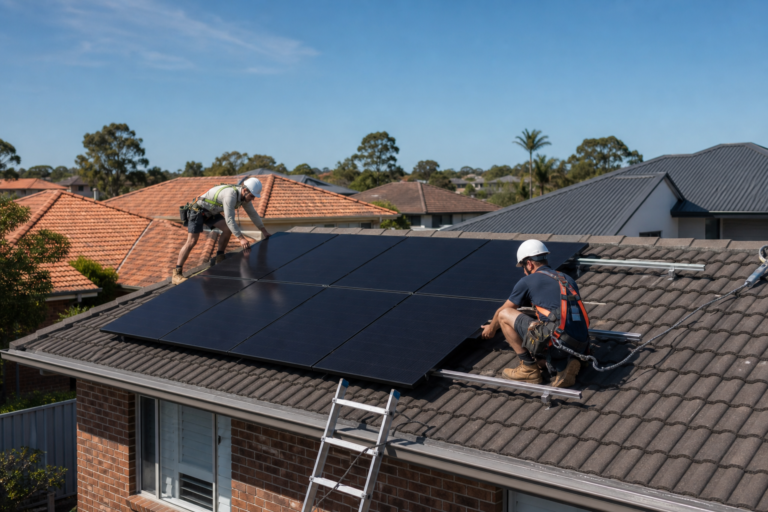
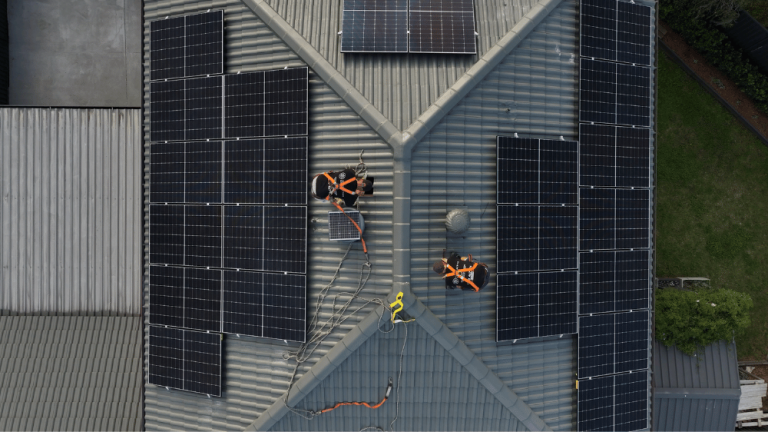
On installation day, the physical work should be organised and predictable. Panels are mounted, the inverter is installed, electrical connections are completed, and the system is tested. A tidy site by day's end is a sign of discipline, not a bonus.
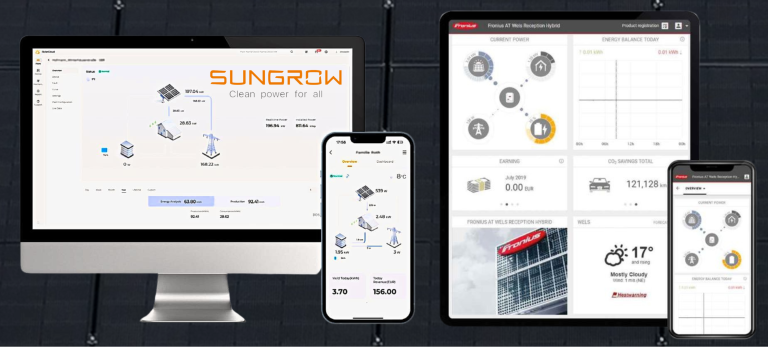
After installation, the system needs to be commissioned properly. That means the equipment is configured, checked, and made ready for normal operation. Just as important, the homeowner should be shown how to use the monitoring platform and what normal performance looks like.
A practical handover should include:
- Monitoring access. You should know how to check production and spot obvious issues.
- Shutdown and safety basics. You don't need to become an electrician, but you should understand the essentials.
- Warranty documents. Keep product and workmanship records in one place.
- Support contacts. You should know who to call if the system behaves unexpectedly.
Living with the system
Once the system is running, the goal is simple. Use it well. Shift suitable loads into solar hours where possible. Keep an eye on monitoring. Ask questions if generation suddenly looks unusual.
Maintenance for most home systems is modest, but “low maintenance” doesn't mean “never look at it again.” Leaves, grime, storm impacts, or inverter alerts can affect performance, and early attention usually prevents bigger issues.
What a good long-term relationship looks like
The best solar projects don't end at switch-on. Homes change. Families buy EVs, replace hot water systems, renovate, add cooling, or revisit battery storage later. The installer you choose should still be useful after the initial install, especially when it's time to expand or troubleshoot.
That's the essence of a good solar investment in NSW. It starts with a bill problem, but it becomes a home energy strategy.
If you're weighing up solar power for homes in Australia and want a design that considers panels, battery readiness, and EV charging from the start, Interactive Solar offers consultations for NSW homeowners who want clear advice, professional installation, and a system built for long-term use rather than a quick sale.
Make Interactive Solar a preferred source in Google
One click tells Google to surface our articles more often in Top Stories, AI Overviews and AI Mode.