EV Charger Installation Near Me: Certified NSW Installers
Last updated:
You've bought the EV, parked it in the garage, and had the first good week of not thinking about petrol. Then reality kicks in. Charging from a standard outlet works, but it's slow, inconvenient, and usually not how you want to live with the car long term.
That's when the search for EV charger installation near me typically starts. In NSW, that search shouldn't end with whoever can mount a wallbox fastest. The better question is whether your home can support the charger properly, how it fits with your switchboard, and whether it should be tied into your solar and battery setup from day one.
A charger isn't just another appliance. It's a major electrical load that affects how power moves around your property. Done properly, it becomes part of a whole-home energy system that gives you dependable daily charging, cleaner self-consumption, and fewer headaches later. Done badly, it can leave you with nuisance tripping, poor charger performance, or an expensive rework when you add solar batteries or a second EV.
The Need for Professional EV Charger Installation
A common pattern looks like this. A homeowner gets the car first, uses the portable charger for a while, and tells themselves it's fine. A few weeks later, the cable is being dragged out every evening, charging times are frustrating, and the garage powerpoint no longer feels like a smart permanent plan.
That's the point where a dedicated charger stops being a convenience upgrade and becomes a practical necessity. The issue isn't only speed. It's electrical safety, compliance, and load control.
Australia's public charging network is growing quickly, but availability still varies from region to region, which is why a dependable home or workplace setup remains strategically important for everyday charging access, according to Australia's national charging infrastructure overview. Public sites help. They don't replace the value of having charging where the car spends most of its time.
Why a standard outlet usually isn't the long-term answer
Portable charging has its place. It can be useful as a backup, for temporary use, or while you're waiting for a proper installation. What it doesn't do well is handle the routine of daily EV ownership in a way that's tidy, reliable, and designed around the rest of your home's electrical load.
A professionally installed wall charger typically gives you:
- A dedicated circuit so the charger isn't sharing load with other equipment
- Cleaner cable management so the setup stays safer and easier to use
- Protection at the switchboard matched to the charger and circuit design
- A better platform for smart charging if you want scheduling or solar integration later
Practical rule: If the charger will be used most days, it should be designed as a permanent part of the house, not treated like a temporary extension of a powerpoint.
Why workmanship matters
A charger can be premium on paper and still underperform if the installation is poor. Bad cable routing, weak isolation planning, switchboard shortcuts, or no thought for future solar and battery integration can turn a simple job into a recurring service call.
That's why installation quality matters just as much as charger brand. The same principle applies across all energy upgrades. Quality installation standards are what separate a reliable energy asset from a wall-mounted accessory that only looks good on handover day.
Finding and Vetting a Qualified Installer in NSW
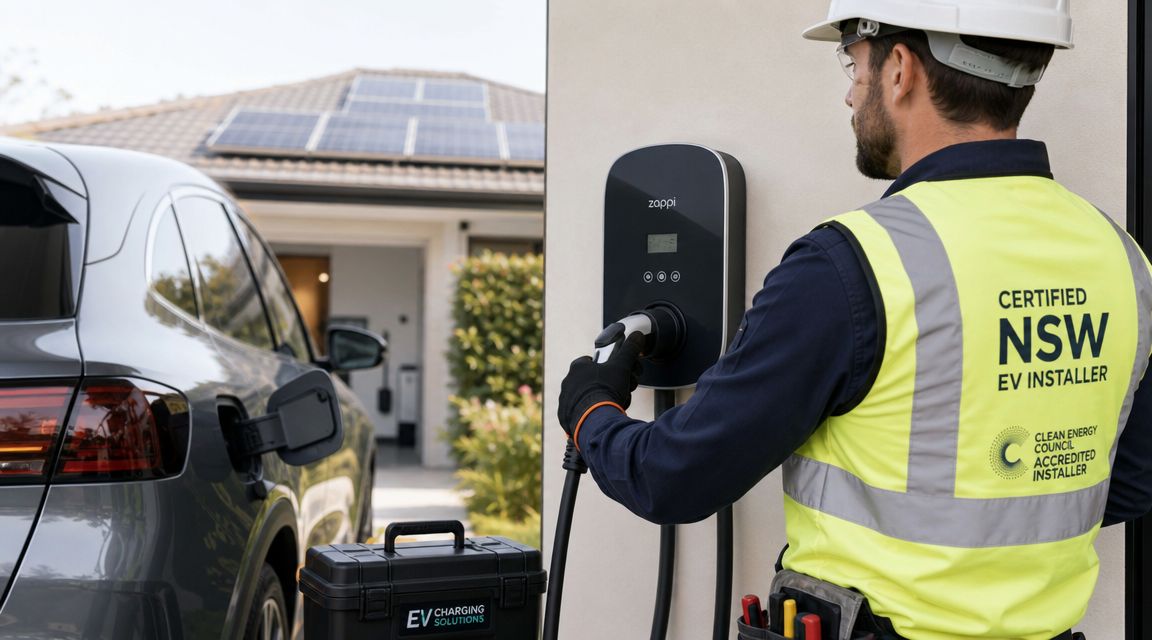
Typing EV charger installation near me into Google gives you plenty of names. That doesn't mean they're all equal. Some are solid electrical contractors who understand EV loads, switchboard realities, and solar integration. Others are effectively selling a box on the wall.
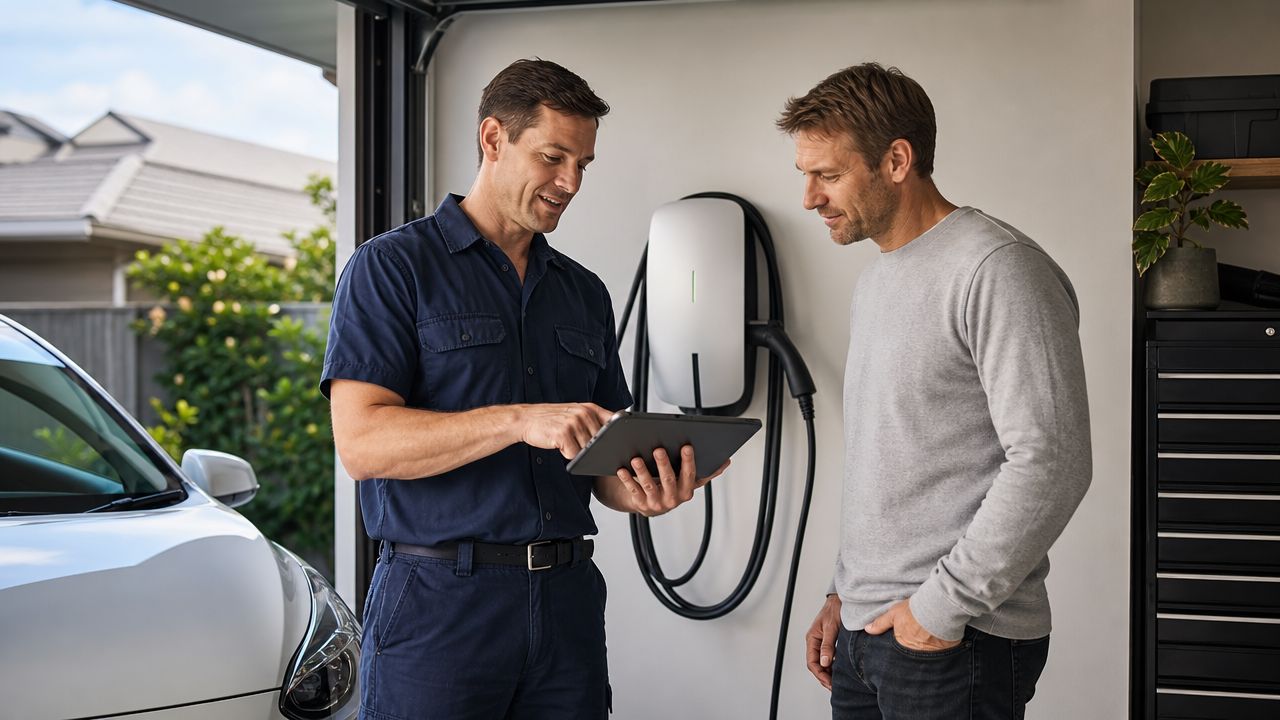
The difference shows up before a single tool comes out. A capable installer asks about your board, supply, parking position, vehicle use, and future plans. A weak one jumps straight to charger model and mounting location.
What to check before you book
Start with licensing and insurance, but don't stop there. EV charging is straightforward when the site is simple. It becomes more technical when switchboards are crowded, cable paths are awkward, or the charger needs to work with solar, batteries, or managed loads.
Ask these questions:
- Are you licensed for the electrical work involved? The answer should be direct, with no hesitation.
- Have you installed chargers at homes similar to mine? Older homes, detached garages, and multi-vehicle households each bring different issues.
- Will you assess supply capacity before recommending the charger size? If they don't lead with this, that's a concern.
- Do you install hardwired systems regularly? Hardwired setups are common where a permanent dedicated circuit is the better fit.
- Can you plan for solar or battery integration? Even if you're not adding those now, future-proofing matters.
- What compliance paperwork will I receive? In NSW, proper documentation matters just as much as the physical install.
The difference between an installer and an energy systems electrician
A general electrician can be perfectly competent for simple jobs. But if you want the charger to work as part of a broader home energy strategy, look for someone who thinks beyond the immediate circuit.
That means they should be comfortable discussing:
| Topic | What a strong installer covers |
|---|---|
| Switchboard capacity | Whether the board has room and headroom for the new load |
| Load management | How the charger behaves when the house is already drawing power |
| Solar compatibility | Whether charging can align with daytime generation |
| Battery interaction | Whether charging should be scheduled around battery priorities |
| Future upgrades | Second EV, larger charger, or later electrical works |
The best installer doesn't just ask where you want the charger. They ask how you want the home to perform.
Red flags that should slow you down
Some warning signs are obvious. Others are subtle.
- Instant quoting without a proper assessment often means assumptions are being made about your switchboard or cable route.
- A focus on the cheapest charger only usually ignores control features and long-term usability.
- No questions about your EV driving pattern suggests they're not sizing the setup around actual use.
- No mention of consumer protections or standards is a bad sign when electrical compliance is involved.
If you want an overview of the consumer protection framework for new energy technologies, read about the New Energy Tech Consumer Code. It's useful context when you're comparing providers and promises.
Your On-Site Assessment Checklist
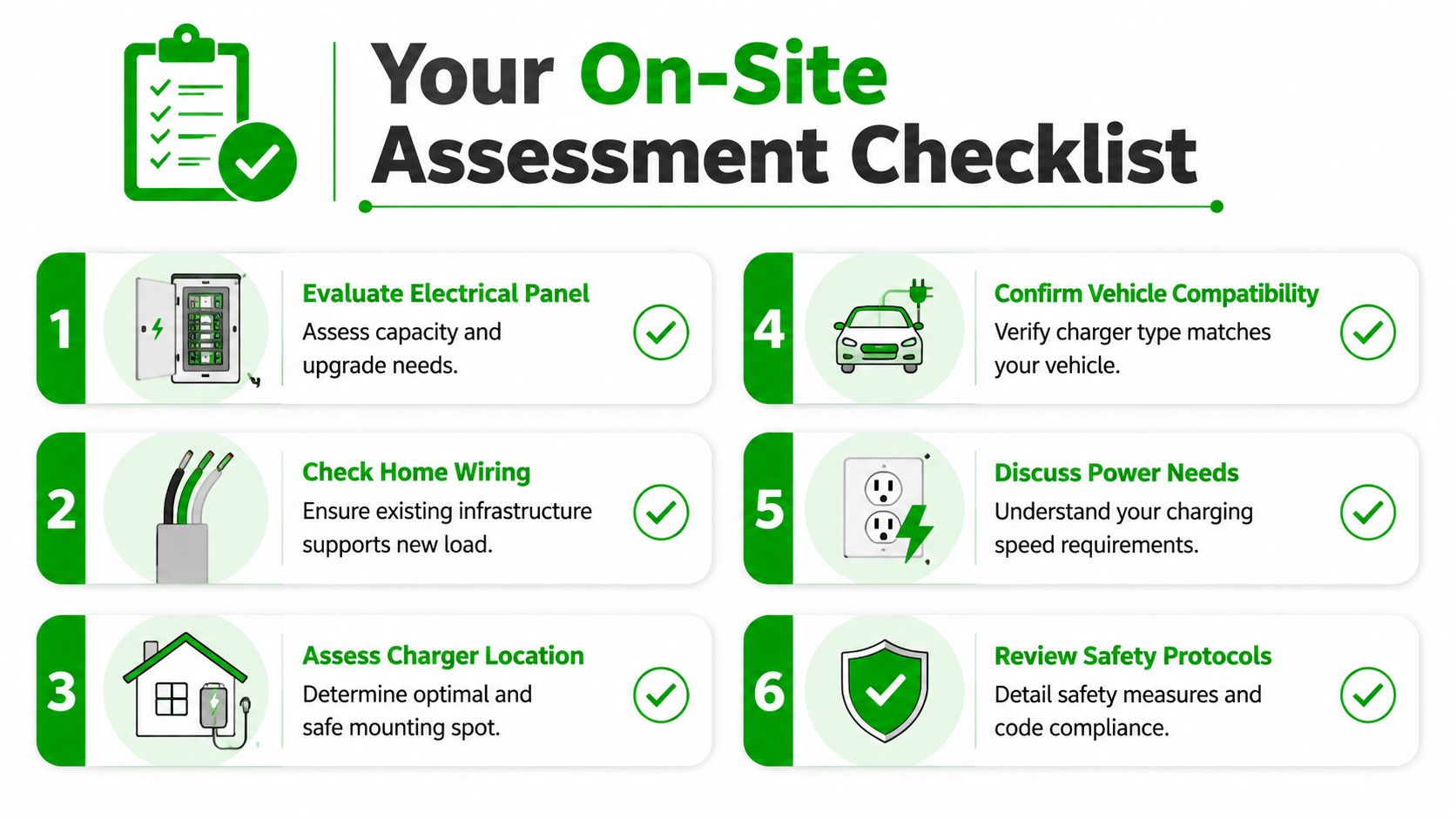
A proper site visit answers one question first. Can the home support EV charging safely, cleanly, and in a way that still makes sense once solar, a battery, or a second EV enters the picture?
That changes the inspection straight away. A licensed electrician should assess the charger as part of the home's overall energy system, not as a standalone appliance on an empty wall. In NSW, the job needs to follow the normal electrical compliance path, with the charger on a suitable circuit, the protection devices selected correctly, and the finished installation tested before handover.
What the electrician should inspect
A useful assessment covers the electrical constraints, the cable run, and how the charger will work with the way the household uses power.
Switchboard condition and available capacity
The board has to be checked for spare ways, main switch and protective device suitability, and the amount of real headroom available once the home's other loads are considered. A charger may be possible, but the right answer is not always “full power all the time”.Cable route from the board to the charger position
Distance, access, wall type, roof space conditions, trenching, and exposure all affect cost and finish quality. The neatest location for daily use can still be a poor choice if the cable route creates unnecessary complexity or leaves the wiring exposed to damage.Mounting position and day-to-day use
Charger placement should suit how the car is parked, how the cable reaches the charge port, and whether the unit is protected from weather and impact. A charger that looks tidy on install day can become frustrating very quickly if the lead has to cross a walkway or barely reaches the vehicle.Existing high-demand appliances
Air conditioning, ovens, pool pumps, induction cooktops, electric hot water, and workshop loads all matter. These are the loads that compete with EV charging, especially in the evening peak when people arrive home, cook dinner, and switch everything on at once.Metering, communications, and control options
Smart charging features depend on more than the charger itself. Wi-Fi strength, switchboard metering hardware, and compatibility with the home's inverter or energy management setup all need checking if you want scheduling, solar-following, or dynamic load control to work properly.
Questions worth asking on site
Homeowners get better outcomes when they ask direct, practical questions during the inspection.
Use questions like these:
- If the house load spikes, how will the charger respond?
- Do you expect switchboard upgrades or extra protection devices before installation?
- Is this charger location best for cable length, daily use, and future maintenance?
- Can this setup expand if we add another EV or upgrade the solar system later?
- Will the charger work properly with export control, solar monitoring, or battery scheduling?
Those answers tell you a lot about the installer. A careful electrician will explain the trade-offs. For example, the fastest charger your supply can technically support is not always the setup that gives the best running costs or the least stress on the home's electrical system.
Where solar and battery planning comes in
The inspection should also cover when the car is home and where the charging energy is likely to come from. That matters because a charger tied into the broader system can use daytime solar better, avoid draining a battery at the wrong time, and reduce the chance of expensive electrical rework later.
If you are already comparing solar battery options for home energy storage, ask the installer how EV charging will fit around those priorities. In some homes, the best setup is to send excess solar to the car during the day. In others, it makes more sense to preserve battery capacity for evening household use and schedule the vehicle to charge overnight. The right decision depends on your tariff, driving pattern, inverter capability, and how the home uses power across the day.
A good site assessment leaves you with a clear scope, realistic expectations, and a charger plan that still works after the rest of the home evolves.
Key Technical Decisions for Your Home Setup
Once the site is assessed properly, the next decisions are less about “can I install a charger?” and more about what kind of charger and control strategy suits the home.
Plenty of projects go off track. People compare charger models, app screens, and casing finishes, but the most important choice is often invisible. It's whether the charger will work with the home's real electrical limits and energy priorities.
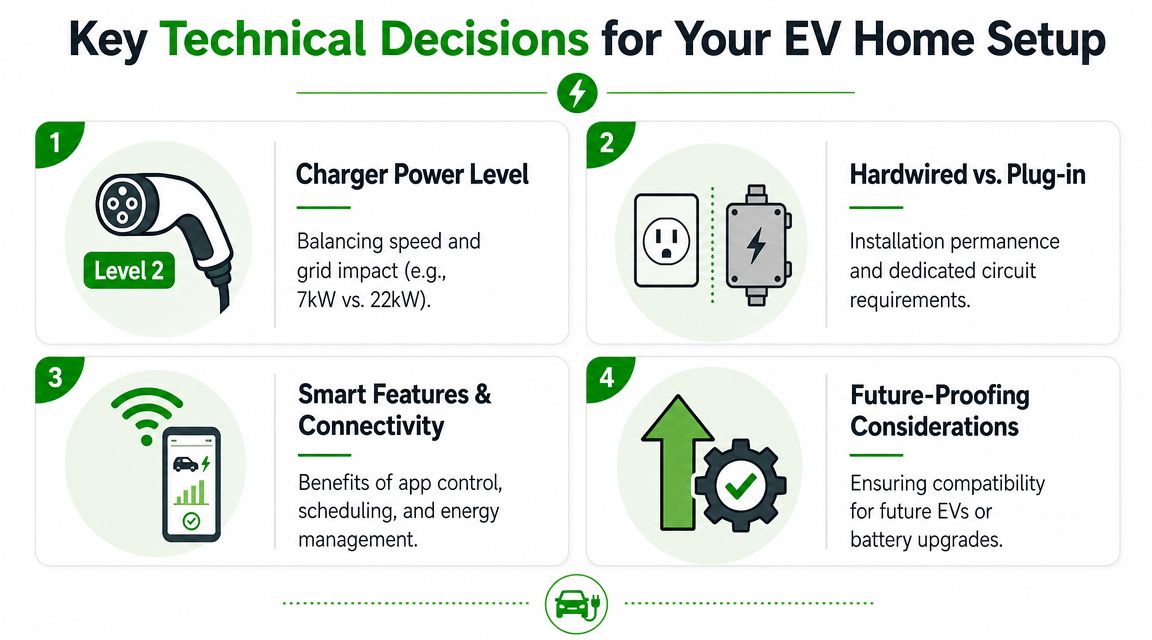
Charger size isn't only about speed
A lot of homeowners start by asking for the fastest charger their property can take. That's understandable, but it isn't always the smartest outcome.
A better approach is to match charger capacity to:
- Your vehicle usage pattern
- How long the car is parked at home
- Your home's available electrical headroom
- Whether solar charging is part of the plan
- Whether a second EV is likely later
If the car sits at home overnight every night, you may not need the biggest available charger. In many homes, a charger that fits neatly within the site's electrical capacity and works well with controlled scheduling delivers a better long-term result than pushing the supply to its limit.
Load management is often the real decision
One of the most overlooked issues in Australian homes is load management. Rising EV uptake means the practical question isn't just where to mount the charger. It's whether the property can carry that ongoing load without forcing expensive upgrades. Aligning charging with solar self-consumption is especially relevant in NSW, where many households are trying to manage costs and grid constraints more intelligently, as noted in this discussion of load management and solar-aligned EV charging.
In practice, smart load management can mean the charger reduces its draw when the house is busy, then increases output when demand drops. That can help avoid nuisance trips and may reduce the need for unnecessary upgrade work.
On real jobs, this is what usually matters most: not the charger's maximum capability, but how well it behaves when the oven, air conditioning, and hot water system are all competing for power.
Solar, batteries, and charging strategy
If you already have rooftop solar, the charger should be chosen with that in mind. Some households want daytime charging to soak up excess generation. Others need overnight scheduled charging because the car is away during business hours. Neither approach is wrong. The point is to design around your actual routine.
If there's a battery in the system, the strategy becomes even more important. You might want the battery to support evening household demand first, with EV charging delayed until cheaper grid periods or stronger solar windows. In another home, battery discharge to the charger may be acceptable because driving needs take priority.
The easiest way to understand is:
| Home setup | Better charger feature focus |
|---|---|
| No solar, no battery | Scheduling, safety protections, dependable app control |
| Solar only | Solar-aware charging, daytime control, export optimisation |
| Solar plus battery | Priority settings, managed charging windows, integrated energy logic |
| Planning future upgrades | Open compatibility, expandable controls, installer support |
For homeowners comparing systems, it helps to review chargers in the context of the broader home EV charging options available, not as standalone devices.
Hardwired versus simpler configurations
Where a charger is going to be used regularly, hardwired installation is often the cleaner and more permanent approach. It usually gives the electrician more control over circuit design, protection, and final finish.
The right choice still depends on the charger model, site conditions, and how permanent you want the setup to be. But from a trade perspective, the less improvisation built into the final installation, the better the result usually is.
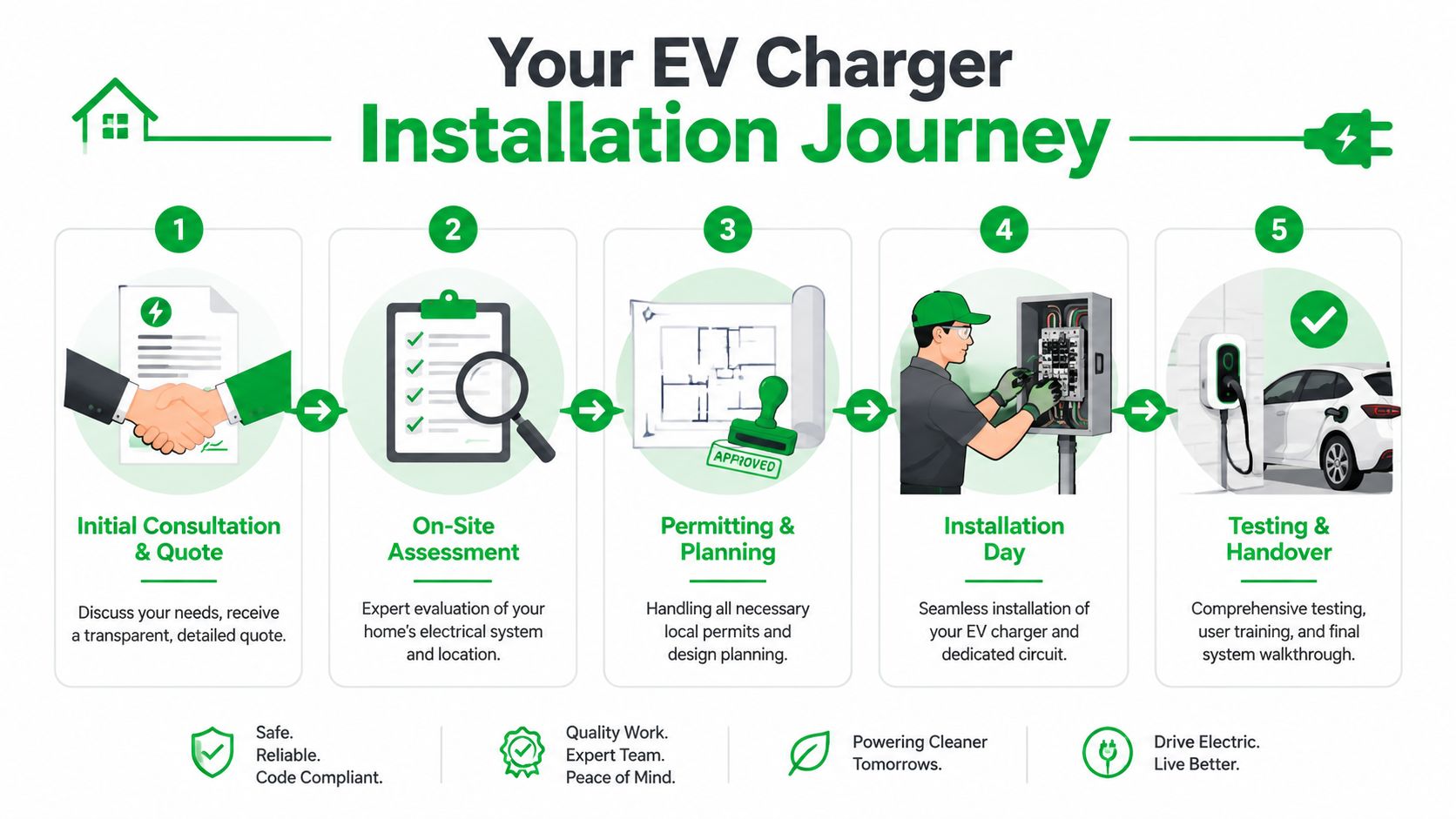
The Installation Process From Quote to Handover
At this point, the job should feel settled. You have approved the charger, the location is marked, the cable path is understood, and there are no surprises about switchboard work, approvals, or final paperwork.
That order matters. A charger is not just another wall-mounted appliance. It becomes part of the home's electrical system, and in many homes now, part of a wider setup that includes solar, battery storage, or both. A good installation process makes sure the charger works properly on day one and still makes sense when the rest of the energy system changes later.
What happens before installation day
The real work starts well before the tools come out. By installation day, the electrician should already have confirmed circuit sizing, protection requirements, charger placement, and whether the switchboard needs upgrades or adjustment to support the new load safely.
For homes with solar or batteries, this planning stage also sets the charging strategy. Some households want the charger to favour daytime solar production. Others want scheduled overnight charging, battery protection, or room for future load control. If those decisions are left until handover, the charger may be installed correctly but configured poorly for the way the home uses energy.
Good preparation also avoids the common site-day problem where the owner expects one finish and the installer delivers another. Surface conduit, wall penetration points, isolator positions, Wi-Fi needs, and app access should all be discussed upfront.
What the physical installation usually involves
The installation itself should be methodical and tidy. Power is isolated where required, the dedicated circuit is installed, the charger is mounted at the agreed location, and the cable route is completed in a way that suits both safety and future service access.
Most jobs include these tasks:
- Preparing the switchboard for the new EV circuit and protection devices
- Running cabling to the charger position through roof space, cavity, conduit, or external pathways
- Mounting the charger at a practical height with proper clearances
- Connecting and testing communications if the charger uses Wi-Fi, Ethernet, CT clamps, or energy management controls
- Labelling the installation clearly so the circuit and equipment are easy to identify later
Neat cable work is not cosmetic fluff. It usually reflects better planning, fewer shortcuts, and an installation that is easier to inspect, maintain, and expand. That becomes even more important if the charger will later be tied into solar export control or battery-aware charging logic.
This video gives a useful look at the kind of professional workflow homeowners should expect during an EV charger installation.
Testing, commissioning, and handover
A proper handover proves more than basic power to the charger. The electrician should test the circuit, confirm the charger responds as expected, and check any settings that affect charging speed, scheduling, or household load limits.
If the home has solar or battery storage, this is the point where integration needs to be checked in real terms. The owner should know whether the charger is set to charge only from surplus solar, whether it can draw from the battery, and what happens when the home load rises. Those details affect running cost just as much as the installation itself.
At handover, you should expect:
| Handover item | Why it matters |
|---|---|
| Charger operation demo | You can start, stop, and monitor charging without guesswork |
| App and account setup | Scheduling and energy settings only work if the software is set up properly |
| Charging mode explanation | You need to know whether the charger is using grid power, solar preference, or managed limits |
| Compliance paperwork | Keep it with your electrical and solar records for insurance and future sale questions |
| Fault and support guidance | Clear next steps reduce downtime if the charger or communications drop out |
For homes where the charger is one part of a broader energy setup, ongoing support matters after the install as well. A service option such as ongoing energy system care can help when charger settings need to be adjusted around solar performance, battery priorities, or future upgrades.
A rushed handover leaves owners with a working charger and no clear idea how to use it well. That usually shows up later as higher charging costs, poor solar use, or avoidable support calls.
Post-Installation Support and FAQs
A charger can be installed perfectly and still frustrate the owner if support stops at the front door. The first few weeks matter. That's when people start using schedules, testing solar charging windows, and learning what the charger does when household demand changes.
Post-installation support should include practical help, not just warranty paperwork. If the charger has app controls, make sure the account is fully set up, notifications are understood, and charging schedules reflect your real routine rather than the installer's assumptions.
What to do after the installer leaves
Start with the simple admin and setup tasks that often get missed:
- Register the charger warranty with the manufacturer if required
- Save all compliance documents in the same place as your solar and electrical records
- Name the charger in the app clearly if your software allows it, especially useful for future multi-device setups
- Test one or two scheduled charging sessions before you rely on them
- Check your cable storage routine so plugs and leads aren't left strained or exposed
If your home has broader energy equipment, ongoing service matters even more. Support plans such as ongoing energy system care can be useful when the charger is one part of a larger solar and battery setup.
Common questions homeowners ask
Will an EV charger work properly with my solar?
Yes, but how well it works depends on charger controls, your daytime parking pattern, and whether the charging schedule is built around solar production or simple time-of-use charging.
What if the charger trips or shows a fault?
First, don't keep resetting it repeatedly without understanding the cause. Check the app, note any status lights, and contact the installer if the fault continues. Repeated tripping usually points to an issue worth diagnosing, not ignoring.
Can I charge two EVs at home in future?
Often yes, but it should be considered early. The answer depends on your switchboard capacity, charger selection, and whether load sharing or staged charging will be required.
Should I leave the charger plugged in all the time?
That depends on the charger model and your usage habits. What matters most is keeping the cable managed properly, avoiding strain on connectors, and using the system as instructed by the manufacturer.
The long-term view
The best home charger setups age well because they were planned as part of the house, not added as an afterthought. They leave room for solar optimisation, battery control, future vehicles, and changing household demand.
That's the difference between getting a charger installed and building a home energy system that still makes sense years from now.
If you want a charger installed as part of a smarter whole-home energy plan, Interactive Solar can help with solar, batteries, EV charging, and certified electrical installation across NSW. Their team designs systems around how your home uses power, so your EV charger works with the rest of your setup instead of against it.
Make Interactive Solar a preferred source in Google
One click tells Google to surface our articles more often in Top Stories, AI Overviews and AI Mode.