
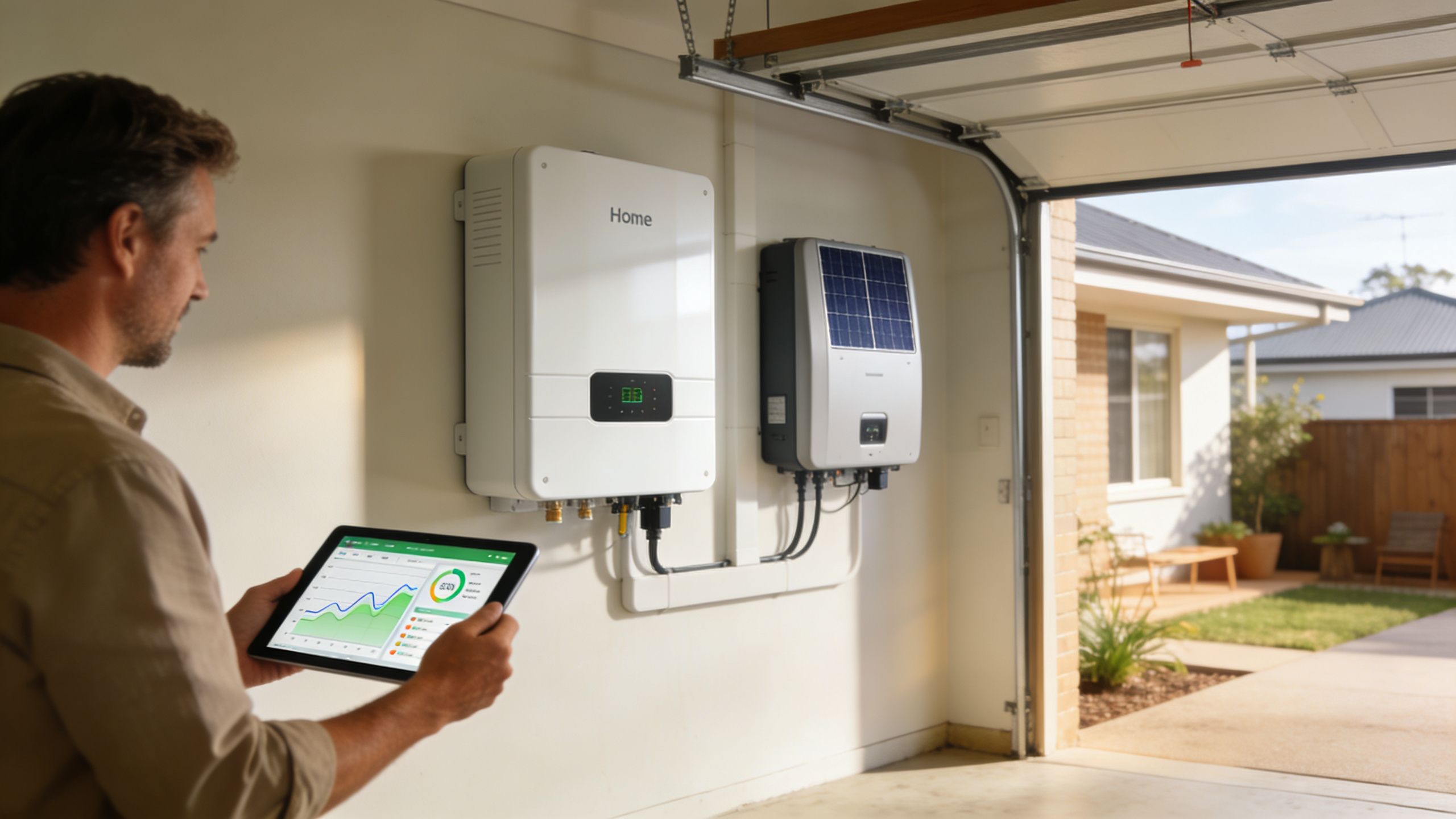
Home Battery Storage Prices: Your 2026 AU Guide
You're probably looking at home battery storage prices because you've already done the first bit of homework. Maybe you have solar and you're tired of sending power back to the grid in the middle of the day, only to buy it back at night. Maybe you're planning a new solar system and want to get storage right from day one. Either way, a simple battery price is often the initial search, and it's usually the least useful number in the whole decision.
A battery isn't a boxed appliance with one universal price tag. It's part of an electrical system that has to match your switchboard, your existing solar setup, your evening usage, your backup expectations, and the way your retailer charges for electricity. Two homes can want “a battery” and need completely different designs.
Introduction Why a Simple Price Tag Is So Misleading
The first mistake homeowners make is comparing battery quotes the same way they'd compare a fridge or TV. That approach falls apart quickly. A low headline figure can leave out inverter changes, monitoring, installation complexity, backup hardware, or switchboard work. A higher quote can be the better value if it includes the parts and design work needed to make the system perform properly for years.
There's a reason batteries are now part of the mainstream energy conversation. Globally, lithium-ion battery cell prices have fallen by more than 99% since 1991, and every time global cumulative battery production doubled, prices fell by roughly 19%, according to Our World in Data's battery price analysis. That long decline is why home battery storage prices are far more approachable than they used to be.
But that global trend doesn't tell you what your home should install, or whether a quote is complete.
If you're in Sydney or greater NSW, the question isn't “What does a battery cost?” It's “What system fits my house, and what value will it deliver once it's installed?” That's a much better starting point, especially as households look for ways to respond to rising electricity costs in NSW.
A battery's sticker price matters less than its installed role in your home. What it powers, how it charges, and how it integrates will decide whether it feels like a smart investment or an expensive add-on.
The right way to assess home battery storage prices is to look at the full system, the quality of the integration, and the long-term energy value. Once you do that, the market gets much easier to read.
Whats Really Included in a Home Battery Quote
A proper battery quote should read like a system design, not a product listing. Homeowners often focus on the battery cabinet because it's the visible part, but the battery unit is only one piece of the total job.
In Australia, battery pricing is best understood on an installed basis, and DC-coupled systems are often more cost-effective per kWh because they avoid duplicate power-conversion stages and can use a shared hybrid inverter, while AC-coupled retrofits need extra inverter hardware and integration work, as explained in this Australian battery installation cost breakdown. That single technical difference changes quoting more than many homeowners realise.
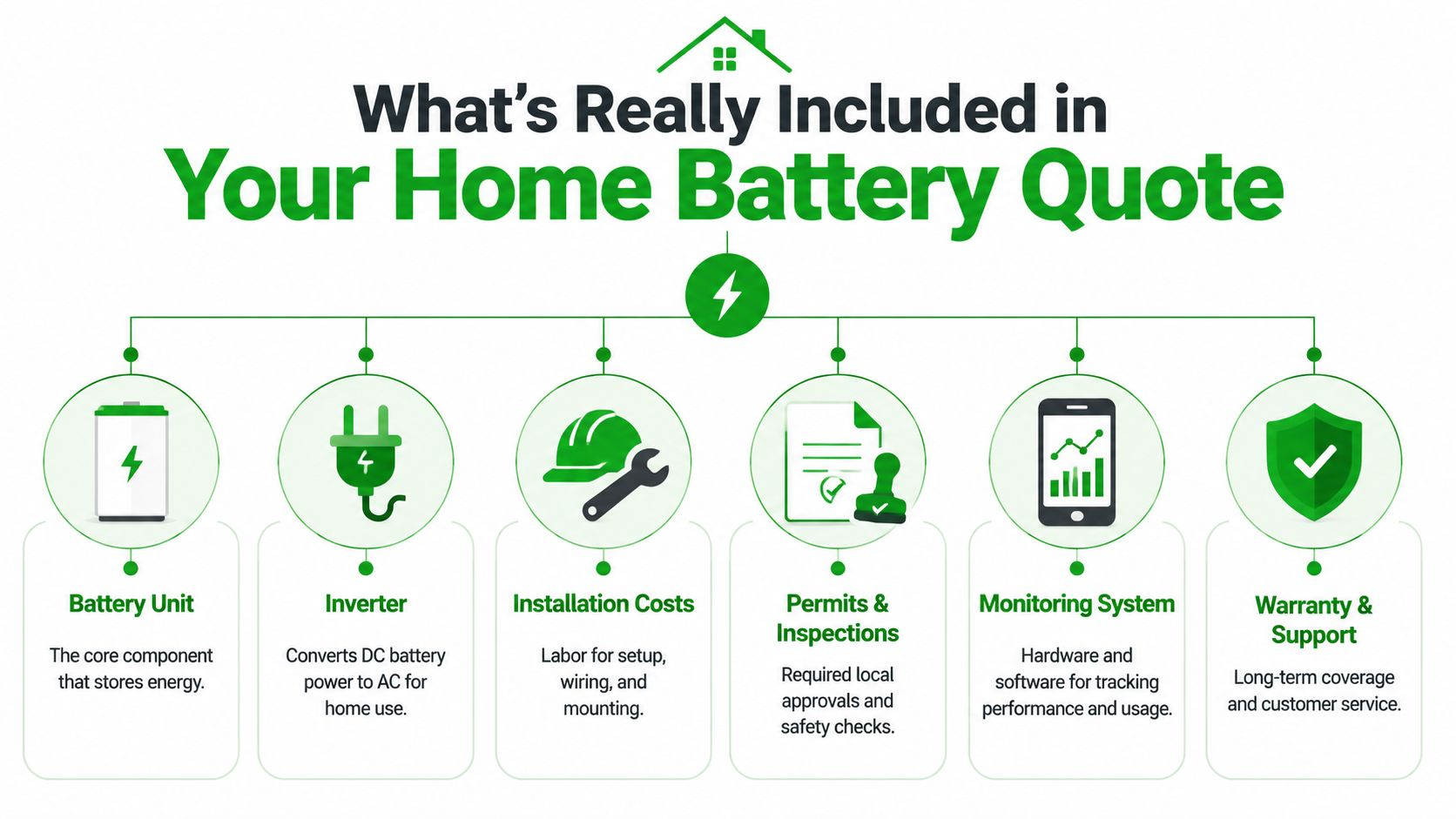
The battery unit is only the starting point
The battery module stores energy. That's obvious. What's less obvious is that battery brands package this differently. Some products combine more functions into one integrated unit. Others rely on external components, extra controls, or a separate inverter setup.
That's why comparing “battery capacity only” can mislead you. One quote may include a clean, integrated architecture. Another may rely on more pieces on the wall and more labour to get everything talking to each other.
Inverter choice changes the whole job
If you're adding storage to an existing solar system, AC coupling is common. It works well in many retrofits, but it often involves more hardware and more integration work. If you're building a new solar-plus-battery system, DC coupling can be cleaner and leaner because the solar and battery share more of the power electronics.
Here's what that means in practice:
- Retrofit homes often pay for flexibility: AC-coupled batteries can work with an existing PV system, but the install usually involves more design coordination.
- New systems often get a neater architecture: DC-coupled layouts can simplify the system and reduce duplicated equipment.
- The cheapest pathway depends on timing: Replacing an old inverter and adding a battery at the same time can be smarter than bolting storage onto ageing hardware.
Labour, compliance, and switchboard work are real costs
Battery installs are electrical projects, not appliance drop-offs. The quote should account for mounting, isolators, cabling, protection devices, commissioning, and testing. If the installer finds your switchboard needs attention, that can materially affect the final figure.
A solid quote should also be clear about:
- Electrical upgrades: Existing boards don't always have the spare capacity or layout needed for storage.
- Permits and approvals: These should be handled properly, not left vague.
- Backup configuration: If you want blackout support, the quote should specify what's backed up and how the changeover works.
- Monitoring access: You should know whether the system includes an app, web portal, or both.
Practical rule: If a quote doesn't clearly state the inverter arrangement, backup capability, and switchboard assumptions, it isn't complete enough to compare.
Warranty and after-care matter more than people think
The difference between a clean install and a troublesome one often shows up months later, not on day one. Good after-sales support, clean cable management, correct commissioning, and a system that's documented properly matter as much as the equipment itself.
That's also why installation quality should be part of the buying decision, not an afterthought. Homeowners can save themselves a lot of grief by understanding why installation quality affects long-term solar and battery value.
A battery quote should answer one simple question clearly. What exactly are you getting, installed and operational, on your home?
Choosing a Battery for Performance and Lifespan
The cheapest battery on paper often becomes the most expensive one to live with. That's because batteries aren't just bought by capacity. They're bought by how well they perform over time, how efficiently they cycle energy, and how much usable value they deliver across their working life.
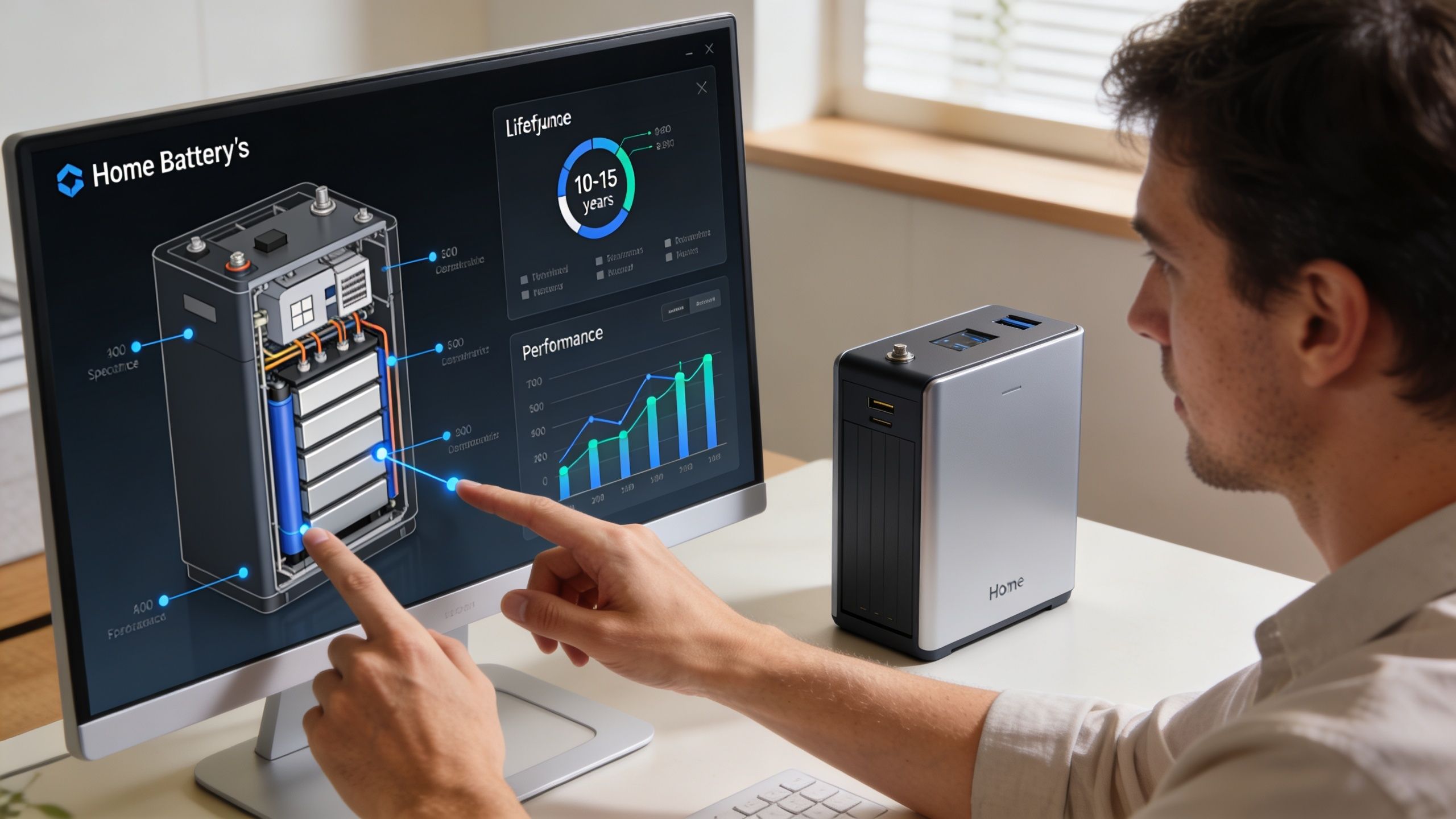
For most homes, battery selection should start with your actual use case. Do you want to shift solar into the evening? Do you want backup for essential loads? Do you expect frequent cycling? Those questions matter because they shape what counts as value.
Chemistry affects real-world value
LFP, or lithium iron phosphate, is widely favoured for residential use because it balances safety, longevity, and efficiency well. According to this guide to home battery chemistries, LFP systems typically offer about 6,000–10,000 cycles and roughly 93–96% round-trip efficiency, compared with lower-cycle lithium-ion NMC systems at about 4,000–6,000 cycles. That means an LFP battery can deliver more lifetime energy throughput before replacement, lowering degradation cost per delivered kWh.
That doesn't make every NMC battery a bad option. It does mean homeowners should ask why a particular chemistry has been recommended for their site.
Some practical differences matter more than spec-sheet marketing:
- Cycle life matters if you'll use the battery every day: Daily solar shifting puts wear on the battery. Higher cycle life can mean better long-term value.
- Efficiency matters if your goal is bill reduction: The less energy lost between charging and discharging, the more of your solar you keep.
- Thermal behaviour matters in Australian conditions: Residential systems need to cope with heat, enclosure conditions, and installation location.
Capacity is not the same as usability
A bigger battery isn't always a better battery. If your home only has a modest evening load, oversizing the system can leave too much storage underused for long stretches. That weakens the investment case.
What usually works best is matching the battery to your load profile. Homes with strong daytime solar production and predictable evening use often benefit from a battery sized for self-consumption first, with backup as a secondary consideration. Homes that place a premium on blackout resilience may need a different design, especially if they want to run more than lights, refrigeration, internet, and a few key circuits.
A good battery design follows your evening habits. It doesn't chase the biggest possible unit just because more capacity sounds better.
If you want a deeper side-by-side look at system types and trade-offs, a battery comparison guide for Australian homeowners can help frame the conversation before you request quotes.
Read the warranty with a technician's eye
Battery warranties are often presented as reassurance. They should also be treated as a technical document. Look for what the warranty guarantees. Is it time-based, throughput-based, or tied to retained capacity? Does it cover labour as well as hardware? Are there conditions around internet connectivity, firmware, or approved installation standards?
Those details matter because two batteries with the same headline warranty period may not offer the same real protection.
This walkthrough is useful if you want to see how battery performance terms connect to practical home use:
What works and what usually doesn't
A few patterns show up again and again in residential installs.
| Decision area | Usually works well | Usually causes regret |
|---|---|---|
| Battery sizing | Matching storage to actual evening load | Buying maximum capacity without a usage reason |
| Chemistry choice | Prioritising LFP for long-term residential cycling | Choosing by headline price alone |
| Backup planning | Selecting essential circuits deliberately | Assuming the battery will run the whole home automatically |
| Quote review | Checking usable energy, warranty, and integration | Comparing only nominal capacity and brand name |
The best battery isn't the one with the loudest marketing. It's the one that matches how your home uses power on an ordinary Tuesday.
How Government Incentives Shape Your Final Investment
Government incentives change the numbers enough that battery buying without them in mind is a mistake. A homeowner who looks only at pre-incentive pricing can end up dismissing storage too early, or comparing systems on the wrong basis.
In Australia, the true installed price is heavily influenced by rebates. The federal Cheaper Home Batteries rebate opened on 1 July 2025 and is expected to reduce the upfront cost of an eligible battery by about 30%, with exact savings depending on usable capacity. In NSW, the Peak Demand Reduction Scheme can also lower the net cost further, as outlined in this Australian battery rebate overview.
Incentives don't remove the need for good design
A rebate can make a poor-fit battery cheaper, but it can't make it right for your home. That's why incentives should be treated as part of the final investment calculation, not as the reason to buy whatever qualifies.
The better approach is:
- define what the battery needs to do
- design the system around your load and solar setup
- apply eligible incentives to that design
- compare the net outcome, not the headline product price
That sequence matters. Homeowners who reverse it often end up chasing the rebate instead of the right system.
Ask how the incentive is being handled
Some installers are organised and transparent with incentive processing. Others mention a rebate early in the sales conversation and get vague when you ask what's required to claim it.
Ask direct questions such as:
- Eligibility: Is the quoted system definitely eligible under the current program rules?
- Application handling: Will the installer manage the paperwork and submission process?
- Quote format: Does the quote show pre-incentive and post-incentive figures clearly?
- State stacking: How has the NSW scheme been factored in, if applicable?
Rebates should make a good system more affordable. They shouldn't be used to distract you from missing components, weak warranties, or poor design.
For NSW homeowners, it's worth reviewing what the NSW battery rebate launch means in practice before signing anything.
The final figure is always site-specific
Incentives are one reason broad online price lists don't tell the full story. The other reason is integration work. A battery added to a straightforward modern switchboard is one job. A battery paired with existing solar, extra backup requirements, or electrical upgrades is a different one.
That's why the final investment can vary even when two households choose similar battery capacities. The hardware may be comparable. The site conditions rarely are.
From Investment to Savings How a Battery Pays You Back
Home battery storage prices make more sense once you stop treating the battery as a purchase and start treating it as a tool. The battery's job is to move your energy from the time it's abundant to the time it's expensive or unavailable.
That shift is why storage is no longer just a sustainability purchase. As of 2025, lithium-ion battery pack prices averaged $108 per kilowatt-hour, and global trends show battery storage has shifted from a niche environmental decision to a practical financial one, with newer adopters increasingly motivated by cost economics, according to Harvard Business School's analysis of falling battery storage costs.
A normal household example
Take a typical family home with solar. Midday arrives and the panels produce more electricity than the house is using. Without a battery, a lot of that generation goes out to the grid. By dinner time, the solar output drops, appliances switch on, lights come on, and the home starts importing electricity.
With a battery, part of that midday solar surplus is stored for later use. The family runs more of the evening from their own energy instead of buying from the grid during the period when power is often less favourable from a bill perspective.
That's the core value. Not magic. Just timing.
The strongest savings usually come from self-consumption
For most residential systems, the biggest savings driver is self-consumption. That means using more of your own solar within your home instead of exporting it and importing later.
A battery can help in several ways:
- Evening solar shifting: Store daytime surplus and use it after sunset.
- Time-of-use support: Reduce grid purchases when tariffs are higher.
- Load smoothing: Cover household spikes without pulling as much from the grid.
- Backup value: Keep selected circuits running during outages, depending on design.
The best-performing systems usually have one thing in common. The battery is matched to actual household behaviour, not to an optimistic sales pitch.
Time-of-use tariffs change the equation
If your retailer uses time-based pricing, a battery becomes more than backup hardware. It becomes a scheduling tool. Charge from solar during the day, hold that energy, and use it when imported electricity is less attractive.
That's why the economics can improve even when a home already has solar. The battery changes when you consume energy, not just how much you produce.
If bill reduction is the main goal, it helps to understand practical ways households reduce electricity bills before deciding on battery size.
The homes that get the best battery value usually know their evening load. They know what runs after sunset, what can be shifted, and what matters during an outage.
Virtual power plants may add another layer of value
Some battery owners also look at Virtual Power Plant participation. The idea is straightforward. Your home battery becomes part of a wider network that can support the grid during demand events.
That opportunity won't suit every homeowner, and the details depend on equipment compatibility, retailer programs, and how much control you're comfortable giving up. But it's worth asking about. In some cases, VPP participation can improve the overall value proposition.
What doesn't work well
The weakest battery outcomes usually come from one of three mistakes:
- Oversizing for rare events: Buying a very large system mostly for blackout scenarios that hardly occur.
- Ignoring household load patterns: Installing storage without understanding when energy is used.
- Expecting instant savings from any battery: Savings come from how the system is configured and used, not from the battery existing on the wall.
A battery pays you back by changing your relationship with the grid. It lets your home keep more of the solar it already produces, use that energy at smarter times, and rely less on imported electricity when demand rises.
Your Essential Checklist Questions to Ask Any Installer
The best battery quote often comes from the installer who asks the best questions first. If someone can't explain why they've chosen a certain battery size, coupling method, or backup setup for your home, you're not getting design advice. You're getting a catalogue recommendation.
Good installers won't be annoyed by detailed questions. They'll usually welcome them, because serious questions lead to better system outcomes.
Start with system design, not brand preference
Many homeowners begin by asking, “Which battery brand is best?” That's understandable, but it's the wrong first question. Start with fit. Ask how the installer assessed your home's daytime generation, evening consumption, existing solar hardware, and backup priorities.
You want to know whether they've designed a system for your house or quoted a common package.
Push for clarity on performance and support
The installer should be able to explain usable storage, expected operating behaviour, what happens in a blackout, and any limitations of the proposed setup. They should also explain who handles warranty claims, service calls, and monitoring support after commissioning.
“If the answer changes when you ask for it in writing, it was never a clear answer to begin with.”
Installer Vetting Checklist
| Category | Question to Ask |
|---|---|
| System design | How did you size this battery for my home's actual evening load and solar production? |
| Inverter setup | Is this system AC-coupled or DC-coupled, and why is that the better fit here? |
| Backup capability | Which circuits will stay on during an outage, and which ones won't? |
| Electrical works | Does the quote assume any switchboard upgrades, extra protection devices, or other electrical changes? |
| Warranty | What does the warranty cover in practice, including labour, replacement process, and performance conditions? |
| Monitoring | What app or portal will I use, and what information will it actually show me day to day? |
| Incentives | Have all applicable rebates or NSW incentives been included correctly in the quote? |
| Future expansion | Can this system be expanded later if my energy use changes or I add an EV charger? |
| Installation team | Who is doing the installation, and are they licensed and experienced with battery systems? |
| After-care | If the system faults or underperforms, who do I call and what happens next? |
A few warning signs are easy to spot
Be cautious if the installer does any of the following:
- Leads with a discount before discussing your load profile
- Avoids explaining backup limitations
- Uses vague language around incentives
- Can't show a clear scope of works
- Pushes the largest battery without discussing usage patterns
The right partner won't just quote home battery storage prices. They'll explain what drives them, what trade-offs matter, and what will work on your property over the long term.
If you want specific advice instead of generic online price lists, Interactive Solar can help you assess the right battery setup for your home, solar system, and budget goals. A good starting point is a proper conversation about your usage, your switchboard, your backup priorities, and the incentives available in NSW. That's how you get from confusing battery pricing to a system that makes sense.
Make Interactive Solar a preferred source in Google
One click tells Google to surface our articles more often in Top Stories, AI Overviews and AI Mode.