Commercial Solar Panels Brisbane: 2026 Savings Guide
If you're running a Brisbane business, you've probably felt the same pattern over the past few years. Your power bill lands, usage hasn't changed much, and the cost still jumps around enough to make budgeting harder than it should be. That's usually the point where commercial solar stops looking like a nice sustainability project and starts looking like a serious operating decision.
For most businesses, the primary question isn't whether solar works in Brisbane. It does. The better question is how to build an energy setup that still makes sense in five, ten, and fifteen years. That means looking beyond panels alone and thinking about generation, storage, and charging as one connected system.
Businesses searching for commercial solar panels brisbane often start with roof space and rebates. Those matter. But the sites that perform best over time are the ones designed around daytime load, future equipment upgrades, battery readiness, and whether EV charging will become part of operations, staff amenities, or fleet planning.
The Powerful Business Case for Commercial Solar in Brisbane
The strongest commercial solar decisions usually start with frustration. A workshop, office, school, retail site, or warehouse gets hit by another unpredictable electricity bill, and management realises the grid is no longer a cost they can absorb and forget.
Brisbane gives businesses a rare advantage here. It has the sunlight profile to make solar perform well, and that changes the maths in a way many other operating upgrades can't. According to Halcol Energy's Brisbane commercial solar analysis, Brisbane businesses often see payback periods of 3 to 5 years and ongoing electricity cost savings of 50 to 70%.
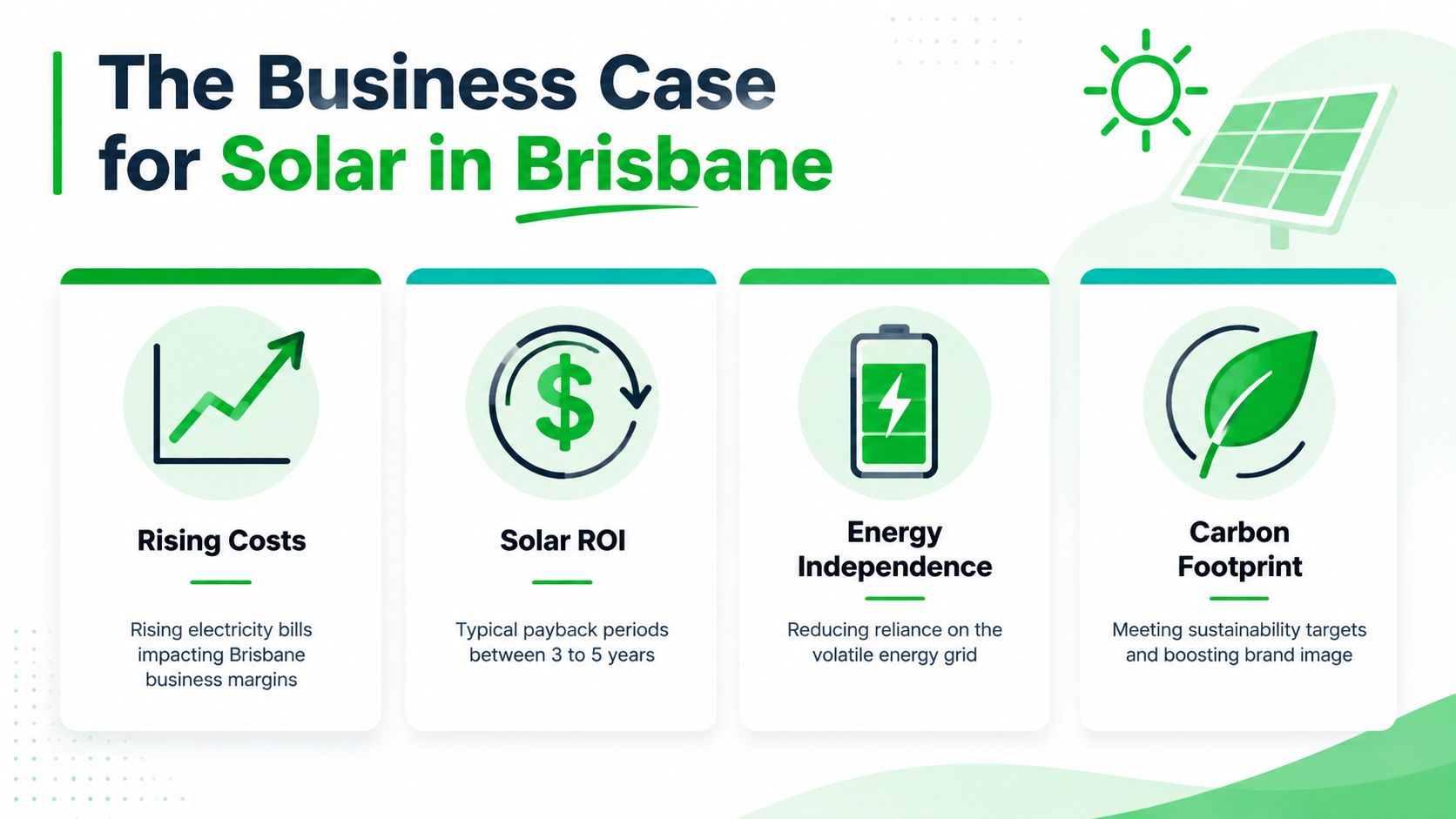
That's why solar shouldn't be treated as a simple expense line. It's better viewed as an asset that lowers operating costs, gives more control over future energy risk, and supports procurement, ESG, and tenancy discussions at the same time.
Why the ROI is usually stronger than owners expect
A lot of business owners assume solar only works if they have a massive roof or a factory-level power bill. In practice, the businesses that benefit most often have one thing in common. They use a lot of electricity during the day.
That includes:
- Offices and medical sites where HVAC, lighting, and equipment run through business hours
- Warehouses and trade facilities with steady weekday demand
- Retail and hospitality venues with refrigeration, kitchen equipment, or long opening hours
- Mixed-use commercial properties where common area loads never really switch off
Practical rule: If your site buys expensive daytime power, solar is worth modelling properly before you rule it out.
For a lot of owners, the bigger issue isn't whether savings are possible. It's whether the investment competes with other capital priorities. In my view, that's exactly why solar deserves a serious look. It reduces a recurring overhead rather than adding a new one. It also gives you a way to act on the same bill pressure discussed in this guide on how businesses can reduce electricity bills.
What works and what doesn't
What works is matching system design to real site demand. What doesn't work is buying a generic package based only on panel count.
Good commercial outcomes usually come from:
- Load-led design rather than choosing a system size first
- Accurate interval data review so the array matches trading hours and seasonal demand
- Planning for expansion if battery storage or EV charging is likely later
- Board and finance clarity around payback, not just total system size
Solar in Brisbane isn't a speculative play. For many businesses, it's become one of the more practical ways to protect margin while improving long-term energy resilience.
Navigating Queensland's Solar Incentives
A lot of hesitation around commercial solar comes from one assumption. The upfront cost must be too high to make the project practical. In Queensland, that's not always true, especially for systems under the federal threshold that qualifies for the main up-front incentive.
The key mechanism most Brisbane businesses need to understand is the Small-scale Technology Certificates scheme, usually shortened to STCs. It works as a point-of-sale discount on eligible systems under 100kW, so the benefit is usually built into the proposal rather than claimed later through a messy reimbursement process.
According to Taylor Energy's commercial solar rebate overview, a 100kW system can attract an STC incentive worth over $50,000, which significantly reduces the initial investment required.
What the incentive actually means in practice
The STC scheme matters because it changes the conversation from “Can we justify this capex?” to “What system size gives us the best return inside the incentive rules?”
For business owners, the practical takeaway is simple:
- The discount is front-loaded rather than being a vague future benefit
- Eligibility matters because the scheme applies to systems under 100kW
- System sizing becomes strategic because a slightly different design can change the financial outcome
Here's a simple summary.
| Incentive Name | Eligibility | Primary Benefit |
|---|---|---|
| Small-scale Technology Certificates (STC) | Commercial solar systems under 100kW | Reduces upfront system cost through a point-of-sale discount |
Where businesses often get this wrong
The common mistake is treating the incentive as the whole financial strategy. It isn't. It improves project viability, but the long-term result still depends on the load profile, roof layout, equipment selection, and whether the business is likely to add storage or charging later.
A rebate can make a good solar project better. It won't rescue a poorly designed one.
The other mistake is under-sizing a system just to keep the decision comfortable. Sometimes that's sensible. Sometimes it leaves too much daytime consumption on the grid. The right answer depends on your load shape, not your initial instinct.
A good commercial proposal should also make the paperwork feel straightforward. Businesses usually don't want to spend internal time chasing certificate mechanics, installer coordination, or approval pathways. The cleaner process is one where the provider handles eligibility, applies the incentive correctly, and presents the numbers clearly enough for finance or management to sign off with confidence.
Designing the Right System for Your Business
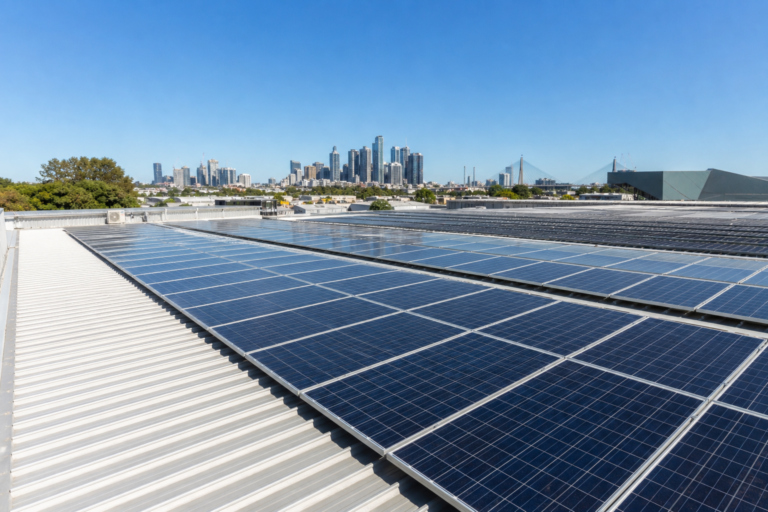
The best commercial systems are rarely the biggest. They're the ones designed around how the site consumes power, how hot the roof gets, what shadows hit it during the day, and whether the business expects growth.
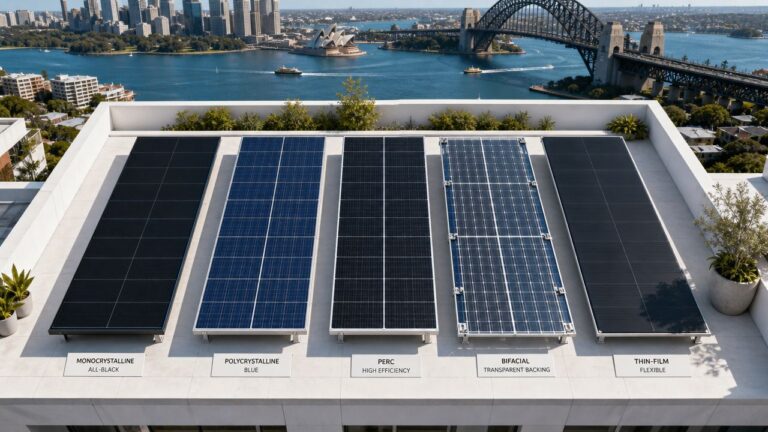
That matters in Brisbane because heat, glare, and roof conditions can change real output more than many buyers expect. Panel technology plays a major role here, especially on commercial rooftops where high temperatures and long operating hours can expose weaker design choices quickly.
Panel choice matters more on commercial roofs
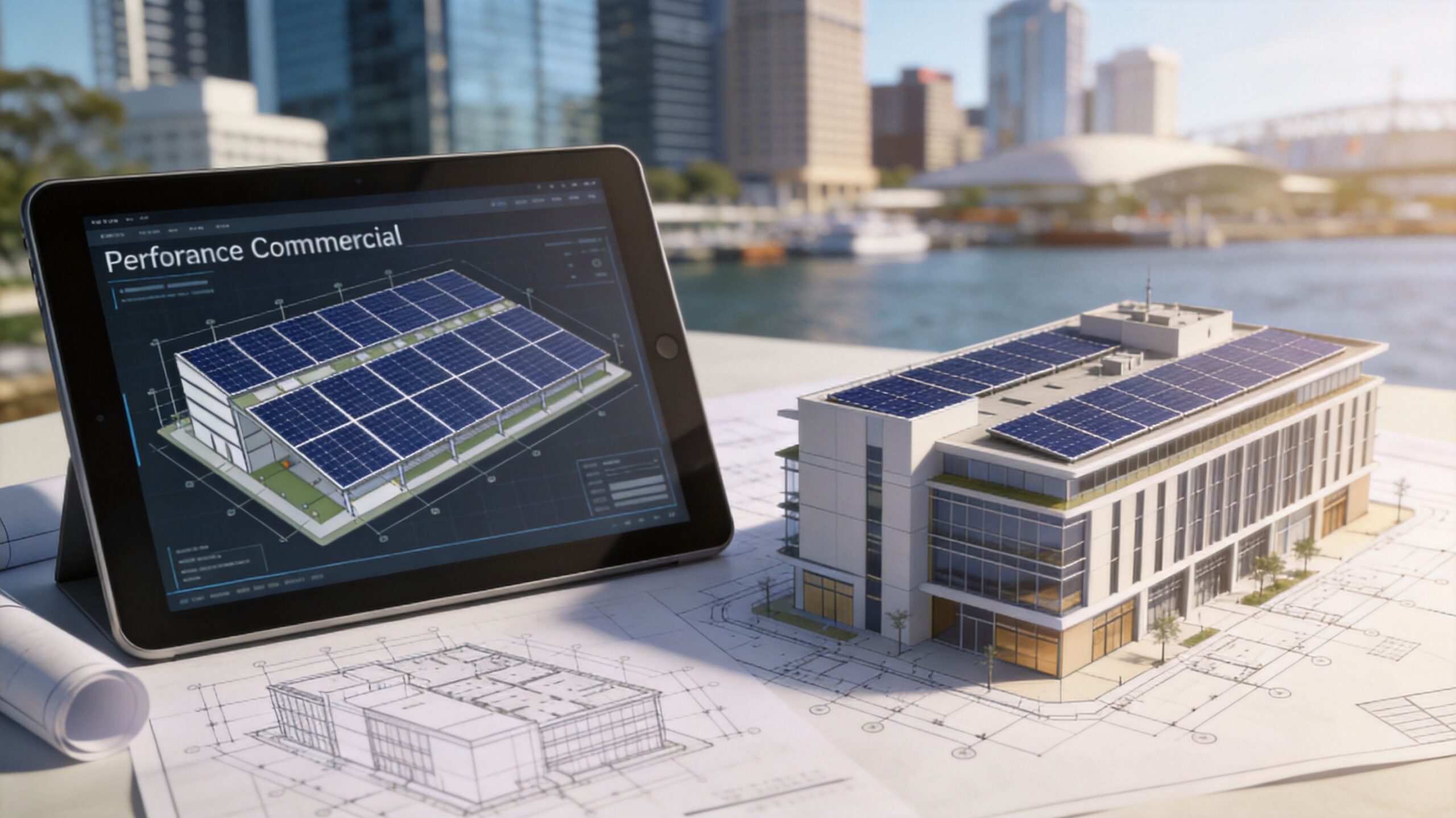
In Brisbane's subtropical conditions, N-Type modules can be the smarter commercial choice. According to QLD Commercial Solar's panel guidance, high-performance N-Type modules can deliver 10 to 15% higher energy yield than traditional P-Type panels because of stronger temperature coefficients and lower degradation.
That's not a trivial difference on a business site. Commercial roofs often run hot. Add HVAC plant, limited airflow, light-coloured membranes, or reflective surfaces, and panel performance under temperature stress becomes a real commercial issue, not just a technical talking point.
If you're comparing products, it's worth understanding why some panel families perform differently in the field. A good starting point is this review of JA Solar panel options and market position, especially if you're weighing mainstream commercial module choices against premium alternatives.
Orientation isn't as simple as north equals good and everything else equals bad
A lot of business owners still think a roof has to face perfect north to justify solar. That's too simplistic for commercial sites.
Brisbane businesses usually care about usable daytime energy, not theoretical peak output in ideal lab-style conditions. On many sites, east-west layouts can make sense because they spread generation more evenly across the working day. That can align better with office, retail, and warehouse demand than a single north-heavy production spike.
A sensible design review should look at:
- Morning versus afternoon demand across the site
- Shading from neighbouring structures and rooftop plant
- Whether flatter output helps the building avoid expensive demand events
- Future battery integration, where generation timing can matter as much as total volume
Don't reject a commercial roof because it isn't perfect. Assess how the generation profile matches the building load first.
What good sizing looks like
The right system size usually sits between two mistakes. One is overbuilding an array that exports too much low-value energy. The other is underbuilding it and leaving obvious daytime savings on the table.
A practical design process should test:
- Your interval data, not just annual bill totals
- Roof constraints, including access paths, plant exclusion zones, and structural realities
- Growth plans, such as extra tenancy load, more equipment, or EV charging
- Electrical integration, including inverter placement and switchboard capacity
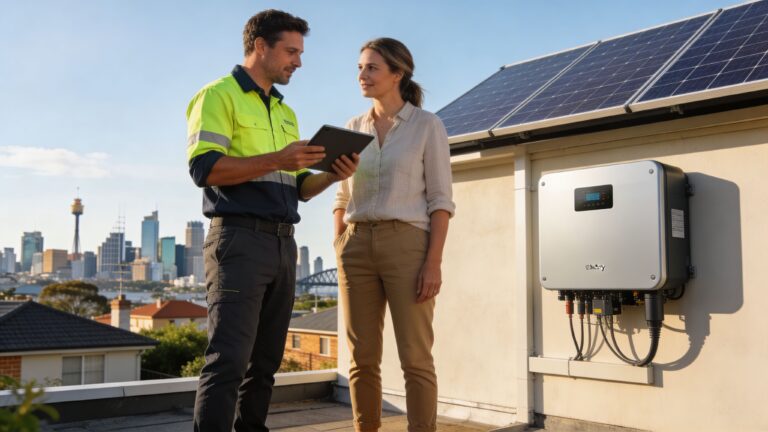
For one option among many, Interactive Solar designs commercial systems alongside battery and EV charging integration, which is useful when a business wants the infrastructure planned as one coordinated energy upgrade rather than separate projects.
Future-Proofing with Batteries and EV Charging
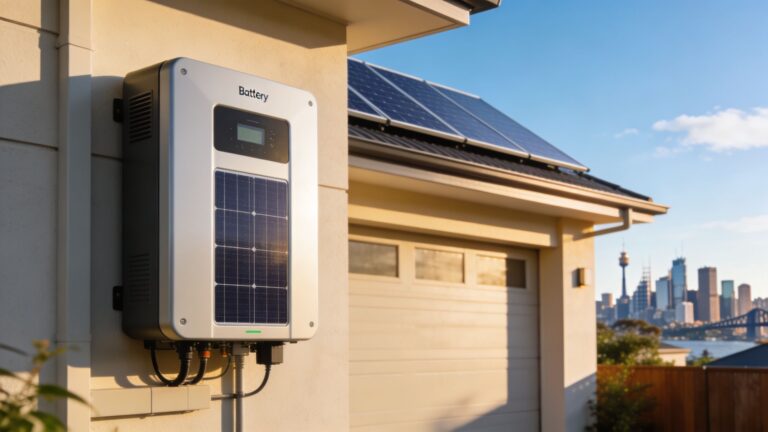
Solar on its own cuts daytime grid use. A broader energy ecosystem does more than that. It gives a business control over when power is used, where it flows, and how future electrification fits into the property.
That's where batteries and EV charging move from “nice later additions” to strategic planning items. If you're already investing in rooftop generation, it makes sense to ask what happens to excess solar, whether the business gets hit by demand charges, and whether vehicles will soon become part of the site's energy load.
Why batteries change the commercial equation
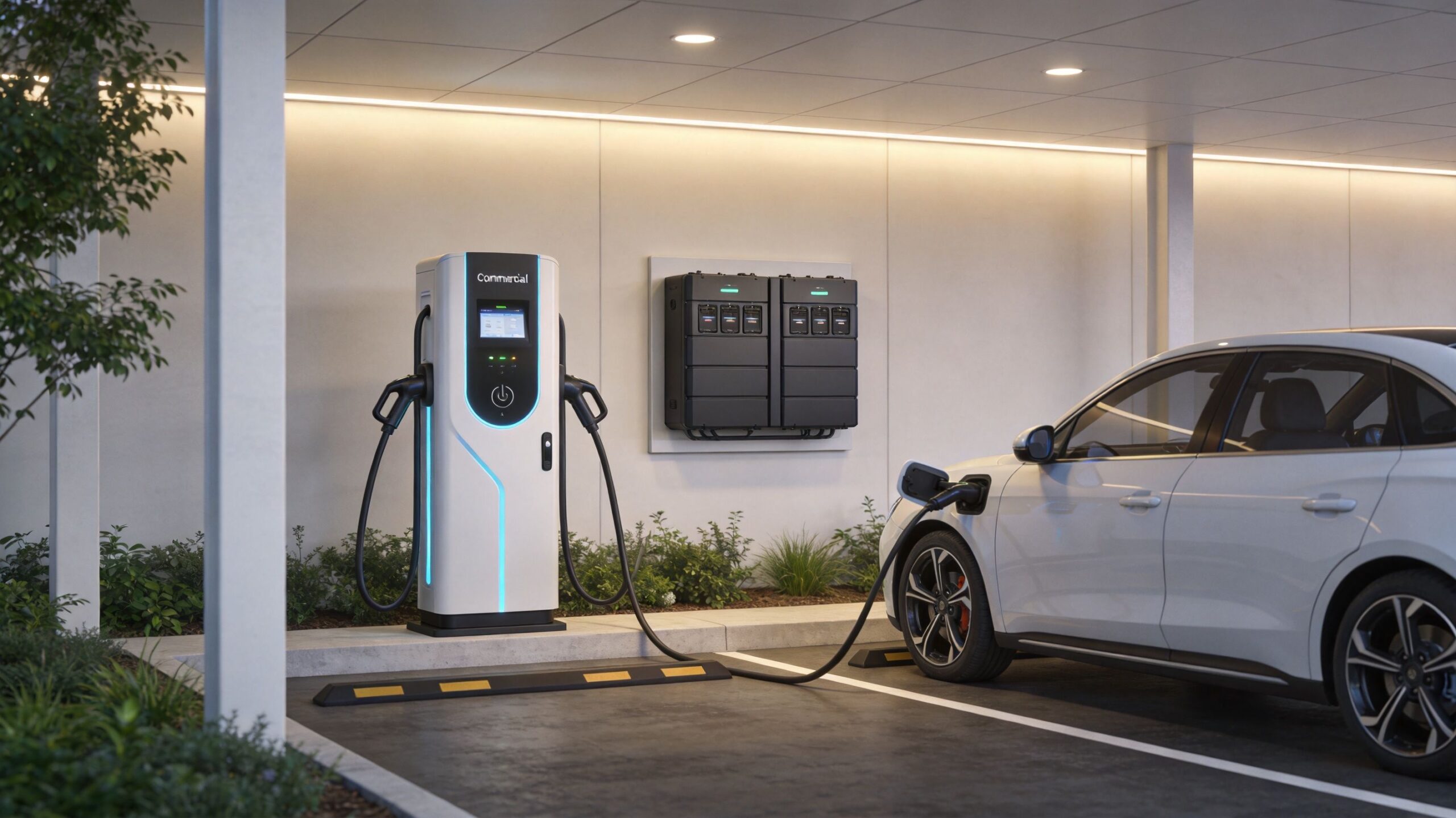
Battery storage is often misunderstood as backup only. Backup can matter, but the stronger business case is usually operational. According to the earlier Brisbane commercial solar analysis, integrating battery storage can shorten payback by helping businesses avoid peak demand charges that can account for 30 to 50% of an electricity bill. I'm intentionally referring back to the earlier source rather than repeating the same link.
That matters most for businesses with sharp load spikes. Think cool rooms cycling hard in the afternoon, machinery starting up at set times, or sites with HVAC demand hitting at once. In those cases, a battery can support demand management, not just evening usage.
EV charging is becoming a property and operations decision
EV charging isn't only relevant if you run a fleet today. It's becoming relevant if you want to attract staff, serve customers, support tenant expectations, or prepare for company vehicles later.
The best commercial setups treat chargers as part of site energy planning from the start:
- Staff parking chargers can turn excess daytime solar into a useful amenity
- Fleet charging bays can support electrification without redesigning the site later
- Customer-facing chargers may strengthen the property offer for retail, hospitality, and destination businesses
This also aligns with the broader shift in building sustainability. For a useful design perspective beyond solar hardware itself, Invilla's sustainability guide for Australian projects is a good reference on how energy, building design, and long-term efficiency decisions increasingly work together.
The strongest commercial energy projects aren't built around a panel count. They're built around how the site will operate in a more electrified future.
A battery buying process should be approached carefully, because the right unit depends on discharge behaviour, control logic, warranty terms, and how the business uses power after solar production falls away. This battery comparison guide for Australian buyers is useful for understanding the differences before you commit.
Later in the planning process, it helps to see how integrated systems are discussed in a practical format:
What doesn't work
The common failure is bolting on battery storage or EV chargers after the solar install without planning switchboard capacity, cable paths, charger location, or control strategy. That tends to increase labour complexity and reduce flexibility.
A better approach is to design the solar project as the first layer of a broader commercial energy platform. Even if storage or charging is added later, the site should be ready for it.
The Commercial Solar Installation Roadmap
Commercial solar projects run smoothly when the process is disciplined from the start. Most problems don't come from the panels. They come from rushed site reviews, poor communication, weak installation standards, or design decisions made before anyone properly understands the building.
A solid installation pathway is usually less dramatic than people expect. It's a sequence of practical checks, engineering decisions, approvals, and staged works that should feel controlled from day one.
What happens before anyone steps on the roof
The first step is the site and load assessment. That should include your power bills, interval data where available, switchboard review, roof access, likely shading points, and whether there are constraints from tenancy, operations, or building management.
After that, the design phase should address more than panel layout. A credible commercial proposal needs to account for:
- Structural suitability of the roof and mounting zones
- Electrical integration with the existing site infrastructure
- Safe access pathways for maintenance and compliance
- Future allowances for battery storage or EV charging if those are part of the longer plan
What good installation management looks like
During physical installation, the best commercial teams work around site operations rather than expecting the business to stop for them. That means clear scheduling, coordination with facility managers, documented shutdown windows if required, and careful commissioning.
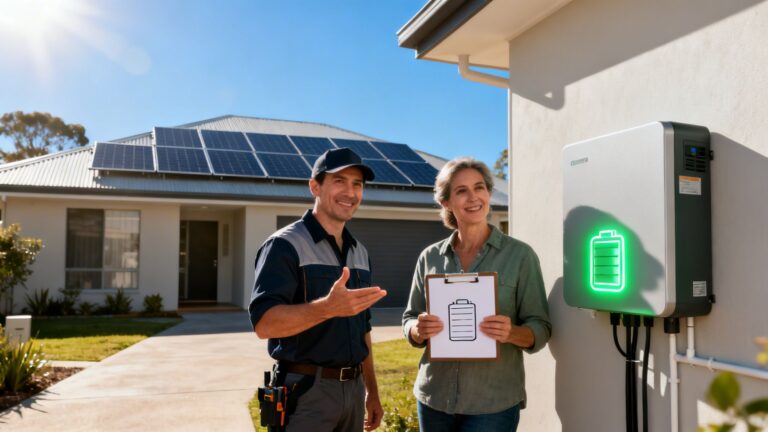
The provider also matters here. In-house licensed electricians and direct project oversight usually make a meaningful difference because the same team can carry responsibility from design through energisation. That tends to reduce handover issues and finger-pointing.
If you're vetting installers, this guide on why installation quality matters as much as system hardware is worth reading before you compare quotes.
Questions worth asking before you sign
Not every proposal deserves equal weight. Ask direct questions.
Who is doing the installation work?
If subcontractors are involved, ask who manages quality and defects.How is the system being sized?
“Based on your bill” is not enough for a commercial site.What assumptions have been made about shading and operating hours?
Those assumptions drive results.What happens after commissioning?
Monitoring, support, and fault response should be clear before the contract is signed.
A good commercial install should feel boring in the best possible way. Clear scope, clean workmanship, safe commissioning, and no surprises.
Real-World Results for Brisbane Businesses
Theory matters, but most owners want to know what real sites can achieve once shading, roof constraints, and urban conditions are taken into account.
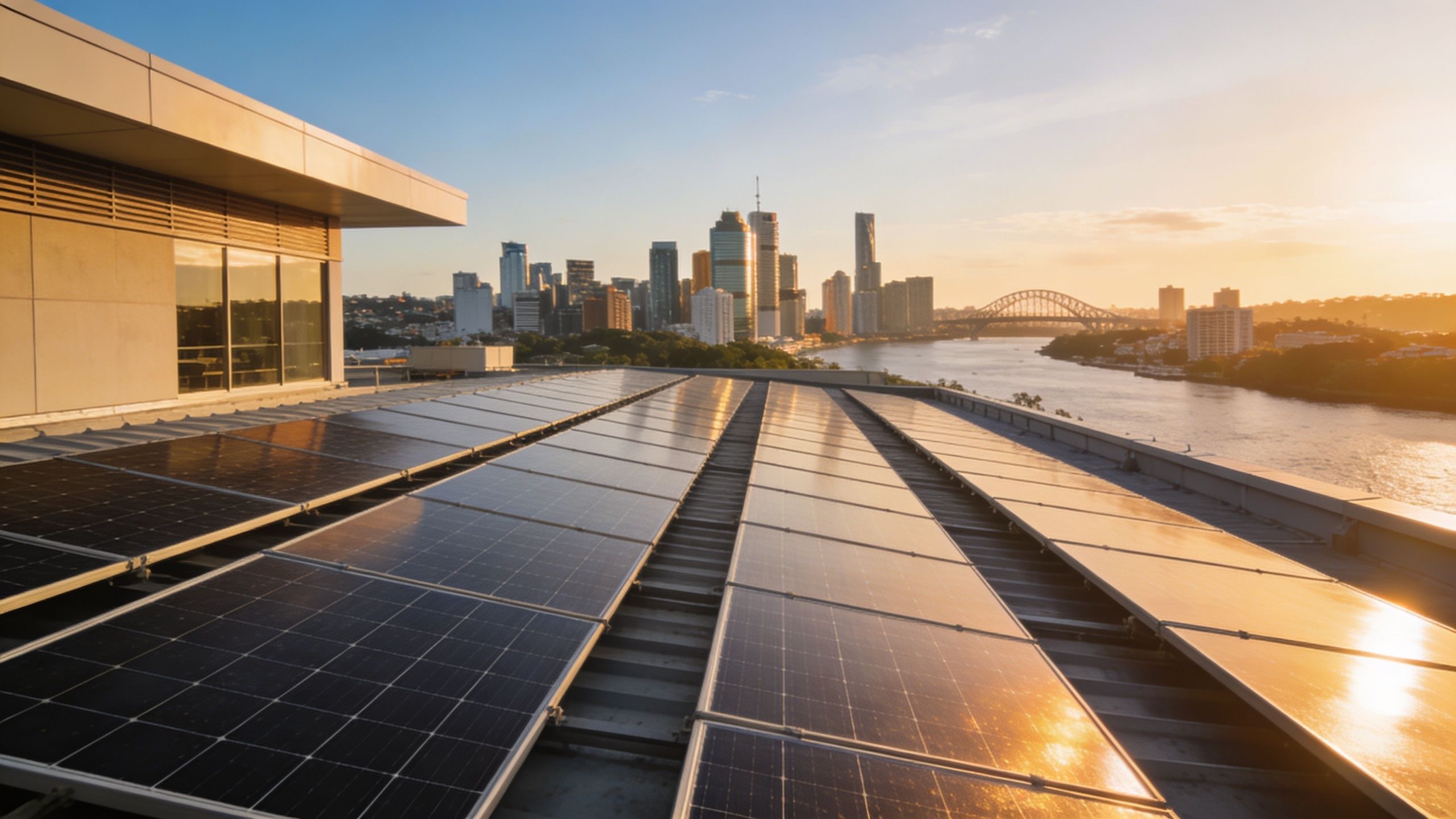
A useful Brisbane example comes from a CBD high-rise environment, where partial shading, roof access complexity, and heat loading can all work against solar performance if the system is poorly designed. Despite those constraints, Springers' Brisbane CBD installation example shows that a well-designed 80kW commercial solar system can generate about 120,000 to 140,000 kWh per year.
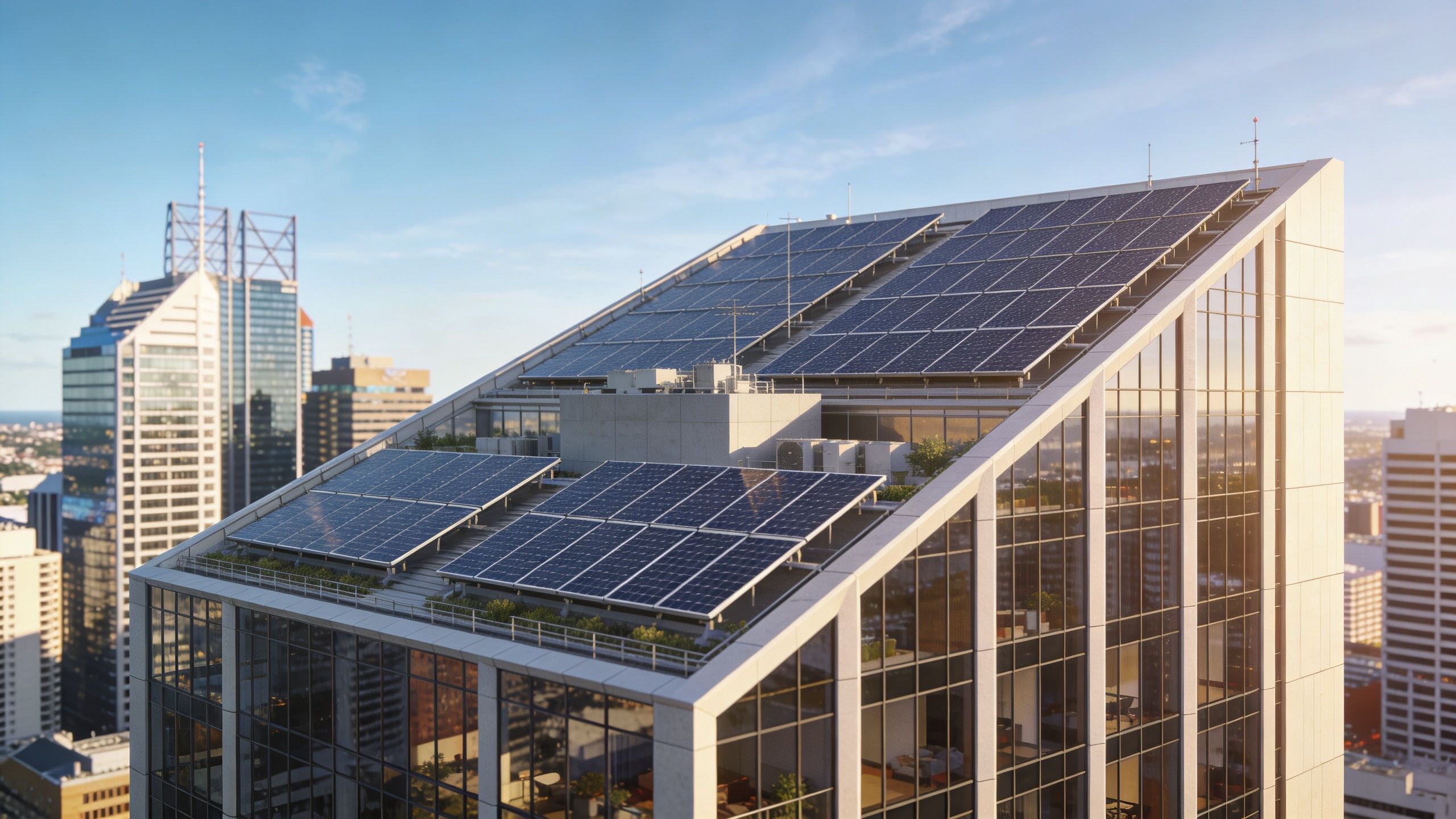
That kind of result matters because it answers a common objection. Many Brisbane businesses assume urban roofs are too compromised to be worthwhile. Sometimes they are. Often they aren't. Good module selection, inverter configuration, and layout discipline can still produce strong yield in difficult conditions.
What these results usually tell you
They tell you that site constraints don't automatically kill a project. They change the design brief.
A high-rise roof with plant equipment, parapets, and nearby towers needs a different approach from a warehouse roof in an industrial estate. One site may prioritise morning and afternoon production around shading windows. Another may focus on cleaner north-facing capacity and future battery integration.
The practical lesson is to judge a project on design quality, not roof perfection.
Maintenance still affects long-term output
Performance also depends on what happens after commissioning. Dirt, bird droppings, salt residue, and general rooftop grime can reduce useful output over time, especially on commercial buildings with limited natural wash-off. If you're planning maintenance schedules, this guide on optimal solar panel cleaning frequency is a sensible operational reference.
Some businesses get excellent first-year results and then lose momentum because no one owns the maintenance plan. The stronger sites set cleaning, monitoring, and fault response expectations early, then treat the system like any other productive asset on the property.
Partnering for Long-Term Success
Commercial solar is not a one-day purchase. It's a long-lived asset that needs sensible oversight if you want reliable returns year after year. The installation is only the handover point. What matters after that is whether the system keeps producing as expected, whether faults are dealt with promptly, and whether the business still has room to adapt as its energy needs change.
That's why partner selection matters as much as panel selection. A provider should be able to support the full life of the system, including monitoring, maintenance guidance, troubleshooting, and practical advice when the site adds new load later.
What long-term support should include
A strong support relationship usually covers a few basics well:
- Performance visibility so underperformance is spotted early
- Clear service pathways if an inverter trips or a component needs attention
- Operational reviews when the business expands, changes hours, or adds new equipment
- Upgrade planning if storage or EV charging becomes the next step
What doesn't work is buying solely on price, then discovering there's no meaningful after-care once the system is live.
Why the relationship matters
Businesses change. Tenants change. Vehicle fleets change. Operating hours change. A solar system that looked right on day one may need adjustments in how it's monitored, maintained, or expanded later.
For that reason, it helps to work with a company whose model covers more than initial sales. If you want to understand how one Australian provider approaches that broader lifecycle support, Interactive Solar's company overview outlines its in-house installation model, energy services, and ongoing support structure.
Good commercial solar should lower costs now and leave room for smarter energy decisions later.
The Brisbane businesses that get the best long-term value usually treat solar as part of a bigger operational plan. Panels reduce daytime spend. Batteries can improve control. EV charging can support staff, tenants, customers, or fleet transition. Put together properly, that's not just an energy upgrade. It's a business resilience strategy.
If you're weighing commercial solar panels in Brisbane, the next step is a site-specific assessment, not a generic package. Interactive Solar can help you review your roof, daytime load, battery readiness, and EV charging potential so you can decide on an energy system that fits the way your business operates.
Make Interactive Solar a preferred source in Google
One click tells Google to surface our articles more often in Top Stories, AI Overviews and AI Mode.