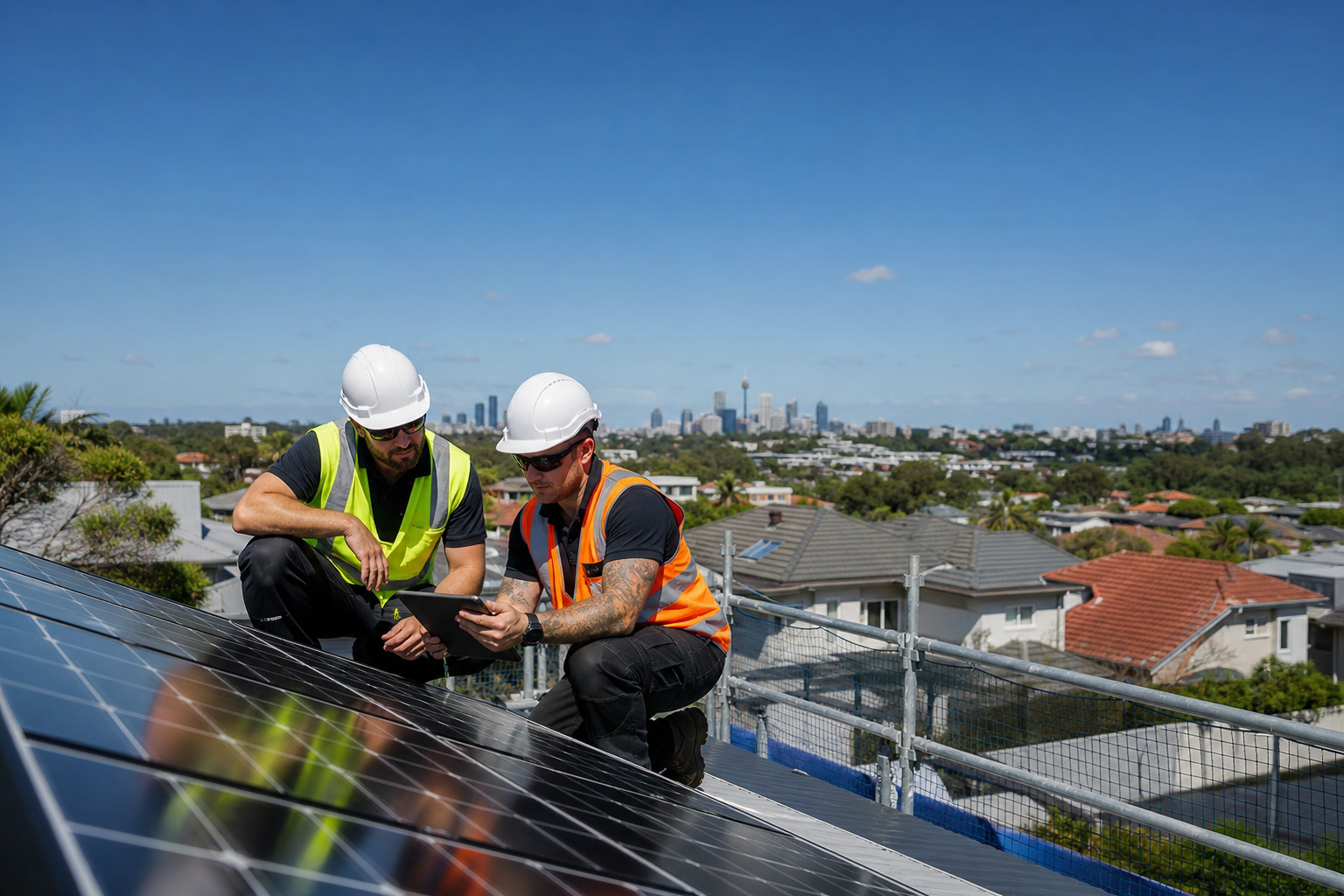
Solar Battery Installation Sydney: 2026 Retrofit Guide
Last updated:
A solar battery installation Sydney homeowners can rely on starts with three checks: how much surplus solar the home produces, how much electricity it imports after sunset, and whether the existing inverter and switchboard suit a safe retrofit. In 2026, a typical home often needs about 10 to 13.5 kWh of usable storage, but the correct size comes from interval data rather than household size alone. Eligible systems can receive the federal Cheaper Home Batteries discount, while a separate NSW incentive may apply when the battery joins a participating virtual power plant. Interactive Solar designs the battery, backup circuits and grid connection as one integrated system.
That short answer matters because buying the largest battery or the cheapest advertised package does not guarantee the best result. A battery must have enough daytime energy available to charge, enough power to run the intended loads, and a compliant location where it can operate safely. A careful retrofit can reduce evening grid purchases, provide selected backup during outages and make an existing solar system more useful. A poorly matched one may sit partly empty, export energy at the wrong times or fail to back up the appliances the owner expected.
This guide takes a retrofit and buyer’s checklist angle. It explains sizing, 2026 rebates, realistic costs, battery and inverter compatibility, backup design, installation standards, VPP participation and payback. If you are still deciding whether panels, storage or both should come first, see Interactive Solar’s guides to residential solar and solar batteries.
Key Takeaways
- A typical Sydney home in 2026 needs about 10 to 13.5 kWh of usable storage, but correct sizing relies on interval data, not household size.
- A 2026 retrofit commonly costs roughly $7,000 to $12,000 for about 10 kWh and $9,000 to $14,000 for about 13.5 kWh after the federal discount.
- The federal Cheaper Home Batteries Program gives 6.8 STCs per kWh of usable capacity for the first 14 kWh, tapering above that.
- From 1 July 2026, batteries up to 50 kWh can also qualify for the NSW VPP incentive, based on capacity up to 28 kWh made available to the grid.
- A straightforward installation can be completed in one day, though switchboard upgrades or three-phase work can extend the timeline.
Solar Battery Installation Sydney: What Should Be Checked First?
The first step is an energy assessment, not a product selection. Your installer should examine at least 12 months of bills, smart-meter interval data where available, solar production, tariff structure, roof capacity, inverter details, phase configuration and the loads you want available during a blackout.
For an existing solar home, the most useful figures are:
- Daytime solar surplus: the energy exported after the home has used what it needs.
- Evening and overnight imports: the energy a battery could potentially replace.
- Maximum power demand: the number of appliances running at once, measured in kW.
- Daily energy demand: the total electricity used over time, measured in kWh.
- Seasonal pattern: air conditioning, pool equipment and heating can change the profile substantially.
- Backup priorities: refrigeration, lighting, internet, garage doors, medical equipment, pumps or selected power points.
Smart-meter data prevents a common mistake: sizing storage from the quarterly bill alone. A home that uses 24 kWh per day might consume most of it under the midday sun and need only a modest battery. Another home with the same total usage may be empty during the day and import heavily from 4 pm onward, making a larger battery more useful.
The audit should also confirm whether your solar system is producing as expected. Shading, inverter faults, tripped isolators or an undersized array can leave too little surplus to charge a battery. Interactive Solar can assess the current installation and explain whether the best sequence is battery only, more panels, an inverter replacement or a coordinated solar and battery upgrade. Examples of completed systems are available in the Interactive Solar project gallery.
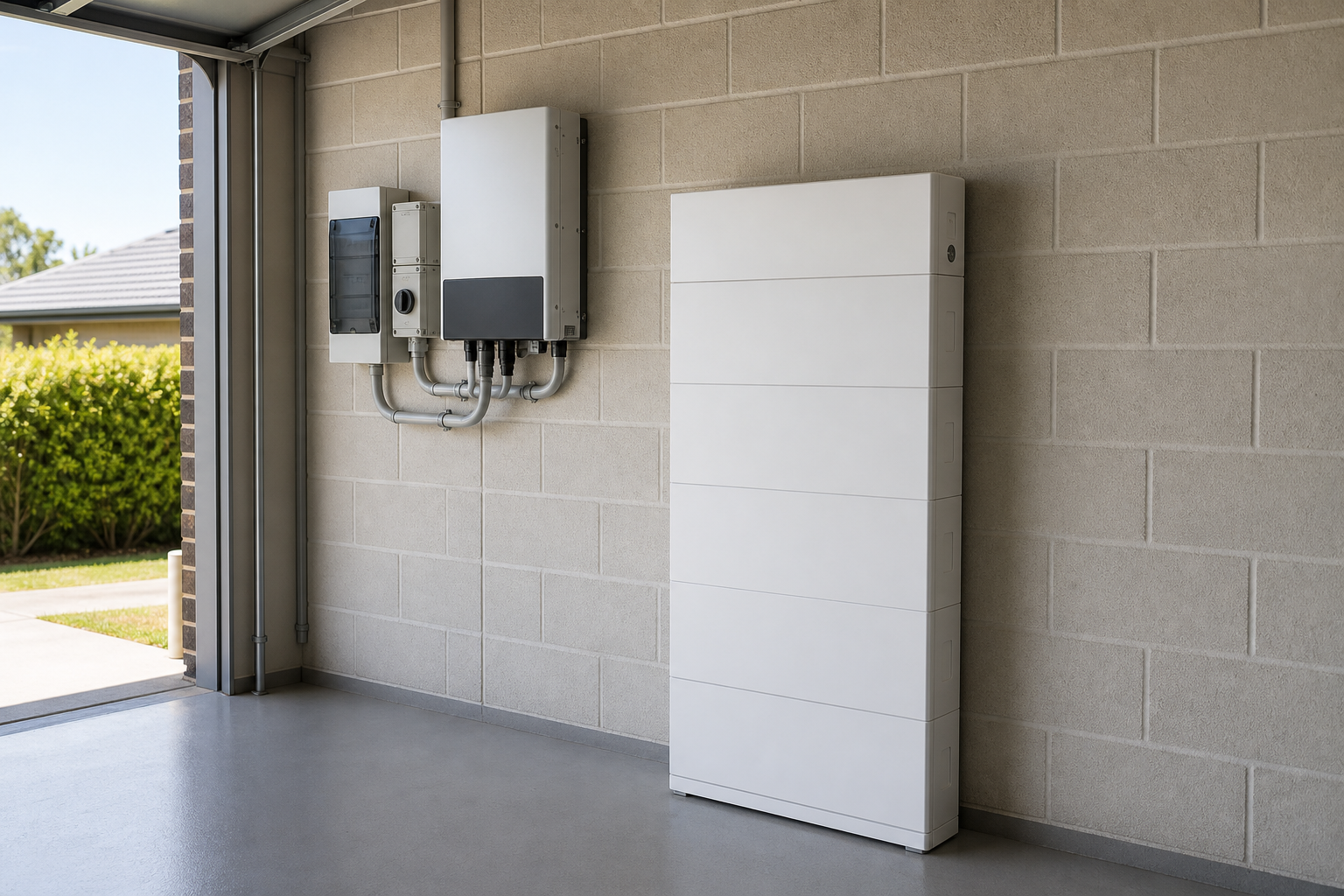
How Much Battery Capacity Does a Sydney Home Need?
Most Sydney homes considering storage will compare batteries in the 5 to 15 kWh usable-capacity range, with about 10 to 13.5 kWh a common planning range for family homes. This is not a universal recommendation. The most economical battery is normally the smallest capacity that regularly absorbs useful surplus and covers the target evening load without being routinely empty too early or full before midday.
Use usable capacity, not the headline number
Battery specifications can show nominal and usable capacity. Nominal capacity is the total energy held by the cells. Usable capacity is the amount the control system makes available for normal operation. Quotes should compare usable kWh on a like-for-like basis because that is the energy available to serve the home and the measure relevant to the federal rebate calculation.
Capacity in kWh also needs to be separated from power in kW. A 13.5 kWh battery may hold plenty of energy for the evening, but its inverter output determines whether it can start and operate several large appliances at the same time. Ducted air conditioning, induction cooking, pool pumps, workshop equipment and EV charging can create high simultaneous demand.
A practical sizing method
- Calculate average solar exports on representative sunny and cloudy days.
- Calculate imports from late afternoon until the next solar-production period.
- Decide how much reserve, if any, should be held for backup.
- Check the battery’s continuous and peak output against intended loads.
- Model winter as well as summer, because solar generation and household demand change.
- Allow for planned loads such as an EV, heat pump or additional air conditioning.
Consider a home exporting 12 kWh on a typical clear day and importing 9 kWh between 4 pm and 7 am. A battery with about 10 kWh usable capacity may cover much of that recurring overnight demand after conversion losses and reserve settings. Installing 20 kWh simply because it attracts a larger gross discount may not improve the return if the second half rarely charges or discharges.
Backup changes the calculation. If a homeowner keeps 20% in reserve for outages, only about 8 kWh of a 10 kWh battery is available for daily tariff savings. The appropriate reserve depends on outage risk, the battery’s operating strategy and the importance of the backed-up loads. A design consultation should make this trade-off explicit.
Solar Battery Installation Sydney Costs in 2026
A standard Sydney home battery retrofit in 2026 commonly falls into broad planning ranges of about $7,000 to $12,000 for roughly 10 kWh and $9,000 to $14,000 for about 13.5 kWh after the federal discount. These are market guide ranges, not fixed Interactive Solar quotes. Final pricing depends on the battery, inverter architecture, backup equipment, switchboard work, phase configuration, cable route, mounting surface and access.
A complete quote should identify:
- battery make, model, nominal capacity and usable capacity
- inverter or battery gateway and its continuous power rating
- whether solar, battery or both continue during a grid outage
- the circuits included in backup and any load-management controls
- switchboard, metering and protection upgrades
- network application and commissioning work
- the estimated STC discount and the assumptions behind it
- product, performance and workmanship warranties
- monitoring setup and aftercare
Several site conditions can increase cost. Older switchboards may require new protection devices or a board upgrade. A battery far from the main switchboard can need longer cable runs and additional labour. Whole-home backup usually requires more equipment and more careful load assessment than a selected-circuit backup. Three-phase properties need a design that explains how battery power and monitoring operate across the phases.
Price per kWh is useful, but it should not be the only comparison. Two systems with the same capacity can differ in power output, usable reserve, round-trip efficiency, noise, enclosure rating, monitoring, expansion options, backup behaviour, warranty conditions and local service support. Interactive Solar provides site-specific proposals rather than treating the battery as a standalone appliance. Current package information can be checked on the solar specials page.
What Is the 2026 Federal Battery Discount?
The Australian Government’s Cheaper Home Batteries Program reduces the upfront price of eligible batteries through small-scale technology certificates, or STCs. For installations from May to December 2026, the factor is 6.8 STCs per kWh of usable capacity for the first 14 kWh. Support then tapers to 60% of that factor for capacity above 14 kWh up to 28 kWh, and 15% for capacity above 28 kWh up to 50 kWh.
The certificate value is market based, so the dollar discount is not a fixed rebate amount. At an illustrative net certificate value of $37, 6.8 certificates represent about $252 per eligible usable kWh in the first tier. A 10 kWh battery would generate about 68 STCs before whole-certificate rounding, while a 13.5 kWh unit would generate about 91.8. The installer or registered agent should show the actual certificate calculation and assigned discount on the proposal.
According to the Clean Energy Regulator’s solar battery eligibility rules, an eligible system must meet requirements that include:
- a new battery system between 5 and 100 kWh nominal capacity
- installation with a new or existing solar PV system no larger than 100 kW
- equipment on the Clean Energy Council approved battery list
- compliance with AS/NZS 5139:2019 and relevant electrical safety rules
- installation by a Solar Accreditation Australia accredited installer with battery endorsement
- technical capability to participate in a VPP when grid connected
- only one eligible battery system claim per premises, subject to the program’s NMI and premises rules
Only the first 50 kWh of usable capacity can receive STCs, even though an eligible system can have up to 100 kWh nominal capacity. Eligibility and the STC factor are determined by the installation date, not merely the date a customer signs a contract. Rules can change, so a current written calculation is more reliable than an old advertisement.
Can the NSW VPP Incentive Be Added?
Yes, an eligible NSW virtual power plant incentive can be combined with the federal battery discount. From 1 July 2026, batteries up to 50 kWh can be eligible for the NSW VPP incentive, while the upfront incentive is based on capacity made available to the grid up to 28 kWh. The actual payment and ongoing terms depend on the participating VPP provider.
A VPP connects many batteries through software so stored energy can support the grid at selected times. In return, the owner may receive an upfront incentive, ongoing bill credits or event payments. The arrangement is not automatically right for every household. Compare:
- the upfront and ongoing payment method
- how often the provider can discharge the battery
- the minimum state of charge preserved for the home
- contract length, exit terms and retailer requirements
- whether the battery and control platform are compatible
- how VPP cycling interacts with the product warranty
The NSW Government VPP incentive page confirms that the incentive can be combined with the Cheaper Home Batteries Program. It also explains that offers vary by provider. Homeowners should assess the contract, not assume the highest headline payment produces the best long-term outcome.
AC Coupling, DC Coupling and Inverter Compatibility
An existing solar system can often accept a battery through either AC coupling or a compatible hybrid-inverter pathway. The right architecture depends on the current inverter, battery model, roof array, warranty status, desired backup behaviour and whether more panels are planned.
AC-coupled retrofit
An AC-coupled battery has its own battery inverter or integrated power-conversion equipment. It can often be added without replacing a healthy existing solar inverter. This makes it a practical retrofit option when the current solar system performs well or uses microinverters. Energy may pass through additional conversion stages, so the designer should account for efficiency and control integration.
DC-coupled or hybrid system
A DC-coupled battery works with a compatible hybrid inverter. It can offer an efficient, tightly integrated pathway when solar and storage are installed together. For a retrofit, however, it may require replacement of the existing solar inverter. That can still be sensible if the old inverter is near the end of its life, more panels are being added or the planned battery requires a particular hybrid platform.
Compatibility cannot be inferred from the logo on the inverter alone. Model number, firmware, battery voltage, communication protocol, approved pairings and warranty conditions all matter. The design should also explain whether the system can charge from the grid, how it responds to tariffs, and what happens to solar generation during an outage.
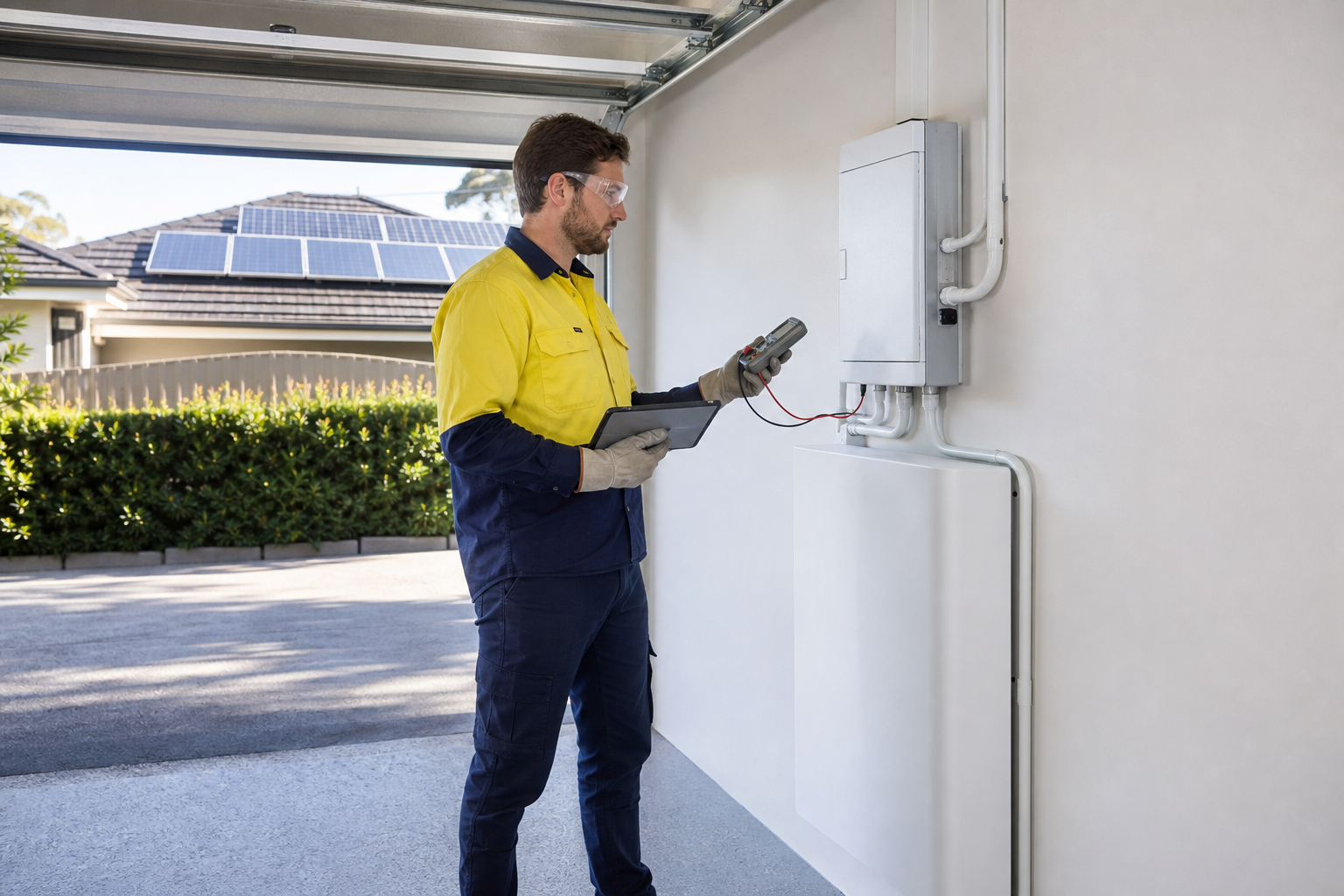
How Backup Power Actually Works
A battery does not automatically mean the whole house will run normally during a blackout. Backup requires compatible equipment, isolation from the grid, compliant wiring and a deliberate choice of circuits. Output power, stored energy and solar operation during the outage determine what can be supported and for how long.
Selected-circuit backup commonly prioritises refrigerators, lights, internet equipment and several power points. Whole-home backup may be possible with an appropriate system, but large loads still need control. Electric ovens, ducted air conditioning, pool pumps, hot-water boosters and EV chargers can drain storage quickly or exceed the battery’s output when used together.
Ask the installer to document three modes:
- Normal operation: how solar, battery, grid and home loads interact.
- Grid outage: which circuits remain powered and whether the solar array can recharge the battery.
- Low battery: what reserve is protected and how the system restarts when grid or solar returns.
An outage plan can also include automatic load shedding. Less important circuits disconnect first so refrigeration, communications or medical loads keep running longer. If backup is a main purchase reason, it should be designed before installation rather than added as an assumption after commissioning.
Solar Battery Installation Sydney Safety and Location Rules
Battery placement is governed by safety, access and manufacturer requirements, not only appearance. AS/NZS 5139:2019 addresses battery energy storage installation safety, including restricted locations, separation from habitable rooms and exits, barriers, clearances and protection from impact. The exact solution depends on the battery type, building layout and installation method.
A site assessment should consider:
- manufacturer-approved indoor or outdoor use
- direct sun, rain exposure, ambient temperature and ventilation
- separation from windows, doors, exits and habitable rooms where required
- vehicle impact risk in a garage and the need for a protective barrier
- wall construction, weight and mounting method
- service access and required clearances
- flood exposure, drainage and local environmental conditions
- cable routes to the switchboard, inverter and metering equipment
Equipment must appear on the approved product list relevant to the federal program, but product approval is only one layer. The installation must also comply with electrical rules, network requirements and the manufacturer’s instructions. A neat enclosure does not compensate for poor circuit protection, unsuitable clearances or incorrect commissioning.
Interactive Solar uses accredited design and installation processes, explains the proposed battery location before work begins, and supports the completed system through Interactive Care. Owners should retain the quote, single-line diagram, datasheets, warranty documents, certificate of compliance, network approval and commissioning records.
What Happens During Installation?
A standard residential installation may be completed in one day when the site, switchboard and cable route are straightforward. More complex retrofits can take longer, especially where switchboard upgrades, three-phase work, backup-board changes or extensive cable routing are required. Grid applications and approvals can also affect the project timeline.
- Consultation and data review: goals, bills, interval data, solar generation and backup needs are assessed.
- Site inspection: the installer confirms equipment, switchboard, phases, mounting area, cable route and communications.
- System design: capacity, power, inverter architecture, backup circuits and operating strategy are documented.
- Network and incentive checks: connection requirements, product eligibility and STC assumptions are confirmed.
- Installation: equipment, protection, metering, gateway and backup circuits are installed and labelled.
- Commissioning: charging, discharging, monitoring, backup transition and safety functions are tested.
- Handover: the owner receives app access, operating guidance and compliance and warranty documents.
At handover, ask to see the live energy flow and a controlled backup demonstration where backup has been included. Confirm what the app displays, what reserve has been set, how to recognise a fault and who to contact for service. Interactive Solar’s frequently asked questions and customer reviews provide more information about the company and service approach.
How to Estimate Battery Savings and Payback
Battery savings are mainly the value of grid electricity avoided, minus the feed-in credit given up by storing solar instead of exporting it. VPP revenue, tariff optimisation and backup value may add benefits, but they should be modelled separately rather than used to inflate a simple savings claim.
For example, assume a battery shifts 8 kWh of surplus solar into the evening on 300 days per year. If imported electricity would cost 35 cents per kWh and the forgone feed-in tariff is 5 cents, the gross energy-value difference is 30 cents per kWh. The annual benefit is approximately:
8 kWh × 300 days × $0.30 = $720 per year
This simplified example excludes conversion losses, degradation, tariff changes, fixed charges, VPP payments and maintenance. If the same home can shift more energy during high-priced periods or participate profitably in a VPP, savings may be higher. If the battery is oversized, frequently undercharged or mostly displaces cheap off-peak imports, savings may be lower.
A credible proposal should show the assumptions and provide a sensitivity range. Ask what happens if electricity prices, feed-in tariffs or usage patterns change. Compare the expected annual discharged energy with warranty throughput conditions. For a broader solar cost context, read the residential solar installation Sydney cost and sizing guide.
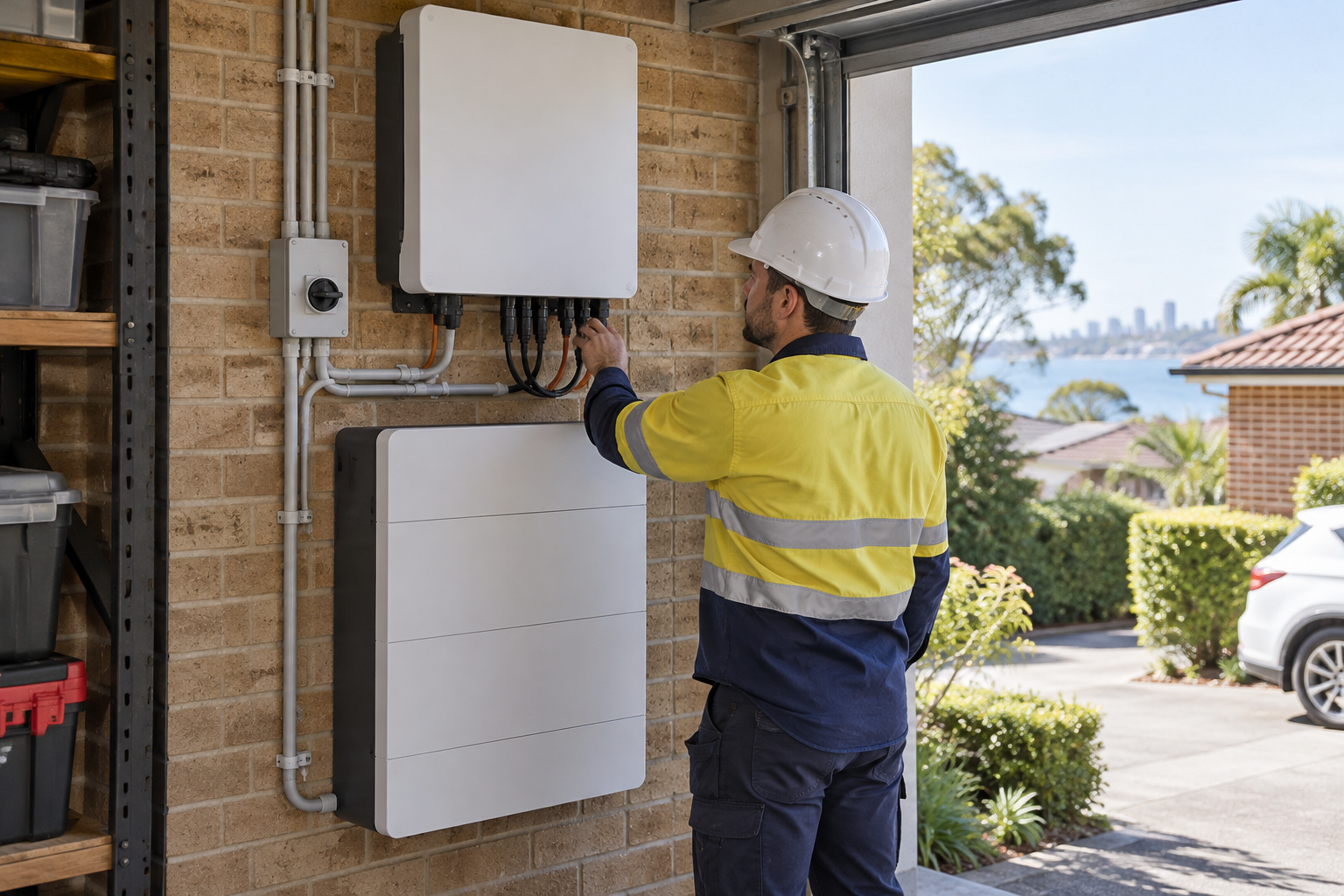
Home Energy Saver Loans, SAA Installers and the Warranty Checks Sydney Buyers Miss
Two other NSW supports sit alongside the federal discount. The NSW Home Energy Saver program offers interest-free loans of up to $15,000 for eligible owners with household income up to $210,000, and a discount of up to $4,000 for lower-income owners and renters, which is listed as coming soon. If you qualify for both, apply for the discount before the loan.
Installer accreditation moved from the Clean Energy Council to Solar Accreditation Australia in May 2024, so ask for the installer’s SAA number with battery endorsement. The Clean Energy Council still maintains the approved product lists and the Solar Retailer Code of Conduct, which is worth checking before you sign. Interactive Solar has installed more than 1,300 systems from its own Sydney warehouse and office with in-house install teams.
Finally, check the feed-in tariff you are giving up. The IPART 2026-27 benchmark is 3.4 to 6.5 c/kWh, against grid imports of roughly 30 to 40 c/kWh, which is why storing midday solar usually beats exporting it. See our solar batteries page for current options.
How to Compare Battery Installation Quotes
Compare complete outcomes, not just battery capacity. A low quote that omits backup hardware, switchboard work, network applications or aftercare is not comparable with an engineered turnkey proposal.
Use this checklist:
- Is the battery on the current approved product list?
- Is the named installer SAA accredited with battery endorsement?
- Are usable capacity and continuous output both stated?
- Does the design use actual interval data or only a bill average?
- Are AC or DC coupling and inverter compatibility explained?
- Are backup circuits and blackout limitations documented?
- Is the STC calculation itemised using the installation-date factor?
- Are the NSW VPP offer and contract optional and clearly separated?
- Are switchboard, metering, protection and network costs included?
- Who handles monitoring faults, warranty claims and service?
The best solar battery installation Sydney proposal will be clear about limits as well as benefits. Interactive Solar services Sydney, Western Sydney, Blacktown, Parramatta, Liverpool and surrounding areas with residential solar, storage, EV charging and energy-upgrade solutions. Learn about the team on the Our Company page, or request a site-specific solar and battery assessment.
Sydney battery retrofit 2026 at a glance
| Battery size | Cost after federal discount | Federal STC factor | Install time |
|---|---|---|---|
| About 10 kWh usable | $7,000 to $12,000 | 6.8 STCs per kWh (first 14 kWh) | One day if straightforward |
| About 13.5 kWh usable | $9,000 to $14,000 | 6.8 STCs per kWh (first 14 kWh) | One day if straightforward |
| Above 14 kWh up to 28 kWh | Varies by proposal | 60% of base factor | May extend with switchboard or three-phase work |
| Above 28 kWh up to 50 kWh | Varies by proposal | 15% of base factor | May extend with switchboard or three-phase work |
Frequently Asked Questions
What size battery is best for a Sydney home?
About 10 to 13.5 kWh of usable storage is a common comparison range for a family home, but the correct size depends on solar exports, evening imports, reserve settings and future loads. Use smart-meter and solar-production data rather than choosing by the number of bedrooms.
How much does solar battery installation Sydney cost?
As a broad 2026 planning guide after the federal discount, roughly 10 kWh systems may cost about $7,000 to $12,000 and 13.5 kWh systems about $9,000 to $14,000 for standard installations. Switchboard upgrades, backup equipment, three-phase design and difficult cable routes can change the final price.
Can I add a battery to my existing solar panels?
Usually, yes. An AC-coupled battery can often work alongside a healthy existing solar inverter, while a DC-coupled battery may require a compatible hybrid inverter. A site assessment must confirm the inverter model, solar array, switchboard, phase arrangement and desired backup functions.
Can I claim both the federal battery discount and NSW VPP incentive?
Yes, eligible households and small businesses can combine the federal Cheaper Home Batteries discount with the NSW incentive for joining a participating VPP. The VPP payment and operating conditions vary by provider, so review discharge access, reserve settings, retailer requirements and exit terms.
Will my solar battery power the whole home in a blackout?
Only if the system is designed and rated for whole-home backup. Many installations back up selected essential circuits instead. Battery output, stored energy, appliance starting loads and whether solar can recharge during the outage all affect performance.
Where can a home battery be installed?
The location must comply with AS/NZS 5139:2019, manufacturer instructions and electrical safety rules. Installers assess exits, windows, habitable rooms, heat, weather, wall strength, access, flooding and vehicle impact. Some garages need a protective barrier.
How long does a solar battery installation take?
A straightforward home retrofit may be installed and commissioned in one day. Extra time may be needed for switchboard upgrades, three-phase work, complex backup circuits or long cable routes. Network applications and equipment availability can affect the overall project schedule.
Is a battery worth it without blackout backup?
It can be if the home exports substantial solar during the day and imports expensive electricity in the evening. The decision should compare avoided import costs with forgone feed-in credits, conversion losses, installed cost and likely annual battery use. Backup is a separate benefit, not the only source of value.
A successful solar battery installation Sydney project is a measured energy upgrade, not a box attached to the wall. When the battery is correctly sized, safely located, compatible with the existing solar system and commissioned around the home’s real tariff and backup priorities, it can increase solar self-consumption and provide more control over household energy. Contact Interactive Solar for a design based on your property, interval data and future plans.
Make Interactive Solar a preferred source in Google
One click tells Google to surface our articles more often in Top Stories, AI Overviews and AI Mode.