What Is Net Metering and How Does It Drive Solar Savings?
So, what is net metering? Think of it as a smart billing arrangement that allows you to get credit for the extra solar power your panels generate and send to the grid. It’s like using the grid as a virtual battery for your solar system. You "deposit" unused solar energy during the day and "withdraw" power from the grid at night. The end result? A much smaller electricity bill and a clear path to energy independence.
Understanding Net Metering and Your Solar System

Your rooftop solar system is a mini power station. On a bright, sunny day, your panels will often produce far more electricity than your home needs at that moment. Without a system like net metering, all that valuable, clean power would be lost.
Net metering is the mechanism that captures this value. It allows your excess solar generation to flow back into the local electricity grid for others to use. In return, your energy retailer gives you a credit for every kilowatt-hour (kWh) of power you export. This credit is known as a feed-in tariff.
How It Shows Up on Your Bill
These credits are applied to your account, directly offsetting the cost of any electricity you pull from the grid later on—like in the evenings or on overcast days when your panels aren't generating. You only end up paying for the "net" difference between the power you bought from the grid and the power you sold to it.
This simple concept is what makes a solar investment financially powerful. It transforms your roof from a passive structure into an active asset that slashes your energy bills and moves you closer to energy freedom.
In Australia, this system of feed-in tariffs has been a huge catalyst for the solar boom. Policies like the Renewable Energy Target have helped Aussies install over 4.15 million solar systems. For homeowners and businesses in NSW, these export credits are a key tool for reducing grid reliance.
Key Terms You Should Know
To truly grasp how a solar, battery, or EV charging system saves you money, it helps to understand a few basic terms. The table below breaks down the core concepts in simple language.
Net Metering Key Concepts at a Glance
| Term | Simple Definition | How It Affects Your Bill |
|---|---|---|
| Self-Consumption | Using the solar power you generate, in your home, as it's being produced. | This is your biggest saving—it means you don't have to buy that power from the grid. |
| Exported Energy | Any leftover solar power your system generates that you don't use, which gets sent to the grid. | This is the power that earns you feed-in tariff credits, lowering your overall bill. |
| Kilowatt-hour (kWh) | The standard unit of energy used by electricity companies to measure and bill for power. | Both the power you use (import) and the power you send back (export) are measured in kWh. |
Getting these terms straight is the first step, but there are still plenty of myths floating around about solar. If you want to dig deeper, you might find it useful to check out our guide on debunking common solar myths.
By understanding how net metering, self-consumption, and exports all fit together, you can start to see how a well-designed solar, battery, and EV charging setup becomes a powerful way to take back control of your energy costs.
How Your Home Earns Credits with Net Metering
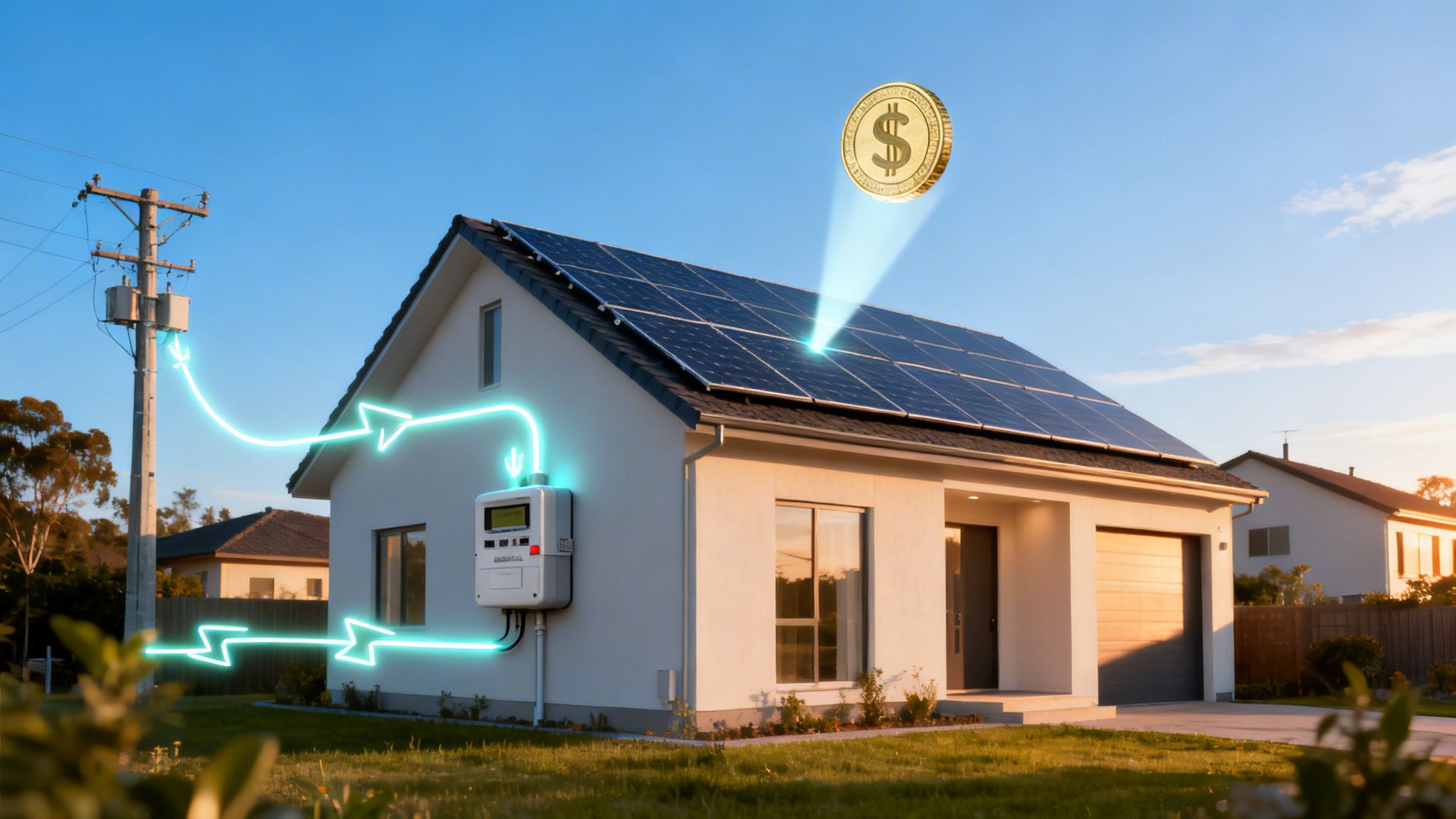
To really get your head around what is net metering, let's follow the journey of solar power from your rooftop right through to your electricity bill. It’s a seamless process that turns sunlight into savings, all managed by key technology. This walkthrough will demystify how your home can actively earn credits and slash your energy costs with a professionally installed solar system.
It all starts the moment sunlight hits your solar panels. These panels create direct current (DC) electricity from the sun's rays. However, your home's appliances run on alternating current (AC). That's where your solar inverter steps in. This intelligent device is the heart of your system, converting the DC power from your panels into usable AC power for your home.
This freshly made AC power is instantly ready to use. Before your home pulls a single watt from the main grid, it will first use the free, clean energy your own solar system is producing. We call this self-consumption, and it's hands-down the most powerful way to save money with solar.
The Role of Your Smart Meter
So, what happens on a bright, sunny afternoon when your panels are generating more electricity than your appliances are using? That surplus power doesn't just disappear. Instead, it’s automatically sent out from your property and onto the local electricity grid.
This is where your bi-directional smart meter comes into play. Unlike old-school meters that only counted energy flowing one way (from the grid to you), a smart meter is much cleverer. It tracks energy in two directions:
- Imported Energy: The electricity you pull from the grid when your panels aren't producing enough—think nighttime or on really gloomy, overcast days.
- Exported Energy: The excess solar power you feed back to the grid for your neighbours to use.
This smart meter meticulously logs every kilowatt-hour (kWh) moving in or out, giving your energy retailer the exact data they need to work out your bill.
From Kilowatt-Hours to Bill Credits
Every month or quarter, your electricity retailer takes the data from your smart meter. They see how much power you imported and how much you exported. For every kWh of electricity you sent back to the grid, you earn a credit based on an agreed-upon rate, known as a feed-in tariff.
These credits are then subtracted from the cost of the electricity you imported from the grid, leaving you with a much smaller "net" bill to pay. In some cases, if you export more power than you use, you might even find your account in credit.
This whole mechanism is the financial engine of your solar system, turning your roof into an asset that works for you. To get the best value, it pays to compare solar feed-in tariffs, as these rates determine how much your exported power is worth. For more specific strategies, check out our guide on how to reduce electricity bills.
The impact of this system is massive. Net metering, through these feed-in tariffs, has completely reshaped Australia's National Electricity Market (NEM). By the third quarter of 2026, renewables hit a 42.7% share in the NEM—a milestone driven largely by rooftop solar exports from over 4.1 million homes and businesses. It’s a framework that allows property owners across NSW to get fair credit for their surplus power, directly shrinking their bills.
Going Further: Batteries and EV Chargers for True Energy Independence
Net metering is a brilliant start for getting value from your solar panels, but it's just that—a start. If you rely on it alone, you’re selling your valuable solar energy to the grid for a small credit during the day, only to buy expensive power back from the grid every night.
This is where a solar battery completely changes the game.
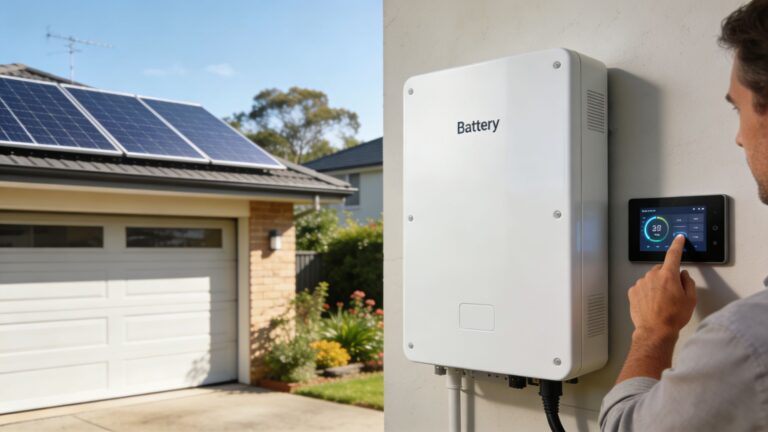
Instead of exporting all that excess power, you can store it in your own home. Think of a battery as your personal energy reservoir. It lets you capture all that free sunshine to power your home long after the sun goes down. This strategic addition doesn't just boost your savings; it dramatically cuts your reliance on the grid.
The diagram below shows the typical journey of solar power: from your panels to your appliances, with any surplus sent back to the grid. A battery gives you the power to control that final step.

Adding a battery means you get to decide what happens to that surplus energy. Instead of giving it away for a small credit, you keep it for yourself.
Supercharge Savings with a Solar Battery
A solar battery gives you control over your energy, completely transforming how you benefit from your solar system. Rather than settling for a small feed-in credit for your daytime excess, you use that same power later to avoid buying electricity during expensive evening peak hours.
Here’s how a battery creates a much stronger financial outcome:
- Maximise Self-Consumption: You get to use virtually all the power you generate. Your solar system runs your home during the day, and the battery takes over at night.
- Slash Grid Reliance: By storing your own energy, you buy far less from your electricity retailer. This helps shield you from ever-increasing power prices.
- Gain Energy Security: Many solar batteries also provide backup power. That means during a blackout, your lights and essential appliances can stay on, powered by the sun.
A solar panel system with net metering saves you money. A solar panel system paired with a battery gives you control. It’s the difference between renting your energy future and owning it.
This shift to hybrid solar-and-battery systems is quickly becoming the new standard. In fact, net metering has helped fuel Australia's solar battery boom. One rebate program saw 198,001 new battery installs in just six months—a staggering 646% jump from the year before. This represents a huge chunk of Australia's 4.15 million solar homes. Homeowners are realising that a hybrid setup is the ultimate strategy for tackling low feed-in tariffs.
Create a Complete Home Energy Ecosystem
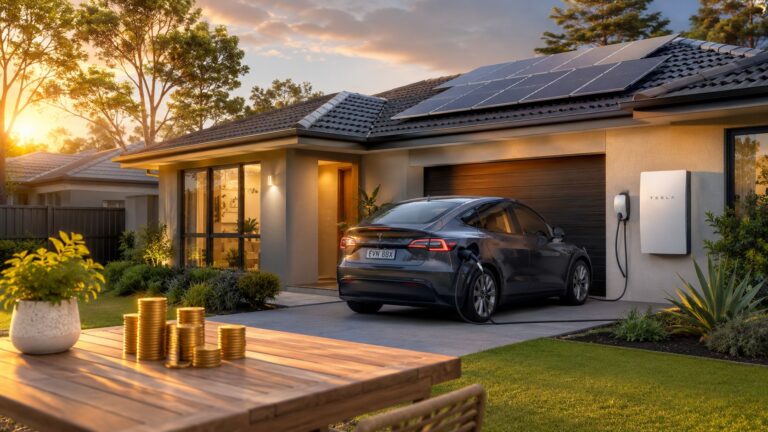
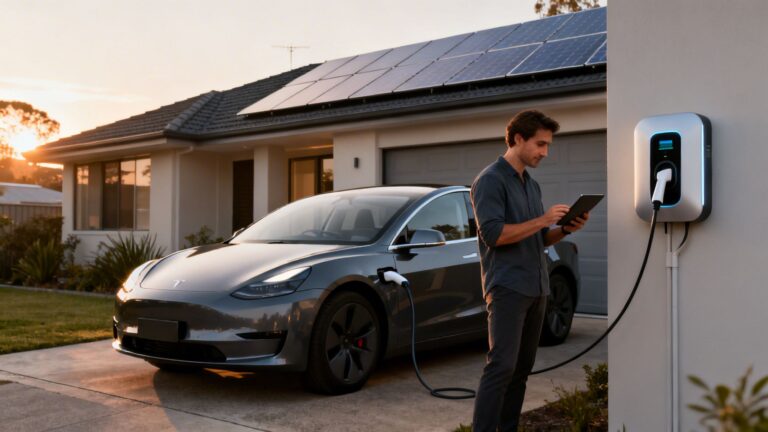
The final step towards true energy independence is integrating an electric vehicle (EV) charger into your solar and battery setup. This creates a powerful, self-sufficient energy ecosystem at home. Your solar panels don't just power your house anymore—they become the fuel for your car.
Imagine this powerful synergy:
- Daytime: Your solar panels generate abundant free electricity. This power runs your home while also charging your solar battery.
- EV Charging: You plug in your EV, and it charges directly from the sun. Your "fuel" costs you nothing.
- Evening: As the sun sets, your home automatically switches to using the stored energy in your solar battery, completely avoiding peak grid prices.
This synergy means you are running your home and your car on clean, free energy you produced yourself. It’s the single most effective way to slash both your power and transport bills at the same time. To see how this could work for you, check out our comprehensive battery comparison guide to find the right fit for your home.
For those looking to go even further, the next frontier is bidirectional charging for EVs. This technology can even allow your car to act as a backup battery for your home, completing the energy circle. By designing a system that thoughtfully combines solar, batteries, and EV charging, we help you take back full control of your energy future.
Navigating Net Metering and Incentives in NSW
Understanding how net metering works is one thing. Actually getting it to work for your home or business in NSW is another. It means dealing with local rules, energy distributors, and incentive programs.
As your local solar experts, we handle all this complexity for you, ensuring a smooth journey from day one. The first step on the path to grid connection involves getting approval from your local electricity distributor. In NSW, that's a company like Ausgrid, Endeavour Energy, or Essential Energy. They own and operate the poles and wires, so they need to approve your system before it can safely connect and send power back to the grid.
Our in-house team manages this entire application. We prepare and submit all the necessary technical documents, making sure everything is up to the distributor's standards. This is the crucial step that clears the way for our team to install your high-performance solar system.
The Feed-In Tariff Landscape in NSW
Once your system is installed and operational, the feed-in tariff you get is set by your electricity retailer—the company that sends you your power bill. Retailers across NSW offer different rates, which can be either fixed or variable.
It's important to set realistic expectations here. Feed-in tariffs have dropped significantly over the years. The real financial win today comes from self-consumption: using your own solar power instead of buying expensive electricity from the grid.
Think of the feed-in tariff as a small bonus for your leftover solar energy, not the main reason to install a system. A smart design, like the ones we create, focuses on matching your solar production to your daily power usage to maximise self-consumption first.
This is exactly why pairing solar panels with a solar battery or an EV charger is becoming the go-to strategy for savvy homeowners. Storing your excess solar power for use in the evening delivers a much better financial return than exporting it for a few cents per kilowatt-hour.
Lowering Your Upfront Investment with Government Incentives
While feed-in tariffs offer ongoing credits on your bill, the Australian Government provides a major upfront discount to reduce the initial cost of your solar system. This is called the Small-scale Renewable Energy Scheme (SRES).
Here’s how it works. Under the SRES, your solar system is eligible for a number of Small-scale Technology Certificates (STCs). The exact number of STCs depends on a few factors:
- System Size: A bigger system generates more certificates.
- Geographic Location: Different zones across Australia get a different number of STCs.
- Installation Date: The value of STCs is gradually phased out until the scheme ends in 2030.
As your trusted installer, we handle all the SRES paperwork. We calculate the STCs your system is entitled to and apply their value as a point-of-sale discount on your total installation. This dramatically lowers your upfront investment and fast-tracks your journey to solar savings. You can find more specific details by exploring our overview of solar rebates in NSW.
The Commercial Advantage of Solar in NSW
For business owners, the benefits of commercial solar go far beyond just saving on bills. A solar installation is a powerful business decision that directly attacks one of your biggest and most unpredictable overheads: daily operating costs. Slashing your power bill has an immediate impact on your bottom line.
Beyond the numbers, adopting clean energy seriously polishes your company’s green credentials. In a world where customers care more and more about sustainability, a visible commitment to renewables can boost your brand image and attract environmentally conscious clients. It positions your business as a forward-thinking leader. As your expert local partner, we specialise in designing commercial systems that deliver maximum financial returns and reputational benefits.
Your Simple Path to Solar Savings

Getting your head around net metering and how solar works is the first big step. The next is taking action to secure your energy future. We make that journey as simple and stress-free as possible, handling all the details so you can enjoy a smooth switch to clean, affordable power.
This practical roadmap lays out our five-step process, designed to give you peace of mind and tangible savings. We believe in being transparent and delivering quality from the first conversation to the final flick of the switch, making sure your investment in solar panels, a battery, or an EV charger is one you feel great about.
Step 1: Your Custom Energy Consultation
Every home and business has its own unique energy needs. That's why our process always starts with a personal, face-to-face consultation. We take the time to visit your property, understand your energy consumption patterns, and discuss what you want to achieve.
Whether your main goal is to slash your electricity bills, charge your EV with sunshine, or get backup power for blackouts, this first meeting is vital. It gives us the information we need to design a custom solar solution that truly works for you.
Step 2: Smart System Design
With a clear picture of your goals, our experts get to work designing a smart energy solution. This isn't about selling you the biggest system possible; it’s about engineering the right system for your specific needs, perfectly balancing performance and value.
We consider all the variables to create a setup that’s ready for the future:
- Solar Panels: Sized to match your daytime energy use and help you use as much of your own solar power as possible.
- Solar Batteries: Integrated to store your excess solar energy for use at night, giving you genuine energy independence.
- EV Chargers: Added seamlessly to your system so you can power your car with clean, free energy from your roof.
Our designs focus on delivering predictable results and are capable of offsetting 70–100% of your grid reliance when sized correctly with a battery.
A great solar system isn't just about the hardware on your roof. It’s about thoughtful design that considers your lifestyle, future plans, and financial goals to deliver the best possible outcome.
Step 3: We Handle the Paperwork
The admin side of going solar can feel daunting, with all the applications and approvals needed from local energy distributors. Our dedicated team takes this entire load off your shoulders. We manage all the grid applications and paperwork required for your solar installation.
This includes submitting all the technical specifications and ensuring everything complies with distributors like Ausgrid and Endeavour Energy. By handling this complex step, we guarantee a smooth, delay-free process, moving your project forward without you having to lift a finger.
Step 4: Professional In-House Installation
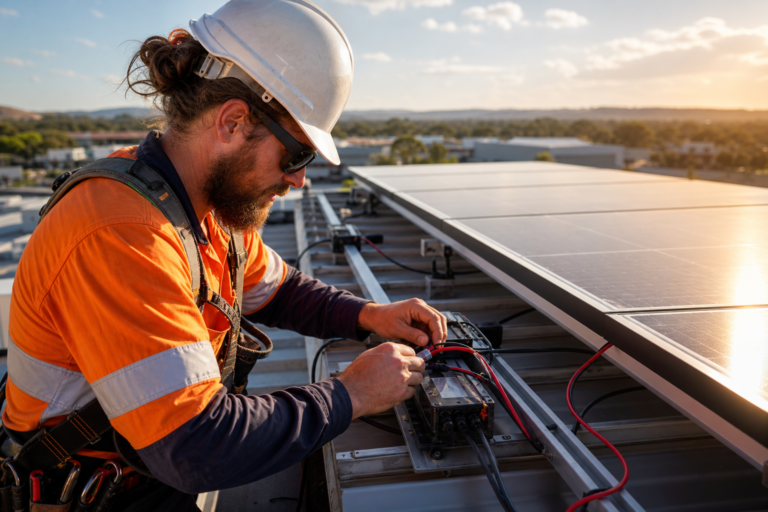
Once the approvals are sorted, it’s time for the installation. Unlike companies that farm out the work to subcontractors, we use our own team of fully licensed and certified electricians (Licence #329360c). This gives us complete control over the quality of the workmanship and the project timeline.
Our in-house installers aren't just experts in their trade; they are employees who share our commitment to doing things right. They make sure every panel is perfectly placed, every connection is secure, and your system is set up for top performance and safety.
Step 5: Activation and Ongoing Support
With the installation complete, we’ll walk you through the final step: activating your system and watching the savings start to roll in. We'll show you exactly how to monitor your system's performance and answer any questions you have.
But our commitment doesn't stop when we flick the switch. We provide responsive after-care and quick troubleshooting, making sure your system continues to deliver value for years to come. This hands-on approach is our promise of a hassle-free solar experience.
Common Questions About Net Metering and Solar
As you start looking into net metering and how it fits with a solar, battery, or EV charging setup for your home or business, questions naturally come up. It's a big decision, and you deserve clear, straight answers. This section tackles the most common queries we get, giving you practical information so you can feel confident about your investment.
Is Net Metering Still Worth It with Low Feed-In Tariffs?
Absolutely. While feed-in tariffs—the credits you get for sending power back to the grid—are lower than they once were, the real financial win from solar today comes from self-consumption. This means using the free power your panels generate in real-time instead of buying it from your retailer.
A lower feed-in tariff simply makes a smart solar strategy even more crucial. It's precisely why adding a solar battery is now such a powerful financial move.
By storing your excess daytime solar power in a battery to use at night, you can slash your reliance on the grid and lock in your savings. A well-designed system, like the ones we specialise in, is all about maximising self-consumption to give you the best possible return on investment.
What Happens to My Power During a Blackout?
This is a critical point. Standard grid-tied solar systems must shut down during a blackout. It’s a mandatory safety feature to prevent your system from feeding electricity into the grid while crews are working on the lines, which would be extremely dangerous.
However, this is where a solar battery with backup power becomes a true game-changer. When you pair your panels with a battery, your home can automatically disconnect from the grid during an outage. Your system then keeps running your essential appliances using the energy stored in the battery, plus any new power your panels are generating. We design these hybrid systems to give you genuine energy independence and peace of mind.
If you want to dive deeper into the world of solar, we've put together a huge list of frequently asked questions about solar energy that covers even more ground.
How Long Does It Take to Get a Net Meter Installed in NSW?
The timeline can vary, but we handle the entire process to make it as quick and seamless as possible for you. Here’s how it usually plays out:
- Application Submission: As soon as you approve our system design, we submit all the grid-connection paperwork to your local electricity distributor (like Ausgrid or Endeavour Energy) on your behalf.
- Installation: Once we get approval, we schedule the installation with our in-house team of certified electricians.
- Meter Upgrade: After the physical install is done, your electricity retailer organises for your old meter to be swapped out for a bi-directional 'smart meter' that can handle net metering.
That final meter changeover can sometimes take a few weeks, depending on the retailer’s schedule. Don't worry, our team coordinates everything and keeps you in the loop every step of the way.
Can I Add a Battery or More Panels to My System Later?
Yes, and we strongly recommend planning for it from the start. A core part of our design philosophy is 'future-proofing' your system. This often involves installing a hybrid inverter from day one, which is built to work seamlessly with a solar battery.
A hybrid inverter makes it simple and more cost-effective to add energy storage or more panels down the track as your needs evolve. For instance, if you decide to buy an electric vehicle or your family grows, your system will be ready for the upgrade.
When we have our initial consultation, we’ll talk about your future plans in detail. This ensures the system we design today is not only perfect for your current needs but also ready for the smart energy upgrades you'll want tomorrow, giving you long-term value and flexibility.
Ready to take the next step towards energy independence? The team at Interactive Solar has over 20 years of combined experience designing and installing high-performance solar, battery, and EV charging solutions for homes and businesses across NSW. Get a customised quote today and discover how you can take back control of your energy bills.
Make Interactive Solar a preferred source in Google
One click tells Google to surface our articles more often in Top Stories, AI Overviews and AI Mode.