Solar Panel Installation Liverpool: 2026 Cost & Sizing Guide
Last updated:
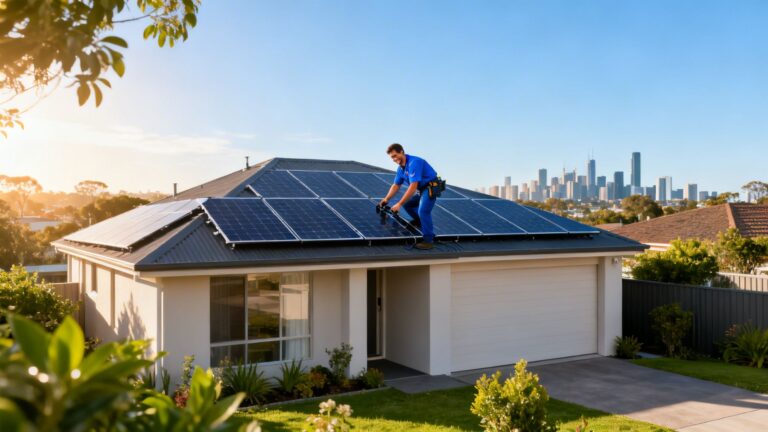
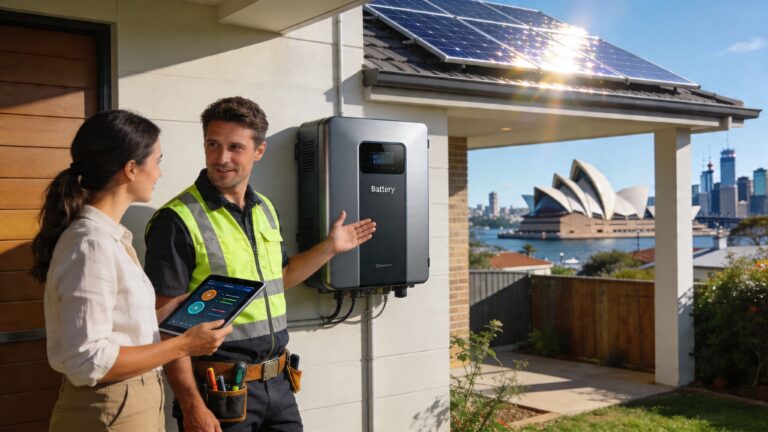
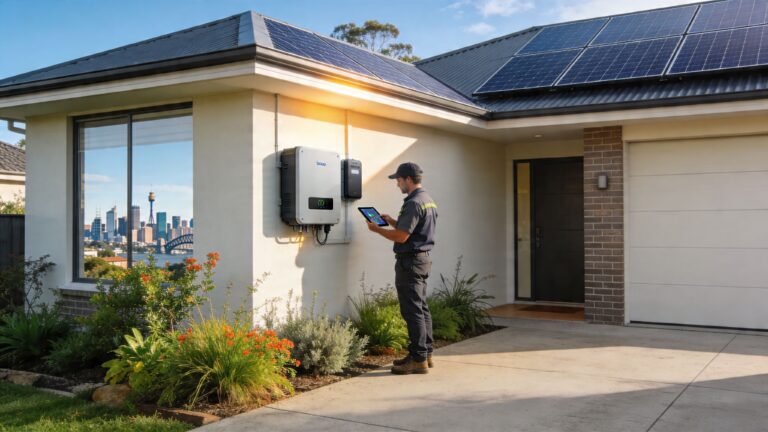
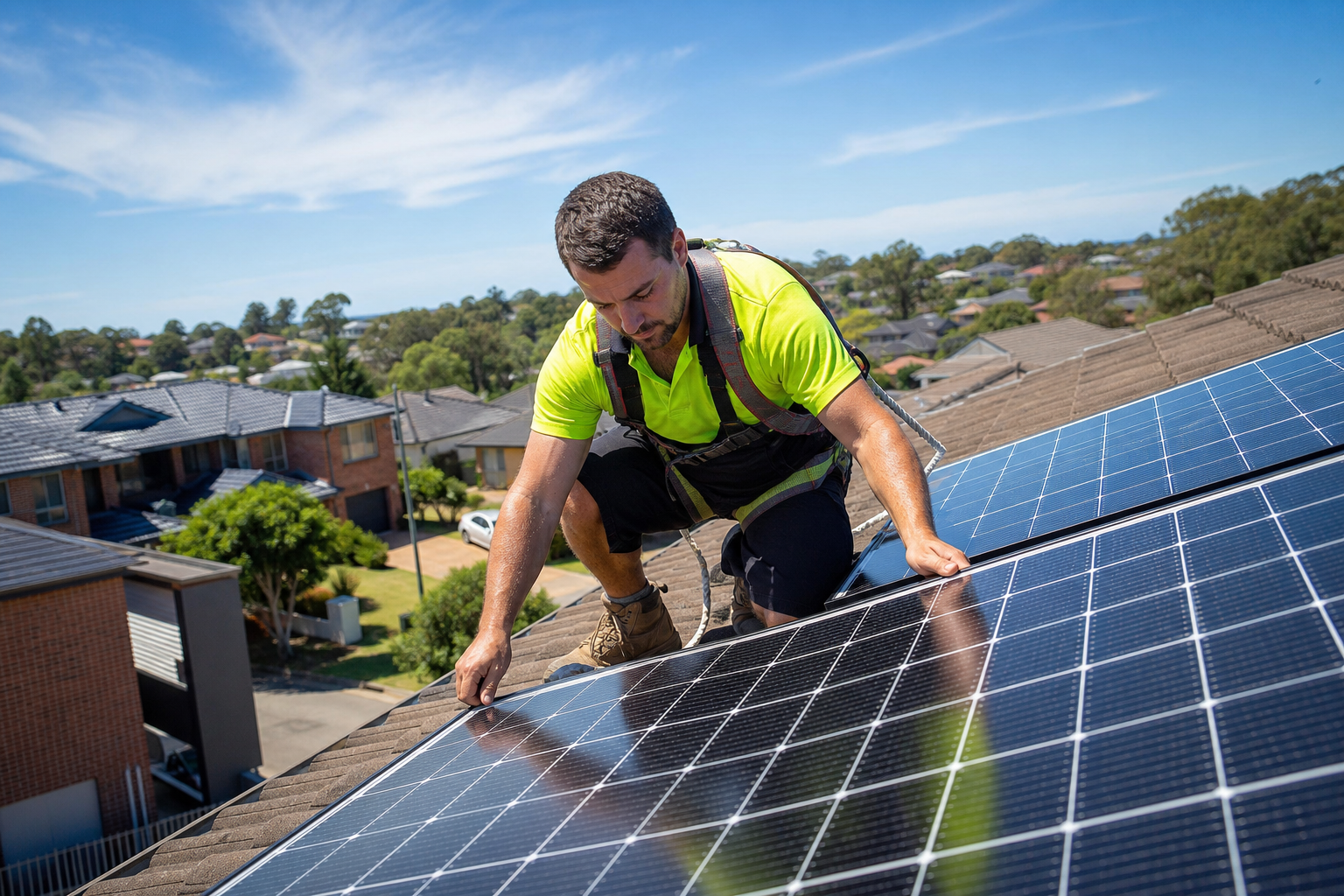
A solar panel installation liverpool homeowners can rely on typically costs between $4,500 and $9,500 after rebates for a 6.6kW to 10kW system, takes one day on the roof, and pays for itself in roughly 3.5 to 5 years. Liverpool sits in the Endeavour Energy network in south-west Sydney, which shapes how much you can export, what approval you need, and how your system should be sized. This guide walks through costs, sizing, rebates, network rules, roof types and the installation process specific to Liverpool and the surrounding suburbs.
Key Takeaways
- A 6.6kW to 10kW solar system in Liverpool typically costs $4,500 to $9,500 after rebates and pays back in roughly 3.5 to 5 years.
- Liverpool sits in the Endeavour Energy network, where standard single-phase connections are generally capped at 5kW of export without extra approval.
- A 6.6kW system earns about 45 STCs worth $1,700 to $1,800, while a 10kW system earns about 69 STCs worth $2,600 to $2,800.
- Most homes need 6.6kW for under 15kWh/day usage, 10kW for 15 to 25kWh/day, or 13.2kW or more for 25 to 40kWh/day with three-phase supply.
- Installation itself takes one day, but the full process from signed quote to a working metered system usually takes three to six weeks.
Solar Panel Installation Liverpool: What It Costs in 2026
Most Liverpool households land on a 6.6kW, 10kW or 13.2kW system. As a 2026 guide, after the small-scale technology certificate (STC) discount is applied at the point of sale, typical fully installed Sydney pricing looks like this:
- 6.6kW (about 15 panels): $5,000 to $8,000
- 10kW (about 22 to 24 panels): $7,500 to $11,000
- 13.2kW (about 30 panels): $9,500 to $13,500
The spread inside each band comes down to panel and inverter brand, roof complexity, whether your switchboard needs upgrading, and whether the install is single or three phase. A brick-and-tile home in Casula with a simple north-facing roof plane sits at the lower end. A two-storey home in Wattle Grove with three roof orientations, an older switchboard and limited access sits at the upper end.
Beware of quotes far below these ranges. In practice the savings usually come from budget panels, an undersized or non-CEC-approved inverter, or a subcontracted crew you will never see again when a fault appears. Interactive Solar publishes what is included in every quote and backs installs with the Interactive Care aftercare program.
What Rebates Apply to Solar Panel Installation Liverpool Homes Can Claim?
Two federal mechanisms and one state program matter in 2026.
Small-scale Renewable Energy Scheme (STCs)
Sydney, including Liverpool, is in STC Zone 3 with a solar rating of 1.382. The deeming period stepped down to five years for systems installed in 2026, and the scheme closes in 2030. A 6.6kW system currently earns roughly 45 STCs, worth about $1,700 to $1,800 off the install price. A 10kW system earns about 69 STCs, worth roughly $2,600 to $2,800. You do not claim this yourself: a reputable installer assigns the certificates and shows the discount on the quote.
Cheaper Home Batteries Program
If you add storage, the federal battery discount applies to new systems between 5kWh and 50kWh nominal capacity, paired with a solar array up to 100kW, using CEC-approved equipment installed by an SAA battery-endorsed installer to AS/NZS 5139. The battery STC factor for May to December 2026 is 6.8 per kWh of usable capacity, with support tapering to 60 per cent above 14kWh and 15 per cent above 28kWh. It steps down again in future periods, so the value of waiting is negative.
NSW Home Energy Saver
NSW offers interest-free finance for eligible households toward solar, batteries, EV chargers, hot water and insulation, with a targeted discount stream for lower-income households arriving later in 2026. Installs must be completed by a supplier approved by the relevant finance provider. The NSW VPP incentive can also stack with the federal battery discount if you join a virtual power plant.
Full eligibility criteria are published by the Clean Energy Regulator and NSW Climate and Energy Action, and both are updated regularly.
How Big a System Does a Liverpool Home Need?
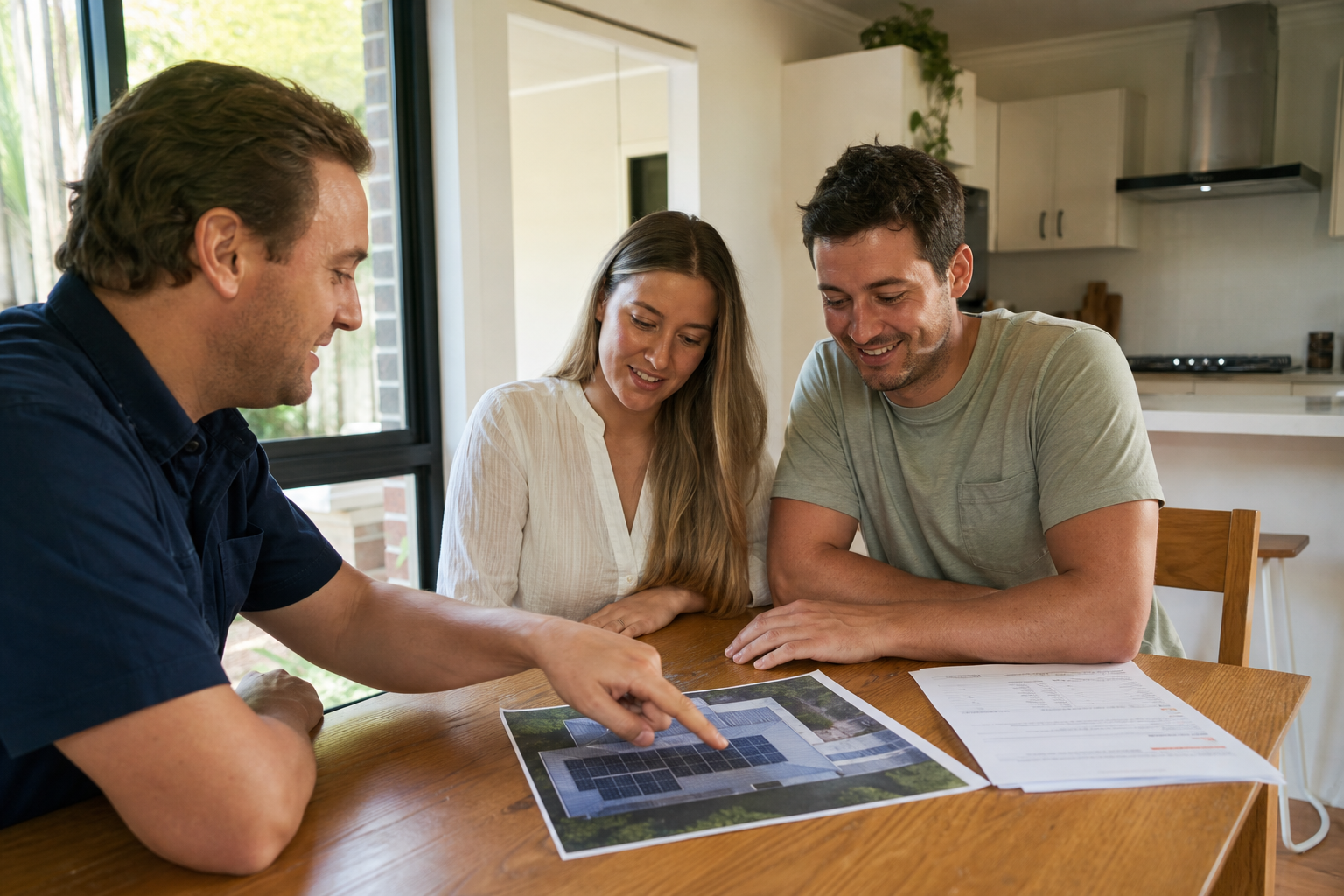
Sizing starts with your bill, not your roof. Pull twelve months of usage in kWh from your retailer and look at daily average consumption.
- Under 15kWh/day (couple, small home, most usage at night): 6.6kW
- 15 to 25kWh/day (family of four, ducted air conditioning): 10kW
- 25 to 40kWh/day (large home, pool, EV, or a home business): 13.2kW or larger with a three-phase supply
South-west Sydney runs hot. Liverpool, Prestons and Green Valley homes commonly draw heavy afternoon air-conditioning loads in summer, which is exactly when a west-facing string produces. Splitting an array across north and west rather than piling everything on north often delivers better self-consumption, even though total annual generation drops slightly. That trade is usually worth it, because self-consumed energy is worth your full retail rate while exported energy earns a feed-in tariff of only a few cents.
If you are also considering storage, size the solar first and the battery second. Our solar batteries page covers Tesla Powerwall, Sungrow and other CEC-approved options.
Endeavour Energy Rules That Affect Liverpool Installs
Liverpool sits inside the Endeavour Energy distribution area, which also covers Parramatta, Blacktown, Campbelltown and the Blue Mountains. Two rules matter most.
First, standard single-phase connections are generally capped at 5kW of export without additional approval. You can still install 6.6kW or 10kW of panels, but the inverter is configured to limit export to the approved level. Your generation is not wasted if you shift usage into daylight hours or add a battery.
Second, three-phase properties usually receive a higher export allowance, which is why larger homes and small business premises in Moorebank and Prestons often benefit from upgrading. Your installer submits the connection application to Endeavour Energy before installation and lodges the certificate of compliance afterwards. If a company asks you to handle that paperwork yourself, treat it as a warning sign.
Roof Types Around Liverpool and What They Mean for Mounting
Housing stock in the Liverpool local government area varies widely, and the roof drives both cost and timeline.
- Concrete tile (common in older Liverpool, Casula and Ashcroft homes): standard tile-replacement feet, straightforward, low cost. Brittle older tiles occasionally need replacing.
- Terracotta tile: more fragile, slower and more careful work, slightly higher labour.
- Colorbond or corrugated steel (typical in newer Edmondson Park and Middleton Grange estates): fastest and cleanest installs, clamp-mounted with no penetrations on klip-lok profiles.
- Low-pitch or flat: needs tilt frames, which adds cost and can trigger wind-load engineering.
Two-storey homes add scaffolding or an elevated work platform in some cases, which is a real cost, not an upsell. A quote that ignores access on a difficult roof usually turns into a variation later.
The Solar Panel Installation Liverpool Process, Step by Step
- Consultation and bill review. We look at twelve months of consumption, tariff structure and future plans such as an EV or a pool.
- Roof assessment and design. Satellite imagery plus a site inspection confirms usable roof area, orientation, shading from neighbouring trees, and switchboard condition.
- Written quote. Panel and inverter models, warranty terms, STC discount, and any switchboard or meter work are itemised.
- Grid application. Submitted to Endeavour Energy, usually approved within a few business days.
- Installation day. A Solar Accreditation Australia (SAA) accredited team completes most residential systems in a single day.
- Compliance and meter change. The certificate of compliance is lodged and your retailer arranges a bi-directional meter, which typically takes one to three weeks.
- Monitoring and handover. App setup, a walkthrough of the isolators, and performance benchmarks so you know what normal looks like.
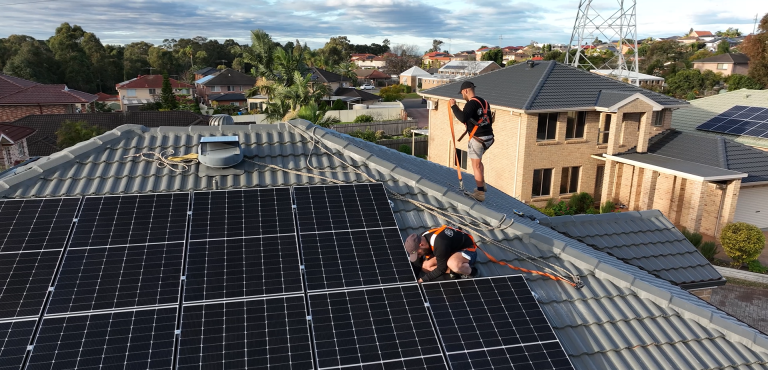
You can see completed south-west Sydney systems in our gallery, and verified customer feedback on our reviews page.
How Much Will You Actually Save?
A well-designed 6.6kW system in Liverpool generates roughly 9,000 to 9,500kWh a year. If you self-consume around half of that at a retail rate near 35 cents per kWh and export the rest at a feed-in tariff of about 5 to 8 cents, annual savings land in the $1,400 to $1,800 range. On a 10kW system with high daytime usage, $2,200 to $3,000 a year is realistic. That maps to a payback of roughly 3.5 to 5 years, with panel product warranties commonly 25 years and performance warranties often guaranteeing above 85 per cent output at year 25.
Adding a battery changes the maths. It lifts self-consumption dramatically and provides blackout backup, but on current pricing it usually extends overall payback rather than shortening it. Households in Liverpool choose batteries for resilience, evening load coverage and VPP income as much as for pure return.
Choosing an Installer for Solar Panel Installation Liverpool Wide
Compare quotes on these points rather than the headline price:
- CEC accreditation for the person physically on your roof, not just the company
- In-house crews rather than rotating subcontractors
- Named panel and inverter models with the datasheets attached
- Written workmanship warranty and a local aftercare pathway
- Clear inclusion or exclusion of switchboard upgrades, tilt frames and access equipment
- An Australian office you can physically visit if something goes wrong in year six
Interactive Solar has been installing across Sydney for years, with a strong footprint in Liverpool, Parramatta and Blacktown. More about the team is on our company page, and current offers appear on solar specials.
Beyond Panels: Batteries, EV Chargers and Heat Pumps
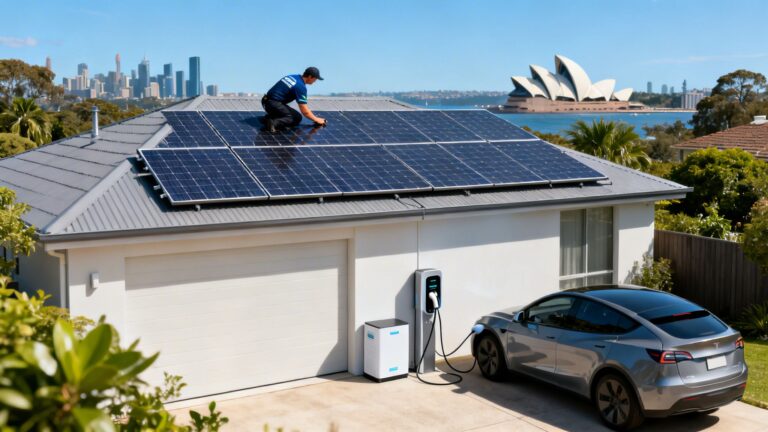
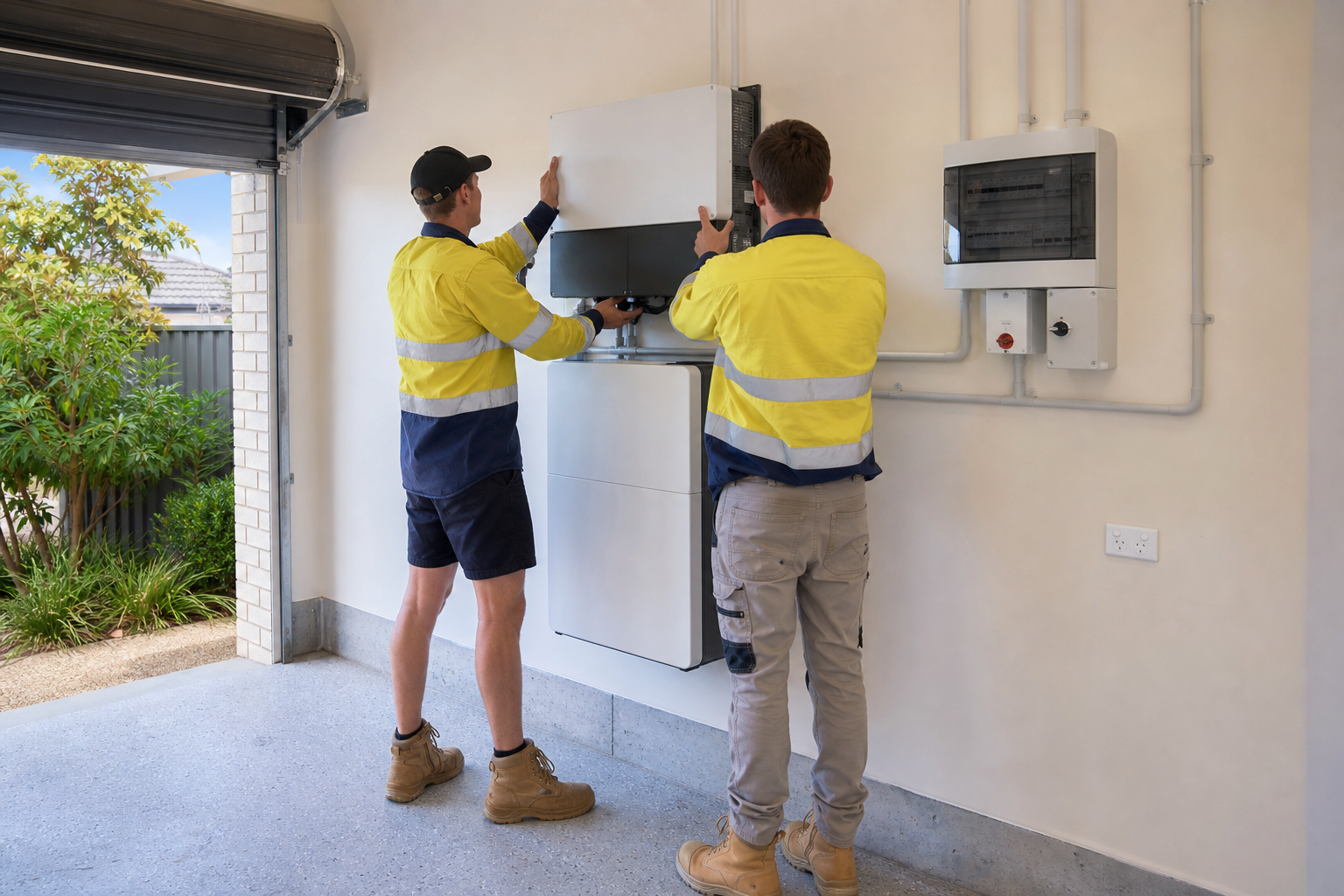
Solar is usually the first step in electrifying a home. Once the array is in, the next highest-value additions in south-west Sydney are typically a hot water heat pump, which shifts one of the largest loads in the house into daylight hours, and an EV charger so vehicle charging runs on your own generation. A heat pump paired with a timer set to midday is one of the cheapest ways to lift self-consumption without buying storage.
For businesses in the Moorebank and Prestons industrial precincts, the economics are stronger again because consumption aligns almost perfectly with generation. See commercial solar for details, and note that the federal small-scale rebate cap is set to expand from 100kW to 1MW from 1 October 2026, now legislated for systems installed on or after 1 October 2026 (applications open mid-to-late November 2026), which will materially change commercial project returns.
2026 Rules Liverpool Households Should Check Before Signing
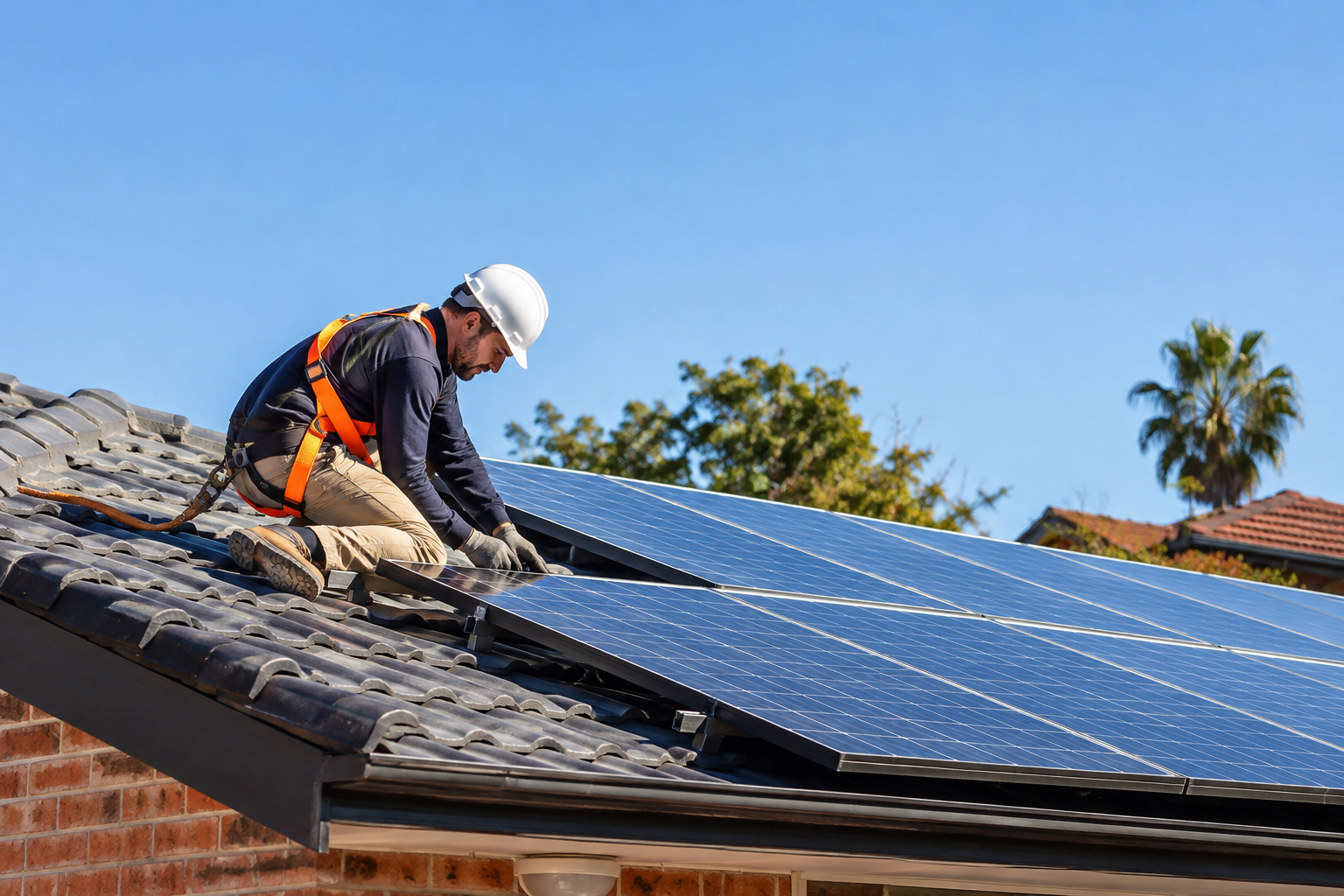
That gap is why self-consumption matters more than export. Installer accreditation moved from the Clean Energy Council to Solar Accreditation Australia in May 2024, so ask to see your installer’s SAA number. Check that panels and inverters appear on the Clean Energy Council approved product lists, and read the NSW Government energy pages on the Home Energy Saver scheme if you plan to add a battery.
Not sure what a retailer must disclose? This Clean Energy Council video explains the Solar Retailer Code of Conduct.
Panel and Inverter Choices for Liverpool Conditions
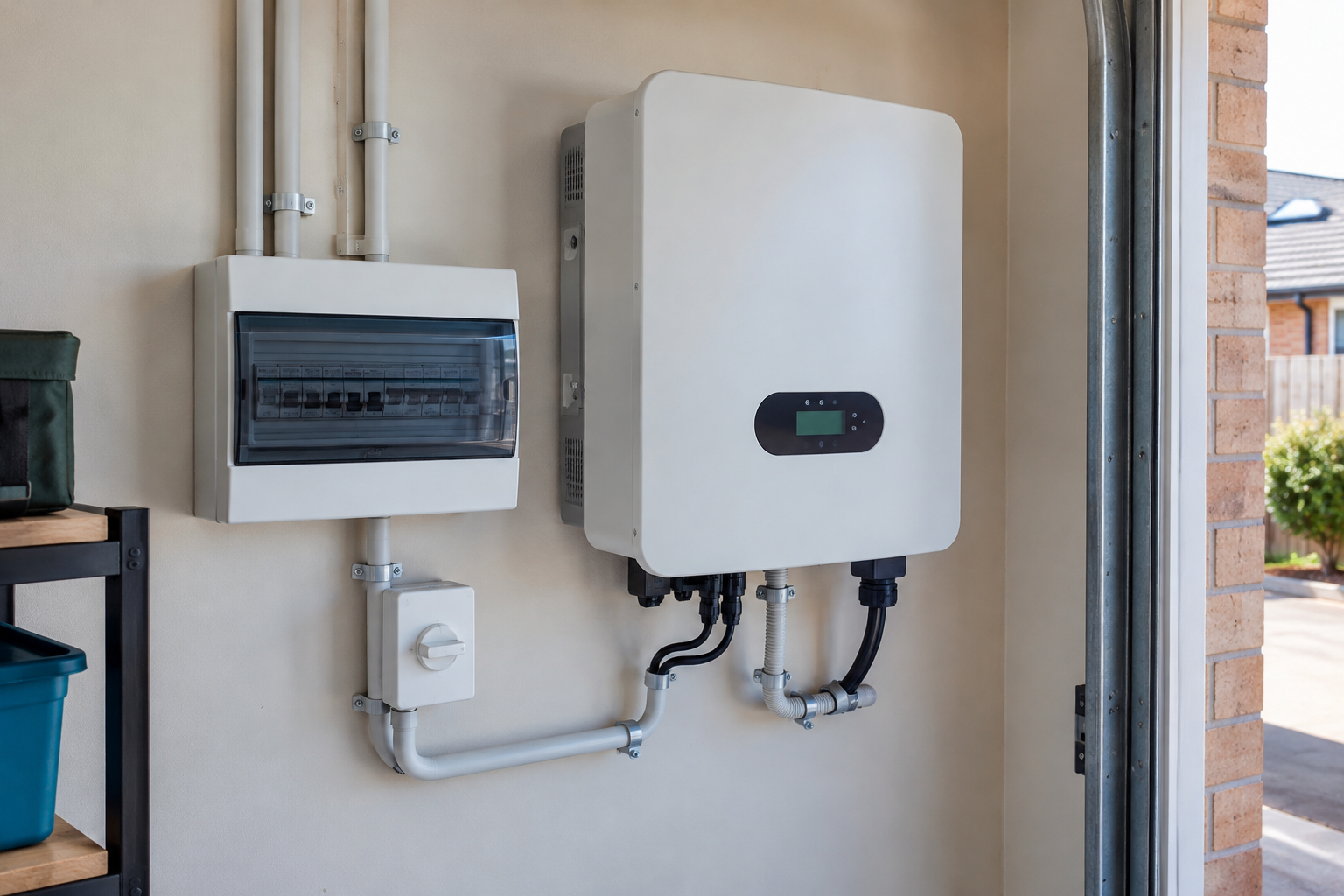
South-west Sydney regularly pushes past 40 degrees in summer, and rooftop temperatures run higher again. That makes the temperature coefficient of a panel a practical concern rather than a spec-sheet detail. Panels with a coefficient closer to minus 0.29 per cent per degree hold output better on a 42 degree Liverpool afternoon than budget modules sitting near minus 0.38 per cent.
In the 2026 SolarQuotes Installer’s Choice Awards, installers ranked Aiko first for the second year running, followed by Jinko, SunPower, REC and Trina Solar. Any of those tiers are defensible choices. What matters more is the pairing: a strong panel behind a weak inverter is a false economy, because the inverter is the component most likely to need replacing first. Look for a manufacturer with an Australian service presence and a warranty that is honoured locally rather than through an overseas returns process.
Microinverters or DC optimisers are worth the extra spend on complex Liverpool roofs, particularly where a neighbouring gum tree, a chimney or a second-storey wall shades part of an array for a portion of the day. On a clean, unshaded single-plane roof, a good string inverter remains the better value.
Suburbs We Service Around Liverpool
Our crews regularly install across Liverpool, Casula, Moorebank, Prestons, Green Valley, Hoxton Park, West Hoxton, Middleton Grange, Edmondson Park, Wattle Grove, Chipping Norton, Warwick Farm, Lurnea, Ashcroft, Miller, Cartwright, Hinchinbrook, Cecil Hills, Austral and Leppington, along with the wider Fairfield and Camden corridors. Local density matters more than it sounds: a team already working nearby can attend a service call quickly, and we hold stock for the panel and inverter families we install most often across the region.
Solar system sizing and cost at a glance for Liverpool
| System size | Typical cost | Best for usage | STCs earned |
|---|---|---|---|
| 6.6kW (about 15 panels) | $5,000 to $8,000 | Under 15kWh/day | About 45 STCs, worth $1,700 to $1,800 |
| 10kW (about 22 to 24 panels) | $7,500 to $11,000 | 15 to 25kWh/day | About 69 STCs, worth $2,600 to $2,800 |
| 13.2kW (about 30 panels) | $9,500 to $13,500 | 25 to 40kWh/day (three-phase) | Not stated |
Frequently Asked Questions
How long does a solar installation take in Liverpool?
Most residential systems are completed in one day on site. From signed quote to a working, metered system is typically three to six weeks, with the retailer meter change being the longest step.
Do I need council approval?
Rooftop solar on a standard Liverpool residential property is exempt development in almost all cases. Heritage-listed properties or systems requiring significant tilt frames can be exceptions, and we flag that at the design stage.
Will solar work on a west-facing roof?
Yes. West-facing panels produce around 10 to 15 per cent less annually than north, but they generate during the summer afternoon peak when south-west Sydney air conditioning is running hardest, which often makes them more valuable per kWh.
What happens in a blackout?
A standard grid-connected system shuts down for safety. Only a battery with backup capability configured on a protected circuit will keep your lights, fridge and internet running.
How much roof space do I need?
Roughly 2 square metres per panel. A 6.6kW system needs about 30 square metres of usable, unshaded roof, and a 10kW system about 45 square metres.
Can I add panels later?
Sometimes, but it depends on inverter headroom and your approved export limit. It is almost always cheaper to install the larger array up front than to expand in two stages.
What maintenance is required?
Very little. Sydney rain handles most cleaning, and an inspection every two to three years plus monitoring alerts is enough for the majority of systems.
Get a Quote
If you are comparing options for solar panel installation Liverpool wide, the fastest path is a genuine site-specific design based on your actual consumption rather than a generic package price. Start on our residential solar page or contact us for an assessment, and browse our FAQ for anything not covered above.
Make Interactive Solar a preferred source in Google
One click tells Google to surface our articles more often in Top Stories, AI Overviews and AI Mode.