Solar Battery Storage Sydney: 2026 Sizing & Rebates
Last updated:
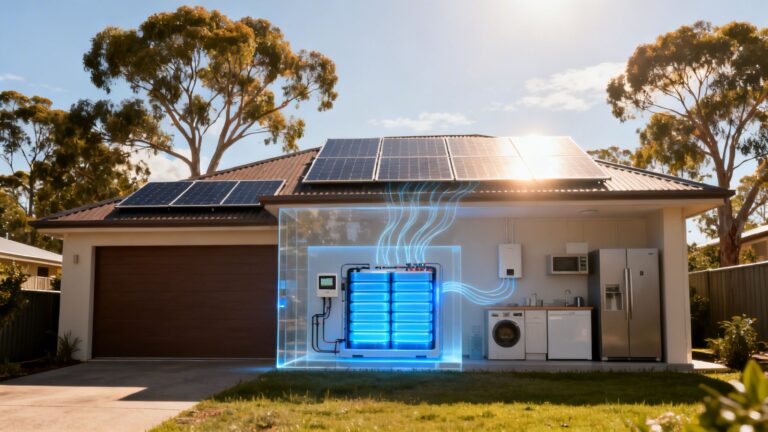
Solar battery storage Sydney can help a home use more of its own solar power after sunset, reduce peak-time grid purchases and provide backup when the grid fails, if the battery and inverter are designed for that purpose. In 2026, eligible systems may combine the Australian Government’s Cheaper Home Batteries Program with the NSW Virtual Power Plant incentive, but the value depends on usable capacity, equipment eligibility and your VPP contract. The right size comes from your interval electricity data, not a standard package.
Interactive Solar designs and installs residential and commercial storage across Sydney from its Chipping Norton base. The company reports more than 1,300 solar systems installed and 10 MW of energy supplied, with its own installation teams. Those details matter because a battery is not just a box on a wall: it must work with the existing solar system, switchboard, network connection and the way the property uses power.
Solar battery storage Sydney: what changed in 2026?
The federal battery incentive changed on 1 May 2026. The Clean Energy Regulator now applies the battery STC factor in capacity tiers: 100% for the first 14 kWh of usable capacity, 60% for the next 14 kWh, and 15% for capacity above 28 kWh up to 50 kWh. The factor for May to December 2026 is 6.8 STCs per eligible usable kWh. The incentive is not a fixed cash rebate: the value depends on the STCs created and the arrangement used to apply them to the purchase.
A typical 13.5 kWh battery falls within the first federal tier, while a larger battery crosses into the lower factors. This does not mean a larger system is automatically a poor choice. It means the household should check whether the extra usable capacity will regularly serve evening and overnight demand, rather than buying storage that will rarely cycle.
NSW also offers an incentive for eligible households and small businesses that connect a battery to a participating Virtual Power Plant (VPP). From 1 July 2026, batteries from 2 kWh up to 50 kWh can be eligible, while the incentive calculation is based on capacity made available to the grid up to 28 kWh. Providers set different contract terms and payment arrangements, so NSW does not promise one universal dollar amount. The state’s program guidance says to compare offers and check how much capacity the provider can control.
The NSW VPP incentive may be combined with the federal battery discount when the relevant eligibility rules are met. Battery installations at apartment buildings are excluded from this particular VPP incentive. See the Clean Energy Regulator’s battery eligibility and STC guidance and the NSW Government VPP incentive rules before relying on an incentive in a quote.
What does solar battery storage in Sydney cost?
There is no reliable single installed price for every Sydney battery. The quote changes with usable capacity, inverter compatibility, backup circuits, switchboard work, cable runs, battery location, access, network requirements and whether the system is being installed with new solar or retrofitted to an existing array.
For a useful comparison, ask for an itemised quote that shows:
- battery model, nominal capacity and usable capacity
- continuous and peak power output, plus whether backup is included
- inverter model and any required replacement or additional equipment
- the exact STC quantity and the dollar value credited against the quote
- any NSW VPP incentive estimate, separate from the federal discount
- switchboard, metering, network application and installation costs
- warranty terms, workmanship coverage and after-install support.
Do not compare two advertised “rebate” totals until you know whether both include the same federal STC assumptions, VPP offer, solar installation and backup equipment. An offer that includes a provider’s commercial VPP bonus is not necessarily comparable with one showing only the federal incentive.
For your own estimate, start with the capacity that can be used, not the nominal label. The federal scheme calculates support using usable capacity and limits eligible capacity to the first 50 kWh. Then confirm whether the chosen battery is on the Clean Energy Council’s current approved products list and whether the installation will be completed by an appropriately endorsed Solar Accreditation Australia installer.
Solar battery storage Sydney: how to choose the right size
Battery sizing should be based on how much solar power is left over during the day and how much electricity the property uses after solar generation falls. A small household with modest evening demand may not benefit from the same capacity as a home with multiple air conditioners, an electric vehicle, a pool pump or regular overnight loads.
Before selecting a capacity, review at least these three inputs:
- Solar surplus: how much energy the existing or proposed solar array exports on a normal day, and how that changes in winter.
- Evening and overnight consumption: use interval meter data where available, rather than assuming the battery will discharge fully every night.
- Power demand: battery energy capacity is measured in kWh, while power output is measured in kW. A battery can have enough stored energy but still be unable to run several large appliances at once.
A battery that is too small may empty early in the evening. A battery that is too large may not fill on shorter winter days or may add cost without displacing much more grid energy. If backup is important, identify the essential circuits and the loads that need to operate together. Whole-home backup can require different equipment and design from keeping a fridge, lights and internet running.
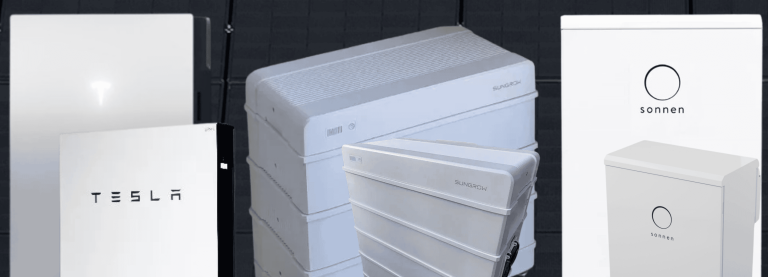
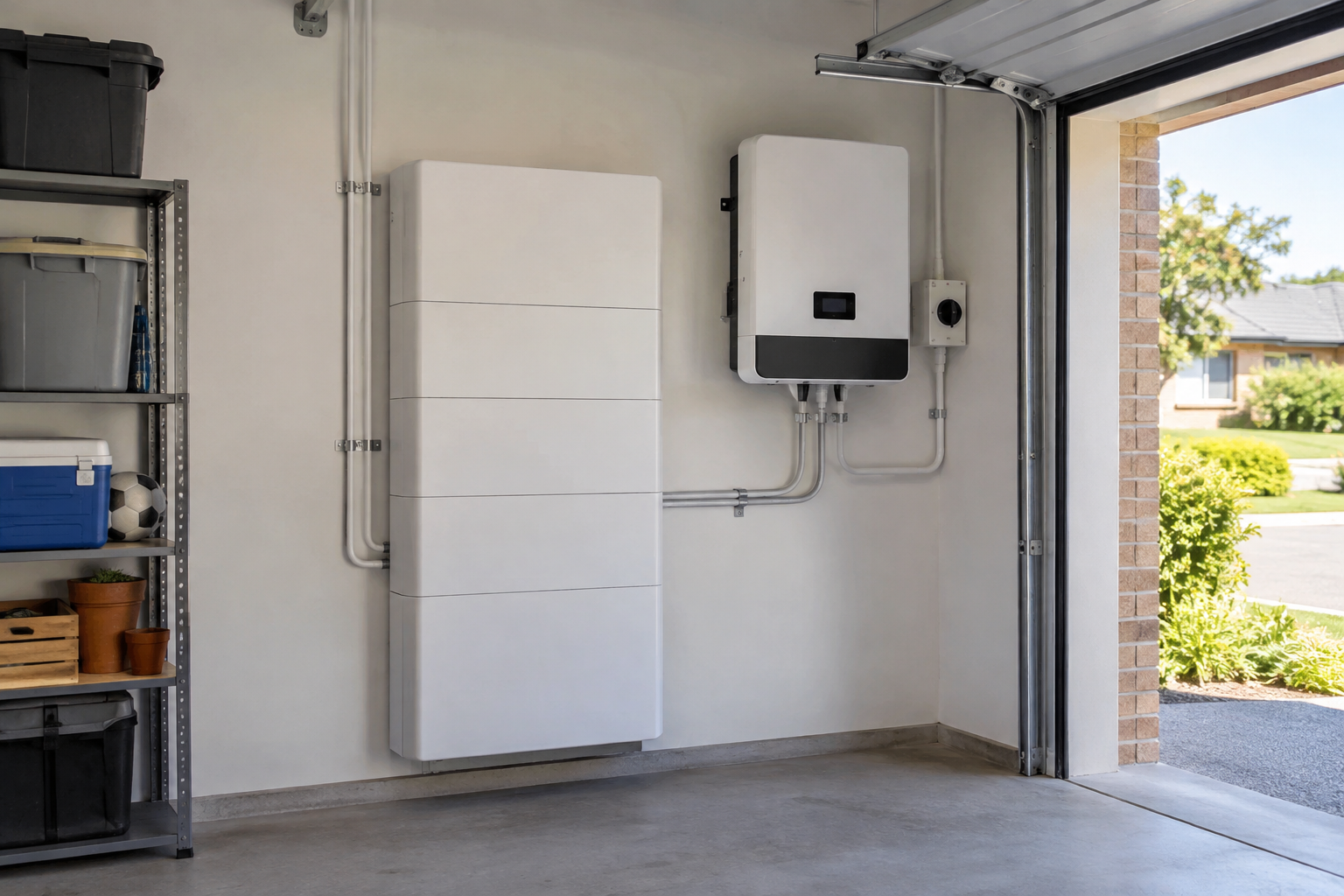
Interactive Solar’s Sydney battery range includes modular options such as Sungrow SBR, Sigenergy SigenStor and FoxESS CQ7-S, as shown on its Solar Batteries page. Each product has different capacity increments, inverter requirements and backup features. Treat the page as a starting point, then confirm current model specifications, approved status and compatibility for the specific site.
Retrofit or install solar and a battery together?
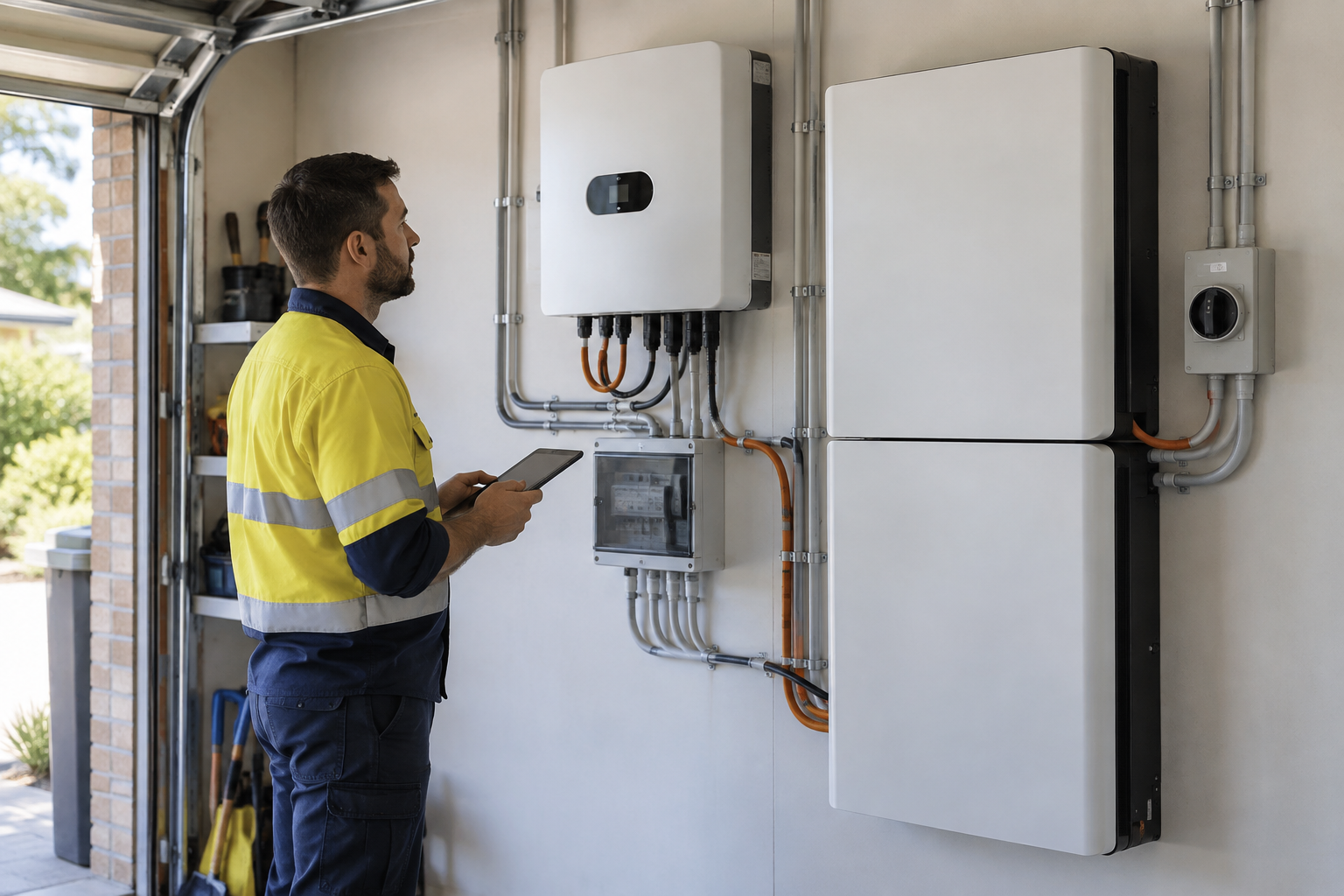
A battery can be added to a compatible existing solar system or designed alongside new panels. A retrofit assessment should check the inverter type, system age, export behaviour, monitoring access and whether the solar system can charge the battery as intended. Some retrofits can use an AC-coupled battery, while others may be better suited to a hybrid inverter or a replacement inverter. The right arrangement depends on equipment compatibility, not just the battery brand.
When installing solar and storage together, the designer can size the array, inverter and battery as one system. That makes it easier to plan backup circuits, battery charging and future loads such as an EV charger. It can also avoid paying to replace equipment that is already near the end of its useful life.
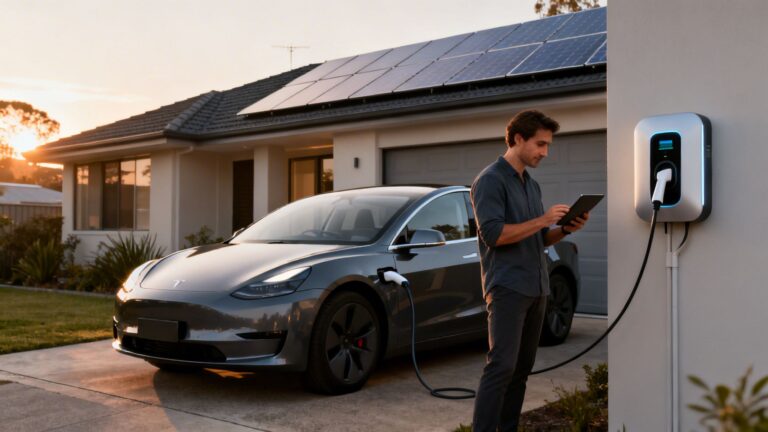
If your existing inverter is still serviceable, ask the installer to explain the cost and efficiency trade-offs of keeping it versus changing to a hybrid system. If a replacement is proposed, request the model numbers and an explanation of what functionality the new equipment adds. Interactive Solar also installs residential solar and EV chargers, so the design can account for likely future electrification rather than treating each device as a separate project.
Can a Sydney battery lower electricity bills?
A battery can increase solar self-consumption by storing surplus generation for later use. Its bill impact depends on the value of the energy it stores, the electricity it later displaces, the feed-in tariff you give up, the battery’s losses and any VPP payments or charges. A payback estimate that counts every stored kWh as a full retail-rate saving will usually overstate the result.
Use your bill and smart-meter data to estimate a typical day. For each kWh that could be stored, compare the value of exporting it now with the cost of buying a kWh later. Include battery efficiency and only count VPP income if a specific eligible provider has confirmed the offer and its conditions. Your retailer’s tariff, time-of-use periods and export rate can change, so review the model against the current plan rather than an old bill.
For a property that uses most of its solar power during daylight hours, less energy may be available to store. For a home that is empty during the day and active in the evening, a battery may shift more solar energy into valuable evening use. An EV, heat pump or air conditioner can change that profile again. This is why a site-specific assessment is more useful than a generic “years to payback” claim.
NSW VPP participation: payment, control and trade-offs
A VPP links participating batteries so an energy provider can coordinate stored energy. NSW’s incentive is attached to joining an eligible VPP, and a provider may also offer ongoing credits or payments for energy exported at certain times. These are separate ideas: the state incentive has its own eligibility and calculation, while the VPP retailer’s contract determines how the battery may be controlled and how exported energy is paid.
Before signing, ask the provider:
- how much usable capacity can be dispatched and when
- whether the owner can set a minimum backup reserve
- how payment is calculated and whether it can change
- which retailer and battery models are supported
- what happens if you change electricity plans, move house or leave the VPP.
The NSW Government says the incentive can be claimed once per National Metering Identifier (NMI), and actual value depends on the provider and contract. Compare more than one offer where possible. Participation may not suit someone who wants to keep all stored energy reserved for backup or who is uncomfortable with remote dispatch. Read the contract, not just the headline payment.
Battery safety, standards and installer accreditation
Battery location and installation quality are safety decisions. The design should account for manufacturer clearances, access, ventilation, vehicle impact risk, weather exposure, fire separation and the property’s construction. Installations must meet relevant electrical rules and Australian Standards, including AS/NZS 5139 for battery energy storage systems.
For federal program eligibility, the Clean Energy Regulator specifies eligible capacity and equipment conditions, including a listed battery, compliance with applicable standards, and installation by an appropriately accredited Solar Accreditation Australia installer with battery endorsement. The Clean Energy Council maintains the approved products list; installer accreditation is a separate function now handled by Solar Accreditation Australia. Ask for the installer’s accreditation details and the product model’s current listing rather than relying on a general claim of “CEC accreditation”.
Interactive Solar says it uses in-house installation teams and operates its own warehouse, office and showroom in Chipping Norton. Its company page reports 15 staff, more than 1,300 systems installed and over 10 MW supplied. These are useful accountability signals to discuss during a quote, alongside licences, product warranties and the written commissioning documents you will receive. Learn more about the team on the Our Company page, browse recent work in the project gallery, or check customer feedback on the reviews page.
For consumer and product checks, consult the Clean Energy Council Approved Products program, the Solar Accreditation Australia battery accreditation information, and the ACCC product recall register. A quote should identify the battery and inverter model precisely so you can verify both.
Solar battery storage Sydney: installation steps and timing
A straightforward battery installation may be completed in a day, but the full project can take longer because design, stock, approvals and switchboard work vary by property. A responsible process typically includes a review of usage and existing equipment, an onsite assessment, a written system design and quote, network or retailer paperwork where required, installation, commissioning, handover and monitoring setup.
Before work starts, confirm the proposed location, clearances, backup circuits, internet or monitoring requirements, VPP settings and who handles the incentive paperwork. At handover, keep the installation certificate, electrical documentation, product warranties, operating instructions, emergency shutdown information and any VPP contract. Ask the installer to demonstrate how to check system status and how to contact support.
Interactive Solar provides residential and commercial energy services from Chipping Norton and lists battery systems for homes and businesses. To discuss a site-specific design, see the battery options or contact the team with a recent bill and, if available, interval usage data.
Frequently asked questions about solar battery storage Sydney
How much does solar battery storage Sydney cost?
There is no single Sydney installed price because capacity, inverter compatibility, backup equipment, switchboard work and site access affect the quote. Ask for an itemised price before and after the federal STC credit, with any NSW VPP offer shown separately.
What federal battery incentive is available in 2026?
The Cheaper Home Batteries Program provides support through STCs for eligible batteries. From May to December 2026, the factor is tiered by usable capacity: 100% for the first 14 kWh, 60% for the next 14 kWh and 15% for the next 22 kWh, capped at 50 kWh of usable capacity. Check the Clean Energy Regulator’s current rules before signing.
Can I combine the federal battery discount with a NSW incentive?
Eligible households and small businesses may combine the federal program with the NSW VPP incentive if they meet both sets of rules. NSW’s VPP incentive requires connection to a participating provider, and the payment depends on the provider, contract and capacity made available up to 28 kWh. It is not a guaranteed fixed-dollar rebate.
How large a battery does a Sydney home need?
Size it from solar surplus, evening and overnight use, and the power required for appliances or backup. Interval meter data and a review of the existing inverter give a more reliable answer than a standard package size.
Do I need solar panels to install a battery?
Battery configurations and incentive rules differ. The federal program requires an eligible battery paired with a solar PV system of no more than 100 kW. NSW’s VPP incentive has separate eligibility conditions, so check the current state guidance and the provider’s requirements for your battery.
Who can install a battery in NSW?
Battery work must be completed or supervised by appropriately licensed and accredited professionals and comply with electrical laws and relevant Australian Standards. For federal incentive eligibility, check that the installer holds the required Solar Accreditation Australia battery endorsement and that the battery model is on the Clean Energy Council’s approved list.
Is a solar battery worth it if I already get a feed-in tariff?
It may be, but compare the export credit you give up with the later grid electricity you avoid buying, and include battery losses, tariffs and VPP terms. The result depends on your actual usage and retailer plan, so model it using your current bill and meter data.
How long does battery installation take?
The onsite work for a straightforward battery may take a day. The overall project can take longer if the inverter, switchboard, backup circuits, network paperwork or equipment availability require additional work. Ask for a site-specific schedule before accepting a quote.
Choosing a battery with the whole home in mind
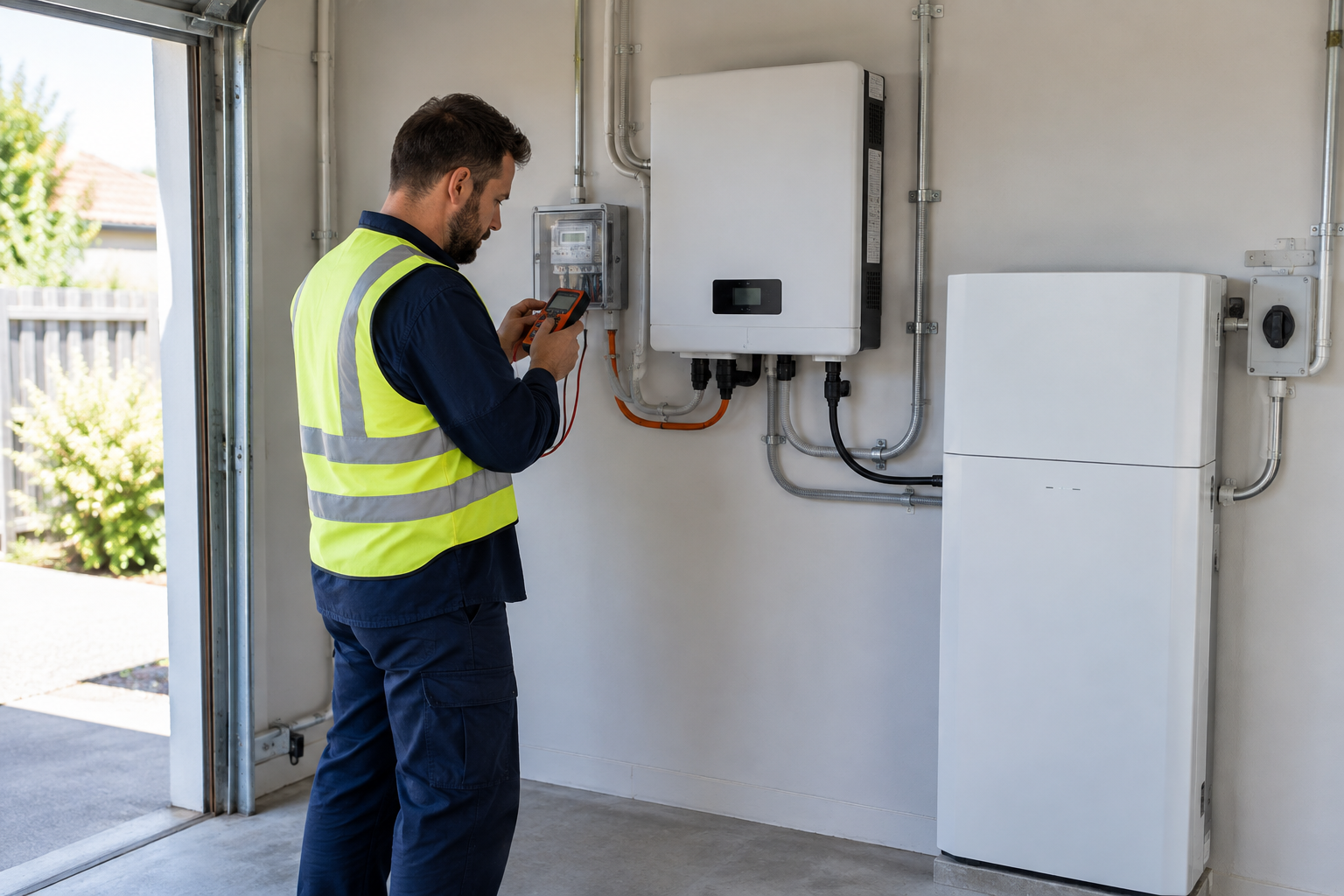
A good battery proposal explains how much energy the system can store, what loads it can power, how incentives are calculated and what trade-offs come with VPP participation. It should also show the equipment models, installation scope and support arrangements. That is a better basis for choosing than a headline rebate or a payback figure without assumptions.
Interactive Solar works across Sydney on residential and commercial solar, batteries and EV charging. Bring a recent electricity bill and questions about backup, tariffs or future loads to a site assessment, then compare the proposed system against your real consumption and the current official incentive rules.
Make Interactive Solar a preferred source in Google
One click tells Google to surface our articles more often in Top Stories, AI Overviews and AI Mode.