Solar Powered Roof Fan a Homeowner’s Guide for 2026
Last updated:
Summer in NSW often feels the same inside too many homes. The air conditioner is running, the living room still feels heavy, and the ceiling seems to hold heat long after sunset. Homeowners usually blame windows, old insulation, or a tired air con system first.
Often, the underlying problem is sitting above the plasterboard.
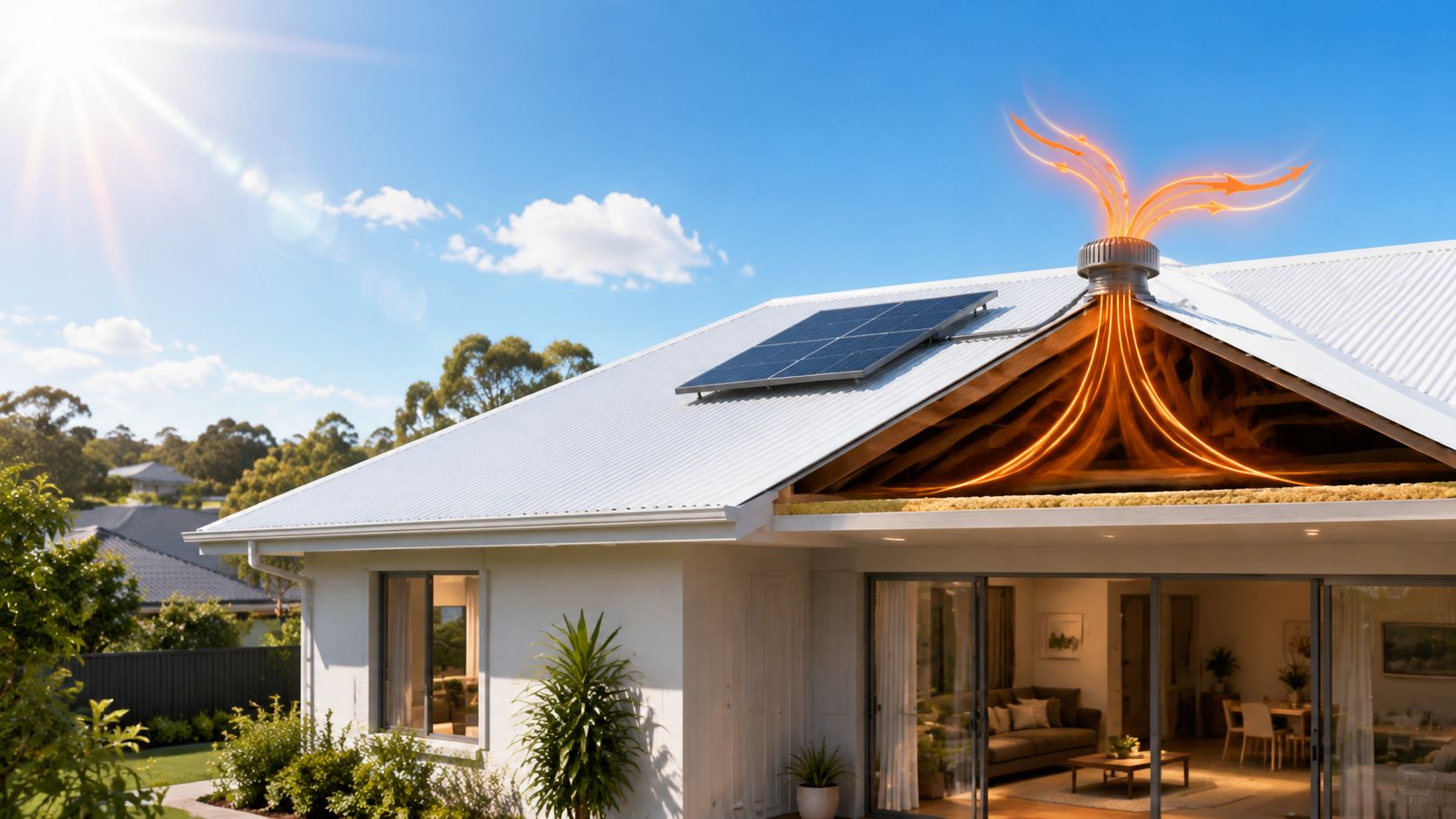
A hot roof cavity can turn your home into a slow cooker. That trapped heat radiates downward for hours and keeps pushing your cooling system to work harder than it should. A solar powered roof fan can help, but only when it suits the roof, the ventilation layout, and the way the home is built. In some homes, it's the right fix. In others, passive ventilation, better sealing, or insulation upgrades make more sense.
The Hidden Heat Source Wasting Your Energy
On a hot afternoon, the symptom is obvious. Upstairs rooms feel stuffy. Downlights and ceiling manholes leak warmth into the hallway. Bedrooms stay uncomfortable into the evening, even after the outside air has started to cool.
The cause is less obvious. The roof cavity stores heat all day, especially under dark roofing, low airflow, and strong summer sun. That heat doesn't stay neatly contained above the ceiling line. It loads up the insulation, warms ceiling surfaces, and keeps your home hotter for longer.
The broader Australian climate makes that more than a comfort issue. The Clean Energy Council explains that roof spaces can become extremely hot in summer, driving up cooling demand, and Australia's Bureau of Meteorology recorded 2019 as the nation's second-warmest year on record, with a national mean temperature 1.51°C above the 1961–1990 average according to this roof heat and cooling demand reference.
What homeowners usually notice first
Homeowners typically don't say, "My roof cavity is overheating." They say things like:
- The air con never seems to catch up on very hot days.
- The second storey is worse than downstairs, even with the same thermostat setting.
- The house stays warm at night after a long sunny day.
- Some rooms feel different from others, especially western bedrooms and hallway areas near the roof space access.
Those clues matter because they point to heat loading, not just poor cooling.
A house can have a capable air conditioner and still feel uncomfortable if the roof cavity keeps feeding heat back into the rooms below.
Why cooling the room isn't enough
If your strategy is only to chill the occupied space, you're always working from underneath the problem. The air con lowers indoor temperature, while the roof cavity keeps replacing that gain from above.
That doesn't mean every hot roof needs a powered fan. It does mean roof ventilation deserves serious attention when a home feels hot despite decent air conditioning and reasonable insulation. If the roof space is acting like an oven, treating the ceiling below it is only half the job.
How a Solar Powered Roof Fan Works
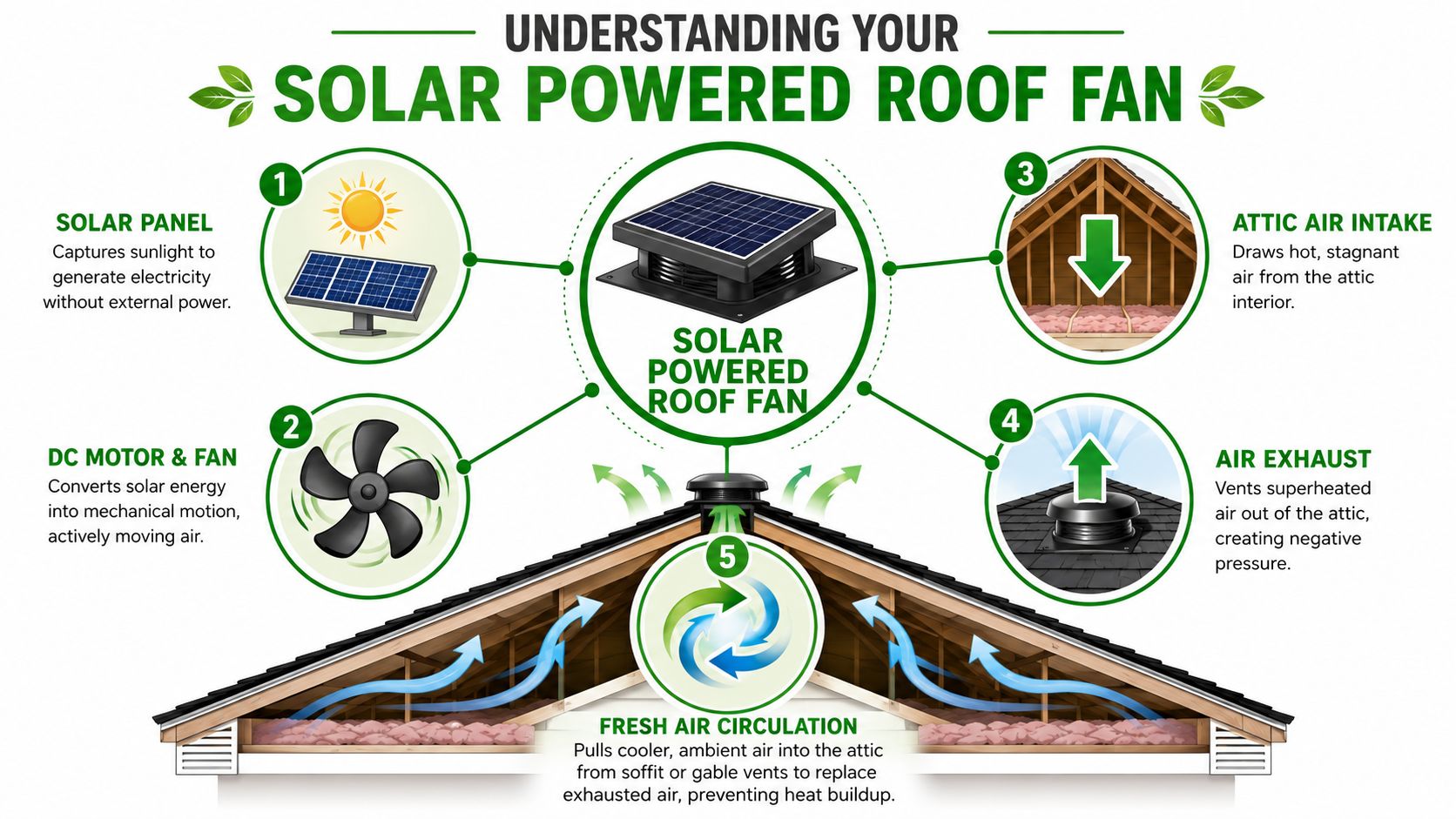
A solar powered roof fan is an active exhaust system. It doesn't wait for wind like a whirlybird does. It uses its own small solar panel to run a motor and pull hot air out of the roof cavity while the sun is hitting the roof.
This visual shows the airflow path clearly.
The basic operating sequence
Think of it as a powered chimney for the roof space.
- The panel receives sunlight and generates power.
- A DC motor turns the fan blades.
- The fan extracts hot, stale air from the highest and hottest part of the roof cavity.
- Replacement air enters through intake vents, usually from eaves, soffits, or other passive openings.
If that intake path is available, the system can keep air moving through the cavity instead of allowing heat to sit and build.
A lot of homeowners first look at fan style and panel size. That's understandable, but the key performance question is airflow through the whole roof space. A fan can only exhaust what the roof can replace.
What the fan is really doing
The fan isn't pumping cool air into the home. It is removing accumulated heat from above the ceiling line. That matters because roof spaces often peak during the same hours when cooling demand rises inside the house.
Some units are sold with integrated controls, while others rely mainly on solar availability. Either way, the strongest operating window is usually when the sun is strongest and the roof is hottest.
For a practical overview of local system types and installation approaches, this page on roof ventilator fan options in NSW is useful.
Later in the process, it helps to see the hardware in action rather than just in diagrams.
The part many product pages skip
A solar powered roof fan only works properly when the roof cavity has a pathway for make-up air. If the fan is trying to pull air out of a cavity that can't breathe in, the result won't match the brochure. That's why good installers look at the whole ventilation path, not just the fan unit itself.
Benefits and Real-World Performance in NSW
The main benefit of a solar powered roof fan is straightforward. It can lower heat build-up in the roof cavity during the same part of the day when solar gain is highest. In the right home, that can ease the load on cooling, improve comfort in upper rooms, and help the roof space clear heat more efficiently.
The key phrase is in the right home.
A lot of marketing around roof ventilation makes the result sound universal. It isn't. The better question is whether the fan improves conditions on your specific roof, in your part of NSW, with your levels of shade, pitch, and existing ventilation.
Where solar fans tend to work well
They usually make more sense when several factors line up:
- Strong solar exposure on the section of roof where the panel will sit.
- Persistent summer heat in the roof cavity, especially in homes that stay warm into the evening.
- Usable intake ventilation at the eaves or elsewhere, so the fan isn't fighting a sealed cavity.
- Upper-floor discomfort that points to roof heat rather than only window gain.
- Homes with active daytime heat load, where the roof bakes hard during school or work hours and is still releasing heat later.
In those situations, active extraction can be a practical upgrade.
Practical rule: If the roof gets good sun, the cavity gets excessively hot, and the home has a clear intake path, a solar fan is far more likely to deliver a noticeable result.
Where expectations need to stay realistic
Performance is weather-dependent. The panel needs direct sunlight to keep the motor running properly, and output can vary with roof pitch, shading, and local conditions, as explained in this guidance on solar attic fan performance in real climate conditions.
That means a heavily shaded roof, a poor panel position, or limited sun during the hottest hours can reduce the fan's benefit. It also means two homes in the same suburb can get different results.
For homeowners comparing broader options, this guide to the best roof ventilation systems for Australian homes helps frame the decision properly.
What a solar fan won't fix
A roof fan doesn't solve every heat problem. It won't compensate for:
- Poor ceiling insulation
- Significant air leakage from the living area into the roof cavity
- Large west-facing glass gains
- An undersized or poorly performing air conditioner
- A roof layout with weak intake ventilation
That's why the honest answer is sometimes "yes, install a fan", and sometimes "fix the ceiling plane first". The best outcomes come from diagnosing the source of the heat load rather than buying the most aggressive-looking vent unit.
Solar Fans Versus Other Ventilation Methods
A solar powered roof fan is one option among several. It isn't automatically better than passive ventilation, and passive ventilation isn't automatically enough. The right choice depends on whether the house has a real heat or moisture issue that passive airflow isn't solving.
Many Australian homes can perform well with properly designed passive systems such as ridge vents and soffit ventilation. The key decision is whether a powered fan is solving an unsolved problem or just adding another roof penetration, as outlined in this overview of attic ventilation trade-offs.
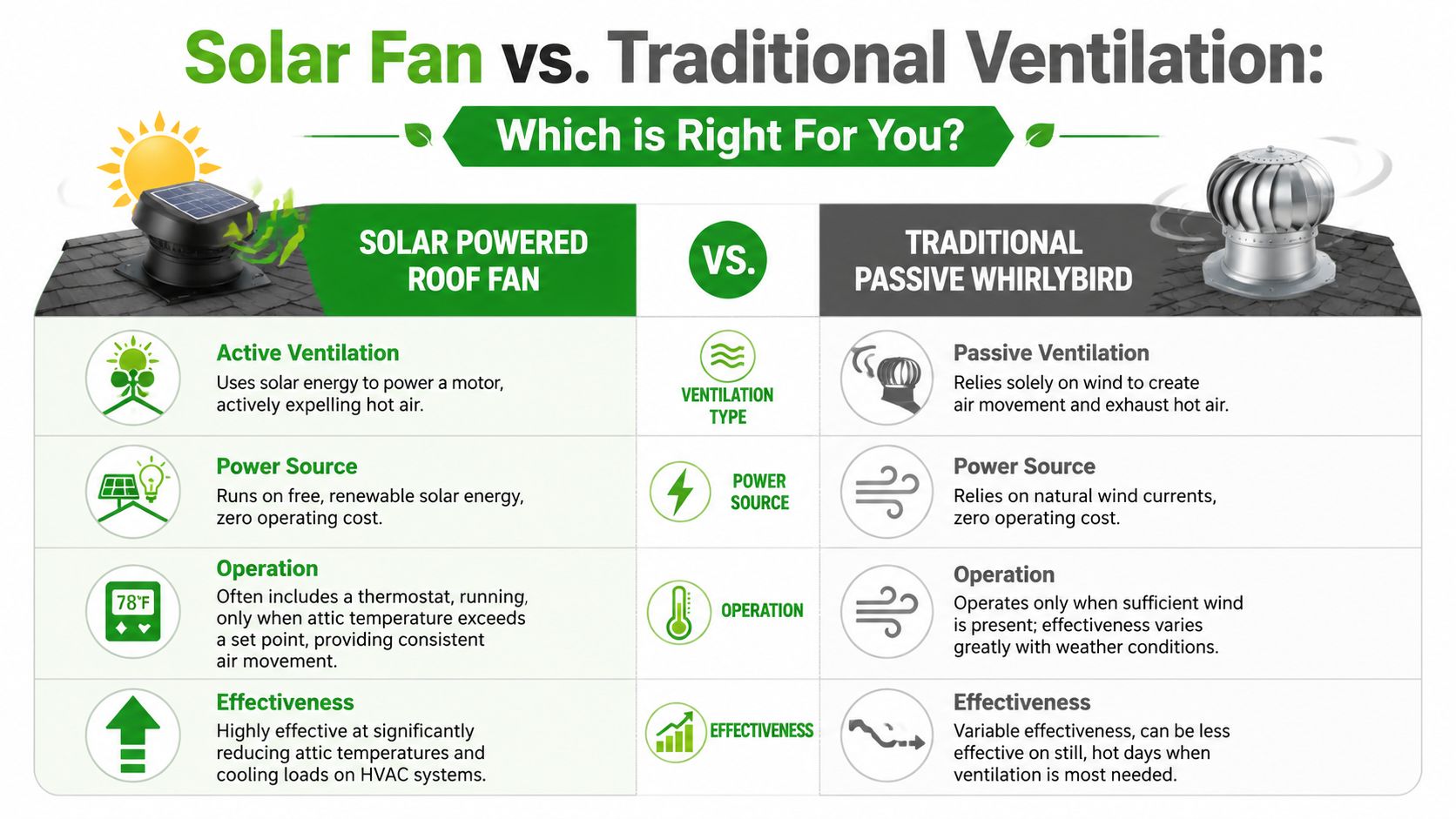
Side-by-side practical comparison
| Method | Best fit | Limitation |
|---|---|---|
| Solar powered roof fan | Roofs with strong sun exposure and a genuine heat build-up issue | Performance depends on sunlight and correct intake ventilation |
| Whirlybird | Homes needing simple passive exhaust with no powered components | Output can fall away on still, hot days |
| Ridge and soffit ventilation | Homes designed for continuous passive airflow across the roof cavity | Needs the roof layout to support good intake and exhaust balance |
| Insulation and ceiling sealing | Homes where heat transfer and air leakage are the main issue | Doesn't actively purge trapped hot air on its own |
When passive ventilation is enough
Some houses already have decent airflow through eaves and ridge lines. In those homes, adding a powered fan may not produce a meaningful gain. If the roof cavity already vents reasonably well and the bigger weakness is poor insulation or ceiling leakage, that's where the money should go first.
A helpful outside perspective is 7 Summits Roofing's guide to ventilation, which explains the broader logic of balancing intake and exhaust. The climate is different, but the ventilation principles are still useful.
When a powered fan earns its place
A solar fan becomes more compelling when passive systems aren't moving enough air during harsh summer conditions. That's often the case on still days, on roofs with trapped hot zones, or in homes where upper rooms remain uncomfortable despite otherwise sensible upgrades.
Some homeowners also compare roof fans with daylighting and passive roof products because both involve roof penetrations and comfort outcomes. If you're weighing broader roof improvements, it's worth understanding how solar tube skylights fit into a different part of the comfort equation.
If a passive system is already doing the job, adding a fan may only make the roof more complicated. If passive airflow is falling short, a solar fan can be the missing piece.
Correctly Sizing and Placing Your Roof Fan
This is where many installations go wrong. Homeowners often focus on the fan unit, but sizing is really about the relationship between roof volume, airflow capacity, and intake area.
One published product specification notes that a 25 W integrated monocrystalline panel can drive about 1,030 CFM, and that same guidance warns that if intake is undersized, the fan can depressurise the roof cavity and reduce effective ventilation, as shown in this roof fan CFM and intake reference.
The checklist that matters on site
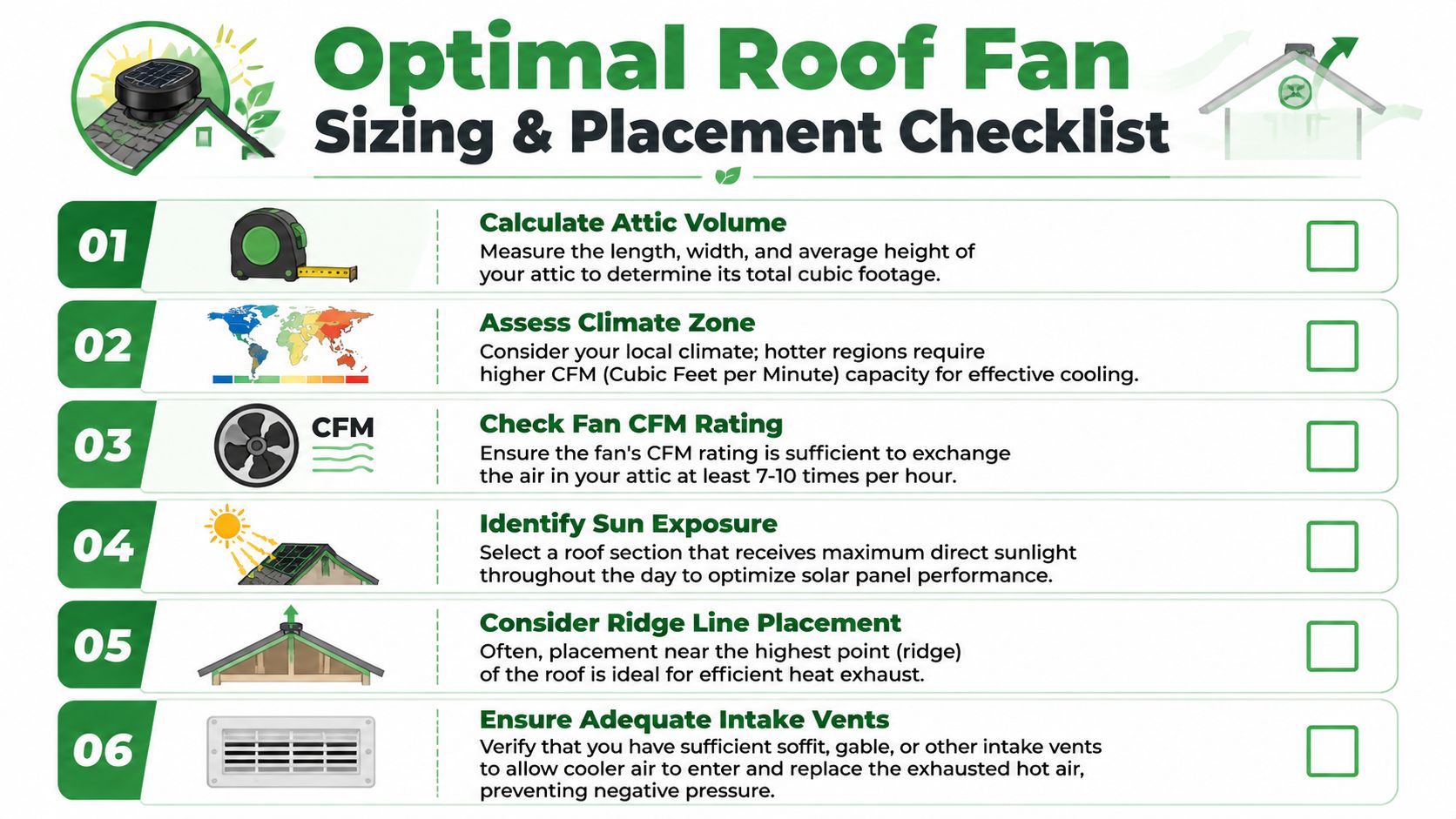
Start with these checks before choosing a model:
- Roof cavity size. A small roof space and a sprawling roof space don't need the same airflow.
- Available intake vents. Eaves and soffits must allow replacement air to enter.
- Sun exposure at the mounting point. Shade during the hottest part of the day can cripple output.
- Highest practical placement. Hot air accumulates high, so position matters.
- Roof design and access. Valleys, ridges, hips, and obstacles change the best location.
A fan that's too large for the available intake can create poor airflow behaviour. A fan that's too small may run but not make a noticeable difference.
Why intake vents are not optional
This is the part many homeowners never get told. Exhaust without intake is a bad system. If the roof cavity can't draw enough replacement air from outside, the fan may try to pull air from places you don't want, including gaps around ceiling penetrations.
That is one reason sizing should never happen in isolation. The fan, the vent area, and the roof cavity geometry need to be assessed together.
If you want a simple explainer on how airflow is discussed in building ventilation, this guide to indoor air quality for homeowners gives useful background on air changes and why movement rates matter.
For homeowners planning a retrofit, this page on roof vent installation considerations is a practical starting point.
Placement mistakes to avoid
- Too low on the roof. Heat won't be extracted from the hottest zone as effectively.
- Near constant shade. The panel can't deliver reliable output.
- Ignoring roof layout. A fan placed where air short-circuits across a small section of the cavity won't ventilate the full space.
- Treating all roof types the same. Metal, tile, and complex roof forms need different detailing.
Integrating Roof Ventilation into a Whole-Home Energy Plan
A solar powered roof fan works best when it isn't treated as a standalone gadget. It should sit inside a broader home energy strategy that includes cooling efficiency, insulation quality, and rooftop solar.
That bigger picture matters in Australia because rooftop solar is already familiar to many households. The Clean Energy Regulator reported that more than 4 million small-scale solar PV systems had been installed nationally by the end of 2024, which helps explain why solar-assisted hardware feels less foreign to homeowners than it once did, as noted in this Australia rooftop solar adoption reference.
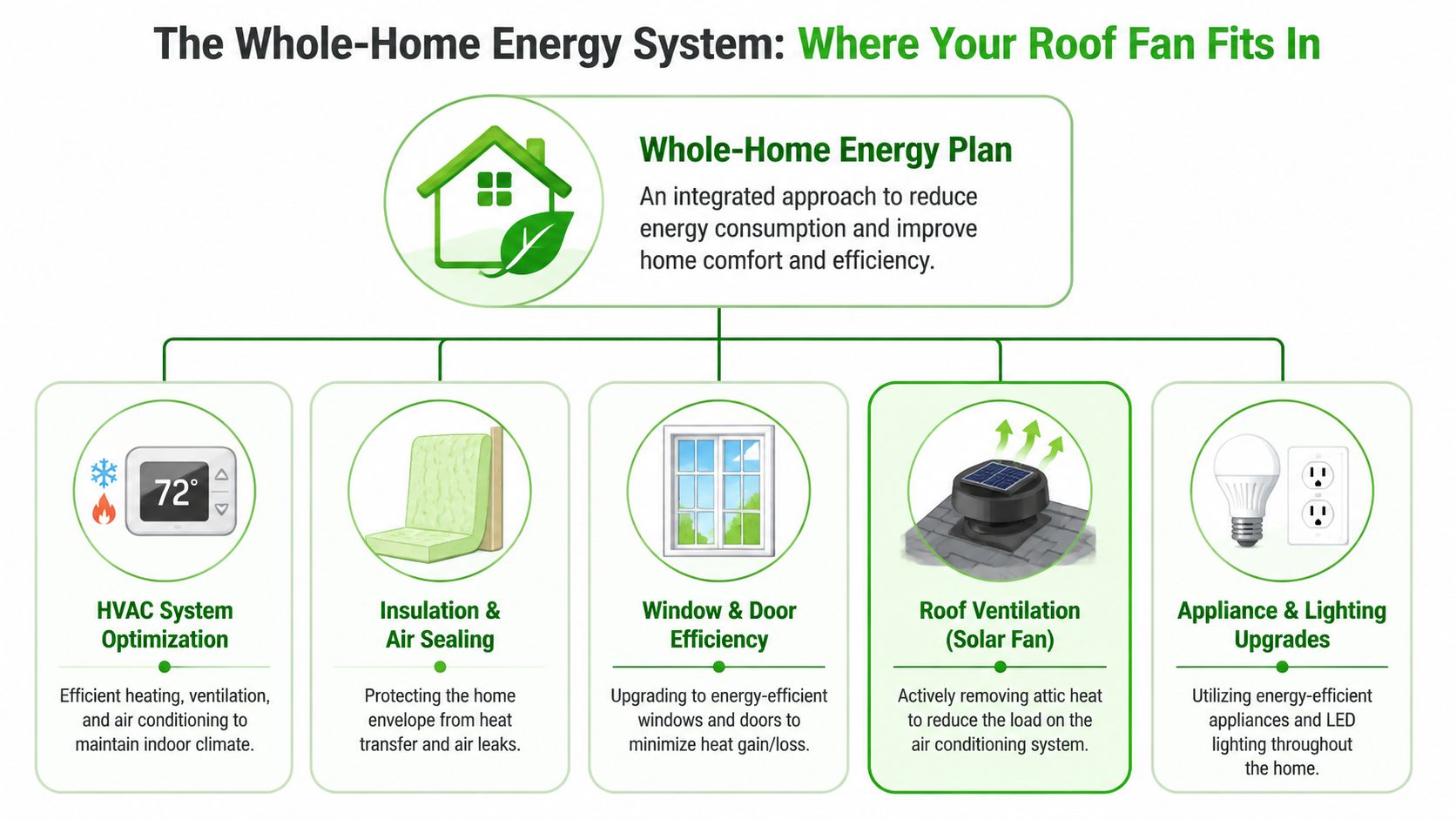
How the pieces work together
When roof ventilation reduces heat loading above the ceiling, the cooling system doesn't have to fight as hard against stored roof heat. That doesn't replace insulation or efficient air conditioning, but it can support both.
A sensible whole-home plan usually considers:
- Ceiling insulation and air sealing so heat transfer is limited at the building envelope
- Efficient cooling equipment matched to the way the home is used
- Rooftop solar PV to offset daytime electricity demand
- Battery storage, where appropriate, to improve self-consumption and resilience
- Roof ventilation to deal with trapped heat at the source
Why this matters for solar households
In practical terms, lowering avoidable cooling demand makes your solar generation work harder for the rest of the house. The less energy you need to spend overcoming roof heat, the more flexibility you have elsewhere in the home.
For anyone reviewing solar system design at the same time, this guide on what size solar system you need is a useful companion read.
Good energy planning isn't about piling on products. It's about making each part of the home work with the others.
The homes that benefit most from joined-up thinking
The best candidates are often homes that already know summer discomfort is a pattern, not a one-off. If the roof cavity overheats, the air con runs heavily, and solar is already on the agenda, combining those decisions usually produces a better result than treating each issue in isolation.
Why Professional Installation Is Non-Negotiable
Installing a solar powered roof fan means cutting into the roof covering, flashing the penetration correctly, sealing it against weather, and placing the unit where it can perform. That's roofing work, weatherproofing work, and system design work in one job.
This is not a weekend DIY task.
What goes wrong with poor installation
Bad roof fan installs usually fail in one of four ways:
- Water ingress because the flashing detail is wrong for the roof profile
- Poor placement because the panel or vent sits in a shaded or ineffective location
- Weak airflow results because no one assessed intake ventilation
- Warranty headaches because the roof was altered without proper installation practice
Even when the fan itself is good, poor workmanship can turn it into a long-term roof problem.
Roof penetrations have to be treated seriously
Any penetration through roofing needs to respect drainage paths, material profile, and weather exposure. That applies whether you're dealing with a vent, a skylight, a flue, or another rooftop outlet.
For a useful comparison of how roof penetrations can create problems when they're not detailed properly, this article on Canadian dryer vents on roofs is worth reading. It's not about solar fans, but it highlights why roof-mounted exhaust points need careful planning.
The fan is the easy part. Keeping the roof watertight for years is the hard part.
What a proper installer should assess
A capable installer should check more than the spot where the fan will sit. They should look at:
- Roof type and pitch
- Existing intake ventilation
- Likely shade patterns
- The highest effective exhaust point
- Safe access and compliant installation
- Flashing method suited to the roof material
On metal roofs, details around profile and sealing matter. On tiled roofs, the flashing and tile interface matter just as much. A neat-looking install from the ground means nothing if the waterproofing is wrong underneath.
Why experience matters in NSW conditions
NSW homes are a mixed bag. You see Colorbond, concrete tile, terracotta tile, older fibro-era roof spaces, modern truss roofs, low-set brick veneer homes, and two-storey project builds with very different airflow behaviour. There isn't one universal fan location that suits them all.
An experienced installer looks at the roof as a system. That's what protects the home and gives the fan a real chance to work properly.
Frequently Asked Questions About Solar Roof Fans
Do they work on cloudy days or in winter
They work best when the panel receives direct sunlight. On dull days, output may drop or the fan may run less effectively depending on the model and the available solar input. In winter, roof ventilation can still help manage stale air and moisture in some homes, but the strongest benefit is usually during warmer periods.
Are they noisy
Most modern units are fairly quiet when installed correctly. Because the motor sits on the roof and the airflow is above the ceiling line, homeowners usually notice comfort changes before they notice sound. If a fan is noisy, poor mounting or poor product quality is often part of the story.
Are they suitable for metal roofs
Yes, provided the installer uses flashing and fixing methods suited to the roof profile. Metal roofs are common candidates for solar roof fans in NSW, but the waterproofing detail still has to be right.
Can a solar fan replace insulation
No. A fan removes heat from the roof cavity. Insulation slows heat transfer into the rooms below. They do different jobs, and homes usually perform best when both are considered properly.
If your home feels hot from above, your cooling system runs harder than it should, or you're planning solar and want a more complete energy solution, Interactive Solar can assess whether a solar powered roof fan is the right fit for your roof, or whether passive ventilation, insulation, solar PV, batteries, or a combination will serve you better.
Make Interactive Solar a preferred source in Google
One click tells Google to surface our articles more often in Top Stories, AI Overviews and AI Mode.