Replacement Solar Inverter: Your NSW Guide
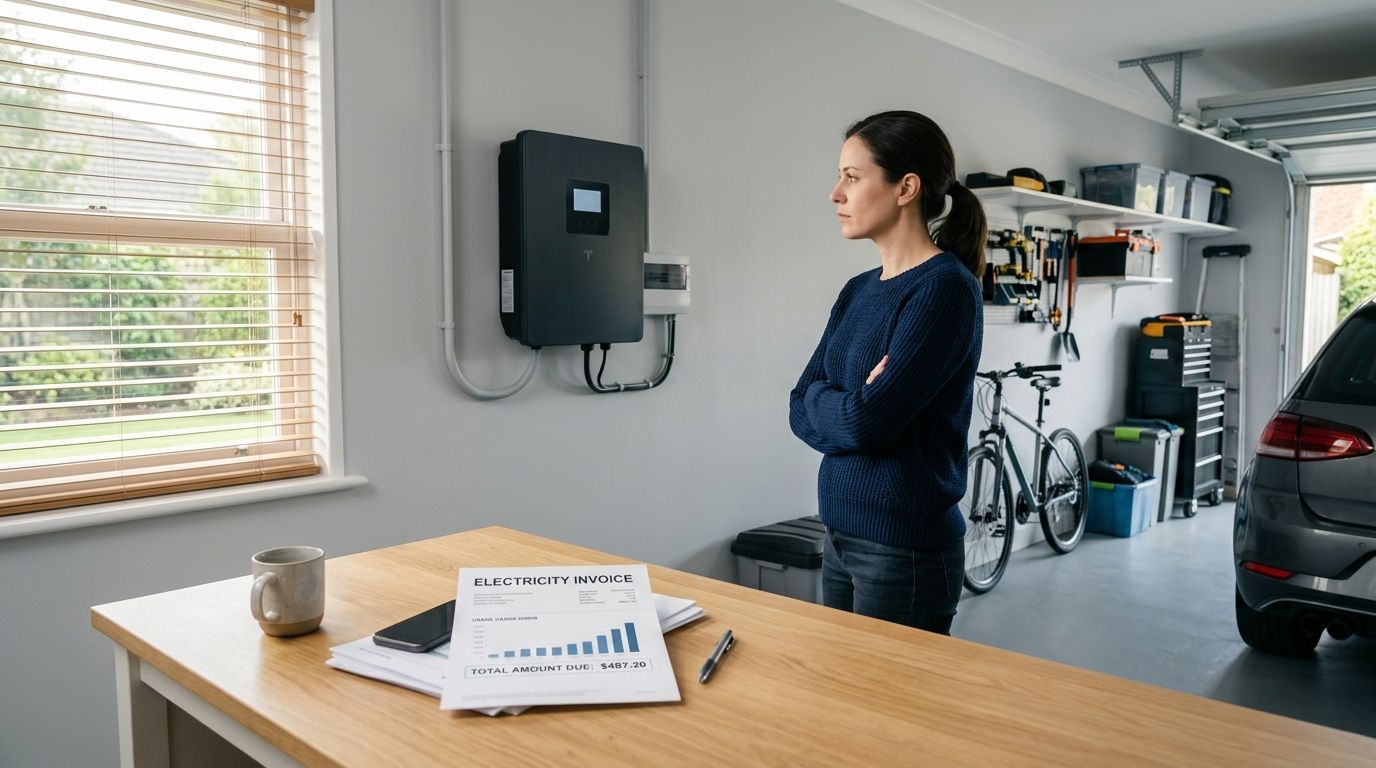
Your power bill has crept up. The monitoring app has gone quiet. Or maybe the inverter in the garage has been sitting there with a fault light that won't clear, even though the weather's been good and the panels look fine.
That's a familiar callout across Sydney and greater NSW. A lot of homeowners assume the panels have failed, but in many cases the replacement solar inverter conversation starts because the inverter has reached the stage where age, heat, daily cycling, and changing grid requirements catch up with it. The panels keep their reputation for longevity. The inverter does the hard electrical work every day, and it usually asks for attention first.
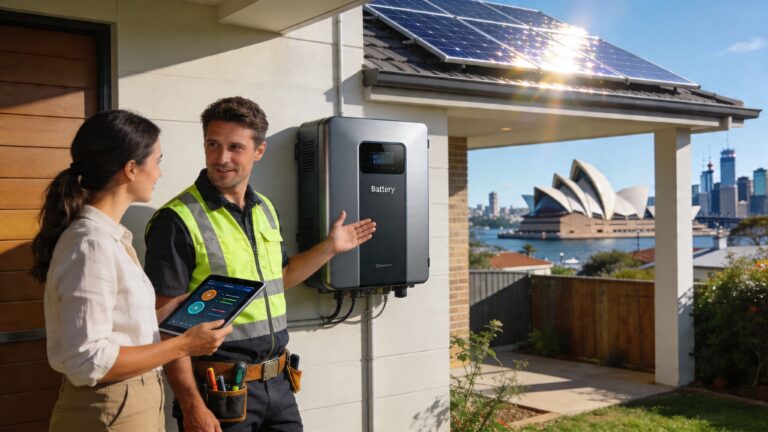
A smart replacement isn't just about getting the lights back on. In NSW, it can also be the moment that decides whether your system stays stuck in the past or gets set up for battery storage, export control, and cleaner long-term performance.
The Heart of Your Solar System Needs a Check-Up
A typical scenario goes like this. The household had solar installed years ago, savings were solid, and nobody gave the system much thought after that. Then the electricity bill changed direction. The inverter started throwing an error. Or the unit looked normal from a distance, but production had dropped for long enough that the savings had all but disappeared.
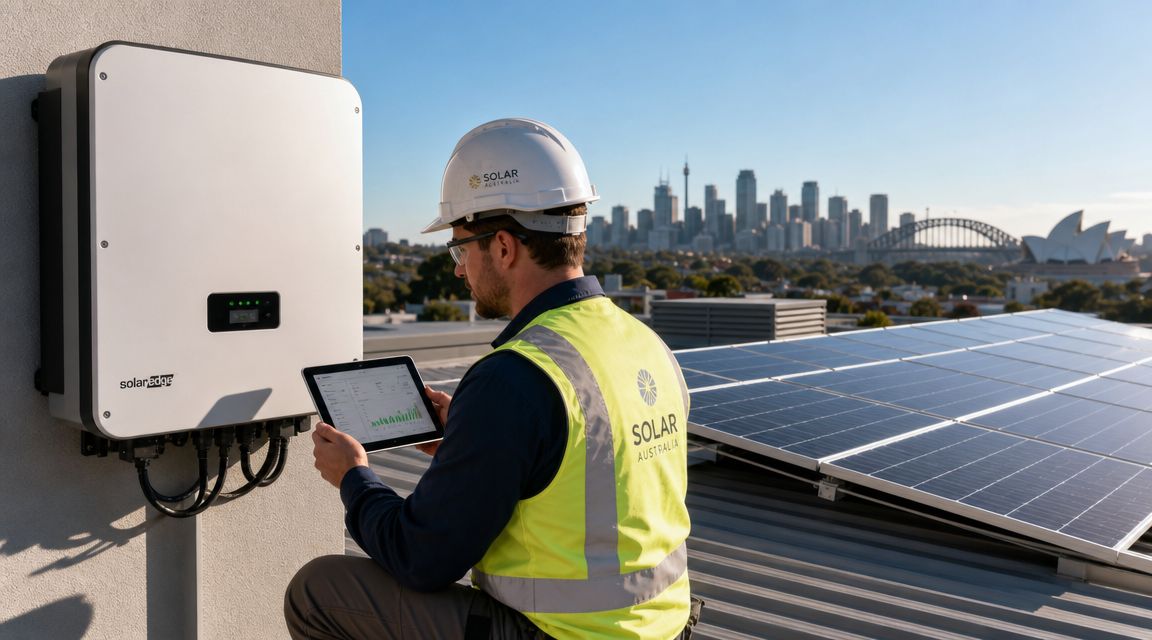
That's why the inverter deserves respect. It's the part of the system converting the solar panels' DC electricity into usable AC power for the home, all while managing operating conditions and communicating with the grid. It does the heavy lifting every day.
Why replacement is often normal, not alarming
In Australia, a solar inverter's life expectancy is generally around 10 to 15 years, while cheaper units may last only 5 years. Since most rooftop PV systems are designed for 20+ years of use, at least one inverter replacement is a common and expected event during the system's lifetime, according to Huawei's Australian solar inverter replacement guidance.
That changes the way homeowners should think about the problem. If the inverter is ageing out, the system hasn't necessarily been a bad investment. It may be time for the first major component refresh.
Hot roof spaces and west-facing walls don't help. NSW summers are hard on electronics, and inverters spend their lives handling variable solar input and household demand. Over time, the stress shows up as nuisance faults, reduced generation, intermittent shutdowns, or total failure.
Practical rule: If your system is older and your savings have dropped without an obvious shading issue, don't assume your panels are the culprit first.
What a good replacement decision looks like
A good outcome isn't “swap the box and hope for the best”. It's checking whether the original design still suits the home, the local network rules, and the way the household now uses energy. A family that's added air conditioning, works from home more often, or plans to buy an EV may need a different inverter strategy from the one that made sense years ago.
Consumer protection matters too. If you're comparing installers, the New Energy Tech Consumer Code is worth understanding because it sets expectations around clear proposals, system performance information, and dispute pathways. That's useful when the job involves not only hardware, but also approvals and recommissioning.
Is Your Inverter Really the Problem? Diagnosis 101
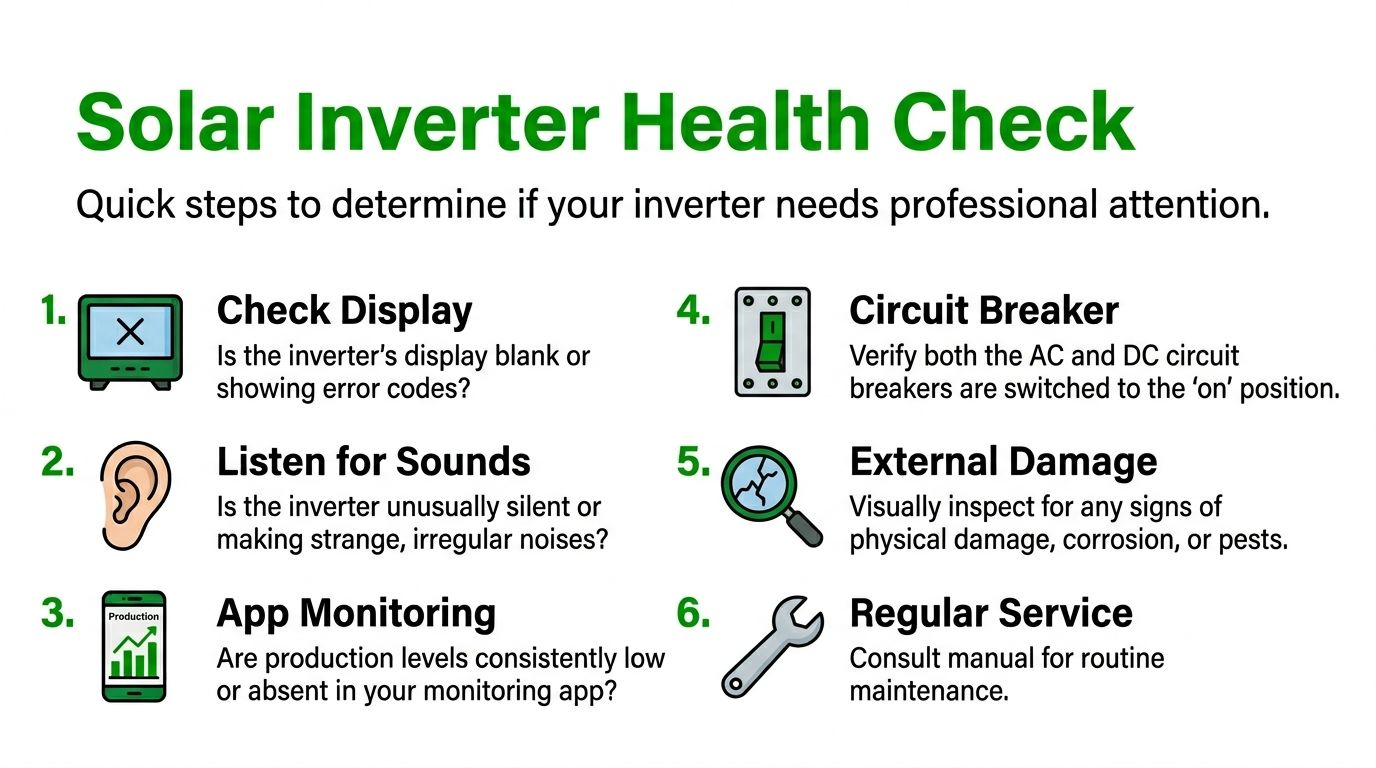
Before locking in a replacement solar inverter, it's worth ruling out the simpler faults. Plenty of service calls end up being a tripped breaker, a communication problem, or a shutdown caused by another electrical issue on site.
What you can do as a homeowner is limited, and that's a good thing. You're checking indicators, not opening covers or handling live equipment.
No lights or display
If the screen is blank or the unit looks dead, start with the obvious:
- Check daylight conditions: Don't assess solar output before the sun is properly up or late in the evening.
- Look at the isolators and switchboard: A breaker may have tripped, or the inverter may be shut down at the AC or DC side.
- Review the monitoring app: If monitoring stopped days ago, that can help narrow down when the issue began.
A blank display doesn't always mean the inverter itself has failed. It can mean the unit has no supply, has gone into protection mode, or has suffered an internal fault that needs testing by a licensed technician.
Constant rebooting
An inverter that starts up, shuts down, and repeats the cycle usually tells you something is wrong beyond simple app communication.
Common field causes include:
- Voltage or grid-related issues: The inverter may be trying to connect, then dropping back out.
- Thermal stress: Units installed in poorly ventilated spots can become unstable in hot conditions.
- Internal component wear: Older inverters often show faults this way before they fail completely.
If you're seeing this pattern, don't keep resetting it all day. Note the behaviour, take photos of the display if you can, and pass that to the installer.
Repeated rebooting is rarely fixed by pressing the same button again. It usually needs proper fault-finding.
Red fault lights and error codes
A red light or fault code is useful information, even if it doesn't mean much to you at first glance. The best move is to record exactly what's on the screen and when it appears.
Use this simple rule of thumb:
| Symptom | Safe homeowner action | When to stop |
|---|---|---|
| Blank display | Check daylight, app, visible switch positions | If still blank, call a professional |
| Fault code | Photograph the code and note the time | Don't open the unit or remove covers |
| Low production | Compare with recent sunny days in the app | If the drop persists, book an inspection |
| Visible damage | Inspect from a safe distance only | If there's cracking, scorching, corrosion, or pests, shut nothing off unless instructed |
What you can check safely
A homeowner can usually do these checks without taking risks:
- Read the screen: Note any fault message or warning light.
- Check the app or portal: Many systems show when production dropped off.
- Inspect the area visually: Look for water marks, corrosion, insect activity, or obvious casing damage.
- Confirm whether breakers appear tripped: If something is clearly off or mid-position, don't force anything repeatedly.
If you want a better sense of how monitoring helps catch these issues early, this guide on inverter remote monitoring for solar efficiency is useful.
What you should never do
Don't remove covers. Don't test wiring. Don't disconnect connectors on the roof or at the inverter. Don't assume an idle unit is safe just because the display is dark.
Solar systems can hold dangerous DC voltage, and faults can sit hidden until someone disturbs the wrong component. Diagnosis is helpful. DIY electrical work isn't.
Choosing Your Replacement Solar Inverter
Most homeowners at this point either save themselves future hassle or accidentally lock in another short-term fix.
The big question isn't only “what failed?” It's “what should replace it now that the house, the network rules, and the energy market have moved on?” In NSW, that's a real design decision, not just a product order.
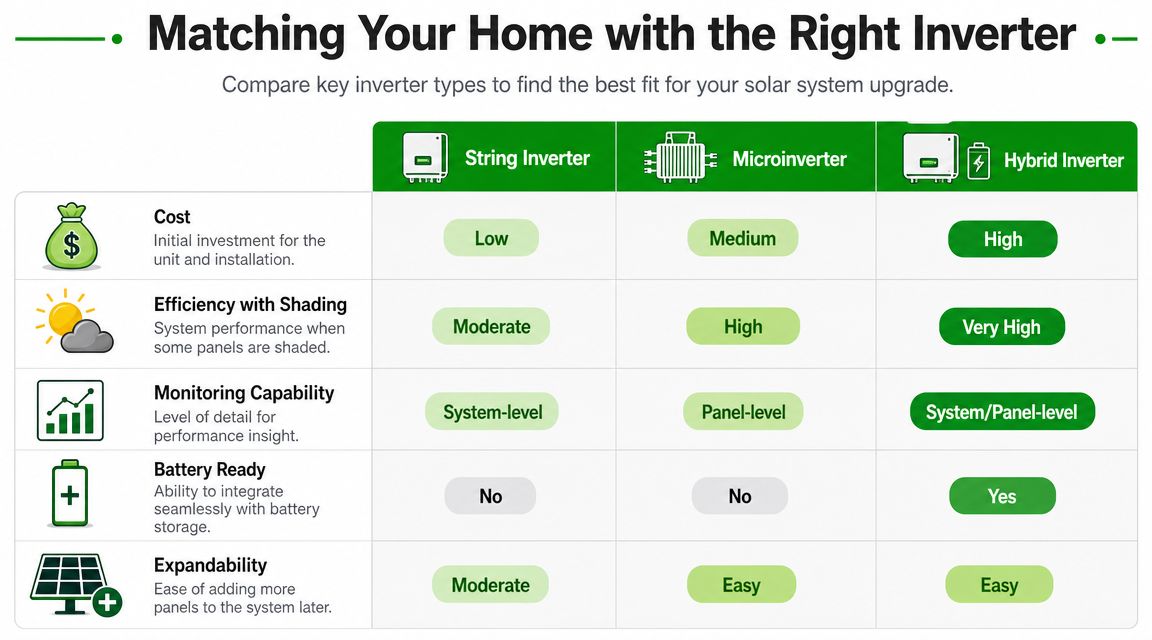
Like-for-like string inverter replacement
A standard string inverter replacement still makes sense in many homes. If the roof layout is straightforward, the panels are performing evenly, and the household wants reliable solar generation restored, this option can be the cleanest path.
It tends to suit homes where:
- The array design is simple: One or two orientations, minimal shading, and no awkward roof sections.
- Battery storage isn't on the near-term plan: The owner wants dependable solar, not a broader system redesign.
- Existing panel strings are still suitable: The replacement can be matched properly to the array's electrical characteristics.
What doesn't work is assuming any string inverter will do. The replacement has to sit within the right voltage and current window for the existing solar array, and the installer has to confirm compatibility properly before ordering.
Microinverters when the roof is the real problem
Microinverters are usually considered when the trouble isn't just the old inverter. The issue may be roof complexity, partial shading, or a layout where panel-level control would improve performance and fault visibility.
These can suit homes where:
- Trees or nearby structures shade parts of the array at different times.
- Panels face multiple directions.
- The owner wants panel-level monitoring rather than broad system-level visibility.
They're less attractive if the existing system was built around a simple central inverter setup and there's no strong technical reason to change architecture. A microinverter conversion can be a bigger redesign than some households need.
Here's a quick side-by-side view:
| Inverter type | Best fit | Watch-out |
|---|---|---|
| String inverter | Straightforward existing systems | Less flexible for later battery integration |
| Microinverter | Complex roofs and uneven shading | Bigger change from a central inverter setup |
| Hybrid inverter | Homes planning batteries or more control | Needs proper compliance and design assessment |
A short explainer can help visualise the differences before you decide:
Hybrid inverter for future-proofing
For a growing number of NSW households, the replacement solar inverter that makes the most sense is a hybrid inverter. Not because everyone needs a battery today, but because many don't want to pay twice for the same transition.
A key decision homeowners in NSW face is whether to replace a failed inverter or use the opportunity to upgrade. Network rules increasingly require export limits, and a new hybrid inverter can be the most cost-effective way to prepare for future battery storage and manage grid compliance, turning a forced replacement into a strategic system enhancement, as noted in this NSW-focused discussion of inverter upgrade decisions.
If you know a battery or EV charger is likely in the next phase of the home, replacing an old inverter with another dead-end model often costs more in the long run.
Hybrid inverters usually suit homeowners who are thinking about:
- Battery readiness: They want a simpler path to storage later.
- Export control compliance: They need a system that can work with current network expectations.
- Energy management upgrades: They want more control over self-consumption and future add-ons.
For readers considering storage, it helps to understand how current solar battery options for NSW homes fit into an inverter replacement decision.
What actually decides the right choice
Ignore marketing language for a minute. The right inverter is usually decided by five practical questions:
- What condition are the existing panels and strings in?
- Does the roof have shading or multiple orientations?
- Is battery storage likely soon, later, or never?
- Will the local network require export controls on the replacement?
- Can the original inverter still be swapped like-for-like under current approval conditions?
If the answer to the third or fourth question is yes, a hybrid option deserves serious consideration. If the array is simple and the household just wants clean, reliable restoration, a standard string replacement may be the smarter move.
The Inverter Replacement Process in NSW Explained
A proper inverter replacement job in NSW isn't a handyman task. It's electrical work, solar work, and compliance work rolled into one. The box on the wall is only part of the job. The rest is making sure the system is safe, correctly connected, and lawful to return to service.
Why DIY is a bad bet
People sometimes think replacing an inverter is similar to swapping an appliance. It isn't. A grid-connected solar system has DC generation, AC supply, isolation points, earthing requirements, and network obligations. Get any of those wrong and the risk isn't theoretical.
In Australia, a professional inverter replacement follows a strict safety sequence: isolate AC, open the DC disconnect, and verify zero voltage before touching any hardware. Re-checking polarity and terminal torque after installation is critical to prevent common failures like arc faults or nuisance trips, which can occur long after the installer has left, according to this practical inverter replacement safety walkthrough.
That's exactly why a licensed, properly qualified solar electrician matters. The dangerous mistakes often don't show up as immediate sparks or smoke. They show up later as intermittent faults, overheating, nuisance trips, or unreliable generation.
What the on-site process should include
A well-run replacement usually follows a sequence like this:
Initial assessment
The installer checks the existing system layout, inverter location, cable condition, switchgear, isolators, ventilation, and whether the proposed replacement suits the current array.Compliance and approval review
In NSW, the job may involve network paperwork, retailer notifications, or checks tied to export settings and inverter approval status.Safe shutdown and isolation
The AC side is isolated first, then the DC side is opened, and the system is tested to confirm it's de-energised before any work begins.Removal and installation The old inverter is removed, the new unit is mounted correctly, and the cabling is checked for suitability rather than reused on assumption.
Connection checks
Conductor lengths, terminations, torque, polarity, and grounding are all re-verified before the system is brought back online.
A neat-looking replacement isn't enough. Good inverter work is proven by the checks you don't see, not the photos you do.
NSW-specific issues that catch people out
The biggest delays often have nothing to do with physically hanging the new inverter. They come from the details around recommissioning and network expectations.
Common problems include:
- Like-for-like assumptions that aren't valid anymore
- Older switchboards needing attention before reconnection
- Replacement models requiring new export settings
- Approval delays when the original product is discontinued
That's where installation quality separates experienced teams from rushed operators. If you want a sense of what proper workmanship standards look like, this piece on why installation quality matters in advanced solar systems is worth a read.
Beyond Installation: Commissioning and Future Care
A replacement solar inverter job isn't finished when the unit powers up. Plenty of poor installations appear to work on day one. The ultimate test is whether the system has been commissioned correctly, registered properly, and set up for long-term monitoring and support.
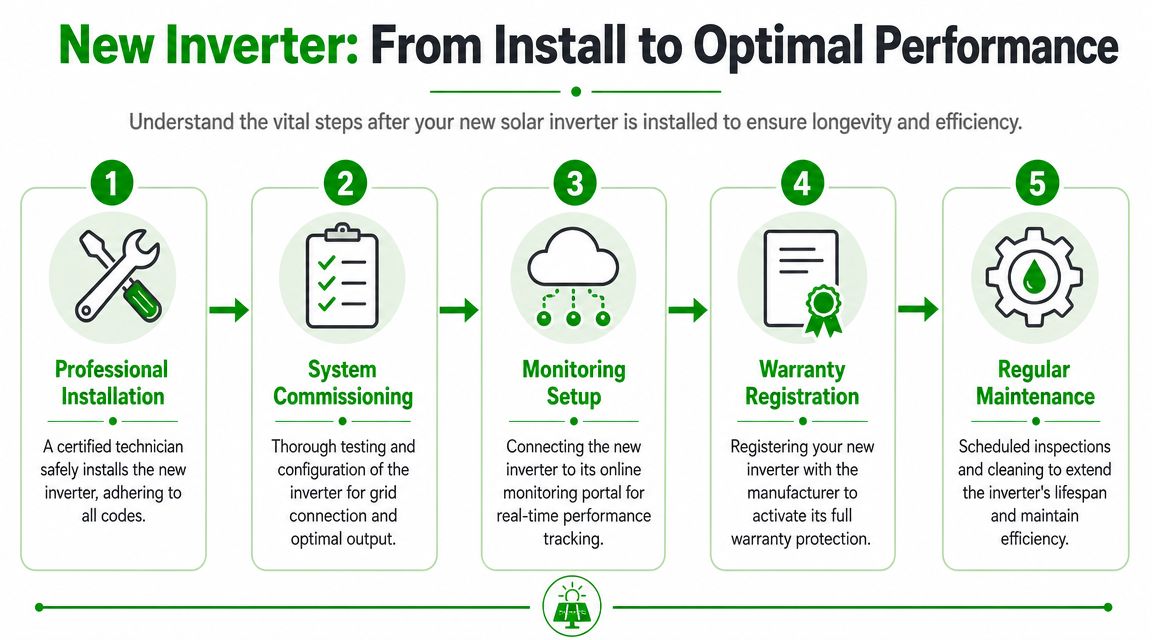
Commissioning is where the job is proven
Properly commissioning a replacement inverter in Australia involves mandatory checks against grid-connection standards, including verifying AC side synchronisation and anti-islanding protection. Installers must also confirm AC cabling is adequately sized and all enclosures are properly earthed to prevent efficiency loss and ensure long-term safety, as outlined in this solar inverter installation and commissioning guide.
That means the installer shouldn't be guessing. They should be verifying that the inverter talks to the grid correctly, disconnects when it should, and operates within the right settings for the site and network conditions.
This idea isn't unique to solar. In building services more broadly, good operators rely on proper testing and verification rather than assumptions. That's the same logic behind quality assurance for facility operations, where systems are commissioned to confirm they perform as intended before being handed over.
The three handover items that matter most
When the install is complete, homeowners should expect more than a quick “all done”.
- Monitoring setup: The new inverter should be connected to its monitoring platform so faults and performance drops don't go unnoticed.
- Warranty registration: This should be handled immediately or clearly handed over with instructions. Delaying it can create a headache later.
- Documentation: The owner should know what model was installed, what settings were applied, and who to contact if the system behaves oddly.
The best time to register a warranty is on handover day, not six months later when you're trying to remember serial numbers.
Looking after the system after replacement
A new inverter doesn't need fuss, but it does need sensible care. Keep the area around it clear, don't stack stored items against ventilation points, and keep an eye on the monitoring portal so you notice if production changes suddenly.
Good after-care also means having a clear service path. If your installer offers ongoing support, this kind of solar system after-care and maintenance support is what keeps a replacement from becoming another future mystery.
The old inverter also needs proper disposal. It's electronic equipment and should be handled responsibly, not dumped in general waste or left in the shed “just in case”.
Your Inverter Replacement Questions Answered
How long will my solar be offline during a replacement
The on-site swap can be fairly straightforward. The bigger variable in NSW is everything around it.
While many guides quote inverter hardware prices, the total cost and downtime in NSW can be influenced by approvals, meter changes, and installer availability. A low quote can become expensive if it doesn't account for compliance paperwork and potential switchboard adjustments needed to get the new system legally back online, as discussed in this NSW-focused solar inverter replacement overview.
So the honest answer is this: the physical replacement may only be one part of the timeline. If approvals, network conditions, or switchboard work are involved, the project can take longer than homeowners expect. Ask your installer for two timeframes, one for on-site work and one for total project completion.
Is it ever worth repairing an old inverter instead of replacing it
Sometimes, yes. If the fault is minor, parts are available, and the unit is otherwise in decent shape, repair can make sense.
In practice, replacement usually wins when the inverter is already ageing, has recurring faults, or the repair still leaves you with outdated functionality and no real path to future upgrades. A repair that gets you through a few more months may not be a win if the system still needs another major intervention soon after.
A good installer won't push one answer blindly. They'll look at the unit's condition, supportability, compliance position, and what the household wants next.
What if my original panel brand no longer exists
That's common, and it usually doesn't prevent an inverter replacement. The key issue is electrical compatibility, not whether the panel badge matches the new inverter brand.
The installer needs to assess the existing array properly, including string layout and operating characteristics, then select an inverter that suits those conditions. This is also why “same size as before” isn't enough as a design method. The replacement needs to be matched to the actual system on the roof today, not the brochure from years ago.
Should I replace like-for-like or upgrade for battery readiness
If you're sure you only want solar generation restored and nothing else is likely to change, like-for-like can be sensible.
If there's a realistic chance you'll add a battery, need better export control, or want more control over household energy use, an upgrade can be the smarter financial decision over the life of the system. The cheapest immediate fix isn't always the lowest-cost pathway once future works are considered.
What should I ask before approving the job
Keep the questions practical:
- Is the proposed inverter compatible with my existing array?
- Will the replacement trigger any network or approval changes?
- Do I need export limit settings updated?
- Is my switchboard or AC cabling likely to need adjustment?
- Will you set up monitoring and warranty registration at handover?
Those answers tell you more than a polished quote ever will.
If your system has stopped performing and you want straight advice on whether to repair, replace, or upgrade, speak with Interactive Solar. Their NSW team handles the full process from assessment and compliant replacement through to battery-ready upgrades, monitoring setup, and after-care, so you can get your solar working properly again without the usual guesswork.
Make Interactive Solar a preferred source in Google
One click tells Google to surface our articles more often in Top Stories, AI Overviews and AI Mode.