Boost Savings: Commercial Solar Installation Blacktown
If you run a warehouse, workshop, office, childcare centre, medical practice, or mixed-use site in Blacktown, you’ve probably felt the same pressure a lot of local operators are dealing with. Power costs keep landing on the P&L as a moving target. You can control staffing, stock, scheduling, and supplier terms. Electricity is harder to tame.
That’s why commercial solar installation blacktown has shifted from a “nice to have” upgrade to a business planning decision. The strongest projects aren’t built around hype. They’re built around load profiles, roof conditions, approvals, safe installation, and a funding structure that suits the way your business runs.
For most SMEs, the challenge isn’t deciding whether solar makes sense in principle. It’s figuring out how to get from interest to an installed, working system without losing time, getting stuck in paperwork, or buying a setup that looks good on paper but performs poorly on site.
Why Blacktown Businesses Are Turning to Commercial Solar
A lot of Blacktown businesses are in the same spot. Daytime operations are energy-hungry, margins need protecting, and the grid bill doesn’t feel predictable enough to leave alone.
Solar changes that conversation. It lets a business produce part of its own daytime electricity on the roof it already pays for. That matters more in commercial settings than many owners first realise, because business demand often lines up with solar generation hours.
Blacktown suits commercial rooftop solar
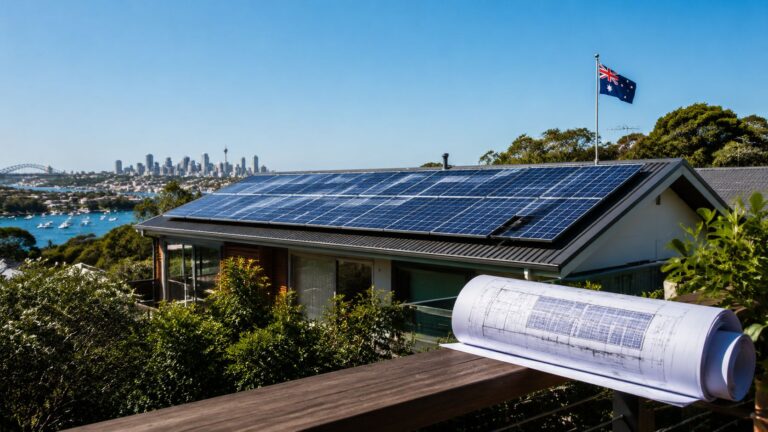
Blacktown isn’t just another metro area with a few sunny roofs. A 2019 UTS/CEFC report identified the Blacktown area as having one of the highest technical potentials for rooftop solar in Sydney, with an estimated capacity between 1,896 and 2,272 MW, highlighting how much usable roof space exists across local commercial and industrial buildings (UTS/CEFC figures summarised here).
That local context matters. Warehouses, factories, trade facilities, bulky goods sites, community buildings, and office roofs create the kind of space where commercial solar can work properly when the structure, orientation, and site access are assessed the right way.
It’s about cost control, not just sustainability
The most practical reason businesses pursue solar is simple. They want more control.
A well-matched system can turn part of your electricity spend from a variable operating burden into something far more manageable. That doesn’t mean every roof is ideal or every tariff structure produces the same result. It means a business with strong daytime usage often has a real opportunity to reduce its exposure to grid dependence.
Solar works best when it’s designed around how the site uses power, not around a generic system size.
There’s also a resilience angle. When owners read updates on changing energy markets, they’re not usually looking for theory. They want to know what they can do now. If that’s on your mind, this guide on electricity prices rising and how to prepare is a useful next read.
What pushes projects forward
The Blacktown businesses that move ahead with solar usually share a few traits:
- They use significant power during the day: Solar generation is most valuable when the site consumes it as it’s produced.
- They plan beyond this quarter: Good projects reward businesses that think in operating years, not billing cycles.
- They want one upgrade to solve several problems: Lower power costs, cleaner operations, better future readiness for batteries or EV charging.
Commercial solar isn’t a trend in Western Sydney. It’s becoming part of how well-run businesses protect cash flow and make their sites work harder.
Unlocking Savings and Sustainability with Commercial Solar
The obvious benefit of solar is lower electricity spend. That’s true, but it’s only part of the commercial case.
For a business owner, the better question is this. What changes operationally once the site starts producing its own power during working hours?
Savings that affect day-to-day operations
The first win is direct. Solar can reduce the amount of electricity you need to buy from the grid during production hours, trading hours, or office hours.
That helps in practical ways:
- Budgeting gets easier: You’re less exposed to full-grid reliance during the day.
- Margin pressure eases: Savings can support wages, equipment, fleet costs, or stock.
- Expansion becomes easier to model: Energy planning stops being a blind spot.
For many businesses, the value isn’t a headline number. It’s the fact that power becomes a managed input instead of a recurring surprise.
If you’re looking at the broader issue of bill reduction before choosing equipment, this guide on how to reduce electricity bills is worth reviewing alongside a site-specific solar assessment.
Energy independence in business terms
“Energy independence” can sound abstract. On a real site, it means you’re no longer buying every unit of daytime power from the grid.
That matters because grid pricing and network conditions sit outside your control. Solar gives your building another source of supply. Not a total replacement in every case, but a meaningful one.
Think of it the same way you’d think about diversifying a supplier base. If your business relies on one source for a critical input, you carry more risk. Solar reduces that dependence.
A strong commercial system is designed to maximise self-consumption first. Export value is secondary for most SMEs.
Sustainability that customers and stakeholders can see
The environmental side matters too, especially for businesses that tender for work, report to clients, manage multi-site operations, or want their premises to reflect modern standards.
Solar gives a business a visible, credible way to improve how it operates. It’s not just about saying the right thing. It’s about changing the physical site in a way that aligns with lower-emissions operations.
That can support:
| Business area | Practical effect |
|---|---|
| Customer perception | Shows the site is modern and efficiency-focused |
| Staff culture | Signals long-term investment in the workplace |
| Procurement and partnerships | Helps when counterparties care about operational sustainability |
| Property strategy | Makes the roof an active asset rather than dead space |
Better projects come from matching system design to business use
What works well in commercial solar is rarely the cheapest-looking option at quote stage. The best-performing systems usually come from good load analysis, sensible equipment matching, and an honest conversation about how the site will use the energy.
What doesn’t work:
- Overselling battery storage before the load profile is understood
- Designing to fill every bit of roof area without checking switchboard and export constraints
- Treating a commercial site like a scaled-up house
- Ignoring future additions such as EV chargers or tenancy changes
What works:
- Looking at interval usage data before design
- Prioritising daytime self-use
- Allowing room for future upgrades
- Choosing equipment that can be monitored properly after handover
The businesses that get the most from solar don’t chase generic promises. They treat it like any other capital improvement. They ask what it will do for operating costs, site capability, and long-term flexibility.
Your Commercial Solar Project Lifecycle Explained
Most business owners don’t need a lecture on solar theory. They need to know what happens, in what order, and who is responsible at each stage.
That’s where many projects either build confidence or lose it. A good commercial solar installation blacktown should feel organised from first conversation through to handover.
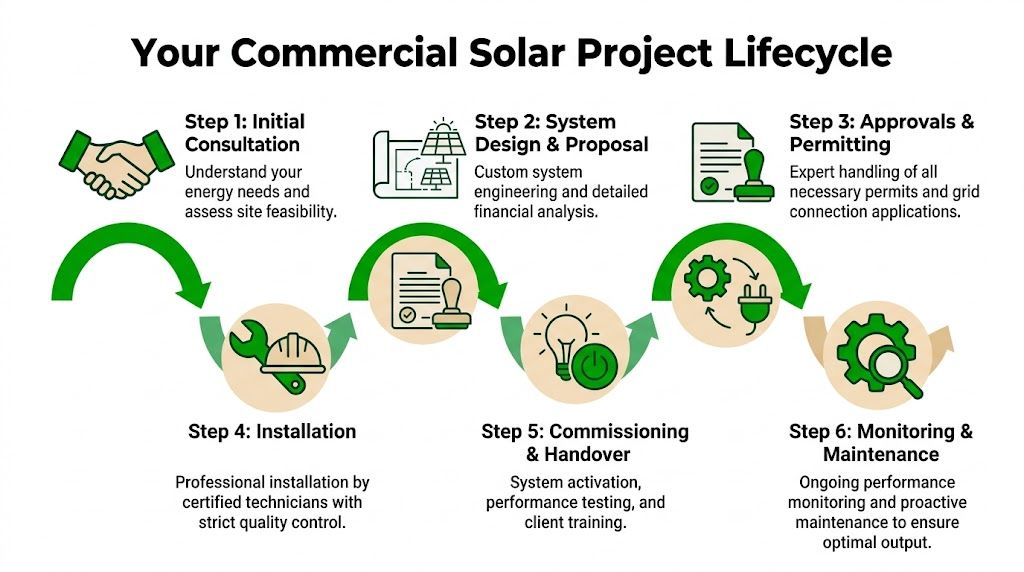
Step 1 Initial consultation and site review
The process starts with understanding the business, not the panels.
A proper first review looks at your electricity usage pattern, operating hours, roof layout, access, switchboard position, and whether the building is owner-occupied or leased. For tenanted sites, lease terms and landlord approvals can matter as much as technical design.
This stage usually answers the questions owners care about most:
- Will solar suit our usage profile?
- Is the roof viable?
- Can the installation happen without disrupting operations?
Step 2 System design and proposal
Once the site stacks up, the engineering work begins. At this stage, quality starts to separate providers.
A commercial design should be built around load behaviour, roof constraints, inverter strategy, cable runs, safety compliance, and future options like batteries or EV charging. It should also account for shading, panel placement, maintenance access, and how the site will be monitored after commissioning.
Practical rule: If a proposal focuses on panel count before it explains site constraints, ask harder questions.
A serious proposal should also explain trade-offs. For example, a denser layout might increase generation but complicate service access. A different inverter arrangement might simplify fault finding later. On industrial sites, practicality matters as much as headline capacity.
Businesses comparing larger rooftop projects often benefit from seeing how similar sites are approached. This overview of industrial solar installation in Sydney gives useful context.
Step 3 Approvals and grid connection
This is the stage many owners underestimate.
Commercial solar often involves distributor paperwork, metering considerations, electrical compliance documentation, and, in some cases, approvals tied to building conditions or landlord requirements. If the provider isn’t experienced here, jobs stall.
Top-tier project management ensures a smooth process. Applications are lodged correctly. Information is complete. Timelines are realistic. The client isn’t chasing updates or discovering late in the process that export conditions affect the design.
Step 4 Installation planning and delivery
By installation day, the job should already feel predictable.
That requires pre-start coordination around site access, inductions, delivery staging, lift requirements, shutdown planning if needed, and clear communication with managers, tenants, or staff. For active commercial sites, this part matters. A technically good install can still become a poor project if it disrupts trade or creates avoidable safety headaches.
Good installers sequence the work so the roof team, electrical team, and commissioning tasks don’t trip over one another.
A clean install usually includes:
- Safe access setup: Roof work starts only once access and safety controls are locked in.
- Mounting and panel installation: Racking needs to suit the roof type and preserve structural confidence.
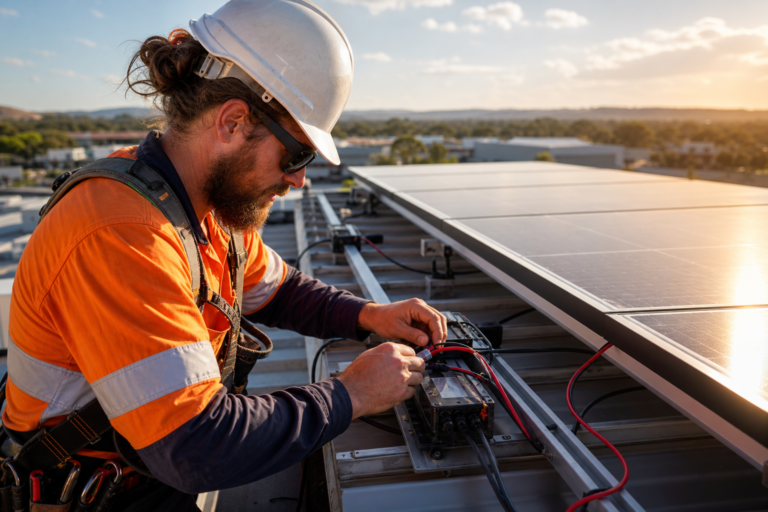
- Electrical works: Inverter placement, isolators, cabling, and switchboard integration need tidy execution.
- Quality checks during install: Problems are easier to correct before the system is energised.
Step 5 Commissioning and handover
Commissioning isn’t just turning the system on.
This stage should include testing, verification, monitoring setup, and a client handover that makes the system understandable. The owner or manager should know what the system is expected to do, what to watch in the monitoring platform, and who to contact if output drops or an alert appears.
A handover done properly avoids one of the most common frustrations in commercial solar. The system is installed, but nobody on site feels confident using the information it provides.
Step 6 Monitoring and maintenance
Commercial systems aren’t “set and forget”. They’re low maintenance, but not no-maintenance.
Output should be monitored. Faults should be noticed early. Visual inspections, cleaning strategy where appropriate, and electrical checks should be handled on a schedule that suits the site conditions. Dust, bird activity, roof access restrictions, and surrounding operations all influence what sensible maintenance looks like.
Here’s the practical difference:
| Managed approach | Poor approach |
|---|---|
| Monitoring is active and reviewed | Monitoring exists but nobody checks it |
| Faults are investigated quickly | Underperformance goes unnoticed |
| Maintenance fits the site environment | Maintenance is generic or absent |
| Client knows who owns post-install support | Responsibility becomes unclear after install |
The full lifecycle matters because every weak step shows up later. A rushed assessment creates bad design. Bad design creates approval issues. Poor planning creates installation delays. Weak handover creates underperformance that nobody catches.
That’s why experienced project management is not an add-on in commercial solar. It’s the core of the job.
Key Components of a High-Performance Commercial Solar System
A commercial system is only as strong as the way its parts work together. Panels matter. Inverters matter. Mounting matters. The bigger point is that performance comes from the full design, not from one premium component in isolation.
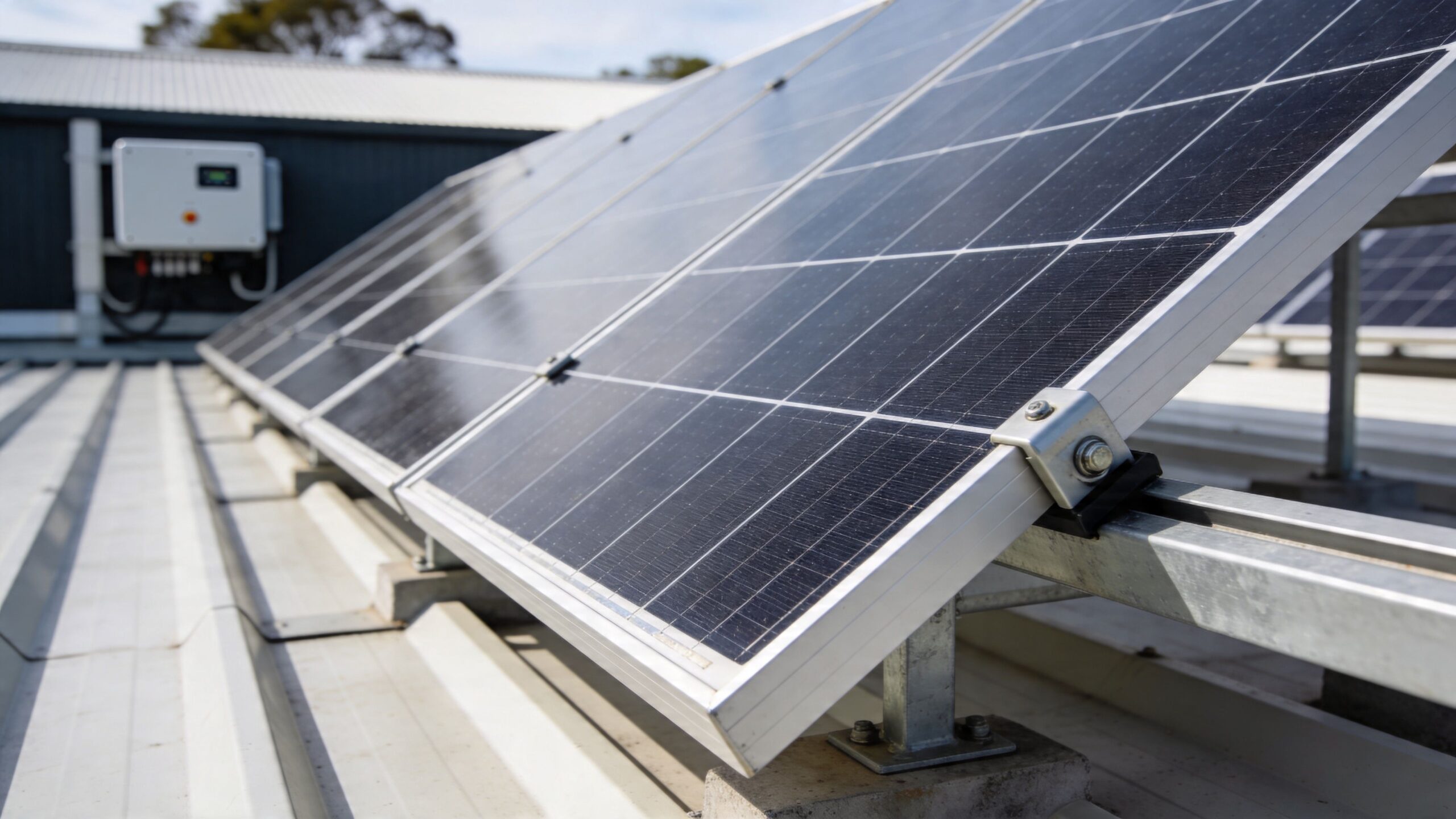
Panels capture the opportunity
Panels are the most visible part of the system, but selection shouldn’t stop at wattage.
For commercial roofs, panel choice needs to reflect roof area, layout efficiency, long-term reliability, and compatibility with the broader electrical design. High-output modules can make sense where roof space is valuable or where the goal is to lift production without overcomplicating the array layout.
The wrong way to buy panels is by chasing a brand name without checking the rest of the design. The right way is to ask how the module choice affects string design, servicing, and expected site performance.
The inverter does more than convert power
The inverter is where a lot of commercial system quality is won or lost. It converts DC electricity from the panels into usable AC power, but in practical terms it also shapes monitoring, fault visibility, and how efficiently the system runs under real site conditions.
A strong local example comes from a 99.12 kW commercial solar installation in Blacktown that used 168 JA 590W panels with a 110kW Sungrow inverter. That design was engineered to optimise the DC/AC ratio, avoid clipping during peak production, and achieve a performance ratio above 95% in Sydney’s high-sunlight conditions (project details here).
That example highlights an important point. Good engineering isn’t flashy. It’s the reason a system performs well after summer arrives.
Mounting and roof integration need careful attention
Mounting systems don’t get much attention in sales conversations, but they should. They carry the array, interface with the roof, and affect long-term serviceability.
On commercial sites, mounting design needs to account for:
- Roof type: Metal deck, tilt frame, membrane, and other surfaces all behave differently.
- Structural considerations: The roof must safely carry the system and any related loads.
- Waterproofing and weathering: Bad detailing here creates expensive problems later.
- Access paths: Maintenance teams need room to inspect and service safely.
The best-looking panel layout on screen can be the worst one on the roof if it ignores drainage, access, or maintenance paths.
Monitoring helps protect output
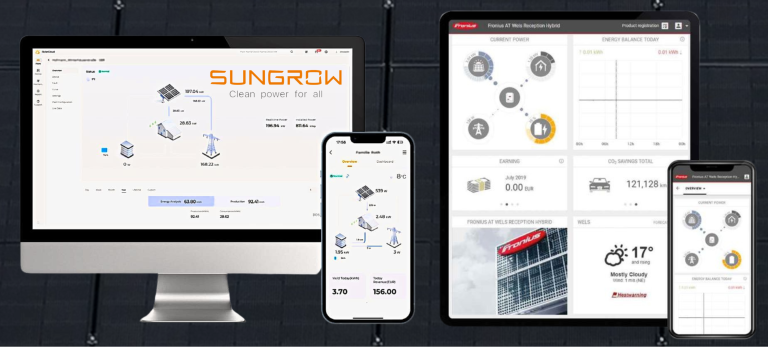
Commercial solar shouldn’t operate blind. Monitoring platforms give owners and facility managers visibility into generation, faults, and overall behaviour over time.
That visibility matters because underperformance isn’t always obvious from the power bill alone. Remote monitoring makes it easier to pick up issues early, especially on multi-zone or larger rooftop systems. For a closer look at that side of system management, this guide on enhancing solar efficiency with inverter remote monitoring adds useful detail.
A short visual overview can help tie these pieces together:
Batteries and EV chargers change the role of the system
Once solar is in place, many businesses start thinking beyond daytime generation.
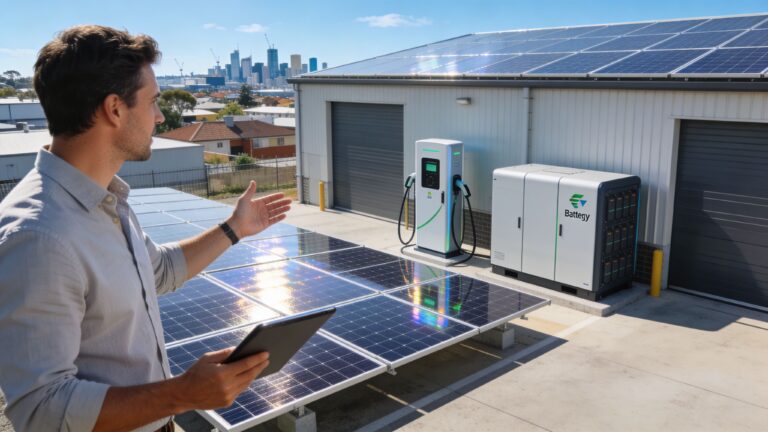
A battery can store excess solar for later use, support self-consumption strategies, and improve how a site manages load after production drops off. It won’t suit every business on day one, but it should be considered at the design stage so the system isn’t boxed into a dead end.
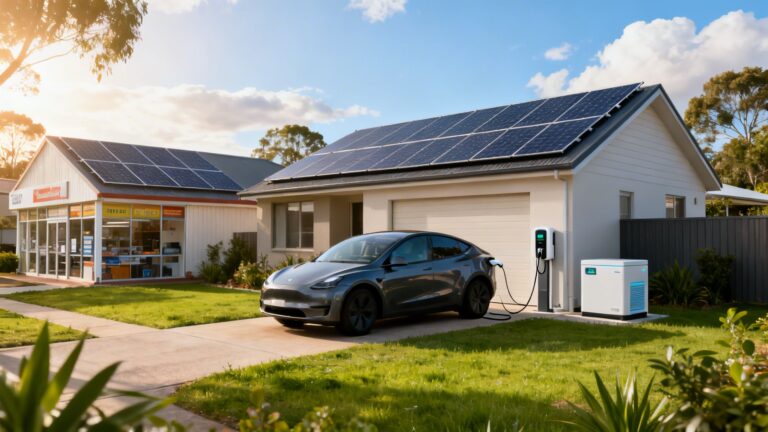
EV chargers are similar. If your business has fleet vehicles, staff charging needs, or customer parking, solar can become part of a larger energy ecosystem instead of a standalone rooftop project.
That broader setup usually works best when planned in stages:
| Component | What it contributes |
|---|---|
| Solar panels | Daytime electricity generation |
| Inverter | Conversion, control, and monitoring |
| Battery | Stored energy for later use |
| EV charger | Uses solar on site for transport demand |
The highest-performing systems aren’t just collections of parts. They’re coordinated energy assets built to suit how the site will operate now and how it may evolve later.
Financing Your Commercial Solar Investment in Blacktown
The technical side of solar is only half the decision. Funding is often the part that slows owners down.
That’s especially true for SMEs. Many projects sit in an awkward middle ground. Small and medium-sized commercial solar projects in areas like Blacktown are often too large for straightforward residential-style financing and too small for major project finance, which is why specialized commercial guidance matters (Industry Search discusses this financing “grey area” here).
The main funding paths
Most Blacktown businesses look at one of three approaches. The right fit depends on cash flow, tax treatment, ownership goals, and how long the business expects to stay at the site.
Cash purchase
Buying the system outright gives the business full ownership from day one.
That often appeals to owners who want the cleanest long-term structure and don’t want another finance agreement sitting beside equipment, vehicles, or fitout obligations. It can also simplify decision-making around future upgrades.
The trade-off is obvious. It requires capital to be allocated upfront, which may or may not be the best use of cash depending on the business.
Business lending or asset finance
A finance structure such as a business loan or chattel-style equipment funding can help spread the cost while still allowing the business to work toward ownership.
This suits many commercial buyers because it balances control with cash flow flexibility. The business gets the benefit of the solar asset while avoiding a full upfront outlay.
This path deserves careful review with your accountant or adviser. The best structure depends on your entity type, depreciation treatment, and broader financing strategy.
Power Purchase Agreement
A Power Purchase Agreement, or PPA, works differently. Instead of buying the system itself, the site host agrees to buy the electricity produced under an agreed structure.
For some businesses, that removes the pressure of direct capital expenditure and makes solar possible sooner. It can be especially useful when preserving cash is more important than immediate ownership.
The trade-off is that you typically won’t control the asset in the same way as an owned system, and contract terms need close attention. PPAs can be effective, but they aren’t automatically the best answer for every SME.
Financing should fit the business model. A good solar structure for an owner-occupier may be a poor one for a short lease or a fast-changing tenancy.
Incentives still matter
Government incentives can reduce the effective cost of eligible systems, and they should be part of the conversation early, not treated as a bonus at the end.
For many commercial systems in the relevant size range, Small-scale Technology Certificates (STCs) may apply. The rules depend on system specifics and eligibility at the time of installation, so they need to be factored into the proposal correctly.
This summary of NSW solar rebates and government rebates for solar is a useful starting point if you want the incentive side explained in plain language.
How to decide which path suits you
The cleanest way to evaluate financing is to look at commercial reality, not just solar enthusiasm.
Ask these questions:
- How important is ownership? Some businesses want the asset. Others want the outcome.
- How tight is working capital? Preserving cash may outweigh long-term ownership preferences.
- How stable is the site? Lease length and occupancy certainty affect the right structure.
- Will the business expand energy use later? Future batteries, chargers, or added load can influence today’s finance choice.
What usually goes wrong
Most financing mistakes come from forcing a standard template onto a non-standard business.
Common problems include:
- Choosing a structure before checking lease conditions
- Ignoring who owns roof rights or upgrade approvals
- Comparing offers that include different assumptions on incentives or monitoring
- Focusing only on monthly repayment rather than total project suitability
The strongest commercial solar outcomes come from matching three things properly. The site. The system. The funding model.
When those align, the project tends to move quickly and perform well. When one is out of step, the friction usually shows up later.
Local Businesses Leading the Charge with Solar Power
Blacktown businesses don’t have to look far for proof that commercial solar can work at meaningful scale. A strong local example already exists.
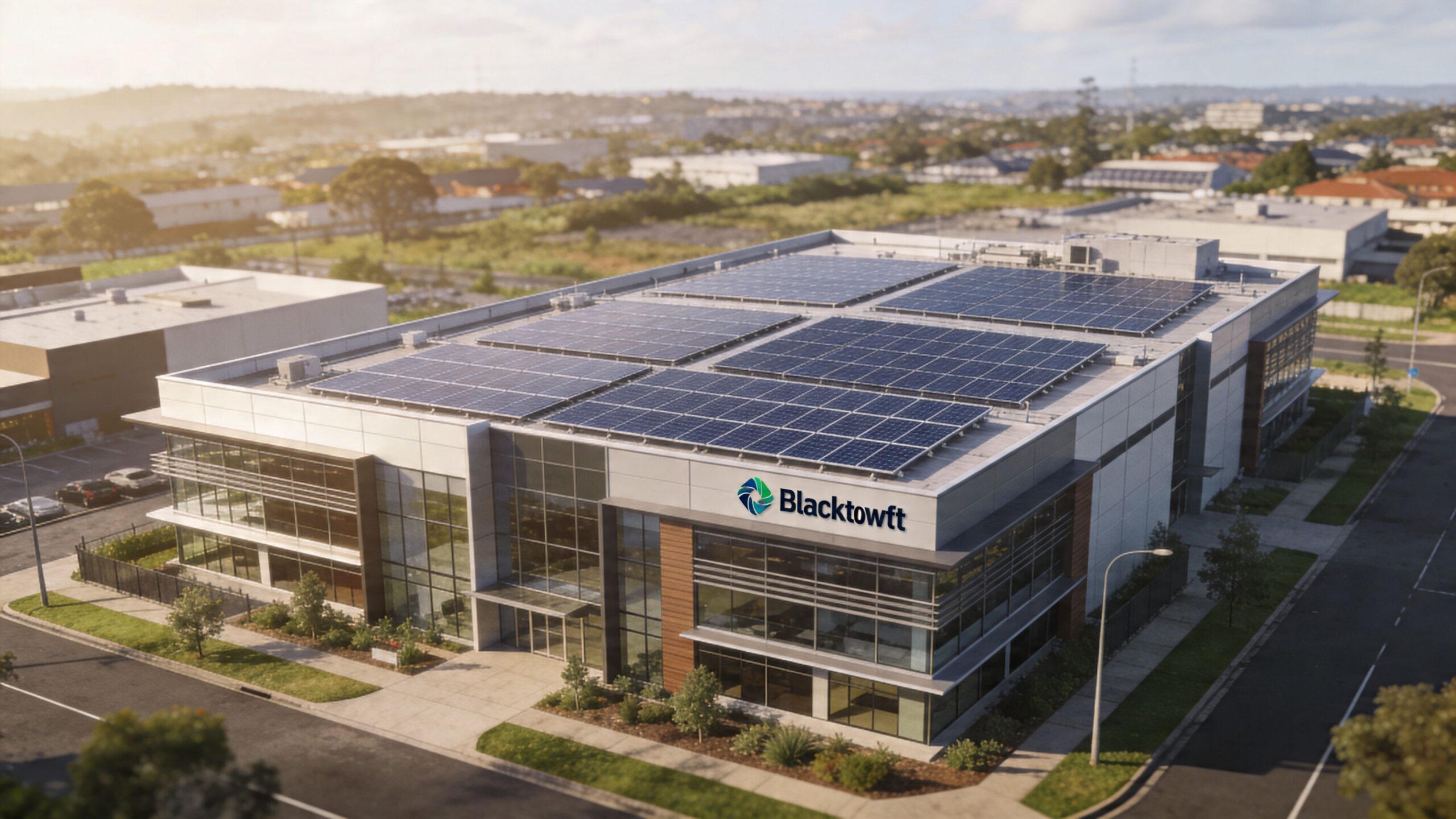
In 2020, Blacktown City Council completed a 707kW commercial solar project across 16 sites, financed through Australia’s largest rooftop solar PPA for a local government. The system is estimated to save the council $170,000 annually on electricity bills and cut CO2 emissions by 563 tons per year (reported by pv magazine Australia).
That matters for two reasons.
First, it shows that solar in Blacktown isn’t theoretical. It has already been deployed across real sites with real operational demands. Leisure centres, libraries, childcare, and community facilities all had to keep functioning while the project delivered practical outcomes.
Second, it demonstrates that financing structure matters just as much as engineering. The council’s project wasn’t only a story about panels on roofs. It was a story about using a workable commercial model to deliver a major outcome without relying on a standard upfront purchase.
What SMEs should take from that example
A local council project is larger and more complex than most private SME installations, but the lesson still applies.
Businesses can draw a few useful conclusions:
- Large roofs in Blacktown are valuable energy assets
- Commercial solar can be structured in more than one way
- Good projects are measured by business outcomes, not just installed capacity
The council example matters because it proves local precedent. Businesses aren’t stepping into the unknown.
For smaller businesses, the takeaway isn’t that they need a multi-site project. It’s that the Blacktown market already supports serious commercial solar thinking. If a public-sector operator can use a structured solar model to improve long-term energy performance, private businesses can apply the same discipline at their own scale.
Choosing Your Partner for a Blacktown Commercial Solar Installation
A commercial solar system can look impressive in a proposal and still become a frustrating project if the installer can’t manage the job properly. Partner choice affects design quality, approvals, scheduling, safety, after-care, and how quickly problems get solved if something needs attention later.
For business owners, the shortlist should be practical.
What to check before you sign
Look for these signals:
- Licensed electrical capability: The business should be properly licensed to deliver the work. For Interactive Solar, that includes Licence #329360c.
- In-house installation teams: This reduces handover gaps between sales, design, and delivery.
- Turnkey project management: One team should coordinate assessment, design, approvals, installation, and support.
- A real local operating base: Warehouse, office, or showroom presence usually tells you the business is structured for accountability.
- After-care that’s clearly defined: You want to know what happens if monitoring shows an issue or the site needs troubleshooting.
What good partners do differently
They don’t push a generic system and disappear after commissioning.
They ask for usage data. They talk through roof constraints. They explain trade-offs in plain English. They design with future additions in mind, whether that’s battery storage, EV charging, or a staged rollout across multiple buildings.
The best partner for a commercial solar installation blacktown project is the one that treats the job like a business asset upgrade, not a box-moving exercise.
Common Questions About Commercial Solar
Does commercial solar need much maintenance
Not much, but it does need oversight. Commercial systems should be monitored, inspected appropriately, and checked when alerts or output changes appear. A low-maintenance system still benefits from an active maintenance plan.
Can we add a battery later
Often, yes. That’s why future planning matters during the original design. If battery storage may be added later, the system should be designed so the upgrade path is practical rather than messy and expensive.
Can solar work with EV chargers at a business site
Yes, if the site’s electrical setup and load profile are assessed properly. Solar and EV charging can complement each other well, especially where vehicles are parked on site during solar production hours.
What happens on cloudy days
The system still produces electricity, just at a lower level than in strong sunshine. Commercial sites remain connected to the grid, so the business continues operating while solar contributes what conditions allow.
Is every Blacktown commercial roof suitable
No. Some roofs are excellent candidates. Others have shading, structural, access, tenancy, or switchboard constraints that need careful review. A proper site assessment matters more than a quick online estimate.
If you’re weighing up a commercial solar project and want clear advice on design, batteries, EV chargers, funding pathways, and end-to-end delivery, speak with Interactive Solar. Their in-house team can help you assess your site properly, map out the right system for your business, and manage the full journey from consultation to after-care.
Make Interactive Solar a preferred source in Google
One click tells Google to surface our articles more often in Top Stories, AI Overviews and AI Mode.