Best Solar Panel Installers Sydney: Your 2026 Guide
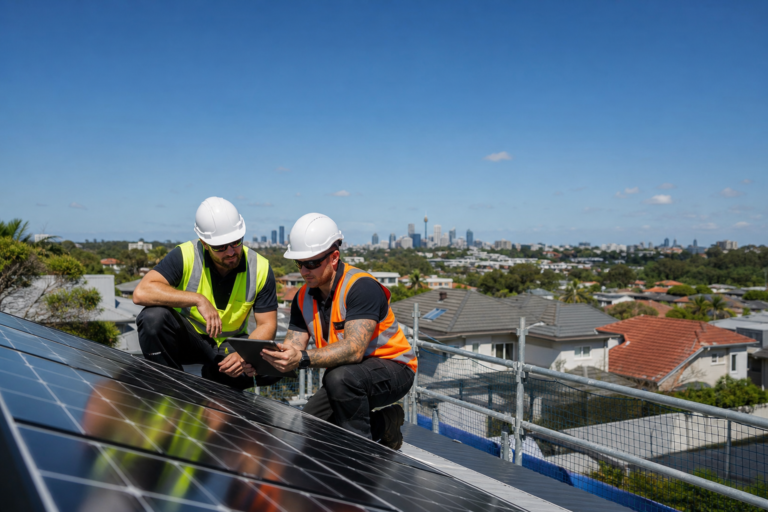
Deciding to go solar is one of the smartest moves a Sydney homeowner can make to wrestle back control of their power bills. The best solar installers in Sydney don't just sell you panels; they design a complete energy solution to shield you from outrageous electricity prices and build genuine, long-term energy independence.
Where to Start Your Sydney Solar Journey
Let's be honest, switching to solar in Sydney is a big decision, and getting the basics right is the first step toward a solid investment. With power bills becoming a constant source of anxiety for families and businesses, a properly designed solar system is a powerful, practical way out. It’s all about generating your own clean power and cutting your reliance on an increasingly unstable grid.
The real goal isn't just to slap some panels on your roof. It's to create an energy ecosystem that's actually built for your home and how you use power. This means choosing the right components that all work together to give you the biggest bang for your buck.
The Key Parts of a Modern Energy Solution
A quality solar setup today is built around a few core pieces of technology. Each one has a critical job in how your system makes, uses, and even stores energy, creating a powerful ecosystem for your home.
- High-Efficiency Solar Panels: These are the workhorses, grabbing sunlight and turning it into DC (direct current) electricity. The tech has come a long way, and modern panels deliver impressive output, even on those cloudy Sydney afternoons.
- Smart Inverters: Think of the inverter as the brains of the whole operation. It takes that DC power from your panels and converts it into the AC (alternating current) electricity your home's appliances need. The best inverters also give you a goldmine of data on your system's performance.
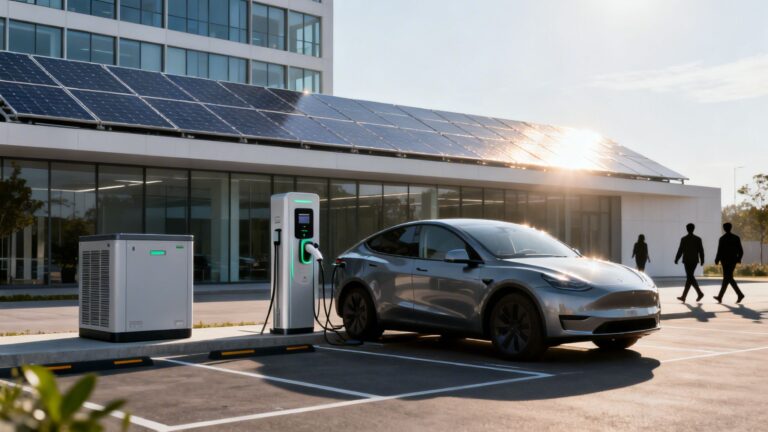
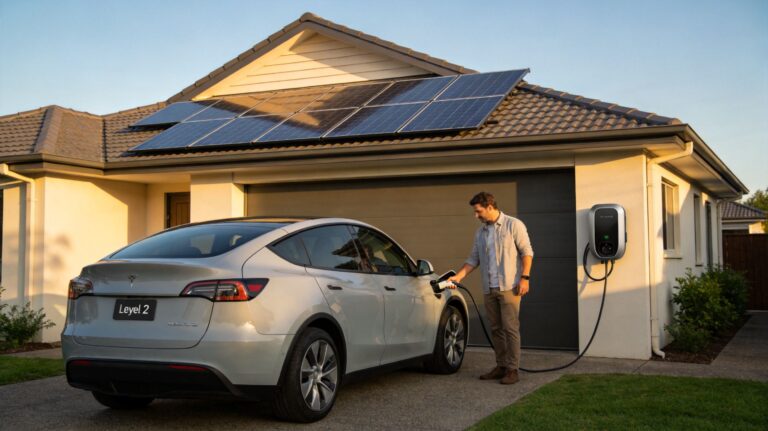
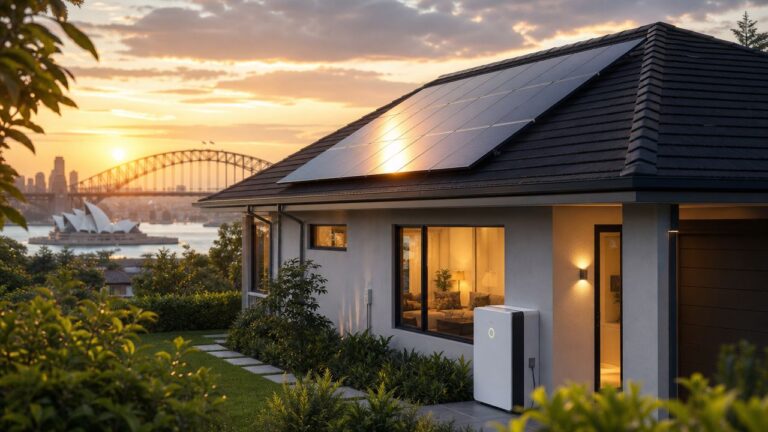
- Solar Batteries and EV Chargers: This is where you future-proof your setup. A battery lets you store your excess solar power to use at night or during a blackout. An EV charger means you can literally power your car with sunshine—the ultimate self-sufficient move.
A well-designed energy system from a quality installer isn't just another appliance; it's a long-term asset for your home. The right mix of solar panels, an inverter, and future-ready add-ons like batteries and EV chargers creates a resilient energy solution that grows with you.
Take a moment to think about how you use energy today—and how that might look in five or ten years. Are you planning to get an electric vehicle? Is the family expanding? Talking through these plans with experienced solar panel installers in Sydney is crucial. It ensures your system is designed for who you are now and who you'll be in the future.
This kind of forward-thinking is what separates a generic install from a genuinely valuable home upgrade. You can start to get a feel for the potential returns by using tools to calculate solar savings and see how the numbers could stack up for your property.
How to Find and Vet Top Sydney Solar Installers
The solar industry in Sydney is absolutely booming. But with that growth comes a crowded market, filled with everyone from genuine experts to high-pressure sales teams who just want a quick buck. Finding a truly reliable installer is about more than just getting panels on your roof; it's about finding a partner who will be around for the 25+ year lifespan of your system.
A bit of homework now will save you major headaches down the track.
This is your solar journey in a nutshell. It’s not just about the install, but about making smart choices from the get-go to protect your investment and set your home up for the future.
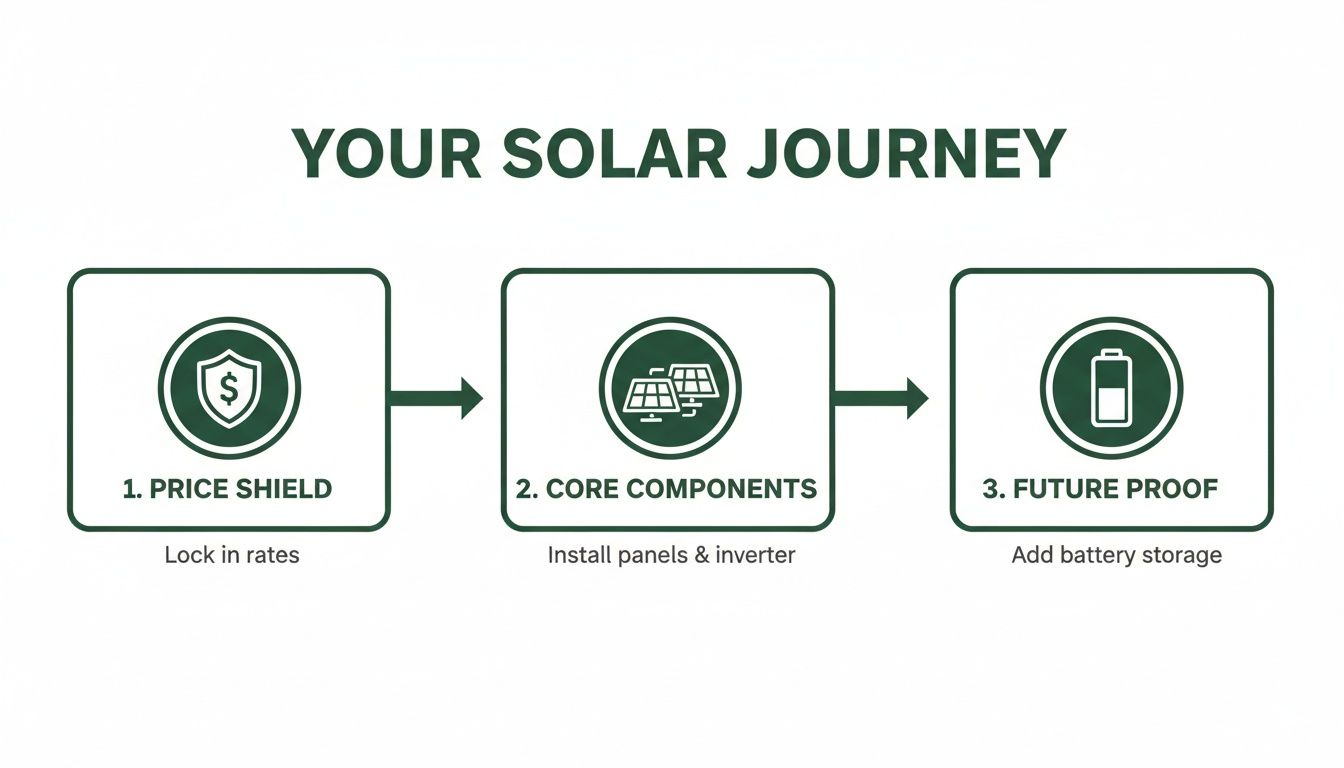
As the infographic shows, a great solar project is a strategic plan. It’s about getting the finances right, choosing solid technology, and thinking about what comes next, like batteries or EV chargers.
The market's expansion is no secret. Australia's solar sector has exploded, with 8,088 businesses now operating nationwide as of 2026. Here in NSW, and especially Sydney, that growth is even more intense. The state installed a massive 260,733kW in the second quarter of 2026 alone, as homeowners scramble to escape soaring power bills.
For a local, family-owned company like Interactive Solar, this just pushes us to double down on quality and service. If you want to dive deeper into the numbers, you can explore the market analysis from IBISWorld.
Start With Accreditation and Licensing
Before you even think about looking at a quote, the first thing you need to do is check an installer’s credentials. It’s the quickest and easiest way to filter out the cowboys.
Clean Energy Council (CEC) Accreditation: This one is non-negotiable. Only CEC Accredited Installers can design and install systems that are eligible for federal government incentives. Think of it as a baseline for quality, safety, and ongoing training. No CEC ticket, no deal.
Licensed Electrician: A solar system is a power plant on your roof, plain and simple. It absolutely must be installed by a fully licensed electrician. Don’t be shy—ask for their licence number. A reputable company like Interactive Solar will have it on hand (#329360c). You can then pop over to the Fair Trading NSW website and verify it in seconds.
NETCC Signatory: The New Energy Tech Consumer Code (NETCC) is a voluntary code of conduct, but it’s a huge green flag. It means the installer has committed to higher standards of customer service and consumer protection. It gives you an extra layer of confidence, and you can learn more about the New Energy Tech Consumer Code NETCC to see why it's so important for your project.
Look for a Real Local Presence
In the solar world, the word "local" gets thrown around a lot. Some big national companies simply hire subcontractors in Sydney, which can turn into a blame game if something goes wrong. A truly local installer is different.
You want to find a company with a real, physical office, showroom, and warehouse in the Sydney area. Our facility in Chipping Norton, for example, is a clear signal that we're invested in the community for the long haul.
A local warehouse is a game-changer. It means the company actually holds its own stock of panels, inverters, and parts. This translates to more reliable project timelines and, crucially, faster access to replacement gear if a warranty issue pops up. You won't be stuck waiting weeks for a part to be shipped from another state.
Having a local team also means that if you ever need any post-installation support, the same people who installed your system can be there to sort it out—quickly.
Evaluate Real-World Performance and Reviews
Online reviews are a great window into an installer’s history, but you need to read between the lines. Don’t just glance at the star rating; dig into the actual comments on platforms like Google Reviews and SolarQuotes.
Look for patterns. Do customers consistently mention good communication, a professional crew, and solid after-sales support? Also, pay close attention to how the company responds to any negative feedback. A defensive or dismissive response is a red flag. A professional, constructive reply shows they actually care about customer satisfaction.
When you’re vetting installers, it also helps to know what makes a good one in the first place. Getting a handle on understanding the solar panel installer profession gives you an insider's perspective. This knowledge empowers you to ask smarter questions and properly size up the expertise of the companies you're talking to.
Decoding Your Solar Quote and System Design
So you’ve got a few solar quotes in hand, and they’re probably making your head spin. It’s a classic scenario: a jumble of technical terms, unfamiliar brands, and different system sizes that make a straight comparison feel impossible.
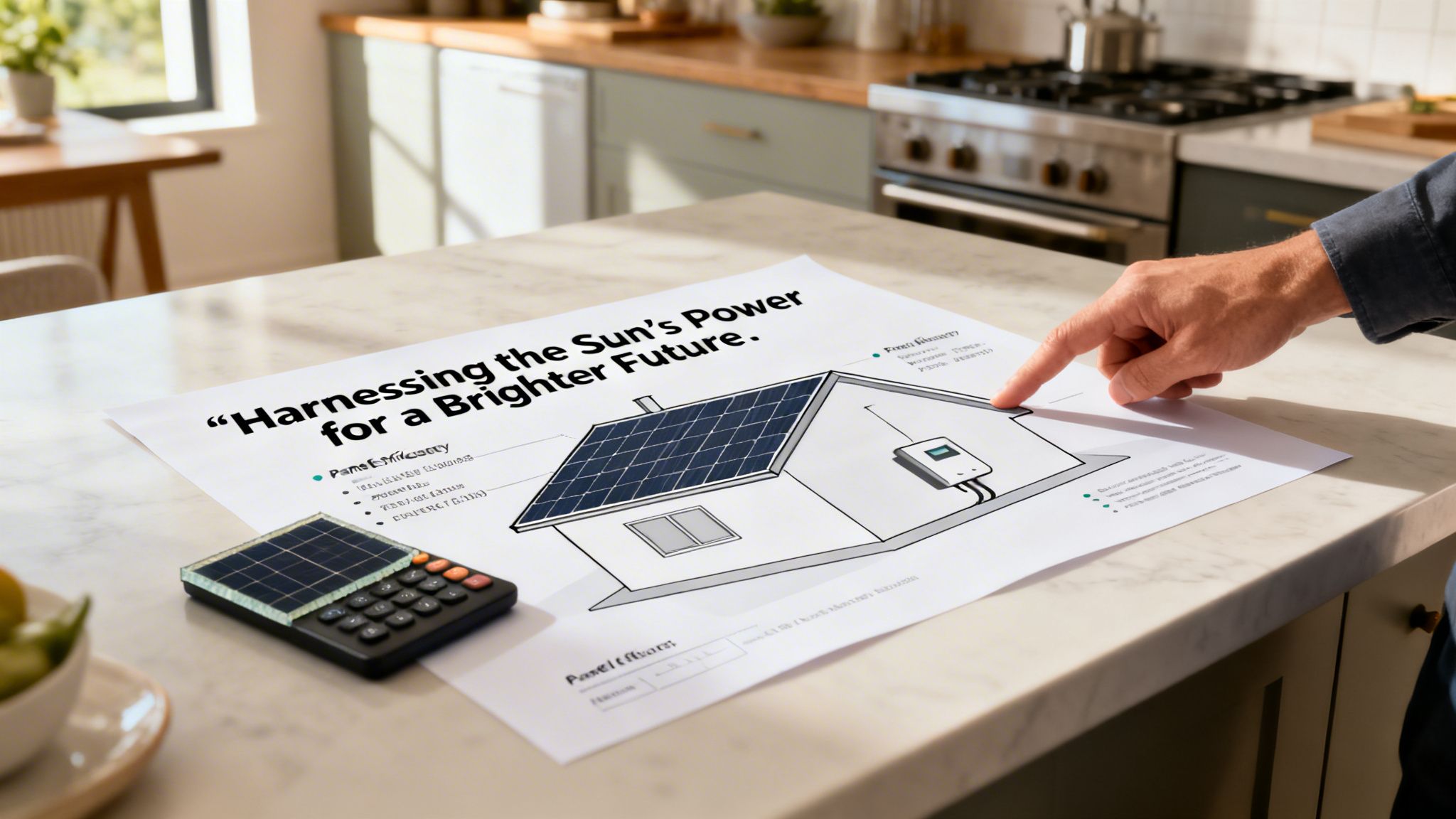
But here’s the thing—a solar quote is so much more than just a price tag. It’s the blueprint for your home’s energy future. Getting comfortable with reading between the lines is the most critical skill you can develop during this process.
A proposal from a top-tier solar panel installer in Sydney will never be a generic, one-page document. You should be looking for a detailed, multi-page plan that proves they’ve actually analysed your property and thought about your energy use. Anything less is a big red flag.
Beyond the System Size
It’s easy to get hung up on the total system size, like 6.6kW or 10kW, but the real story is in the components. Your quote needs to list the exact brand and model number for both the solar panels and the inverter. Vague promises like "premium Tier 1 panels" just don't cut it.
An experienced installer knows it’s the combination of components that drives performance. They'll recommend specific panels and inverters that are known to work well together and can handle Sydney's climate. They should also be able to tell you why they’ve chosen that particular gear for your home.
A custom design is non-negotiable. If a quote doesn't show satellite imagery of your roof with a proposed panel layout, you're looking at a cookie-cutter job. The design must factor in your roof's orientation, pitch, and any shading from trees or nearby buildings.
This level of detail is what leads to an accurate performance estimate. A great quote won't just promise vague bill savings; it will give you a projection of the system's annual production in kilowatt-hours (kWh).
Analysing the Hardware and Warranties
Once you have the specific brands and models, you can finally compare apples with apples. Don't just glance at the brand name—it’s time to dig into the datasheets and warranty documents.
A proper quote will clearly break down three key warranties for you:
- Panel Product Warranty: This covers physical defects in the panel itself, usually for 15-25 years. It’s a direct measure of the manufacturer's confidence in their build quality.
- Panel Performance Warranty: This is a guarantee that the panel will still produce a certain percentage of its original power after 25-30 years. It tells you how gracefully the panel will age.
- Installer's Workmanship Warranty: This is the installer’s promise to stand behind their own work, covering any issues with the wiring, mounting, and overall installation. A 5-10 year workmanship warranty from a local Sydney company shows they are accountable.
When you're evaluating panels, for instance, you can do your own homework by reading detailed product reviews. Our team regularly shares insights on market-leading options. To get an idea of the detail you should be looking for, check out our in-depth JA Solar panel review.
Comparing different quotes can get confusing, fast. Use this checklist to keep things organised and ensure you’re making a fair, like-for-like comparison.
Key Elements to Compare in Sydney Solar Quotes
| Quote Component | What to Look For | Red Flags to Avoid |
|---|---|---|
| Solar Panels | Specific brand and model number. Datasheet provided. | Vague terms like "Tier 1" or "Premium Panels" with no model number. |
| Inverter | Specific brand and model number. Is it a standard or hybrid inverter? | Generic "5kW inverter" description. No mention of hybrid capabilities. |
| System Design | A satellite image of your roof with a clear panel layout. Shading analysis included. | A quote with no visual design or one that ignores obvious shade issues. |
| Performance Estimate | Annual energy production forecast in kilowatt-hours (kWh). | Only vague promises of bill savings (e.g., "save up to 80%"). |
| Product Warranty | Panels: 15-25 years. Inverter: 5-10 years (often extendable). | Unusually short warranty periods or no mention of them at all. |
| Performance Warranty | Guarantees around 80-90% of original output after 25 years. | Missing performance warranty or one that degrades very quickly. |
| Workmanship Warranty | At least 5 years, offered by the installer directly. 10 years is even better. | A warranty underwritten by a third party, or one that lasts only 1-2 years. |
| Total Cost & Inclusions | Fully itemised cost, including GST, STC rebate, installation, and grid connection. | A single lump-sum price with no breakdown. Hidden fees for council or meter work. |
This table acts as your guide. If a quote is missing information from the "What to Look For" column, don't be afraid to go back and ask the installer for the missing details. A reputable company will have no problem providing them.
Future-Proofing Your Design
The best solar installers aren’t just solving your energy problems for today—they’re helping you plan for tomorrow. Your power needs are almost guaranteed to change, especially with electric vehicles and home batteries becoming more common.
A forward-thinking installer will design a system that can grow with you. This might involve:
- Installing a "hybrid" inverter: A hybrid inverter is battery-ready from day one, saving you the cost and hassle of replacing it if you decide to add storage later.
- Positioning equipment strategically: Placing the inverter in a location that makes future battery or EV charger installation easier and cheaper.
- Sizing the system for future load: If you mention you’re thinking about an EV in a few years, a good installer will factor that extra electricity demand into their design from the start.
It’s so important to talk about your five-to-ten-year plan. A skilled installer uses this to build a system that evolves with your life, making sure your investment delivers value for decades. This kind of thoughtful planning is a clear hallmark of a top-tier solar panel installer in Sydney.
Understanding Incentives, and ROI in NSW
Let's talk money. Getting a handle on the financials is what turns a vague idea of "getting solar" into a confident decision. A quality solar system is a serious upgrade to your home, but knowing the government incentives available and your return on investment (ROI) is what takes the guesswork out of it.
Any reputable solar panel installer in Sydney won't just throw a price at you. They'll walk you through the numbers so you understand exactly how and when your system will start paying you back.
The first thing to understand is the federal government’s Small-scale Renewable Energy Scheme. This isn't a cash rebate you get in the mail; it's a significant upfront discount that your installer handles for you.
How the STC Incentive Works for You
The whole system is built around things called Small-scale Technology Certificates (STCs). Think of them as credits your new solar system earns before it's even switched on.
- Every solar system is eligible for a set number of STCs, based on its size (in kilowatts) and its location. Sydney falls into a specific zone that determines the exact number.
- Your accredited installer is the one who claims these certificates on your behalf.
- They then sell them on an open market, and the value is passed directly to you as a point-of-sale discount on your quote.
This is why the final price you see is often thousands of dollars less than the gross system cost. A good installer manages all the paperwork, making it seamless and ensuring you get the maximum financial leg-up from day one. To get into the nitty-gritty, you can check out our deep dive on solar rebates for NSW government incentives.
Here's the crucial part: The STC program is being phased out. The number of certificates you get decreases every single year until the scheme ends completely in 2030. This means the upfront discount gets smaller each year. Acting sooner rather than later makes a real financial difference.
Calculating Your Payback Period
Beyond the initial investment, the next question on every Sydney homeowner's mind is: "How long until it pays for itself?" A good installer won't give you a fuzzy answer. They'll calculate a realistic payback period based on your unique situation.
First, they'll look at your current electricity bills. The more you're paying now, the faster your payback will be. Simple as that.
Next is your self-consumption rate. This is the secret sauce. It's the percentage of solar power you use in your own home as it’s being generated. The more you self-consume, the more you save. It's why running the washing machine, dishwasher, or pool pump during the day is such a smart move—you're using your own free power instead of buying it from the grid.
Finally, the calculation includes the feed-in tariff. This is the small credit you get for any leftover solar energy you export back to the grid. A proper quote will model all these factors to give you a clear financial forecast, not just a vague promise of savings.
Local Council and Compliance Matters
Here's a bit of good news. Most residential solar installations in Sydney are considered 'exempt developments', meaning you probably won't need to lodge a full-blown Development Application (DA).
However, 'exempt' doesn't mean 'no rules'. There are still regulations to follow, especially concerning panel placement in heritage conservation areas or on properties with specific planning controls.
This is where a seasoned local installer earns their keep. Experienced solar panel installers in Sydney know the ins and outs of different council requirements across the metro area. They handle the necessary checks and paperwork to ensure your installation is fully compliant, saving you from any potential headaches with local authorities later on.
The proof is in the numbers. Sydney's solar adoption is booming, with roughly 25-30% of households now running on solar. The trend is only growing—in 2024 alone, NSW dominated the country's installations, putting up 97,475 systems, which was 31% of Australia’s total for the year.
This isn't just a fad; it’s a smart financial move that’s helping Sydney families tackle rising energy costs and secure a solid return on their investment.
What to Expect During and After Your Solar Installation
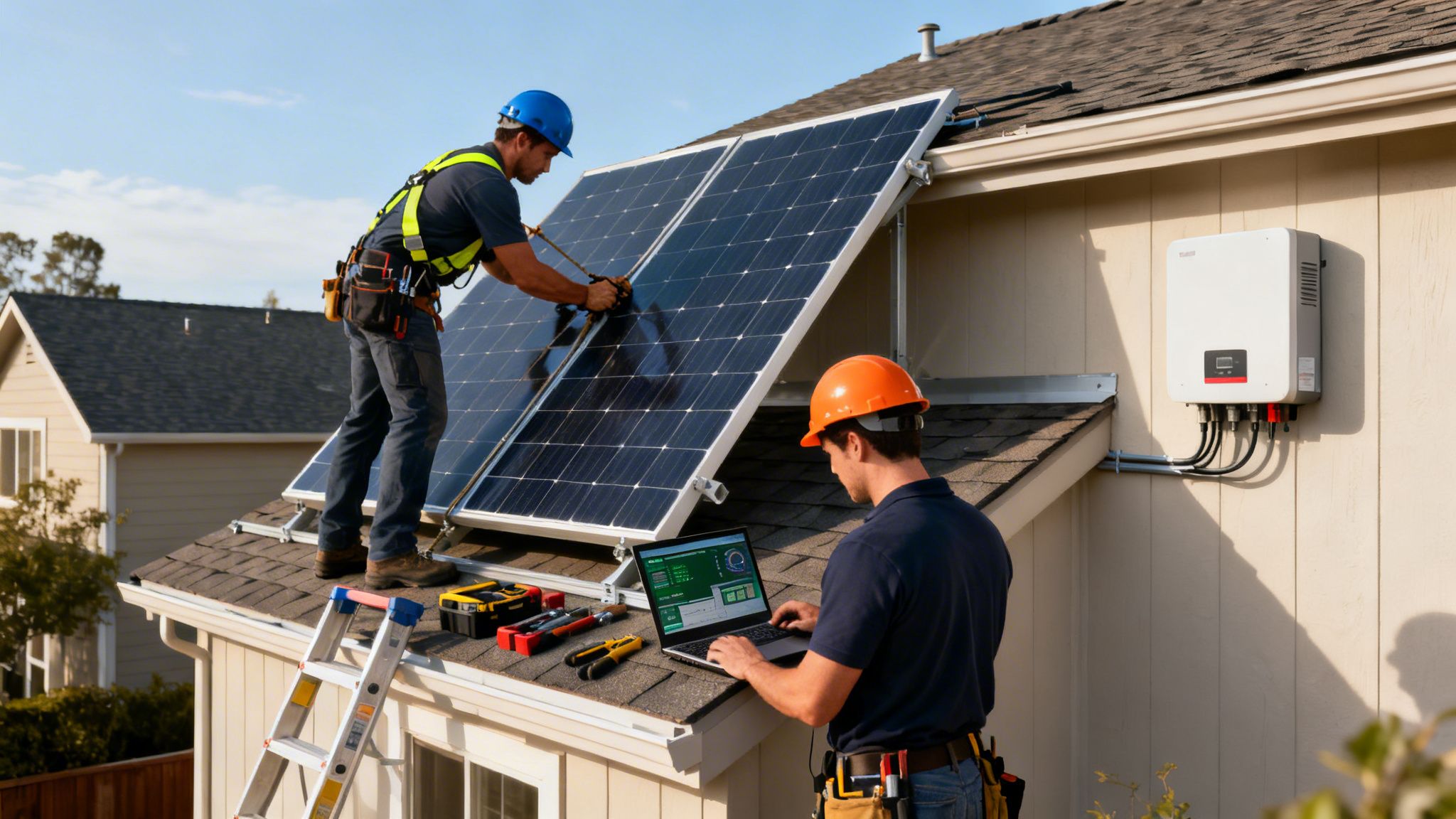
Installation day is the exciting part. It’s when all the research and planning finally become a power-generating reality on your roof. Knowing what happens on the day—and what comes after—is the key to a smooth, professional experience from start to finish.
A top-tier solar panel installer in Sydney won’t leave you in the dark. They’ll give you a clear plan for the day, so you know who’s showing up, what they’ll be doing, and how long it should take. For most Sydney homes, the whole job is done and dusted in a single day.
Remember, this isn’t just another trade job; it's a specialised electrical project. The team that arrives at your door should be the installer’s own in-house, accredited electricians—not a random crew of subcontractors you’ve never met.
On the Day: The Installation Process
On the morning of the install, the team will arrive, usually led by a senior electrician. The first thing they should do is walk you through the day’s plan, confirming the final panel layout on the roof and the spot you’ve agreed on for the inverter.
From there, the day follows a pretty structured process:
- Safety First: The team’s first priority is getting the site safe. This means setting up safety rails and harnesses before anyone sets foot on your roof.
- Mounting the Framework: Next, a durable mounting frame is fixed directly to your roof’s rafters. This is the backbone of your system, designed to hold your panels for decades, so it has to be installed with precision to keep everything watertight and secure.
- Panels and Inverter Go In: With the frame ready, the panels are lifted and securely attached. While that’s happening, another electrician is usually installing the inverter and running the specialised DC cabling down from the roof.
- Connecting to Your Home: The final step is the most technical part. The new solar system is carefully connected to your main switchboard, and all the required safety circuits are installed.
Don’t be surprised if the power to your home needs to be switched off for a bit, usually for an hour or two. This is for the final connection at the switchboard. A good installer will always give you plenty of warning before they do this.
From First Power-Up to Handover
Once the last wire is connected, the team doesn't just flick a switch and leave. Your system goes through a formal commissioning process. The installers run a series of tests to make sure every single component is working correctly, safely, and in line with all Australian Standards.
After a successful commissioning, they’ll walk you through how everything works. This is your chance to learn how to read your inverter, understand what the different lights mean, and know the safe shutdown procedure, just in case. They’ll also get you set up with the system’s monitoring app on your phone, giving you a live look at your home’s new power plant.
The efficiency of this process is why solar adoption across NSW continues to surge. In the second quarter of 2024 alone, NSW led the nation with 260,733.33kW of new solar capacity installed, showing just how many homeowners are successfully making the switch. This boom puts Sydney at the centre of Australia's clean energy shift, driven by households wanting to take back control of their power bills.
Aftercare: What a Great Installer Does Next
A great installation is only half the battle. The true measure of a quality installer shows up in the weeks, months, and years that follow. The best solar panel installers in Sydney see the handover as the beginning of a long-term relationship, not the end of a sale.
- Handling the Paperwork: Your installer should take care of all the paperwork needed to get your system connected to the grid. This includes submitting the documentation to your energy retailer to get your meter reconfigured and your new feed-in tariff activated.
- Proactive Monitoring: The best installers don't just wait for you to call. Many will monitor their customers’ systems remotely, allowing them to spot potential issues—like a single panel that’s not performing as it should—often before you even know there's a problem.
- Responsive Local Support: If you have a question or notice something isn't right, you need to know you can get a straight answer, fast. Look for installers who provide responsive local support, ensuring any troubleshooting is handled by experts who know your system inside and out.
This commitment to high standards is non-negotiable. For a deeper dive into why the quality of the workmanship is so critical, check out our guide on quality installations. This ongoing support is what really gives you peace of mind, knowing your investment is in good hands for the long haul.
Your Sydney Solar Questions, Answered
Going solar is a big decision, and naturally, it comes with a lot of questions. We hear them every day from Sydney homeowners just like you.
To cut through the jargon, we've put together straight-talking answers to the most common queries we get. Getting your head around these points will give you the confidence to make the right call for your home.
Let's dive into system sizing, batteries, warranties, and planning for an EV.
How Do I Pick the Right Size Solar System for My Sydney Home?
Choosing the right solar system size isn't about covering every last inch of your roof. It’s about matching your unique energy habits. A good installer won't just glance at your bill's total; they'll dig into your daily and seasonal kilowatt-hour (kWh) usage patterns.
The real aim is to maximise your self-consumption. This means using the power you generate as it's made, which saves you far more money than exporting it back to the grid for a tiny feed-in tariff. While systems between 6.6kW and 10kW are common for Sydney families, that’s just a ballpark figure.
Nothing beats a professional assessment from a quality solar panel installer in Sydney. They use proper modelling software that factors in your roof's orientation, potential shading, and your power usage habits. The goal is to recommend a system size that gives you the best and fastest return on your investment—an engineered solution for your life, not just a one-size-fits-all product.
Is a Solar Battery Really Worth It in Sydney?
A solar battery can be a game-changer, particularly if your household chews through a lot of power in the evenings after your panels have clocked off for the day. It completely changes your relationship with the grid.
Instead of exporting your excess solar power for a few cents, a battery lets you store that valuable energy. When the sun goes down, you run your home on that stored, free electricity instead of buying it from your retailer at a premium. It’s a massive step towards genuine energy independence.
One of the most overlooked benefits is energy security. During a blackout, a home with a correctly installed solar and battery system can keep the essential circuits running. That's real peace of mind.
A good installer won't just push a battery on you. They'll run the numbers based on your actual energy data, modelling the financial outcome to give you a clear picture of the savings and payback period. This lets you make a smart decision on whether a battery makes sense for you now, or if it's an upgrade to plan for down the track.
What Warranties Should I Actually Care About?
Warranties are your safety net, and it's crucial to understand that there are three different types. They are not created equal, and knowing the difference is key to protecting your investment for years to come.
Panel Product Warranty: This covers the physical panel against defects in materials and manufacturing. You want to see a warranty of 15 to 25 years from the manufacturer. A longer warranty is a strong signal of their confidence in the panel's build quality.
Panel Performance Warranty: This is a guarantee that the panels will still produce a certain percentage of their original output after 25 to 30 years. It’s an assurance against rapid degradation, telling you how well the panels are expected to perform as they age.
Installer’s Workmanship Warranty: This is arguably the most critical one of all. It’s offered by the solar panel installers in Sydney themselves and covers everything related to the installation—the wiring, the mounting, and all the labour. A reputable company will stand by their work with a 5 to 10-year workmanship warranty, proving they’re invested in your system’s long-term health.
Should I Factor in an EV Charger with My New Solar System?
Absolutely, yes. If you already own an electric vehicle or even suspect you might buy one in the next few years, bring it up with your solar installer from day one.
Pairing an EV charger with your solar system is the smartest way to fuel your car with clean, free energy generated right on your own roof. It's much cheaper and simpler to plan for this during the initial solar design. A forward-thinking installer will make sure your system is sized to handle your home's regular load plus the significant demand of charging an EV.
Even if an EV is just a future possibility, mentioning it allows the installer to "future-proof" your setup. This might mean installing a slightly larger inverter or running the necessary conduits from the switchboard to the garage now. A little bit of planning upfront can save you thousands in extra costs and hassle later on, making sure your solar system is ready for the next chapter of your energy story.
Ready to take control of your energy bills with a system designed for your Sydney home? The team at Interactive Solar offers face-to-face consultations and turnkey solutions for solar panels, batteries, and EV chargers. Start your journey toward energy independence today.
https://interactivesolar.com.au
Make Interactive Solar a preferred source in Google
One click tells Google to surface our articles more often in Top Stories, AI Overviews and AI Mode.