Best Roof Ventilation Systems for a Cooler Sydney Home in 2026
Last updated:
When it comes to keeping your home comfortable, the most effective roof ventilation systems work in pairs. They combine passive intake vents (like those under your eaves) with exhaust vents (like ridge vents or solar-powered fans) to keep air constantly moving.
This balanced approach is the single best way to cool down your roof cavity, take the pressure off your air conditioner, and ultimately lower your energy bills in a hot climate like Sydney's.
Why Roof Ventilation Is Your Secret Weapon for a Cooler Sydney Home
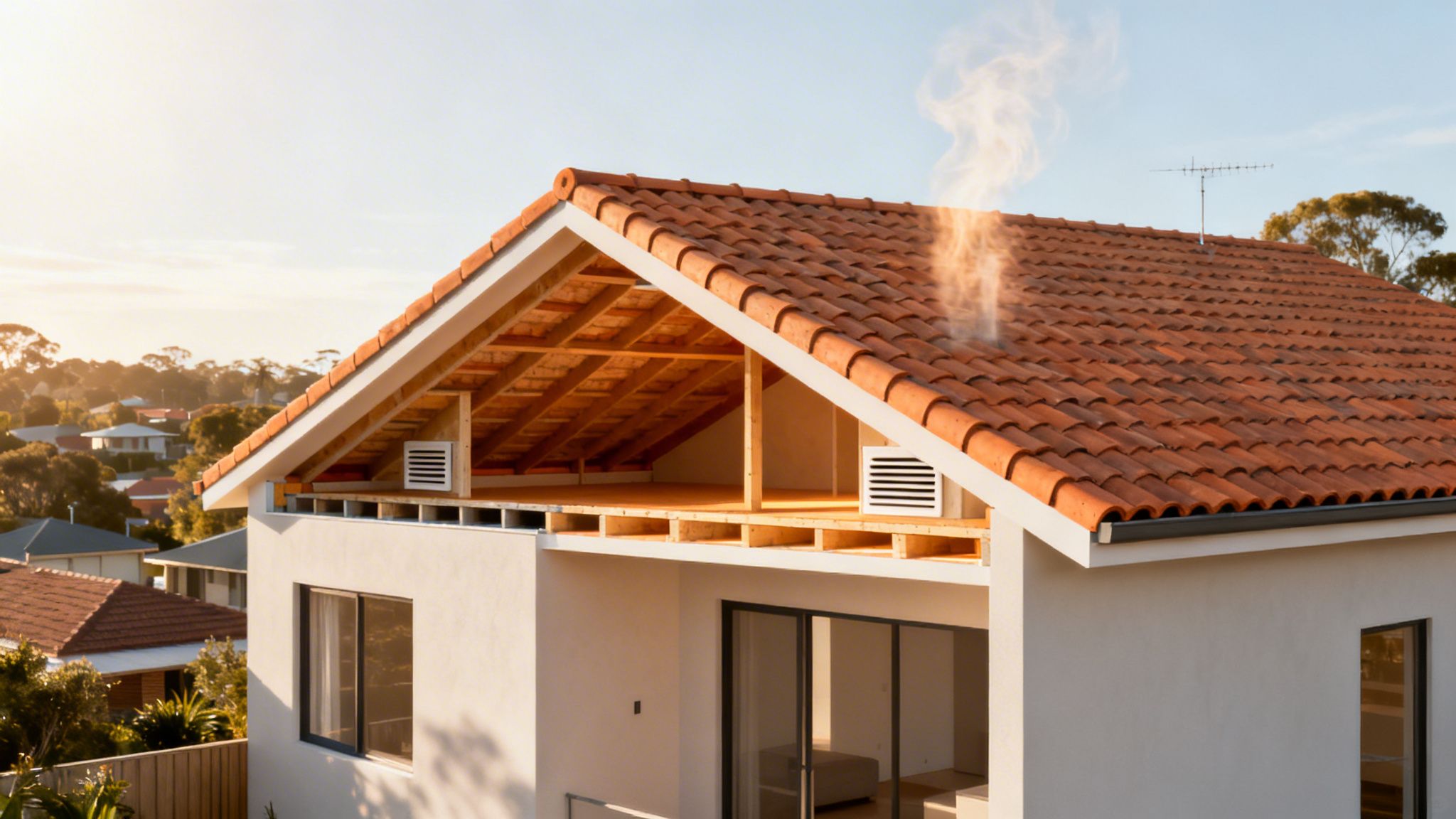
Picture your roof space on a blistering Sydney summer afternoon. It doesn't take long for it to become a literal oven, with trapped air temperatures soaring far higher than it is outside. That intense heat then radiates straight down into your living areas, forcing your air-con to run flat out just to keep things bearable.
Your home needs to breathe. Without proper ventilation, that hot, stale air has nowhere to go. It just sits there, creating a massive thermal load on your entire house and leading directly to sky-high energy bills and a stuffy, uncomfortable home.
The Power of Airflow for Energy Efficiency
The solution is actually quite simple, but incredibly effective. By installing the right roof ventilation system, you give your home a way to exhale all that hot air and inhale cooler, fresh air from outside. It’s a continuous cycle that cools your attic space, creating a vital buffer between the sun’s heat and your ceiling.
A well-ventilated roof delivers a few key benefits:
- Reduced Energy Bills: By dramatically lowering the temperature in your roof space, you seriously cut the workload on your air conditioning. The result is a noticeable drop in your power usage.
- Improved Indoor Comfort: A cooler roof means cooler ceilings. This translates to a more pleasant and consistent temperature right through your home, day and night.
- Protection for Your Home: Good ventilation is also your best defence against moisture buildup. It helps stop mould, mildew, and long-term structural damage to your roof's timber frame.
For a home to be truly energy-efficient, it has to manage heat properly. Roof ventilation is a non-negotiable part of the puzzle, and it works hand-in-glove with other energy solutions. It creates an environment where solar panels operate more efficiently and your battery has less demand to meet, helping you get the most out of your entire system.
Ultimately, getting your head around the best roof ventilation systems is the first step toward a more comfortable, cost-effective, and resilient home. It's an investment that pays you back by protecting your property and your wallet, especially when it’s part of a complete energy solution with solar panels and batteries.
How a Ventilated Roof Protects Your Home and Lowers Bills
To get your head around roof ventilation, just think of your roof space like a giant hot air balloon. On a hot Sydney day, the sun hammers down on your roof, superheating the air trapped inside your attic. Hot air naturally wants to rise, but without an escape route, it just sits there, cooking your home from the top down.
This is where a clever bit of physics called the stack effect comes into play. A well-designed ventilation system uses this natural tendency to its advantage. It creates an exit point at the highest part of your roof—like a ridge vent or turbine—and an entry point down low, usually through soffit vents under the eaves.
This simple setup kicks off a constant, passive cycle. As hot air escapes out the top, it creates a slight vacuum that pulls cooler, fresh air in from below. You end up with a gentle, non-stop breeze flowing through your roof cavity, whisking away heat and moisture before they can do any damage.
Turning Airflow Into Savings and Protection
The results of this simple process are immediate, and they go far beyond just having a cooler attic. For anyone living in NSW, especially through our scorching summers, proper ventilation delivers real-world benefits that protect both your home and your wallet. The right roof ventilation system is genuinely an investment in your home’s long-term health.
Here’s what a properly ventilated roof actually does for you:
- Slashes Your Energy Bills: By cooling down the roof space, you’re creating a thermal buffer between the sun and your living areas. Your air conditioner no longer has to run full-tilt just to keep the house comfortable, which means a direct and very noticeable drop in your power consumption.
- Makes Your Home More Comfortable: Ever wonder why the top floor of a house always feels like an oven? That’s the heat from the roof radiating straight down. Ventilation stops this dead in its tracks, giving you more consistent, comfortable temperatures everywhere in the house.
- Prevents Moisture and Mould: Sydney's humidity loves to get into a stuffy roof cavity. Once trapped, this moisture condenses on timber and insulation, creating a perfect breeding ground for mould, mildew, and wood rot. Ventilation flushes this damp air out, keeping your attic dry and healthy.
- Extends Your Roof’s Lifespan: Extreme heat is the number one enemy of roofing materials. It causes shingles to warp and sealants to crack and break down way too soon. By keeping your roof cooler, you significantly extend the life of these materials and save yourself a fortune in future repairs.
At its core, roof ventilation is all about stopping heat and moisture from becoming destructive forces. When you manage these two things, you’re not just protecting your home’s structure—you’re making it a cheaper and much nicer place to live.
The Financial Case for a Ventilated Roof
The return on investment for roof ventilation is incredibly strong in hot climates like ours. In homes without decent ventilation, attic heat buildup can force air conditioners to run up to 40% longer. NSW homeowners can see impressive results by working with an experienced installer like Interactive Solar, especially when ventilation is combined with a solar and battery system to maximise energy savings. You can find more broad insights into the Australian market on IndexBox.
At the end of the day, getting this heat under control is one of the smartest financial moves you can make as a homeowner. For more practical advice, take a look at our guide on how to reduce electricity bills for other powerful strategies.
Alright, you know why your roof needs to breathe, so let's get into the how. The right ventilation system really comes down to your home’s design and what you want to achieve with your energy bills. There are two main camps: passive vents that work with nature, and powered vents that take a more active approach, perfectly complementing solar energy systems.
Figuring out which one is right for you is the key. A simple passive setup might be perfect for one house, while another might get huge benefits from a solar-powered fan. Let's look at the most common options we see on homes across Sydney.
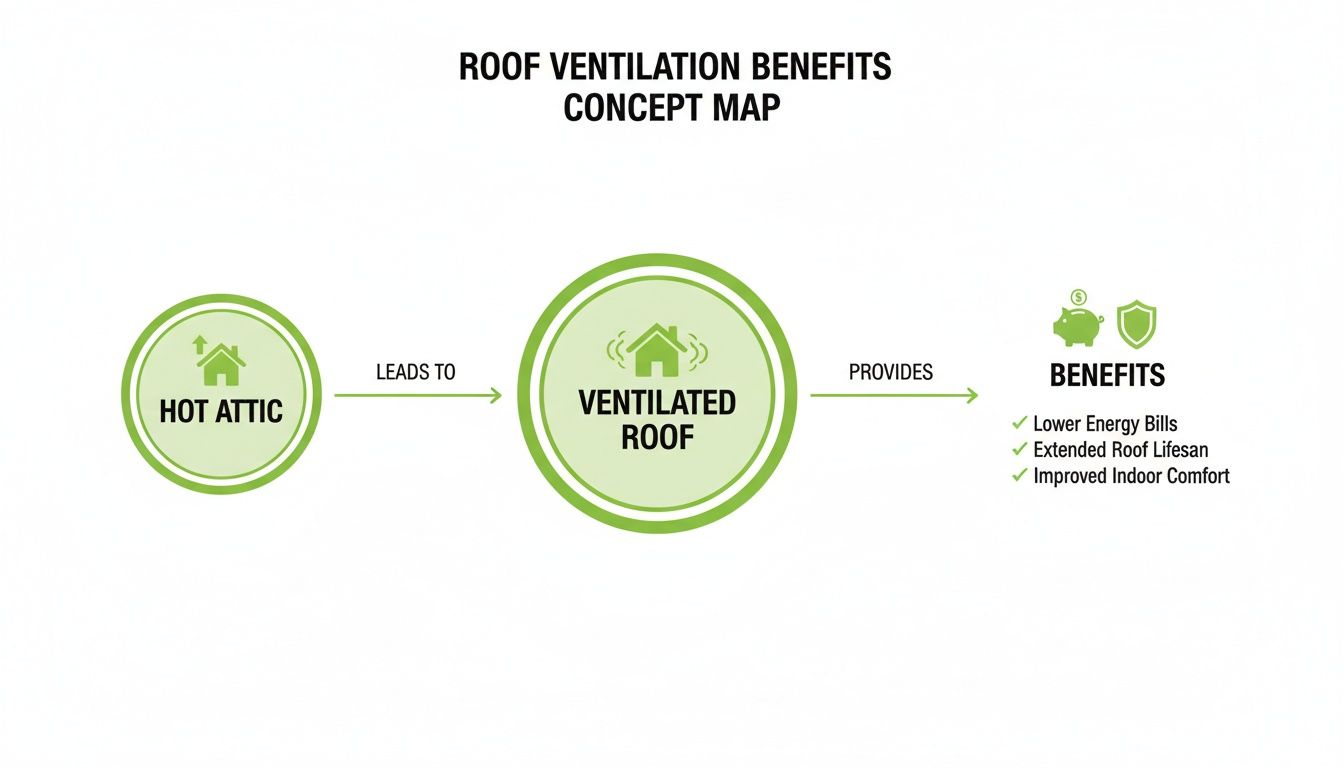
The idea is simple: a well-ventilated roof space directly cuts down your air con's workload and protects the structure of your home from heat and moisture damage.
Passive Ventilation: The Power of Natural Airflow
Passive vents are the quiet achievers of roof ventilation. With no moving parts and zero electricity use, they rely on basic physics—wind and the "stack effect." It's a simple principle: hot air naturally rises and needs a way out.
For a passive system to work properly, it needs to be balanced. Think of it as giving your roof space a mouth and lungs.
- Intake Vents: These are usually placed low on the roof, like in the soffits under your eaves. They draw in cooler, fresh air.
- Exhaust Vents: Positioned high up near the peak, these let the hot, stale air escape after it has risen.
Common exhaust vents include ridge vents, which sit discreetly along the very peak of your roof, and roof turbines (you've probably seen them as 'whirlybirds'). The wind catches the fins on a whirlybird, helping spin it to actively pull hot air out.
The real beauty of a passive system is its "set-and-forget" nature. Once it's installed, it just works. Day and night, it's quietly cycling air, keeping your attic cooler and drier without adding a cent to your power bill or needing any real maintenance.
For a lot of standard Sydney homes with a typical pitched roof, a balanced passive system is a brilliant solution. It creates a constant, gentle airflow that makes a massive difference to the heat load on your ceiling, meaning your air conditioner doesn't have to fight so hard. It's also worth seeing how this fits into bigger ideas like whole house ventilation systems.
Powered Ventilation: Active Heat Removal
While passive systems are fantastic, some homes need a bit more muscle. This is where powered ventilation comes into play. These systems use a fan to physically yank hot air out of the roof cavity, making them a great fit for homes with complex rooflines, poor natural airflow, or those that just get incredibly hot.
Traditionally, these fans are wired into your home’s main power. But there's a much smarter, energy-efficient option that's quickly becoming the go-to choice for solar-ready homes.
Solar Attic Fans: The Best of Both Worlds
A solar-powered attic fan is a total game-changer. It's a high-performance fan connected to its own small solar panel. You get all the benefits of a powerful, active fan, but it runs for free, powered entirely by the sun.
Here’s why solar attic fans are one of the best roof ventilation systems you can get:
- Powerful Performance: These fans can move a serious amount of air. They are incredibly effective at pulling heat out of the roof space fast, even on the most scorching days.
- Zero Running Costs: They work hardest when the sun is at its peak—which is exactly when your roof is the hottest and you need ventilation the most. And it doesn't cost you anything.
- Perfect Synergy with Solar PV: If you already have solar panels on your roof, a solar attic fan is the perfect partner. By keeping the roof surface cooler, it can actually help your main solar panels run more efficiently, as they perform better when they aren't baking in extreme heat.
For homeowners who have invested in a solar and battery system, adding a solar attic fan is a no-brainer. It drastically reduces the load on your air conditioner during the day. This means more of your clean solar energy can go towards charging your battery for use at night, instead of just being burned up trying to battle the daytime heat. It’s a smart piece of tech that improves both your comfort and your energy independence.
Choosing the Right Ventilation for Your Sydney Property
Alright, so we’ve covered the different types of ventilation systems out there. Now comes the important part: figuring out which one actually makes sense for your home. Picking the best roof ventilation isn’t a one-size-fits-all deal, especially in a place like Sydney with its mix of old and new housing.
The whole game is about creating a balanced system. You need the amount of air coming in (intake) to equal the amount of hot air getting out (exhaust). This isn't just good advice; it's a core principle of the National Construction Code. Get it wrong, and the system just won't work effectively.
Factors That Shape Your Decision
To nail down the right strategy, you have to look at your home’s specific DNA. A sprawling single-storey home in the suburbs has completely different ventilation needs than a narrow terrace house in the inner city.
Here’s what you need to look at:
- Roof Material and Style: Have you got classic terracotta tiles or a modern COLORBOND® metal roof? Tile roofs are great for slotting in individual tile vents, while metal roofs are a perfect match for those clean, continuous ridge vents that just blend right in.
- Roof Pitch and Complexity: The steepness, or pitch, of your roof is a massive factor. A steep roof naturally helps hot air rise—what we call the stack effect—making passive systems work beautifully. On the flip side, a very low-pitch roof might need the extra grunt of a solar attic fan to physically pull that stagnant heat out.
- Local Climate and Conditions: Sydney’s climate isn’t the same everywhere. If you're near the coast, you’re battling high humidity and salty air. In those spots, getting rid of moisture is just as critical as pushing out heat, so you need strong, continuous airflow.
The goal here is to create a ventilation plan that works with your home's design, not against it. By looking at these elements, you can build a solution that gives you the best bang for your buck in comfort and energy savings.
Tailoring the System to Your Home
Let's walk through a couple of common scenarios you see all over NSW. This should help you picture which of the best roof ventilation systems might be the right fit for you.
Take a smaller, single-storey brick home with a simple, moderately pitched tile roof. This is a prime candidate for a classic passive system. A few soffit vents to draw cool air in, paired with a couple of well-placed whirlybirds or tile vents to let hot air out, would do a fantastic job.
Now, think about a big, modern home with a complex, low-pitch metal roof and a bunch of different roof sections. Trying to cool that entire attic space with passive ventilation alone would be a struggle. Here, you’d want a more active approach. One or more solar-powered attic fans would be much more effective, giving you powerful, targeted heat extraction exactly where it’s needed. This is especially true if the home already has or is planning to get solar panels.
A Smart Investment for NSW Homes
Upgrading your roof ventilation is one of the most effective things you can do for your home. Here in New South Wales, where our team at Interactive Solar operates, proper ventilation can drop attic temperatures by up to 30°C. That directly translates into cutting your air conditioning use by as much as 20-30% during our hot, sticky summers. For more detailed information, you can explore local roof ventilation pricing guides.
A cooler, drier home is also just a more efficient home, period. This is especially valuable if you're looking to get the most out of your solar panels, batteries, and other energy-saving gear like EV chargers. To see how this fits into the bigger energy picture, you can learn more about modern heat pump systems and see how they benefit from a house that doesn’t trap heat.
Ultimately, getting the ventilation right is a foundational upgrade for any energy-conscious Sydney household looking to invest in a complete solar and battery solution.
Integrating Ventilation with Your Solar and Battery System
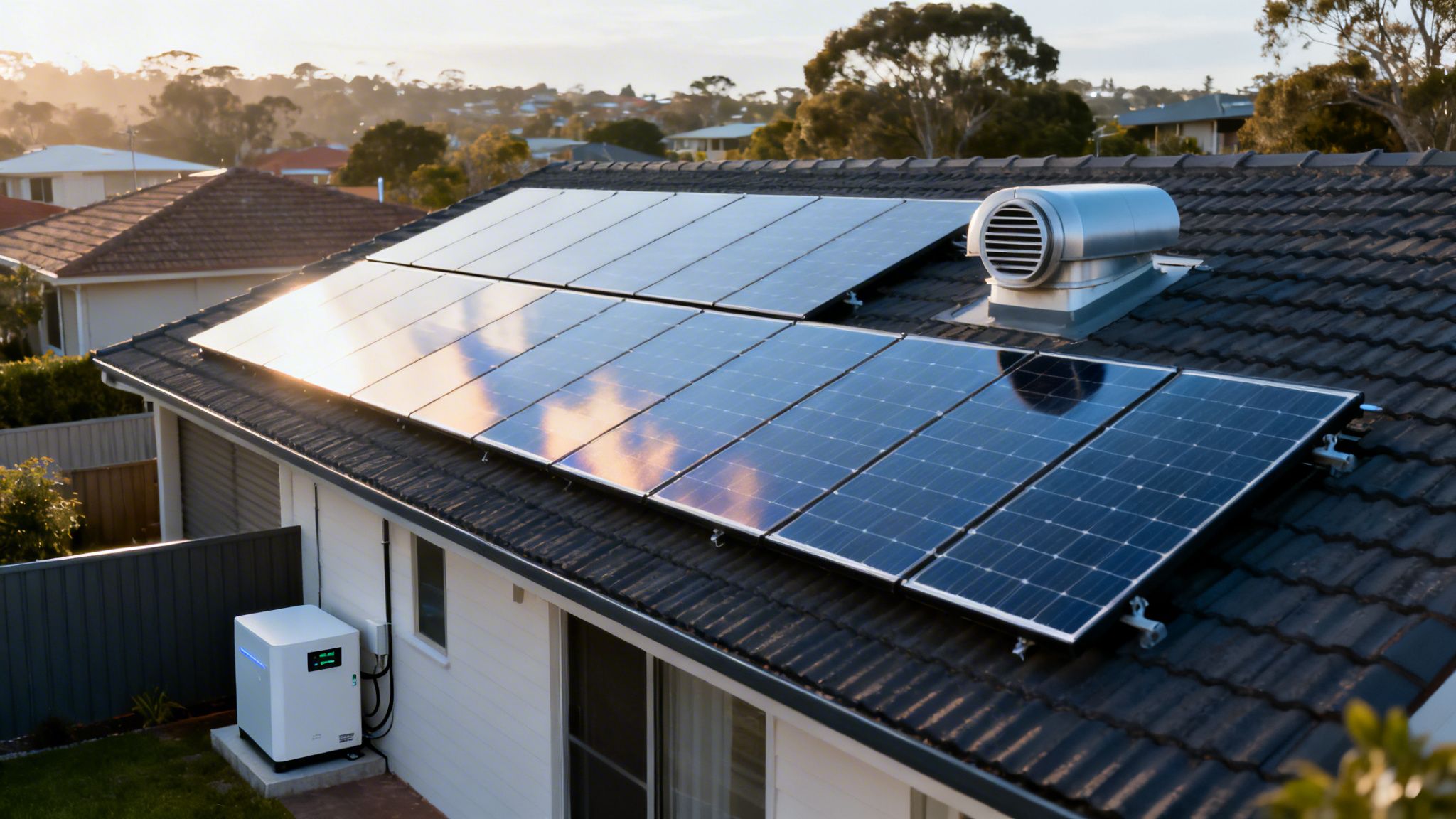
Thinking about your home's energy as a complete ecosystem is the key to unlocking serious savings. Your solar panels, battery, and roof ventilation aren't just separate bits of hardware; they're a team. And when they work together, the results are powerful.
A smart ventilation strategy does more than just cool your home—it directly boosts the performance of your entire solar energy setup.
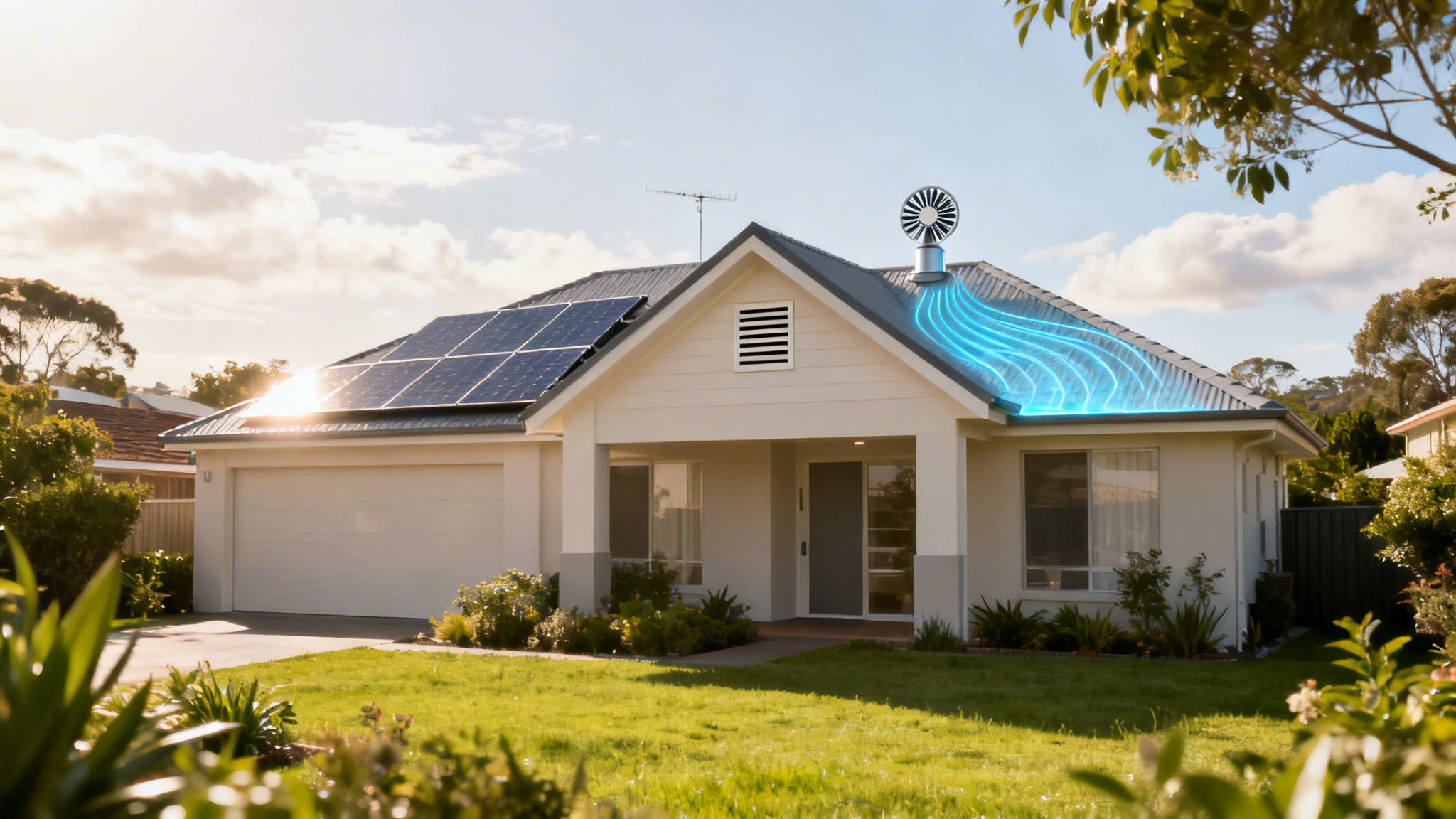
It all comes down to a simple truth: heat is the enemy of efficiency. As a solar panel gets hotter, its power output drops. By actively pulling super-heated air out of the roof cavity, a good ventilation system helps lower the operating temperature of your panels, letting them pump out more clean energy all day long.
Creating a Powerful Energy-Saving Loop
When you pair quality roof ventilation with your solar and battery, you kickstart a fantastic positive feedback loop. A cooler roof space means your air conditioner doesn't have to work nearly as hard, slashing its energy use during those peak sunny hours.
This has a massive knock-on effect for your battery storage. Instead of your precious solar power being gobbled up just to battle the heat, much more of it can be sent to charge your battery. This also means you have more surplus energy to power other high-draw appliances, like your EV charger.
By the time the sun goes down, you're left with a fully charged battery, ready to power your home all evening. It’s a simple synergy: better ventilation and smart solar mean greater energy independence and much smaller bills.
For anyone with a solar system, or planning one, it’s worth digging into the benefits of solar powered roof ventilation, as these systems are designed to perfectly complement each other.
Protecting Your Investment and Warranties
Combining solar panels and roof ventilation isn't a DIY job; it needs expert planning. A professional installer like Interactive Solar will ensure the layout of your vents works in harmony with your solar array, not against it. This is non-negotiable.
Here’s what a professional integration looks like:
- Optimal Placement: Vents are carefully positioned to maximise airflow without casting performance-killing shadows on your solar panels.
- Roof Integrity: Every penetration for vents and solar mounts is expertly sealed, guaranteeing your roof stays 100% watertight.
- Warranty Protection: Proper installation protects the warranties on both your roofing materials and your solar gear, giving you complete peace of mind.
This is all about creating a holistic, future-proof energy solution for your home. If you're exploring energy storage, you can discover more about how solar batteries work and see why cutting your home's daytime power load is so critical for getting the most out of your investment.
Ultimately, combining these technologies turns your house into a smarter, more efficient machine. Better ventilation means less air con, which frees up your solar panels to charge your battery and power your EV. It's the perfect example of how the right components working together can supercharge your savings and energy resilience.
Why Professional Installation Matters for Your Peace of Mind
So, you’ve done your homework and picked out the perfect roof ventilation system. Great. But now comes the part that makes or breaks the whole project: the installation. It might be tempting to save a few dollars and go the DIY route, but this is one job where professional expertise isn't just a nice-to-have—it’s essential.
Think of it this way: your roof is the first line of defence for your entire home. A shoddy ventilation job doesn't just fail to cool your house; it can create a whole new set of problems. We're talking leaks, mould, and structural damage. An expert installer knows it's not just about cutting a hole and sticking a vent in. It's about placement, sealing, and creating a balanced system that works seamlessly with your specific roof.
The Expertise Behind a Flawless Installation
A proper installation is so much more than basic handyman work. It demands a deep understanding of roofing structures, airflow dynamics, and the very specific Australian building codes that govern this kind of work. This is where years on the tools really shows.
Here’s what a seasoned professional brings to the table:
- Balanced Airflow Design: They don't guess. They calculate the exact balance of intake (at the soffits) and exhaust (at the ridge) needed for your roof's size and pitch. This is the secret to a system that actually works.
- Guaranteed Watertight Seals: This is non-negotiable. Professionals use industry-grade flashing and sealing methods to make every single penetration completely waterproof. No exceptions.
- Full Code Compliance: A pro ensures the entire job meets the National Construction Code (NCC) and any local council rules, so you're fully covered.
A correctly installed roof ventilation system should be something you never have to think about again. It just works—quietly protecting your home day in and day out. That result only comes from quality workmanship.
The Value of a Trusted Partner
Choosing an experienced and licensed partner like Interactive Solar takes all the risk and guesswork out of the equation. Our in-house team of licensed electricians and installers has decades of combined experience under their belts. We know exactly how to integrate a new ventilation system with an existing or new solar panel array, ensuring all your warranties remain intact.
We handle everything from the initial consultation for your entire home energy system—including solar, batteries, EV chargers, and ventilation—to the final checks, making sure every detail is spot on. You get the confidence of knowing the job was done right the first time. You can read more about our obsession with high-quality installations and see why we believe it’s the most important part of any project.
At the end of the day, professional installation isn’t just another cost—it’s an investment in your home’s health and your own peace of mind. With responsive after-care and a perfectly performing system designed to last for years, you can just relax and enjoy a cooler, more comfortable home.
Frequently Asked Questions About Roof Ventilation
It’s natural to have a few questions when you’re looking at roof ventilation. We get them all the time from Sydney homeowners, so we’ve put together a list of the most common ones we answer.
How Do I Know if My Roof Ventilation Is Inadequate?
There are a few tell-tale signs. The most obvious ones are surprisingly high summer power bills, rooms on the top floor that feel like an oven, or finding mould and moisture building up in your roof space.
If your air conditioner is running non-stop on hot days just to keep the house liveable, that’s a massive clue your roof is trapping way too much heat. This excess heat reduces the efficiency of your solar panels and puts unnecessary strain on your whole home energy system. A professional check is the only way to know for sure, but these symptoms are a great place to start.
Can I Have Too Much Roof Ventilation?
This is less about having too many vents and more about getting the balance right. A properly working system needs a balanced amount of air coming in (intake) and going out (exhaust).
If you have too much exhaust without enough cool air coming in to replace it, the system just won't work efficiently. In some cases, it can even start sucking the conditioned air straight out of your living areas. This is exactly why a professional design and installation is so important—you need to get it right the first time.
A common myth is that more vents always equal better ventilation. The reality is that the best systems are strategically designed for balanced airflow, making sure hot air gets out without causing other problems.
Will Installing Roof Vents Cause Leaks?
When they’re installed by a licensed professional, the answer is a firm no. Experienced installers use high-quality flashing, proper sealants, and proven methods to create a completely watertight seal around every single vent.
Leaks are almost always the result of a DIY job gone wrong or just plain shoddy workmanship. Using a reputable company that provides a warranty for their work is the best way to guarantee a leak-free roof and protect your investment in solar panels and other rooftop equipment.
Do Whirlybirds Work When There Is No Wind?
Yes, they do, even on still days. While wind definitely gives them a good spin, whirlybirds also work because of something called the "stack effect"—it's the simple physics principle that hot air rises.
As the hot air in your roof space builds up and rises, it pushes through the turbine, causing it to spin and pull even more heat out. However, for homes with solar panels, a solar-powered attic fan is often a more effective solution as it guarantees powerful airflow during the hottest, sunniest parts of the day when it's needed most. As you plan your complete home energy solution, our comprehensive guide to the Tesla Powerwall 3 can also help you understand how energy storage fits into the picture.
Ready to make your home more comfortable and stop dreading your energy bills? The team at Interactive Solar can design and install the perfect roof ventilation system for your Sydney property, often alongside our solar and battery solutions. Take back control of your energy bills today.
Make Interactive Solar a preferred source in Google
One click tells Google to surface our articles more often in Top Stories, AI Overviews and AI Mode.