What Size Solar System Do I Need? A Complete NSW Guide
Last updated:
Your bill has crept up again. Maybe summer air conditioning hammered you, maybe someone in the house now works from home, or maybe you're already thinking about an EV charger in the garage. That’s usually the moment people start asking, what size solar system do i need, and it’s also where a lot of bad advice starts.
The short answer is that the right size isn’t just about today’s bill. In NSW, the best solar system size depends on your actual electricity use, your roof, how much energy you use during the day, and whether you’re planning for a battery or EV charging later. A system that looks fine on paper can still be wrong in practice if it ignores shading, export limits, or future electrification.
There is one useful benchmark. In Australia, the average residential solar system size reached 6.6 kW by 2023, and for NSW homeowners, particularly in Sydney, where average annual household electricity consumption is 5,500 to 7,500 kWh, a properly sized system can offset 70 to 100% of grid reliance, according to this NSW solar sizing overview. But average doesn’t mean ideal. Good sizing is always specific to the house.
Start by Understanding Your Electricity Usage
Start with your last 12 months of bills.
That sounds basic, but it is the step that stops people buying a system that fits the sales brochure instead of the house. Good solar sizing starts with how much electricity you use, when you use it, and whether that pattern is about to change. In NSW, that last part matters more than it used to. A home that looks like a standard 6.6 kW job today can be undersized very quickly once an EV arrives, a battery goes in, or export limits tighten on your street.
A kilowatt-hour, or kWh, is a measure of energy used over time. If an appliance draws 1 kilowatt for 1 hour, it uses 1 kWh. Your electricity bill totals that usage across the billing period.
What to pull from your bill
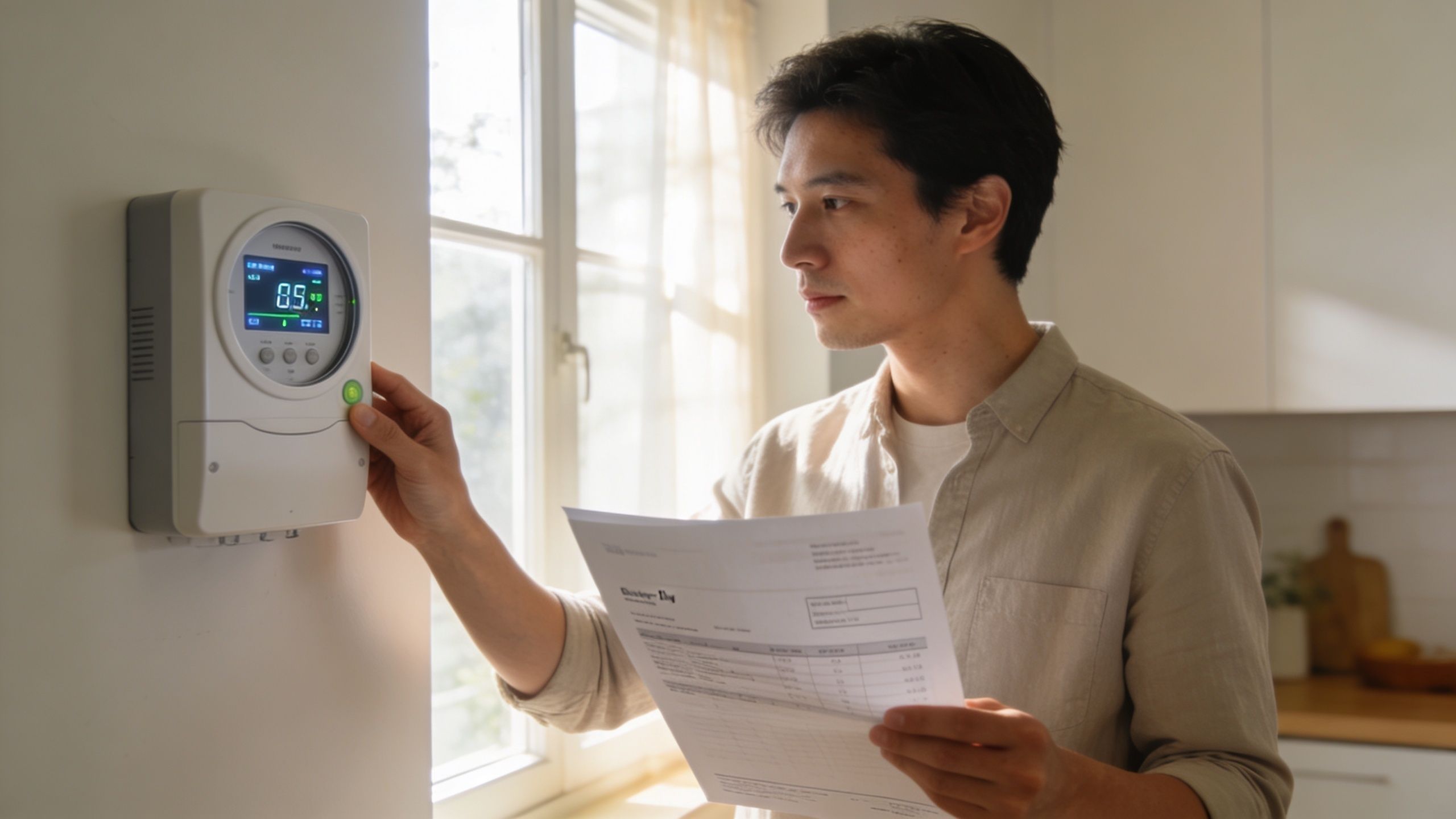
Most NSW bills already give you enough to build a sensible starting brief for solar. Write down:
Total kWh for the billing period
This is usually in the usage summary.The number of days in that period
You need this to calculate your daily average.Seasonal highs and lows
Summer cooling, winter heating, pool pumps, and electric hot water can shift the pattern a lot.Your tariff type
Time-of-use, flat rate, controlled load, and any separate circuits all affect how much value you get from daytime solar.
If your bill shows 1,800 kWh over 90 days, your average is 20 kWh per day. That number is your baseline. It is not the final system size, but it is the first figure any careful installer should ask for.
Daily usage is only half the job
Average daily kWh helps, but it does not tell the whole story. I have seen two homes with the same daily average end up needing different solar designs because one family uses most of its power after sunset, while the other runs air conditioning, pool equipment, and appliances through the middle of the day.
That is why the bill review should include usage timing, not just total usage. If you have access to smart meter interval data through your retailer or distributor, use it. The Australian Energy Regulator explains what information appears on energy bills and how metering and tariffs affect charges on its energy bill guidance for households. For solar sizing, that timing data is often what separates a decent quote from an accurate one.
Check for changes that will affect the next 5 to 10 years
This is the part many online calculators miss.
A system sized only for your current bill can be wrong for a household that is about to electrify more of the home. In NSW, I would specifically ask these questions before locking in system size:
Are you planning to buy an EV?
Regular home charging can add a large new electrical load, especially if the car is charged overnight and you later want to shift some of that charging into solar hours.Will you add a battery later?
Battery-ready solar sizing is not just about battery capacity. It also affects how much daytime excess you can produce for charging and evening use.Are you replacing gas appliances?
Heat pump hot water, induction cooking, and reverse-cycle air conditioning can lift electricity demand while cutting gas bills.Do you work from home more than you used to?
That can improve solar self-consumption, which often changes the size that makes financial sense.
Future-proofing pays off. If the roof space, switchboard, and budget allow it, many households are better served by sizing for expected demand over the next several years rather than sizing to last quarter's bill alone.
One bill is not enough
A single quarter can distort the picture. A mild autumn bill can make usage look lower than it really is. A brutal summer can make it look permanently high.
Use four quarters if possible. That gives you a better view of:
- Peak summer demand, especially from cooling
- Winter changes, including heating and shorter solar days
- Stable loads, such as fridges, pool pumps, and hot water
- New demand trends, such as an EV charger, renovated living areas, or growing daytime occupancy
If you want to cut waste before you size the system, our guide on how to reduce electricity bills before installing solar can help. Cleaning up avoidable usage first usually leads to a more accurate solar design and a better return.
The three numbers to bring to an installer
Before you ask for quotes, note these down:
| What to note | Why it matters |
|---|---|
| Average daily kWh | Sets the baseline for system sizing |
| Highest-usage season or quarter | Shows whether peak demand should influence the design |
| Likely future load increases | Helps size for EV charging, battery charging, and home electrification |
That gives you a practical brief. It is much more useful than saying you want to wipe out the bill, because it gives the installer something real to design around.
The Core Formula for Calculating Your System Size
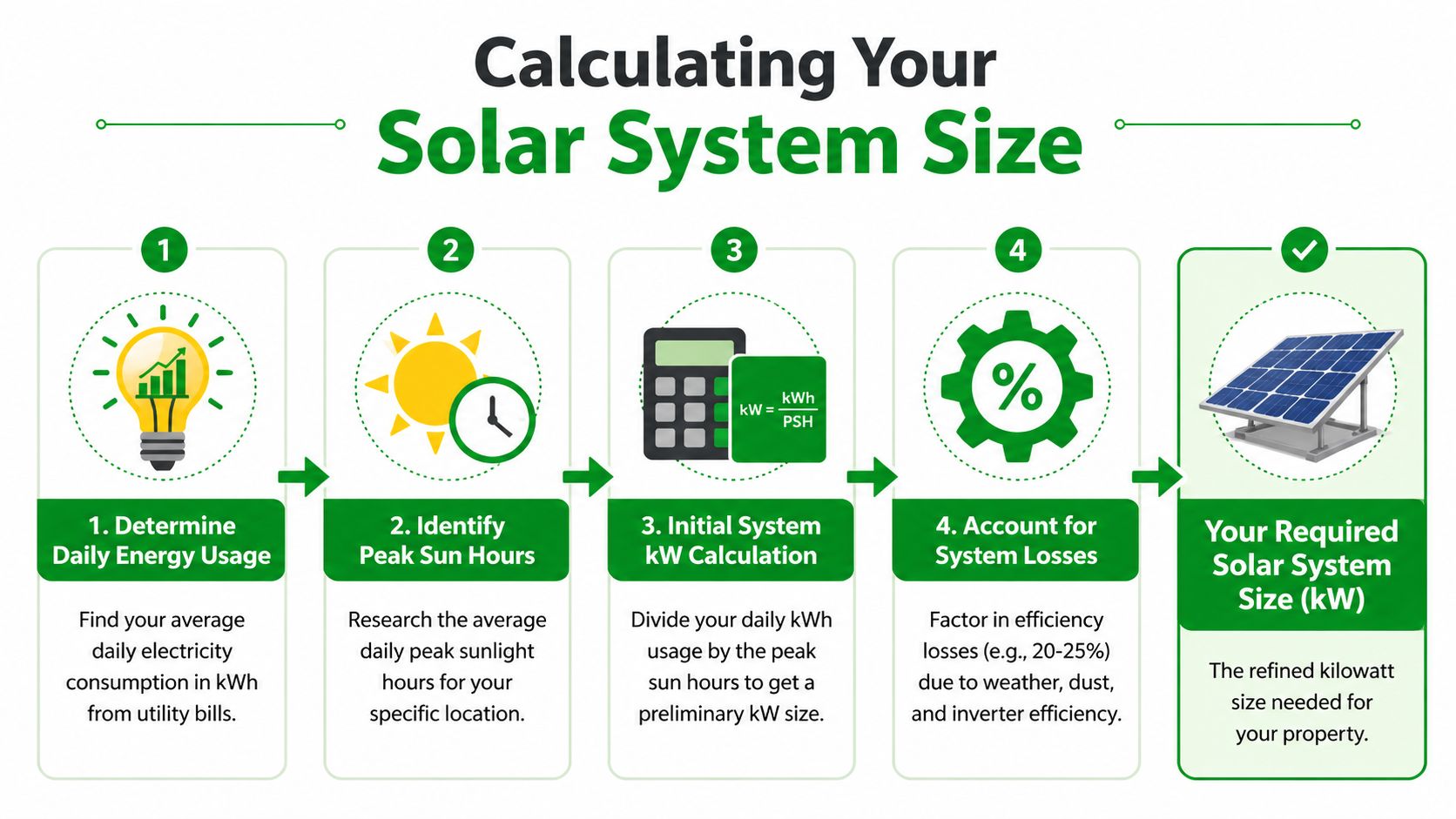
The basic sizing formula turns household energy use into a starting solar capacity in kilowatts, or kW. It is a starting point only. On NSW homes, the right answer also depends on how you use power through the day, what your DNSP will let you export, and whether you expect new loads such as an EV or battery charging.
The formula that gives you a starting point
In Sydney and across much of NSW, installers commonly begin with this approach: Required kW = Daily kWh / Peak Sun Hours / System Efficiency. The Clean Energy Council’s solar sizing guidance sets out the same logic, including a derate factor to allow for real-world losses rather than ideal test conditions.
The three inputs are straightforward:
- Daily kWh is your average daily electricity use
- Peak sun hours are the usable solar production hours for your location
- System efficiency allows for losses from heat, inverter conversion, wiring, panel mismatch, dust, and site conditions
If a home uses 20 kWh a day, this formula gives a rough array size that could cover a large share of that usage under normal conditions. It does not tell you whether the panels fit well on the roof, whether the output lines up with your daytime demand, or whether a larger system would make sense once an EV arrives.
A simple way to read the formula
Household demand is the load you need to cover. Peak sun hours tell you how much useful solar production you can expect across an average day. System efficiency trims the result back to something closer to what a real roof will produce.
If daily demand is high and the solar window is limited, the system needs more capacity to deliver the same result. If daytime self-consumption is low, a bigger system may still work, but only if export limits, tariff settings, and future loads support it.
The formula gives you a baseline number. Good system design starts there and then tests whether that number still works in real life.
Why the derate factor matters
Many online estimates go wrong at this point. They divide usage by sun hours and stop. The result often looks tidy, but it ignores the losses every operating system has.
Panels run hotter than lab conditions. Inverters convert DC to AC with some loss. Cable runs, roof layout, light shade, and dirt all chip away at output. On a home that is already close to the edge on sizing, those losses can be the difference between a system that performs as expected and one that leaves you buying more grid power than you planned.
What the formula does, and does not, answer
For many NSW households, the formula points toward familiar residential system sizes. That does not mean the common market size is automatically the right one.
Use the result as a sense check:
- A surprisingly small result can mean the usage data missed seasonal demand or growing daytime loads
- A surprisingly large result often reflects heavy appliances, electric hot water, air conditioning, or future electrification plans
- A result in a common size range still needs to be tested against export limits, roof layout, and how much solar you will use on site
I often see homeowners focus on offsetting the current bill and miss the next five years. That is where under-sizing creeps in. A home that plans to add an EV, switch from gas, or install a battery later usually benefits from a design that leaves room for those changes instead of forcing an expensive retrofit.
The future-proofing question NSW homeowners should ask
After you run the formula, ask a more useful question: Will this system still suit the house after the next round of upgrades?
That matters in NSW because export conditions are changing, and oversized exports are not always rewarded the way they were a few years ago. In plain terms, a bigger system is not always better, but a system sized only for today can become too small very quickly if you add EV charging, increase daytime occupancy, or want enough solar to charge a battery properly in winter shoulder months.
Cost plays into that decision as well. A sensible step is comparing system categories before getting too attached to one size. This guide to the cost of solar panels in NSW helps frame what different system sizes usually look like in the market.
A quick baseline guide
| Average daily use | What the formula helps determine |
|---|---|
| Lower daily use | Whether a smaller array will produce enough value to justify the install |
| Mid-range daily use | Whether a standard residential size covers most usage without relying too heavily on exports |
| Higher daily use | Whether a larger array, staged battery plan, or EV-ready design makes more financial sense |
The formula is the engineering start. The right system size comes from matching that starting number to the home, the roof, and the way the household is likely to use energy over the next several years.
How Location and Roof Design Impact Your Solar Output
A 6.6 kW system on one NSW home can outperform a larger system on the house next door. I see that regularly. The difference is usually not the brand of panel. It is the roof layout, the shade profile, and whether the design matches how the home will use power over the next few years.
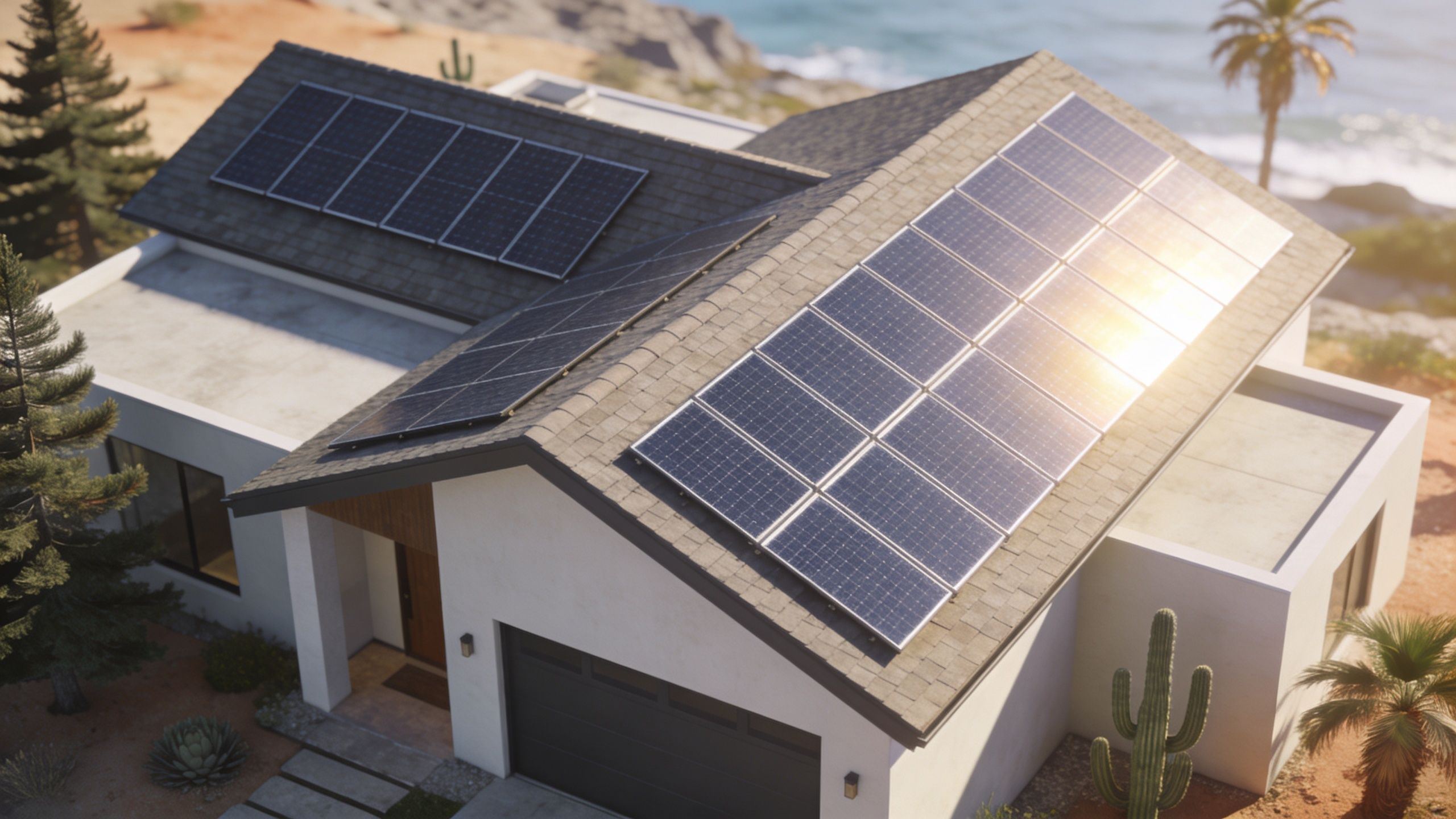
Good sizing starts with generation potential, not just consumption. Roof direction, pitch, shading, usable panel area, summer heat, and inverter setup all affect how much real energy the system will produce. That is why generic calculators often miss the mark. They can estimate a headline size, but they cannot tell you whether your best roof space is suited to a battery-ready design, or whether export limits will make one layout more useful than another.
Orientation changes the shape of your solar day
North-facing panels still give the strongest all-round production for many Australian homes. That part is true. But north is not automatically the best financial outcome for every NSW household.
East-west layouts often suit the way people live. East-facing panels help with morning loads. West-facing panels carry later into the afternoon, which can line up better with people getting home, running cooling, or starting an EV charge after work. If export limits are tight, spreading production across more of the day can be more useful than building one large midday spike that the grid may not accept in full.
That trade-off matters more now than it used to. A slightly lower annual yield on paper can still be the better design if it lifts self-consumption and leaves a cleaner path for future battery use.
Shade can change the design quickly
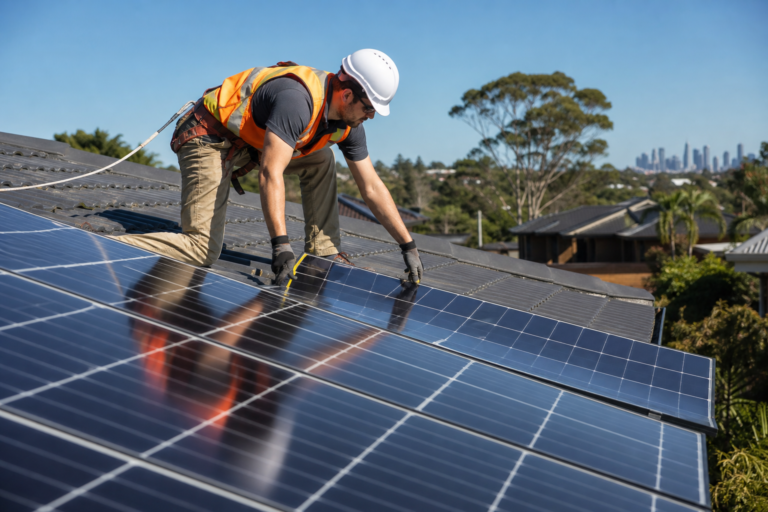
Shade is one of the biggest reasons two quotes with the same panel count perform differently. Trees, chimneys, upper-storey walls, vent pipes, TV antennas, and nearby buildings can all reduce output. Sometimes the loss is minor. Sometimes one poor roof section drags down the value of the whole layout.
The fix depends on the roof. A simple, open roof plane can work well with a standard string inverter. A cut-up roof with mixed orientations or partial shading may justify optimisers or microinverters. Those products are not automatically better. They are tools for specific situations, and they need to earn their extra cost.
If one section is shaded for part of the day, that section may still be usable. It just needs to be modelled properly instead of being filled with panels to reach a larger advertised system size.
Real output is always lower than nameplate
Panel wattage is a laboratory figure. Roof temperature, cable runs, inverter conversion, panel mismatch, dirt, and shading all reduce real-world output. The Clean Energy Council’s approved products program and installation standards exist because these details affect long-term performance and safety, not just paperwork. You can review the CEC framework for approved solar products and installer requirements if you want to see how equipment and compliance are assessed.
The practical takeaway is simple. A 10 kW system is not 10 kW all day, every day. Good design allows for those losses before anyone promises annual production figures.
What experienced designers actually look at
A proper site assessment usually weighs several factors together:
Best roof sections first
The strongest roof areas should carry the core of the array. Panel count comes after that, not before.Pitch and panel grouping
The roof angle affects production profile and how neatly panels can be grouped without awkward gaps or compromised access.Heat build-up
Panels run hotter on some roofs than others. That affects output, especially in summer.Inverter architecture
The inverter should suit the roof layout, likely export conditions, and whether battery integration is planned later.Switchboard and future upgrades
If the home may add an EV charger, battery, induction cooking, or more electric hot water load, it helps to allow for that now.
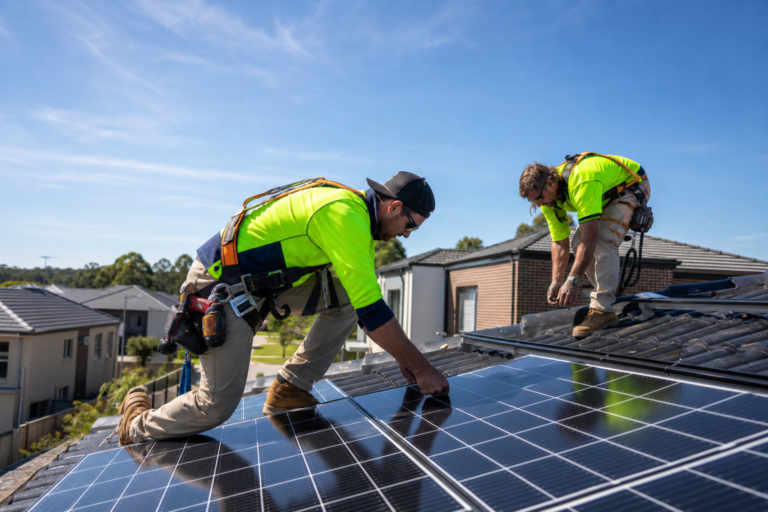
Installation quality matters just as much. I have seen well-specified systems lose value because of rushed layout work, poor string design, or messy commissioning. This article on why installation quality affects long-term solar value explains the workmanship side well.
Roof shape often decides the final size
Many homeowners start with a target number like 6.6 kW, 10 kW, or 13.2 kW. The roof usually has the final say. Skylights, hips, valleys, setbacks, and small broken roof faces can limit the clean usable area. On some homes, the best answer is a slightly smaller system placed on better-performing sections. On others, a split-array design across multiple faces gives better coverage through the day and works better for future battery charging or daytime EV top-ups.
This is also where changing NSW export conditions affect design choices. If the local network limits export capacity, the right answer may be to use the best roof space for stronger self-use and battery compatibility, rather than chasing the biggest array the roof can physically hold.
A short explainer is worth watching here, because roof layout and system architecture are easier to understand visually.
What works and what usually doesn’t
| Works well | Usually causes problems |
|---|---|
| Matching the array to the strongest roof areas | Chasing the biggest possible panel count regardless of roof quality |
| Using east, west, or north roof faces based on the home’s load profile | Assuming north-facing is always the only good answer |
| Choosing inverter architecture to suit shade, layout, and future battery plans | Using the same inverter approach on every house |
| Allowing for real-world losses in production estimates | Trusting headline panel wattage alone |
The best system size is the one your roof can support properly, while still leaving room for how the home is likely to run in a few years.
Sizing for Solar Batteries and EV Charging
A lot of solar systems are undersized the day they’re installed because they’re designed for the past, not the next few years. If you’re thinking about an EV, battery storage, or moving more appliances onto electricity, that matters now, not later.
The question what size solar system do i need stops being a simple maths exercise. It becomes a planning decision.
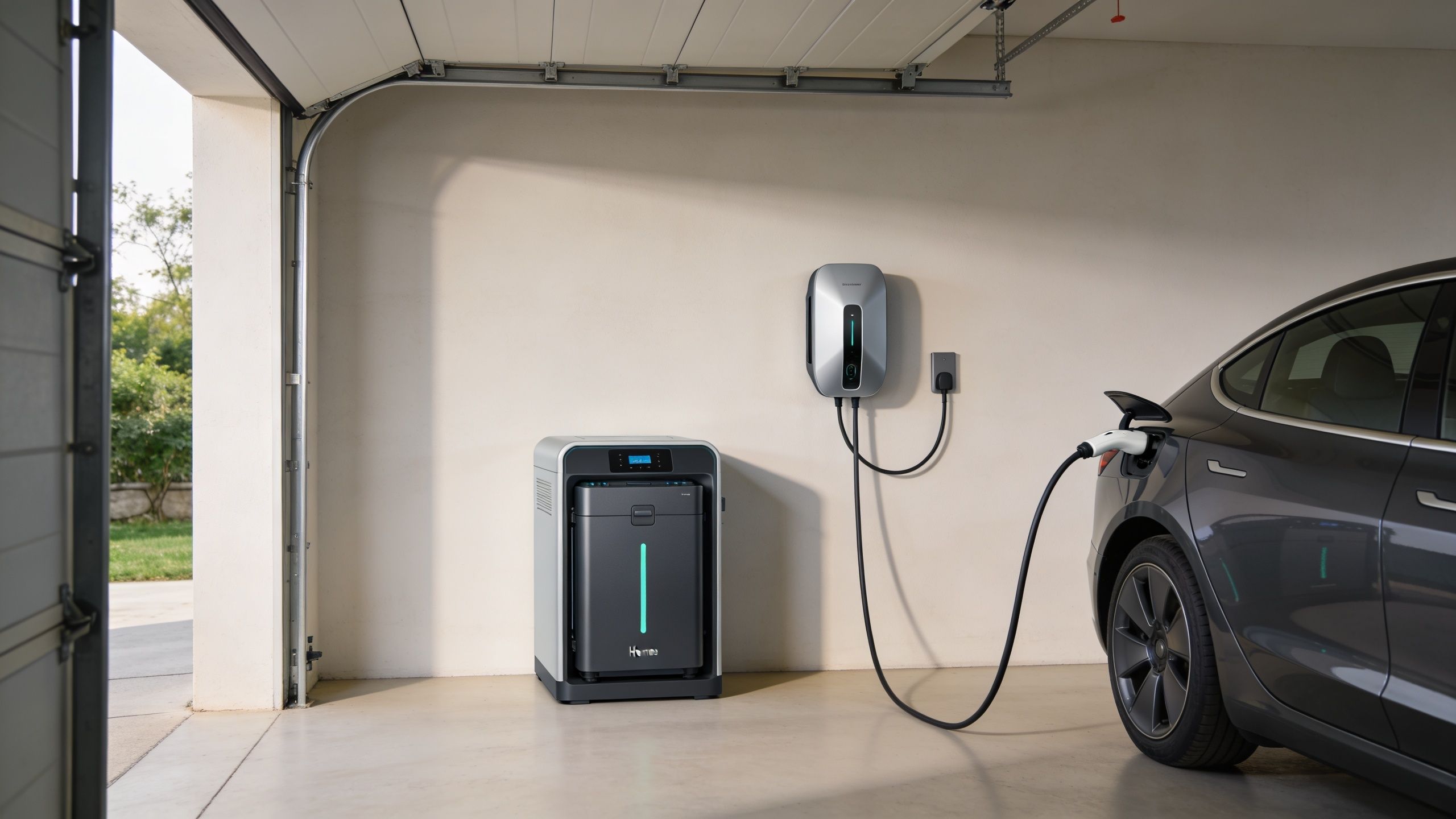
Why future-proofing matters in NSW
As of 2024, over 40% of NSW households have solar PV, and sizing is increasingly influenced by future needs. A 13.2 kW system suits homes with EVs and batteries, producing over 20,000 kWh annually, according to the Clean Energy Regulator’s small-scale technology certificate information. That doesn’t mean every home should jump to 13.2 kW. It does mean future loads are now a normal part of good system design.
If a household is likely to electrify more of the home, sizing only for current demand can be a false economy. Adding capacity later is possible, but it can be less tidy from a design and installation point of view.
EV charging changes the sizing conversation
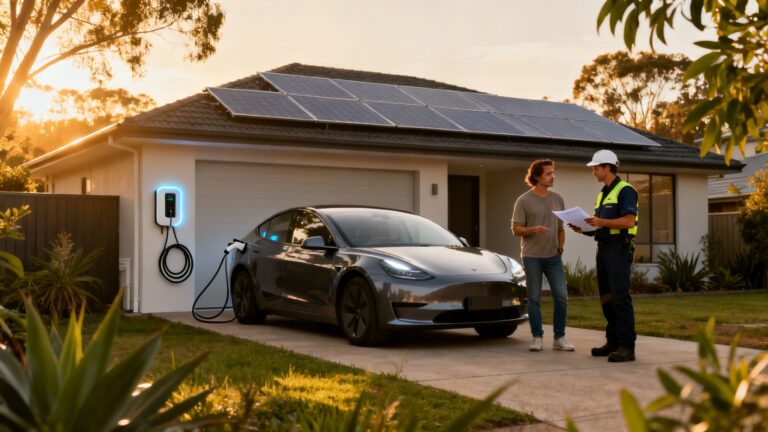
An EV turns your home into a transport fuel station. That’s excellent when solar is available to support it, but it increases energy demand and changes when you might want that energy available.
For some homes, daytime charging works well because the car is home during the day. For others, the EV returns in the evening, which makes solar-plus-battery planning more relevant. The right answer depends on your routine.
Three common situations come up:
The commuter household
The car leaves in the morning and comes back after sunset. A battery can help if the goal is to use more of your own solar later in the day.The work-from-home pattern
The EV is often parked at home during daylight hours. In that case, a larger solar array can directly support charging.The second-car transition
One EV becomes two; households that installed “just enough” solar often wish they had left more room in the design.
The cheapest panel is usually the one you plan for properly the first time, not the one you try to retrofit around an already crowded roof.
Batteries change the goal from offset to self-consumption
Without a battery, excess daytime generation often goes back to the grid. With a battery, more of that generation can be held for evening loads. That changes the design objective.
Instead of only asking, “Can this system cover our annual use?”, a better question becomes, “Can this system cover daytime loads, charge the battery well, and leave enough flexibility for the next appliance or vehicle?”
That’s why larger arrays often make more sense when battery storage is part of the long-term plan. The battery needs surplus solar to do its job properly. If the array is too small, the battery may spend more time underfed than useful.
If you’re weighing storage options, this battery comparison guide is a good way to compare the practical differences between battery setups before narrowing the solar size.
When oversizing is smart and when it isn’t
Oversizing can be a very sensible move when:
| Situation | Why a larger array can make sense |
|---|---|
| You plan to buy an EV | It prepares for extra charging demand |
| You want a battery later | It gives the battery more solar to work with |
| Your daytime loads are rising | More self-consumption can improve the value of each generated unit |
| Your roof has good usable area | It’s easier to install a coherent system now than rework it later |
Oversizing isn’t automatically smart if the roof is heavily compromised, if export constraints are severe and self-consumption will stay low, or if the electrical design leaves no clean path for later expansion. The point isn’t to install the biggest system possible. The point is to avoid a system that becomes too small the moment your household changes.
What usually works best
The strongest future-proofed systems are usually the ones that combine four things:
- A realistic view of future electricity use
- A roof layout that prioritises productive panel positions
- An inverter pathway that supports battery integration
- A plan for how and when the EV will charge
That’s a much better framework than asking for the “standard size”.
Real-World Examples and Navigating NSW Grid Rules
The easiest way to understand sizing is to put it into real households. Not made-up miracle stories. Just the kinds of NSW homes that come up every day.
The growing family
This home has rising summer demand, regular air conditioning use, and plans for an EV within the next year or two. Their current bills suggest a decent-sized residential system would work, but sizing only to present usage would likely leave them short once the car arrives.
For this kind of household, the design question isn’t only how much electricity they use now. It’s whether the array can cover daytime household demand and still leave enough generation to support EV charging or future battery storage. A conservative design can look fine today and feel cramped later.
A consultant should also look hard at export conditions here. If network export limits are restrictive, it may be smarter to favour self-consumption strategy, battery readiness, and load shifting instead of relying on daytime exports.
The downsizers
This household often has lower total demand than a busy family home, but there’s a catch. Many downsizers are home during the day, which means solar self-consumption can be excellent if the system is matched properly.
They may not need a large system just because the roof can take one. What matters is whether they want to cover current daytime use, eliminate more evening grid dependence with a battery later, or reduce bills with a moderate, well-targeted setup.
This is a good example of where a “bigger is always better” sales pitch falls apart. If the daytime usage profile is steady but moderate, a right-sized system with a clean roof layout can outperform a more aggressive design that exports a lot and aligns poorly with household behaviour.
A tailored system often beats a larger generic one because the savings come from using your own solar well, not just generating more of it.
The small business with daytime load
Commercial sites are different because demand often lines up much better with solar generation. If the business operates through the day, the array can offset a larger share of active consumption instead of sending energy out to the grid.
The core sizing logic is still the same. Start with usage. Then look at roof area, load timing, and whether equipment such as refrigeration, office air conditioning, or machinery runs through solar hours. For many small businesses, the value of solar comes from reducing daytime purchased energy rather than chasing exports.
If rebates and eligibility are part of your planning, it helps to review current NSW solar rebates and government rebate information before finalising the design.
How NSW grid rules affect the answer
Many online estimates become unreliable. They may tell you what a roof could hold, but not what the grid will allow that system to do.
Key considerations include:
Export limits
Your network may limit how much solar can be exported at any one time. That can influence inverter settings, battery value, and whether a larger array still makes sense.Feed-in returns versus self-use
The more value you get from using your own solar directly, the less attractive it is to design purely for surplus export.Single-phase versus three-phase supply
This can shape how the inverter and export settings are configured, especially on larger homes or commercial sites.Battery readiness
Where export capacity is tight, storage can become more relevant because it gives excess daytime generation another place to go.
What these examples show
| Household type | Usually the right design focus |
|---|---|
| Growing family | Future-proof for rising consumption and EV charging |
| Downsizers | Match the system to actual daytime use and storage goals |
| Small business | Prioritise strong daytime offset and practical roof utilisation |
The lesson is simple. The right system size sits at the intersection of usage, roof design, and network rules. Miss any one of those and the answer can be wrong.
Preparing for a Professional Solar Consultation
A good consultation moves quickly when you bring the right information. A poor one stays vague and ends with a generic quote.
Before you speak to an installer, gather a few essentials.
What to have ready
Recent electricity bills
Bring the last 12 months if possible. This shows average use, seasonal swings, and any unusual peaks.Your future plans
Note whether you expect to add an EV, battery, electric hot water, induction cooking, or more air conditioning.Basic roof details
You don’t need to be an expert. Just know whether you’ve got shading from trees, multiple roof faces, skylights, or any obvious constraints.Your priorities
Some homeowners want maximum bill reduction. Others want backup capability, battery readiness, or EV support. Those aren’t the same brief.
Questions worth asking
A proper installer should be able to answer practical questions clearly, including:
- How was the system size chosen for my usage, not just my roof space?
- How will this design handle shade and multiple roof orientations?
- Is the inverter setup suitable for battery integration later?
- How do local export limits affect this recommendation?
The best consultation doesn’t rush to the biggest system. It explains the trade-offs.
What a strong proposal should show
You should expect a proposal that links the design to your usage pattern, roof layout, and future plans. It should feel like a site-specific recommendation, not a recycled package with your name dropped on top.
That’s the difference between shopping for solar and designing an energy system for your home.
If you want clear advice from a local team that handles design, installation, batteries, and EV charging in-house, speak with Interactive Solar. They’ll help you work out what size solar system do i need for your home in NSW, based on your bills, your roof, and where your energy use is heading next.
Make Interactive Solar a preferred source in Google
One click tells Google to surface our articles more often in Top Stories, AI Overviews and AI Mode.