Expert Solar Battery Installation Sydney
If you've already got solar on the roof but your evening bill still hurts, you're in the same position as a lot of Sydney households. The panels do their job through the day, power gets exported when nobody’s home, then the sun drops and the house starts buying electricity back from the grid at the exact time power is most expensive. Add the occasional outage or voltage issue, and the setup can feel half-finished.
That’s where battery storage changes the equation. Instead of sending your excess solar away and hoping the feed-in credit makes it worthwhile, you keep more of that energy on-site and use it when your home needs it. For many homes, that means less exposure to peak tariffs, less frustration with blackouts, and far more control over how the system performs day to night.
Your Guide to Solar Battery Installation in Sydney
A common call starts the same way. The homeowner has solar. The bills are lower than they used to be, but not low enough. They’ve noticed the dishwasher, air conditioning, pool pump, cooking, and EV charging all happen outside the best solar hours. They’re also unsure whether a battery is worth it, where it can go, and whether the rebate process is a headache.
That hesitation makes sense. Battery systems are more technical than standard solar, and there’s more riding on good design. The battery has to suit the home’s load profile, work with the existing inverter setup or a new one, meet network requirements, and be installed in a compliant location. When any of those pieces are rushed, the system underdelivers.
Sydney is moving quickly on storage. In the first month of the federal Cheaper Home Batteries Program, launched on July 1, 2025, New South Wales recorded 7,347 battery installations, around 37.5% of the national total, driven by the 30% upfront rebate according to SolarQuotes’ reporting on early battery installation data.
Why this matters now
That level of uptake tells you two things. First, batteries have moved from “maybe later” to a serious upgrade many homeowners are acting on now. Second, installer quality matters more when demand rises, because busy markets attract both excellent operators and rushed ones.
For Sydney homes, a battery usually isn’t about chasing a gadget. It’s about making the solar you already own work harder.
Homes without storage often generate well during the day but stay exposed to evening grid pricing. A battery closes that gap.
If you’re weighing up solar battery installation sydney options, the practical goal is simple. Store the daytime surplus, keep critical loads covered more effectively, and make the home less dependent on an increasingly unpredictable grid.
Unlocking Energy Independence with a Solar Battery
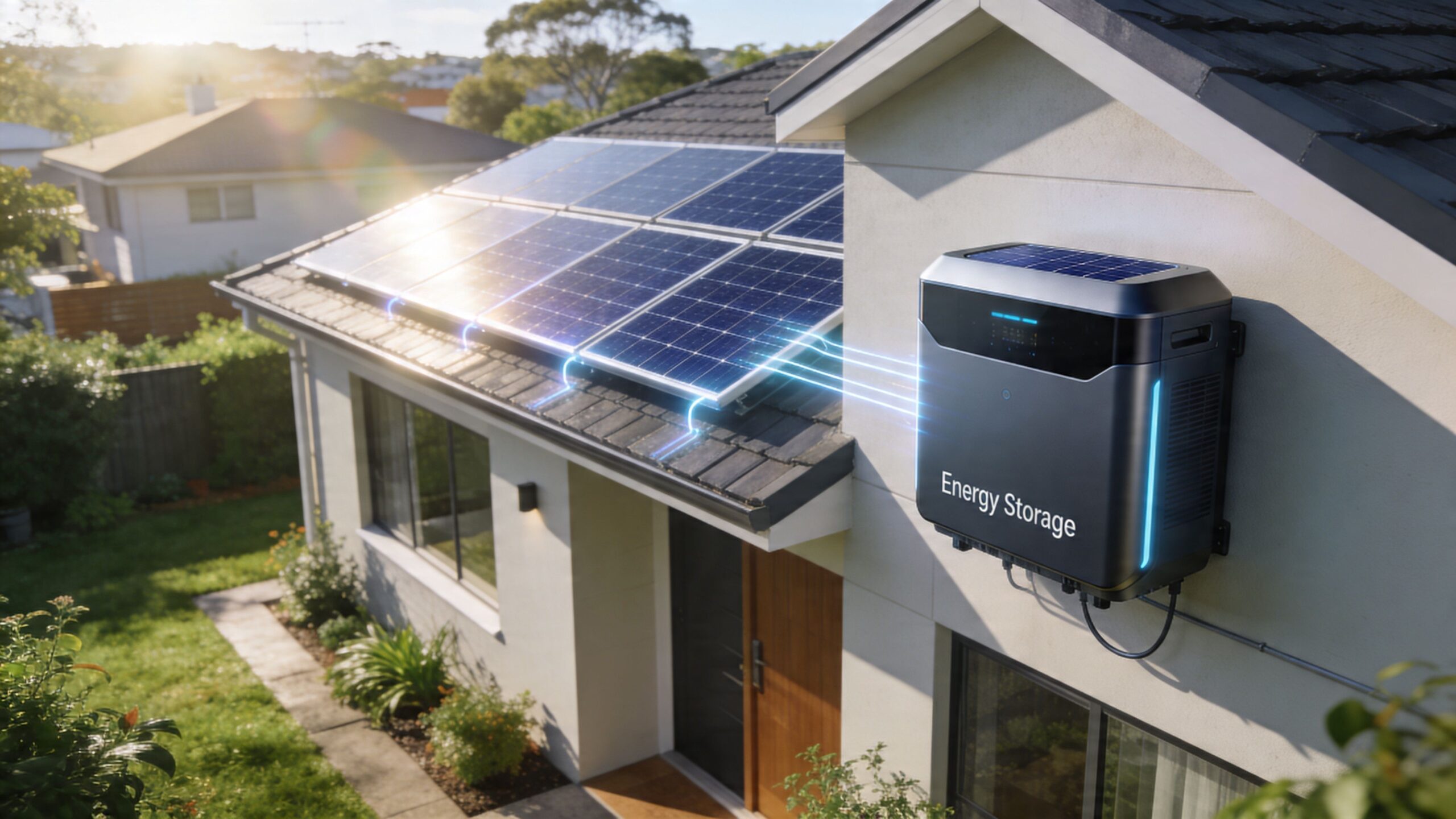
For easy understanding, a battery can be compared to a water tank. Your solar panels collect energy during the day in the same way a roof collects rainwater. Without storage, any extra “spills” back to the grid. With a battery, you keep that excess and draw on it later when the house needs it.
That changes how your solar behaves. Instead of being useful mainly in sunlight hours, the system keeps contributing after sunset, during peak tariff windows, and in some setups, during outages.
What the battery is actually doing
During the middle of the day, your solar system often produces more than the house is using. A battery captures that surplus. Later, when the family gets home and loads increase, the battery discharges and supplies the home first before the property imports from the grid.
The result is higher self-consumption. That means using more of your own solar instead of exporting it and buying power back later.
If your main goal is lower bills, this matters a lot. A battery lets you shift cheap solar generation into expensive consumption periods. That’s the reason storage can be more valuable than adding extra panels to a home that already exports plenty through the day.
The three benefits homeowners care about
- More of your solar stays on-site. That means your roof is doing more useful work for your household, not just for the network.
- Your home gets more protection from grid volatility. Depending on system design, a battery can support backup circuits when the grid drops.
- You gain better control over when energy is used. That’s especially useful for homes with evening-heavy usage, electric cooking, ducted air, pool equipment, or EV charging.
The bill side of this is worth understanding in plain terms. Sydney homeowners often ask why solar savings feel smaller than expected. A big reason is timing. Solar generation is strongest when many households aren’t using much power. If most of that production leaves the property during the day, the actual savings window gets wasted.
For a practical breakdown of ways households can reduce imported power and use solar more effectively, this guide on how to reduce electricity bills is useful background.
What a battery won’t do
A battery isn’t magic. It won’t fix poor panel placement, bad system design, excessive overnight loads, or unrealistic expectations. It also won’t provide whole-home backup in every installation unless the system is designed for that and the backup circuits are selected properly.
Practical rule: A good battery setup starts with load analysis, not brand hype.
That’s the difference between a system that looks good on paper and one that effectively changes the way your house uses energy.
Choosing the Right Solar Battery System for Your Home
Picking a battery isn’t just about buying the biggest unit you can fit on a wall. The right setup depends on your daily usage pattern, your existing solar hardware, whether you want backup, and how much flexibility you need for future changes like an EV or additional air conditioning.
In Sydney, the best battery choice is often the one that matches the home’s routine rather than the one with the most marketing around it.
Start with chemistry, not branding
Most homeowners will be comparing LFP and NMC batteries. You don’t need to become an engineer, but you should know the practical difference.
| Feature | Lithium Iron Phosphate (LFP) | Nickel Manganese Cobalt (NMC) |
|---|---|---|
| Safety focus | Commonly chosen where safety and thermal stability are priorities | Often chosen where compact energy density is a priority |
| Longevity profile | Commonly favoured for long service life in home storage | Can suit some applications but needs careful product comparison |
| Residential fit | Widely used for household battery systems | Also used in battery products, depending on brand and design |
| Installer conversation | Ask about compliance, warranty terms, backup capability, and compatibility | Ask the same questions and compare on real application, not brochure claims |
The broad market trend in residential storage has shifted strongly toward LFP for good reason. It’s commonly selected for home battery installations because owners want stability, durability, and a chemistry that suits long-term daily cycling.
Battery size should match your evening load
The number that matters most is kWh, which tells you how much energy the battery can store. In practical terms, sizing should be based on what the house uses after solar production drops, not just on how much energy you consume across a full day.
A small household with modest evening use needs a different battery from a family home running cooking loads, air conditioning, and EV charging after dark. Oversizing can leave storage underused. Undersizing can make the battery feel disappointing even if the product itself is sound.
A good installer will look at:
- Your usage pattern. Daytime-heavy homes and evening-heavy homes need different designs.
- Your major loads. Air conditioning, pool pumps, electric hot water, ovens, and EV chargers all change sizing decisions.
- Your backup expectations. Running a fridge, lights, and internet during an outage is a very different design brief from backing up large appliances.
- Your future plans. If you’re adding an EV or renovating, that should be discussed before the system is specified.
New system or retrofit
Battery integration usually goes one of two ways.
Hybrid inverter pathway
If you’re installing solar and battery together, or replacing older equipment, a hybrid inverter can make sense. This approach is often cleaner from a design perspective because the inverter is built to manage solar and storage together.
Hybrid systems can be a strong fit for new builds or larger upgrades where future expansion matters.
AC-coupled retrofit pathway
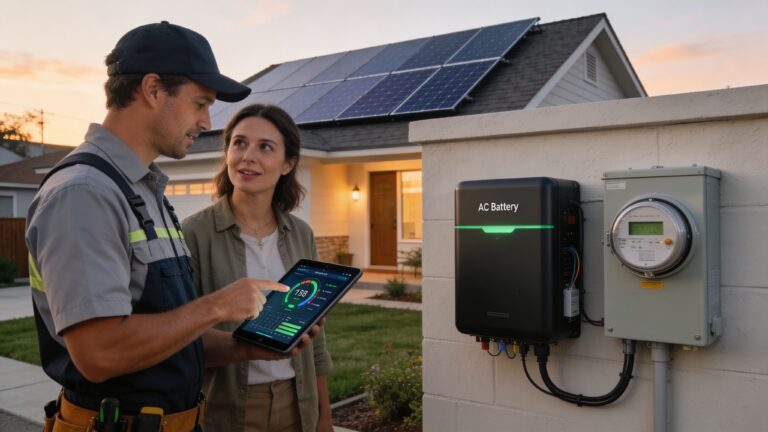
If you already have a working solar system, an AC-coupled battery can often be added without rebuilding the entire installation. That’s attractive for homeowners who want storage now but don’t want to throw away a good solar inverter.
Retrofits can work well, but compatibility still has to be checked carefully. Not every existing system is a simple add-on job.
A battery should fit the house you have now and the loads you’re likely to add next. If the design ignores that, you’ll outgrow it faster than you expect.
For a side-by-side look at product categories and decision points, this battery comparison guide helps frame the right questions before you accept a quote.
Questions worth asking before you sign
- Is this battery sized to my night usage or just my total usage?
- Will the system provide backup, and if so, which circuits are backed up?
- Is my current inverter compatible, or does the design rely on extra hardware?
- Can the system be expanded later if my usage changes?
- Where will the battery be installed, and why is that location compliant?
Those questions cut through a lot of sales noise quickly. If the answers are vague, keep looking.
The Solar Battery Installation Process from Start to Finish
You’ve had a few quotes. One installer says the battery can go in the garage. Another says the wall is non-compliant. A third talks about backup power, but doesn’t explain which circuits will stay on in a blackout. The battery installation process can seem confusing because it’s rarely explained properly.
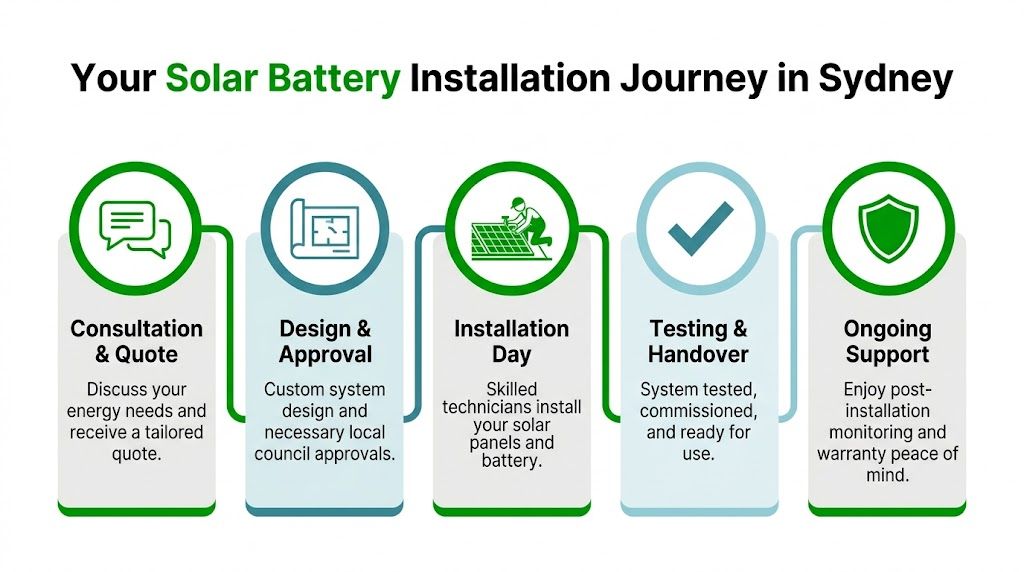
In Sydney, a well-run job follows a clear order. That order matters because battery work is not just a product delivery. It involves electrical design, network approval, installation rules, commissioning, and a handover that leaves you knowing how the system will behave in daily use.
Step one is the site assessment
Here, the important work begins.
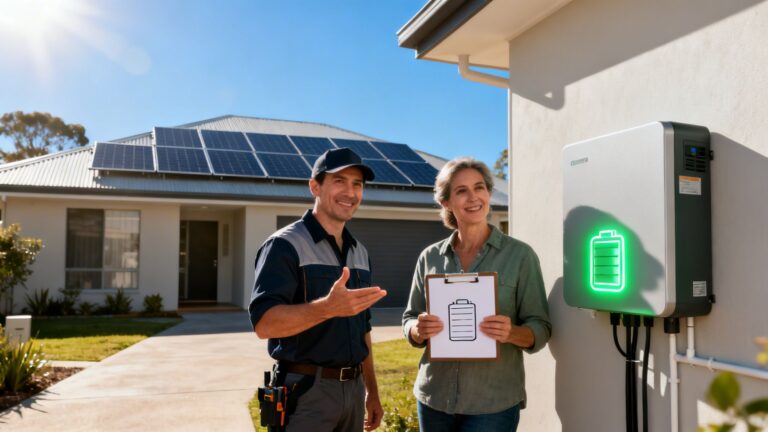
A proper site assessment covers your switchboard, existing solar hardware, meter setup, wall space, clearances, ventilation, cable routes, internet signal for monitoring, and any access issues that could affect installation. In Sydney, it should also pick up local complications early, including strata restrictions, narrow side access, older switchboards, and whether the proposed battery position is compliant.
This step saves people from expensive assumptions. I’ve seen homeowners expect whole-home backup from a system designed to support only a few selected circuits. I’ve also seen garages proposed as battery locations without enough clearance or with surrounding conditions that create compliance problems. Those issues are better dealt with before the quote is signed, not on install day.
Step two is system design, compliance, and rebate preparation
Once the installer has accurate site information, the design can be done properly. That includes battery size, inverter configuration, backup setup, protection equipment, communications, and the exact installation location.
For Sydney homes, network approval is part of the process. If you’re in the Ausgrid area, the installer should prepare and submit the connection paperwork as part of the job. Homeowners should not be left trying to interpret technical forms or guess what the network will accept.
This stage is also where rebate eligibility and supporting documents should be checked if any incentive applies to your project. Good installers deal with that early, because there is no value in promising savings tied to a scheme the system does not qualify for.
Battery placement rules also need to be handled at design stage. Installers must work to the current battery installation standard and the site conditions in front of them. That means checking clearances, fire safety requirements, access, and whether the chosen location makes sense for serviceability later.
Step three is approvals, ordering, and scheduling
Approvals are not exciting, but they affect the entire timeline.
Once the design is settled, the installer should confirm the approval pathway, order the equipment, and book the installation date. If a company schedules first and asks questions later, delays are more likely. The better approach is simple. Clear the paperwork, confirm compatibility, then lock in the job.
At this point, the homeowner usually just needs to confirm the final scope, approve the layout, and make sure site access is available on the day.
Good battery projects run well because the installer handles the details in the right order.
What happens on installation day
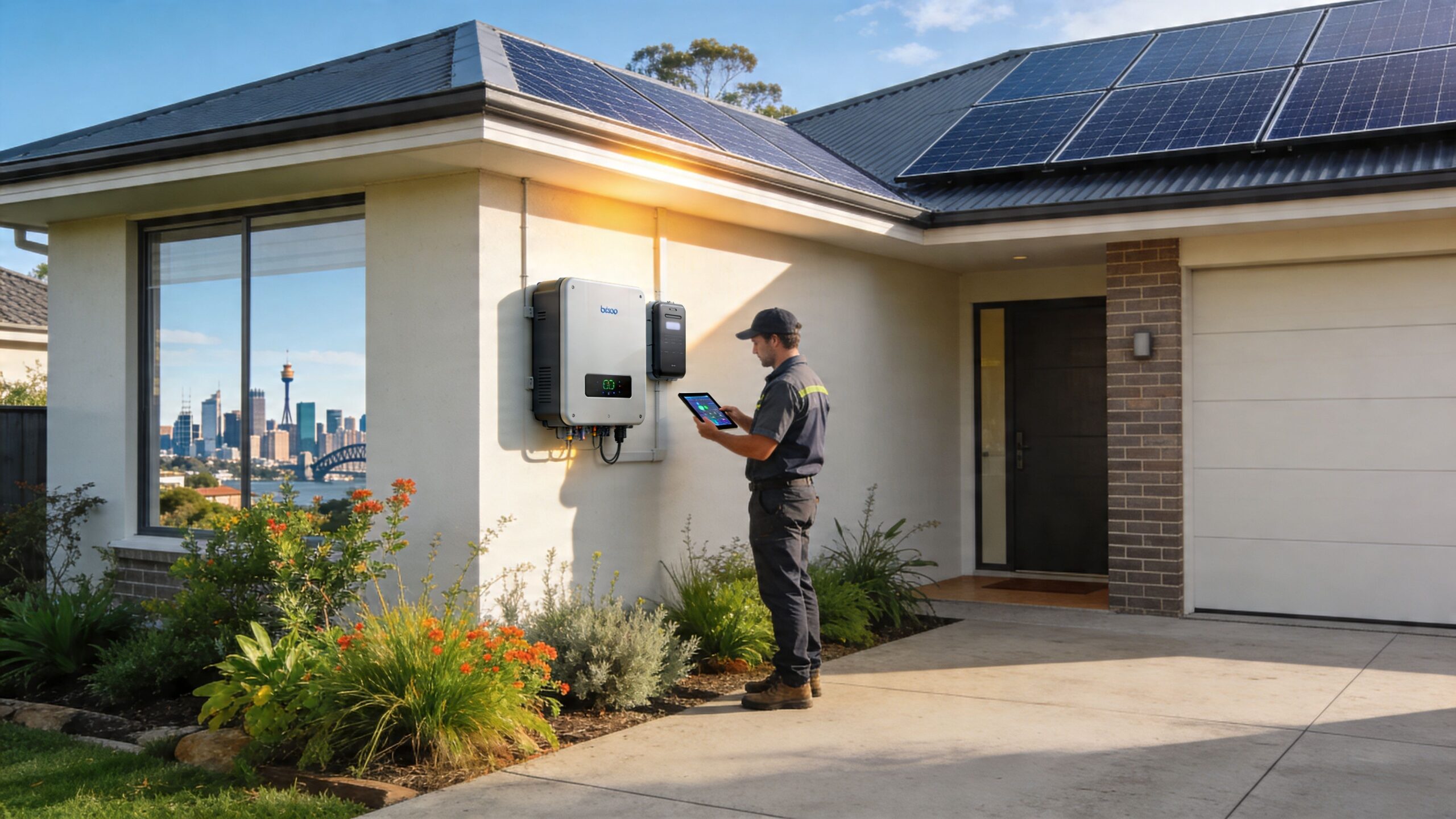
Installation day should feel organised. The crew mounts the battery and associated equipment, carries out any switchboard work, installs protection devices, runs communications, labels the system correctly, and prepares everything for testing and commissioning.
There will usually be a power interruption while electrical work is being completed. That is normal. What matters is whether the installers explain the shutdown window, keep the work area tidy, and complete the job to a standard that will still make sense years later when the system needs service.
A compliant battery installation should include:
- Safe equipment placement. The battery must be installed in an approved location with the required clearances.
- Correct labelling and isolation. Clear signage and identified isolation points matter for servicing and emergency response.
- Neat cable management. Good cable runs improve safety, make future maintenance easier, and reduce the chance of avoidable faults.
- Commissioning checks. The system should be tested under operation, not merely switched on and left.
For a practical example of what careful workmanship looks like, this article on quality solar installations is worth your time.
Handover is part of the installation
The job is not finished when the battery is mounted and energised. It is finished when you know how to use it.
A proper handover should cover the monitoring app, charging and discharge behaviour, blackout operation, backup circuit limits, shutdown and restart steps, warranty documents, and the compliance paperwork for the system that was installed. If the installer rushes through this, the homeowner is left with a battery they own but do not really understand.
The as-built documentation matters too. Keep it. If the system needs warranty support, service work, or changes later, that record saves time and avoids guesswork.
What a quality installer does differently
The difference is usually process control. Good installers do the assessment properly, explain the trade-offs clearly, manage Ausgrid and approval requirements, install to the standard, test the system properly, and stay available after commissioning if something needs attention.
That is what takes a homeowner from uncertainty to a system that works the way it was promised.
Maximising Your Return on a Solar Battery Investment
A battery pays its way by changing when your home buys electricity. That’s the primary engine behind the return. You generate solar in the day, store the surplus, then use it when grid electricity is least favourable.
That’s a better way to think about value than focusing only on the upfront purchase decision. The right question is how effectively the battery reduces expensive imports over its working life.
The return comes from time shifting
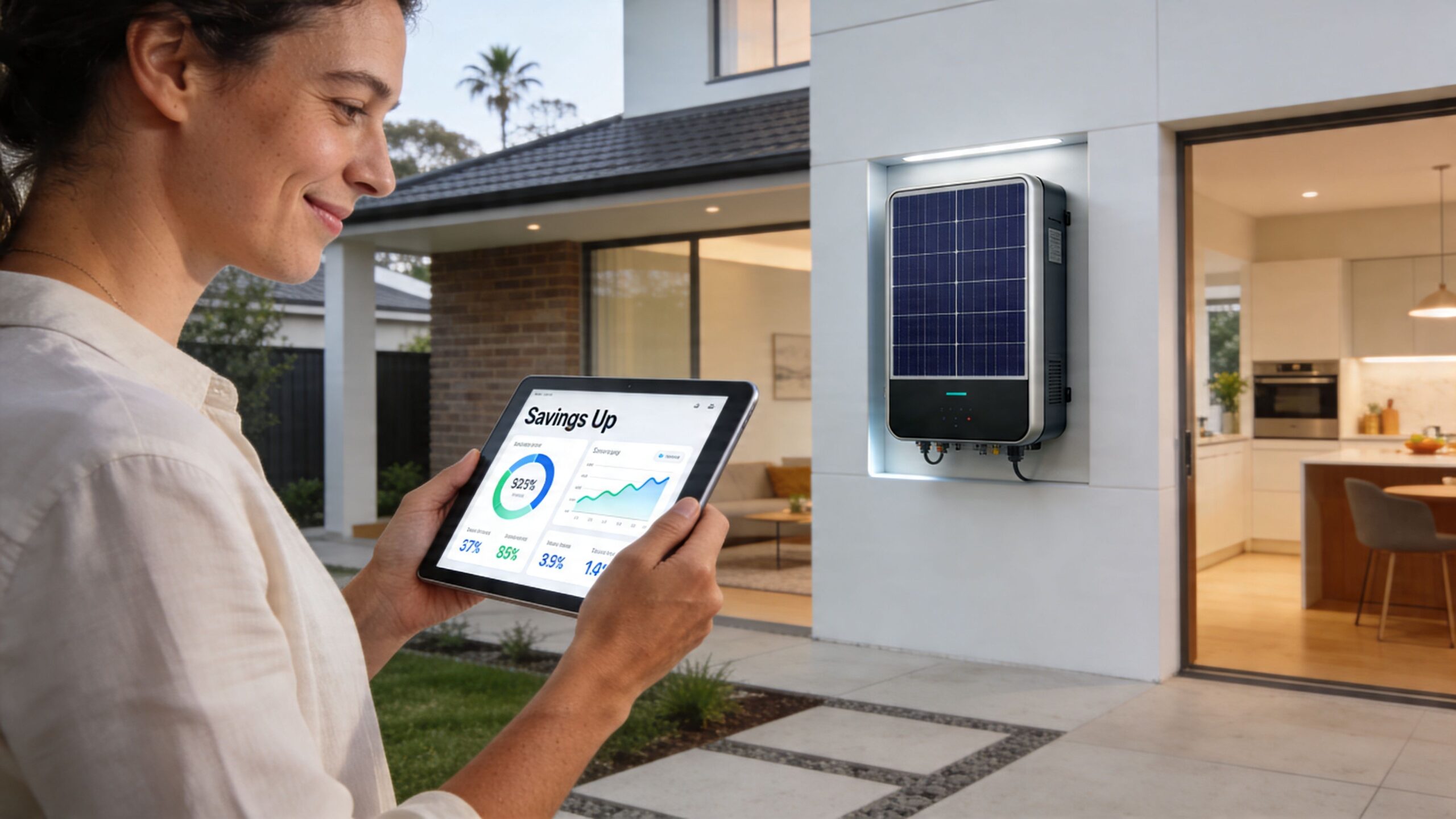
Sydney homes with time-of-use tariffs often pay the most for electricity in the evening, right when rooftop solar output has faded. A battery moves solar energy into that window. That’s why storage can produce much stronger bill impact than exporting daytime surplus and relying on feed-in credits.
According to the NSW Government Home Solar Battery Guide, a properly sized solar battery in Sydney can deliver 85 to 95% round-trip efficiency, push household usage to over 80% solar self-consumption, and produce a payback period of 5 to 7 years in the right setup, as outlined in the NSW Home Solar Battery Guide.
What actually improves returns
Not every battery owner gets the same result. The homes that do well tend to share a few traits.
- They have enough daytime solar surplus. A battery needs energy to store.
- They use meaningful power after sunset. Evening-heavy consumption gives the battery more useful work.
- They choose sensible battery size. Right-sizing avoids money sitting idle in unused storage.
- They monitor the system. The app tells you whether the battery is cycling as intended or whether usage habits need adjusting.
One of the strongest value drivers right now is incentive support. The federal battery rebate has changed the timing for many households that were previously waiting on the sidelines. If you’re trying to understand how that program interacts with NSW conditions, this overview of the NSW battery rebate launch and what to know gives useful context.
What hurts payback
Three mistakes show up often.
Oversizing for bragging rights
A battery that’s much larger than your usable evening demand can spend too much time partially idle. Bigger isn’t always better. Better matched is better.
Ignoring tariff structure
If nobody looks at your electricity plan and consumption timing, the return estimate can be too optimistic. Batteries make the most sense when they’re used to avoid expensive import periods.
Expecting backup alone to justify the system
Backup is valuable, especially in outage-prone areas, but the strongest financial case usually comes from everyday cycling. The battery should save money regularly, not just sit there waiting for a blackout.
The homes that get the best results treat the battery like part of the household routine, not as a standby accessory.
Long-term value is also about stability
Bills aren’t only about today’s rate. They’re about how exposed your home remains to future changes in tariffs, export conditions, and grid reliability. A battery won’t remove every energy cost, but it can reduce how much of your household budget is left at the mercy of those shifts.
That’s why many Sydney homeowners don’t judge storage only on a spreadsheet. They also value the control.
How to Select a Certified Solar Battery Installer in Sydney
Sydney has a mature solar market. NSW has more than 1.14 million solar systems, and 34.08% of households already have solar PV according to Green’s Australian solar statistics summary. That scale is good for choice, but it also means homeowners need to sort experienced battery installers from general electrical contractors who only touch storage occasionally.
A battery system is less forgiving than standard panel work. The installer matters as much as the equipment.

The non-negotiables
Start with credentials, but don’t stop there. A licensed electrician with battery-specific training is the baseline. You also want someone who understands network applications, commissioning, product compatibility, and post-install support.
Use this checklist when comparing quotes:
- Check licensing first. Ask for the contractor licence details and confirm who will carry out the work.
- Ask who designed the system. Good installs start in design, not on the day the van arrives.
- Confirm local experience. Sydney network conditions, switchboards, and property types create recurring issues that local teams usually recognise quickly.
- Look for after-care clarity. If the battery faults, who troubleshoots it, and how do you contact them?
- Request compliance documentation. You should receive the paperwork that proves the system was installed and commissioned properly.
In-house teams usually make accountability easier
When quoting, design, installation, and support are split across different businesses, things get messy fast. The homeowner can end up chasing one company for hardware, another for electrical defects, and a third for software setup.
An installer with in-house project control often gives a cleaner experience because responsibility stays in one place. That doesn’t make every subcontracted model bad, but it does make clear accountability more important.
One useful trust signal is whether the company aligns with consumer protection frameworks such as the New Energy Tech Consumer Code explained here. That won’t replace technical due diligence, but it helps indicate how the company approaches quoting, disclosure, and customer care.
If an installer can’t explain backup limits, location compliance, and monitoring setup in plain language, they probably shouldn’t be fitting your battery.
Questions that expose weak operators
A few direct questions can save you from a poor install:
- Who handles the Ausgrid application and approvals?
- What happens if the monitoring app stops reporting?
- Which circuits will be backed up in an outage?
- Why is this battery a good fit for my existing inverter or new inverter?
- What documentation do I receive at handover?
If the answers are evasive, generic, or clearly sales-led, step back.
A short video can also help you understand what professional installation standards look like in practice.
What confidence should feel like
It should feel calm. You should know where the battery is going, how the system will operate, what backup means in your house, and who owns the job from start to finish.
That’s the standard to expect from any company quoting solar battery installation sydney work.
Your Next Steps Towards a Self-Powered Sydney Home
If your current solar setup still leaves you exposed to evening bills and grid dependence, a battery is the next practical upgrade to consider. Done properly, it turns daytime generation into usable energy after dark, improves energy control, and gives the system more value across the whole day.
The key is getting the basics right. Choose a battery that matches your load profile, insist on compliant installation, make sure the Ausgrid and approval side is handled correctly, and work with an installer who can explain the system without hiding behind jargon.
For homeowners who’ve been putting this off because it seemed too complex, the path is simpler than it first appears when the project is properly managed. A site assessment, a clear design, compliant installation, and a proper handover will tell you quickly whether battery storage suits your home.
If you want an assessment of what would work on your property, a no-obligation consultation is the right starting point.
Frequently Asked Questions About Sydney Solar Batteries
Will a battery run my house during a blackout
Sometimes yes, but not automatically in the way many people assume. Backup depends on the battery model, inverter configuration, and how the system has been wired.
Many battery systems back up selected essential circuits rather than the entire home. That might include refrigeration, lighting, internet, a few power points, and other priority loads. Large appliances can be excluded unless the system is specifically designed to carry them.
The right question isn’t “does it have backup?” It’s “what exactly stays on at my house when the grid fails?”
What is a VPP and should I join one
A Virtual Power Plant is a program where connected home batteries can support the broader grid under agreed conditions. In return, the homeowner may receive some benefit depending on the program structure.
VPPs can suit some households well, especially if the terms are transparent and the control settings match the owner’s expectations. They’re not ideal for everyone. Before joining, ask how often the battery may be used by the program, what reserve level stays available for your home, and whether participation affects your preferred backup strategy.
How long will a home battery last
Battery lifespan depends on chemistry, product quality, operating conditions, and how the system is used. In practical terms, homeowners should focus on the warranty terms, performance guarantee, and whether the battery has been sized and installed properly.
Poor location choice, excessive heat, and bad system matching can all shorten useful life. That’s why installation quality matters just as much as the brand on the casing.
What about battery recycling and disposal
This is one of the most important long-term questions, and too many quotes skip over it. Battery warranties typically cover 10 to 15 years, but end-of-life planning still matters. As noted by the University of Sydney coverage on Australia’s solar waste challenge, national stewardship programs are still developing and landfilling poses environmental risks, so homeowners should discuss responsible decommissioning with their installer through this University of Sydney article on the solar waste crisis.
Ask these questions before you buy:
- Who removes the battery at end of life
- What recycling or recovery pathway is available
- Whether the brand has an Australian support structure
- How future replacement affects the rest of the solar system
Can I add a battery to an existing solar system
Often yes. Many Sydney homes retrofit batteries onto existing PV systems. The key checks are inverter compatibility, switchboard condition, available installation space, and whether the current solar system is still a good candidate for integration.
Retrofit jobs can work very well when the installer assesses the whole site properly. They tend to go badly when someone assumes every existing solar system can accept any battery with minimal changes.
If you’re ready to find out what battery setup fits your home, talk to Interactive Solar for a no-obligation assessment of your current solar, usage pattern, backup needs, and installation options in Sydney.