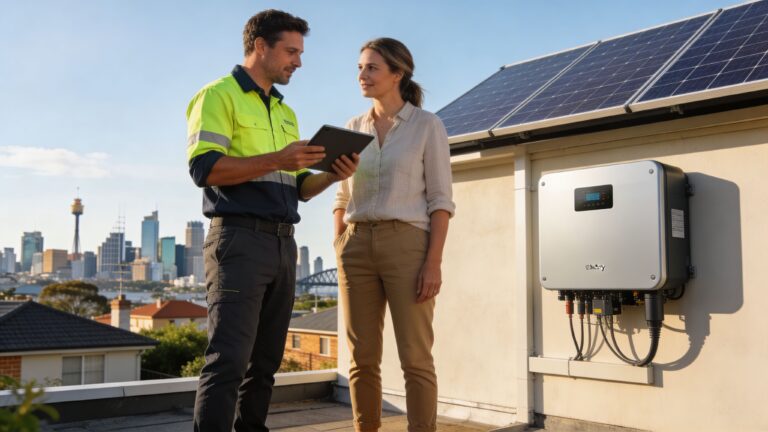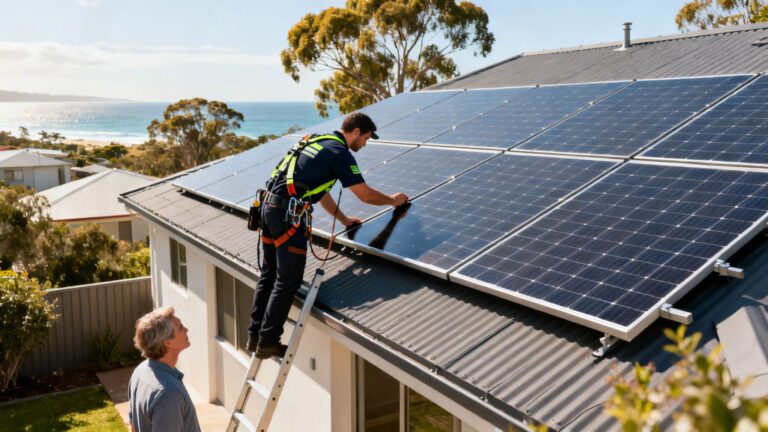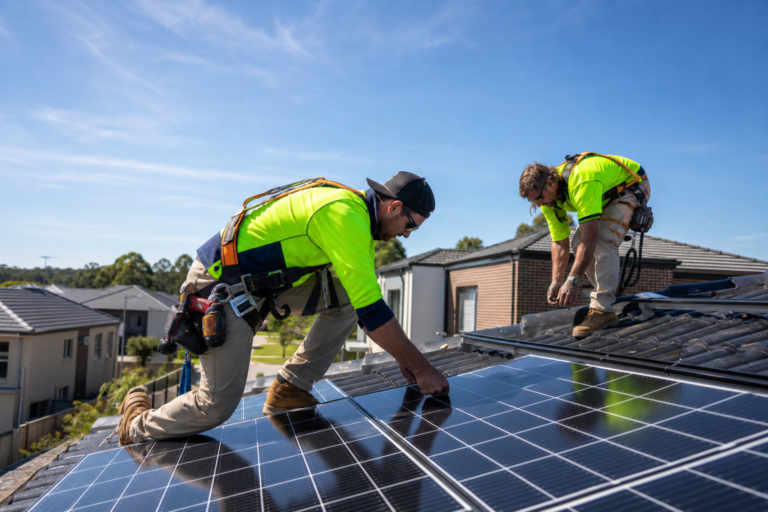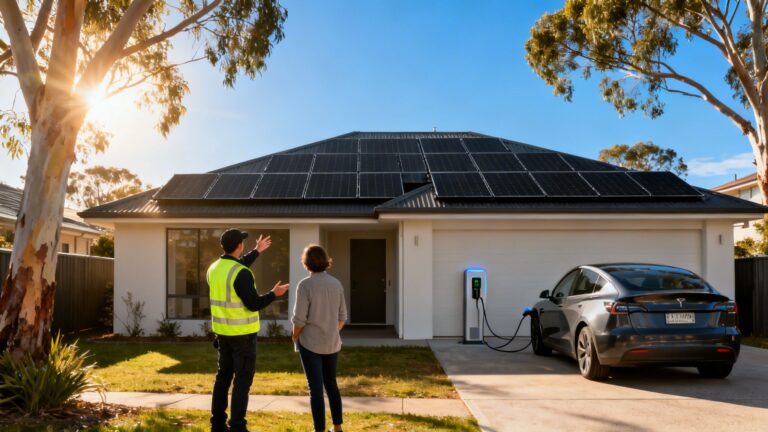
Boost Business: Commercial Solar Installation Western Sydney
Your power bill lands. You look at the latest charges, compare them with last quarter, and realise the daytime load from air conditioning, refrigeration, machinery, computers, or warehouse operations keeps pushing costs up. If you run a business in Blacktown, Penrith, Chipping Norton, or the wider Western Sydney corridor, that situation probably feels familiar.
Commercial solar starts to look less like a nice-to-have and more like basic infrastructure. Not a gimmick. Not a vanity project. More like upgrading from buying all your fuel at retail rates to producing a chunk of it on your own roof.
That’s why so many local business owners are asking the same questions. Will the roof support the system? What approvals are needed? Which rebate path applies? What happens if the installer gets the paperwork wrong? Can batteries or EV chargers be added later without redesigning everything?
Those are the parts that usually get glossed over.
This guide tackles commercial solar installation western sydney from the ground up, with a practical focus on what tends to delay jobs or reduce returns. You’ll see how local uptake has shaped the market, how to think about system size without guesswork, what approvals sit behind the scenes, and how to choose an installer who can handle engineering, grid applications, and compliance properly.
If you want background on the people behind a turnkey provider, Interactive Solar’s company overview gives a useful snapshot of how an in-house team and local warehouse setup fit into project delivery.
Introduction
Commercial solar works best when you treat it like an operations decision, not just an equipment purchase. A business roof can produce a large share of the electricity your site uses during working hours, but only if the system matches your load profile, roof layout, and network conditions.
Many Western Sydney businesses start with the same assumption. More panels must mean more savings. Sometimes that’s true. Sometimes it leads to export limits, unused generation, awkward roof access issues, or approval delays that could have been avoided at design stage.
Why Western Sydney businesses are paying attention
Western Sydney has the kind of building stock that suits solar well. Warehouses, workshops, schools, offices, bulky goods sites, and mixed-use commercial buildings often have broad roof areas and strong daytime consumption. That combination matters because solar delivers the most value when the electricity is used on site as it’s generated.
Rising interest in batteries and EV charging has also changed the conversation. Businesses aren’t only asking how many panels fit. They’re asking whether the system can support future fleet charging, load shifting, or backup planning.
Practical rule: A good commercial solar project starts with how your business uses power hour by hour, not with the panel count.
What usually causes confusion
Owners and facility managers often get stuck on three points:
- Approvals: Grid connection isn’t automatic. The local network provider has to approve the system.
- Incentives: The rebate path depends on system size, and the paperwork has to be right before installation.
- Site constraints: Roof structure, access paths, clearances, switchboard condition, and shading can shape the design more than people expect.
The businesses that get smooth installs usually make decisions in this order:
- Check the site
- Model the load
- Choose the right system size
- Confirm the incentive pathway
- Lodge approvals before work starts
- Install with compliance in mind from day one
That order sounds simple. It isn’t always followed. When it isn’t, projects stall.
Understanding commercial solar in Western Sydney
Western Sydney isn’t a fringe solar market. It’s one of the strongest solar regions in the state. According to Solar Directory’s report on Western Sydney solar adoption, Western Sydney accounts for a quarter of all small-scale solar installations statewide, equating to 65,000 rooftop solar systems that collectively provide nearly 300 MW of capacity.
That level of adoption matters for commercial buyers. It tells you the local market is already familiar with rooftop PV, installer capability is established, and many of the common building types in the region are compatible with solar.
What makes a system commercial
A commercial solar system is a solar PV setup designed around business operations rather than household living patterns. The equipment can look similar to residential solar, but the planning is different.
A home system is usually designed around family consumption peaks. A business system is designed around:
- opening hours
- machinery or HVAC loads
- weekday demand patterns
- tariff structure
- switchboard configuration
- export limits set by the network
Think of it this way. Residential solar is like filling a water tank for a household. Commercial solar is like supplying a workshop or logistics yard with water while the taps are already running all day. The timing of use becomes just as important as total volume.
Why Western Sydney suits commercial solar
The region has several practical advantages.
- Large roofs: Warehouses and industrial units often have simpler, wider roof planes than dense inner-city sites.
- Strong daytime use: Many businesses consume power when solar production is strongest.
- Solar familiarity: Local councils, property owners, and trades are increasingly used to solar-related works.
- Urban scale: Western Sydney’s building stock gives solar room to scale across many business types.
The contrast with more constrained CBD rooftops is one reason Western Sydney has become such a strong installation zone. In practical terms, it’s often easier to design around access, mounting, and usable roof area in suburban commercial precincts than in tightly packed city blocks.
Common business use cases
Commercial solar installation western sydney is especially relevant for sites such as:
- Warehouses and distribution centres: broad roofs and daytime plant load
- Hospitality venues: refrigeration and air conditioning can align with solar production
- Workshops and automotive sites: strong daytime power use
- Offices and medical practices: predictable weekday demand
- Schools and community buildings: regular daytime occupancy
A commercial array is less like a decorative roof upgrade and more like an on-site energy asset. It offsets purchased electricity while your business is operating.
That’s the mindset shift. Once owners view solar as part of business infrastructure, decisions around design, maintenance, and expansion become much clearer.
System sizing and financial returns
The right system size sits in the overlap between your roof capacity, your daytime electricity use, your network approval conditions, and your incentive path. If one of those four is ignored, the design can miss the mark.
Commercial systems in Western Sydney commonly span a broad range. What matters more than the headline size is whether the system matches the site’s real operating pattern.
Start with load before size
If your business uses most of its electricity during the day, a larger system may make sense. If your site shuts early or only has light daytime demand, oversizing can lead to exported energy that’s less valuable than self-consumed energy.
A simple way to think about sizing is this:
- Small commercial sites often need a system that covers core daytime loads such as lighting, office equipment, and air conditioning.
- Medium sites may be trying to offset a mix of HVAC, refrigeration, machinery, or production equipment.
- Larger sites often need staged design thinking, because roof zones, switchboard arrangements, and network conditions can differ across the property.
For many businesses, the first useful exercise is a load audit. Look at interval data if available. If not, review bills and identify when your highest use occurs. A warehouse that peaks in business hours is a very different prospect from a venue with heavy evening demand.
Incentives depend on system size
The incentive path changes once you cross the key size threshold. As explained by Project Solar Group’s commercial solar guide, commercial solar systems under 100 kW are eligible for STCs at point of sale, while those over 100 kW generate LGCs annually without upfront rebates; all require DNSP approval to meet voltage rise and safety limits.
That distinction affects project cash flow and planning.
- Under 100 kW: the incentive is usually felt earlier through the sale process.
- Over 100 kW: the certificate structure works differently, so modelling needs to reflect that.
- Any size: network approval still sits in the middle of the project.
The market signal from NSW
Commercial uptake is not hypothetical. According to the Clean Energy Council rooftop solar and storage report, NSW led Australia’s PV market in 2024 with 97,475 installations, capturing 31% of the national total and contributing to both small-commercial (15%) and medium-commercial (9%) segments.
That doesn’t tell you what size your system should be. It does tell you businesses across NSW are actively deploying commercial solar in meaningful numbers, including the very size bands many Western Sydney firms sit within.
A practical way to think about returns
Returns come from four main levers:
- How much grid electricity the system offsets
- How closely solar production matches business hours
- Which certificate pathway applies
- How well the installer avoids redesigns, delays, and compliance mistakes
A larger system isn’t automatically the better financial choice. The better choice is the one that turns more of your roof into useful on-site generation without creating approval problems or operational headaches.
Planning insight: The most valuable kilowatt-hour is usually the one your business uses immediately on site.
System Size Incentives and Payback Estimates
Because this guide can only use verified figures, it’s safer to present the incentive path clearly and treat payback qualitatively rather than invent a timeframe.
| System Size (kW) | Rebate Type | Payback Estimate (Years) |
|---|---|---|
| Under 100 kW | STCs at point of sale | Varies by site, usage pattern, installation design, and approvals |
| Over 100 kW | LGCs generated annually | Varies by site, usage pattern, installation design, and approvals |
If you want to pressure-test different size options against your usage profile, a solar savings calculator like this commercial savings tool can help frame the discussion before engineering starts.
Sizing mistakes that reduce value
Some common issues show up again and again:
- Designing from roof area alone: Just because panels fit doesn’t mean they’ll produce the best return.
- Ignoring operating hours: A business with low midday demand may need a different strategy.
- Forgetting future loads: Planned EV chargers, extra refrigeration, or tenancy changes can alter the ideal size.
- Assuming approvals are a formality: Export restrictions can change the design.
The best-sized system often isn’t the biggest one. It’s the one that fits your business rhythm.
Site approvals and installation timeline
At this stage, many projects either remain organised or begin to drift. A commercial solar installation western sydney job usually looks straightforward from the outside. Panels on roof, inverter on wall, paperwork signed, system switched on. In reality, most of the serious risk sits in the checks and approvals before installers lift the first panel.
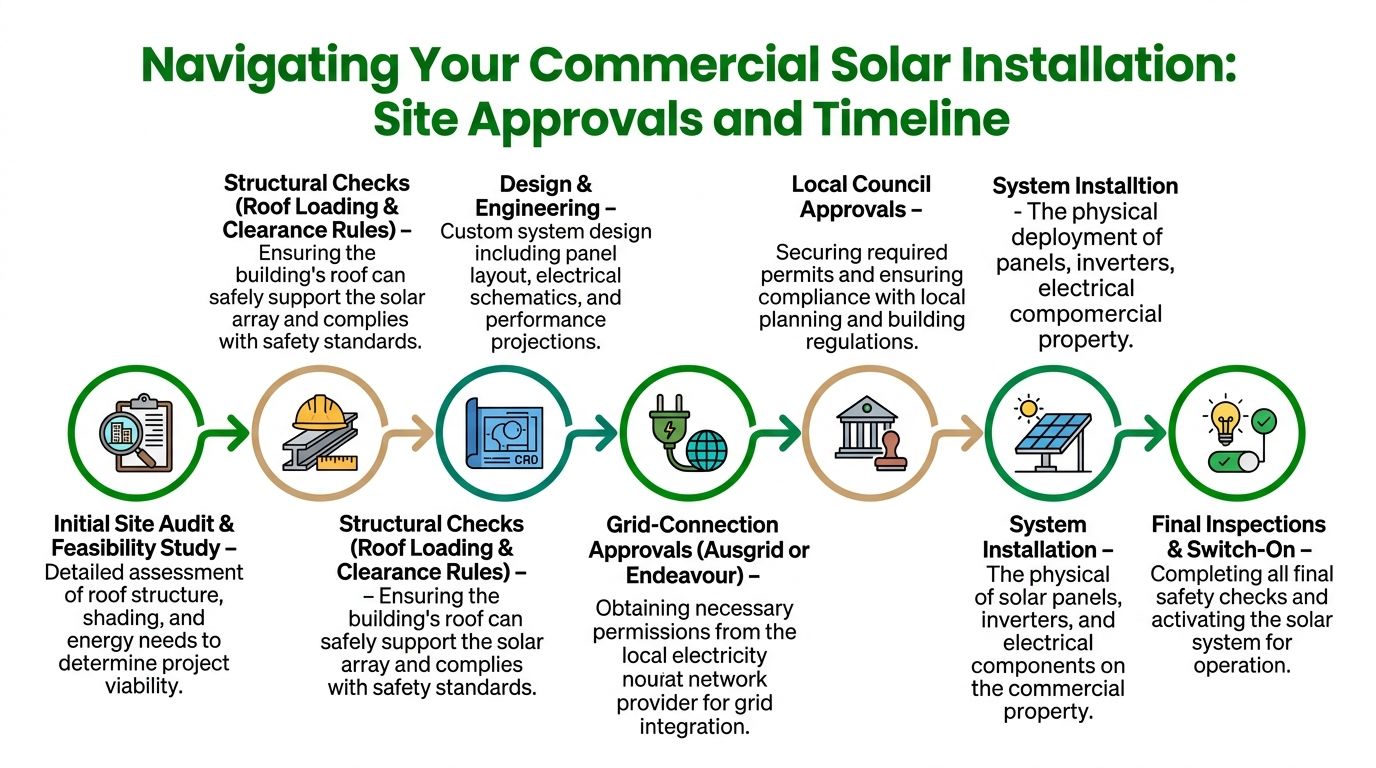
A clean process starts with feasibility, moves through engineering and network applications, and only then reaches installation.
What has to be checked on site
The roof is the obvious first checkpoint, but the hidden requirements matter just as much.
Sydney Water’s solar PV specification sets out practical roof rules for installations up to 100kW, including a minimum 500mm clearance around the perimeter and 600mm maintenance access every four rows, or 300mm every two rows for flush-mounted non-tilted panels, as detailed in Sydney Water’s solar PV specification. Those rules are not cosmetic. They affect access, safety, servicing, and long-term performance.
A proper site review usually checks:
- Roof structure: Can the building support the array and mounting system?
- Access paths: Can people safely reach gutters, plant, anchor points, and service areas?
- Shading: Nearby structures, plant, parapets, or trees can alter array layout.
- Switchboard condition: Existing electrical infrastructure may need upgrades or reconfiguration.
- Roof material and waterproofing: Mounting details vary by roof type.
If your site includes undeveloped edges, heavy vegetation, or access constraints around a future expansion zone, broader preparation questions can come into play. In that situation, a practical background read on land clearing costs in NSW can help owners understand site-prep issues that sometimes affect energy and construction projects more broadly.
Roof space isn’t the same as usable roof space. Access corridors, setbacks, services, and structural limits all remove area from the design.
The approval chain
After the physical site review, the paperwork starts.
A commercial installer generally needs to prepare design documents, electrical details, and a grid application for the relevant DNSP. Depending on location, that may involve Ausgrid or Endeavour Energy conditions. The network provider reviews whether the proposed connection meets local voltage rise and safety requirements.
Council involvement varies. Some projects move through with minimal planning friction. Others need closer review because of building characteristics, heritage context, fire access, or ancillary works.
The consumer side matters too. Business owners should understand who is responsible for design assumptions, approvals, variations, and final commissioning standards. The New Energy Tech Consumer Code overview is worth reading because it helps clarify what transparent quoting and installation conduct should look like.
A practical timeline from audit to switch-on
The exact timing varies by site and network response, but the sequence is usually consistent.
Initial audit and data review
Bills, load profile, roof review, and early feasibility.Structural and engineering checks
Roof loading, array layout, clearances, and electrical design.Network application
DNSP submission for connection approval.Council or building compliance review if needed
This depends on site specifics.Equipment scheduling
Panels, inverters, mounting gear, and switchgear are coordinated.Installation works
Mechanical and electrical installation proceed in a set order.Inspection and energisation
Final checks, metering steps, and switch-on.
A short explainer can make the flow easier to picture.
Where projects usually stall
The biggest slowdowns tend to come from avoidable gaps:
- Missing structural documentation
- Unclear roof access allowances
- Incomplete DNSP application details
- Assumptions about meter changes
- Late discovery of council requirements
A disciplined installer sequence reduces all of those. The owner’s role is to ask better questions earlier.
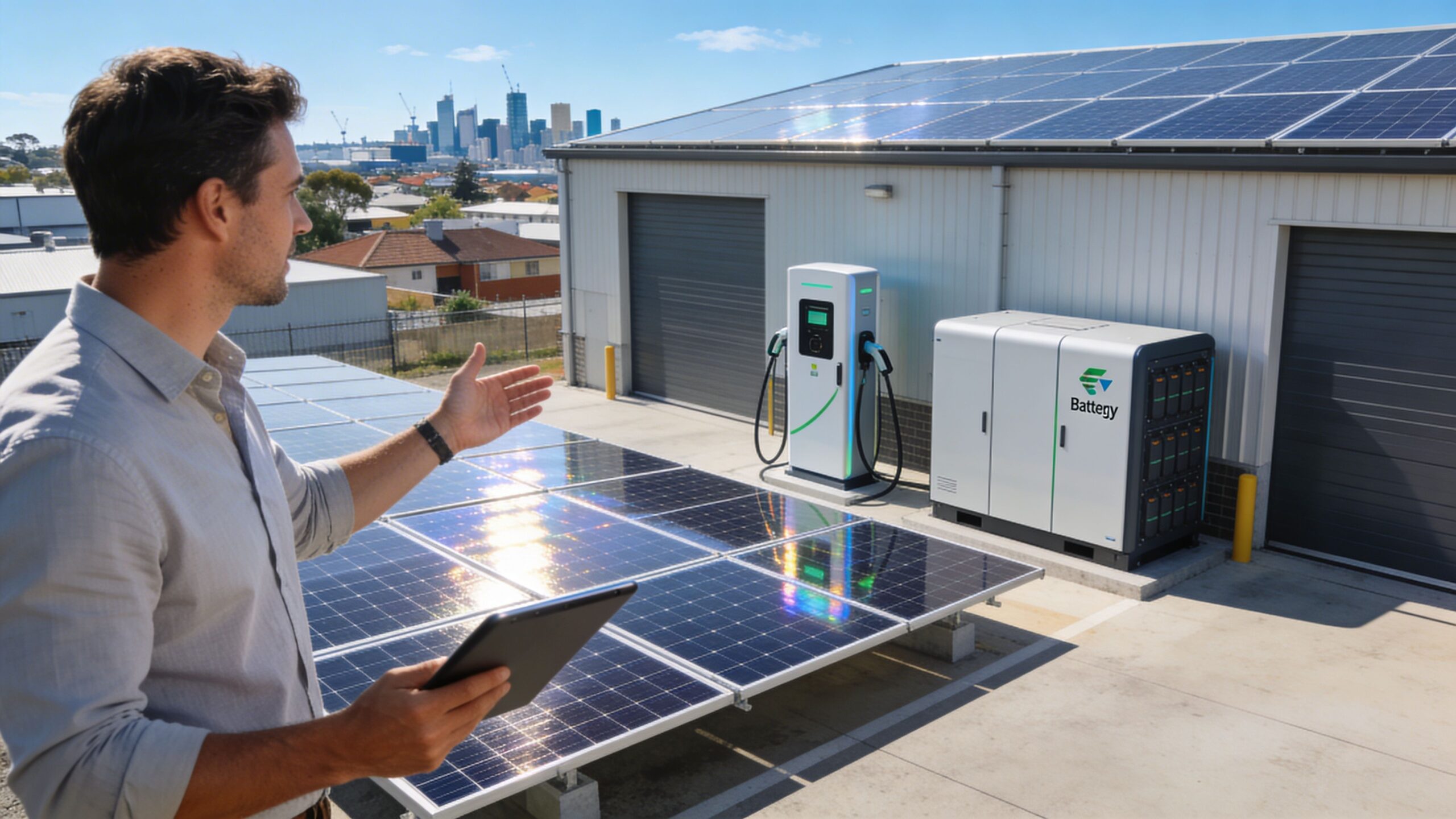
Battery storage and EV charging integration
Once the solar array is designed, the next question is often whether to stop there or build a broader energy system around it. That usually means adding battery storage, EV charging, or both.
These options solve different problems. A battery changes when solar is used. An EV charger changes where your generated power goes. Combined together, they can make the site more flexible.
Battery-only option
A battery is useful when your business produces solar during the day but still buys meaningful grid power later in the afternoon or evening. Instead of exporting part of your daytime generation, the system can store some of it for later use.
That can suit sites such as:
- offices with late afternoon HVAC demand
- hospitality venues with evening trade
- warehouses with staggered shift patterns
- businesses wanting a stronger self-consumption profile
Battery planning usually turns on questions like cycle use, available installation space, switchboard integration, and control settings. Chemistry, warranty terms, and operating strategy all matter, but the main business question is simple: will the battery regularly charge and discharge in a way that supports the site’s actual load?
If you’re comparing battery pathways, a side-by-side resource like this battery comparison guide helps narrow the field before detailed design.
EV charging-only option
EV chargers make sense when the site has fleet vehicles, staff charging needs, customer parking, or a desire to future-proof the property. This option is less about storing energy and more about directing daytime solar into transport use.
A workplace charger setup can be useful for:
- service fleets returning during the day
- staff vehicles parked on site for long periods
- customer-facing destinations
- mixed commercial sites planning for gradual EV uptake
The key design question isn’t just charger brand or socket type. It’s load management. Chargers need to work with the building’s existing electrical demand so they don’t create unnecessary peaks.
Combined solar, battery, and EV setup
This is the most flexible approach, but it also requires the cleanest planning. When designed well, the array produces daytime energy, the battery shifts some of it to later periods, and EV chargers absorb energy that might otherwise be exported.
A combined setup is often the strongest fit when a business expects its energy use to evolve over time.
| Option | Best suited to | Main benefit | Main design caution |
|---|---|---|---|
| Solar plus battery | Sites with late-day demand | Better self-consumption | Battery use must match real load |
| Solar plus EV charging | Sites with parked vehicles | Turns solar into transport energy | Needs load management |
| Solar plus battery plus EV | Growing or multi-use sites | Flexibility and future readiness | Integration needs careful design |
A battery stores energy. An EV charger shifts consumption into a controllable load. They’re related, but they’re not interchangeable.
Planning for future upgrades
Many businesses don’t need to install everything at once. What matters is making sure the first-stage solar design doesn’t block a later battery or EV charger addition.
That means checking:
- inverter compatibility
- switchboard capacity
- cable pathways
- mounting and wall space
- software and monitoring compatibility
If the site is likely to evolve, say so early. Retrofitting around an inflexible first-stage design is where costs and complexity tend to creep in.
Choosing a licensed installer
A Western Sydney business can approve the right panel brand, the right system size, and the right budget range, then still end up with delays, variation costs, or incentive problems because the installer was the weak link.
That happens more often than owners expect.
On a commercial job, the installer is not just putting panels on a roof. They are coordinating electrical design, roof access rules, shutdown planning, switchboard work, network paperwork, safety controls, testing, and handover. If any one of those parts is handled poorly, the project can stall even if the hardware itself is perfectly good.
Why licensing and accreditation matter in practice
Licensing is the baseline. Accreditation and commercial experience are what turn a legal installer into a reliable project partner.
A good way to picture it is to compare a commercial solar job with a shop fitout. You would not hire a crew based only on the tiles and paint they proposed. You would check whether they could handle the approvals, the trades, the site rules, and the final sign-off without creating problems for the business. Solar works the same way.
For Western Sydney sites, this matters even more because many buildings come with hidden complications. Older switchboards in Wetherill Park, shared tenancy arrangements in Blacktown, or roof access limits in Smithfield can affect who is capable of delivering the work they quoted. A residential installer stepping into commercial work may know the products but still miss the approval path or the site constraints.
What to verify before signing
Ask for documents and clear answers, not general reassurance.
- NSW electrical contractor licence: The business responsible for the electrical work should be properly licensed.
- Current accreditation relevant to the system type: The people designing and signing off the system should meet the required accreditation standards.
- Commercial project history: Ask for examples of warehouses, offices, strata sites, or mixed-use premises, not only house installations.
- Clear scope of work: The quote should spell out design, engineering, applications, shutdown requirements, metering, commissioning, and exclusions.
- Approval responsibility: Confirm who handles DNSP applications, incentive paperwork, and any landlord or strata coordination if the site requires it.
- Service after commissioning: Ask who responds to faults, monitoring alerts, and warranty issues once the install team has left site.
One practical reference on workmanship standards and what quality installation should include is this guide to installation quality.
Red flags that often show up too late
Some problems are obvious. Others only appear after the contract is signed.
A quote that skips structural assumptions is one example. On paper, a roof may look wide open. In reality, walkways, exclusion zones, fragile sections, services, and firefighter access can cut usable area quickly. If the installer has not raised those questions early, the design may be more sales sketch than buildable plan.
The same goes for approvals. Western Sydney businesses often focus on price and payback, but approval handling is where weak installers get exposed. If no one can explain the network application path, metering changes, shutdown planning, or whether the site needs landlord consent, you are looking at risk that has been pushed downstream.
Watch for these warning signs:
- Incentives mentioned without eligibility steps
- No discussion of roof access, switchboard condition, or site-specific hazards
- Unclear subcontractor arrangements
- Sparse documentation, especially missing diagrams, assumptions, or exclusions
- Promises on timing before approvals have been checked
For business owners comparing providers, it can also help to understand how solar companies present and win jobs in the market. A trade-focused article on effective solar lead generation strategies gives useful context on sales practices, which can make scripted pitches easier to spot.
A better way to compare bids
Use one simple test. Ask each installer what could delay the project at your specific site.
The strongest answers are usually concrete. They mention switchboard upgrades, roof loading review, access restrictions, DNSP processing, tenant approvals, or metering lead times. The weaker answers stay general and return to panel brands or broad savings estimates.
That difference matters because commercial solar success usually comes from fewer surprises, not from the lowest first number on the quote.
Interactive Solar is one example of a provider working in this space with in-house installation teams, commercial solar capability, EV charging, battery integration, and NSW electrical licensing under Licence #329360c. That kind of integrated delivery can reduce handover mistakes between design, installation, and support.
Local case studies and lessons learned
Real projects rarely unfold exactly like the first concept sketch. Roofs reveal constraints. paperwork takes longer than expected. Tenants change operating hours. Dust builds up faster than anyone planned for. Those details shape outcomes more than broad solar theory.
Rather than inventing polished case studies, it’s more useful to look at three common Western Sydney scenarios and what they teach.
Chipping Norton warehouse with a broad metal roof
A warehouse operator has plenty of roof area and strong daytime use from lighting, office spaces, roller door activity, and general site operations. On paper, it looks ideal.
The hidden issue is access. Once the roof plan is reviewed properly, walkways, setbacks, and service zones remove a chunk of the area that seemed available. The final design is still viable, but the lesson is clear. Usable roof area is always smaller than gross roof area.
A second issue often appears at the switchboard. Older commercial sites may need electrical tidying or upgraded coordination before the solar connection can proceed smoothly.
The businesses that avoid frustration are the ones that let engineering trim the concept early, instead of forcing the roof to match the sales drawing.
Blacktown café or hospitality site with mixed load timing
A hospitality venue often likes solar because refrigeration, kitchen prep, and cooling loads run through the day. But cafés and restaurants can have a split pattern. Some loads align neatly with solar generation. Others continue after the sun drops.
That makes the project less about “how many panels fit” and more about “which loads sit in daylight hours.” In these cases, the owner may end up pairing solar with a later-stage battery discussion if evening trade is significant.
Council and landlord coordination can also matter more on this kind of site, especially if signage, tenancy rules, or shared building services are involved. The lesson isn’t that hospitality sites are poor solar candidates. It’s that small commercial jobs still need disciplined planning.
Penrith industrial unit in a dusty environment
Maintenance then becomes a business issue, not a housekeeping issue. According to Energy Matters’ article on commercial solar maintenance in Australia, uncleaned panels in Western Sydney’s industrial areas can lose 20–30% efficiency annually due to dust and pollution, leading to 10–15% lower ROI over five years without proper maintenance.
That single point changes how an owner should think about handover.
A site near industrial traffic, warehouses, or open yards may need a maintenance plan from day one. Not because the system is faulty, but because local conditions affect output. If that’s ignored, the business can wrongly assume the system was oversized, underperforming, or badly specified, when the simpler issue is dirt accumulation.
Lessons these local scenarios share
Across different business types, the same practical lessons keep surfacing:
- Roof suitability is a design question, not a sales assumption
- Daytime load shape matters more than enthusiasm for a larger system
- Approvals and landlord or council inputs can affect timing
- Maintenance should be part of ROI planning from the start
A sensible owner asks for two things before signing off. First, a realistic design that accounts for the roof as it exists. Second, an operating plan for after commissioning, including monitoring, maintenance, and fault response.
That’s how commercial solar installation western sydney moves from a promising idea to a working asset that keeps delivering.
Conclusion
Some business owners still assume solar is mostly about panel brands and rebate headlines. It isn’t. Commercial solar succeeds when the project is handled like a piece of business infrastructure. That means proper sizing, proper roof checks, proper approvals, and proper long-term care.
Western Sydney is well suited to commercial solar, but local suitability doesn’t remove the need for discipline. The hidden details still decide the outcome. Roof access. Structural verification. DNSP approvals. Certificate eligibility. Switchboard readiness. Maintenance planning. Those are the pieces that protect value.
If you’re weighing up a system for your warehouse, office, workshop, retail site, or mixed commercial property, the most useful next step isn’t chasing the biggest array. It’s getting a site-specific assessment that tests your load profile, roof constraints, and approval path before commitments are made.
A well-planned system can lower reliance on grid electricity, support wider energy goals, and create a stronger base for batteries or EV charging later. A rushed system can do the opposite.
If you want a practical next step, Interactive Solar can help you assess your roof, usage profile, approval pathway, and future battery or EV charging options so you can make a grounded commercial decision rather than a rushed one.
Make Interactive Solar a preferred source in Google
One click tells Google to surface our articles more often in Top Stories, AI Overviews and AI Mode.