Sungrow Battery Installation Sydney: 2026 Cost & Model Guide
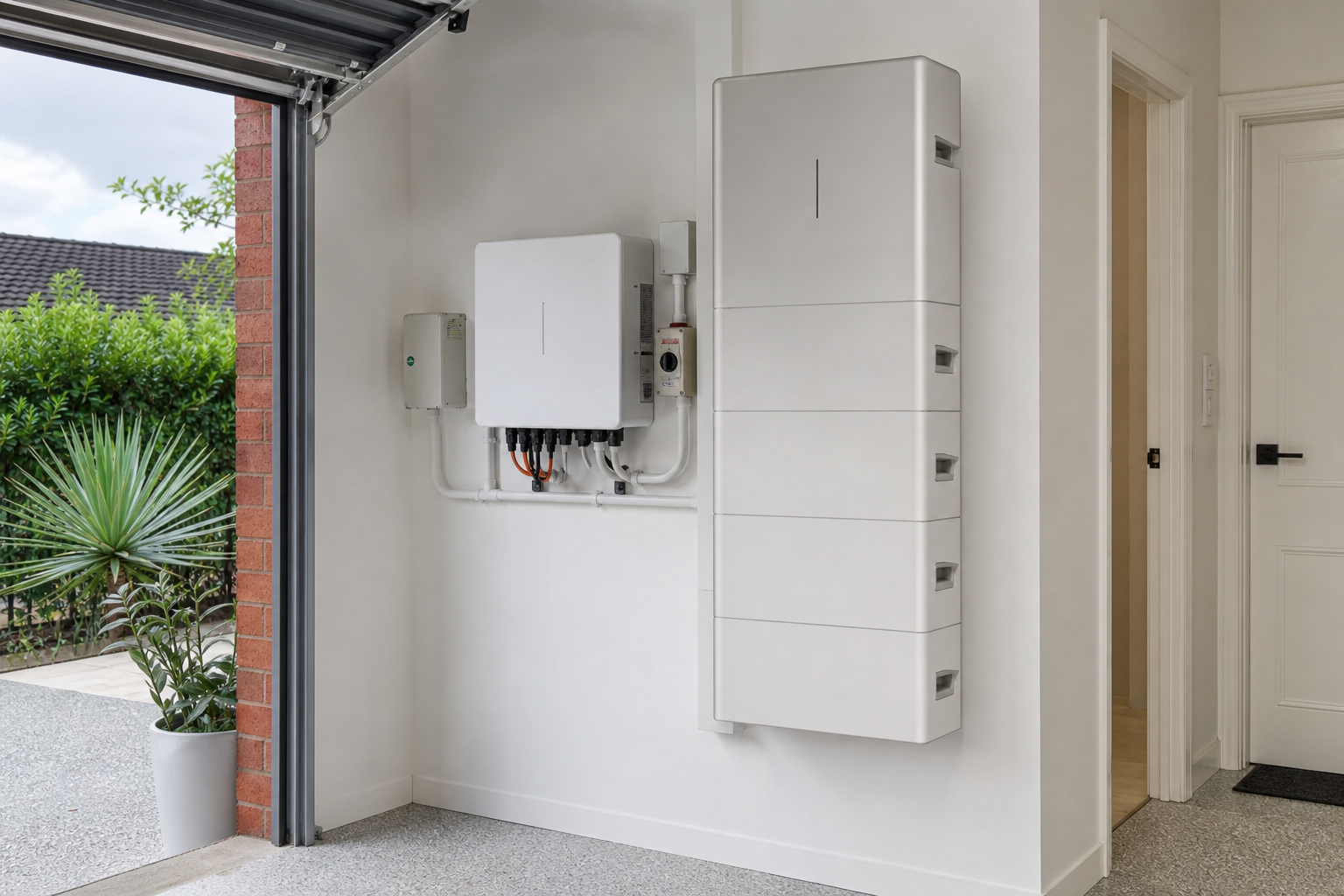
Sungrow battery installation Sydney pricing typically runs from $9,000 to $19,500 installed before rebates, or roughly $5,500 to $14,500 after the federal Cheaper Home Batteries Program discount, depending on which SBR model you choose and whether solar is installed at the same time. Sungrow’s SBR series ranges from 6.4 kWh to 25.6 kWh usable capacity, and most Sydney homes land on a 9.6 kWh to 12.8 kWh system paired with a Sungrow hybrid inverter.
Interactive Solar has completed more than 1,300 solar and battery installations across Sydney with our own in-house licensed electricians, and Sungrow is one of the three battery brands we install most often alongside Tesla Powerwall and BYD. Below is exactly what a Sungrow battery installation in Sydney involves, what it costs in 2026, and how to work out if it is the right fit for your home.
Sungrow Battery Installation Sydney: 2026 Cost Breakdown
Sungrow’s SBR series is modular, so pricing scales in even steps by capacity. The table below reflects typical Sydney installed pricing before and after the current federal battery rebate.
| Model | Usable capacity | Typical installed price | Approx. federal rebate* | Price after rebate |
|---|---|---|---|---|
| SBR064 | 6.4 kWh | $9,000 – $10,500 | ~$1,900 | $7,100 – $8,600 |
| SBR096 | 9.6 kWh | $11,000 – $13,500 | ~$2,850 | $8,150 – $10,650 |
| SBR128 | 12.8 kWh | $12,500 – $15,000 | ~$3,800 | $8,700 – $11,200 |
| SBR160 | 16.0 kWh | $14,500 – $18,000 | ~$4,650 | $9,850 – $13,350 |
| SBR192 | 19.2 kWh | $16,500 – $19,500 | ~$5,000 | $11,500 – $14,500 |
*Rebate figures are indicative only and depend on install date, installer and retailer. The federal Cheaper Home Batteries Program pays roughly $6.80 per kWh of usable capacity for installs from May to December 2026, tapering to 60% support above 14 kWh and 15% above 28 kWh, capped at the first 50 kWh of a system’s usable capacity per property. NSW households may also stack a Peak Demand Reduction Scheme (PDRS) incentive on top, which typically adds a further $1,500 to $2,500 depending on the retailer and battery size. Combining solar and a Sungrow battery in a single install also shares scaffolding, switchboard and electrician labour costs, which is why a same-visit combined install is usually cheaper per kWh than retrofitting a battery later.
Which Sungrow Battery Model Suits a Sydney Home?
Sungrow sells two residential ranges in Australia: the SBR series (high-voltage, stackable, paired with the SH-RT hybrid inverter) and the smaller SBH series aimed at lighter-use households. For most Sydney homes we recommend the SBR series because it is stackable in the field, meaning a second module can be added later if energy use grows without replacing the whole unit.
- SBR064 (6.4 kWh): suited to a 1-2 person household running the essentials overnight (fridge, lighting, TV, wifi).
- SBR096 (9.6 kWh): the most common size we install for a 3-4 person Sydney household with a typical 6.6-10 kW solar system, giving close to full overnight coverage on an average day.
- SBR128 (12.8 kWh): suits homes with pool pumps, ducted air conditioning, or EV charging that want to shift most daytime charging load onto solar.
- SBR160 and above: typically chosen for larger homes, home offices with daytime load, or households targeting near-total grid independence.
Sungrow’s SH5.0RT/SH10RT hybrid inverter range pairs directly with the SBR battery and supports single or three-phase Sydney properties, with a wide 150V-950V PV input range that suits most existing rooftop arrays without needing a separate inverter swap. The inverter itself carries a 5-year standard warranty (extendable), and the SBR battery modules carry a 10-year warranty rated for roughly 6,000 cycles, which under typical daily cycling translates to well beyond the warranty period in practical use.
Is Sungrow Worth It Compared to Tesla Powerwall and BYD?
Sungrow typically installs for $1,500 to $2,500 less than a comparable Tesla Powerwall 3 system in Sydney, while using the same lithium iron phosphate (LFP) chemistry and carrying a comparable 10-year warranty. The independent SolarQuotes review of Sungrow notes the company has run a local Sydney office since 2012, which matters for warranty support if something needs attention years down the track.
Where Tesla Powerwall wins is app polish and brand recognition; where BYD Battery-Box competes closely is modular stacking flexibility similar to Sungrow’s own approach. In practice, the right choice usually comes down to which inverter you already have or plan to install, since matching battery and inverter brand simplifies commissioning and keeps warranty claims with a single manufacturer rather than splitting a fault between two companies.
Sungrow’s scale is also worth noting: the brand holds the number one market position in Australia for both inverters and residential batteries, with well over 400,000 systems installed in Australian homes and businesses. That volume means parts, firmware updates and installer familiarity are all easier to source locally than with smaller or newer battery brands entering the Australian market.
Sungrow Battery Installation Sydney: Rebates and Eligibility in 2026
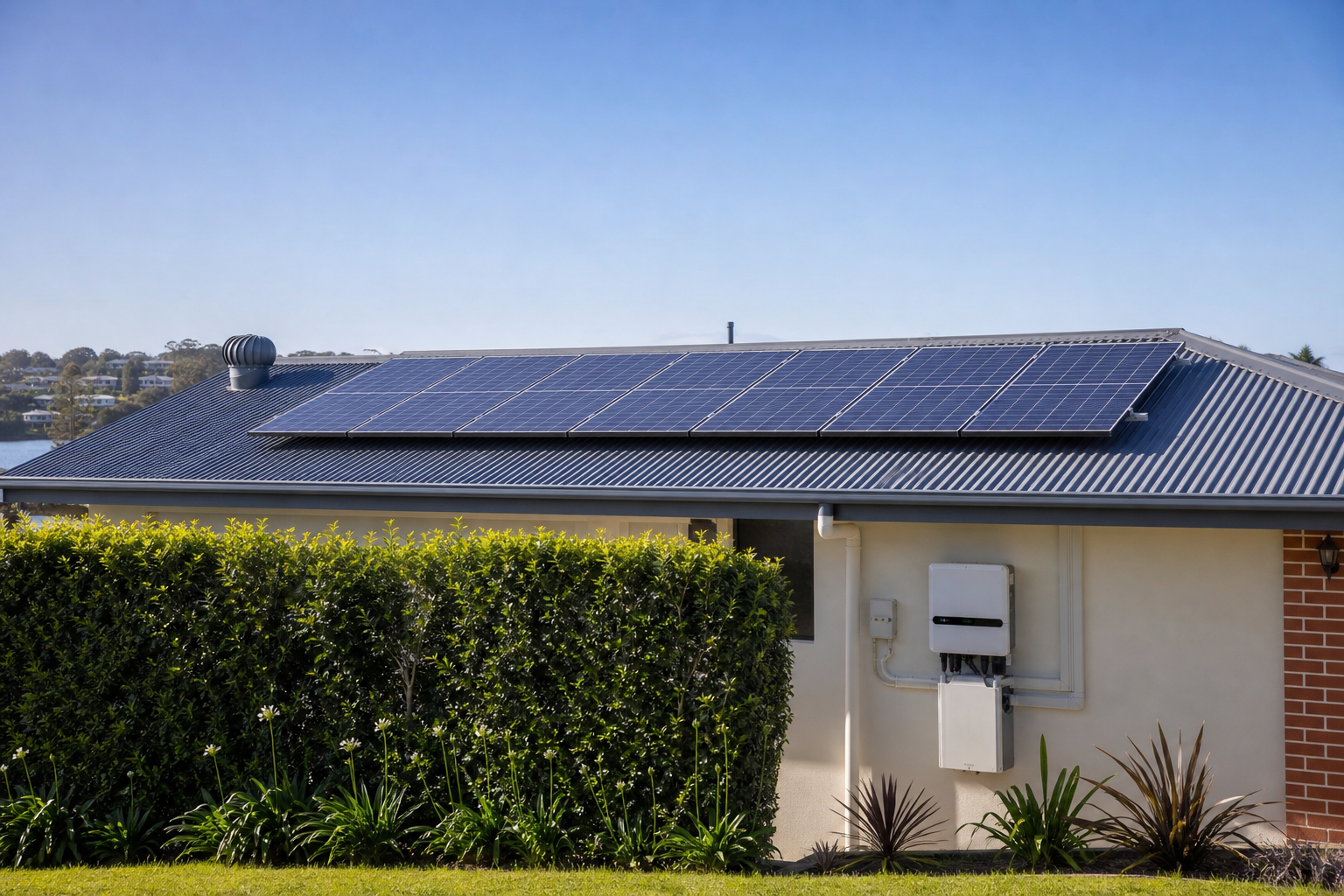
To qualify for the federal Cheaper Home Batteries Program, a Sungrow battery installation must meet several conditions set by the Clean Energy Regulator:
- Installed on or after 1 July 2025, with a nominal capacity between 5 kWh and 100 kWh
- The battery model must appear on the Clean Energy Council approved battery list (all current Sungrow SBR and SBH models qualify)
- Paired with new or existing rooftop solar of up to 100 kW
- Installed by an installer accredited through Solar Accreditation Australia, using VPP-capable equipment
- The rebate only applies to the first 50 kWh of usable capacity per property
NSW households can typically stack a state-based Peak Demand Reduction Scheme incentive on top of the federal rebate, and some retailers offer an additional payment for enrolling the battery in a virtual power plant (VPP). Full current eligibility details are published by the Clean Energy Regulator and the NSW Government’s energy.nsw.gov.au. Note that installer accreditation transferred from the Clean Energy Council to Solar Accreditation Australia in 2024, so ask any installer for their current SAA accreditation number rather than an old CEC card.
Step-by-Step: How a Sungrow Battery Installation Sydney Homeowners Trust Actually Works
- Site assessment: our team reviews your switchboard, roof orientation, existing solar (if any) and daily energy use to size the right SBR model.
- System design: we confirm whether a single or three-phase Sungrow hybrid inverter is needed, and check DNSP (Ausgrid or Endeavour Energy) export limit rules for your address, since export limits affect how much solar you can size alongside the battery.
- Approvals: we lodge the DNSP connection application and STC/rebate paperwork on your behalf, so you are not chasing forms.
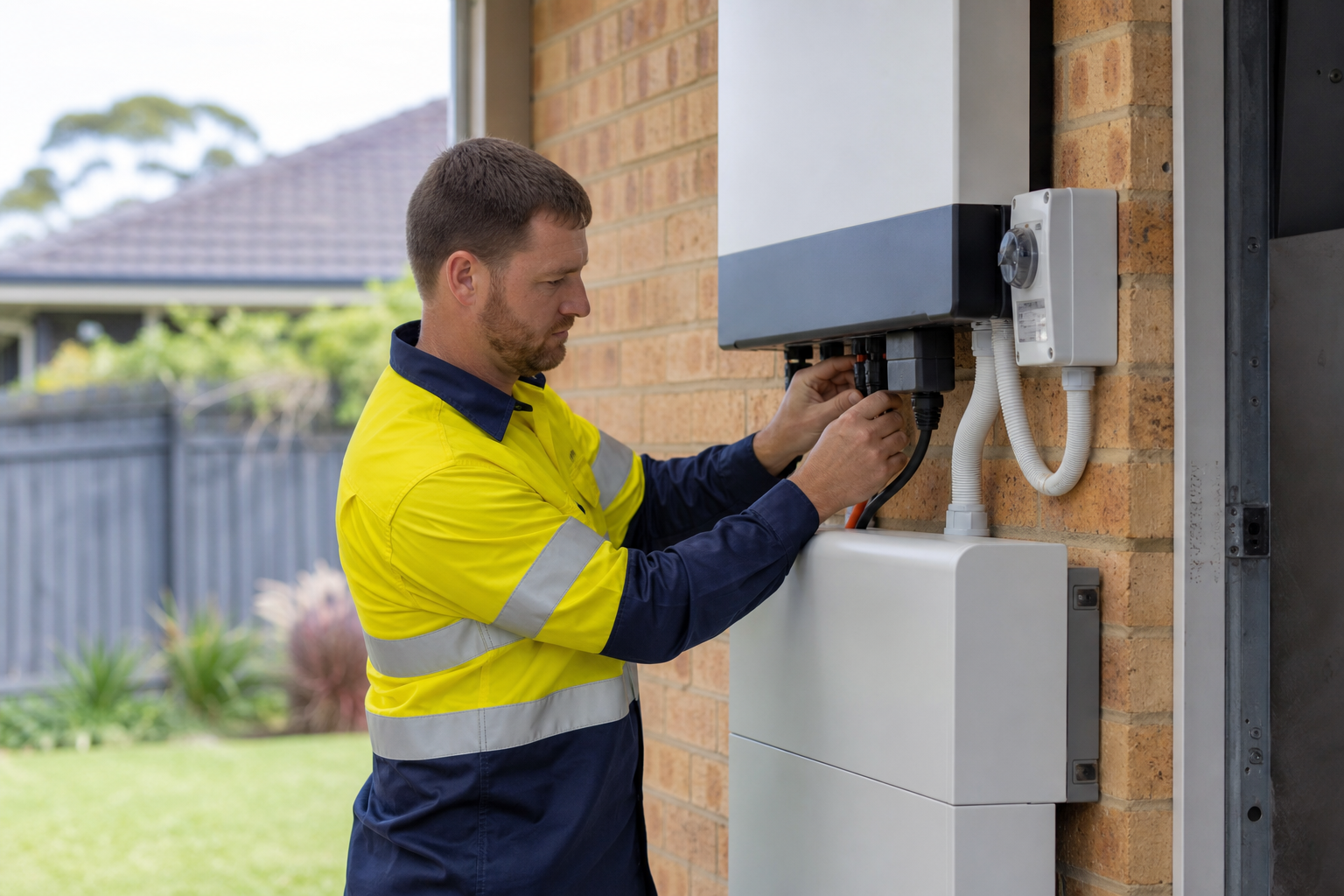
- Installation day: our in-house licensed electricians mount the battery, wire it to the hybrid inverter and switchboard, and commission the system. Most single-battery installs take one day; combined solar and battery installs typically take one to two days.
- Commissioning and handover: we set up the Sungrow monitoring app, walk you through backup and time-of-use settings, and register the system for warranty before we leave site.

Payback Period for a Sungrow Battery Installation in Sydney
Most Sydney households on a time-of-use tariff see payback in 6 to 9 years on a standalone battery retrofit, and closer to 4 to 6 years when the battery is installed alongside new solar, because the combined system captures more free daytime solar rather than exporting it at a low feed-in tariff. NSW’s IPART benchmark feed-in tariff for 2026-27 sits at just 3.4 to 6.5 cents per kWh, while grid import runs 30 to 40 cents per kWh, so every kWh of solar stored and self-consumed is worth roughly 5 to 10 times more than exporting it to the grid.
Households on a flat tariff see a smaller but still meaningful saving, since the battery still shifts overnight and evening peak-hour usage onto stored solar rather than grid electricity. Enrolling a Sungrow battery in a VPP program can add further ongoing credits on top of the up-front rebate, though VPP terms and payment structures vary by provider and are worth comparing before signing up.
Backup Power: What Happens in a Blackout?
Sungrow’s SBR series supports backup mode, which keeps selected circuits, or the whole home depending on your switchboard setup, running during a grid outage. This requires a backup box or an integrated backup switch to be installed alongside the battery, which our team scopes during the initial site assessment so there are no surprises on install day. Backup capacity is also limited by how much energy is stored in the battery at the time of the outage, so households wanting maximum blackout resilience often size up slightly beyond their average daily solar self-consumption needs.
Maintenance and Monitoring
A Sungrow battery installation Sydney households choose generally needs very little ongoing maintenance. The Sungrow app gives real-time visibility of charge state, solar generation and grid import/export, and firmware updates are pushed automatically over the internet connection set up during commissioning. We recommend a visual check of the battery unit and a look at the app history every few months, and a professional system health check every one to two years, particularly once the standard inverter warranty period is approaching its end.
Why Choose Interactive Solar for Your Sungrow Battery Installation
Interactive Solar has installed more than 1,300 solar and battery systems across Sydney, supplying over 10 MW of solar capacity with a 15-strong in-house team, our own warehouse and showroom, and no subcontracted electricians. That means the person quoting your Sungrow battery is backed by the same team that installs and services it. You can read genuine customer feedback from our 134-plus Google reviews on our reviews page, browse completed projects in our gallery, or see our full solar battery range.
If you already have solar and are retrofitting a battery, our residential solar team will check your existing inverter compatibility first. If you are installing solar and a Sungrow battery together, ask about our current solar specials, or read more about our team on our our company page. For a full walkthrough of the installer accreditation and consumer protections you should expect from any solar retailer, the Clean Energy Council’s Solar Retailer Code of Conduct is a useful independent reference:
Ready to get started? Contact our team for a free site assessment and a fixed quote for your Sungrow battery installation.
Frequently Asked Questions
How much does a Sungrow battery installation cost in Sydney?
A Sungrow SBR battery installation in Sydney typically costs $9,000 to $19,500 installed before rebates, or roughly $5,500 to $14,500 after the federal Cheaper Home Batteries Program discount, depending on the model size (6.4 kWh to 25.6 kWh).
Is Sungrow a good battery brand for Australian conditions?
Yes. Sungrow has run a local Sydney office since 2012, its batteries carry a 10-year warranty, and the SBR and SBH series both appear on the Clean Energy Council’s approved battery list, which is a prerequisite for federal rebate eligibility.
Can I add a Sungrow battery to my existing solar system?
In most cases yes, provided your existing inverter is compatible or is replaced with a Sungrow hybrid inverter. Our team checks this during the initial site assessment before quoting, so there are no surprises once installation day arrives.
What rebates apply to a Sungrow battery installation in Sydney?
The federal Cheaper Home Batteries Program applies to CEC-approved batteries between 5 kWh and 100 kWh installed by an accredited installer, paying support on the first 50 kWh of usable capacity. NSW households can often stack an additional state-based incentive on top.
How long does a Sungrow battery installation take?
Most single-battery retrofits are completed in one day by our in-house electricians, including switchboard work and commissioning. Combined solar and battery installations typically take one to two days depending on system size.
Does a Sungrow battery work during a blackout?
Yes, with a backup box or integrated backup switch installed alongside the battery, selected circuits or the whole home can continue running during a grid outage, limited by how much charge is stored at the time.
Which Sungrow battery size is right for my home?
Most 3-4 person Sydney households with a 6.6-10 kW solar system suit the 9.6 kWh SBR096, while larger homes with pool pumps, ducted air conditioning or EV charging typically need 12.8 kWh or more. Our team sizes this based on your actual daily usage during the site assessment.
Make Interactive Solar a preferred source in Google
One click tells Google to surface our articles more often in Top Stories, AI Overviews and AI Mode.