Solar Power to Charge Car Battery: A 2026 NSW Guide
Last updated:
If you have purchased an EV and noticed a spike in your power bill, or if you already own rooftop solar and dislike seeing surplus generation leave your home for a low feed-in return, you are asking the right question. Can solar power charge a car battery in a way that saves money and works day to day in NSW?
Yes, but only if you separate two very different jobs that people often lump together.
One job is keeping a 12V starter battery healthy in a petrol car, boat, caravan, or weekend vehicle that sits parked for long periods. That’s a small-scale maintenance setup. The other job is charging an electric vehicle traction battery that runs the car. That’s a home energy system, not a gadget.
That distinction matters because the wrong advice sends homeowners down the DIY path when what they really need is proper system design, charger integration, and export-aware control. A serious EV setup needs to work with your roof space, switchboard, inverter, charging habits, and household load. If you’re weighing up the economics first, it helps to understand the broader cost of solar panels in NSW before you decide how far to go with panels, battery storage, or EV charging hardware.
Harnessing the Sun for Your Vehicle
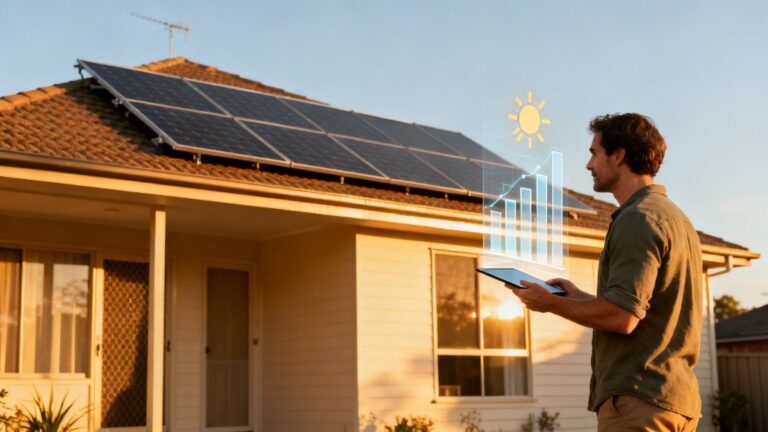
For NSW households, charging from solar is one of the cleanest ways to get more value from both your roof and your car. It turns daytime generation into kilometres instead of letting that energy spill to the grid when no one is home.
The phrase solar power to charge car battery sounds simple, but it covers two completely different setups. A small panel on the dash or garage roof can help maintain a 12V battery. It can’t do the heavy lifting required for a modern EV.
That’s where many guides go wrong. They talk about portable solar kits and battery tenders, then suggest the same approach scales up to electric cars. It doesn’t.
A trickle charger maintains a battery. An EV charging system powers transport.
For homeowners with an EV, the primary opportunity isn’t a portable panel. It’s an integrated setup that captures daytime solar, measures household demand, and sends surplus energy where it has the most value. In most homes, that means the charger needs to respond to what the house is doing in real time.
A good system also has to match the way people live. Some households can charge during the day. Others leave early and return late. Some have one EV now and a second one on the horizon. The right answer depends less on marketing claims and more on load patterns, roof layout, and whether you want a basic charger or a system that’s designed to maximise self-consumption.
Two Paths for Solar Car Battery Charging
There are only two practical paths here. One is simple and cheap. The other is proper home infrastructure.
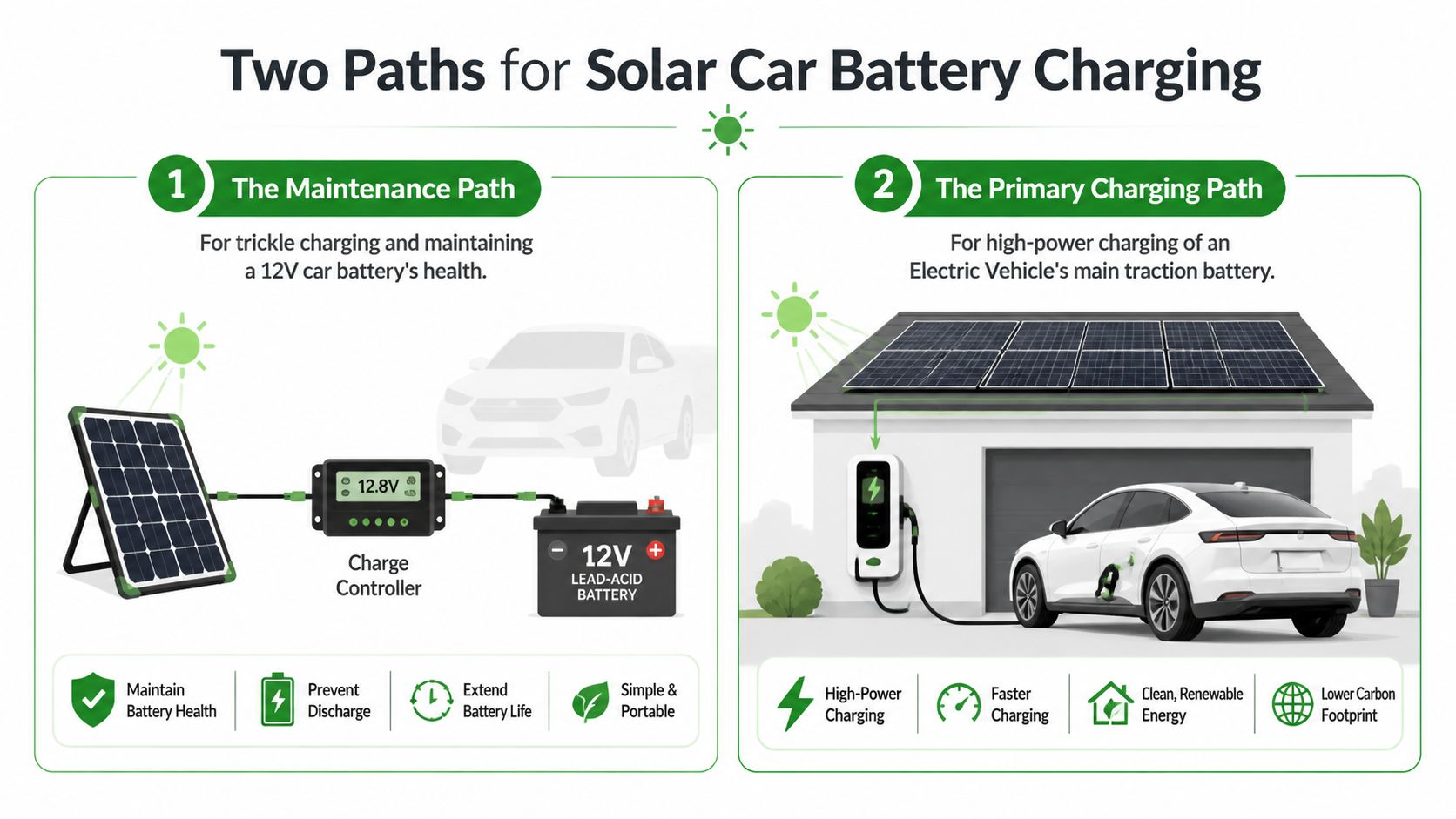
The maintenance path
If you’ve got a petrol or diesel car that sits in the driveway, a small solar panel can help stop the 12V battery from going flat. The same applies to caravans, boats, farm utes, and spare vehicles that don’t get driven often.
This setup is usually straightforward:
- Small solar panel for light battery maintenance
- Basic charge controller so the battery isn’t overcharged
- 12V connection method such as clamps, a fused direct connection, or a suitable socket
- Good placement with consistent sun and minimal shading
This path works because the job is small. You’re only replacing the slow standby losses that drain a starter battery over time. You are not trying to add large amounts of energy quickly.
It’s a reasonable DIY task if the gear is matched properly and fused correctly. The limits are obvious though. A portable maintenance panel won’t run household loads, won’t fill an EV battery, and won’t solve rising electricity bills.
The primary charging path
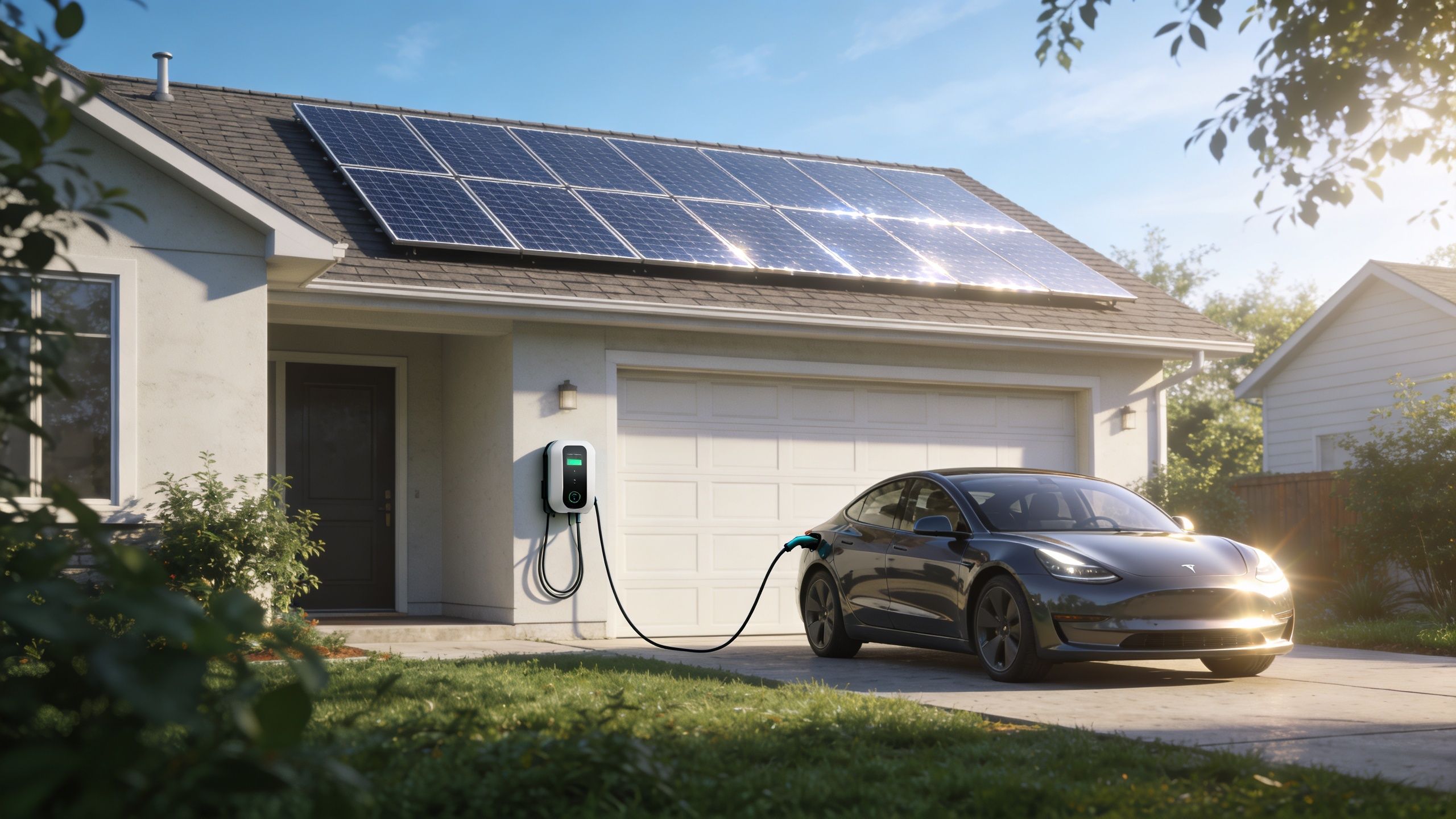
Charging an EV from solar is in another category. You need enough generation, the right inverter behaviour, and a charger that can communicate with the home energy system. That’s why households looking at proper home EV chargers should treat the project as an electrical upgrade, not a portable accessory purchase.
A working EV setup usually involves:
| Need | Typical solution |
|---|---|
| Daytime generation | Rooftop solar array |
| Solar conversion and control | Smart inverter |
| Safe vehicle charging | Dedicated wall-mounted EV charger |
| Better use of excess energy | Load monitoring and smart diversion |
| Night-time flexibility | Optional solar battery |
The purpose is different too. A 12V maintainer keeps a battery alive. An EV charging system needs to deliver useful driving range, consistently, without creating switchboard issues or pushing unnecessary imports from the grid.
Practical rule: If your aim is “keep the battery from dying”, small solar may be enough. If your aim is “run the car from the roof”, you need a designed system.
That’s why serious EV owners are usually better served by a professionally installed setup. It’s safer, more effective, and far more likely to give you the result you expected when you started looking into solar power to charge car battery options.
Essential Components for a Home Solar EV Charging System
A reliable home EV charging setup has four core parts. If one is wrong, the rest of the system can’t perform properly.
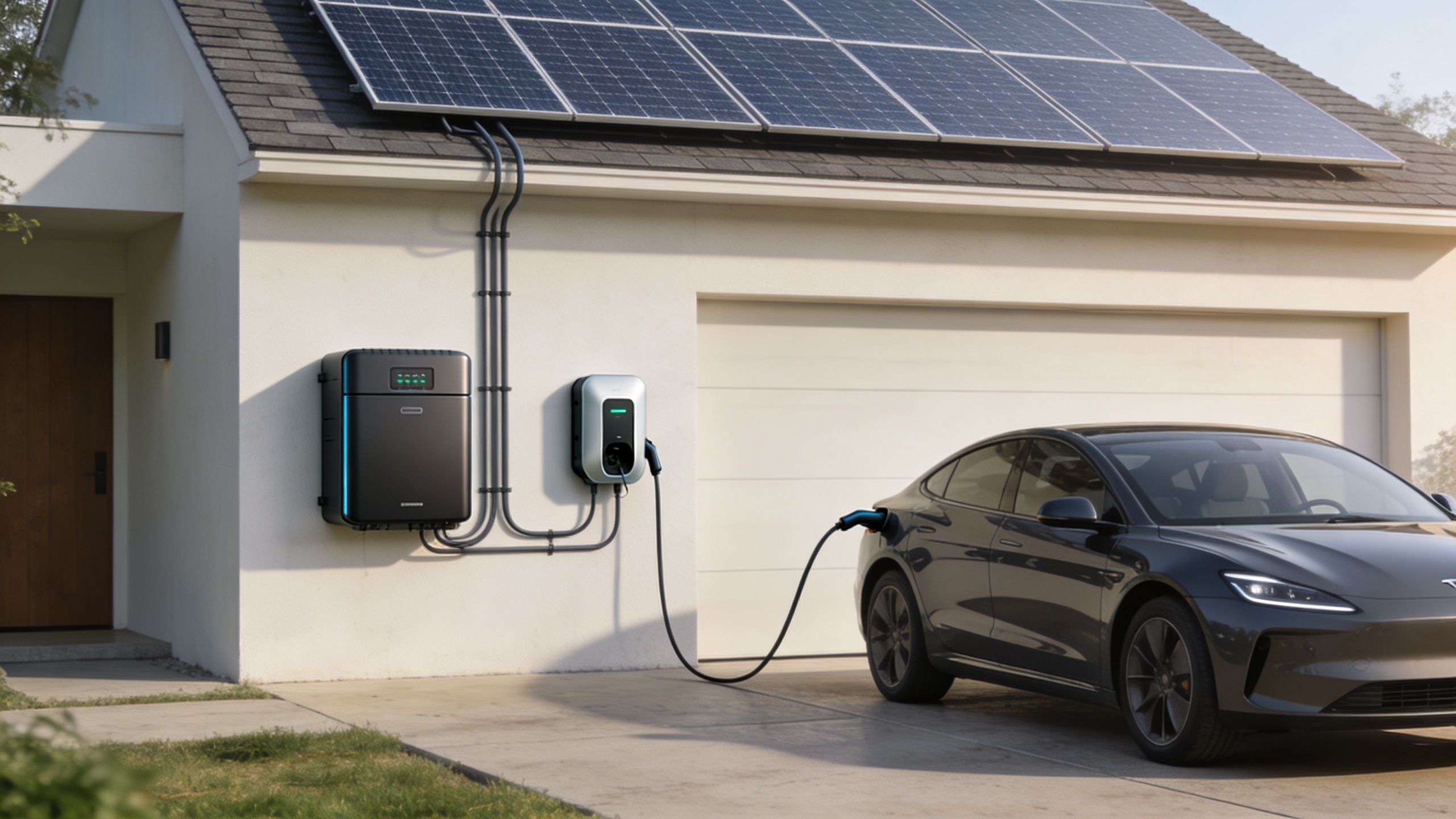
Solar panels that suit the roof, not just the brochure
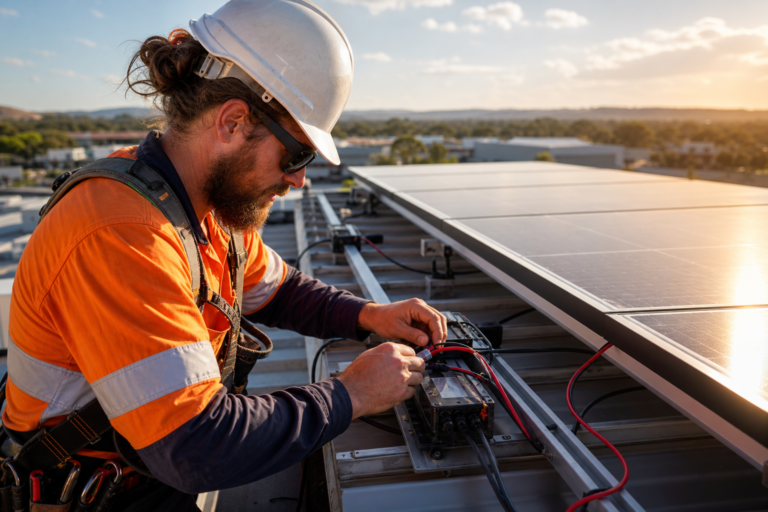
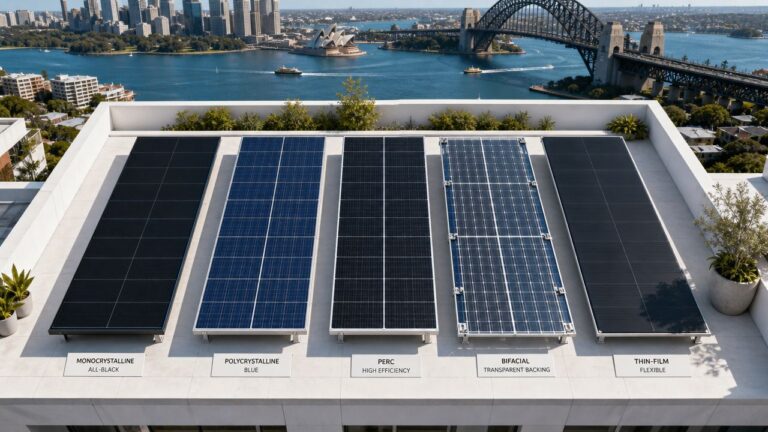
Panels are the fuel source. In NSW, roof space, orientation, shading, and panel quality all matter because the charger can only use what the roof is producing.
A system designed around EV charging usually needs to do more than offset the home’s daytime appliances. It has to create usable excess at the same time the car is plugged in, or produce enough overall generation that stored energy can be used later if a battery is added.
Good design starts with roof reality:
- Usable roof area matters more than headline panel wattage.
- Shade exposure changes output through the day.
- Panel layout needs to work with inverter sizing and household demand.
- Future plans matter if you expect a second EV or battery later.
The inverter is the brains of the system
Most homeowners focus on the panels first. For EV charging, the inverter deserves equal attention. Control is executed there.
Inverters from brands such as Fronius and SolarEdge are often discussed because they support the kind of monitoring and control needed for smarter energy use. In a well-designed setup, the inverter doesn’t just convert solar power. It also works with export limiting, household load monitoring, and charger behaviour.
That matters because poor control wastes solar. Recent Clean Energy Council reports from Q1 2026 highlight that 15% of Sydney EV owners waste 20-30% of their solar production due to the lack of smart energy diversion, a problem solved by professionally installed systems with CT clamps and zero-export limiters, as noted in this discussion of automating excess solar for EV charging.
If you want a broad homeowner-friendly explanation of charger selection, safety, and setup choices, this expert advice on home EV charging is a useful companion read.
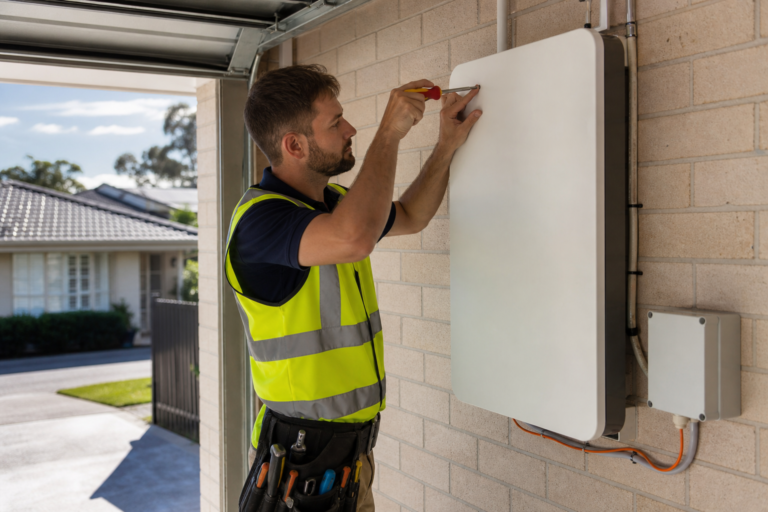
A dedicated wall charger beats a standard socket
Technically, some EVs can charge from a normal power outlet with the manufacturer’s portable cable. In practice, that’s usually the slowest and least elegant option for a household that wants to use solar properly.
A dedicated wall-mounted charger gives you better control over:
- Charging schedules during solar production hours
- Load management with the rest of the house
- Solar-only or eco charging modes on compatible systems
- Daily convenience because the cable stays in place
That’s also where the user experience changes. Instead of just plugging in and hoping for the best, you can tell the system how to behave.
A quick walkthrough helps make that clearer:
Battery storage changes the timing problem
Solar production happens in the middle of the day. Many EV owners need charging flexibility outside those hours. That’s where a battery can make the whole system far more useful.
Adding storage doesn’t just help with evening charging. It also lets the house hold onto excess generation instead of exporting it away. For homeowners considering that next step, it’s worth understanding how solar batteries fit into a broader self-consumption strategy.
The best EV charging system isn’t the one with the biggest spec sheet. It’s the one that matches generation, charging times, and household behaviour without constant manual work.
System Sizing and Real-World Setup Examples
The right size depends on how far you drive, when you’re home, and how much of your existing solar production is spare.
A useful benchmark in Sydney is this. A standard 6.5kW rooftop solar system can generate 26-39 kWh on a sunny day, which is enough to charge a typical 65 kWh EV battery from 20% to 80%. When properly sized, it can offset 70-100% of grid reliance, with average annual fuel-equivalent savings reaching up to $1,500, according to this summary of solar EV charging facts in Australia.
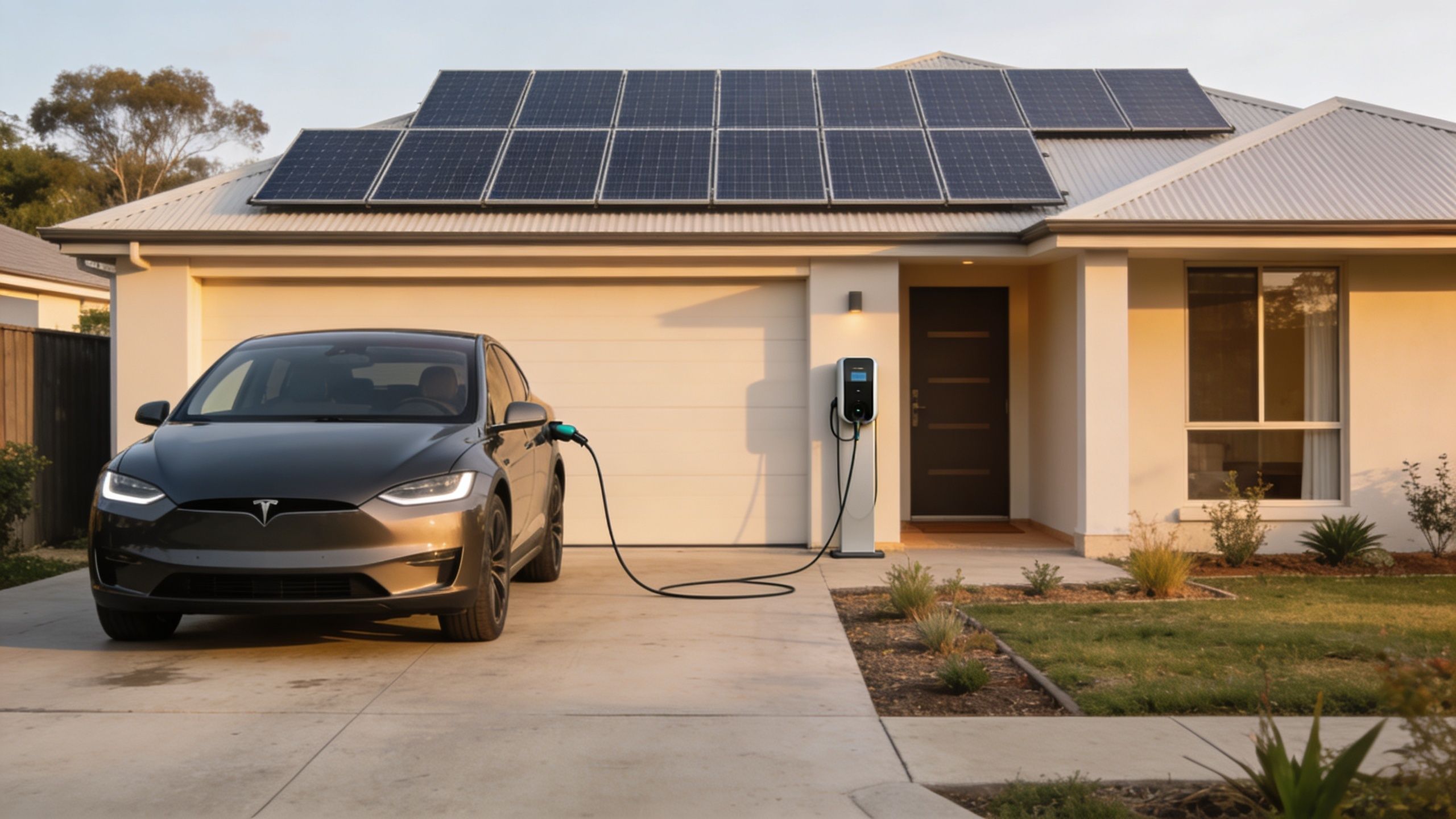
Example one for a daily Sydney commuter
Take a homeowner who commutes around the city most weekdays and plugs in when they get home or works from home a few days a week. If their driving is modest, they usually don’t need a giant system dedicated only to the car.
The key question is whether the roof can create enough daytime surplus to cover the driving energy over the week. In many homes, a standard-sized solar system can do that comfortably during good solar conditions, especially if charging is scheduled for the middle of the day rather than the evening peak.
That homeowner gets the best result from three design choices:
- Charging in daylight when solar is strongest
- Using smart charger modes that track surplus generation
- Checking existing household loads so the EV doesn’t force grid imports
For a lot of single-EV households, the system doesn’t need to be oversized. It needs to be coordinated.
Example two for a growing family in greater NSW
A different picture emerges when a household has heavier air conditioning use, larger daytime demand, or plans for another EV. In those homes, the charger is competing with a lot more load.
That’s where future-proofing matters. A family that installs only enough solar for today’s appliance usage may find the EV pushes them back onto the grid far more than expected. If they later add a second vehicle, the mismatch becomes obvious.
Future-minded design: Size the system for the household you’re becoming, not just the one you are today.
In practical terms, that often means looking beyond panel count alone. Inverter capability, charger integration, and battery readiness become part of the design conversation. If you’re comparing storage options to support that kind of setup, a detailed battery comparison guide can help frame the trade-offs.
What sizing discussions should include
A proper sizing conversation should cover more than your last electricity bill.
- Driving pattern including how often the car is home during solar hours
- Home load profile so pool pumps, ducted air, and cooking loads aren’t ignored
- Roof constraints such as orientation, tilt, and shade
- Expansion plans including another EV, battery storage, or future electrification
The biggest mistake is designing around a perfect sunny day and ignoring the rest of the year. The best systems handle normal life well, not just ideal conditions.
Installation Safety and Australian Standards
Charging an EV from solar involves serious electrical work. That includes rooftop DC, inverter configuration, switchboard integration, load monitoring, and charger installation. This is not the place to improvise.
Australian standards matter because poor installation creates more than inconvenience. It can create heat, nuisance tripping, equipment faults, non-compliant export behaviour, and in the worst cases, fire risk. For grid-connected solar and battery systems, installers need to work within AS/NZS 4777 requirements. For wiring and electrical work more broadly, AS/NZS 3000 remains fundamental.
Why licensed installation matters
A compliant EV charging setup has to be right at several points at once. The cabling must suit the load. Protection devices need correct selection and placement. CT clamps have to be installed and configured properly if the charger is meant to follow solar surplus. Export control settings must align with the site and network conditions.
That’s why experienced electricians matter. They don’t just mount hardware. They design around real switchboards, existing circuits, service limitations, and utility rules.
A similar principle applies in other parts of home electrification too. Households comparing broader energy upgrades often benefit from practical trade-based resources such as this guide to solar hot water solutions, because it shows how product choice and installation quality affect long-term performance.
Apartments and strata need even more care
Detached homes are usually the easiest case. Apartments and strata are different.
In NSW, navigating strata laws like the Strata Schemes Management Act 2015 is a major hurdle for apartment EV charging. Professional installers are required to design compliant solutions, from small balcony setups to shared canopies, as discussed in this overview of solar-powered EV charging in strata settings.
That’s one reason generic DIY advice falls apart in multi-residential buildings. The issue isn’t only whether the charger works. It’s whether the installation is legal, safe, approved, and supportable over time.
Consumer protections matter too
Homeowners should also pay attention to paperwork, warranties, approved products, and installer accountability. The framework around the New Energy Tech Consumer Code is relevant because it speaks directly to how quotes, performance expectations, and after-sales support should be handled.
Compliance isn’t red tape for its own sake. It’s what separates a system that works safely for years from one that causes avoidable problems.
For NSW homeowners, that’s the indispensable part of the project.
Maximising Your Investment with Smart Charging
Once the system is installed, the next step is using it properly. At this stage, many homes either get strong results or inadvertently leave savings on the table.
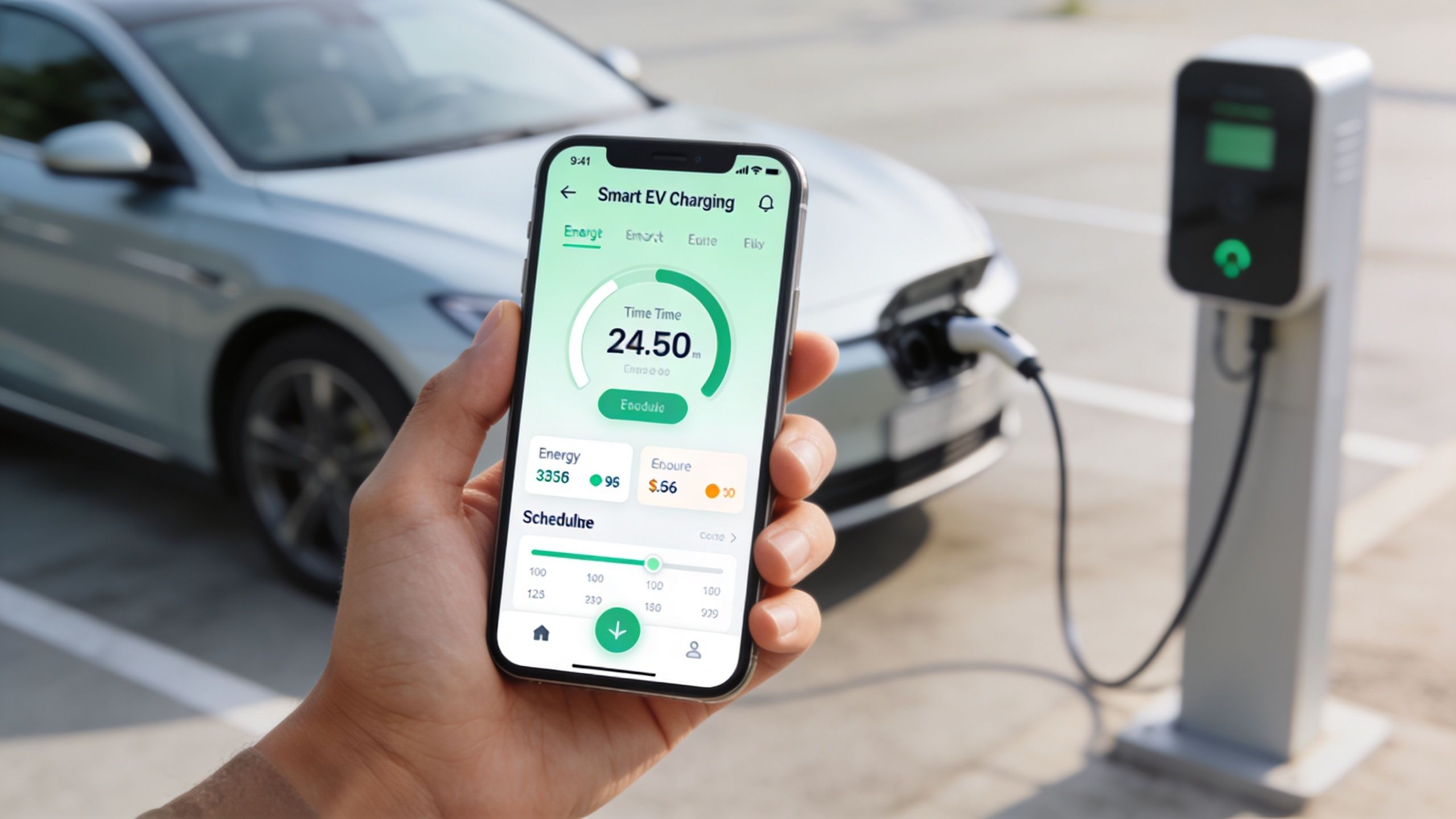
Use solar-only or eco charging modes
Modern chargers often include modes that follow available solar generation rather than pulling a fixed amount from the grid. When the home has surplus production, charging ramps up. When clouds roll over or the oven turns on, charging can scale back.
That behaviour matters in a real household because solar output and home consumption are always moving. The charger should respond to that movement, not ignore it.
A few practical habits make a big difference:
- Enable solar-priority charging if your charger and inverter support it.
- Review charger app settings after installation rather than leaving factory defaults.
- Match charging windows to daytime generation where possible.
- Check for load balancing features if the house has large appliances running at the same time.
Divert surplus before exporting it
The most effective systems monitor what the house is importing or exporting in real time. If there’s excess solar, the system can send that energy to the EV before exporting it away.
CT clamps and smart controls earn their keep. They allow the charger and inverter to see the home’s energy flow and adjust charging to suit. Without that visibility, homeowners often assume the EV is charging from solar when part of the session is drawing from the grid.
For readers exploring international perspectives on this type of charger control, this overview of ontdek slimme laadoplossingen offers a useful look at how smart charging features are framed in the broader EV market.
Build your routine around solar production
Technology helps, but routine still matters. If you can plug in during the middle of the day, you make the system’s job much easier.
A practical routine often looks like this:
| Situation | Smarter charging move |
|---|---|
| Working from home | Charge during the strongest solar window |
| Office commute | Use weekend daytime charging to catch up |
| High household daytime load | Delay EV charging until other major loads ease |
| Frequent evening charging | Consider battery storage for flexibility |
Small settings changes can shift charging from “partly solar” to “mostly self-consumed solar”.
The households that get the best value usually do two things well. They install hardware that can communicate properly, and they spend a little time setting the system up around actual daily use.
Take Control with a Professionally Installed System
For a standard 12V battery, a small solar maintainer can be perfectly useful. It’s simple, low-power, and built for a narrow job.
For an EV, the conversation changes. You’re no longer maintaining a battery. You’re building a home energy system that needs enough generation, proper electrical design, compliant installation, and smart control if you want solar power to charge car battery needs in a way that effectively cuts bills.
That’s where professional design makes the difference. It helps you avoid undersized arrays, incompatible hardware, poor charger behaviour, and the frustration of owning solar without using it effectively. It also gives you a system that can evolve with the household if you add battery storage, change vehicles, or electrify more of the home.
Interactive Solar is a family-owned NSW provider with over 20 years of combined experience, in-house installation teams, and fully licensed electricians under Licence #329360c. The company manages the process from consultation and design through installation and after-care, which is exactly what serious EV charging projects need.
If you want a setup that’s designed around your roof, your switchboard, and the way you drive, skip the guesswork and get the system planned properly from the start.
If you’re ready to stop exporting usable solar and start turning it into kilometres, speak with Interactive Solar. The team can assess your home, driving habits, and existing electrical setup, then design a solar, battery, and EV charging solution that fits your NSW property properly.
Make Interactive Solar a preferred source in Google
One click tells Google to surface our articles more often in Top Stories, AI Overviews and AI Mode.