EV Charger Installation Cost NSW 2026: Guide & Savings
Last updated:
You’ve picked up the new EV, downloaded the apps, and worked out your first charging routine. Then the next question lands. What’s it going to take to install a proper charger at home?
Many begin by looking for one number. They want a tidy figure that tells them what the job should cost. In practice, ev charger installation cost in NSW doesn’t work like a flat retail shelf price. The charger itself is only one part of the job. The property, switchboard, cable path, parking layout, and compliance requirements shape the overall scope.
That’s why two homes in the same suburb can end up with very different quotes. One might have a modern switchboard and a garage wall right beside it. Another might have an older board, limited capacity, and a long path to a carport at the far end of the house. Both owners are “installing an EV charger”, but the electrical work behind those words is completely different.
The useful question isn’t “what’s the standard price?” It’s “what is my house going to require for a safe, compliant, future-proof installation?” If you understand that, you can read a quote properly, avoid false savings, and make better decisions before a cable is ever pulled.
Your New EV is Here What About the Charger
A lot of new EV owners hit the same moment. The car is in the driveway, the handover is done, and the excitement is real. Then you look at the charging cable that came with the car and start asking whether that’s enough, whether you need a wall charger, and why one installer says the job is straightforward while another says the switchboard has to be checked first.
That confusion is normal.
A home charger isn’t like buying a kitchen appliance and plugging it in. It’s an electrical installation that has to suit your vehicle, your usage pattern, and your home’s existing infrastructure. If the quote feels more detailed than expected, that’s usually a good sign. It means the installer is looking at the actual job, not guessing.
The biggest mistake homeowners make is assuming the charger determines the whole cost. It doesn’t. The charger is one line item. The primary variables are what sits behind the wall, how far power has to travel, whether the switchboard can support a dedicated circuit, and what compliance work is needed to make the installation safe and legal.
For homeowners comparing options, a good starting point is understanding the kinds of home EV charging solutions available in NSW. Once you know the charging style that suits your routine, the installation side makes much more sense.
A clean quote should explain the work, not hide it. If you can’t tell why the number changes from one property to the next, you’re missing the most important part of the decision.
Understanding the Basics of a Standard Installation
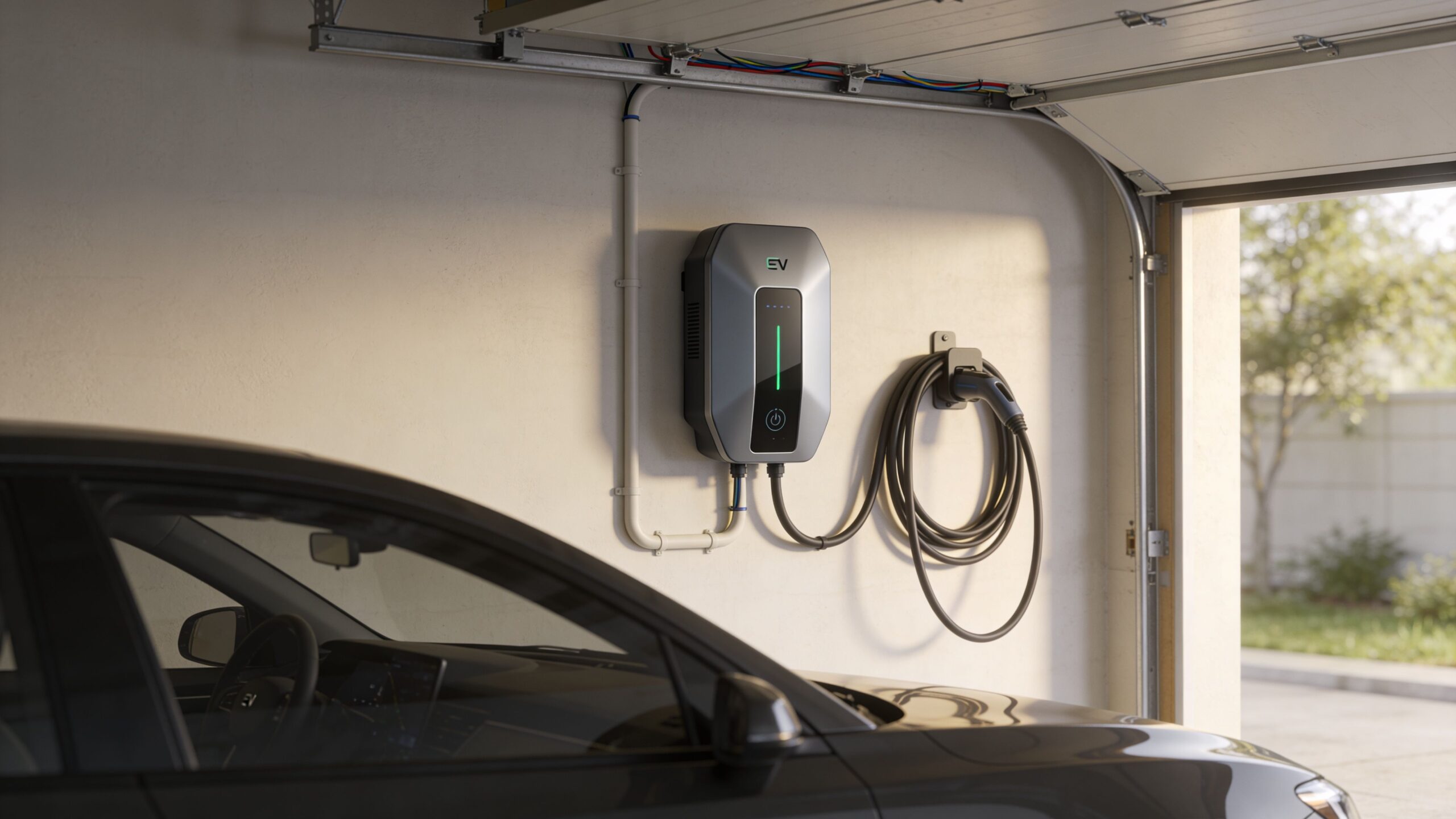
A standard home EV charger installation usually means a Level 2 wall charger, mounted in a practical location and supplied by its own dedicated circuit from the switchboard. In NSW, that is the baseline most homeowners are pricing against. The reason quotes still vary is simple. Very few homes are identical once you look behind the wall.
The term "standard" can also be misleading. It does not mean every job is cheap or simple. It means the property has the right conditions for a straightforward install. Good switchboard capacity, a short cable run, safe access, and no hidden rectification work. If one of those pieces is missing, the price changes because the labour, materials, and compliance work change with it.
Level 1 and Level 2 solve different problems
The portable charging lead that comes with many EVs can be enough for occasional use or very low daily kilometres. It is slow, and for many households it becomes a stopgap rather than a long-term solution.
A Level 2 charger is built for regular home charging. It runs on a higher-capacity circuit, charges faster, and gives the installer more control over protection, cable sizing, and smart features. That matters if the car is driven every day, if charging needs to happen overnight, or if the homeowner wants to coordinate charging with rooftop solar.
The charger itself is only part of that decision. The home has to support it properly.
What a standard installation usually includes
A proper EV charger install is an electrical job first and a hardware job second. The visible box on the wall is the easy part. The primary work is making sure the charger can run safely for long periods without overloading existing infrastructure.
A typical scope includes:
- The charger unit. This may be a basic model or a smarter unit with scheduling, app control, load management, or solar compatibility.
- A dedicated circuit from the switchboard. EV charging is a sustained electrical load, so it should not share with general power circuits.
- Circuit protection and any charger-specific safety requirements. The exact protection depends on the charger model and the site design.
- Cable, conduit, isolators, and mounting hardware where required. These are selected based on current draw, distance, exposure to weather, and how the cable route can be installed neatly and safely.
- Testing, commissioning, and setup. The job is not complete when the charger powers on. It needs verification, configuration, and a final check that it operates as intended.
This is also where workmanship matters. A charger can be technically installed and still be a poor job if the cable route is messy, the mounting location is awkward, or the installer has cut corners on presentation and future serviceability. That is why quality electrical installation work affects value just as much as the charger brand.
The fixed requirements and the flexible choices
Homeowners do have some control over cost.
Charger brand is a choice. Smart features are a choice. Charger location is often a choice, within reason. If the vehicle can be parked closer to the switchboard, that may reduce cable length and labour. If outdoor mounting can be avoided, that can simplify the job too.
Other parts are necessary. The circuit has to be designed correctly. The switchboard has to be assessed properly. Protection devices have to suit the charger and the installation method. Compliance is not an optional extra added to make the quote look bigger. It is part of doing the job legally and safely.
That distinction is where many quotes separate. A low number can look attractive until it leaves out switchboard upgrades, protection changes, or time needed to run cable through a difficult roof space.
Hardwired versus plug-in comes down to use, location, and long-term plans
Homeowners often ask whether a plug-in charger will save money. Sometimes it can, but only if the existing electrical setup already suits that approach and the charger location is protected. In many homes, a hardwired charger is the cleaner and more durable option, especially outdoors or where the charger will stay in place for years.
From an installer's point of view, the decision is about control and reliability. Hardwired setups usually give fewer points of failure and a tidier finish. Plug-in setups can suit the right property, but they still depend on the circuit behind them being designed correctly.
If you have ever compared trade categories and wondered why one install is quoted as a simple fit-off while another turns into a larger electrical job, the principle is similar to other fixed services with hidden infrastructure. Guides on installation costs explained make the same point. The route, access, compliance requirements, and condition of existing infrastructure shape the final number.
A standard installation, then, is not a marketing label. It is a site where the electrical path from the switchboard to the charger is short, safe, and ready for the load. That is what keeps the quote closer to the lower end.
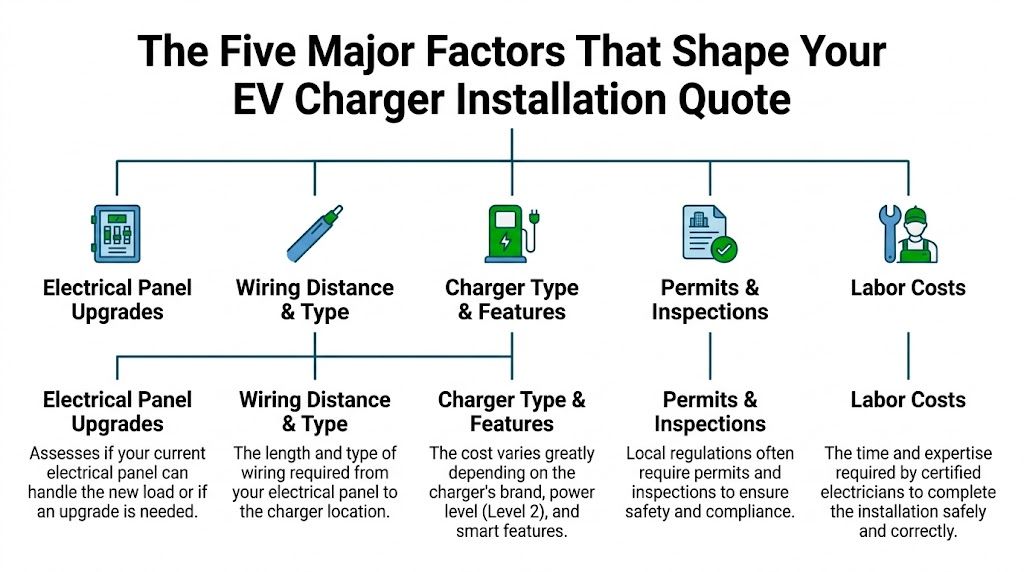
The Five Major Factors That Shape Your Installation Quote
Your car arrives on Friday. By the weekend, the next question is usually the same. Can the charger go in the garage and what will it cost? The answer depends less on the box on the wall and more on what sits behind it. A quote is really a price for creating a safe, compliant path from your switchboard to the parking spot, with enough capacity to charge properly over the long term.
1. Charger type affects more than hardware cost
The charger itself is only part of the spend. What matters more is what you expect it to do every day.
A basic unit that charges overnight can suit households that just want reliable top-ups and low upfront cost. A smarter charger can make sense if you want solar integration, scheduled charging, app control, load management, or the ability to prioritise off-peak tariffs. Those features can be worth paying for, but only if they match the way the house uses power.
I often see homeowners compare chargers by sticker price alone. That misses the core decision. The better question is whether the charger will stay a standalone appliance or become part of the home's wider energy setup.
2. Switchboard condition often decides whether the job stays simple
Quotes can quickly diverge.
An EV charger adds a sustained electrical load, and the switchboard has to handle it safely. If the board is full, outdated, missing the right protection, or already carrying heavy household demand, the installation can move from a straightforward circuit addition to a larger upgrade job. That is why two homes on the same street can get very different pricing.
The homeowner usually cannot change the age of the switchboard, but they can understand the trade-off. Spending less by forcing a charger onto marginal infrastructure is not a saving. It usually means more limitations, less flexibility, and a higher chance of needing corrective work later.
A useful comparison appears in broader installation costs explained. Different trades have different standards, but the cost pattern is familiar. Once hidden infrastructure needs work, labour and access start driving the total.
3. Cable route matters because access drives labour
Distance is only one part of the cable run. Access is usually the bigger issue.
A charger mounted close to the switchboard with open roof space above it is one type of job. A charger on the far side of the home, with tight roof access, no underfloor space, masonry walls, finished ceilings, or a long external path, is another. The longer and harder the route, the more cable, conduit, fixings, protection, and installation time the job needs.
This also affects design choices. In some homes, shifting the charger a few metres can remove hours of labour or avoid surface conduit in a visible area. That is one of the clearest ways a homeowner can influence the final investment without cutting corners.
4. Mounting location can trigger extra protection or civil work
Where the charger goes changes the build method.
A garage wall usually gives the cleanest result. The charger is protected from weather, the cable route is often shorter, and the mounting surface is easier to work with. Outdoor installs can still be done well, but they often need more weather protection, stronger mounting details, and a more careful cable path.
If the charger needs to reach a detached garage, carport, boundary wall, or open driveway, the job may involve trenching, conduit, surface protection, or reinstatement after the electrical work is done. That extra work is not optional decoration. It is what keeps the installation durable and compliant in real conditions.
| Site condition | What it usually means for the job |
|---|---|
| Charger near switchboard | Shorter route, less cable, lower labour time |
| Charger far from switchboard | More routing work, more materials, higher install complexity |
| Garage wall install | Easier mounting and protection in many homes |
| Detached or outdoor location | More weatherproofing and possible trenching or conduit work |
5. Compliance and workmanship are part of the price
A proper EV charger installation includes design decisions, protection selection, testing, and certification. It is not just a mount-and-connect job.
That matters later. Good workmanship reduces nuisance faults, keeps the charger performing properly, and avoids the sort of shortcuts that show up when you sell the house, make an insurance claim, or add more electrical equipment. Homeowners looking at the long view should pay attention to what quality electrical installation looks like on site, not just the charger brand.
Labour follows complexity and responsibility. An experienced electrician might complete a clean install efficiently, but the value is in getting the circuit design, protection, cable route, testing, and final compliance right the first time.
How a Professional Installer Assesses Your Home
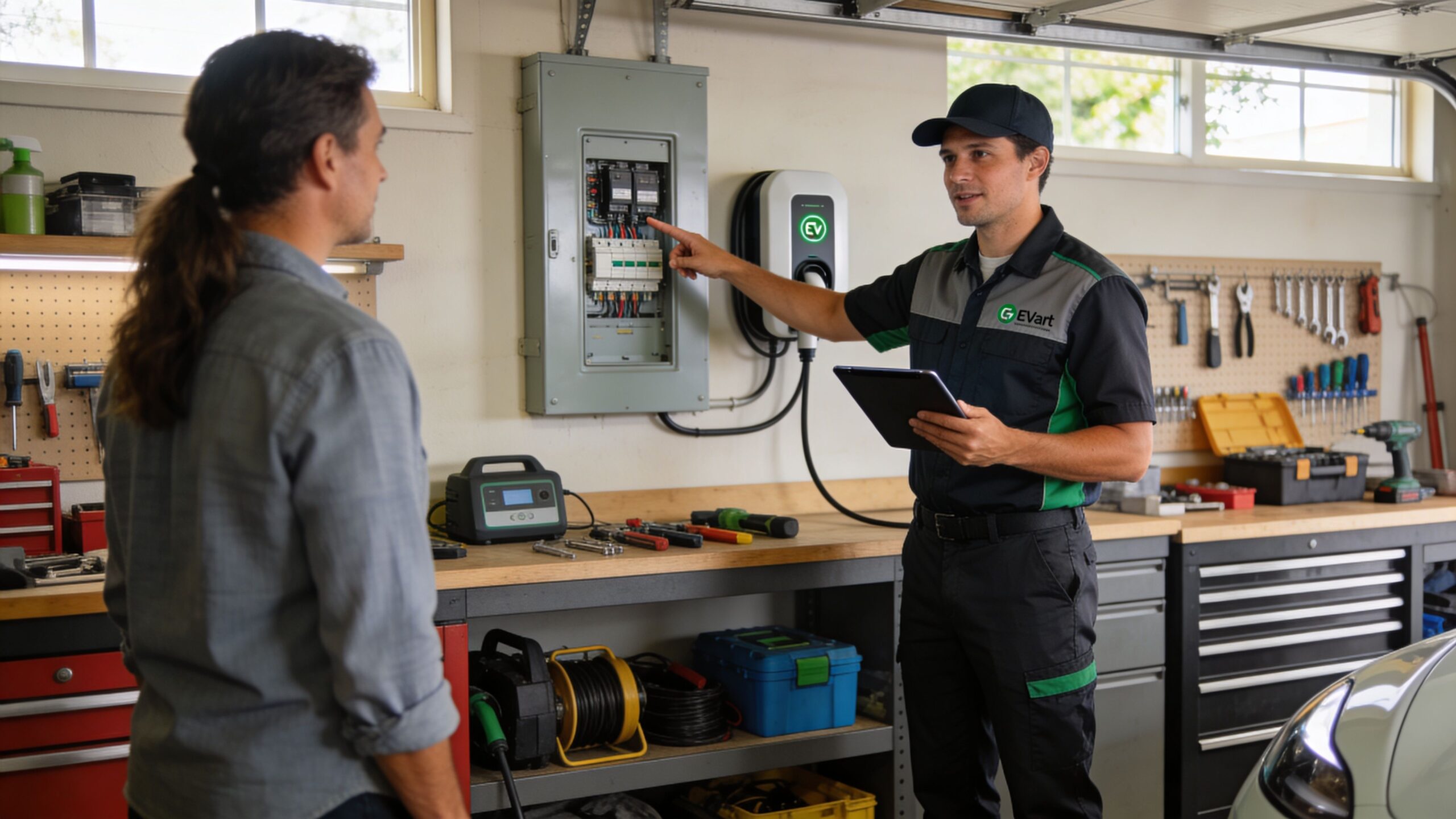
A proper EV charger quote should come from an electrical assessment, not from a guess over the phone. The visible charger location matters, but the primary decision starts at the switchboard.
The first check is load and capacity
The installer looks at what the home is already asking the electrical system to do. That includes major appliances and any existing solar or battery equipment.
The verified data for this brief states that a significant portion of installation costs can be driven by the need for a switchboard upgrade, especially in homes built before the widespread adoption of modern appliances, and that strict load assessments are required because if the existing panel cannot safely accommodate the EV charger alongside other circuits, an upgrade with appropriate safety switches is essential for compliance and hazard prevention, as cited in the reference to switchboard upgrade requirements for EV charging.
That’s why a serious installer wants to know more than just the car model. They need to understand the home’s electrical profile.
Key questions usually include:
- What major loads are already present such as ducted air, electric hot water, pool pumps, or cooking appliances.
- Whether solar or battery systems are installed because they affect design options and cable pathways.
- How the EV will be charged every night, occasionally, or around solar production.
Then the switchboard gets a physical inspection
Photos can help, but an in-person inspection is best when the site is complex.
The electrician checks the board’s condition, available ways, protective devices, service arrangement, and whether the existing layout supports a new dedicated EV circuit cleanly. Age matters, but age alone doesn’t decide the outcome. Some older boards are neatly upgraded. Some newer-looking boards still have design limitations.
If the board can support the charger safely, the job stays simpler. If it can’t, the quote has to account for the work needed to bring the installation up to standard.
Cable route planning is where experience shows
A good installer doesn’t just find a route. They find the best compliant route.
That means balancing appearance, protection, accessibility, and labour. Sometimes the shortest route isn’t the best one. A roof cavity may be quicker than chasing masonry. An external conduit path may be cleaner than opening finished internal walls.
This is also where you’ll often get useful practical advice from an experienced team. A small change in charger position can avoid a difficult crossing, save surface disruption, or leave better access around the parked vehicle.
Here’s a simple walk-through of what a site visit should cover:
Vehicle and charging pattern review
The installer checks how quickly you need to charge and whether smart control is worth it.Switchboard assessment
They verify capacity, protection, and whether upgrades are likely.Cable path mapping
They identify the safest and most efficient route from board to charger.Mounting location review
They look at height, weather exposure, cable reach, and vehicle parking habits.Compliance and handover planning
They outline what approvals, testing, and commissioning are required.
A homeowner should also know who is responsible for conduct, transparency, and documentation. That’s where broader consumer protections matter. If you’re comparing providers, it’s worth understanding the standards behind the New Energy Tech Consumer Code in Australia.
A short video can also help demystify what a proper EV charging setup involves:
The best quotes often come from the installers who ask the most questions. They’re not making the process harder. They’re reducing the chance of surprises after the work starts.
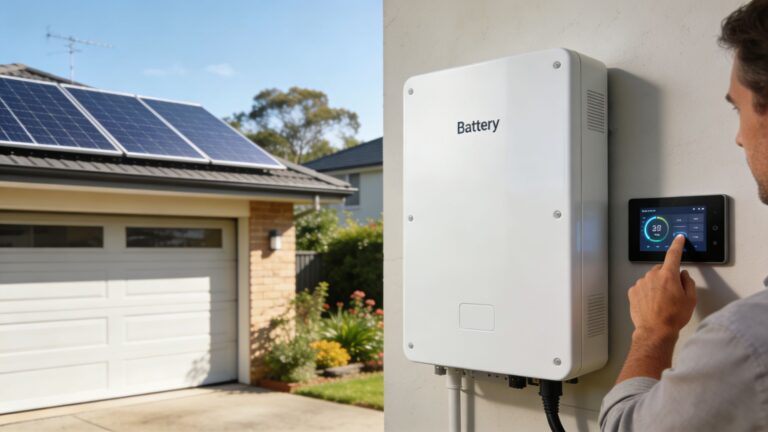
Integrating Your Charger with Solar Panels and Batteries
For many NSW households, the charger isn’t the end of the story. It’s the next piece in a home energy system that already includes solar, or should.
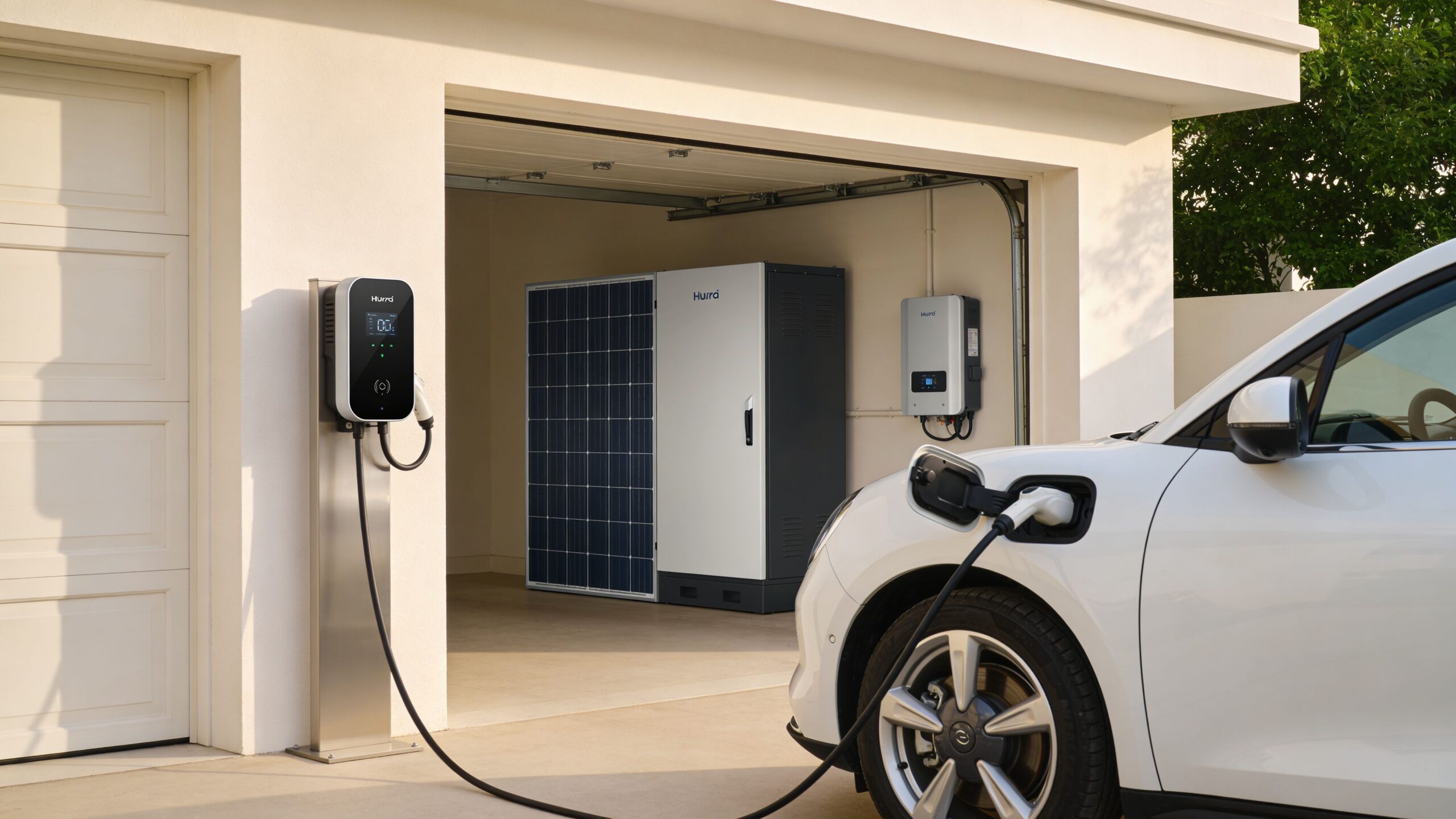
Why solar changes the value equation
A standalone charger gives convenience. A charger integrated with solar can do much more than that.
The verified data for this brief states that while there is an initial investment, installing an EV charger, particularly when integrated with a solar PV system, can lead to significant long-term savings, and that federal and state incentives are often available to reduce the upfront cost for both the charger and related solar components, improving payback by allowing the vehicle to be powered with self-generated electricity, as cited in the verified reference to solar-integrated EV charging and incentives.
That’s the key shift. Instead of seeing the charger as another appliance that increases bills, you can design it as a controlled load that uses your own generation more effectively.
What works well in practice
The strongest setups are usually the ones designed as a whole system.
That can include:
- A smart charger that responds to solar surplus so the car charges when excess generation is available.
- Charge scheduling that avoids expensive grid periods and aligns with household usage.
- Battery coordination where stored energy supports charging when the sun is down, depending on system design and household priorities.
What doesn’t work as well is adding a charger with no thought to the rest of the energy system. That can leave homeowners with a technically functional setup that misses the full financial and operational upside.
Batteries widen your options
Solar on its own is excellent for daytime charging, especially if the car is home during daylight hours. A battery changes the picture for households that want more control in the evening or overnight.
It doesn’t mean every battery should prioritise EV charging all the time. It means you have another layer of flexibility. You can decide whether stored energy supports the home first, the vehicle first, or a balance between the two.
For homeowners considering the broader picture, it helps to compare the role of solar battery storage in a home energy system before locking in charger settings or equipment choice.
The right charger is not always the biggest charger
People sometimes overspec the hardware.
If the goal is to maximise solar self-consumption, the best charger may be the one with the smartest control features, not just the highest output. Bigger isn’t automatically better if the home’s generation pattern, battery strategy, and driving habits don’t support it.
A well-matched setup gives you:
| Goal | Best design approach |
|---|---|
| Use more of your own solar | Smart charger with solar-aware control |
| Charge reliably overnight | Scheduling and battery-aware design where appropriate |
| Reduce grid reliance | Whole-of-home planning rather than charger-only thinking |
A charger becomes far more valuable when it’s planned as part of the home’s energy ecosystem, not bolted on as an afterthought.
Reducing Your Upfront Investment with Rebates and Incentives
Many homeowners treat the quoted installation figure as the final out-of-pocket cost. That’s not always the case. Depending on your setup, support may be available through a mix of federal and NSW programs tied to EV charging, solar, batteries, or related energy upgrades.
The important point is not to rely on old advice. Incentive settings change, eligibility rules change, and some programs apply only to certain equipment types or installation contexts. A rebate that suits a detached home may not apply in the same way to a strata property or a business site.
The verified data supplied with this brief includes references to federal and state support mechanisms linked to EV charging and integrated energy upgrades. In practical terms, that means homeowners and businesses shouldn’t assume the gross quoted figure is the same as the net cost after eligible support is considered.
Where homeowners usually save
Support may be available through several channels, such as:
- State-based EV or charging support for eligible homes or projects.
- Solar-related incentives where the charger forms part of a broader energy upgrade.
- Business tax treatment or exemptions where EVs and charging are being deployed through a workplace or fleet arrangement.
- Bundled upgrade pathways where switchboard, battery, or solar work changes the economics of the whole project.
The trap is focusing on one rebate in isolation. In many homes, the better financial result comes from designing the charger, solar, and storage together instead of treating each item as a separate purchase.
Why timing matters
An installation that makes sense this quarter may look different after an incentive closes or a new one opens. That’s especially relevant in NSW, where policy settings around electrification and home energy upgrades continue to evolve.
If you want a current view of what support may apply, it’s worth reviewing NSW solar rebate pathways and related government support. Even if your immediate goal is EV charging, these programs often connect to the wider energy design of the property.
A sensible quoting process should identify likely eligibility early. That way you can compare options on the actual investment, not just the sticker figure.
Real-World Examples from Interactive Solar
The easiest way to understand ev charger installation cost is to look at how different homes create different scopes of work. These examples are anonymised, but they reflect the kinds of NSW projects that come up every week.
A straightforward install in a newer Sydney home
The first property was the kind every installer hopes for. Modern switchboard. Garage wall close to the board. Clear roof space access. No awkward bends, no external trenching, no compliance surprises.
The homeowner wanted dependable overnight charging and didn’t need anything overly complicated. The best result came from keeping the charger location close to the existing electrical infrastructure rather than moving it to the far wall for symmetry.
The lesson in that job was simple. When the house is electrically ready and the owner is practical about charger placement, the project stays tidy and efficient.
An older home where the visible job was the easy part
The second project looked simple at first glance. The owner wanted the charger installed near the front driveway. The issue was behind the walls.
The home had an older switchboard and a less convenient path back to the desired charging location. The charger itself wasn’t the challenge. The challenge was making sure the circuit could be added safely and routed without creating an ugly or vulnerable installation.
What worked was taking time upfront to assess the board properly, then redesigning the cable route to reduce disruption. What wouldn’t have worked was pretending it was a basic install and trying to solve the problems halfway through.
That’s where many quote differences come from. One installer prices the visible hardware. Another prices the actual electrical job.
A small business with staff and fleet charging in mind
The third example was a business site that wanted charging for a small fleet and staff vehicles while also managing electricity use more intelligently. Commercial EV charging changes the conversation. It’s less about a single parking bay and more about usage patterns, control, and how charging interacts with daytime operations.
The site already had broader energy goals, so the chargers were planned alongside the rest of the electrical infrastructure rather than added later as a standalone convenience feature. That made the final result more useful. Charging could be managed as part of the site’s overall energy strategy, not as a bolt-on expense.
A few patterns show up again and again across jobs like these:
- Simple homes reward sensible charger placement. The closer the charger is to suitable infrastructure, the cleaner the quote tends to be.
- Older homes need honest assessment. A careful inspection early is cheaper than discovering limitations once work starts.
- Businesses do better with whole-site planning. Multiple chargers make more sense when electrical capacity and energy use are considered together.
The most cost-effective installation is rarely the one with the cheapest headline quote. It’s the one that solves the site properly the first time.
Your EV Charger Questions Answered
How long does a typical installation take from site inspection to commissioning
The short answer is that it depends on what we find on site.
If the switchboard has capacity, the cable run is straightforward, and the charger is in stock, a standard home installation can be scheduled and completed without much delay. If the board needs upgrading, the cable path is difficult, or approvals are required before work starts, the timeline stretches because those items have to be resolved properly first.
The reason timing varies is simple. Installation is only fast when the electrical groundwork already supports it.
Are all EV chargers compatible with all EV models
No. Compatibility should be checked before anyone orders hardware.
In NSW homes, the charger usually needs to match more than just the plug type. We also look at how the vehicle accepts charge, whether the owner wants smart scheduling, and whether solar or battery integration matters. A charger that works electrically can still be the wrong choice if its controls, load management, or app functions do not suit the car and the household.
That is why a proper quote starts with the vehicle, the home, and the owner's charging habits together.
What are the unique challenges for apartments and strata complexes
Apartments and strata sites are usually more expensive because the job is rarely just about mounting a charger near a parking space.
Cost drivers are shared supply, approval pathways, metering, and load management. In a house, the charger usually connects back to one switchboard serving one owner. In an apartment building, the installer often has to work out who owns the supply, how electricity use will be measured, whether the building has spare capacity, and what system will stop multiple chargers from overloading the main infrastructure.
Strata by-laws can also affect the design. Some sites need individual metering. Others need a managed system that can expand later as more residents buy EVs. Those decisions change both the upfront cost and whether the installation will still work well in a few years.
What maintenance does a home EV charger need
Most home chargers do not need much maintenance, but they should not be ignored.
Keep the unit clean, store the cable properly, and check the plug and lead for wear or damage. If the charger has software or app controls, keep those updated because smart charging and communication faults often start there. If charging becomes inconsistent, the breaker trips, or the unit shows an error, get a licensed electrician to inspect it.
A charger is fixed electrical equipment, not a household appliance. It should be treated that way.
If you want a charger that’s safe, compliant, and designed around how your home uses power, talk to Interactive Solar. Their team installs EV chargers, solar, and battery systems across NSW, with practical advice that helps you choose the right setup instead of guessing from a generic price range.
Make Interactive Solar a preferred source in Google
One click tells Google to surface our articles more often in Top Stories, AI Overviews and AI Mode.