
Cost Of Solar Panels NSW: Get The Best Value
Another power bill lands in your inbox. You open it, skim the total, and the same thought comes back: surely this can’t keep going.
That’s usually the moment people start searching for the cost of solar panels NSW. Not because they suddenly want rooftop hardware, but because they want control. They’re tired of guessing what the next bill will look like, tired of changing habits around peak times, and tired of hearing broad claims that don’t help them make a sound decision.
The mistake many people make at that point is comparing solar the way they’d compare a kettle or a television. They look for the cheapest sticker price and assume lower entry cost means better value. It rarely works that way. Solar is closer to an energy infrastructure upgrade. The system design, the roof conditions, the inverter choice, the installation standard, and your future energy needs all shape whether the system saves you money for years or underperforms from day one.
That’s also why the market looks very different from it did years ago. Household solar is no longer a niche purchase. According to the Australian Bureau of Statistics, installation costs per kilowatt in Australia fell 75% between 2010-11 and 2024-25, and household solar generation increased 20-fold over the same period (ABS household solar electricity generation data). Solar has become far more accessible, but smart buying still matters.
If you’re looking at ways to cut power costs before making a final decision, this guide on how to reduce electricity bills is a practical place to start.
That Shocking Bill Is a Symptom Not the Problem
A high bill usually isn’t the root problem. It’s the symptom.
The deeper issue is that most NSW households and businesses don’t control when they use power, what they pay for it, or how exposed they are to future price changes. Solar changes that equation, but only when it’s chosen for the right reasons. The point isn’t just to buy panels. It’s to build a system that gives your property a more predictable energy profile.
Take a common Sydney scenario. A family adds a second fridge, a pool pump, and more time at home during the day. Their old electricity pattern no longer matches their old assumptions. They start shopping for solar and quickly get flooded with offers that focus on panel counts, promotional discounts, and “from” pricing. What they need is a quote that explains what they’re buying, what’s excluded, and how the system will perform on their roof.
Cheap solar can still be expensive if the design is wrong, the install is rushed, or key site costs are left out of the quote.
That’s why the discussion around the cost of solar panels NSW has to go beyond a sales figure. Good solar lowers long-term grid dependence. Poor solar replaces one frustration with another.
What most people are really buying
People say they want a cheaper bill. In practice, they usually want a mix of things:
- More certainty: less exposure to tariff changes and seasonal bill spikes.
- Better use of their roof: turning unused roof space into on-site generation.
- A path to electrification: support for future batteries, EV charging, or all-electric appliances.
- Confidence in the outcome: a system that works in practice, not just in a brochure.
That’s the shift. Solar isn’t just a product decision. It’s an energy planning decision.
Deconstructing a Solar Quote What Are You Paying For
A solar quote should read like a full scope of works, not a teaser ad.
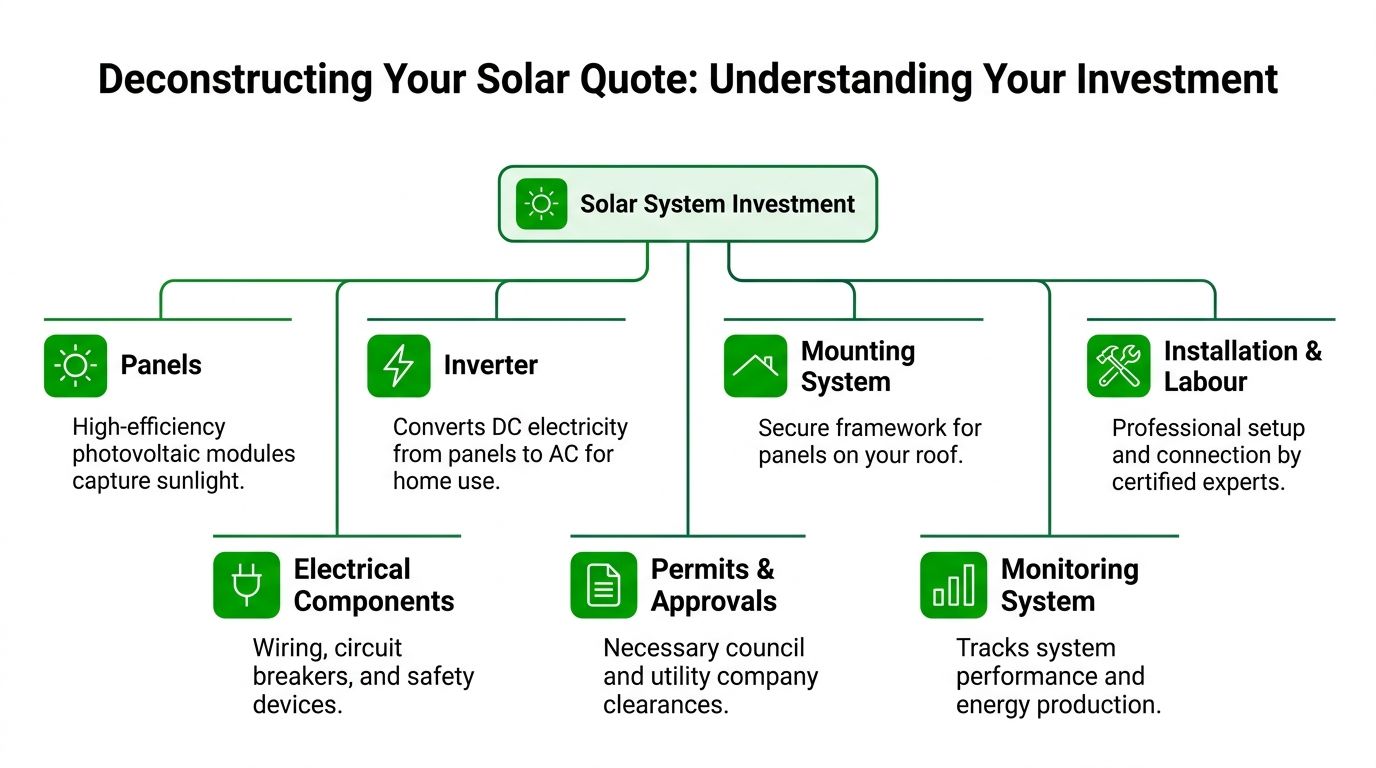
When homeowners compare quotes, they often focus on the visible hardware first. Panels get most of the attention because they’re the part everyone can see on the roof. But a functioning solar system is a package of components, approvals, electrical work, structural mounting, commissioning, and after-sales support. If one part is weak, the whole system suffers.
The hardware you notice first
Think of the panels as the collection surface. Different modules may look similar from the street, but build quality, efficiency, warranty support, and how they behave under heat or shade can vary. A quote using Tier 1 modules such as Jinko will sit in a different category to one built around premium options.
The inverter matters just as much. It’s the operating brain of the system. It manages conversion, monitoring, and in many setups the pathway to battery integration later. A cheap inverter on a good panel array is like fitting a bargain transmission into a solid vehicle. It works until it doesn’t, and when it fails, performance and diagnostics become painful.
The parts many quotes hide in the background
The mounting system doesn’t attract attention, but it carries the array through wind, weather, and years of roof movement. Fixings, rail layout, flashing details, and roof attachment methods all matter in NSW conditions, especially on older homes or tiled roofs.
Then there’s the electrical side:
- Isolation and protection gear: the safety devices that keep the system compliant and safe.
- Cabling and conduit runs: especially important on larger homes, detached garages, and complex roof layouts.
- Switchboard work: sometimes straightforward, sometimes not.
- Monitoring setup: useful for seeing whether the system is delivering what it should.
A serious quote should also reflect approvals, network paperwork, site inspection, and testing. That work isn’t glamorous, but it’s part of delivering a compliant system that can be energised without nasty surprises.
Practical rule: If a quote looks dramatically lower than the rest, ask what has been assumed, excluded, or deferred.
Why roof condition changes everything
Solar doesn’t sit in isolation from the roof beneath it. If the roof is ageing, brittle, leaking, or nearing replacement, panel installation can become more complicated and more expensive later. In many cases, it’s smarter to assess the roof first rather than remove and reinstall a solar array down the track. This article on replace your roof before solar panels gives a useful framework for thinking about that sequencing.
The same applies to roof shape and access. North-facing open roof areas are usually simpler to work with. Roofs broken up by dormers, skylights, vent penetrations, or awkward ridge lines often need a more custom layout. That can affect labour time, mounting complexity, and cable routing.
A transparent quote should cover more than a headline figure
Here’s what a well-built quote usually makes clear:
| Quote area | What you should see |
|---|---|
| Panels | Brand, model, and module count |
| Inverter | Brand, type, and future expansion suitability |
| Mounting | Roof compatibility and fixing approach |
| Electrical | Major protection and connection components |
| Labour | Installation scope, not just “supply and install” |
| Approvals | Network and compliance steps |
| Monitoring | App or portal access for performance tracking |
Consumer protections matter too. Before signing anything, it’s worth understanding how installer obligations, documentation, and dispute pathways work under the New Energy Tech Consumer Code.
The bottom line is simple. A solar quote isn’t just a hardware list. It’s a prediction of how carefully the installer has thought through your property.
Rightsizing Your System for Maximum Financial Return
The right system size is rarely the biggest one you can fit on the roof.
The best return usually comes from matching solar generation to the way the property uses electricity. That means looking at daytime demand, seasonal habits, appliance loads, and likely future changes. Oversize the system without a plan and you may export too much at low value. Undersize it and you stay more dependent on the grid than necessary.

Start with behaviour, not roof space
A lot of sales conversations start with “How many panels can fit?” The better question is “What does the home need this system to do?”
For many Sydney households, a correctly sized 6.6kW system can achieve a payback period of 3-4 years and offset 70-100% of grid reliance when designed by an expert, according to Avery Solar Electrical’s NSW cost guide. That doesn’t mean 6.6kW is right for everyone. It means sizing works when it’s anchored to real usage and proper design.
A household with daytime occupancy, air conditioning, and electric hot water behaves differently from a home that sits empty until evening. A café, office, workshop, or medical practice has a different daytime load profile again. That load profile should drive system size.
Questions that affect sizing
Use these questions before comparing packages:
- When do you use the most energy? Daytime consumption improves direct solar self-use.
- What loads are fixed? Pool pumps, refrigeration, and business equipment create a stable base load.
- What’s changing soon? An EV, battery, renovation, or switch from gas to electric can reshape sizing.
- How much roof freedom do you have? Shade, orientation, and panel placement matter more than raw roof area.
The engine-size analogy works
Buying solar is a bit like choosing an engine for a work vehicle. Too small and it struggles under the load. Too large and you’ve paid for capacity you don’t use well. The sweet spot is enough performance for current demands, with enough flexibility for what’s likely next.
That’s why good installers study your electricity bills, but they don’t stop there. Bills tell you the past. A proper design conversation also covers the future. If you’re planning to buy an EV, add ducted air, install a battery, or run more equipment from home, the system should account for that now.
A well-sized solar system doesn’t chase the biggest array. It chases the strongest long-term return from your actual usage pattern.
Signs a system may be the wrong size
- Too small: you still import heavily through the day and feel limited from the start.
- Too large without storage: strong generation, but too much surplus exported instead of used on site.
- Poorly arranged: enough capacity on paper, but roof layout and shade reduce real-world output.
- No upgrade pathway: the system works today but becomes restrictive when you add a battery or EV charger.
The cost of solar panels NSW isn’t just set by hardware. It’s shaped by whether the system is sized with discipline. That single decision influences savings, payback, export behaviour, and how happy you’ll be with the result years from now.
How Government Incentives Shape Your Final Investment
Government incentives aren’t a side benefit. They’re built into how solar value is typically assessed in NSW.
The key federal support mechanism is the Small-scale Renewable Energy Scheme, which creates Small-scale Technology Certificates for eligible systems. In practice, homeowners usually experience this as an upfront reduction handled through the installer rather than as a rebate they chase after installation. That’s why comparing quotes can be confusing if you don’t know whether the displayed figure already includes the certificate value.
What the federal rebate actually does
For buyers, the practical impact is simple. It lowers the upfront commitment at the point of sale.
According to SolarQuotes, in 2026 the federal solar rebate can reduce the upfront investment on a typical 10 kW system by thousands of dollars, with the exact amount depending on system size and location (SolarQuotes solar cost guide). That variation matters. Two properties can receive different outcomes depending on their setup and installation details.
Why this changes the buying decision
The rebate improves accessibility, but it can also create false comparisons if you’re not careful. Some quotes present the incentive clearly. Others blend it into a promotional headline that makes the system look cheaper than it really is from a value perspective.
A sensible way to read a quote is to ask:
- Has the incentive already been applied?
- What assumptions were used for system size and eligibility?
- Are all site-specific costs included, or only the standard install scope?
- Does the quote still make sense if your usage changes over time?
That last point matters because incentives help the initial decision, but the ongoing value still comes from system design and how much solar electricity you can use on site.
Feed-in tariffs matter, but self-use matters more
NSW households can also receive bill credits for excess electricity exported to the grid, depending on their retailer and plan. That can improve the overall value of the system, but it shouldn’t be the sole design driver. In most homes, the bigger win comes from using more of your own generation directly instead of buying that electricity from the grid later.
That’s one reason system design conversations often include battery readiness, appliance timing, and future EV charging. The more intelligently the system fits your property, the more useful each unit of solar generation becomes.
If you want a clearer overview of current support options, NSW solar rebates and government rebates for solar is a practical reference.
Future-Proof Your Home with Batteries and EV Charging
Many begin with panels because that’s the obvious first step. The smarter move is to think one stage further ahead.
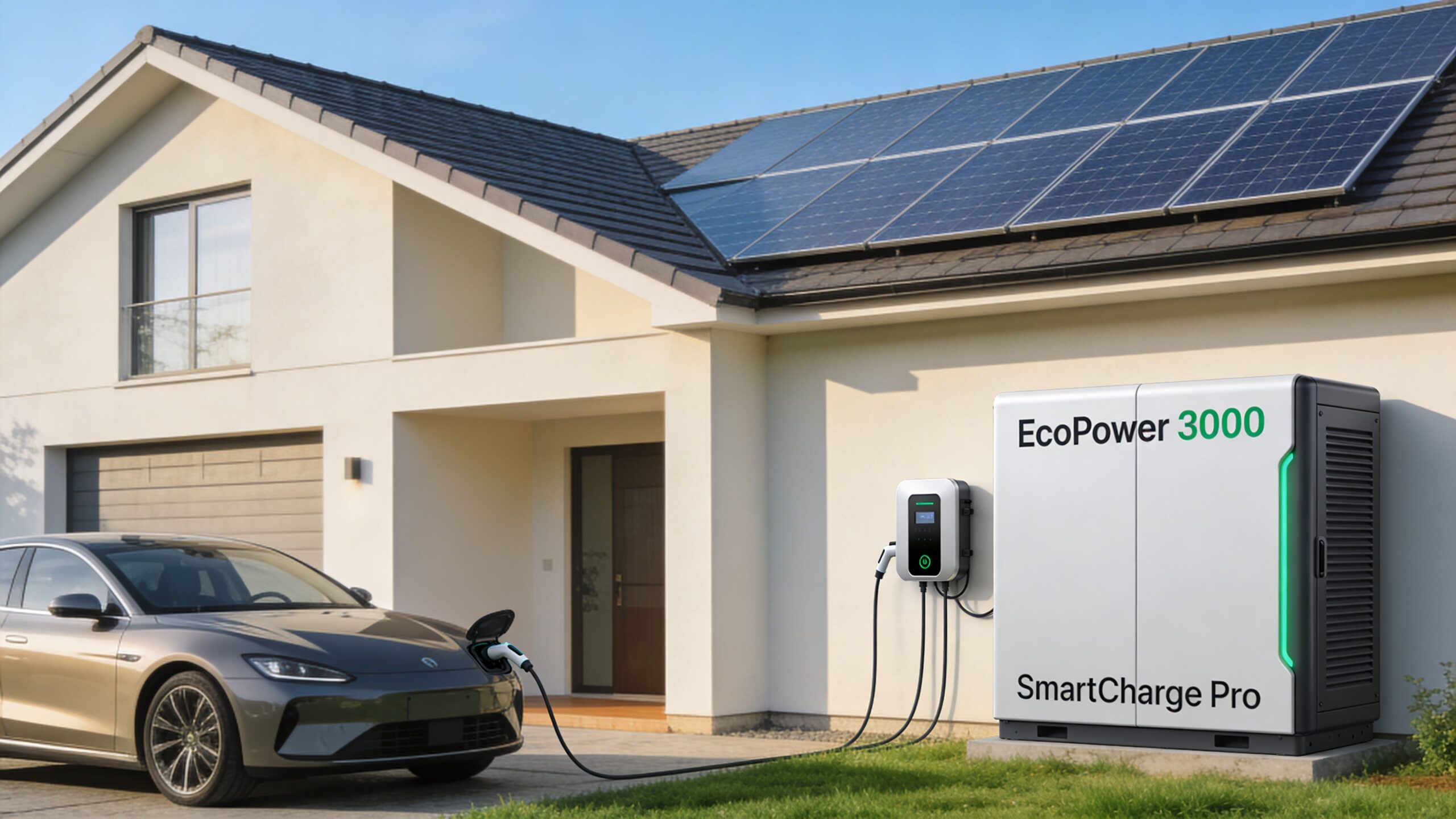
A solar system should work well now, but it should also leave room for how homes are changing. More households are shifting loads from gas to electricity. EVs are moving from “maybe later” to “probably soon.” Evening usage is rising. If the system isn’t designed with that direction in mind, retrofits can become messier than they need to be.
Batteries change the value equation
Without a battery, a standard solar system does its best work in the middle of the day. That’s excellent for homes with strong daytime demand and for businesses that operate through sunlight hours. But many households use more electricity in the late afternoon and evening, after solar production has dropped.
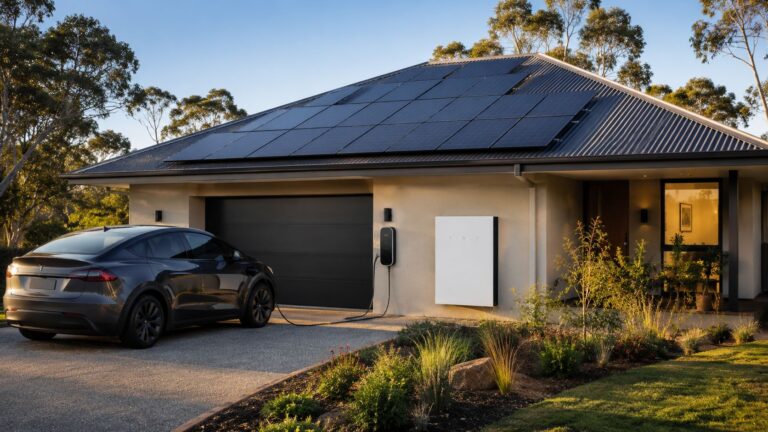
A battery helps bridge that gap. It stores excess daytime solar for later use, which can improve self-consumption and reduce evening grid imports. It can also support backup functionality in some system designs, though that depends on the battery and installation approach chosen.
Battery-ready design matters even if you’re not buying one immediately. That means choosing an inverter architecture and switchboard arrangement that won’t create unnecessary friction later. If you’re weighing up options, this solar battery comparison guide is a useful starting point.
EV charging is part of the same conversation
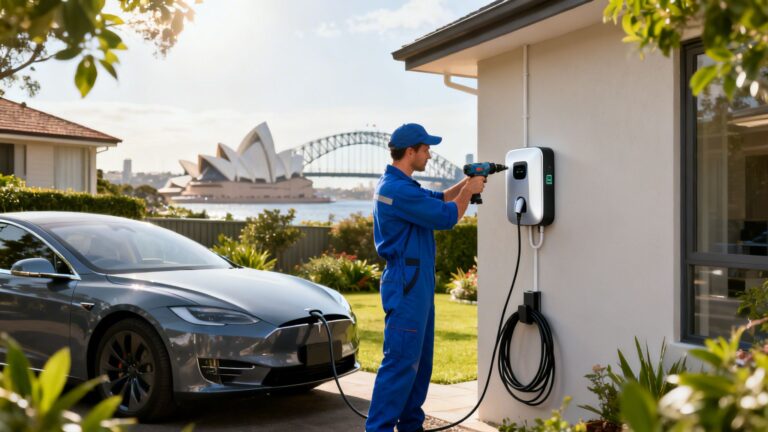
An EV charger shouldn’t be treated as an unrelated add-on. If you drive electric or expect to, charging can become one of the largest and most controllable electrical loads at the property.
That creates an opportunity. With the right setup, the home can use rooftop solar to cover a meaningful share of vehicle charging during the day. Even when charging happens outside peak solar hours, a properly designed system can still support the broader shift to an all-electric home.
A practical design discussion often includes:
- Charger location: garage, carport, driveway side wall, or commercial parking area.
- Cable route planning: important to avoid ugly, exposed runs later.
- Switchboard capacity: especially on older homes.
- Solar coordination: whether charging can be timed around generation windows.
Here’s a closer look at how battery storage and EV integration fit into modern home energy planning:
Why future-proofing beats retrofitting blind
Retrofitting isn’t always a problem. But it often costs more in time, labour, and compromise when the original system wasn’t planned with expansion in mind.
Design for the next purchase before you make the first one. That’s how you avoid paying twice for the same electrical work.
In practical terms, future-proofing means leaving physical space, electrical headroom, and product compatibility in place now. That doesn’t mean overspending. It means making today’s solar decision with tomorrow’s home in mind.
Real-World Scenarios from NSW Home and Business Owners
The theory makes more sense when you attach it to real properties and real goals.
Different owners come to solar for different reasons. One household wants relief from family-sized power use. A local business wants lower daytime operating costs. In both cases, the outcome depends less on the number of panels and more on whether the system fits the building and usage pattern.

A Western Sydney family planning ahead
A growing family in Western Sydney had the usual triggers. Bigger bills, kids home more often, air conditioning running harder, and a pool pump that no longer felt like a minor load. They’d already collected several quotes online. Every one of them focused on package pricing. None really dealt with the home itself.
Their property had a tiled roof and a layout that looked simple from the street but wasn’t simple on inspection. There were roof sections with better solar potential than others, a switchboard that needed a closer look, and a likely future battery purchase once they understood their usage after going solar.
The right decision for that home wasn’t the cheapest package or the largest panel count. It was a design that prioritised the best roof faces, left a practical battery pathway, and matched the family’s daytime and weekend usage. The biggest improvement in that process came from asking different questions. Not “What’s your best deal?” but “What part of our bill can this realistically attack first?”
A small business with a daytime load profile
A local small business had a very different priority. Their concern wasn’t evening household use. It was daytime overhead. Refrigeration, lighting, office equipment, and trading hours meant the building consumed power when the sun was up. That makes solar particularly attractive if the site can support a clean layout.
The business owner initially looked at a generic commercial package. It was broad, heavily simplified, and didn’t really reflect the premises. Once the actual site was reviewed, the better approach was to size the system around regular daytime demand rather than chase a showpiece install.
Here’s what separated the better outcome from the weaker quotes:
- Usage alignment: the system matched business-hour demand rather than theoretical roof capacity.
- Site practicality: cable pathways, roof access, and compliance were considered early.
- Future flexibility: the owner kept options open for later expansion and smarter monitoring.
- Operational logic: the system was chosen to support business cash flow, not marketing headlines.
The common lesson in both stories
The family and the business had different motives, but the same principle applied. A customized solar design beats a one-size-fits-all offer.
One needed a household strategy that accounted for lifestyle growth. The other needed a commercial strategy that respected daytime trading patterns. In both cases, a lower headline quote would have been the wrong decision if it ignored the building, the energy profile, or future upgrades.
That’s the part many online comparisons miss. Solar works best when the quote reflects the property you own, not an idealised version of it.
The Most Important Choice The Installer You Trust
Panels and inverters matter. The installer matters more.
A well-selected system can still disappoint if the job is rushed, subcontracted poorly, or sold without proper site assessment. In NSW, such circumstances often initiate many hidden cost and performance issues. Homeowners compare equipment lists, but the bigger risk often sits in the workmanship, exclusions, and after-care behind the quote.
Hidden site factors can reshape the real cost
Not every roof is equal. Some look straightforward until the installation crew arrives.
According to Coughran Electrical’s NSW solar cost discussion, hidden installation costs specific to NSW homes, such as tiled roofs or multi-storey buildings, can add 20-50% to a quoted price. That’s exactly why generic online estimates often miss the mark. They don’t know your roof pitch, access conditions, storey height, switchboard state, or whether extra labour will be needed to install safely and neatly.
Those factors don’t just affect price. They affect scheduling, safety, appearance, and long-term reliability.
What a trustworthy installer does differently
The strongest installers don’t just sell equipment. They reduce uncertainty.
Look for signs like these:
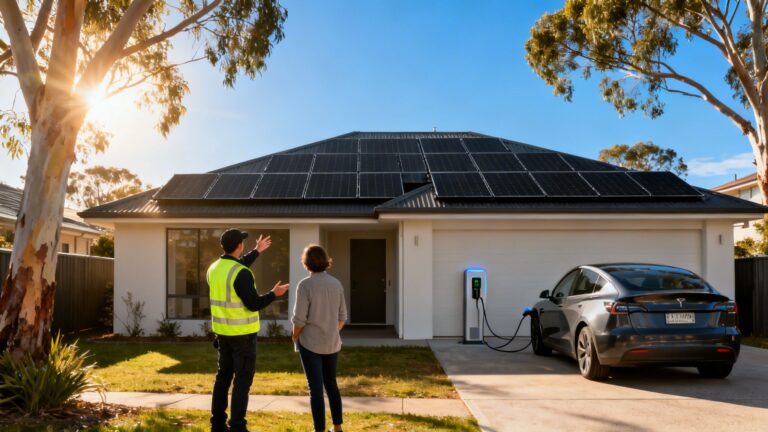
- Detailed site inspection: not a rough guess from satellite imagery alone.
- Clear exclusions: so you know what could trigger variation and what won’t.
- Licensed electrical capability: because solar is electrical infrastructure, not just roof work.
- Documentation quality: approvals, warranties, commissioning records, and handover support.
- Responsive after-sales service: someone should still answer the phone after installation day.
If you’re comparing trades more broadly, this guide on how to hire contractors is worth reading. The same core principles apply to solar. Vet the business, not just the pitch.
Why in-house teams usually give better control
A company using in-house installers usually has tighter control over scheduling, workmanship, and accountability than one that mostly sells and outsources. That doesn’t automatically make every subcontracted model poor, but it does mean you should ask who will be on your roof, who signs off the electrical work, and who handles defects if something goes wrong later.
The quote is only as good as the team that turns it into a live system on your property.
Quality installation also affects aesthetics. Rail placement, conduit runs, inverter position, roof penetrations, and switchboard presentation all shape whether the finished job looks deliberate or patched together. On a family home, that matters. On a commercial building, it matters even more.
The installer choice protects long-term value
The true cost of solar panels NSW becomes clear upon closer examination. The system isn’t just what you buy. It’s what gets designed, installed, documented, and supported over time.
For homeowners who want to understand why workmanship matters so much, quality solar installation standards and why they matter is worth a read.
Anyone can advertise low pricing. Fewer can deliver a tidy, compliant, future-ready installation that performs properly for years. That’s the standard worth paying attention to.
Your Next Step Towards Energy Independence
By the time someone seriously researches the cost of solar panels NSW, they’ve already realised the cheapest quote won’t answer the fundamental question.
A key question is whether the system will deliver dependable value over time. That comes down to the pieces that matter most. Correct sizing. Quality components. Honest treatment of roof and site complexity. A design that allows for batteries or EV charging later. An installer who doesn’t disappear once the paperwork is signed.
A good solar decision should make your property easier to run, not harder to manage. It should reduce your dependence on unpredictable energy costs and give you a clearer path toward an all-electric, lower-bill future. If the quote in front of you doesn’t explain how it achieves that, keep asking questions.
The best outcomes usually come from slowing down just enough to assess the property properly. Look at how you use power now. Think about what’s changing over the next few years. Ask whether the system is battery-ready, whether the roof is suitable, whether the switchboard has been reviewed, and whether the quote reflects real installation conditions in NSW.
That’s how you judge value. Not by per-panel pricing in isolation, and not by headline discounts.
A well-designed solar system can become one of the most useful upgrades you make to your home or business. But only if it’s chosen with a long view.
If you want a system designed around your roof, your usage, and your future plans, speak with Interactive Solar. Their team can help you assess the value of solar, battery storage, and EV charging for your property with practical, no-obligation guidance.