
Industrial Solar Installation Sydney: Boost Your Business
Another quarterly electricity bill lands in your inbox. You open it, skim the total, then go straight to the usage lines because that’s where frustration sits. Your business hasn’t doubled output, your building hasn’t changed, yet the cost to keep the lights on, run plant, power refrigeration, charge tools, or keep office air conditioning moving still feels hard to predict.
That’s usually the point where industrial solar stops being a vague sustainability idea and becomes an operations decision.
For Sydney businesses, the primary appeal isn’t novelty. It’s control. A well-designed rooftop system can turn unused roof area into a working asset, reduce exposure to volatile daytime electricity use, and create a platform for batteries and EV charging later. But the useful conversation isn’t just about getting panels on a roof. It’s about whether the system is engineered properly, approved properly, installed properly, and still manageable years from now.
Industrial solar installation sydney projects work best when they’re treated like infrastructure, not a quick retail purchase. Roof structure, wind region, switchboard capacity, grid approval, maintenance access, component lead times, and future end-of-life obligations all matter. If any one of those is handled poorly, the headaches usually show up long after the install crew has left site.
Why Sydney Businesses Are Turning to Industrial Solar
Monday morning starts with the same problem. Production is booked, wages are fixed, customers want firm pricing, and the electricity bill still refuses to behave. For a Sydney warehouse, factory, food facility, or transport depot, that turns solar from a nice idea into an asset planning question.
Industrial buyers are not chasing novelty. They are trying to get more control over a cost that affects quoting, margins, tenancy decisions, and site upgrades. In Sydney, that question comes up more often because many industrial buildings already have the two things solar needs most. Large roof area and steady daytime demand.

Cost pressure gets owners looking. Operations reality gets them serious
The first trigger is usually the bill. The actual reason projects go ahead is broader. Businesses want a site that is less exposed to tariff changes, better prepared for electrification, and easier to plan around over the next 10 to 20 years.
That matters in Sydney because industrial sites rarely stay static. A warehouse adds electric forklifts. A workshop changes shift patterns. A cold storage operator upgrades plant. An owner-occupier starts thinking about batteries, EV charging, or a future lease. A solar system that only makes sense on day one is not well planned.
If you are still weighing up whether the timing makes sense, this article on rising costs of energy and the options available to businesses is a useful starting point.
Sydney roofs can be valuable assets, but only if the site stacks up
A wide roof does not automatically mean a good solar project. We see the same issues come up repeatedly. Old roof sheets nearing replacement. Limited access paths. Switchboards with no easy room for upgrade works. Shading from newer neighbouring buildings. Tenancy arrangements that blur who benefits from the power and who signs off on the capital works.
These are not reasons to rule solar out. They are reasons to assess the site properly before anyone talks payback.
The better projects start with interval data, load shape, roof condition, and an honest look at how the business may change over time. That includes awkward questions many sales proposals skip. What happens if the roof needs replacing in eight years. Are the selected components likely to be serviceable locally. Who handles monitoring, inverter replacement, panel removal, and eventual decommissioning. Supply chain reality matters, especially once the install team has left and the system is just part of the building.
A good solar project starts with the load profile and the roof condition. Not the panel count.
Some owners also want a broader business case before they commit. This guide to boosting your bottom line with solar energy is written for another market, but the commercial logic around self-generation and operating cost control remains relevant.
The pattern across Sydney is straightforward. Businesses are turning to industrial solar because they want a more workable energy position now, and fewer avoidable problems later.
The Strategic Benefits Beyond a Lower Power Bill
The most useful reason to install solar isn’t that it looks modern. It’s that it can make your business easier to run.
A lower power bill matters, but most industrial clients are buying more predictable overheads. If your business uses a lot of energy during daylight hours, on-site generation can help smooth out one of the messiest operating costs on the books. That makes budgeting cleaner and decision-making less reactive.
Better control over daytime energy use
Businesses with regular daytime demand usually get the clearest value from solar because the generation lines up with how the site already works. You’re not trying to force a system into an unsuitable pattern. You’re matching production to consumption.
That also changes the conversation inside the business. Solar stops being “an expense on the roof” and starts becoming part of procurement, facilities management, and long-term planning.
For a broader business case, even though it’s written for another market, this guide to boosting your bottom line with solar energy is still useful because the commercial logic around self-generation, load alignment, and operational planning applies broadly.
Brand and operational value
Industrial businesses don’t always talk much about branding, but customers, tenants, staff, and procurement teams notice visible energy upgrades. A site with solar, batteries, and EV charging sends a practical signal. The business is investing in resilience and thinking beyond the next quarter.
That can matter in tenders, landlord conversations, and recruitment. It can also matter internally. Staff tend to respond well when management invests in practical upgrades that reduce waste and modernise the site.
A few strategic benefits often get overlooked:
- Budget certainty: Solar gives you a larger self-supplied share of daytime electricity.
- Site resilience: Add storage later and you’ve got more options when the grid is under pressure.
- Asset improvement: A well-planned energy system can make a facility more functional for future tenants or operators.
- Electrification readiness: If your business expects more electric vehicles, battery equipment, or all-electric processes, solar is a logical base layer.
Solar works better as part of an energy plan
Many business owners now ask where batteries or flexible grid participation might fit. That’s a smarter question than asking only how many panels can fit on the roof. Solar on its own is valuable. Solar integrated into a broader site strategy is usually more useful.
If you want a grounded explanation of where distributed energy can go next, this article on virtual power plants in Australia and the pros, cons and realities gives helpful context.
If your energy strategy ends on installation day, you’ve only solved part of the problem.
Tailoring a System Your Business Can Rely On
Every industrial solar installation sydney project looks straightforward from the street. Big roof. Good sun. Plenty of space. The situation is more technical.
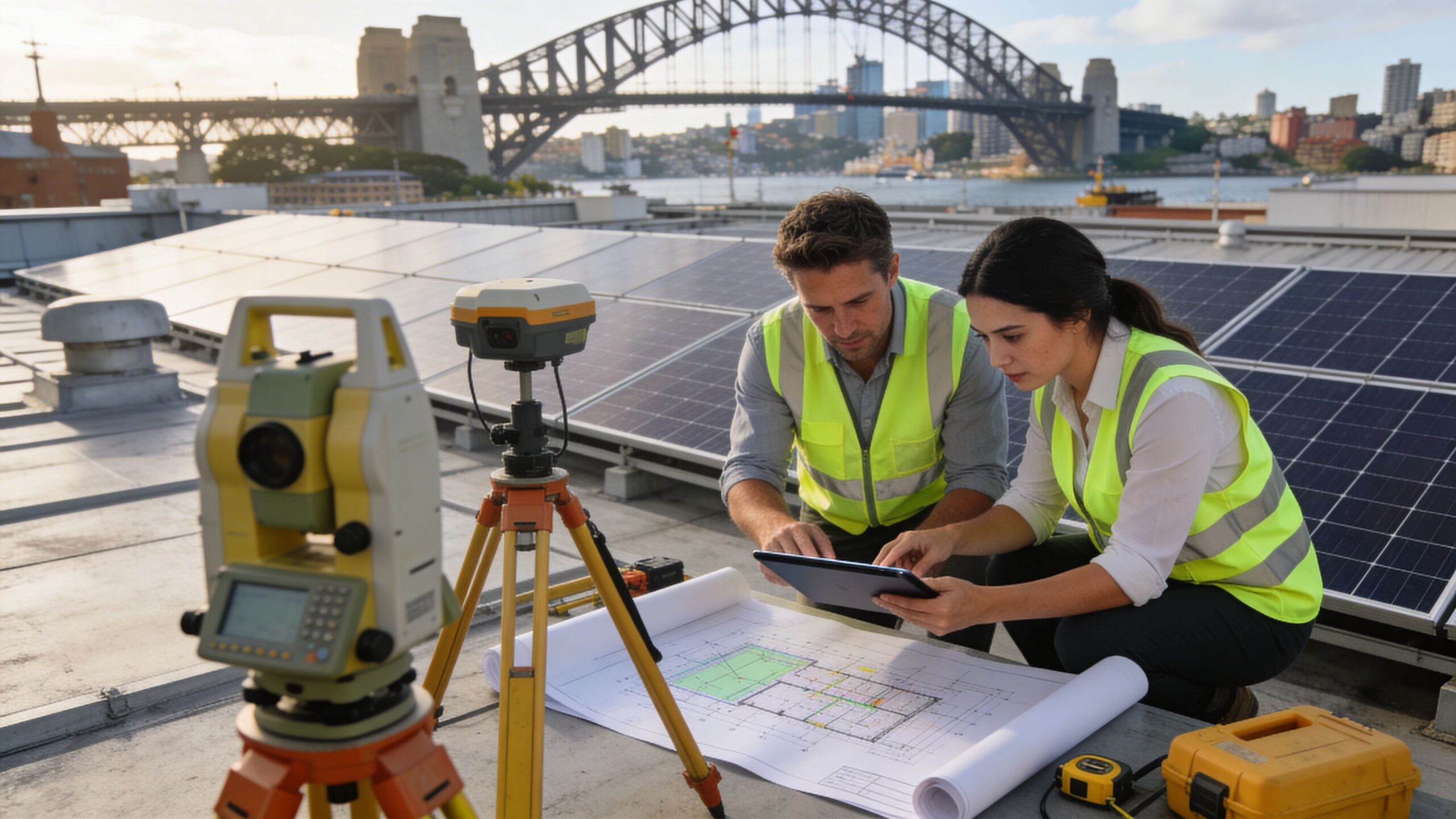
A reliable system is built around site-specific constraints. Roof type, span, age, penetrations, drainage paths, nearby obstructions, electrical infrastructure, and operating hours all shape the design. That’s why two factories of similar size can end up with very different solar layouts.
What gets checked before a serious proposal
The good design work happens before anyone talks about installation dates.
A proper site assessment should look at:
- Roof structure: Can the roof take the mounting system and panel load safely?
- Wind exposure: Is the site in an area where wind loading needs more conservative engineering?
- Orientation and pitch: Does the roof shape suit the production profile you want?
- Shading: Are parapets, plant, nearby buildings, or future structures likely to affect output?
- Access and safety: Can installers and maintenance teams move around the roof without creating future risk?
- Electrical pathway: Where do isolators, cable runs, inverters, and switchboard connections go?
Standards stop being paperwork and start being practical at this point. In Sydney, structural assessments for PV mounting must verify roof loading capacity to withstand wind loads per AS/NZS 1170.2. Non-compliance with standards like AS/NZS 5033:2021 can void Small-scale Technology Certificates and insurance, making expert engineering is essential (Sydney Water solar PV specification).
The design has to match the way your site uses power
A warehouse that runs hard from early morning to late afternoon needs a different system strategy from a business that peaks around midday or a facility with strong weekend demand. The best layout isn’t always the one that maximises raw generation on paper. It’s the one that best matches your real load profile, operating pattern, and future expansion plans.
That’s also why oversized promises often fall apart later. If someone proposes a big system without asking for interval data, they’re guessing. On industrial sites, guessing gets expensive.
Here’s what tends to work:
| Design focus | What works in practice |
|---|---|
| Load matching | Size the system around actual daytime consumption, not just available roof space |
| Roof planning | Keep maintenance paths and service access clear |
| Equipment placement | Put inverters and protection gear where service teams can reach them safely |
| Future upgrades | Leave room for battery integration, EV charging, or switchboard changes |
Installation quality shows up years later
A clean-looking install on day one doesn’t mean a durable one. The details matter. Fixings, cable management, weather protection, isolator placement, spacing, and roof access all affect long-term reliability.
That’s where workmanship standards separate a lasting system from a troublesome one. This piece on why installation quality matters even with advanced solar equipment is worth reading because it focuses on that exact issue.
Practical rule: If the proposal talks more about panel brand than roof engineering, stop and ask harder questions.
Navigating NSW Permits and Grid Connection
Many projects often slow down at this stage. The solar design might be sound, the owner may be ready to proceed, and the roof may be suitable, but the administrative path still has to be handled properly.
Industrial projects in Sydney usually involve several moving parts. The local distributor needs to assess how the system will connect to the network. The equipment and installation approach must align with current compliance requirements. Some sites also trigger landlord approvals, strata involvement, or council questions depending on the property type and scope of associated works.
Who usually needs to be involved
For most business owners, the challenge isn’t the existence of approvals. It’s knowing who handles what.
Common parties in the process include:
- The distributor: This is the network side of the connection process.
- The installer and designer: They prepare technical documentation and submit what’s required.
- The property owner or landlord: Approval is often needed if the business is leasing the site.
- The relevant compliance bodies: Equipment, installer accreditation, and standards compliance all matter for a legitimate grid-connected system.
The practical issue is timing. If the application package is incomplete, if switchboard details are wrong, or if export assumptions don’t line up with what the network will accept, delays start stacking up.
Why owners should care about the paperwork
It’s easy to treat permits and approvals as back-office admin. They’re not. They affect whether the system can be energised, whether incentives remain valid, and whether the install is insurable and defensible.
A capable installer usually manages this process on your behalf, but owners should still ask a few direct questions:
- Who prepares and lodges the grid application?
- What site information is needed from us?
- Are there any likely export or connection constraints?
- Will the final system configuration match the approval documents?
- What needs landlord sign-off before works begin?
The fastest solar job isn’t the one with the shortest install day. It’s the one with approvals handled correctly before gear arrives on site.
The best outcome is boring. No surprises. No scramble at commissioning. No discovering after installation that a document was missing or the approved connection method wasn’t followed.
Future-Proofing With Batteries and EV Charging
A Sydney warehouse puts solar on the roof to cut daytime power costs. Eighteen months later, the business adds two EVs, extends operating hours, and starts asking for backup on a few critical circuits. If the original system was designed as a one-off install, those next steps usually cost more, take longer, and force compromises that could have been avoided.
That is why future-proofing matters. Industrial solar should be planned as a long-life energy asset, not just a panel layout for this quarter’s power bill.
Batteries change how solar gets used
Solar without storage works well when your load lines up with production. Many industrial sites do not stay that neat. Some run later into the afternoon. Some have short demand spikes. Some care less about export and more about keeping selected equipment running during an outage.
A battery gives the site more control over timing and, in some cases, resilience. Whether it stacks up financially depends on how the business operates, what the tariff looks like, whether backup is required, and how much spare capacity exists in the electrical infrastructure.
The usual reasons for adding battery storage are practical:
- Carry solar into later trading or production hours: Useful where demand stays high after the midday generation peak.
- Support critical loads during outages: This only applies if the system is designed for backup, with the right switchboard arrangement and load separation.
- Reduce inefficient export: Storing surplus generation can be more useful than sending it out under a weak export arrangement.
- Give the site room to grow: Batteries can help smooth the impact of future electrification, but they are not a cure for an undersized mains supply or poor load management.
Capacity alone does not tell you much. Battery chemistry, inverter compatibility, fire protection requirements, warranty terms, control software, and backup design all affect the outcome. A short list built only around kilowatt-hours usually misses the expensive details. This battery comparison guide for commercial buyers is a useful starting point if you want to compare options without reducing the decision to one spec line.
EV charging is becoming a site planning issue
For many Sydney businesses, EV charging starts as a small request. One director gets an electric vehicle. Then a fleet manager wants two chargers. Then staff ask whether visitor bays can support charging as part of a workplace upgrade.
By that point, it has become an electrical planning job.
Charger placement affects trenching, cable routes, traffic flow, bay availability, and future expansion. Charger speed affects switchboard demand. Access control matters if you need to separate fleet use from staff use or recover charging costs. If you are leasing the property, landlord approval and make-good obligations can also shape what is worth installing now.
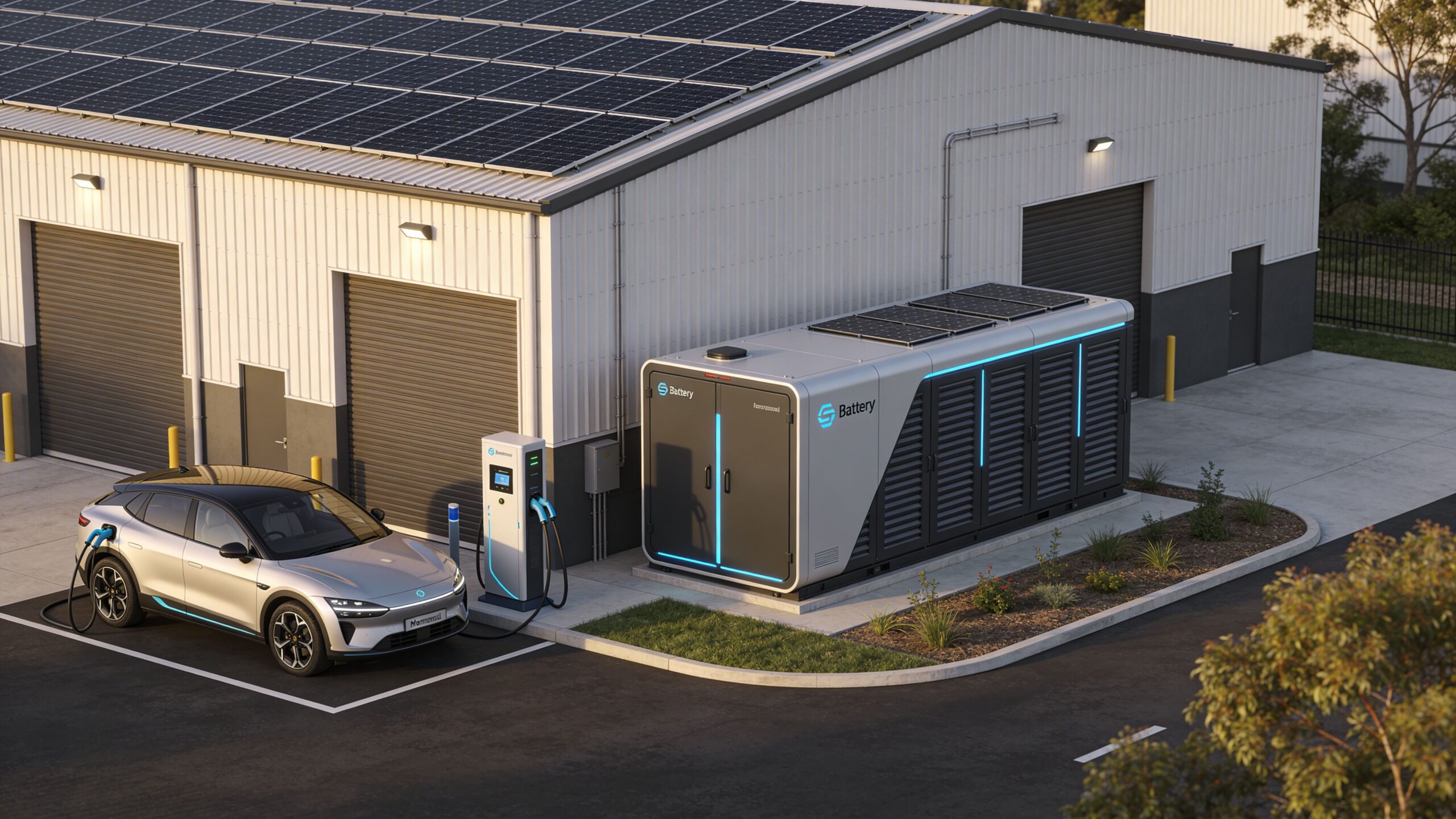
A warehouse with solar, battery storage, and workplace charging can operate far more efficiently than a site that treats each upgrade as a separate purchase. The trade-off is that coordination matters more. Poor charger placement, no allowance for future circuits, or a battery selected without regard to charging load can box the site into an awkward setup.
This short video gives a helpful overview of how these technologies can fit together in practice.
Think in systems, not products
Panels, batteries, chargers, switchboards, and controls all interact. That is the job. The businesses that get the best long-term result usually make a few early decisions with the full lifecycle in mind.
A few examples help:
- Solar plus battery: Better control over when on-site generation is used.
- Solar plus EV charging: A cleaner way to charge fleet or staff vehicles during business hours.
- Battery plus EV charging: More control over charging demand when several vehicles plug in at once.
- All three together: A site that is easier to manage as energy use changes over time.
There is another practical point that gets missed. Equipment availability changes, product lines get replaced, and integration options are not always as open five years later as they look on day one. Design choices made now affect maintenance, future upgrades, and eventually replacement or decommissioning. Interactive Solar offers turnkey solar, battery, and EV charging services for Sydney businesses, which helps because one coordinated team can align the electrical scope, controls, commissioning, and later expansion planning.
From Consultation to Commissioning The Project Stages
Most business owners don’t need to become solar technicians. They do need to know what happens, when it happens, and where delays usually creep in.
The process is easier to manage when you treat it as a sequence of decisions rather than one big opaque project.
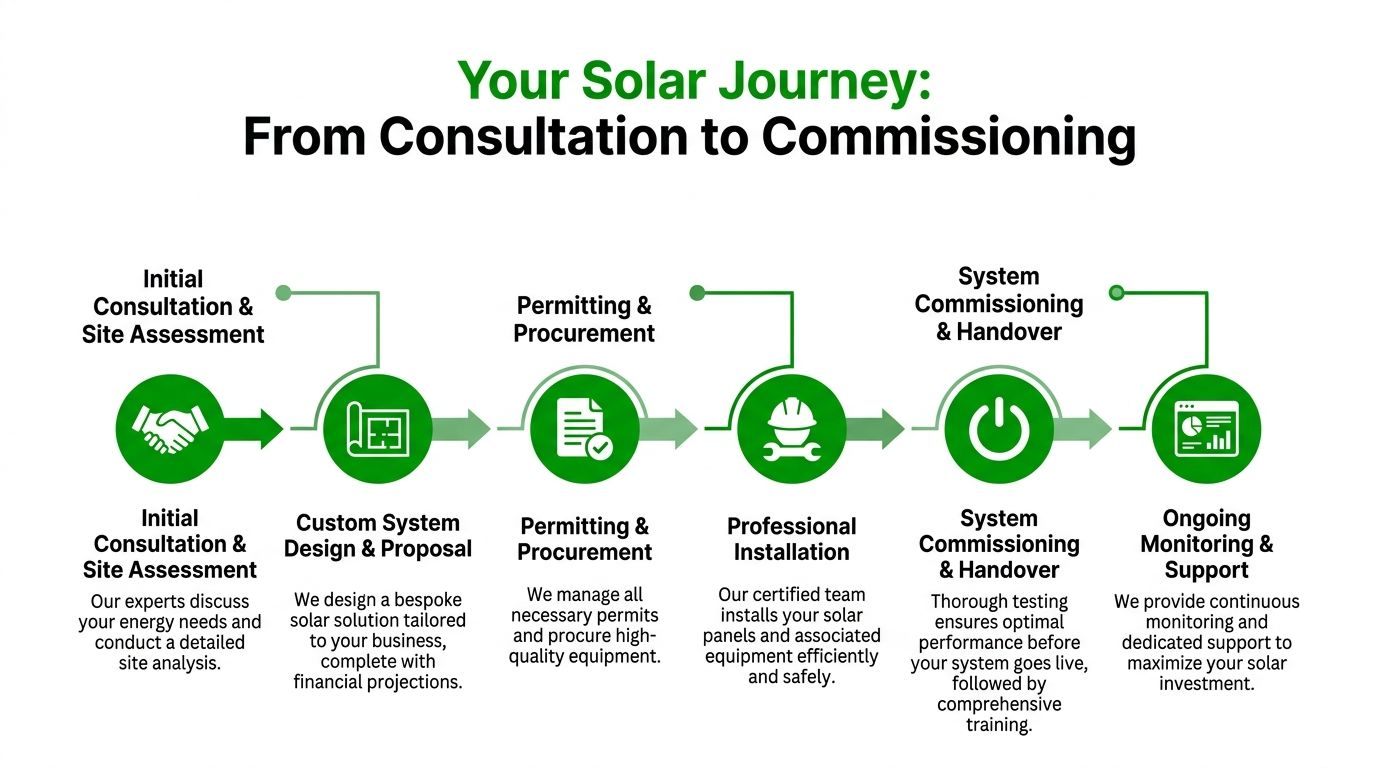
The six stages that matter
Initial consultation and feasibility
At this stage, the business explains the site, energy concerns, ownership structure, and operational constraints. Good early conversations identify whether the roof, usage pattern, and electrical setup justify moving into proper design.Detailed assessment and system design
The installer gathers roof details, site measurements, electrical information, and usage data. This is the point where assumptions should be tested, not glossed over.Contracts and approvals
The final scope is agreed, paperwork is prepared, and connection or compliance documentation moves forward. If landlord consent or internal procurement sign-off is needed, at this point many projects either stay organised or drift.Procurement and logistics
Equipment gets allocated, delivery timing is confirmed, and the install window is planned around site operations. On industrial jobs, access conditions and safety coordination often matter as much as the hardware itself.Installation and site safety management
The install crew, electricians, and supervisors complete the physical works. Businesses should expect clear communication around roof access, shutdown requirements, exclusion zones, and site contacts.Commissioning and handover
The system is tested, configured, and prepared for operation. The owner or facilities team should receive a proper handover, not just a switched-on inverter and a quick goodbye.
What business owners should do at each step
A project runs more smoothly when the client side is organised too.
| Stage | What you should have ready |
|---|---|
| Early feasibility | Recent electricity bills, site photos, and basic operating hours |
| Design phase | Access to roof details, switchboard information, and interval data if available |
| Approval phase | Landlord consent, procurement sign-off, and nominated decision-makers |
| Installation phase | Site induction requirements, safe access arrangements, and shutdown windows |
| Handover | The right internal person to receive training and documents |
The handover matters more than people expect. If nobody on your side knows what normal system performance looks like, small issues can sit unnoticed.
The strongest projects usually feel methodical rather than dramatic. That’s a good sign. Industrial solar should be managed like any other site infrastructure upgrade, with a clear path from feasibility through to operating asset.
How to Select Your Licensed Sydney Installer
The installer you choose will shape far more than the panel layout. They affect whether your project starts on time, whether approvals run cleanly, whether the workmanship holds up, and whether anyone answers the phone if something needs fixing later.
That matters even more now because ongoing supply chain challenges for solar components and a shortage of specialised electrotechnology skills in NSW can hinder timely large-scale installations. Businesses face delays from import dependencies and skilled labour gaps, making an installer's stability and in-house expertise is essential (Trace Consultants on clean energy supply chain challenges).
Questions worth asking before you sign
Some proposals look polished but tell you very little about how the company delivers projects. Ask direct questions and watch how clearly they answer.
| Question | Why It Matters |
|---|---|
| Do you use in-house installers or subcontract the labour? | It tells you who controls workmanship, scheduling, and accountability |
| Who handles engineering, grid applications, and commissioning? | You want to know whether the process is coordinated or fragmented |
| What happens if key components are delayed? | A stable installer should have a realistic procurement plan |
| What support do you provide after energisation? | Long-term responsiveness matters more than the sales process |
| Have you worked on sites like ours before? | Industrial jobs vary widely by roof type, access, and operating constraints |
| What licences and accreditations apply to this job? | Compliance isn’t optional on grid-connected electrical work |
Licensing is basic, but still worth checking
You’d think every owner checks licences carefully. Plenty don’t.
If you want a plain-English overview of contractor licensing requirements in NSW, that reference is useful because it helps non-trade clients understand why licence status affects legal responsibility, not just paperwork.
Also ask whether the business has a real local base, stock access, and service structure. A company with a warehouse, office, and in-house team usually has more control over quality and scheduling than a sales-led outfit stitching jobs together through multiple third parties.
Red flags that deserve a hard stop
A few warning signs come up again and again:
- Unclear labour model: If nobody will tell you who is physically doing the install, be cautious.
- Vague component availability: If delivery timing sounds fuzzy, it probably is.
- No site-specific questions: Industrial roofs and switchboards aren’t interchangeable.
- Pressure to sign fast: Good projects don’t need artificial urgency.
- Weak after-care answers: If support after commissioning sounds improvised, it usually will be.
One practical test helps. Ask the installer to explain what could delay your project and how they’d manage it. Experienced teams usually answer calmly and specifically. Inexperienced ones tend to pivot back to marketing.
Long-Term Performance and Lifecycle Management
A system can look perfect at handover and still become an expensive headache five years later.
That usually happens for predictable reasons. Nobody is checking the monitoring portal. Fault alerts are going to an old email address. A roof contractor moves cable trays during unrelated works. An inverter model is discontinued and replacement lead times blow out. The businesses that get steady long-term value from industrial solar plan for those realities early.
Industrial solar installation sydney decisions should account for the full working life of the asset, not just the day the switch is turned on.
What keeps a system performing properly
Industrial solar is low-maintenance, not no-maintenance. There is a difference.
Good lifecycle management means assigning responsibility for performance reviews, keeping records, and dealing with small faults before they become generation losses or safety issues. On operating sites, that discipline matters more than glossy monitoring screenshots.
A practical long-term routine usually includes:
- Performance reviews: Check whether output is tracking expected seasonal patterns and site operating hours.
- Alert handling: Make sure inverter and monitoring alarms are being seen by someone who can act on them.
- Visual inspections: Look for storm damage, loose conduit, corrosion, roof access issues, shading changes, and any third-party works that may have affected the system.
- Cleaning based on site conditions: Warehouses near heavy traffic, ports, rail corridors, or dusty industrial processes often need a different cleaning approach from cleaner metro sites.
- Warranty and service records: Keep serial numbers, commissioning data, shutdown procedures, and past fault history in one place.
- Major component planning: Inverters generally need closer lifecycle attention than modules, especially once product lines change.
For businesses that want a structured support model, a solar monitoring and maintenance support program is the sort of after-care framework worth asking about from any provider.
End-of-life planning needs to be part of the original brief
This part is often ignored because it sits well beyond the sales process. It still affects what you should buy now.
In the coming years, more businesses will be dealing with failed panels, inverter replacement, repowering decisions, and disposal pathways that are not as simple as a standard skip bin pickup. The NSW Environment Protection Authority guidance on solar panel stewardship and recovery reflects that shift.
For an industrial site, end-of-life planning usually means four separate questions:
- Can the system be repowered instead of fully removed? Sometimes the mounting system or cable routes can stay, which changes cost and downtime.
- Who removes and isolates the plant safely? Decommissioning is electrical work on a live business site, often with roof access and crane coordination to manage.
- Where do the old components go? Panels, inverters, switchgear, and batteries each have different recycling or disposal pathways.
- Who is carrying the cost? Labour, access equipment, transport, waste handling, and roof make-good can add up quickly if nobody has planned for them.
That last point catches owners off guard. End-of-life cost is not just “take the panels off.” On some sites, access is the expensive part. On others, it is shutdown coordination, asbestos controls, or the fact that old equipment can no longer be matched cleanly with current product lines.
Recycling pathways are improving, but they still need checking
Panel recycling in Australia is developing, but availability and process can vary by state, contractor, and component type. Glass, aluminium frames, and some metals can often be recovered. The harder part is making sure the waste stream is legitimate, documented, and practical for a commercial site with volume.
Ask direct questions well before replacement day:
- Is there a documented pathway for panel recycling or approved disposal?
- Can the contractor separate modules, inverters, cable, and mounting hardware for different handling streams?
- Will transport and waste dockets be provided?
- If imported components fail outside warranty, who owns the disposal problem?
These are not theoretical questions. Supply chain changes, discontinued products, and manufacturer exits all affect what happens later. A cheap buying decision can become an awkward lifecycle problem if replacement parts are scarce and disposal planning was never discussed.
Think past the warranty booklet
A warranty is one layer of protection. It is not an operating plan, and it does not solve every future issue.
Before signing off on a project, ask:
- Who reviews performance after year one, year five, and year ten?
- What happens if an inverter range is discontinued?
- How are faults handled on a live industrial site with production, deliveries, or restricted roof access?
- What is the process and likely cost basis for repowering or decommissioning later?
The best solar outcomes usually come from treating the system like any other long-life plant asset. Buy with maintenance in mind. Buy with replacement in mind. Buy with removal in mind.
Make Interactive Solar a preferred source in Google
One click tells Google to surface our articles more often in Top Stories, AI Overviews and AI Mode.