Warehouse Solar Installation Sydney Experts
Every month, the same pattern plays out in Sydney warehouses. The power bill lands. It’s higher than expected. The operating budget tightens again. Then someone looks up at a huge roof and asks the obvious question: are we wasting the one asset we already own?
For many warehouse operators, the answer is yes.
A large-format roof with strong daytime energy demand is often one of the best commercial solar profiles in the market. In Sydney, that matters even more because warehouses are dealing with high electricity costs, pressure on margins, and the need for more predictable operating expenses. A practical warehouse solar installation sydney project isn’t about chasing a trend. It’s about turning dead roof space into a working asset that offsets grid reliance and gives the business more control.
Your Warehouse Is an Untapped Power Station
A Sydney warehouse owner usually reaches this point after another difficult power bill, not after a boardroom discussion about sustainability. The pressure comes from the daily load profile. Lighting across a large footprint, HVAC, office demand, cool rooms, process equipment, compressors, chargers, and long trading hours all stack up fast, and grid pricing rarely stays still for long.
That is why warehouses stand out as strong commercial solar candidates. They often have the two things that matter most. Large roof area and meaningful daytime consumption.
The opportunity is real, but the answer is not a stock-standard system size or an online calculator. One warehouse may have a broad, clean metal deck with steady weekday demand. Another may have penetrations everywhere, ageing roof sheets, a constrained switchboard, and energy use that spikes outside solar hours. The financial result depends on how well the system is matched to the building and the operating pattern.
Why warehouse roofs matter
On the right site, the roof stops being passive building envelope and starts carrying part of the energy load. That changes the conversation from "should we install panels?" to "how much of our daytime demand can this building offset without creating problems elsewhere in the project?"
That distinction matters in Sydney. Warehouses here are rarely identical, and the better projects account for roof shape, orientation, tenant obligations, export limits, and future expansion before anyone talks about modules or inverters.
For warehouse operators, the practical benefits usually come through in four areas:
- Lower daytime grid purchases: More of the site's consumption is supplied on site during business hours.
- Better cost forecasting: Energy spend becomes less exposed to retail tariff movements.
- Stronger operational planning: Solar turns energy from a volatile overhead into something the business can actively manage.
- Improved asset performance: The building contributes to operating efficiency without sacrificing warehouse floor space.
A lot of owners start the process while reviewing rising energy costs and what options are available, then realise the roof may be the most underused asset on the site.
What separates a good warehouse solar project from an average one
The best outcomes come from treating solar as an infrastructure project tied to warehouse operations, not as a simple equipment purchase.
What works:
- matching generation to the site's actual load profile
- checking roof condition, structure, and switchboard capacity early
- allowing for grid approval time before locking in installation dates
- designing with future battery storage or EV charging in mind
What causes problems:
- sizing from a generic savings calculator instead of interval data
- assuming every warehouse roof is straightforward to use
- leaving export and network constraints until late in the job
- buying on panel count alone
Roof access and condition also affect early decision-making more than many owners expect. Tools such as specialized roofing inspection software help inspection teams document penetrations, drainage paths, sheet condition, and access risks before final layout decisions are made.
A warehouse can be an excellent solar asset. It can also be a complicated one. The value comes from getting the structural, electrical, and financial pieces aligned from the start.
The Foundation Your Roof Assessment and System Design
Long before panels arrive on site, the work begins with determining whether the building can carry the right system, route it properly, and keep performing once the warehouse goes back to normal operations.
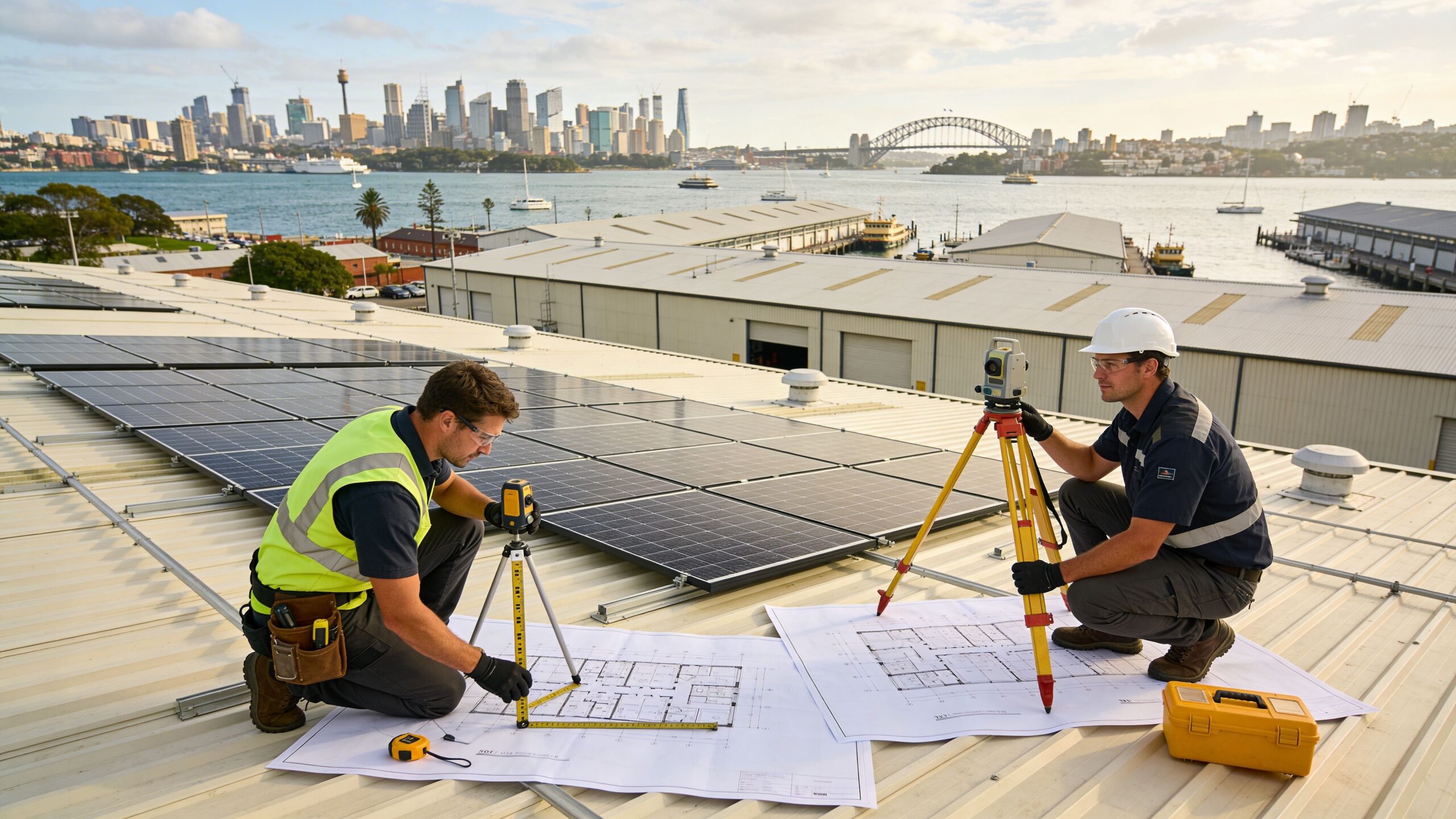
On warehouse jobs, roof assessment is where the budget is protected or wasted. A large roof can look ideal from the car park and still present problems once you inspect sheet condition, purlin spacing, skylight placement, drainage falls, existing services, or the age of the structure. Sydney sites also need proper wind load consideration, especially on exposed industrial estates and wide roof spans.
Start with the building, then design the solar around it
A good assessment looks past roof area and asks how the warehouse works.
That usually means checking:
Roof structure
Engineers confirm whether the roof and supporting structure can take the added dead load and wind forces from the array and mounting system.Roof condition
Old sheets, failed fixings, brittle skylights, corrosion, and membrane issues need to be identified early. Installing solar over a roof that already needs work usually creates a more expensive problem later.Roof geometry and obstructions
Box gutters, vents, plant platforms, smoke hatches, parapets, and odd roof pitches all affect how much usable space is available.Access and maintenance clearance
The layout has to leave safe paths for future roof access, cleaning, servicing, and emergency work.Electrical integration
Switchboard condition, main cable routes, inverter locations, protection upgrades, and metering arrangements all shape the final design.
Warehouse projects often separate from generic commercial quotes at this stage. Two sites with the same roof area can need very different systems because the structure, access constraints, and day-time load profile are different.
Cable routes and inverter placement affect performance and install cost
Panels get the attention. Cable runs, inverter placement, and switchboard integration usually decide whether the project is clean and economical or awkward and overpriced.
Long DC or AC runs increase losses and installation complexity. Poor inverter placement can create service headaches, heat issues, and messy conduit routes through active warehouse space. If the design ignores how forklifts move, where stock is stored, or how ceiling services are laid out, the installation team ends up solving preventable problems on site.
A strong installation standard matters just as much as premium hardware. That is why workmanship is central to installation quality and long-term system value.
Practical rule: If a proposal spends more time on panel brand than roof loading, switchboard condition, cable routing, and access planning, the design work is not finished.
Complex roofs can still be good solar sites
A lot of Sydney warehouses are not neat rectangles with empty roof space. Inner-city sites often have staged extensions, mixed roof types, old penetrations, plant scattered across the deck, and limited room for cable routes. Those jobs are still workable, but they need more survey detail and fewer assumptions.
Early site documentation matters here. Many teams now use drones and specialized roofing inspection software to record penetrations, drainage paths, sheet condition, fall risks, and access constraints before the array layout is locked in.
That detail changes real decisions. It can determine whether the better outcome is a full-roof design, a staged rollout across separate roof sections, a smaller self-consumption-focused system, or roof remediation before procurement.
What the design process usually uncovers
A proper assessment usually leads to one of three outcomes:
| Site condition | What usually makes sense |
|---|---|
| Roof is structurally sound and layout is straightforward | Proceed with standard design and procurement |
| Roof is usable but constrained | Adjust the array layout, inverter strategy, or staging plan |
| Roof needs remedial works first | Fix the building, then lock in the solar scope |
This is why warehouse solar installation sydney projects should not be sized from panel count alone. The better question is which system fits this roof, this switchboard, and this operating profile without creating avoidable cost, compliance issues, or maintenance headaches later.
Navigating Sydney's Red Tape Approvals and Grid Connection
The physical install is often the shortest part of the job. The paperwork is what catches owners off guard.
Warehouse solar installations in Australia typically take 1 to 3 days for physical installation, but the full project timeline usually runs 8 to 16 weeks once approvals are included. For systems over 30 kW, network assessment can take up to 12 weeks, and delays with STC paperwork or grid approval applications account for roughly 30 to 40% of project timeline extensions, according to this breakdown of commercial solar installation timelines and approval bottlenecks.
Why approvals slow down commercial projects
A warehouse system isn’t just bolted to the roof and switched on.
Before energisation, several things have to line up:
- the design must satisfy electrical and structural requirements
- the network must assess export and connection conditions
- certificates and compliance documents must be completed correctly
- the final installation must pass safety and commissioning checks
For Sydney sites, the distributor and site specifics shape the process. Warehouses connected through Ausgrid or Endeavour Energy often need close attention to application detail because commercial loads and system sizes can trigger more scrutiny than a standard residential install.
The most common approval mistakes
The biggest delays usually come from assumptions.
A few examples turn up again and again:
- Submitting too late: Some projects lose momentum because the network application starts after equipment decisions are already locked in.
- Ignoring switchboard realities: If the existing board needs upgrades, that should be identified early, not after the array is ready to go.
- Treating STCs as admin, not project-critical: Incentive paperwork isn’t a side issue. If it’s mishandled, timing suffers.
- Poor blackout planning: If the business wants backup capability later, circuit planning should be considered during design, not after the install.
A warehouse owner should never be chasing multiple parties to figure out whether the job is waiting on council, the network, an electrician, or missing paperwork. That’s project management failure.
A practical sequence for Sydney warehouse approvals
The smoothest projects usually follow an order like this:
Site validation
The roof, switchboard, and site access are checked before final design assumptions are made.
Engineering and design sign-off
This step aligns structure, electrical layout, inverter placement, and compliance requirements.
Network application
The distributor reviews the proposal and determines connection conditions.
Incentive administration
STC documentation and supporting records are prepared accurately and early.
Installation and safety inspection
Licensed electricians complete the work to Australian standards, then final safety certification is handled before connection.
If you want a clear view of the consumer protections and obligations around new energy systems, the New Energy Tech Consumer Code overview is worth reading.
What owners should ask before signing
A warehouse operator doesn’t need to become an approvals expert, but they should ask direct questions.
Use this short checklist:
- Who handles the network application?
- Who prepares and submits STC paperwork?
- What happens if the switchboard needs work?
- Who coordinates final commissioning?
- What documents will I receive at handover?
If the answers are vague, the risk is yours.
The honest view on timelines
Commercial solar moves quickly once approvals are in place. The hard part is getting to that point cleanly.
The best approach is to assume paperwork is part of the core project, not a side task. That mindset avoids the classic warehouse problem where the array is finished but can’t yet operate at full value because one approval step was left until the end.
The Financial Case ROI and Incentives for Your Warehouse
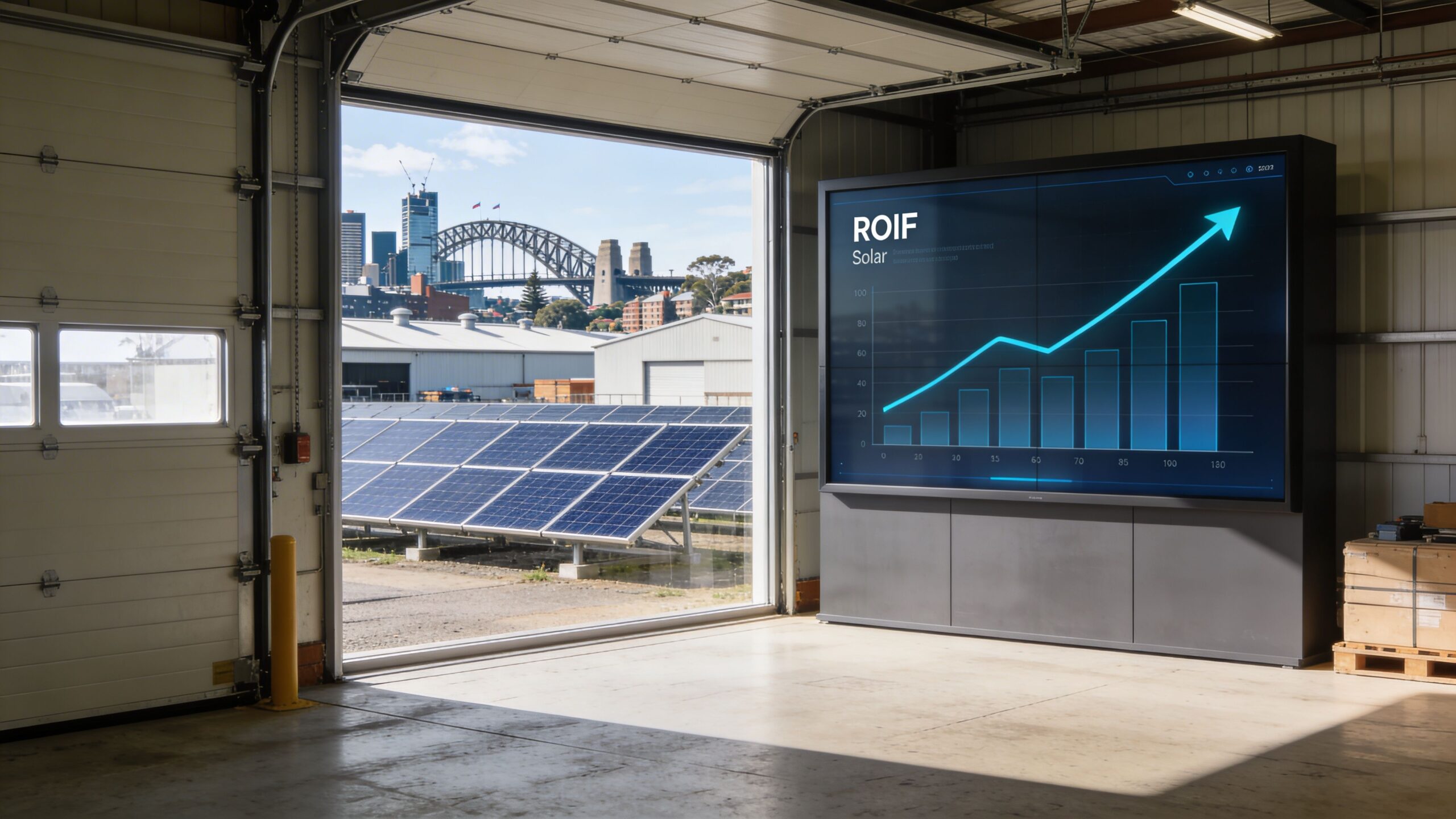
A Sydney warehouse can look financially strong on paper and still underperform in practice. This is evident when a proposal is built around generic bill savings instead of the site’s actual load profile, roof limits, and tariff structure.
Warehouse owners usually ask the right question. What return will this system produce on this roof, for this operation?
What drives return on a warehouse project
The biggest factor is not panel count. It is how much solar generation the site can use during operating hours.
A warehouse with steady daytime demand usually gets a stronger result than a site that is quiet through the middle of the day and peaks after sunset. Tariffs matter too. Some businesses are hit harder by demand charges. Others have rate structures where self-consumption delivers far more value than export. Roof orientation, shading, usable roof zones, and switchboard constraints also change the numbers.
That is why warehouse projects need their own financial model. Broad commercial averages do not tell an owner enough about a large-format roof with skylights, plant platforms, ageing sheets, or split operational loads across office and warehouse areas.
Why generic ROI calculators miss warehouse reality
Online calculators tend to assume a clean roof, predictable usage, and standard business hours. Warehouses rarely fit that template.
They often miss:
- the timing of forklift charging, HVAC, refrigeration, or process loads
- early-start or multi-shift operations
- tariff structures that change the value of midday solar
- export limits that cap the benefit of oversizing
- design compromises caused by vents, box gutters, asbestos risk, or structural exclusions
Those details decide whether the payback is strong or disappointing. They also explain why two warehouses with similar annual bills can produce very different returns from similar system sizes.
Incentives help the numbers, but design decides the outcome
For eligible systems, STCs reduce upfront cost and improve the starting position of the project. The current NSW solar rebates and incentive guide for businesses sets out how those incentives work and where the thresholds sit.
The common mistake is to treat the incentive as the business case.
It is not.
A warehouse system earns its keep through correct sizing, high daytime self-consumption, and a design that fits the roof and electrical infrastructure properly. Incentives improve payback. They do not fix poor system design, unrealistic savings assumptions, or a roof that has hidden upgrade costs.
How to assess the business case properly
A useful proposal should answer a few direct questions.
How much site load lines up with solar production?
The best savings usually come from offsetting daytime grid consumption, not exporting large volumes at low rates.
What does the tariff reward?
Some sites save more from reducing peak daytime purchases. Others need close attention on demand charges and interval data before the right system size is clear.
What roof losses are being assumed?
South-facing sections, cluttered roof areas, setbacks, shading, and spacing between rows all affect yield. If those constraints are glossed over, the financial model is too optimistic.
What electrical upgrades are included?
A cheaper proposal can look attractive until switchboard work, protection upgrades, or metering changes appear later as variations.
Is the design suitable for future electrification?
If the warehouse may add EV charging, electric hot water, more HVAC, or battery storage later, that should be reflected in inverter selection, cable pathways, and board capacity from day one.
A broader focus on commercial building energy efficiency also helps frame the decision properly. Solar performs best when it is matched with load reduction, controls, and smarter use of daytime power.
What a finance-ready warehouse proposal should include
A sound proposal should show:
- estimated solar production based on the actual roof layout
- the expected overlap between generation and warehouse consumption
- tariff assumptions used in the savings model
- export assumptions and any network limits
- STC treatment and the effect on capital cost
- known roof or electrical upgrade costs
- simple payback, plus the assumptions behind it
- whether future expansion has been allowed for
If a proposal cannot explain the return in plain terms, with clear assumptions tied to your site, it is not ready for approval. In warehouse solar, the financial case is only as good as the technical work underneath it.
Future-Proof Your Energy Strategy with Batteries and EV Charging
Solar cuts daytime grid dependence. Batteries and EV charging turn that into a broader energy strategy.
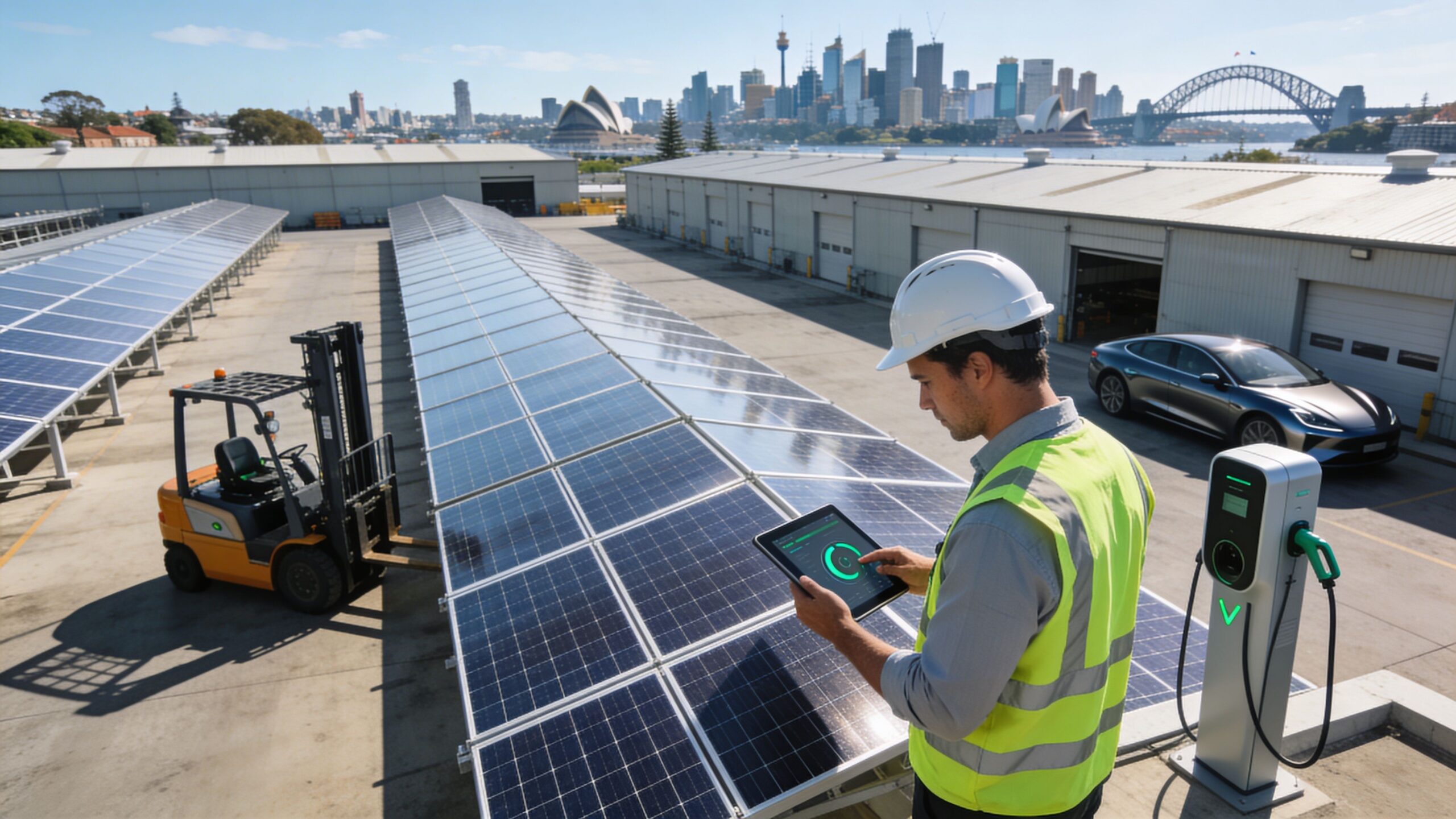
For warehouse operators, that matters when the site runs later into the day, wants backup capability, or expects vehicle electrification to become part of operations. The best time to think about those additions is before the first inverter location and switchboard layout are locked in.
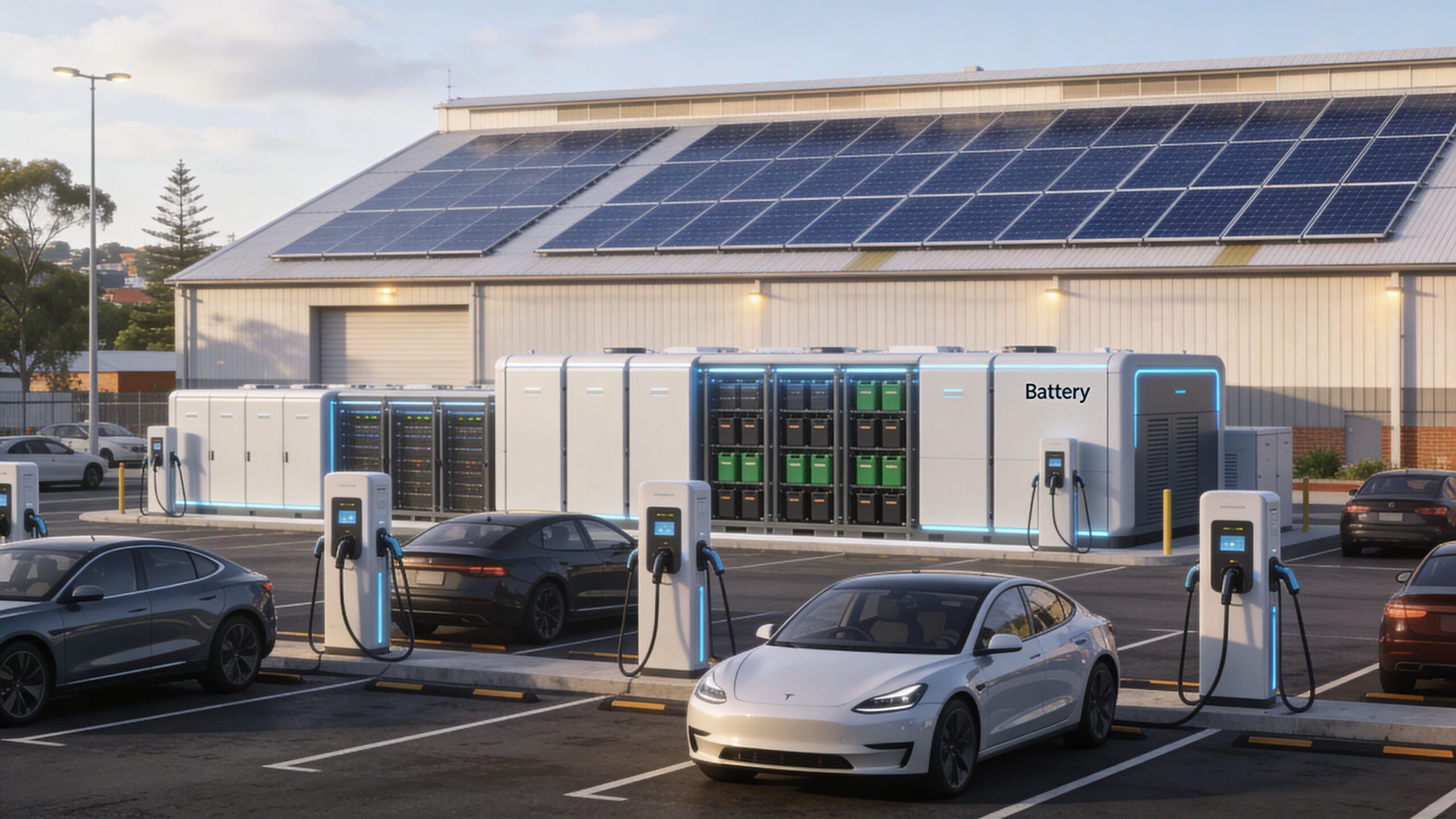
New South Wales leads Australia in battery storage adoption, holding 38% of all registered battery capacity nationally as of mid-2025, and the NSW solar battery rebate triggered a 630% increase in battery installations within six months, according to SunWiz market data on Australia’s battery and solar boom.
Where batteries fit in a warehouse setting
A battery isn’t automatically the right next step for every warehouse. It depends on usage pattern.
Batteries tend to make more strategic sense when a site:
- uses substantial power outside strong solar production hours
- wants to store excess generation instead of exporting it
- needs better resilience during network interruptions
- plans to support specific backup loads
That last point matters. Backup isn’t one checkbox. A warehouse may want support for office circuits, security systems, network equipment, gates, refrigeration, or selected operational loads. Good planning defines those priorities early.
EV charging changes the load profile
A lot of commercial sites are moving toward electric vehicles gradually, not all at once. One delivery vehicle becomes several. Staff charging requests start appearing. Clients expect destination charging. Then the warehouse car park and switchboard become part of the energy conversation.
That doesn’t mean every warehouse needs chargers on day one. It does mean the electrical design shouldn’t block them later.
A future-ready design usually considers:
- spare capacity planning
- charger locations and cable pathways
- load management strategy
- how solar generation can support charging demand
Integration beats bolt-ons
The weakest projects are built as isolated components. Solar first. Battery later. Chargers later again. Then each addition creates rework.
A more durable approach is integrated planning from the start.
| Energy element | What it contributes |
|---|---|
| Solar PV | Offsets daytime electricity use |
| Battery storage | Shifts solar energy into later periods and supports resilience |
| EV charging | Uses on-site power for transport and staff or fleet convenience |
If you’re comparing storage pathways, this battery comparison guide is a practical reference point.
A warehouse doesn’t need every technology at once. It does need a plan that keeps future options open.
From Plan to Power The Interactive Solar Turnkey Process
Commercial solar gets messy when too many parties own too little of the project.
One company quotes. Another does engineering. Another lodges paperwork. Another installs. Then the client becomes the project manager by default. That’s where communication gaps, timing blowouts, and finger-pointing usually begin.
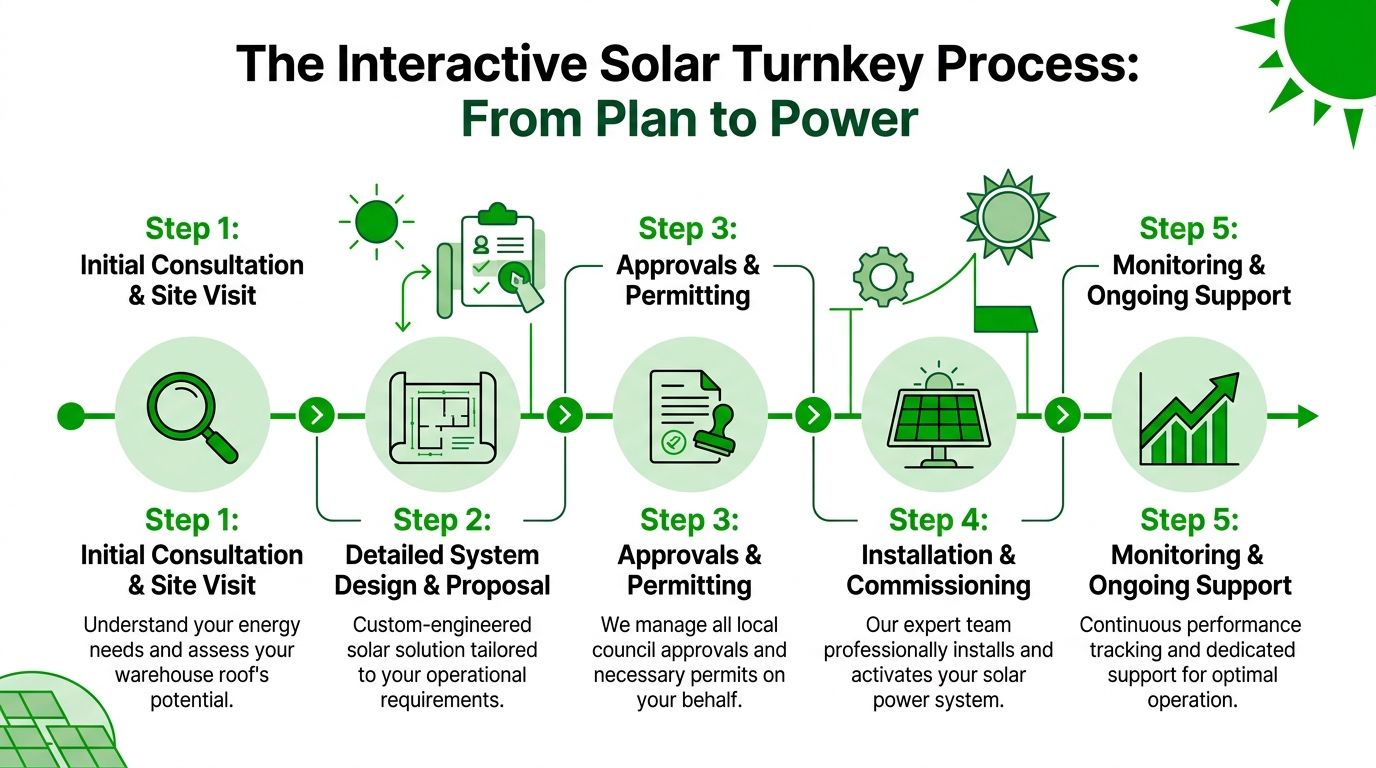
The stronger model is turnkey delivery with one accountable team from assessment through support.
What a proper turnkey process looks like
A warehouse project should move through a clear operational sequence, not a patchwork of handovers.
Initial consultation and site visit
The process starts on site, not in a generic quoting portal. The team reviews energy usage, roof form, site access, switchboard position, and future expansion plans.
Detailed system design and proposal
Here, warehouse-specific ROI logic matters. Generic ROI claims often miss the effect of roof orientation, seasonal usage, and Sydney tariffs. That’s why a stronger process uses warehouse-specific benchmarks and modelling rather than broad assumptions, as discussed in the Smithfield warehouse case study commentary.
Approvals and permitting
A managed project takes ownership of network applications, compliance documentation, and incentive administration instead of pushing that burden back to the client.
Installation and commissioning
Licensed electricians install, test, commission, and prepare the site for handover with proper documentation.
Monitoring and support
A commercial system shouldn’t disappear from view after energisation. Ongoing visibility matters because underperformance often shows up in operations before anyone notices it in reports.
Why supply chain control matters
Warehouse owners care about outcomes, not internal excuses.
A provider with its own warehouse, office, and installation team has more control over:
- equipment availability
- scheduling reliability
- site communication
- quality assurance
- post-installation responsiveness
That makes a difference on commercial jobs because the site often has freight movement, staff access rules, trading hours, and operational constraints that don’t allow loose scheduling.
The client experience should be boring in the best way
The ideal warehouse solar project feels organised.
The owner or operations manager should know:
- who is responsible
- what stage the job is at
- what approvals are pending
- when installation is booked
- what happens after commissioning
They shouldn’t have to chase updates or coordinate separate contractors.
Good project delivery doesn’t feel dramatic. It feels controlled, visible, and on time.
What happens after the switch-on matters too
Commercial clients don’t just need installation. They need confidence that support will still exist after practical completion.
That includes:
- performance visibility
- fault response
- guidance on future battery or EV integration
- a clear contact path when something needs attention
For a warehouse, that support isn’t a nice extra. It protects the value of the asset the business has just installed.
Take Control of Your Warehouse's Energy Future
A warehouse roof can either stay idle or start working for the business every day. That’s the core decision.
For Sydney operators, solar isn’t just about lowering bills. It’s about cost control, stronger forecasting, better use of an existing asset, and a site that’s easier to future-proof. The details matter. Roof condition matters. Engineering matters. Approvals matter. Financial modelling matters. So does planning for batteries and EV charging before they become urgent.
The owners who get the best outcomes don’t chase the fastest quote. They ask better questions. Is the roof ready? Is the design based on actual operations? Who manages the approvals? How will the system perform on this building, under this tariff, with this usage profile?
That’s how a warehouse solar installation sydney project should be approached. As a commercial upgrade with technical, financial, and operational parts that all need to line up.
If your roof has been sitting there while energy costs keep eating into margin, it’s worth getting a proper assessment. A good feasibility review will tell you quickly whether the site is straightforward, constrained, or a strong candidate for staged energy upgrades.
If you want a clear answer on what your warehouse roof can realistically deliver, speak with Interactive Solar. Their team handles commercial solar, battery storage, and EV charging with an end-to-end approach, so you can get practical advice, a site-specific assessment, and a plan that fits how your warehouse operates.